Connect with us

Technology

AI Drives Transformation in Sustainability Management Software Market, Expected to Grow by USD 1.47 Billion from 2024 to 2028 Due to Green Initiatives

Published

on

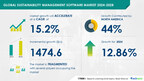
NEW YORK, Sept. 26, 2024 /PRNewswire/ — Report with the AI impact on market trends- The global sustainability management software market size is estimated to grow by USD 1.47 billion from 2024-2028, according to Technavio. The market is estimated to grow at a CAGR of  15.2%  during the forecast period. Shift toward green initiatives is driving market growth, with a trend towards emergence of analytics in sustainability management software. However, integration issues with erp solutions  poses a challenge. Key market players include Benchmark Digital Partners LLC, Dakota Software Corp., Diligent Corp., ENGIE SA, Figbytes Inc., Fortive Corp., International Business Machines Corp., LogicLadder Technologies Pvt. Ltd., Mitsubishi Electric Corp., PDS Group, Quentic GmbH, SAP SE, Schneider Electric SE, Sphera Solutions Inc., UL Solutions Inc., Urjanet Inc., VelocityEHS Holdings Inc., and Wolters Kluwer NV.

Key insights into market evolution with AI-powered analysis. Explore trends, segmentation, and growth drivers- View the snapshot of this report

Sustainability Management Software Market Scope

Report Coverage

Details

Base year

2023

Historic period

2018 – 2022

Forecast period

2024-2028

Growth momentum & CAGR

Accelerate at a CAGR of 15.2%

Market growth 2024-2028

USD 1474.6 million

Market structure

Fragmented

YoY growth 2022-2023 (%)

12.86

Regional analysis

North America, Europe, APAC, South America, and Middle East and Africa

Performing market contribution

North America at 44%

Key countries

US, China, UK, Germany, and Japan

Key companies profiled

Benchmark Digital Partners LLC, Dakota Software Corp., Diligent Corp., ENGIE SA, Figbytes Inc., Fortive Corp., International Business Machines Corp., LogicLadder Technologies Pvt. Ltd., Mitsubishi Electric Corp., PDS Group, Quentic GmbH, SAP SE, Schneider Electric SE, Sphera Solutions Inc., UL Solutions Inc., Urjanet Inc., VelocityEHS Holdings Inc., and Wolters Kluwer NV

Market Driver

The current business environment is witnessing a decline in energy costs, leading enterprises to adopt smarter methods for managing energy consumption. Energy suppliers impose penalties on inefficient devices with low power factors, and governments worldwide raise the bar for energy standard compliance and carbon footprint reduction. Big data and analytics technologies are playing a significant role in reducing operating expenditures in various industries, including energy and utility, banking, financial and insurance, and healthcare, through predictive modeling techniques. Real-time data analytics helps organizations in the energy sector to comply with regulatory requirements. SaaS-based analytics solutions have gained popularity due to their flexibility. In the solar industry, energy analytics is gaining traction in the global sustainability management software market, utilizing machine learning and predictive analytics technologies. Effective energy management systems integrate predictive analytics with IoT, improving operational efficiency and planning through smart grid initiatives. Real-time analytics optimizes functions such as building-energy management, energy production, weather forecasting, and predictive maintenance of EMS. IoT and predictive analytics provide benefits such as asset efficiency analysis, real-time data collection, optimal warranty period definition, and cost estimation, ultimately optimizing carbon emissions and providing well-informed demand-side operations. These factors will boost the growth of the global sustainability software management market during the forecast period. 

Sustainability management software is a business solution that helps companies reduce costs, manage data related to energy usage and resource management, and track their carbon footprint and pollution reduction efforts. This software is trending in various sectors, including manufacturing and chemicals, due to its ability to automate data management, provide real-time information, and support scenario planning for energy savings and climate change mitigation. The software can be implemented as cloud-based, on-premise, or hybrid solutions, offering consulting and implementation services. Key features include project planning, reporting, and collaboration and communication systems. By adopting sustainability management software, businesses can enhance their corporate strategy, embrace sustainable practices, and derisk their supply chains in resource-stressed areas. The software also supports green development, energy efficiency, and the use of renewable resources, ultimately contributing to a low-carbon technology future. 

Request Sample of our comprehensive report now to stay ahead in the AI-driven market evolution!

Market Challenges

Sustainability management software plays a crucial role in helping businesses manage and reduce their carbon emissions. Integrating this software with an enterprise resource planning (ERP) system can enhance its benefits. However, integration challenges arise due to the complexity of IT infrastructure. The lack of compatibility between sustainability management software and ERP systems can result in additional costs and manual processes. Middleware solutions exist to address some of these issues, but they require customization and can be costly. Overcoming these integration hurdles is essential for the expansion of the global sustainability management software market.Sustainability management software is essential for businesses seeking to reduce costs, manage data, and minimize their environmental impact. Challenges include effective energy usage and resource management, data management, and reporting. Automated data management and scenario planning help save energy and reduce carbon footprint, pollution, and climate change risks. The chemicals and manufacturing sectors benefit from sustainability software, enabling supply chain derisking and green development. Corporate strategy and sustainable practices require cloud-based solutions for energy efficiency, carbon emissions reduction, and real-time information on green energy and renewable resources. Implementation and consulting services ensure successful software adoption, whether on-premise, hybrid cloud, or collaboration and communication systems.

Discover how AI is revolutionizing market trends- Get your access now!

Segment Overview

This sustainability management software market report extensively covers market segmentation by  

Application 1.1 IT and telecom1.2 Healthcare1.3 Automotive1.4 Manufacturing1.5 Oil and gasDeployment 2.1 Cloud2.2 On-premisesGeography 3.1 North America3.2 Europe3.3 APAC3.4 South America3.5 Middle East and Africa

1.1 IT and telecom-  The IT and telecommunications sector is projected to lead the global sustainability management software market due to the significant carbon footprint it contributes to the environment. Currently, ICT is responsible for approximately 3-4% of global CO2 emissions, with telecommunications accounting for 1.6% of this total. Upstream and downstream operations, including energy use from suppliers, contribute up to 90% of telco firms’ emissions. With data centers projected to account for 8% of global power consumption by 2030, the need to monitor and reduce carbon emissions is increasingly important. Major telcos have committed to reducing energy usage per unit of traffic by around 70% by the end of this decade, which could potentially reduce emissions by up to 15% by 2030. In response, the ICT industry is adopting sustainability management software to manage emissions and comply with climate regulations, driving market growth within the IT and telecom sector during the forecast period.

Download a Sample of our comprehensive report today to discover how AI-driven innovations are reshaping competitive dynamics

Research Analysis

Sustainability Management Software is a vital tool for businesses seeking to reduce their carbon emissions, manage energy usage, and promote the use of renewable resources. This software enables automated data management of energy consumption and resource usage, providing valuable insights for energy saving and pollution reduction. It also supports scenario planning and project management, helping companies to implement sustainable practices and align with corporate strategy. The software can be delivered through cloud-based, on-premise, or hybrid cloud solutions, offering flexibility to meet various business needs. With databases and reporting capabilities, this software assists organizations in tracking their carbon footprint, monitoring climate change impacts, and identifying areas for improvement in their manufacturing processes. By adopting Sustainability Management Software, businesses can effectively manage their energy and resources, reduce their environmental impact, and contribute to a more sustainable future.

Market Research Overview

Sustainability management software is a vital tool for businesses seeking to reduce their carbon emissions, manage energy usage, and promote the use of renewable resources. This software enables real-time data management and reporting on energy consumption, resource usage, and environmental impact. It offers automated data management, project planning, scenario planning, and energy-saving strategies to help companies reduce their carbon footprint and pollution levels. The software can be implemented through cloud-based, on-premise, or hybrid cloud solutions, and often includes collaboration and communication systems to facilitate teamwork and information sharing. Sustainability management software is essential for industries such as chemicals and manufacturing, where energy efficiency and resource management are critical. It also plays a crucial role in corporate strategy and the adoption of sustainable practices. Cloud-based solutions offer cost-saving strategies and easy access to low-carbon technology, making them increasingly popular. Overall, sustainability management software is a powerful tool for businesses looking to minimize their environmental impact, improve energy efficiency, and enhance their corporate social responsibility.

Table of Contents:

1 Executive Summary
2 Market Landscape
3 Market Sizing
4 Historic Market Size
5 Five Forces Analysis
6 Market Segmentation

ApplicationIT And TelecomHealthcareAutomotiveManufacturingOil And GasDeploymentCloudOn-premisesGeographyNorth AmericaEuropeAPACSouth AmericaMiddle East And Africa

7 Customer Landscape
8 Geographic Landscape
9 Drivers, Challenges, and Trends
10 Company Landscape
11 Company Analysis
12 Appendix

About Technavio

Technavio is a leading global technology research and advisory company. Their research and analysis focuses on emerging market trends and provides actionable insights to help businesses identify market opportunities and develop effective strategies to optimize their market positions.

With over 500 specialized analysts, Technavio’s report library consists of more than 17,000 reports and counting, covering 800 technologies, spanning across 50 countries. Their client base consists of enterprises of all sizes, including more than 100 Fortune 500 companies. This growing client base relies on Technavio’s comprehensive coverage, extensive research, and actionable market insights to identify opportunities in existing and potential markets and assess their competitive positions within changing market scenarios.

Contacts

Technavio Research
Jesse Maida
Media & Marketing Executive
US: +1 844 364 1100
UK: +44 203 893 3200
Email: media@technavio.com
Website: www.technavio.com/

View original content to download multimedia:https://www.prnewswire.com/news-releases/ai-drives-transformation-in-sustainability-management-software-market-expected-to-grow-by-usd-1-47-billion-from-2024-to-2028-due-to-green-initiatives-302258532.html

SOURCE Technavio

Continue Reading
Click to comment

Leave a Reply

Your email address will not be published. Required fields are marked *

Technology

RWA.LTD Announces Comprehensive Consumer Goods Token Ecosystem Layout at Hong Kong Web3 Festival, Leading the Launch of the Consumer RWA Alliance

Published

on

By

HONG KONG, April 24, 2026 /PRNewswire/ — During the Hong Kong Web3 Festival, RWA.LTD, the world’s first platform dedicated to consumer goods RWA (Real World Assets), officially announced the completion of its comprehensive consumer goods token ecosystem layout. At the event, the platform spearheaded the unveiling of the “Consumer RWA Alliance”. Positioned as the “Asian Consumer Goods Asset Trading Center,” RWA.LTD aims to enhance consumption efficiency through AI, reconstruct value distribution via Web3, and connect cross-city and cross-country consumer networks through tokens to accelerate the arrival of the “Smarter Consumer” era.

RWA.LTD stated that consumer goods RWA is not a single product, but a set of new infrastructure developed around consumption scenarios, the circulation of consumer rights, and brand interaction. Since CEO Fu, Rao Tony first proposed the concept of “Consumer Goods RWA” in late 2024, the team simultaneously prepared the RWA.LTD platform and completed Beta testing in September 2025. Following several months of iteration, the platform completed a comprehensive upgrade in mid-March 2026, marking RWA.LTD’s formal transition from the proof-of-concept stage to the ecological development stage.

RWA.LTD Ecosystem

In this public announcement, RWA.LTD systematically disclosed its four major ecological sectors for the first time. First, RWA.LTD | Mall (Winpoint Mall) was officially launched during the Hong Kong Web3 Festival, providing consumers with diverse brand rights driven by RWA Coin; current offerings include the CDAA (Chartered Digital Asset Analyst) Course, Matrix E-commerce Services, and more. Second, RWA.LTD | Exchange was fully launched in mid-March 2026 as a primary issuance and secondary trading market for consumer goods tokens, with plans to list 100 types of consumer goods tokens within the year to provide bidirectional exposure for brands and users. Third, RWA.LTD | Fund plans to collaborate with established VC funds to focus on brand token ecosystem construction and explore new paths for the synergistic development of consumer brands and on-chain capital. Fourth, RWA.LTD | Bot (rwaclaw.ai, rwabot.ai) has completed domain layout and is currently under development; it will provide consumers with real-time AI price comparisons, intelligent recommendations, and automated ordering tools to enhance decision-making efficiency and consumer experience.

RWA.LTD believes that the traditional consumer market has long suffered from information asymmetry, price opacity, and inactive membership systems, while the combination of blockchain and AI provides a new consumption model. By standardizing, digitizing, and placing consumer rights on-chain, consumers are no longer just end-buyers but can become active participants in the consumption network; brands are no longer limited to one-time interactions with consumers but can build stable, sustainable consumer relationships through on-chain tools.

Consumer RWA Alliance

At the Hong Kong Web3 Festival, the Consumer RWA Alliance, spearheaded by RWA.LTD, was inaugurated. The alliance aims to unite consumer brands, channel platforms, technology service providers, ecological partners, and cross-regional resource providers to jointly promote the co-construction of standards, ecological synergy, and scenario implementation for consumer goods RWA. The alliance members attending the unveiling ceremony included Dr. and Professor Lawrence Yu, Founder and Chairman of the Asia Pacific Economic Leaders’ Confederation; Dr. Wang Ping, President of the RWA Ecological International Federation and Chairman of the Asia Pacific M&A Fund; Dou Jun, Secretary General of the Hong Kong RWA Global Industry Alliance and Executive Secretary General of the Blockchain Professional Committee of the China Communications Industry Association (CCIA); Dr. Yu Jianing, Principal of Uweb Business School (Hong Kong) and Rotating Chairman of the Academic Committee of the Hong Kong Certified Digital Asset Analysts Association (HKCDAA); Dr. Jingle, Founder of Hong Kong Meta Strategy; Dr. Qiu Yueying, CEO of Winchain Technology; Tongjian Sun, CEO of INOVAI TECH K.K.; and Wen Hua, Director of the Australia & New Zealand Center of the Hong Kong RWA Global Industry Alliance, with RWA.LTD CEO Fu, Rao Tony serving as the Chairman. The establishment of the alliance marks an important step for consumer RWA moving from platform exploration to industry collaboration, signifying that the RWA narrative is extending from the relatively singular field of financial assets to the consumer industry which is more closely related to real life.

Industry insiders pointed out that the establishment of the Consumer RWA Alliance holds industry significance beyond platform business. On one hand, it helps break the market’s inherent impression of RWA as being “over-financialized” and encourages the outside world to re-recognize the application value of RWA as digital infrastructure in real consumption scenarios. On the other hand, it provides a new organizational framework for the Asian consumer market, making cross-regional brand cooperation, mutual recognition of consumer rights, and on-chain circulation mechanisms more operational. RWA.LTD stated that it hopes to promote the formation of a more diverse, open, and sustainable RWA world through the alliance mechanism, making RWA not just a synonym for asset securitization, but also a key driver for consumer innovation and industrial upgrading.

Regarding compliance issues of market concern, RWA.LTD provided a brief explanation in this announcement. Consumer goods tokens do not fall within the definition of “virtual assets” under Section 53ZRA of the Anti-Money Laundering and Counter-Terrorist Financing Ordinance (AMLO), as they are neither payment tokens nor governance tokens. Even if there is overlap in certain characteristics, the relevant tokens can ultimately be defined as “Limited Purpose Digital Tokens” under Section 53ZR of the AMLO, which are explicitly excluded from the scope of “virtual asset” in the AMLO. Based on this, RWA.LTD does not fall within the regulatory scope of the Virtual Asset Trading Platform (VATP) licensing regime. Meanwhile, the U.S. SEC’s previous No-Action Letter to the Fuse project, along with the definition of “Digital Tools” in the regulatory interpretation published on March 17, 2026, further supports the stance that consumer goods tokens are non-securities, non-commodities, and are not regulated under the virtual asset framework. RWA.LTD emphasized that the company consistently adheres to advancing product design and business development within a compliance framework and will continue to monitor regulatory dynamics in different jurisdictions.

The RWA.LTD team possesses a rich international background and overseas market experience, having long followed the development trends of the Web3 and RWA markets in Europe and the United States. The team observed early on that the Asian RWA market has long been concentrated on financial narratives with relatively monotonous scenarios, and platforms that truly integrate deeply with mass consumption and high-frequency lifestyle scenarios remain scarce. Consequently, the team began preparing the consumer goods RWA platform as early as 2024, hoping to take the lead in completing infrastructure, model verification, and resource integration before an industry consensus was formed.

RWA.LTD CEO Fu, Rao Tony pointed out that consumer goods RWA is currently one of the directions most likely to land and scale quickly. Compared to financial RWA, consumer goods RWA has a stronger efficient foundation in terms of compliance structure, user understanding, scenario adaptation, and promotion paths. Its core value lies in using blockchain technology to release liquidity that the consumer industry has long lacked, allowing consumer rights—which were originally fragmented, dormant, non-tradable, or difficult to circulate across regions—to achieve more efficient allocation and redistribution. Through this mechanism, the relationship between brands, platforms, and consumers will be redefined.

Fu, Rao Tony further stated that as the digitalization of the Asian consumer market continues to improve, the combination of consumer RWA and the real consumer industry is expected to release trillion-dollar economic potential in the future. For Hong Kong, this is not just an emerging Web3 track, but could become an important hub connecting international consumer networks with digital asset innovation. Hong Kong possesses unique advantages as an international financial center, an international trade center, and a highland for institutional innovation. If it can take the lead in forming scale synergy in the field of consumer RWA, it has the opportunity to occupy a leading position in the global wave of consumer asset digitalization.

In the future, RWA.LTD will continue to advance its layout around consumer goods RWA infrastructure construction, ecological cooperation expansion, alliance network improvement, and AI consumer tool research and development, exploring new on-chain paradigms for the consumer industry with more brands, institutions, and partners. As the Mall, Exchange, Fund, and Bot sectors gradually mature, RWA.LTD hopes to drive consumer RWA from concept to large-scale application, providing a more efficient, intelligent, and participatory new value network for the Asian and global consumer markets.

About RWA.LTD

RWA.LTD is positioned as the Asian consumer goods asset trading center, committed to enhancing consumption efficiency with AI, reconstructing consumer value distribution with Web3, and establishing cross-city and cross-country consumer alliance networks via tokens. The company focuses on the consumer goods RWA track, continuously promoting the digitalization of consumer rights, the circulation of consumer assets, and the synergy of the consumer ecosystem to explore the future consumption model of “Smarter Consumer”.

View original content to download multimedia:https://www.prnewswire.com/apac/news-releases/rwaltd-announces-comprehensive-consumer-goods-token-ecosystem-layout-at-hong-kong-web3-festival-leading-the-launch-of-the-consumer-rwa-alliance-302752501.html

SOURCE RWA.LTD

Continue Reading

Technology

Fox ESS Ranks No. 1 Globally in Residential Energy Storage

Published

on

By

WENZHOU, China, April 23, 2026 /CNW/ — Fox ESS, a global leader in renewable energy solutions, has been ranked No. 1 among residential energy storage providers worldwide for 2025, based on MWh shipments in S&P Global Energy’s Residential Energy Storage Market Tracker.

The report also places Fox ESS at No. 1 in Germany and the UK, highlighting the company’s momentum in key markets and expanding distribution footprint.

Compared with 2024, Fox ESS’s global market share rose 50% in 2025, reinforcing its position in a rapidly growing residential storage sector. The company has continued to scale internationally, with global headcount doubling from the end of 2024. As of April 2026, Fox ESS employs more than 5,000 people worldwide, and has added local support through new offices, including in Sydney, Australia.

“We’re thrilled for this remarkable achievement. It reflects our commitment to innovation and product quality, and to making clean, reliable energy practical for households around the world,” said Michael Zhu, CEO of Fox ESS. “We will continue pushing the boundaries to deliver solutions that help homes and businesses move toward energy independence.”

Notably, Fox ESS has launched the Champion’s Choice campaign globally, combining the endorsement of sports champions with recognition from prestigious organizations. With the first stop in Australia, the company signed Ian Thorpe, a five-time Olympic champion last December. The campaign underscores Fox ESS’s ambition to deliver better value for customers and partners.

Fox ESS is committed to building long-term trust with customers and partners. The company delivers reliable, high-quality energy storage systems engineered for consistent performance, supported by rigorous quality-control processes designed to help ensure every product meets the highest standards.

Fox ESS develops solutions that serve both installers and end users. With ongoing investment in R&D, the company stays ahead of evolving market needs, helping installers work more efficiently while enabling homeowners to move toward energy transition and reduce electricity costs.

With a team of more than 400 experts in R&D, Fox ESS continues to refine its product design for easier transportation, installation, and everyday use. The AI-powered FoxCloud app also makes energy management more intuitive, enabling users to monitor and control home energy consumption, manage smart devices, and track detailed generation and usage data in a single streamlined platform, delivering greater peace of mind.

View original content to download multimedia:https://www.prnewswire.com/news-releases/fox-ess-ranks-no-1-globally-in-residential-energy-storage-302752471.html

SOURCE Fox ESS

Continue Reading

Technology

Deepvein Mining Tech Wins NY Product Design Gold for Exploration Robotics

Published

on

By

SHANGHAI, April 23, 2026 /PRNewswire/ — Deepvein Mining Tech, a developer of robotic systems for mining operations, has received Gold at the 2026 NY Product Design Awards for its Intelligent Geological Mapping and Geochemical Sampling Quadrupedal Robots, a robotics series developed for mineral exploration in remote and high-risk field environments.

The NY Product Design Awards, organized by the International Awards Associate (IAA), recognize achievements in product design and industrial innovation worldwide.

Mining exploration has become increasingly costly and technically challenging as easily accessible deposits are depleted, particularly in remote and geologically complex regions where fieldwork can be slow, labor-intensive and operationally demanding.

Deepvein’s award-winning robotics series was developed to address those constraints through a combination of quadrupedal robotic hardware and integrated software systems. The solution supports route planning, equipment coordination, sample logging and geological data management, helping standardize field operations and reduce manual workloads.

Designed for geological mapping and geochemical sampling, the robotic units can autonomously perform targeted collection tasks while reducing repeated manual fieldwork. A single operating cycle can gather approximately 30 to 50 samples.

According to deployment data from company-operated mining assets in Africa, exploration data collection cycles were reduced from around 12 months to one week, while overall workflow costs fell by approximately 40%.

Beyond efficiency gains, the use of robotic systems in steep, high-temperature or hard-to-access areas can help reduce personnel exposure to hazardous conditions. Improved targeting and digital workflow management can also limit unnecessary surface disturbance during early-stage exploration.

Deepvein is developing a broader portfolio of mining robotics covering the industry lifecycle, with future applications expected in transport support, inspection, maintenance and site rehabilitation, alongside continued iteration of its exploration-stage systems.

View original content to download multimedia:https://www.prnewswire.com/news-releases/deepvein-mining-tech-wins-ny-product-design-gold-for-exploration-robotics-302752483.html

SOURCE Deepvein Mining Tech

Continue Reading

Trending