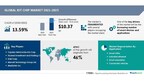
NEW YORK, Sept. 26, 2024 /PRNewswire/ — Report with market evolution powered by AI- The global iot chip market size is estimated to grow by USD 10.37 billion from 2023-2027, according to Technavio. The market is estimated to grow at a CAGR of 13.59% during the forecast period. Increasing number of smart devices and applications is driving market growth, with a trend towards introduction of nb-iot technology. However, privacy and security concerns poses a challenge. Key market players include Advanced Micro Devices Inc., Analog Devices Inc., Arduino Srl, Huawei Technologies Co. Ltd., Infineon Technologies AG, Intel Corp., Marvell Technology Inc., MediaTek Inc., Microchip Technology Inc., NVIDIA Corp., NXP Semiconductors NV, Park Ohio Holdings Corp., Qualcomm Inc., Renesas Electronics Corp., Samsung Electronics Co. Ltd., Silicon Laboratories Inc., SoftBank Group Corp., STMicroelectronics NV, Texas Instruments Inc., and Twilio Inc..
AI-Powered Market Evolution Insights. Our comprehensive market report ready with the latest trends, growth opportunities, and strategic analysis- View your snapshot now
Forecast period
2023-2027
Base Year
2022
Historic Data
2017 – 2021
Segment Covered
Application (Smart cities, Industrial ethernet, Smart wearables, Connected vehicles, and Connected homes), Type (Logic devices, Sensors, Processors, Connectivity integrated circuits, and Memory devices), and Geography (APAC, North America, Europe, South America, and Middle East and Africa)
Region Covered
APAC, North America, Europe, South America, and Middle East and Africa
Key companies profiled
Advanced Micro Devices Inc., Analog Devices Inc., Arduino Srl, Huawei Technologies Co. Ltd., Infineon Technologies AG, Intel Corp., Marvell Technology Inc., MediaTek Inc., Microchip Technology Inc., NVIDIA Corp., NXP Semiconductors NV, Park Ohio Holdings Corp., Qualcomm Inc., Renesas Electronics Corp., Samsung Electronics Co. Ltd., Silicon Laboratories Inc., SoftBank Group Corp., STMicroelectronics NV, Texas Instruments Inc., and Twilio Inc.
Key Market Trends Fueling Growth
The introduction of NB-IoT technology in the IoT chip market has significantly expanded the use of IoT-based chipsets. NB-IoT is a wireless technology that operates on the Low Power Wide Area (LPWA) network and is distinct from LTE-based hardware. This technology trend is expected to positively impact the IoT market. Factors such as the deployment of a wide area network, increased power efficiency, absence of a gateway for NB-IoT use, cost savings, reliability, and connection to a wide range of frequencies are driving the adoption of NB-IoT. NB-IoT allows devices with small form factors and sensors to connect to a licensed narrow bandwidth and transfer data at higher rates. For instance, LTE has a link budget of 142.7 dB, and GPRS has a link budget of 144 dB. An NB-IoT system has a link budget of 164 dB, providing a 20 dB margin for better battery life and data latency. NB-IoT also enables mobile communication devices to reuse older technologies and offers growth opportunities for emerging and newer technologies in the market. This technology has encouraged end-users to utilize IoT in various sectors, including agriculture and automotive, and will become a major driver for the global IoT chip market in the future.
The IoT chip market is surging with trends like encryption security keys for data protection, energy conservation through smart meters and HVAC controls, and security system improvements for connected homes and businesses. NXP Semiconductors, Intel Corporation, and Texas Instruments Incorporated lead the charge with energy-efficient chips for smart home appliances, inventory management, and supply chain management. Real-time advertising, analytics-based decisions, and digital signage rely on IoT devices’ connectivity and networking protocols. Vulnerabilities in software and cyberattacks demand low-power security chips. Energy consumption and miniaturization of chips are crucial for automotive and healthcare applications. IoT connections require networking and supply chain shortages call for connectivity competence. IoT devices in consumer electronics, automotive, and healthcare industries need energy efficiency and security to thrive.
Insights on how AI is driving innovation, efficiency, and market growth- Request Sample!
Market Challenges
The Internet of Things (IoT) market is witnessing significant growth as various devices, such as connected home appliances and cars, become interconnected. This technology allows users to access information from anywhere and at any time through the cloud. However, the implementation of IoT raises privacy and security concerns. An IoT device consists of three layers: transport, network, and physical. Each layer is vulnerable to attacks, with the physical layer being the most dangerous as it involves accessing the device to extract sensitive information. The network layer, which is crucial due to its features like low power consumption and high-speed Internet, can be attacked by misconfiguring routing or analyzing data traffic. The rise of IoT has led to the generation of vast amounts of data, enabling edge devices to work according to users’ preferences. Smart devices collect personal information and provide targeted advertisements and application options based on this data, leading to privacy concerns. Factors contributing to these issues include a lack of secure configuration, unsecured software updates, and the absence of privacy and security regulations. The low priority given to security solutions by governments and companies further hinders the adoption of IoT devices. Misconfigured networks can expose information to outsiders, while unsecured software updates can provide entry points for hackers. The lack of regulations increases the risk of attacks and decreases user trust. To mitigate these concerns, it is essential to prioritize security and privacy in IoT device design and implementation.The IoT chip market is experiencing significant growth due to the increasing demand for automated processes, machine-to-machine connections, and embedded sensors in various industries. However, challenges such as movement restrictions and logistics chains disruptions have affected the semiconductor manufacturing facilities of companies like Western Digital Corporation. To address these issues, IoT chip providers like Cyient and WiSig Networks are developing wireless chip solutions for domestic automation and logistics, warehousing, and manufacturing. Predictive maintenance and data analytics are also crucial for factory efficiency and economic times. IoT chips are used in smart cameras, connected devices, and building automation applications, including intelligent transportation systems, connected cars, and wearables. Memory devices, logic devices, and application-specific or general-purpose MCUs are essential semiconductor products for these applications. Ensuring data confidentiality is vital for the IoT chip market’s growth, with connectivity ICs and edge devices playing a significant role in cloud services. The market for IoT chips in energy management, medical applications, and real-time sensors is also expanding with the increasing internet penetration.
Insights into how AI is reshaping industries and driving growth- Download a Sample Report
Segment Overview
This iot chip market report extensively covers market segmentation by
Application 1.1 Smart cities1.2 Industrial ethernet1.3 Smart wearables1.4 Connected vehicles1.5 Connected homesType 2.1 Logic devices2.2 Sensors2.3 Processors2.4 Connectivity integrated circuits2.5 Memory devicesGeography 3.1 APAC3.2 North America3.3 Europe3.4 South America3.5 Middle East and Africa
1.1 Smart cities- The IoT chip market is experiencing growth due to the increasing adoption of smart city initiatives worldwide. Smart cities integrate various information and communication technologies into urban infrastructure, requiring connectivity solutions such as IoT chipsets. Factors like the implementation of smart grid technologies, Wi-Fi availability, and mobile application landscapes contribute to designating a city as smart. Cities like Singapore, London, and Barcelona are leading the way. The US, in collaboration with Intel, is implementing Intel’s IoT chip for its smart city initiatives. In San Jose, this collaboration aims to create a sustainability lens for the city, measuring air and noise pollution and managing traffic flow and energy consumption. IoT devices and technologies, including chipsets, are integral to this project. The growth of the global IoT chip market is driven by the increasing number of smart city projects in developing economies, advancements in Wi-Fi technologies, and the extensive use of Wi-Fi and the Internet. Key players like IBM, Microsoft, Cisco Systems, and Schneider Electric are contributing to the development of smart cities through initiatives and IT solutions. Smart meters, a significant contributor to the growth of this segment, record utility consumption levels and send data to utility companies for monitoring and billing. Smart grids, which require numerous smart meters, are electrical grids equipped with computational intelligence and network capabilities. Chipset manufacturers are developing chips with efficient communication technologies to support the growth of smart meters and grids. Government agencies and utility companies are replacing traditional meters with smart meters, with Great Britain introducing 34.8 million smart meters by 2023. The growing popularity of smart meters will further drive the development of smart grid projects.
Download complimentary Sample Report to gain insights into AI’s impact on market dynamics, emerging trends, and future opportunities- including forecast (2023-2027) and historic data (2017 – 2021)
Research Analysis
The IoT chip market is experiencing rapid growth due to the increasing number of IoT connections and devices across various industries such as healthcare, consumer electronics, automotive, and building automation. IoT devices require connectivity competence, networking protocols, and low-power security chips to ensure efficient communication and data transfer. The market for IoT chips includes memory devices, logic devices, and connectivity ICs. Vulnerabilities in IoT devices have become a major concern, necessitating the development of advanced embedded technologies and security solutions. The healthcare sector is expected to witness significant growth in the IoT chip market due to the integration of wearables and smart consumer devices. Automotive applications, including connected cars and intelligent transportation systems, are also driving demand for IoT chips. Energy efficiency is a key consideration in the design of IoT chips for applications such as smart HVAC controls and vending machines. NXP Semiconductors, Intel Corporation, and Texas Instruments Incorporated are major players in the IoT chip market, offering innovative solutions to meet the demands of the digital infrastructure.
Market Research Overview
The IoT chip market is experiencing significant growth due to the increasing number of IoT devices in various industries such as healthcare, consumer electronics, automotive, and manufacturing. The demand for connectivity competence, networking protocols, and low-power security chips is driving the market. However, vulnerabilities, including software and cyberattacks, and supply chain shortages due to movement restrictions, are challenges. The chip requirement for miniaturization of chips, energy consumption, and security are key considerations. The healthcare sector is leveraging IoT for predictive maintenance, data analytics, and smart devices. Consumer electronics are seeing growth in smart home appliances, wearables, and connected devices. Automotive applications include connected cars and intelligent transportation systems. The manufacturing sector benefits from automated processes, logistics chains, and real-time sensors. The Economic Times reported on Western Digital Corporation’s semiconductor manufacturing facilities producing wireless chip solutions for various IoT applications. Cyient, WiSig Networks, and Koala NB-IoT SoC are contributing to the market with their RAIN RFID providers, logistics, and warehousing solutions. Smart cameras, memory devices, logic devices, and application-specific MCUs are essential components in building automation applications, connected cars, and edge devices. Cloud services, data confidentiality, and energy conservation are crucial for IoT security and efficiency. Smart meters, security system improvements, and power consumption are critical areas of focus in the energy sector. The wearables segment, connectivity ICs, and smart consumer devices are driving growth in the energy management market. The increasing Internet penetration and the demand for energy efficiency are fueling the growth of IoT chips. NXP Semiconductors, Intel Corporation, and Texas Instruments Incorporated are major players in the market. The market is expected to grow further with the integration of real-time advertising, analytics-based decisions, and digital signage in vending machines.
Table of Contents:
1 Executive Summary
2 Market Landscape
3 Market Sizing
4 Historic Market Size
5 Five Forces Analysis
6 Market Segmentation
ApplicationSmart CitiesIndustrial EthernetSmart WearablesConnected VehiclesConnected HomesTypeLogic DevicesSensorsProcessorsConnectivity Integrated CircuitsMemory DevicesGeographyAPACNorth AmericaEuropeSouth AmericaMiddle East And Africa
7 Customer Landscape
8 Geographic Landscape
9 Drivers, Challenges, and Trends
10 Company Landscape
11 Company Analysis
12 Appendix
About Technavio
Technavio is a leading global technology research and advisory company. Their research and analysis focuses on emerging market trends and provides actionable insights to help businesses identify market opportunities and develop effective strategies to optimize their market positions.
With over 500 specialized analysts, Technavio’s report library consists of more than 17,000 reports and counting, covering 800 technologies, spanning across 50 countries. Their client base consists of enterprises of all sizes, including more than 100 Fortune 500 companies. This growing client base relies on Technavio’s comprehensive coverage, extensive research, and actionable market insights to identify opportunities in existing and potential markets and assess their competitive positions within changing market scenarios.
Contacts
Technavio Research
Jesse Maida
Media & Marketing Executive
US: +1 844 364 1100
UK: +44 203 893 3200
Email: media@technavio.com
Website: www.technavio.com/
View original content to download multimedia:https://www.prnewswire.com/news-releases/ai-is-transforming-the-iot-chip-market-expected-growth-of-usd-10-37-billion-from-2023-to-2027-driven-by-rising-smart-devices-and-applications-302258503.html
SOURCE Technavio








 Technology5 days ago
 Coin Market4 days ago
 Coin Market5 days ago
 Technology5 days ago
 Technology5 days ago
 Technology5 days ago
 Technology4 days ago
 Coin Market4 days ago