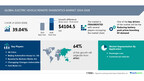
NEW YORK, Sept. 27, 2024 /PRNewswire/ — Report with the AI impact on market trends – The Global Electric Vehicle Remote Diagnostics Market size is estimated to grow by USD 4.10 billion from 2024-2028, according to Technavio. The market is estimated to grow at a CAGR of 39.04% during the forecast period. Reducing battery pack prices boosting EV demand is driving market growth, with a trend towards growing popularity of remote diagnostics services in electric buses However, subscription cost associated with EV remote diagnostics services poses a challenge – Key market players include AB Volvo, Beijing Automotive Group Co. Ltd., Bayerische Motoren Werke AG, Chongqing Changan Automobile Co. Ltd., Ford Motor Co., General Motors Co., Honda Motor Co. Ltd., Hyundai Motor Co., KIA CORP., Li Auto Inc., Mahindra and Mahindra Ltd., Mercedes Benz Group AG, Mitsubishi Motors Corp., Renault SAS, Stellantis NV, Tata Motors Ltd., Tesla Inc., Toyota Motor Corp., and Volkswagen AG.
Key insights into market evolution with AI-powered analysis. Explore trends, segmentation, and growth drivers- View the snapshot of this report
Electric Vehicle Remote Diagnostics Market Scope
Report Coverage
Details
Base year
2023
Historic period
2018 – 2022
Forecast period
2024-2028
Growth momentum & CAGR
Accelerate at a CAGR of 39.04%
Market growth 2024-2028
USD 4104.5 million
Market structure
Fragmented
YoY growth 2022-2023 (%)
29.04
Regional analysis
APAC, Europe, North America, South America, and Middle East and Africa
Performing market contribution
APAC at 64%
Key countries
China, US, Germany, France, and Japan
Key companies profiled
AB Volvo, Beijing Automotive Group Co. Ltd., Bayerische Motoren Werke AG, Chongqing Changan Automobile Co. Ltd., Ford Motor Co., General Motors Co., Honda Motor Co. Ltd., Hyundai Motor Co., KIA CORP., Li Auto Inc., Mahindra and Mahindra Ltd., Mercedes Benz Group AG, Mitsubishi Motors Corp., Renault SAS, Stellantis NV, Tata Motors Ltd., Tesla Inc., Toyota Motor Corp., and Volkswagen AG
Market Driver
Electric buses are experiencing increasing popularity worldwide, particularly in China, due to substantial investments and initiatives to expand their usage and infrastructure. The demand for electric buses is growing among both public and private sectors, and this trend is anticipated to continue. The adoption of electric buses for public transportation is on the rise globally. In response, bus manufacturers and telematics service providers are developing solutions to enhance the efficiency of electric buses. For instance, ViriCiti offers various packages for monitoring electric buses, catering to diverse customer requirements. These packages focus on operational improvement, driver behavior, and maintenance. The maintenance package is particularly noteworthy as it enables maintenance teams and OEMs to identify technical failures remotely, reducing costs and preventing issues. This package includes a remote diagnostic tool that pinpoints the exact location of a faulty battery cell or vehicle component. Similarly, bus manufacturers are developing remote diagnostic solutions to improve maintenance options, contributing to the expansion of the global electric vehicle remote diagnostics market.
The Electric Vehicle (EV) Remote Diagnostics market is experiencing significant growth due to the increasing popularity of automotive remote diagnostics in both passenger and commercial vehicles. This trend is driven by the use of wireless networks like 3G, 4G, Wi-Fi, and Bluetooth for real-time communication between diagnostic equipment and automobile systems. Computer software enables vehicle performance analysis, identifying failures in real-time, and providing vehicle health alerts. Fleet operators and commercial vehicle suppliers benefit from data collection, service downtime reduction, and component defect identification. The Internet of Things (IoT) and telematics play a crucial role in creating connected car ecosystems, enhancing the driving experience for luxury and sports vehicles. Safety and security are prioritized with automatic crash notification, vehicle location tracking, and roadside assistance. Advanced sensors and communication technologies enable predictive maintenance and AI-driven predictive analytics for battery health monitoring and other maintenance needs. As 5G technology emerges, it will further enhance the capabilities of remote diagnostics. Human-Machine Interface and IoT technologies ensure seamless interaction between vehicle owners and their vehicles. However, cybersecurity risks necessitate robust security measures to protect sensitive vehicle data. Automakers must address these challenges to provide reliable and secure remote diagnostic solutions for their customers.
Request Sample of our comprehensive report now to stay ahead in the AI-driven market evolution!
Market Challenges
The electric vehicle (EV) remote diagnostics market is experiencing significant growth due to the increasing popularity of EV telematics applications and services. Remote diagnostic services are often included in bundled offerings of connected car services, utilizing the same telematics control units and hardware components. OEMs can earn revenues through subscriptions by bundling remote diagnostics with other connected car offerings. However, customer reluctance to pay for these services, particularly in price-sensitive markets, poses a challenge. To increase uptake, some EV variants offer remote diagnostics as optional services with customized pricing strategies. Vendors must optimally price their subscription packages to attract a wider customer base, but this may add to the overall cost of connected car offerings. For example, OnStar offers its OnStar safety and security plan with remote access for USD34.99 per month, while the base plan without remote diagnostics is priced at USD24.99. Price-sensitive customers may opt for the base package, potentially hindering the growth of the electric vehicle remote diagnostics market.The Electric Vehicle (EV) Remote Diagnostics market is experiencing significant growth due to the increasing adoption of EVs and the integration of Internet of Things (IoT) and telematics in the automotive industry. However, challenges persist in this market. Data collection from advanced sensors and communication technologies in EVs can be complex, leading to service downtime and component defects. Connected car ecosystems, including luxury and sports vehicles, require real-time vehicle health alerts and predictive analytics for maintenance. Fleet operators and commercial vehicle suppliers benefit from EV remote diagnostics, but cybersecurity risks and human-machine interface design are bottlenecks. Automakers must address these challenges using AI, predictive analytics, and 5G technology to improve the driving experience, ensure safety and security, and provide vehicle tracking and battery health monitoring for vehicle owners. Bluetooth and vehicle electrification are also key considerations in this market.
Discover how AI is revolutionizing market trends- Get your access now!
Segment Overview
This electric vehicle remote diagnostics market report extensively covers market segmentation by
Application 1.1 Passenger cars1.2 Commercial vehiclesType 2.1 Equipment2.2 SoftwareGeography 3.1 APAC3.2 Europe3.3 North America3.4 South America3.5 Middle East and Africa
1.1 Passenger cars- The Electric Vehicle (EV) Remote Diagnostics Market is experiencing significant growth due to increasing demand for efficient and cost-effective maintenance solutions. This market allows automakers and fleet operators to monitor EV health in real-time, identify potential issues, and perform diagnostic checks remotely. This not only reduces downtime but also enhances customer satisfaction and safety. Key players in this market include Bosch, Continental AG, and Delphi Technologies, who are investing heavily in developing advanced remote diagnostic systems for EVs.
Download a Sample of our comprehensive report today to discover how AI-driven innovations are reshaping competitive dynamics
Research Analysis
Electric Vehicle (EV) remote diagnostics refer to the use of wireless networks and diagnostic equipment to monitor and analyze vehicle performance in real-time. This technology enables automakers to identify and address failures and maintenance needs proactively, reducing downtime and enhancing the overall EV ownership experience. The automotive industry is rapidly embracing this technology as part of the vehicle electrification and connected-car ecosystem. EV remote diagnostics cover various automobile systems, including battery health monitoring, human-machine interface, and cybersecurity risks. However, challenges such as technology bottlenecks and cybersecurity risks must be addressed to ensure a seamless and secure diagnostic experience. Real-time monitoring and analysis of vehicle data can lead to more efficient service time and improved vehicle performance.
Market Research Overview
Electric Vehicle Remote Diagnostics: Revolutionizing Automotive Maintenance with Wireless Networks and Computer Software Electric Vehicle (EV) Remote Diagnostics is a game-changer in the automotive industry, enabling real-time monitoring and analysis of vehicle performance through wireless networks and computer software. This innovative technology allows for automatic crash notification, vehicle location tracking, roadside assistance, data collection, and vehicle health alerts. Passenger vehicles and commercial vehicles alike benefit from this advanced system, with luxury and sports vehicles also adopting the technology for enhanced safety and security. Real-time data collection and predictive analytics enable early identification of component defects and service downtime, reducing overall maintenance costs and improving the driving experience. Connected car ecosystems, including IoT technologies and telematics, play a crucial role in EV Remote Diagnostics. Communication technologies such as 3G, 4G, Wi-Fi, Bluetooth, and 5G, as well as advanced sensors, facilitate seamless data transfer and analysis. Fleet operators and commercial vehicle suppliers are major adopters of this technology, ensuring optimal fleet performance and reducing downtime. However, cybersecurity risks associated with IoT technologies and connected cars are a significant concern, necessitating robust security measures. Battery health monitoring is a critical application of EV Remote Diagnostics, ensuring the longevity and efficiency of electric vehicle batteries. Human-Machine Interface (HMI) and AI technologies further enhance the user experience, providing vehicle owners with valuable insights and alerts. Despite its numerous benefits, challenges such as technology bottlenecks, cybersecurity risks, and vehicle electrification remain key considerations for automakers and industry stakeholders. The future of EV Remote Diagnostics lies in the integration of advanced technologies and a focus on enhancing the driving experience while ensuring safety and security.
Table of Contents:
1 Executive Summary
2 Market Landscape
3 Market Sizing
4 Historic Market Size
5 Five Forces Analysis
6 Market Segmentation
ApplicationPassenger CarsCommercial VehiclesTypeEquipmentSoftwareGeographyAPACEuropeNorth AmericaSouth AmericaMiddle East And Africa
7 Customer Landscape
8 Geographic Landscape
9 Drivers, Challenges, and Trends
10 Company Landscape
11 Company Analysis
12 Appendix
About Technavio
Technavio is a leading global technology research and advisory company. Their research and analysis focuses on emerging market trends and provides actionable insights to help businesses identify market opportunities and develop effective strategies to optimize their market positions.
With over 500 specialized analysts, Technavio’s report library consists of more than 17,000 reports and counting, covering 800 technologies, spanning across 50 countries. Their client base consists of enterprises of all sizes, including more than 100 Fortune 500 companies. This growing client base relies on Technavio’s comprehensive coverage, extensive research, and actionable market insights to identify opportunities in existing and potential markets and assess their competitive positions within changing market scenarios.
Contacts
Technavio Research
Jesse Maida
Media & Marketing Executive
US: +1 844 364 1100
UK: +44 203 893 3200
Email: media@technavio.com
Website: www.technavio.com/
View original content to download multimedia:https://www.prnewswire.com/news-releases/electric-vehicle-remote-diagnostics-market-to-grow-by-usd-4-10-billion-2024-2028-ai-driven-report-highlights-impact-of-falling-battery-prices-on-ev-demand—technavio-302259789.html
SOURCE Technavio








 Technology5 days ago
 Technology5 days ago
 Coin Market5 days ago


 Coin Market5 days ago
 Technology5 days ago