Connect with us

Technology

US Used Car Market to grow by USD 41.9Billion from 2024-2028, driven by value for money of used cars, AI-powered report highlights market transformation – Technavio

Published

on

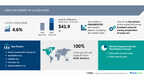
NEW YORK, Oct. 7, 2024 /PRNewswire/ — Report with the AI impact on market trends – The Used Car Market in US  size is estimated to grow by USD 41.9 billion from 2024-2028, according to Technavio. The market is estimated to grow at a CAGR of  4.6%  during the forecast period. Excellent value for money proposition of Used Cars is driving market growth, with a trend towards increased penetration of websites dedicated to selling used cars. However, stringent emission regulations to restrict sales of non-compliant used cars  poses a challenge – Key market players include Asbury Automotive Group Inc., AutoNation Inc., CarMax Inc., Carvana Co., General Motors Co., Group 1 Automotive Inc., Hendrick Automotive Group, Hertz Holdings Inc., Lithia Motors Inc., Penske Automotive Group Inc., Sonic Automotive Inc., and Vroom Inc..

AI-Powered Market Evolution Insights. Our comprehensive market report ready with the latest trends, growth opportunities, and strategic analysis- View your snapshot now

Forecast period

2024-2028

Base Year

2023

Historic Data

2018 – 2022

Segment Covered

Distribution Channel (Third-party channel sales and OEM channel sales), Product (Mid size, Full size, and Compact size), and Geography (North America)

Region Covered

US

Key companies profiled

Asbury Automotive Group Inc., AutoNation Inc., CarMax Inc., Carvana Co., General Motors Co., Group 1 Automotive Inc., Hendrick Automotive Group, Hertz Global Holdings Inc., Lithia Motors Inc., Penske Automotive Group Inc., Sonic Automotive Inc., and Vroom Inc.

Key Market Trends Fueling Growth

The Internet’s expansion in the US has led to an efficient online marketplace for used cars. Websites like AutoNation.com enable buyers to purchase used cars online, reaching a larger audience. Sellers benefit from this platform, while websites offer additional services and discounts. After-sales services are available at discounted rates or for free. AutoNation.com even allows buyers to exchange their old cars for a discount on a new purchase. This convenience and the availability of crucial vehicle information will fuel the growth of the US used car market. 

The used car market in the US is witnessing significant trends. Conventional vehicles continue to dominate, but CNG powered and diesel vehicles are gaining traction. Mid-sized and compact SUVs are popular choices for price-sensitive buyers. Offline and online retailing are growing, with digital retailing and AI applications streamlining the buying process. Sustainability is a key concern, with vehicle certification and emissions a focus. OEMs, dealers, rental car agencies, and leasing offices are embracing inventory pooling and value-added services. Depreciation is a challenge for luxury vehicle owners, but car subscription services offer an alternative. Urbanization and the telecom industry are driving online transactions. Unorganized businesses must comply with BS6 norms and emissions regulations. Financing, warranties, and maintenance plans are essential for used car buyers. Pre-owned and second-hand cars remain in demand, with resale value and ownership duration crucial factors. Overall, the automotive industry trends favor digitalization and sustainability. 

Insights on how AI is driving innovation, efficiency, and market growth- Request Sample!

Market Challenges

The Environmental Protection Agency (EPA) in the US has implemented stricter emission norms for passenger cars and commercial vehicles due to increasing air pollution concerns. These new regulations will impact the used car market as many vehicles on the road will be non-compliant. Older cars, particularly pickup trucks, contribute significantly to vehicular emissions, which can cause health hazards due to harmful gases. New vehicles come with advanced emission control systems that adhere to the latest EPA standards. Given that the average car lifecycle is 2-5 years, these new regulations have been implemented within this period, making used cars non-compliant. Pre-2012 EPA standards were less stringent compared to the current ones. As a result, the EPA may impose stringent testing and re-registration protocols for used cars, potentially restricting sales and negatively affecting the used car market’s growth.The used car market in the US is a significant business sector, encompassing various sales channels such as auctions and private party sales. Prices in this market can vary, with some dealers offering “no haggle” prices, while others may use certified pre-owned vehicles to assure customers. Extended service agreements and advanced vehicle features like power steering, climate control, and anti-lock brakes add value. Flexibility is key, with tech-enabled options, automotive performance tracking, smartphone applications, and internet connectivity becoming standard. However, high depreciation rates and price sensitivity in certain areas pose challenges. Flexible financing alternatives cater to various customer needs. The dealership network, online sales, and auto marketplaces provide affordability and personal mobility solutions. Automobile manufacturers and franchise dealers offer organized options, while unorganized sales and used passenger cars dominate the unfranchised market. The rise of electric and hybrid vehicles adds complexity, requiring customer intelligence and adaptability.

Insights into how AI is reshaping industries and driving growth- Download a Sample Report

Segment Overview 

This used car market in US report extensively covers market segmentation by

Distribution Channel1.1 Third-party channel sales1.2 OEM channel salesProduct 2.1 Mid size2.2 Full size2.3 Compact sizeGeography 3.1 North America

1.1 Third-party channel sales-  The used car market in the US is a significant sector, with numerous buyers and sellers engaging in transactions daily. Dealerships and private sellers offer various makes and models, ensuring a diverse inventory. Prices vary based on factors like vehicle condition, age, and location. Buyers can research extensively using online resources, compare prices, and inspect vehicles before purchasing. The market’s size and competition ensure potential for competitive pricing and a wide selection.

Download complimentary Sample Report to gain insights into AI’s impact on market dynamics, emerging trends, and future opportunities- including forecast (2024-2028) and historic data (2018 – 2022)

Research Analysis

The used car market in the US is a significant sector of the automotive industry, catering to the demand for personal mobility solutions that are more affordable than new vehicles. The market is served by a vast dealership network, both physical and online, including auto marketplaces and e-commerce platforms. Used passenger cars, off-lease vehicles, and certified pre-owned vehicles are popular choices, with various options available for luxury vehicles and second-hand cars. Factors like depreciation, ownership duration, and resale value influence the used car market. The rise of car subscription services and online retailing, coupled with urbanization and the telecom industry’s advancements, have transformed the landscape. Used car owners, vehicle dealers, rental car agencies, leasing offices, auctions, and private party sales are integral parts of this dynamic market. No haggle prices, extended service agreements, and certified pre-owned vehicles add value for consumers, making the used car market a vital contributor to personal mobility solutions.

Market Research Overview

The used car market in the US is a significant sector of the automotive industry, catering to the needs of price-sensitive buyers looking for affordable personal mobility solutions. The market is characterized by a diverse range of offerings, including used passenger cars, SUVs, mid-sized and compact vehicles, electric, hybrid, conventional, CNG-powered, and diesel models. The market is served through both organized and unorganized channels. Organized channels include dealership networks, franchise dealers, and auto marketplaces, while unorganized channels include private party sales and auctions. The rise of digital retailing and online sales has transformed the used car market, enabling customers to buy and sell vehicles online with ease. Key trends in the used car market include the increasing popularity of SUVs, flexibility in financing and ownership duration, advanced vehicle features, and tech-enabled options. The market is also influenced by automotive industry trends, such as sustainability, emissions, and environmental concerns, with a shift towards electric and hybrid vehicles. Used car owners can benefit from value-added services such as financing, warranties, maintenance plans, and extended service agreements. The market is also influenced by global technology standardization, advanced vehicle performance tracking, and smartphone applications. Despite high depreciation rates, flexible financing alternatives make used cars an attractive option for many consumers. Urbanization and the telecom industry have also played a role in the growth of the used car market, enabling online transactions and digital retailing.

Table of Contents:

1 Executive Summary
2 Market Landscape
3 Market Sizing
4 Historic Market Size
5 Five Forces Analysis
6 Market Segmentation

Distribution ChannelThird-party Channel SalesOEM Channel SalesProductMid SizeFull SizeCompact SizeGeographyNorth America

7 Customer Landscape
8 Geographic Landscape
9 Drivers, Challenges, and Trends
10 Company Landscape
11 Company Analysis
12 Appendix

About Technavio

Technavio is a leading global technology research and advisory company. Their research and analysis focuses on emerging market trends and provides actionable insights to help businesses identify market opportunities and develop effective strategies to optimize their market positions.

With over 500 specialized analysts, Technavio’s report library consists of more than 17,000 reports and counting, covering 800 technologies, spanning across 50 countries. Their client base consists of enterprises of all sizes, including more than 100 Fortune 500 companies. This growing client base relies on Technavio’s comprehensive coverage, extensive research, and actionable market insights to identify opportunities in existing and potential markets and assess their competitive positions within changing market scenarios.

Contacts

Technavio Research
Jesse Maida
Media & Marketing Executive
US: +1 844 364 1100
UK: +44 203 893 3200
Email: media@technavio.com
Website: www.technavio.com/

View original content to download multimedia:https://www.prnewswire.com/news-releases/us-used-car-market-to-grow-by-usd-41-9billion-from-2024-2028–driven-by-value-for-money-of-used-cars-ai-powered-report-highlights-market-transformation—technavio-302267733.html

SOURCE Technavio

Continue Reading
Click to comment

Leave a Reply

Your email address will not be published. Required fields are marked *

Technology

Monport MEGAS Brings Advanced LightBurn Features to Desktop CO2 Laser Engraving

Published

on

By

New 70W desktop CO2 laser engraver brings LightBurn’s advanced feature set — autofocus, wireless connectivity and live camera placement — directly into the software, closing a gap most “LightBurn compatible” machines leave open.

SEATTLE, July 27, 2026 /PRNewswire/ — As LightBurn continues to be the preferred software for makers, educators, and small manufacturing businesses, Monport is emphasizing the advanced workflow capabilities of its MEGAS 70W desktop CO2 laser engraver. The system enables users to perform autofocus, wireless connectivity, and live camera positioning directly inside LightBurn, creating a more streamlined production workflow than the basic compatibility offered by many desktop laser systems.

The integration allows users to complete nearly every production step directly inside LightBurn rather than switching between multiple software applications.

The announcement positions the MEGAS as a candidate for best CO2 laser engraver among software-focused buyers: makers, Etsy and Shopify sellers, and small production shops who run LightBurn daily and have grown frustrated switching between a manufacturer’s app and the software they actually use to build and send jobs. The feature announcement coincides with Monport’s Summer Sale, which drops the MEGAS to $2,799.99 for a limited time.

Why “LightBurn Compatible” Doesn’t Always Mean Full Support

LightBurn is the industry-standard control software for hobbyist and small-business laser systems, but compatibility varies widely between machines. Many desktop CO2 laser engravers can send basic cut and engrave jobs to LightBurn, yet require a separate manufacturer app for autofocus, camera alignment or wireless setup—breaking the workflow and adding extra steps every time a job changes materials or needs repositioning.

Industry buyers researching a 70W laser engraver often discover this gap only after purchase: a listing says “LightBurn compatible,” but autofocus still means picking up a manual gauge, and camera alignment means opening a second piece of software just to preview where a design will land.

Going Beyond Basic LightBurn Compatibility

Many competing desktop laser systems support basic LightBurn functions for cutting and engraving. Advanced features such as autofocus, wireless camera positioning and complete wireless workflow integration, however, are often limited, and may require proprietary software, or are unavailable inside LightBurn itself.

The Monport MEGAS was engineered to provide these advanced functions directly within LightBurn, helping users spend less time switching between applications and more time producing finished products— one of the reasons Monport designed the MEGAS specifically for LightBurn power users.

Autofocus Without Leaving LightBurn

On the MEGAS, autofocus is triggered and confirmed directly inside LightBurn, so operators can set material height and start a job without switching to a separate focusing tool or app. For a 70W laser engraver running frequent material changes—from thin acrylic sheet to thicker basswood board—that single-window workflow removes one of the more repetitive steps in a typical production day.

Wireless Connectivity Simplifies Shop Workflow

The wireless connection also enables operators to send jobs to the machine without repeatedly reconnecting USB cables, making the workflow especially useful in classrooms, shared makerspaces and production environments where multiple computers may access the laser.

The MEGAS connects to LightBurn over Wi-Fi, removing the tethered USB connection many desktop CO2 laser engravers still require. That means the machine can be positioned away from a workstation and run jobs sent wirelessly, a common request among small-shop and classroom users managing limited floor space or shared equipment.

Live Camera Placement Inside LightBurn

An onboard wireless camera streams a live view of the work surface into LightBurn, letting users position and align artwork on pre-printed or irregular material directly on screen instead of manually measuring and test-firing the laser.

From Design File to Finished Product

For many laser users, efficiency is measured by how quickly a design becomes a finished product. With the MEGAS, users can import artwork into LightBurn, position the design using the live wireless camera, activate autofocus with a single click, and begin engraving without leaving the software.

By keeping every major production step inside one interface, the workflow reduces setup time, minimizes alignment errors, and simplifies repeat production for businesses engraving dozens—or even hundreds—of personalized products each day on their desktop CO2 laser engraver.

Real-World Material Performance

To demonstrate production versatility, during internal testing, Monport evaluated the MEGAS across several materials commonly used by Etsy sellers, gift businesses and production workshops:

Plywood — crisp engraved wooden signs with clean edgesAcrylic — polished awards and plaques with sharp detailLeather — high-contrast wallet engraving with minimal scorching

The testing demonstrates that a single desktop CO2 laser engraver can handle multiple product categories without requiring significant workflow changes.

Better ROI for Small Businesses

Monport also compared estimated material costs with typical retail pricing across four popular product categories:

Engraved plywood sign: Approximately $35 retail price with about $5 in material costs.Engraved acrylic award: Approximately $45 retail price with about $8 in material costs.Engraved leather wallet: Approximately $55 retail price with about $12 in material costs.

Based on estimated material costs alone, these products show potential material-cost margins of approximately 75% to 85%, before accounting for labor, packaging, shipping, platform fees and other operating expenses. Monport says the combination of higher-margin products, intelligent batch engraving, and a streamlined LightBurn workflow can help small businesses, Etsy sellers, and Shopify merchants recover their investment more quickly as production scales.

Built for Professional LightBurn Users

While M-Design Hub, Monport’s free Windows and macOS software, offers AI-powered image processing, one-click material settings and intelligent batch engraving, Monport says the MEGAS was equally designed for experienced LightBurn users who prefer complete control over every project.

Supporting both software environments gives creators the flexibility to choose an automated workflow for everyday production or LightBurn’s advanced tools for more complex engraving jobs—a combination Monport believes makes the case for the MEGAS as a best CO2 laser engraver choice regardless of skill level.

“LightBurn has become the workflow that thousands of makers and small businesses rely on every day,” said Monport CEO.

“Our goal with the MEGAS was to eliminate unnecessary software switching by bringing advanced features like autofocus, wireless connectivity and live camera positioning directly into LightBurn. That lets users focus on production instead of setup.”

Explore Advanced LightBurn Features on the MEGAS

Monport is positioning the MEGAS as an entry point for LightBurn users who want to explore the software’s advanced feature set without adding a second app to their workflow. Full setup guides and LightBurn configuration walkthroughs for the MEGAS are available on Monport’s website.

Summer Sale Pricing

As part of Monport’s Summer Sale this July, the MEGAS desktop CO2 laser engraver is available at a special offer price of $2,799.99—the limited-time promotional price on the machine to date. The discount is applied automatically at checkout; no promo code is required. The offer runs for a limited time or while supplies last and includes two complimentary laser marking spray bottles, used to prepare bare metal surfaces such as stainless steel for laser marking.

Availability

The Monport MEGAS 70W desktop CO2 laser engraver is available through Monport’s official website.

About Monport

Founded in 2020 and headquartered in Seattle, Monport designs desktop and industrial CO2 and fiber laser engraving and cutting machines for makers, small businesses and workshops, backed by U.S.-based technical support.

Media Contact:

Monport Laser
Email: official@monportlaser.com
Website: https://monportlaser.com

View original content:https://www.prnewswire.com/news-releases/monport-megas-brings-advanced-lightburn-features-to-desktop-co2-laser-engraving-302835013.html

SOURCE Monport

Continue Reading

Technology

Tredence Launches Domain Native Forward Deployed Engineering to Close the Last Mile of Enterprise AI

Published

on

By

The FDE practice builds an elite class of engineers at the intersection of domain expertise and data & AI, solving enterprises’ hardest business problems.

BENGALURU, India and SAN JOSE, Calif., July 27, 2026 /PRNewswire/ — Tredence, the world’s leading data & AI services company, today announced the launch of its Forward Deployed Engineering (FDE) practice, committing to build a dedicated pool of 200 FDEs over the next 12-18 months. Through this practice, the company intends to build the most domain-native engineering capability in the market, helping clients move faster from problem to impact.

Built to tackle high-impact challenges for Fortune 100 enterprises, Tredence’s FDEs are domain specialists first and engineers second. A Retail FDE understands markdown cycles and assortment planning. A supply chain FDE understands network constraints and demand volatility. A revenue growth management (RGM) FDE understands trade spend and price elasticity.

Each Tredence FDE brings that depth to the work of building and scaling agentic systems, applying deep engineering expertise to the business decisions that matter most, from pricing and promotions to the data and semantic foundations that power enterprise operations. They are platform agnostic by design, working across clients’ existing technology stack, including Databricks, Google Cloud, Microsoft, Snowflake, AWS, and leading frontier model providers.

Enterprise AI often struggles at the last mile, where data, systems, and business decisions must come together to create measurable value. Tredence’s Forward Deployed Engineers combine speed, powered by deep AI, data, and engineering expertise, with depth, built through years of domain experience, to turn AI into business outcomes faster.

“Enterprise AI is at an inflection point, and success now depends on combining AI-native engineering with industry depth to turn technology into real business outcomes. Our FDEs are designed to solve the hardest business problems, lead end-to-end AI transformations, and take ownership all the way from business problems to enterprise-scale deployment. That’s the level of accountability enterprise AI needs today,” said Shub Bhowmick, Co-founder and CEO, Tredence.

Why Tredence’s FDE Model Is Different-

More than a decade of deep domain expertise across industries
FDEs bring years of experience in supply chain, customer analytics, built through work with 100+ Fortune 500 clients.AI native engineering as the default way of working
FDEs build with AI from the start, reinforced by Tredence’s AI Forge program, which is centered on AI-first problem solving.Frontline ownership, powered by specialized teams
Tredence FDEs lead from the front, anchoring small, elite teams and owning everything from business problems to enterprise-scale deployment.Hands on depth across hyperscaler, frontier AI, and data platforms
Tredence FDEs help shape the very platforms they build on, with seats on the product advisory teams of leading hyperscalers and ISVs.

About Tredence

Tredence is a global AI and data science solutions provider focused on solving the last-mile problem in AI, the gap between insight creation and value realization. Tredence leverages deep domain expertise, advanced data platforms and accelerators, and strategic partnerships to provide tailored, cutting-edge solutions to its clients. The company has 4,200+ employees across the San Francisco Bay Area, Chicago, Riyadh, Dubai, London, Toronto, and Bengaluru, serving top brands in Retail, CPG, Hi-tech, Telecom, Healthcare, Travel, and Industrials. For more information, please visit www.tredence.com and follow us on LinkedIn.

View original content to download multimedia:https://www.prnewswire.com/in/news-releases/tredence-launches-domain-native-forward-deployed-engineering-to-close-the-last-mile-of-enterprise-ai-302835000.html

Continue Reading

Technology

Fractus and Geotab settle U.S. patent litigation

Published

on

By

Additional agreements reinforce Fractus’ role in the IoT technologies ecosystem

BARCELONA, Spain, July 27, 2026 /PRNewswire/ — Fractus, a pioneer in antenna technology and patent licensing, today announced that it has reached a settlement with Geotab, resolving the patent infringement litigation filed in the United States District Court for the Eastern District of Texas. The terms of the agreement are confidential.

The settlement is an important milestone for Fractus in the connected fleet and transportation market. It brings an end to the dispute with Geotab and confirms the relevance of Fractus’ patented antenna technology in IoT applications where reliable wireless performance is essential.

Fractus also welcomes the growing list of its IoT licensees, which further strengthens Fractus’ position in the IoT ecosystem and demonstrates the growing value of its technology in fleet management, cargo visibility, and mobile asset monitoring.

Fleet telematics and cargo tracking are expanding quickly as transportation and logistics companies look for better visibility, safety, compliance and efficiency. According to Berg Insight, fleet management systems in active use in North America are forecast to grow from 19.2 million units at the end of 2024 to 33.2 million units by 2029. Berg Insight also expects the global installed base of tracking devices for trailers, containers and other cargo-carrying units to grow from 13.8 million units in 2024 to 26.9 million units by 2029.

In these markets, antenna performance is more than a technical specification. Connected devices must communicate across networks, frequency bands, countries and difficult operating conditions, often within space-constrained designs installed on vehicles or other mobile assets. Fractus’ patented antenna innovations help enable the compact, high-performance, multiband connectivity that these IoT devices require.

“We are very pleased to have reached this resolution with Geotab and to see Fractus’ technology gaining further recognition in the IoT market,” said Jordi Ilario, CEO of Fractus. “Fleet management, trailer monitoring and asset tracking are clear examples of how wireless connectivity is transforming transportation. These recent agreements are an important validation of our innovation, and they encourage us to keep building constructive licensing relationships with companies that value strong technology and intellectual property.”

About Fractus

Fractus is an early pioneer in the application of advanced geometry and mathematics to antenna design. The company’s patented innovations enable compact, high-performance, multiband antennas used across smartphones, IoT devices, network infrastructure, connected health and transportation applications. Fractus holds a portfolio covering more than 40 inventions and licenses its technology to leading companies across the wireless ecosystem.

Logo: https://mma.prnewswire.com/media/1896932/Fractus_Logo.jpg 

View original content:https://www.prnewswire.co.uk/news-releases/fractus-and-geotab-settle-us-patent-litigation-302834075.html

Continue Reading

Trending