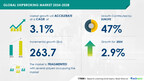
NEW YORK, Oct. 17, 2024 /PRNewswire/ — Report on how AI is redefining market landscape – The Global Shipbroking Market size is estimated to grow by USD 263.7 million from 2024-2028, according to Technavio. The market is estimated to grow at a CAGR of almost 3.1% during the forecast period. demand for key value addition in shipping process is driving market growth, with a trend towards implementation of advanced technologies. However, increased exposure to global macroeconomic factors poses a challenge – Key market players include AGORA SHIPBROKING Corp., Aries Asia, BGC Group Inc., Braemar Plc, BRS Group, Chowgule Brothers Pvt. Ltd., Clarkson Plc, E.A. Gibson Shipbrokers Ltd., Fearnleys AS, Howe Robinson Partners Pte Ltd., IFCHOR GALBRAITHS, Interocean Group, Lorentzen and Co., Maritime London Ltd., MB Shipbrokers KS, McQuilling Partners Inc., Seacore Shipbrokers Ltd., SHIPLINKS, Simpson Spence Young Ltd., and SPI Marine UK Ltd..
Key insights into market evolution with AI-powered analysis. Explore trends, segmentation, and growth drivers- View the snapshot of this report
Shipbroking Market Scope
Report Coverage
Details
Base year
2023
Historic period
2018 – 2022
Forecast period
2024-2028
Growth momentum & CAGR
Accelerate at a CAGR of 3.1%
Market growth 2024-2028
USD 263.7 million
Market structure
Fragmented
YoY growth 2022-2023 (%)
2.9
Regional analysis
Europe, APAC, North America, Middle East and Africa, and South America
Performing market contribution
Europe at 47%
Key countries
UK, Singapore, Norway, US, and China
Key companies profiled
AGORA SHIPBROKING Corp., Aries Asia, BGC Group Inc., Braemar Plc, BRS Group, Chowgule Brothers Pvt. Ltd., Clarkson Plc, E.A. Gibson Shipbrokers Ltd., Fearnleys AS, Howe Robinson Partners Pte Ltd., IFCHOR GALBRAITHS, Interocean Group, Lorentzen and Co., Maritime London Ltd., MB Shipbrokers KS, McQuilling Partners Inc., Seacore Shipbrokers Ltd., SHIPLINKS, Simpson Spence Young Ltd., and SPI Marine UK Ltd.
Market Driver
The maritime industry is witnessing significant advancements driven by technological innovations such as artificial intelligence, machine learning, blockchain, advanced analytics, Big Data, Internet of Things, virtual assistants, automated vehicles, and augmented reality. Modern ships are incorporating smart systems, including advanced sensor systems, drones, satellites, and other robotic devices, to become smarter and more connected. Shipping ports are automating processes and utilizing technology-driven solutions for optimization and efficiency. The use of an Automated Identification System (AIS) is a prime example of how technology is revolutionizing the industry. This system, which consists of a group of satellites tracking ships’ activities and using big data analytics for insights, offers granular-level information for process improvement and optimization. Another groundbreaking innovation is the implementation of blockchain technology, which is expected to bring significant efficiency to the shipbroking and shipping process. Contractual negotiations and documentation, which are traditionally time-consuming due to extensive due diligence, can now be accomplished in minutes with enhanced transparency and minimal human intervention. This development is expected to lead to reduced operating costs for shipbrokers and increased profits. In summary, the maritime industry is undergoing a digital transformation, with technological innovations such as AI, machine learning, blockchain, and Big Data Analytics driving process optimization, efficiency, and transparency. This trend is expected to continue, boosting the growth of the shipbroking market during the forecast period.
Shipbrokers play a crucial role in the maritime transport industry by connecting ship owners with traders looking to move goods. They facilitate legal agreements between parties, offering charting brokers’ services for vessel chartering. Value-added services include insurance, storage facilities, and inland transportation. Risks such as piracy, sea storms, and container damage are managed. Containers, tankers, dry bulk, and other vessel types are bought and sold through sales and purchase agreements. Valuations, recycling, offshore services, and newbuilding services are also provided. Specialized expertise in sectors like oil and gas, manufacturing, aerospace and defense, international trade, and seaborne transportation are key. Intermediaries coordinate freight rates, vessel supply, and cargo logistics, building strong relationships with clients to ensure successful transactions. Online platforms streamline transaction processing.
Request Sample of our comprehensive report now to stay ahead in the AI-driven market evolution!
Market Challenges
The global shipbroking market is significantly influenced by macroeconomic factors, making it susceptible to various risks and uncertainties that could negatively impact the shipping industry. The shipping sector faced significant challenges during the 2008 mortgage crisis, resulting in a decline in economic activity and a drop in profitability. More recently, the collapse of Hanjin, a major container line in 2016, further affected the industry. While the global economy is recovering, risks such as the Chinese economy’s rebalancing, Brexit, and US policy uncertainties continue to pose challenges. Brexit may result in trade barriers between the UK and EU, negatively impacting the entire shipping industry. Protectionism, shortening supply chains, production and trade localization, and the failure of regional trade agreements are also expected to negatively affect the global shipbroking market during the forecast period. The weak investment environment, downturn in trade, and low commodity price levels further compound these challenges.The shipbroking market faces various challenges in the contemporary business landscape. Containers, tankers, dry bulk, and other vessel types require efficient sales and purchase transactions. Valuations, recycling, and newbuilding services are crucial for owners and investors. Oil and gas, manufacturing, aerospace and defense, international trade, and seaborne transportation sectors rely on shipbrokers for logistics and commodities movement. Freight rates, vessel supply, and value-added services impact relationships with clients. Specialized expertise in cargo logistics and intermediaries’ roles are vital in managing freight luggage, vessels, and charterers’ needs. Sellers, logistics, commodities, and freight rates involve significant risks that require mitigation. Online platforms streamline transaction processing, but coordination, charting, and documentation services remain essential. Third-party agencies, blockchain, artificial intelligence, and machine learning offer marine business solutions. Bankers, investors, and charterers require expert advice in offshore projects, offshore services, and oil and gas sectors. Trained professionals handle risks, provide documentation services, and manage relationships with clients and stakeholders. In summary, the shipbroking market faces challenges in managing various vessel types, sectors, and services while ensuring efficient transactions, risk management, and specialized expertise.
Discover how AI is revolutionizing market trends- Get your access now!
Segment Overview
This shipbroking market report extensively covers market segmentation by
Application 1.1 Bulker1.2 Tanker1.3 OthersEnd-user 2.1 Oil and gas2.2 Manufacturing2.3 Aerospace and defense2.4 OthersGeography 3.1 Europe3.2 APAC3.3 North America3.4 Middle East and Africa3.5 South America
1.1 Bulker- The bulker segment’s growth is linked to the expansion of global economic activity and infrastructure development, driving demand for dry bulk seaborne trade. Shipbrokers play a vital role in this sector by acting as intermediaries between shipowners and charterers. They offer essential services like logistics coordination, market research, and negotiation. Shipbrokers’ expertise in freight rates, shipping routes, and market trends enables them to advise clients on optimal shipping strategies. In the bulker segment, where freight rates are influenced by supply and demand shifts, brokers negotiate favorable terms for both parties. They also manage shipping logistics, including scheduling, port preparations, and regulatory compliance, to ensure efficient delivery of commodities like coal, grain, and iron ore. The bulker segment’s growth positively impacts the global shipbroking market. Increased demand for dry bulk commodities necessitates efficient shipping solutions, leading to higher demand for shipbroking services. Shipowners may expand their fleets to meet demand, and brokers facilitate these expansions by connecting them with charterers and managing new contracts. A thriving bulker segment contributes to market stability, benefiting shipbrokers as increased trade volumes and predictable shipping operations enable more accurate forecasts and advice for clients. Consequently, these factors are expected to fuel the growth of the global shipbroking market during the forecast period.
Download a Sample of our comprehensive report today to discover how AI-driven innovations are reshaping competitive dynamics
Research Analysis
The shipbroking market plays a crucial role in facilitating the global maritime transport of goods through various value-added services. Shipbrokers act as intermediaries between ship owners and traders, negotiating charter agreements for the rental of vessels for seaborne transportation. Legal agreements are essential in these transactions, with charting brokers ensuring compliance with international maritime laws. Sea ports serve as crucial hubs for the loading and unloading of goods, with logistics companies providing inland transportation services to move cargo to and from these facilities. Insurance and storage facilities are also essential components of the supply chain, protecting against risks and ensuring the safekeeping of goods. International trade relies heavily on seaborne transportation, with commodities such as grains, oil, and metals frequently transported via vessels. Freight rates and vessel supply are key factors influencing the market, with investors closely monitoring trends to maximize returns. Value-added services offered by shipbrokers include freight forwarding, cargo tracking, and documentation services, enhancing the efficiency and reliability of the maritime transport system. Charterers and traders rely on these services to optimize their supply chains and meet the demands of their customers.
Market Research Overview
The shipbroking market is a dynamic and complex industry that facilitates the buying and selling of various types of vessels, including container vessels, tankers, and dry bulk carriers, among others. Shipbrokers act as intermediaries between ship owners and traders, coordinating legal agreements, charting brokers, and providing value-added services such as insurance, storage facilities, inland transportation, and risk management. Goods are transported via maritime transport to sea ports, where they are loaded onto vessels for seaborne transportation. Freight rates and vessel supply are key factors influencing the market, with specialized expertise in cargo logistics and commodities essential for successful transactions. Risks, such as piracy and sea storms, are managed through insurance and security measures. Online platforms and transaction processing systems streamline the buying and selling process, while newbuilding services and offshore projects require specialized expertise. The market serves clients in various industries, including oil and gas, manufacturing, aerospace and defense, international trade, and logistics transportation. Blockchain, artificial intelligence, and machine learning are increasingly being adopted to enhance marine business solutions and improve efficiency. Third-party agencies and trained professionals provide documentation services and support cross-border imports.
Table of Contents:
1 Executive Summary
2 Market Landscape
3 Market Sizing
4 Historic Market Size
5 Five Forces Analysis
6 Market Segmentation
ApplicationBulkerTankerOthersEnd-userOil And GasManufacturingAerospace And DefenseOthersGeographyEuropeAPACNorth AmericaMiddle East And AfricaSouth America
7 Customer Landscape
8 Geographic Landscape
9 Drivers, Challenges, and Trends
10 Company Landscape
11 Company Analysis
12 Appendix
About Technavio
Technavio is a leading global technology research and advisory company. Their research and analysis focuses on emerging market trends and provides actionable insights to help businesses identify market opportunities and develop effective strategies to optimize their market positions.
With over 500 specialized analysts, Technavio’s report library consists of more than 17,000 reports and counting, covering 800 technologies, spanning across 50 countries. Their client base consists of enterprises of all sizes, including more than 100 Fortune 500 companies. This growing client base relies on Technavio’s comprehensive coverage, extensive research, and actionable market insights to identify opportunities in existing and potential markets and assess their competitive positions within changing market scenarios.
Contacts
Technavio Research
Jesse Maida
Media & Marketing Executive
US: +1 844 364 1100
UK: +44 203 893 3200
Email: media@technavio.com
Website: www.technavio.com/
View original content to download multimedia:https://www.prnewswire.com/news-releases/shipbroking-market-to-grow-by-usd-263-7-million-from-2024-2028–driven-by-key-value-additions-in-shipping-and-ais-impact-on-market-trends—technavio-302278798.html
SOURCE Technavio










 Technology5 days ago

 Near Videos4 days ago
 Technology5 days ago
 Technology5 days ago
 Technology4 days ago
 Near Videos5 days ago
 Coin Market4 days ago