Connect with us

Technology

Tiger Pistol’s New Playbook Elevates QSR Loyalty Programs with Local Digital Advertising Strategies

Published

on

Empowering QSR Brands with Data-Driven Solutions, “The Next Step in QSR Loyalty Programs” Explores How Sharing Loyalty Data and Local Advertising Can Boost Engagement, Sales, and Retention

CLEVELAND, Oct. 22, 2024 /PRNewswire/ — Tiger Pistol, the most advanced local advertising platform, today announced the release of its latest resource for QSR marketers: “The Next Step in QSR Loyalty Programs: Driving Engagement, Sales, and Retention with Local Digital Advertising Strategies.” This comprehensive playbook offers insights and strategies to help quick-service restaurant (QSR) brands improve loyalty program participation through personalized local advertising powered by first-party loyalty data.

Access the Playbook: The Next Step in QSR Loyalty Programs

In a highly competitive restaurant industry, QSR loyalty programs have become essential for building customer relationships and driving repeat visits. However, many programs struggle to maintain engagement, leaving revenue on the table. Tiger Pistol’s latest playbook outlines how QSR brands can overcome these challenges by securely sharing loyalty data with franchisees, enabling them to create hyper-targeted campaigns that drive traffic, boost point redemptions, and increase app downloads.

“Our goal with this playbook is to help QSR brands unlock the full potential of their loyalty programs,” said Sarah Cucchiara, VP of Business Development at Tiger Pistol. “When franchisees have the tools and data they need, they can build personalized campaigns that create deeper connections with their customers. This approach not only improves engagement but also drives measurable business outcomes.”

Key highlights from the playbook include:

Loyalty Data Sharing: Learn how to securely share first-party loyalty data with franchisees, empowering them to create custom and lookalike audiences.Platform-Specific Strategies: Discover how to target local customers effectively across Facebook, Instagram, TikTok, and Amazon Ads, boosting foot traffic and program engagement.Driving App Downloads: Understand how local campaigns can promote loyalty app downloads, increasing digital interaction and enhancing customer relationships.Seamless Campaign Management: Explore how Tiger Pistol’s platform simplifies campaign creation, scaling, and reporting, allowing franchisees to focus on customer service.

The Next Step in QSR Loyalty Programs is available now for free download. QSR marketers, franchise leaders, and multi-location restaurant brands are invited to explore how data-sharing and local advertising can unlock new opportunities to engage customers and boost loyalty program performance.

Access the playbook by visiting Tiger Pistol’s website.

About Tiger Pistol

Tiger Pistol is a premier local advertising platform designed to streamline and simplify localized advertising through the power of automation. With a focus on three core pillars – scale, simplicity, and performance – Tiger Pistol helps franchises, multi-location brands, and marketing resellers efficiently manage and optimize digital advertising campaigns. The platform automates complex tasks, allowing users to effortlessly execute large-scale, locally relevant campaigns across top digital channels like Facebook, Instagram, TikTok, and Amazon. This automation not only enhances the ease of use but also drives superior advertising performance, making effective local marketing accessible to all levels of expertise. Learn more by visiting TigerPistol.com, or following on Twitter, Facebook, or LinkedIn.

CONTACT:   

Christina Morello

Director, Marketing and Communications

christina.morello@tigerpistol.com


View original content to download multimedia:https://www.prnewswire.com/news-releases/tiger-pistols-new-playbook-elevates-qsr-loyalty-programs-with-local-digital-advertising-strategies-302279617.html

SOURCE Tiger Pistol

Continue Reading

Technology

Asia Pacific accounts for a third of the world’s fraud networks as identity fraud grows more complex: Sumsub

Published

on

By

The Sumsub Identity Fraud Report finds that one in three fraud network connections in the region emerge only after users pass identity checks, pointing to verified accounts being sold or handed over to fraudsters after onboarding.

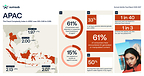
SINGAPORE, Nov. 18, 2026 /PRNewswire/ — Sumsub, the first AI-powered trust infrastructure, has released its Identity Fraud Report 2026-2027*. Now in its sixth edition, the report finds that Asia Pacific (APAC) accounted for a third (33%) of all fraud networks detected globally, more than any other region, and recorded close to a million confirmed fraud attempts, the highest of the six regions.

Fraud networks are coordinated groups of linked identities, accounts and devices run by organized fraudsters. Across APAC, around 1 in 40 approved people (2.4%) are linked to a detected fraud network, and around one-third of these links appear only after they have successfully passed identity verification. This suggests many legitimately verified accounts are later sold or handed over to fraudsters, often for use as money mules: accounts that receive and move stolen funds on a fraudster’s behalf.

Increasingly sophisticated tactics have led Sumsub to the creation of Sumsub’s new Fraud Complexity Index (FCI), which scores each confirmed case on the tooling, coordination and number of techniques behind it. This year, the report finds that the FCI rose from 2.1 to 2.2 globally.

Key APAC findings from the report include:

APAC hotspots for fraud networks: The Philippines recorded the largest number of networks in the region (17% of APAC networks), closely followed by India, while the largest single network was detected in Thailand, with 3,018 linked users.Fraud is becoming more complex: APAC’s FCI rose 14% to 2.09. Hong Kong’s FCI rose 7% to 1.97. APAC businesses also reported fraudster-operated AI agents (11%) more often than any other region.AI agents are adding new exposure: 61% of APAC businesses have detected or suspected fraud involving an AI agent, among the highest levels of any region. APAC businesses lead on limiting agent permissions and on suspending or revoking access, but these controls remain limited: only 15% can suspend or revoke an agent’s access, and 40% verify the human that authorizes one.Deepfake activity is spreading even where overall fraud is declining: Deepfakes rose sharply in Pakistan (+217%), the Philippines (+125%), India (+103%) and Hong Kong (+72%). In Indonesia, the overall fraud rate fell 64% while deepfakes increased 69%.APAC consumers are the most exposed to AI-generated content: 61% of APAC consumers have encountered AI-generated or manipulated content, the highest share of any region. Among those who experienced a fraud attempt, 44% said AI-generated content played a part.Singapore sees fewer, but more complex, attacks: Singapore’s fraud rate fell 36% year-on-year to 1.0%, while its FCI rose 9% to 2.13, above the APAC average. Deepfakes in Singapore fell 37%.Japan has the region’s highest and fastest-growing fraud rate: Japan’s fraud rate rose 219% year-on-year to 5.1%, the highest in APAC.Legitimate AI agents are being turned against businesses: Globally, among businesses that detected or suspected AI-agent fraud, 49% saw a legitimate agent manipulated by malicious instructions, and 30% saw an agent initiate a purchase, payment or transfer.

Verified accounts become building blocks for fraud networks

A single fraudulent account rarely tells the whole story. Fraud networks become visible through shared devices, contact details, payment instruments and document templates that an account-by-account review cannot show. Some of these links appear only after onboarding, as legitimately verified accounts are sold, compromised or otherwise repurposed. Passing KYC confirms an identity at a single point in time, but does not guarantee how an account will be used afterwards.

Businesses recognize the challenge, but few are equipped for it. 29% of APAC businesses say larger linked networks are making fraud harder to detect, the highest share of any region, yet only 25% use fraud network analysis.

In Southeast Asia, organized scam compounds have become highly mobile, relocating sites and reusing the same infrastructure when authorities intervene. Their human cost is significant: by April, Nepal reported that 612 of its citizens had been rescued from online scam centers across Southeast Asia and repatriated.

The impact is felt on both sides of the transaction. Among APAC businesses that experienced fraud, impersonation of a business, employee or supplier was the most commonly reported form of external fraud (42%), the highest of any region, followed by scam-induced payments (40%). Among APAC consumers, 79% experienced fraud in the past 12 months. Half of victims lost money, and 51% of those recovered none of it.

“A scam network is designed to look like a thousand ordinary people doing ordinary things. Every account is verified, and every document is real, because the person holding it was recruited, paid, or coerced into opening it, so nothing trips a wire on its own,” said Erin West, anti-scam advocate, former Deputy District Attorney and founder of Operation Shamrock, who has investigated scam compounds in Cambodia and Thailand. “Look past the person in front of you to the people behind them. The networks already cooperate beautifully with one another, and it’s time we caught up.”

Fraud grows more complex as it shifts across the region

While fraud rates fell in four of six regions globally, the FCI rose in all six. In APAC, it rose 14%, from 1.83 to 2.09.

Rather than rising everywhere at once, fraud is shifting between APAC markets and techniques. Japan’s fraud rate rose 219%, while Singapore’s fraud rate fell 36%, but its FCI rose 9%, above the regional average. In Hong Kong, fraud rate edged up 5% as deepfakes there rose 72%. APAC also leads all regions in the share of businesses saying deepfakes (31%) and synthetic identities (26%) are making fraud harder to detect while QR-code redirection (18%) and device or location manipulation (14%) were also reported more often than anywhere else.

The region also has strong foundations to respond. APAC leads every other region in digital identity wallet adoption: 50% of consumers have used a government digital identity wallet, and 65% say they would be comfortable using one. Banks and financial services remain the most trusted online category, with 74% of APAC consumers reporting high or full trust.

“Fraud in APAC isn’t rising everywhere at once. It is shifting between markets, techniques and stages of the customer lifecycle,” said Penny Chai, Vice President, APAC at Sumsub. “The region is home to some of the world’s most mature digital economies, alongside markets where digital services and organized scam operations are expanding quickly. Those markets are deeply connected, and fraud networks move easily between them. But APAC also has the tools to respond, from progressive regulation to world-leading digital identity adoption and high consumer trust in financial services. The task now is to use them together, so that trust doesn’t end at onboarding.”

Regulators and industry move towards collective action

Regulators across the region are shifting responsibility for scam payments and mule accounts towards the institutions that send, receive or facilitate them, and building new ways to share fraud intelligence. In Singapore, the Protection from Scams Act and the Scams (Countermeasures) and Other Matters Act 2026 give authorities new powers to protect people at risk of being scammed and to disrupt accounts and services linked to scams, while the National Scams List supports the exchange of information on suspicious scam accounts. Hong Kong has created a legally protected mechanism for banks to share information, and Thailand has embedded mule-account controls across banks, payment businesses and crypto operators.

The same collective approach is needed as AI agents take on more tasks. Launched in September, the Sumsub Agentic AI Council brings together cross-sector experts across APAC to develop practical guardrails for AI agents, including agent identity, delegated authority and accountability.

To explore the Sumsub Identity Fraud Report 2026-2027 in full, please download it here: http://sumsub.com/identity-fraud-report-2026/

About Sumsub

Sumsub is the first AI-powered trust infrastructure for compliance operations at scale. It connects identity and business verification, fraud prevention, transaction monitoring, and risk workflows, helping teams reduce manual work and enter new markets.

Trusted by over 4,000 clients across financial services, crypto, mobility, trading, marketplaces, education, and iGaming, including Bybit, Bitpanda, Wirex, Avis, Vodafone, Duolingo, and Kaizen Gaming.

*Methodology

The Sumsub Identity Fraud Report 2026-2027 analyzes more than 5.8 million fraud samples from Sumsub’s internal identity verification and user activity data, comparing 2025 and 2026 across multiple regions and industries. To ensure statistical reliability, only jurisdictions with more than 15,000 verification attempts during the reporting period were included. A network connection refers to a link between an applicant and a detected fraud network at any point in the applicant lifecycle, and is a risk signal rather than proof that the applicant is fraudulent.

The report also draws on Sumsub’s Fraud Exposure Survey 2026, conducted in August 2026 among more than 1,400 fraud and risk professionals and more than 1,500 end users across 21 markets, including Hong Kong, Indonesia, the Philippines, Singapore and Thailand in APAC.

View original content to download multimedia:https://www.prnewswire.com/apac/news-releases/asia-pacific-accounts-for-a-third-of-the-worlds-fraud-networks-as-identity-fraud-grows-more-complex-sumsub-302942447.html

SOURCE Sumsub

Continue Reading

Technology

Asia Pacific accounts for a third of the world’s fraud networks as identity fraud grows more complex: Sumsub

Published

on

By

The Sumsub Identity Fraud Report finds that one in three fraud network connections in the region emerge only after users pass identity checks, pointing to verified accounts being sold or handed over to fraudsters after onboarding.

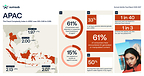
SINGAPORE, Nov. 18, 2026 /PRNewswire/ — Sumsub, the first AI-powered trust infrastructure, has released its Identity Fraud Report 2026-2027*. Now in its sixth edition, the report finds that Asia Pacific (APAC) accounted for a third (33%) of all fraud networks detected globally, more than any other region, and recorded close to a million confirmed fraud attempts, the highest of the six regions.

Fraud networks are coordinated groups of linked identities, accounts and devices run by organized fraudsters. Across APAC, around 1 in 40 approved people (2.4%) are linked to a detected fraud network, and around one-third of these links appear only after they have successfully passed identity verification. This suggests many legitimately verified accounts are later sold or handed over to fraudsters, often for use as money mules: accounts that receive and move stolen funds on a fraudster’s behalf.

Increasingly sophisticated tactics have led Sumsub to the creation of Sumsub’s new Fraud Complexity Index (FCI), which scores each confirmed case on the tooling, coordination and number of techniques behind it. This year, the report finds that the FCI rose from 2.1 to 2.2 globally.

Key APAC findings from the report include:

APAC hotspots for fraud networks: The Philippines recorded the largest number of networks in the region (17% of APAC networks), closely followed by India, while the largest single network was detected in Thailand, with 3,018 linked users.Fraud is becoming more complex: APAC’s FCI rose 14% to 2.09. Hong Kong’s FCI rose 7% to 1.97. APAC businesses also reported fraudster-operated AI agents (11%) more often than any other region.AI agents are adding new exposure: 61% of APAC businesses have detected or suspected fraud involving an AI agent, among the highest levels of any region. APAC businesses lead on limiting agent permissions and on suspending or revoking access, but these controls remain limited: only 15% can suspend or revoke an agent’s access, and 40% verify the human that authorizes one.Deepfake activity is spreading even where overall fraud is declining: Deepfakes rose sharply in Pakistan (+217%), the Philippines (+125%), India (+103%) and Hong Kong (+72%). In Indonesia, the overall fraud rate fell 64% while deepfakes increased 69%.APAC consumers are the most exposed to AI-generated content: 61% of APAC consumers have encountered AI-generated or manipulated content, the highest share of any region. Among those who experienced a fraud attempt, 44% said AI-generated content played a part.Singapore sees fewer, but more complex, attacks: Singapore’s fraud rate fell 36% year-on-year to 1.0%, while its FCI rose 9% to 2.13, above the APAC average. Deepfakes in Singapore fell 37%.Japan has the region’s highest and fastest-growing fraud rate: Japan’s fraud rate rose 219% year-on-year to 5.1%, the highest in APAC.Legitimate AI agents are being turned against businesses: Globally, among businesses that detected or suspected AI-agent fraud, 49% saw a legitimate agent manipulated by malicious instructions, and 30% saw an agent initiate a purchase, payment or transfer.

Verified accounts become building blocks for fraud networks

A single fraudulent account rarely tells the whole story. Fraud networks become visible through shared devices, contact details, payment instruments and document templates that an account-by-account review cannot show. Some of these links appear only after onboarding, as legitimately verified accounts are sold, compromised or otherwise repurposed. Passing KYC confirms an identity at a single point in time, but does not guarantee how an account will be used afterwards.

Businesses recognize the challenge, but few are equipped for it. 29% of APAC businesses say larger linked networks are making fraud harder to detect, the highest share of any region, yet only 25% use fraud network analysis.

In Southeast Asia, organized scam compounds have become highly mobile, relocating sites and reusing the same infrastructure when authorities intervene. Their human cost is significant: by April, Nepal reported that 612 of its citizens had been rescued from online scam centers across Southeast Asia and repatriated.

The impact is felt on both sides of the transaction. Among APAC businesses that experienced fraud, impersonation of a business, employee or supplier was the most commonly reported form of external fraud (42%), the highest of any region, followed by scam-induced payments (40%). Among APAC consumers, 79% experienced fraud in the past 12 months. Half of victims lost money, and 51% of those recovered none of it.

“A scam network is designed to look like a thousand ordinary people doing ordinary things. Every account is verified, and every document is real, because the person holding it was recruited, paid, or coerced into opening it, so nothing trips a wire on its own,” said Erin West, anti-scam advocate, former Deputy District Attorney and founder of Operation Shamrock, who has investigated scam compounds in Cambodia and Thailand. “Look past the person in front of you to the people behind them. The networks already cooperate beautifully with one another, and it’s time we caught up.”

Fraud grows more complex as it shifts across the region

While fraud rates fell in four of six regions globally, the FCI rose in all six. In APAC, it rose 14%, from 1.83 to 2.09.

Rather than rising everywhere at once, fraud is shifting between APAC markets and techniques. Japan’s fraud rate rose 219%, while Singapore’s fraud rate fell 36%, but its FCI rose 9%, above the regional average. In Hong Kong, fraud rate edged up 5% as deepfakes there rose 72%. APAC also leads all regions in the share of businesses saying deepfakes (31%) and synthetic identities (26%) are making fraud harder to detect while QR-code redirection (18%) and device or location manipulation (14%) were also reported more often than anywhere else.

The region also has strong foundations to respond. APAC leads every other region in digital identity wallet adoption: 50% of consumers have used a government digital identity wallet, and 65% say they would be comfortable using one. Banks and financial services remain the most trusted online category, with 74% of APAC consumers reporting high or full trust.

“Fraud in APAC isn’t rising everywhere at once. It is shifting between markets, techniques and stages of the customer lifecycle,” said Penny Chai, Vice President, APAC at Sumsub. “The region is home to some of the world’s most mature digital economies, alongside markets where digital services and organized scam operations are expanding quickly. Those markets are deeply connected, and fraud networks move easily between them. But APAC also has the tools to respond, from progressive regulation to world-leading digital identity adoption and high consumer trust in financial services. The task now is to use them together, so that trust doesn’t end at onboarding.”

Regulators and industry move towards collective action

Regulators across the region are shifting responsibility for scam payments and mule accounts towards the institutions that send, receive or facilitate them, and building new ways to share fraud intelligence. In Singapore, the Protection from Scams Act and the Scams (Countermeasures) and Other Matters Act 2026 give authorities new powers to protect people at risk of being scammed and to disrupt accounts and services linked to scams, while the National Scams List supports the exchange of information on suspicious scam accounts. Hong Kong has created a legally protected mechanism for banks to share information, and Thailand has embedded mule-account controls across banks, payment businesses and crypto operators.

The same collective approach is needed as AI agents take on more tasks. Launched in September, the Sumsub Agentic AI Council brings together cross-sector experts across APAC to develop practical guardrails for AI agents, including agent identity, delegated authority and accountability.

To explore the Sumsub Identity Fraud Report 2026-2027 in full, please download it here: http://sumsub.com/identity-fraud-report-2026/

About Sumsub

Sumsub is the first AI-powered trust infrastructure for compliance operations at scale. It connects identity and business verification, fraud prevention, transaction monitoring, and risk workflows, helping teams reduce manual work and enter new markets.

Trusted by over 4,000 clients across financial services, crypto, mobility, trading, marketplaces, education, and iGaming, including Bybit, Bitpanda, Wirex, Avis, Vodafone, Duolingo, and Kaizen Gaming.

*Methodology

The Sumsub Identity Fraud Report 2026-2027 analyzes more than 5.8 million fraud samples from Sumsub’s internal identity verification and user activity data, comparing 2025 and 2026 across multiple regions and industries. To ensure statistical reliability, only jurisdictions with more than 15,000 verification attempts during the reporting period were included. A network connection refers to a link between an applicant and a detected fraud network at any point in the applicant lifecycle, and is a risk signal rather than proof that the applicant is fraudulent.

The report also draws on Sumsub’s Fraud Exposure Survey 2026, conducted in August 2026 among more than 1,400 fraud and risk professionals and more than 1,500 end users across 21 markets, including Hong Kong, Indonesia, the Philippines, Singapore and Thailand in APAC.

View original content to download multimedia:https://www.prnewswire.com/apac/news-releases/asia-pacific-accounts-for-a-third-of-the-worlds-fraud-networks-as-identity-fraud-grows-more-complex-sumsub-302942447.html

SOURCE Sumsub

Continue Reading

Technology

Archbridge Capital Partners Appoints Mark Jones as Chief Executive Officer

Published

on

By

Former Wells Fargo Global Head of FX and Co-Head of Macro to lead the firm’s next phase of growth and international expansion

HONG KONG, Nov. 18, 2026 /PRNewswire/ — Archbridge Capital Partners (“Archbridge”), a Hong Kong-based alternative fixed income investment manager focused on private credit, today announced the appointment of Mark Jones as Chief Executive Officer and Managing Partner, effective immediately. The newly created role reflects the firm’s ambition to institutionalise its platform and expand internationally. Jones joins Anthony Leung, Chief Investment Officer, and Jenny Wong, Chief Operating Officer, in the firm’s senior leadership.

Established in 2020, Archbridge has focused on private credit since 2023, expanding its investment offerings during that period. The firm now invests predominantly in secured, short-dated private credit across Asia Pacific, with a focus on disciplined underwriting and regular income distributions, an approach that has resonated with family offices in the region.

Jones brings 28 years of global financial markets experience across London, Hong Kong and New York. He previously served as Global Head of Foreign Exchange and Global Co-Head of Macro at Wells Fargo, where he was a member of the bank’s Management Committee. Earlier, he was Head of Wells Fargo Securities Asia and a Managing Director at UBS, leading FICC Distribution across EMEA and Asia Pacific. Before joining Archbridge, he advised private credit funds and alternative asset managers through Kingswood Capital Solutions and was a Venture Partner at Volution, a UK venture capital firm investing in high-growth fintech and AI companies.

As CEO, Jones will lead Archbridge’s global strategy and international expansion, with a focus on building out the firm, strategic partnerships and technology-led innovation across the investment platform. He will work closely with the firm’s investment and operating leadership.

“Mark has led fixed income businesses at the highest level across three continents,” said Anthony Leung, Chief Investment Officer. “His appointment is consistent with our ambition to significantly broaden both our investor and borrower client base.”

“Archbridge is built on strong relationships and disciplined execution,” said Jenny Wong, Chief Operating Officer. “Mark will help us scale internationally while strengthening our institutional capabilities.”

“Over 25 years in global banking, I have seen the evolving financing needs of businesses across Asia Pacific and the growing opportunity for specialist credit managers,” said Mark Jones, Chief Executive Officer. “Archbridge is well positioned to meet that demand by combining rigorous credit underwriting with enduring investor relationships through an institutional-grade platform.”

ABOUT ARCHBRIDGE CAPITAL PARTNERS

Established in 2020, Archbridge Capital Partners is a Hong Kong-based alternative fixed income investment manager focused on private credit. The firm seeks attractive risk-adjusted returns through disciplined credit underwriting, active portfolio management and capital preservation. Archbridge Capital Partners Limited is licensed by the Hong Kong Securities and Futures Commission for Type 4 (Advising on Securities) and Type 9 (Asset Management) regulated activities. archbridgecap.com

View original content to download multimedia:https://www.prnewswire.com/apac/news-releases/archbridge-capital-partners-appoints-mark-jones-as-chief-executive-officer-302943079.html

SOURCE Archbridge Capital Partners

Continue Reading

Trending