Connect with us

Technology

Disrupting the Talent War: How HIRECLOUT is Changing Tech Recruitment

Published

on

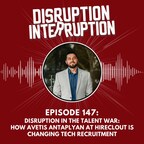
This week on Disruption Interruption, Avetis Antaplyan, Founder & CEO of HIRECLOUT, unpacks the shift from a candidate-driven to an employer-driven market, how it is transforming hiring strategies, and why companies must be selective in both hiring and withholding hires. Discover why economic downturns present unique hiring opportunities and how companies need to rethink leadership and organizational strategies to succeed in today’s world.

TAMPA BAY, Fla., Oct. 29, 2024 /PRNewswire-PRWeb/ — J.P. Morgan Research recently raised the probability of a U.S. recession by the end of 2024 to 35%, prompting companies to adopt more strategic, selective hiring standards. This week, Disruption Interruption podcast host Karla Jo Helms (KJ) sits down with Avetis Antaplyan, Founder & CEO of HIRECLOUT, also known as the “Scale & Retention Architect.” They discuss the shifting recruitment landscape and the new norm of hybrid work amidst an unofficial recession. “It was a candidate-driven market for more than 10 years. They decided where they went, they had multiple offers, and they could ask for whatever price tag,” Antaplyan notes. “Now, the tables have turned.”

“In a company-driven market, only top talent is being sought. ‘We’re setting expectations and only hiring the best,’ says Avetis Antaplyan, CEO of HIRECLOUT. ‘Economic downturns create unique hiring opportunities for companies willing to rethink their strategies and leadership.'”

The Shift from Candidate-Driven to Company-Driven Market
From 2010 to 2020, the hiring market was largely candidate-driven, with numerous job openings prompting companies to compete for talent by offering high pay, diverse options, and remote flexibility. Businesses grew rapidly and often overpaid to meet demand, creating a high-stakes environment led by candidates.
“What we’re seeing now is a company-driven market. The companies have decided we are only going to hire the best. We are going to set the expectations”, Antaplyan states.

A quiet recession has shifted control back to employers, especially in tech. Companies are no longer hiring en masse and remote roles are gradually declining as a new in-office norm of three to four days per week takes shape.

Missing Out on Superstars? Why Companies Are Failing to Attract Top Talent
Many companies remain hesitant to use consulting or executive search firms due to the high volume of applications they receive. However, Antaplyan explains that, among hundreds of applicants, only 2-3% are true top performers. The rest are typically “B Players”—productive and capable but not necessarily “Superstars.”

He emphasizes that A Players rarely show up in applicant pools; instead, they secure new opportunities through connections or direct outreach. “By the time companies sift through hundreds of applicants and complete lengthy hiring processes, top talent is often already off the market,” warns Antaplyan.

Surviving Economic Uncertainty: Lessons from Key Market Shifts
Over the past 17 years, Avetis Antaplyan has navigated three major market shifts that have redefined his approach to talent acquisition and company growth. Reflecting on the 2008–2009 recession, he notes that while his firm survived, the experience taught him the importance of being prepared for recovery, as they weren’t ready for the surge in demand that followed. With COVID-19, he adopted a different strategy, taking significant risks to anticipate the rebound. This proactive approach fueled substantial growth for HIRECLOUT and its clients, earning them two appearances on the Inc. 5000 Fastest Growing Companies list.

“We took a ton of risks in 2021, and for six months, we got our butts kicked because of it, but when the market turned, we were ready to capitalize,” he shares. “We shrank in the number of people, but we grew in size, knowledge, and the level of talent we could bring on. We just got smarter and smarter.”

Links
Disruption in the Talent War: How Avetis Antaplyan at HIRECLOUT is Changing Tech Recruitment https://omny.fm/shows/disruption-interruption/disruption-interruption-1
LinkedIn: https://www.linkedin.com/in/hirefasthireright/
X: https://x.com/hireclout
Company Website: https://hireclout.com/
Company LinkedIn: https://www.linkedin.com/company/hireclout/
Disruption Interruption is the podcast where you will hear from today’s biggest Industry Disruptors. Learn what motivated them to bring about innovation and how they overcame opposition to adoption.
Disruption Interruption can be listened to in Apple’s App Store and Spotify.

About Disruption InterruptionTM
Disruption is happening on an unprecedented scale, impacting all manner of industries— MedTech, Finance, IT, eCommerce, shipping, logistics, and more—and COVID has moved their timelines up a full decade or more. But WHO are these disruptors and when did they say, “THAT’S IT! I’VE HAD IT!”? Time to Disrupt and Interrupt with host Karla Jo “KJ” Helms, veteran communications disruptor. KJ interviews badasses who are disrupting their industries and altering economic networks that have become antiquated with an establishment resistant to progress. She delves into uncovering secrets from industry rebels and quiet revolutionaries that uncover common traits—and not-so-common—that are changing our economic markets… and lives. Visit the world’s key pioneers that persist to success, despite arrows in their backs at http://www.disruption-interruption.com.

About Avetis Antaplyan
Avetis Antaplyan is the Founder and CEO of HIRECLOUT, a two-time Inc. 5000 Fastest Growing company and a leading tech recruiting and consulting firm focused on empowering people and organizations through results-driven relationships. Known to clients as the “Scale & Retention Architect”, Avetis has helped over 250 tech companies scale. He’s a recognized CEO, speaker, advisor, investor, family man, and go-giver. HIRECLOUT provides top-tier tech and go-to-market recruiting and consulting services, supporting the growth of the world’s best companies. Avetis also hosts The Tech Leader’s Playbook podcast and contributes to Inc., Entrepreneur, and the Forbes Technology Council.

About Karla Jo Helms
Karla Jo Helms is the Chief Evangelist and Anti-PR® Strategist for JOTO PR Disruptors™. Karla Jo learned firsthand how unforgiving business can be when millions of dollars are on the line — and how the control of public opinion often determines whether one company is happily chosen, or another is brutally rejected. Being an alumnus of crisis management, Karla Jo has worked with litigation attorneys, private investigators, and the media to help restore companies of goodwill into the good graces of public opinion — Karla Jo operates on the ethic of getting it right the first time, not relying on second chances and doing what it takes to excel. Helms speaks globally on public relations, how the PR industry itself has lost its way, and how, in the right hands, corporations can harness the power of Anti-PR to drive markets and impact market perception.

References
1.    Kasman, Bruce. “What Is the Probability of a Recession? | J.P. Morgan Research.” Jpmorgan.com, J.P. Morgan, 15 Aug. 2024, http://www.jpmorgan.com/insights/global-research/economy/recession-probability.

Media Inquiries:
Karla Jo Helms
JOTO PR™
727-777-4629

Media Contact

Karla Jo Helms, JOTO PR™, 727-777-4629, khelms@jotopr.com, jotopr.com

View original content to download multimedia:https://www.prweb.com/releases/disrupting-the-talent-war-how-hireclout-is-changing-tech-recruitment-302289686.html

SOURCE Disruption InterruptionTM

Continue Reading
Click to comment

Leave a Reply

Your email address will not be published. Required fields are marked *

Technology

Chef Robotics Physical AI Models Can Now Automate Baked Goods Packing

Published

on

By

SAN FRANCISCO, April 29, 2026 /PRNewswire/ — Chef Robotics, a leader in physical AI for the food industry, today announced that Chef robots can now automate tray assembly for baked goods packing. The application places baked products, such as burger buns, chocolate chip cookies, biscotti, butter cookies, biscuits, fortune cookies, granola bars, rusks, and shortbreads into trays and packaging containers before sealing.

Watch Chef robots in action.

Baked goods packing has historically been difficult to automate for high-mix production. Each item behaves differently on the production line—a granola bar compresses under the wrong grip, while a biscotti or rusk can crack if placed at the wrong angle. Surface textures range from glazed and smooth to crumbly and irregular, and strict presentation requirements leave little room for error. This variability has made it challenging for automation systems to reliably handle baked goods at production speeds, leaving food manufacturers dependent on manual labor and traditional bakery equipment.

To address this, Chef built its baked goods packing application on its existing piece-picking capability, which uses Chef’s AI-powered computer vision and physical AI models trained across diverse real-world production environments. This allows Chef robots to assess each item’s position, shape, and orientation in real time and determine how to pick the items from the pan and place them quickly and precisely without damaging them.

The baked goods packing application supports four distinct placement capabilities.

First, Chef’s vision system detects the angle at which each item sits in the pan and reorients it after picking, placing it on the tray at the exact angle required, regardless of its original position, enabling retail-ready presentation for SKUs that require precise angular placement.

Second, Chef robots can place multiple baked goods into the same packaging container in a single automated pass, completing full tray assembly without manual intervention.

Third, for packaging containers with multiple small compartments, Chef robots can precisely place items into each designated section, including multiple items in the same compartment, using Chef’s AI vision model to detect compartment positions and orientations in real time.

Fourth, Chef’s vision system identifies the exact center of each tray and places every item at a predefined offset from that center, ensuring a uniform, consistent arrangement across every pack regardless of how trays arrive on the conveyor.

For food manufacturers evaluating bakery systems and baked goods packaging automation, the application offers higher throughput, reduced labor dependency, and consistent presentation across shifts. The capability runs on Chef’s existing robotic hardware and software, allowing manufacturers to deploy it without requiring any changes to their production lines.

Chef’s baked goods packing application is available in the U.S., Canada, Germany, and the UK and is included as part of Chef’s robotics-as-a-service (RaaS) pricing model.

About Chef Robotics
Chef is the first company to have commercialized a scalable AI-driven food robotics solution. With over 104 million servings made in production, Chef leverages ChefOS, an AI platform for food manipulation, to offer a Robotics-as-a-Service solution that helps industry-leading food companies increase production volume and meet demand. Headquartered in San Francisco, CA, Chef aims to empower humans to do what humans do best by accelerating the advent of intelligent machines. Visit https://chefrobotics.ai to learn more.

View original content:https://www.prnewswire.com/news-releases/chef-robotics-physical-ai-models-can-now-automate-baked-goods-packing-302756923.html

SOURCE Chef Robotics

Continue Reading

Technology

Chef Robotics Physical AI Models Can Now Automate Baked Goods Packing

Published

on

By

SAN FRANCISCO, April 29, 2026 /PRNewswire/ — Chef Robotics, a leader in physical AI for the food industry, today announced that Chef robots can now automate tray assembly for baked goods packing. The application places baked products, such as burger buns, chocolate chip cookies, biscotti, butter cookies, biscuits, fortune cookies, granola bars, rusks, and shortbreads into trays and packaging containers before sealing.

Watch Chef robots in action.

Baked goods packing has historically been difficult to automate for high-mix production. Each item behaves differently on the production line—a granola bar compresses under the wrong grip, while a biscotti or rusk can crack if placed at the wrong angle. Surface textures range from glazed and smooth to crumbly and irregular, and strict presentation requirements leave little room for error. This variability has made it challenging for automation systems to reliably handle baked goods at production speeds, leaving food manufacturers dependent on manual labor and traditional bakery equipment.

To address this, Chef built its baked goods packing application on its existing piece-picking capability, which uses Chef’s AI-powered computer vision and physical AI models trained across diverse real-world production environments. This allows Chef robots to assess each item’s position, shape, and orientation in real time and determine how to pick the items from the pan and place them quickly and precisely without damaging them.

The baked goods packing application supports four distinct placement capabilities.

First, Chef’s vision system detects the angle at which each item sits in the pan and reorients it after picking, placing it on the tray at the exact angle required, regardless of its original position, enabling retail-ready presentation for SKUs that require precise angular placement.

Second, Chef robots can place multiple baked goods into the same packaging container in a single automated pass, completing full tray assembly without manual intervention.

Third, for packaging containers with multiple small compartments, Chef robots can precisely place items into each designated section, including multiple items in the same compartment, using Chef’s AI vision model to detect compartment positions and orientations in real time.

Fourth, Chef’s vision system identifies the exact center of each tray and places every item at a predefined offset from that center, ensuring a uniform, consistent arrangement across every pack regardless of how trays arrive on the conveyor.

For food manufacturers evaluating bakery systems and baked goods packaging automation, the application offers higher throughput, reduced labor dependency, and consistent presentation across shifts. The capability runs on Chef’s existing robotic hardware and software, allowing manufacturers to deploy it without requiring any changes to their production lines.

Chef’s baked goods packing application is available in the U.S., Canada, Germany, and the UK and is included as part of Chef’s robotics-as-a-service (RaaS) pricing model.

About Chef Robotics
Chef is the first company to have commercialized a scalable AI-driven food robotics solution. With over 104 million servings made in production, Chef leverages ChefOS, an AI platform for food manipulation, to offer a Robotics-as-a-Service solution that helps industry-leading food companies increase production volume and meet demand. Headquartered in San Francisco, CA, Chef aims to empower humans to do what humans do best by accelerating the advent of intelligent machines. Visit https://chefrobotics.ai to learn more.

View original content:https://www.prnewswire.com/news-releases/chef-robotics-physical-ai-models-can-now-automate-baked-goods-packing-302756923.html

SOURCE Chef Robotics

Continue Reading

Technology

Air Products to Expand Industrial Gas Supply for Samsung Electronics’ Next-Generation Semiconductor Fab in South Korea

Published

on

By

New investment underscores the company’s long-term commitment to Korea and its leading role in the global semiconductor industry 

LEHIGH VALLEY, Pa., April 29, 2026 /PRNewswire/ — Air Products (NYSE:APD), a world-leading industrial gases company and serving Samsung globally, today announced it has been selected by Samsung to supply industrial gases for its new advanced semiconductor fab in Pyeongtaek, Gyeonggi Province, South Korea.

Under the agreement, Air Products will build, own and operate multiple state-of-the-art production facilities and a bulk specialty gas supply system to supply nitrogen, oxygen, argon, and hydrogen for Samsung’s new semiconductor fab. The new facilities are expected to come onstream in multiple phases from 2028 through 2030.

Air Products has a long track record of executing multiple phase expansions in Pyeongtaek to support Samsung’s growing manufacturing needs. This latest project represents Air Products’ largest investment to date in the semiconductor industry and will establish Pyeongtaek as the company’s single largest operations site globally supporting the electronics industry. 

“Air Products is honored to be selected once again by Samsung and to have their continued confidence as a trusted partner supporting their strategic growth plans,” said SR Kim, President, Air Products Korea. “This significant investment reinforces Air Products’ role as a leading global supplier to the semiconductor industry and underscores our long-standing commitment to supporting our strategic customers with safety, reliability, efficiency and excellent service.”

Air Products has served the global electronics industry for more than 40 years, supplying industrial gases safely and reliably to many of the world’s leading technology companies. The company has operated in Korea for more than 50 years and has established a strong position in electronics and manufacturing sectors.

About Air Products

Air Products (NYSE: APD) is a world-leading industrial gases company in operation for over 85 years focused on serving energy, environmental, and emerging markets and generating a cleaner future. The Company supplies essential industrial gases, related equipment and applications expertise to customers in dozens of industries, including refining, chemicals, metals, electronics, manufacturing, medical and food. As the leading global supplier of hydrogen, Air Products also develops, engineers, builds, owns and operates some of the world’s largest clean hydrogen projects, supporting the transition to low- and zero-carbon energy in the industrial and heavy-duty transportation sectors. Through its sale of equipment businesses, the Company also provides turbomachinery, membrane systems and cryogenic containers globally.

Air Products had fiscal 2025 sales of $12 billion from operations in approximately 50 countries. For more information, visit airproducts.com or follow us on LinkedInXFacebook or Instagram.

This release contains “forward-looking statements” within the safe harbor provisions of the Private Securities Litigation Reform Act of 1995. These forward-looking statements are based on management’s expectations and assumptions as of the date of this release and are not guarantees of future performance. While forward-looking statements are made in good faith and based on assumptions, expectations and projections that management believes are reasonable based on currently available information, actual performance and financial results may differ materially from projections and estimates expressed in the forward-looking statements because of many factors, including the risk factors described in our Annual Report on Form 10-K for the fiscal year ended September 30, 2025 and other factors disclosed in our filings with the Securities and Exchange Commission. Except as required by law, we disclaim any obligation or undertaking to update or revise any forward-looking statements contained herein to reflect any change in the assumptions, beliefs or expectations or any change in events, conditions or circumstances upon which any such forward-looking statements are based.

View original content to download multimedia:https://www.prnewswire.com/news-releases/air-products-to-expand-industrial-gas-supply-for-samsung-electronics-next-generation-semiconductor-fab-in-south-korea-302757497.html

SOURCE Air Products

Continue Reading

Trending