Connect with us

Technology

Non-Life Insurance Market in Iran to Grow by USD 1.61 Billion from 2024-2028, Driven by Rising Insurance Demand and AI-Redefined Market Landscape – Technavio

Published

on

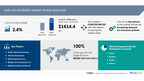
NEW YORK, Nov. 6, 2024 /PRNewswire/ — Report with market evolution powered by AI – The non life insurance market in iran size is estimated to grow by USD 1.61 billion from 2024-2028, according to Technavio. The market is estimated to grow at a CAGR of 2.4% during the forecast period. Increasing demand for insurance policies is driving market growth, with a trend towards emergence of digital marketing platforms. However, data privacy and security concerns in insurance technology poses a challenge.Key market players include Arab Insurance Group, Arman Insurance, Asia Insurance Co., Bimeh Iran Insurance Co., Hekmat Saba Insurance, Mellat Insurance Co., Omid Insurance Co., Parsian Insurance, Pasargad Insurance Co., Razi Insurance Co., Saman Insurance, Sarmad Insurance Co., Taavon Insurance Co., and Tejarat Insurance Co..

AI-Powered Market Evolution Insights. Our comprehensive market report ready with the latest trends, growth opportunities, and strategic analysis- View Free Sample Report PDF

Forecast period

2024-2028

Base Year

2023

Historic Data

2018 – 2022

Segment Covered

Distribution Channel (Direct, Brokers, Banks, and Others), Product (Health insurance, Motor insurance, Fire insurance, Marine insurance, and Others), and Geography (Middle East and Africa)

Region Covered

Iran

Key companies profiled

Arab Insurance Group, Arman Insurance, Asia Insurance Co., Bimeh Iran Insurance Co., Hekmat Saba Insurance, Mellat Insurance Co., Omid Insurance Co., Parsian Insurance, Pasargad Insurance Co., Razi Insurance Co., Saman Insurance, Sarmad Insurance Co., Taavon Insurance Co., and Tejarat Insurance Co.

Key Market Trends Fueling Growth

The non-life insurance market is experiencing significant growth due to the increasing use of digital marketing platforms, particularly social media. With over 56% of the global population having Internet access and the number expected to rise, insurance firms are leveraging social media to expand their market reach and increase awareness of their product offerings. Social media provides several benefits, including easy access to product information, quick customer response, high competitive advantage, easy interaction with customers, and enhanced relationships with social media users. However, in markets with government-sponsored Internet censorship, such as Iran, local ad platforms can serve as alternatives for insurance brokerage firms to engage with customers and address insurance queries, collect feedback, and provide policy updates. These factors are expected to drive the growth of the non-life insurance market during the forecast period. 

The Non-Life Insurance market is experiencing significant trends shaping its future. Mobile apps and online platforms are transforming how customers buy and manage their insurance policies. The aging population demands retirement products and solutions for longevity risk. Cybersecurity is crucial in the digital age, with cyber insurance gaining popularity. Natural disasters necessitate parametric insurance for swift payouts. Financial inclusion through digital banking and insurance literacy campaigns expand market reach. Medical emergencies, property damage, and casualty incidents require comprehensive coverage. Legal responsibilities dictate policy length, with permanent and term life policies catering to various needs. Motor insurance addresses cyber risk, and insurance technology enhances damage coverage for theft and burglary. Co-passengers’ safety, financial security, and customer satisfaction are key. Insurance penetration and premium growth depend on financial literacy and personalized services. Trust-based relationships and educational campaigns foster transparency and combat insurance fraud.

Insights on how AI is driving innovation, efficiency, and market growth- Request Sample!

Market Challenges

Financial organizations face significant barriers in adopting insurance technology solutions due to data privacy and security risks. Big Data and Artificial Intelligence (AI) offer advanced capabilities to track, retrieve, and analyze data from connected servers. However, these technologies also bring potential vulnerabilities. IT infrastructure, often built on open-source codes, can contain glitches and flaws. Cloud-based data storage systems, which are multi-tenant and based on open architecture, pose additional risks. Hackers can easily access these systems and exploit vulnerabilities, raising concerns among organizations. As a result, the adoption of insurance technology may be limited during the forecast period. Organizations must prioritize data security measures to mitigate these risks and unlock the full potential of insurance technology.Non-life insurance, also known as general insurance, covers financial loss due to various risks such as motor, burglary, or theft. Unlike life insurance, it doesn’t provide coverage for death but rather for damages and financial losses. Legal responsibilities, like motor insurance, have mandatory policy lengths. Permanent policies offer long-term coverage, while term life policies are for specific periods. Coverage includes damage, theft, and co-passengers. Financial security is crucial, but insurance penetration remains low due to legal complexities, premium growth, and financial literacy. Challenges include insurance fraud, cyber risk, and consumer protection. Technology, like insurance tech, cybersecurity, data analytics, machine learning, and blockchain, is transforming the industry. Personalized services, trust-based relationships, and educational campaigns are essential for customer satisfaction. Health and travel insurance are popular customer-centric products. Underwriting processes must balance risk and reward, and digital transformation continues to shape the industry.

Insights into how AI is reshaping industries and driving growth- Download a Sample Report

Segment Overview

This non life insurance market in iran report extensively covers market segmentation by

Distribution Channel1.1 Direct1.2 Brokers1.3 Banks1.4 OthersProduct2.1 Health insurance2.2 Motor insurance2.3 Fire insurance2.4 Marine insurance2.5 OthersGeography3.1 Middle East and Africa

1.1 Direct- Insurance firms historically relied on middlemen, such as agents and brokers, to sell their non-life insurance products. These intermediaries helped educate the public about insurance and operated on commission. However, with the rise of digital transformation and increasing internet usage, insurance companies have shifted their marketing strategies. According to The World Bank Group, internet usage increased from 45.33% in 2015 to 84.1% in 2020. Insurance companies now sell their products online through websites, social media, and digital platforms. This shift from a push product to a pull product is primarily due to the focus on digital channels. The COVID-19 pandemic further accelerated this trend, with lockdowns forcing insurers to sell directly to consumers, increasing sales and ensuring survival. These factors are expected to fuel the growth of the non-life insurance market during the forecast period.

Download complimentary Sample Report to gain insights into AI’s impact on market dynamics, emerging trends, and future opportunities- including forecast (2024-2028) and historic data (2018 – 2022)

Research Analysis

Non-life insurance, also known as general insurance, provides coverage for financial loss due to various risks such as property damage, medical emergencies, and liability claims. With increasing life expectancy, financial planning has become crucial, and non-life insurance plays a vital role in securing financial security. Underwriting processes ensure the assessment of risks before issuing policies, which may vary in length from permanent to term. Coverage for customer-centric products includes property insurance, casualty insurance, and travel insurance. Cybersecurity threats pose new challenges, necessitating specialized policies. Life expectancy influences the design of insurance policies, with pensioners requiring long-term coverage. Legal responsibilities and financial literacy are essential for consumers, who must understand policy terms and insurance penetration rates. Premium growth in the non-life insurance sector is influenced by factors like inflation, economic conditions, and demographic changes. Insurance fraud is a significant concern, and consumer protection measures are essential. Digital transformation is revolutionizing the industry, enabling easier access to insurance products and improved customer experience.

Market Research Overview

Non-life insurance, also known as general insurance, provides coverage for financial loss due to various risks excluding the risk of death. With an aging population and increasing life expectancy, non-life insurance becomes essential for financial planning. Underwriting processes ensure the risk assessment and pricing of policies. Customer-centric products include health, travel, and retirement plans. Cybersecurity threats, natural disasters, and parametric insurance are significant concerns. Data analytics, artificial intelligence, and blockchain technologies are transforming the industry. Health insurance covers medical emergencies, while travel insurance protects against trip cancellations and baggage loss. Consumer protection, digital transformation, and financial inclusion are crucial. Cyber insurance shields against cyber risks, and insurance technology streamlines claims processing. Policy length, coverage, and financial loss vary between permanent and term life policies, motor insurance, and casualty insurance. Legal responsibilities and policy length impact customer satisfaction, trust-based relationships, and financial literacy. Insurance penetration and premium growth depend on educational campaigns and personalized services. Digital banking and online platforms offer convenience, while financial literacy combats insurance fraud.

Table of Contents:

1 Executive Summary
2 Market Landscape
3 Market Sizing
4 Historic Market Size
5 Five Forces Analysis
6 Market Segmentation

Distribution ChannelDirectBrokersBanksOthersProductHealth InsuranceMotor InsuranceFire InsuranceMarine InsuranceOthersGeographyMiddle East And Africa

7 Customer Landscape
8 Geographic Landscape
9 Drivers, Challenges, and Trends
10 Company Landscape
11 Company Analysis
12 Appendix

About Technavio

Technavio is a leading global technology research and advisory company. Their research and analysis focuses on emerging market trends and provides actionable insights to help businesses identify market opportunities and develop effective strategies to optimize their market positions.

With over 500 specialized analysts, Technavio’s report library consists of more than 17,000 reports and counting, covering 800 technologies, spanning across 50 countries. Their client base consists of enterprises of all sizes, including more than 100 Fortune 500 companies. This growing client base relies on Technavio’s comprehensive coverage, extensive research, and actionable market insights to identify opportunities in existing and potential markets and assess their competitive positions within changing market scenarios.

Contacts

Technavio Research
Jesse Maida
Media & Marketing Executive
US: +1 844 364 1100
UK: +44 203 893 3200
Email: media@technavio.com
Website: www.technavio.com/

View original content to download multimedia:https://www.prnewswire.com/news-releases/non-life-insurance-market-in-iran-to-grow-by-usd-1-61-billion-from-2024-2028–driven-by-rising-insurance-demand-and-ai-redefined-market-landscape—technavio-302296544.html

SOURCE Technavio

Continue Reading
Click to comment

Leave a Reply

Your email address will not be published. Required fields are marked *

Technology

BinBase Launches 2026 BIN Database Featuring 6-11 Digit Waterfall Lookup for High-Precision Payment Routing

Published

on

By

BinBase introduces its upgraded 2026 BIN Database, offering 3.2M+ card ranges, 29 granular data attributes, and extended 8-11 digit accuracy to eliminate false-positives and optimize routing for global fintechs.

MIAMI, July 21, 2026 /PRNewswire-PRWeb/ — BinBase, a provider of payment intelligence and card issuing data, has announced the official release of its updated 2026 BIN Database. Engineered for payment gateways, acquiring banks, fraud prevention platforms, and e-commerce platforms, the updated dataset solves critical routing inaccuracies caused by the industry-wide shift from legacy 6-digit BINs to extended 8-to-11-digit card ranges.

Relying solely on 6-digit BINs in 2026 means misclassifying card products and losing money on interchange fees. Our 2026 release provides the surgical precision developers need for cost-effective payment routing.

Since ISO/IEC 7812 expanded the standard Bank Identification Number (BIN) length to 8 digits, traditional 6-digit lookup tables have struggled to correctly identify modern card profiles. This leads to false positives, misidentified interchange fees, and failed transactions. BinBase addresses this challenge by introducing a multi-tiered database structure supporting up to 11-digit precision, alongside a recommended “Waterfall Lookup Algorithm.”

To ensure 100% routing and verification accuracy, the Waterfall method executes a descending search sequence: checking 11-digit BIN ranges down through 10, 9, 8, 7, and 6 digits until an exact match is resolved.

Key technical specifications of the 2026 BinBase release include:

Over 3.2 Million Card Ranges: Full global coverage including Visa, Mastercard, Amex, Discover, UnionPay, JCB, and regional networks.Extended Precision: Over 88% of the dataset consists of high-precision ranges (8–11 digits) to accurately isolate sub-brands, currencies, and card tiers.29 Granular Attributes: Beyond core issuer data, the database features advanced parameters including Durbin Regulation status, US Debit/ATM network routing (STAR, NYCE), Fast Funds (Visa Direct / Mastercard MoneySend indicators), commercial Level 2/Level 3 data, and digital wallet token ranges (Apple Pay / Google Pay).

“Modern payment processing requires surgical precision,” said a spokesperson for Damiko Inc. “Relying solely on 6-digit BINs in 2026 means misclassifying card products and losing money on interchange fees. Our 2026 release provides the underlying intelligence developers need to build resilient, cost-effective payment infrastructure.”

Developers and payment teams can evaluate the full 29-field database schema, review integration examples, and download a free 2026 sample dataset on the official GitHub repository.

To learn more about full commercial licensing options, instant CSV downloads, and custom API delivery, visit BinBase.

About Damiko Inc

Damiko Inc is a US-based fintech data provider specializing in card issuer analytics, payment routing data, and global BIN database solutions. Operating through its flagship product, BinBase.com, the company supplies high-precision transaction intelligence to help merchants and payment facilitators worldwide optimize approval rates and mitigate fraud.

Media Contact

Fedor Lavrikoff, BinBase, 1 +17866133333, sales@binbase.com, htttps://www.binbase.com 

View original content:https://www.prweb.com/releases/binbase-launches-2026-bin-database-featuring-6-11-digit-waterfall-lookup-for-high-precision-payment-routing-302829291.html

SOURCE BinBase

Continue Reading

Technology

Redington Limited and AutomationEdge Announce Strategic Partnership to Accelerate Enterprise Automation and Agentic AI Adoption

Published

on

By

MUMBAI, India, July 22, 2026 /PRNewswire/ — Redington, a leading technology aggregator and innovation catalyst, and AutomationEdge, a leading Agentic Process Automation platform for global enterprises, have announced a strategic partnership to accelerate the adoption of enterprise automation and Agentic AI. The collaboration brings together Redington’s extensive distribution ecosystem and partner network with AutomationEdge’s enterprise-grade Agentic Process Automation platform to enable faster, scalable, and outcome-driven digital transformation for organizations.

As a part of the partnership, AutomationEdge’s portfolio of AI Agents and automation solutions is now available through the Redington AI Exchange Marketplace, enabling partners and customers to easily discover, evaluate, and deploy enterprise-ready AI solutions. This availability significantly reduces the time required to adopt AI-driven automation and provides organizations with access to proven use cases that can deliver measurable business outcomes.

The partnership is focused on delivering solution-led automation offerings that simplify adoption for enterprises and channel partners. By combining Redington’s go-to-market reach with AutomationEdge’s 10x automation capabilities, the two organizations aim to help businesses move from fragmented automation initiatives to enterprise-wide orchestration—driving efficiency, agility, and operational excellence.

Through this collaboration, both companies will jointly promote pre-built automation and AI Agent solutions across key business functions, including banking operations, insurance processes, IT / HR operations, customer service, and finance functions. These solutions include ready-to-deploy workflows, AI Agents, demonstration environments, and implementation frameworks designed to accelerate deployment and reduce complexity.

The partnership will also include joint go-to-market initiatives such as partner enablement programs, co-branded workshops, solution showcases, and proof-of-concept (PoC) engagements. These initiatives are designed to equip Redington partners with the knowledge, tools, and support needed to successfully position, sell, and implement AI-powered automation solutions for enterprise and mid-market customers.

Sayantan Dev, Global Head, Software Solutions Group, Redington, said, “The next phase of AI adoption will be defined by execution. Through the Redington AI Exchange Marketplace, we are bringing together the technologies and ecosystem needed to help partners deliver real business outcomes at scale. AutomationEdge’s Agentic AI and automation capabilities strengthen our ability to enable customers to accelerate AI adoption with greater speed, governance, and confidence.”

Prasad Likhite, Chief Sales Officer of AutomationEdge, said, “We are delighted to strengthen our partnership with Redington and accelerate the adoption of next-generation enterprise automation and Agentic AI solutions across the market. The availability of AutomationEdge AI Agents through the Redington AI Exchange Marketplace marks an important milestone in democratizing AI-led transformation, enabling enterprises to rapidly scale intelligent automation initiatives with speed, agility, and measurable business impact. At the same time, it creates significant opportunities for partners to drive innovation, unlock new revenue streams, and deliver greater value to their customers.”

The collaboration also emphasizes localized support, implementation expertise, and customer success services, ensuring that organizations can seamlessly deploy, manage, and scale automation initiatives. By leveraging Redington’s strong partner ecosystem and AutomationEdge’s deep expertise in automation and Agentic AI, the partnership is well-positioned to address the evolving needs of modern enterprises.

As organizations increasingly prioritize productivity, operational efficiency, and AI-led transformation, this partnership marks a significant step toward making enterprise automation and Agentic AI more accessible, scalable, and impactful across industries.

 About Redington

Redington Limited (NSE: REDINGTON) (BSE: 532805), a leading technology solutions provider, empowers businesses in their digital transformation journeys. Guided by its brand narrative “Unlock Next”, Redington goes beyond distribution to remove barriers, accelerate digital adoption, and unlock access, growth, trust, efficiency, and impact—helping businesses, communities, and societies embrace what’s next in technology

About AutomationEdge

AutomationEdge is a leading Agentic Process Automation platform for global enterprises. Its platform enables organizations to automate complex business processes, deploy AI Agents at scale, improve operational efficiency, and accelerate digital transformation initiatives across industries.

Media Contact:
Rahul Wandile
rahul.wandile@automationedge.com


View original content to download multimedia:https://www.prnewswire.com/in/news-releases/redington-limited-and-automationedge-announce-strategic-partnership-to-accelerate-enterprise-automation-and-agentic-ai-adoption-302831361.html

Continue Reading

Technology

Applied Intuition Launches Dana, the Agentic Platform for Physical AI

Published

on

By

New platform pairs agentic AI with the tooling, data, infrastructure and domain expertise Applied Intuition has built over nearly a decade to speed the safe development of intelligent machines for the physical world.

Dana is the first agentic platform for building, testing, deploying and operating physical AI systems across industries.Built on nearly a decade of Applied Intuition’s tooling, infrastructure, workflows and engineering expertise, Dana is purpose-built for safety-critical systems operating in the physical world.Dana helps companies build physical AI applications for any industry or use case, from autonomy and software-defined vehicles to fleet operations, robotics, construction, mining and intelligent in-vehicle experiences.Dana has already reduced critical phases of vehicle development from months to days in internal and select customer deployments.

SUNNYVALE, Calif., July 22, 2026 /PRNewswire/ — Applied Intuition, Inc., a leader in physical AI, today announced the launch of Dana, the first agentic platform for building, testing, deploying and operating physical AI systems across industries. Dana combines the power of agentic AI and rapid application development with nearly a decade of Applied Intuition’s tooling, infrastructure and engineering knowledge. The result is a unified system that accelerates the development of intelligent machines in the physical world.

“We believe physical AI will become one of the defining technologies of this century,” said Qasar Younis, co-founder and CEO of Applied Intuition. “Our ambition is to help bring intelligence to a billion machines, and Dana is the platform we built to make that possible.”

Unlike general-purpose AI tools designed primarily for digital workflows, Dana is built for the complexities of machines operating in the physical world. Dana comes with all the platform capabilities needed to build and deploy safety-critical physical AI applications, including data, visualization and tooling, as well as the evaluation, traceability and governance these systems require. The platform was designed to work across industries and with a wide range of use cases, from software-defined vehicle development and advanced driver assistance systems (ADAS) to mining and construction operations, truck fleet management, robotics and intelligent in-vehicle experiences. With Dana, customers can:

Deploy Applied Intuition’s reference applications — spanning autonomy, fleet operations, and more — or build their own.Use both natural language and command-line interfaces to complete complex development tasks more intuitively and accelerate iteration cycles across teams and systems.Integrate the platform with enterprise systems and collaboration tools, like Slack and Jira, helping organizations connect fragmented engineering and operational workflows while embedding agentic capabilities across the development process.

Applied Intuition has used Dana internally since last year, building and delivering solutions on the platform for long-standing customers across automotive, trucking, mining, and agriculture. Dana’s agent-driven workflows have reduced critical phases of vehicle development timelines from months to days in some cases. Applied Intuition has offered limited, early access to select customers, including heavy-equipment manufacturer Komatsu and Isuzu Motors, who is using the platform to accelerate L4 autonomy for its fleet of commercial trucks.

“We’ve been impressed by how Dana can streamline complex engineering workflows and accelerate development,” said Yasuhiro Yazawa, Director, Isuzu Motors Limited, Japan. “Dana gives our engineering teams greater confidence to develop, track and deploy safe autonomous-vehicle capabilities at a much faster pace.”

“Applied Intuition has been a valuable technology partner as we continue advancing the digital capabilities that support the next generation of mining equipment and solutions,” said Peter Salditt, CEO, Komatsu Mining. “Dana represents another step forward, bringing intelligent, agentic capabilities into our engineering workflows to help our teams innovate faster, improve efficiency and ultimately create greater value for our customers’ operations.”

Dana is designed to help companies keep up with the fundamental shift now underway across industries. As autonomous vehicles, robots and industrial systems become more capable, manufacturers need a more integrated way to build, validate and deploy them safely. Dana gives teams a faster path from idea to production, and the confidence to put increasingly intelligent machines into the real world.

The future of AI is physical. Dana was built for it.

To learn more about Dana and Applied Intuition’s physical AI platform, visit AppliedIntuition.com.

About Applied Intuition
Applied Intuition, Inc. is powering the future of physical AI. Founded in 2017 and now valued at $15 billion, the Silicon Valley company is creating the digital infrastructure needed to bring intelligence to every moving machine on the planet. Applied Intuition services the automotive, defense, trucking, construction, mining and agriculture industries in three core areas: tools and infrastructure, operating systems, and autonomy. Eighteen of the top 20 global automakers, as well as the United States military and its allies, trust the company’s solutions to deliver physical intelligence. Applied Intuition is headquartered in Sunnyvale, California, with nearly two dozen offices across the globe, including in London, Munich, Tokyo, Seoul, and the Washington, D.C. metro area. Learn more at applied.co or press@applied.co.

View original content:https://www.prnewswire.com/apac/news-releases/applied-intuition-launches-dana-the-agentic-platform-for-physical-ai-302831516.html

SOURCE Applied Intuition, Inc.

Continue Reading

Trending