Connect with us

Technology

Airway-On-A-Chip Could Speed Up Future Drug and Therapy Development

Published

on

New paper demonstrates the most advanced example of organ-on-chip technology, designed to accelerate the development of medical countermeasures, including drugs and therapies.

CAMBRIDGE, Mass., Nov. 15, 2024 /PRNewswire-PRWeb/ — Developing a new drug is incredibly complex, but a new breakthrough could help scientists accelerate the process. Researchers at Draper have created a more accurate model of the human airway in a microfluidic device, providing a better platform to study how airway tissue cells respond to pathogens and drug therapies.

“This is the first report of comprehensive and accurate screening of therapeutic candidates for COVID-19 in an organ-on-chip,” said Christine Fisher, Group Leader of Microbiology and Immunology at Draper.

Most pharmaceutical screening methods depend on petri dishes in a lab or in animal models, but these environments aren’t always the best analog of how things work in live humans. As such, many drugs and treatments that seem promising in animals often fail when they reach human trials.

In recent years, scientists have developed a way to model organs and other body tissues on microfluidic chips, which provide a much closer comparison. These miniature human tissues

have so far included the liver, kidney, vasculature, tumor, colon and lung, and now Draper researchers have added new findings for the human airway with powerful implications for future application to high priority pathogen research.

The researchers cultured human primary bronchial epithelial cells under air-liquid interface (ALI) conditions inside a microphysiological system, or MPS, which is designed to mimic human physiology by precisely controlling an environment for cells. Originally, the team was investigating what happens to those cells when they were infected with SARS-CoV-2, but when the researchers fed a flow of therapies in, they discovered something unexpected.

The treated airway tissues showed that two seemingly promising therapies had failed to rein in the viral infection. Those therapies had worked well enough in preclinical studies to send them to human clinical trials, but they eventually failed when tested in humans. In other words, Draper’s airway tissue model accurately predicted the lack of efficacy of two therapies that other pre-clinical methods had failed to reveal.

On further examination, the team detected the airway infection did respond to three antiviral drugs that had succeeded in clinical trials and were now FDA-approved. In all five total cases, the antivirals performed as expected in comparison to clinical outcomes. Importantly, these outcomes were more accurate than those obtained from in vitro tissue models using MPS platforms other than Draper’s PREDICT96-ALI.

“This is the first report of comprehensive and accurate screening of therapeutic candidates for COVID-19 in an organ-on-chip,” said Christine Fisher, Group Leader of Microbiology and Immunology at Draper. “PREDICT96-ALI can increase clinical success, and that represents a new and major milestone in the effort to use human primary cell-based preclinical models to expedite countermeasure development for emerging infectious disease threats and, more broadly, in the drug development pipeline.”

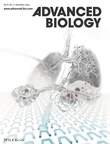
MPS are promising for evaluating drugs before they go to clinical trials, according to Ashley Gard, Group Leader of Cellular and Tissue Engineering and Principal Biomedical Engineer at Draper. But a major limiting factor is the lack of preclinical models capable of providing data predictive of human clinical responses, she added. Writing in Advanced Biology, the researchers say, “There still exists a tremendous unmet need for predictive MPS airway models to fill a critical gap in preclinical therapeutic screening for COVID-19 and other emerging respiratory infections.”

Special care was taken to keep the airway tissue models thriving in the microenvironment of PREDICT96-ALI. The tissues “lived” in a culture media, bathed in a dynamic fluid flow and given nutrients and oxygen. They were tested in a biosafety level 3 (BSL-3) high-containment laboratory, which allowed researchers to evaluate the full viral life cycle of SARS-CoV-2, a critical step in assessing compounds. The paper builds on research published in the journal Cells in 2023.

The research paper concludes: “PREDICT96-ALI is a model of the human broncho-tracheal lung tissue capable of assessing the efficacy of SARS-CoV-2 therapeutics with sufficient throughput to test multiple compounds at multiple concentrations in a single plate.” As such, it can be a vital tool for drug discovery.

PREDICT96-ALI is part of an integrated portfolio of technologies and resources at Draper intended to support the drug discovery and national security mission. Some of these capabilities include biothreat detection technologies developed for IARPA’s Finding Engineering-Linked Indicators (FELIX), DARPA’s Detect It with Gene Editing Technologies (DIGET) and BARDA’s Project NextGen: Next Generation Medical Countermeasures.

Authors include Landys Lopez Quezada, Felix Mba Medie, Rebeccah J. Luu, Robert B. Gaibler, Elizabeth P. Gabriel, Logan D. Rubio, Thomas J. Mulhern, Elizabeth E. Marr, Jeffrey T. Borenstein, Christine R. Fisher and Ashley L. Gard.

Draper

As a nonprofit engineering innovation company, Draper serves the nation’s interests and security needs; advances technologies at the intersection of government, academia and industry; cultivates the next generation of innovators; and solves the most complex challenges. Multidisciplinary teams drawn from a broad and deep talent pool of 1,600 engineers and scientists collaborate to develop first-of-a-kind solutions. Draper’s unbiased approach enables the company to focus on their customers’ needs and to deliver new capabilities to them. Learn more at draper.com.

Media Contact

Scott Deitz, Draper, 1 336-908-7759, scott@sevenletter.com, https://www.draper.com/

View original content to download multimedia:https://www.prweb.com/releases/airway-on-a-chip-could-speed-up-future-drug-and-therapy-development-302306718.html

SOURCE Draper

Continue Reading
Click to comment

Leave a Reply

Your email address will not be published. Required fields are marked *

Technology

TiTE x IHT 2026: The Definitive Hub for Taiwan’s Hardware Manufacturing Excellence

Published

on

By

TAICHUNG, May 6, 2026 /PRNewswire/ — When sourcing from Taiwan, location is the ultimate strategic advantage. Don’t be misled by smaller, general trade shows held in city centers like Taipei. To truly connect with the source, you must go where the products are born. TiTE x IHT (Oct 20-22, 2026) in Taichung is the undisputed largest and most vital hardware industrial expo on the island. Hosted directly in the heart of Taiwan’s precision manufacturing cluster, this event features 1,000+ booths and 500+ top-tier manufacturers, offering a scale and industrial depth that no other exhibition can replicate.

Why Global Buyers Choose the Taichung Source Over Urban Trade Shows:

The Revolutionary “Exhibition as Factory” Model: Taichung is the global epicenter for hardware, home to 70% of Taiwan’s industry output. Our unique location enables the “30-Minute Sourcing Circle.” This allows you to verify high-end samples on the show floor in the morning and audit world-class production lines by the afternoon. By eliminating the travel gap between the booth and the factory, we reduce traditional procurement cycles from weeks to hours, providing unmatched transparency for R&D, capacity assessment, and quality control.ESG & CBAM Compliance for Western Markets: As the EU’s Carbon Border Adjustment Mechanism (CBAM) and global ESG mandates reshape trade, our exhibitors are already ahead of the curve. Discover CBAM-ready solutions and green manufacturing processes specifically designed to meet the strict sustainability requirements of the European and American markets. We provide more than just tools; we provide carbon-footprint-managed resilience for your brand.AI-Driven Smart Manufacturing: Address global labor shortages and rising costs with Taiwan’s latest innovations. The 2026 expo focuses on “AI Empowerment,” showcasing collaborative robotics, automated digital inspection, and data-driven supply chain management. These technologies ensure lead-time stability and high-precision consistency for premium global brand owners.Direct Sourcing & Global Matchmaking: Skip the middlemen and trading agencies. Our “Global Buyer Day” offers exclusive, pre-arranged matchmaking with the actual OEMs/ODMs. This is the primary decision-making platform for major distributors seeking resilient, direct-to-factory partnerships that guarantee the best pricing and priority production slots.

Experience the synergy of smart manufacturing and global trade. Stop at the source—where the world’s hardware is actually built. Secure your competitive edge in the true heart of the industry.

【TiTE x IHT】

Date: October 20-22, 2026Venue: TICEC, Taichung, TaiwanRegister Now: https://accu.ps/g8MZ1SHousing Subsidy: https://forms.gle/34VHVxSrEw7g8GxDAOfficial Website: https://www.hardwareexpotw.com

View original content to download multimedia:https://www.prnewswire.com/news-releases/tite-x-iht-2026-the-definitive-hub-for-taiwans-hardware-manufacturing-excellence-302763625.html

SOURCE TiTE x IHT

Continue Reading

Technology

KIST Accelerates U.S. Expansion of Quantum Deep-Tech Startups Through SelectUSA 2026

Published

on

By

SEOUL, South Korea, May 5, 2026 /PRNewswire/ — The Korea Institute of Science and Technology (KIST) President Oh Sang-rok announced that it will participate in the SelectUSA Investment Summit 2026 as part of a Korean delegation, together with quantum technology startups supported by the Ministry of SMEs and Startups under the Deeptech Project (DIPS).

The initiative, supported by South Korea’s Ministry of SMEs and Startups (MSS), is part of the government’s “Deeptech Incubator Project for Startups” (DIPS) initiative, which aims to nurture globally competitive deep-tech ventures.

KIST, which serves as the lead institution for the quantum technology sector under the program, said it will oversee the global commercialization efforts of participating firms. In particular, the “Global Bridge Program,” jointly developed with the U.S. Embassy in Korea in September 2025, is an official program designed to generate tangible overseas expansion outcomes by linking investment attraction with local market entry through diplomatic channels.

Organized by the U.S. Department of Commerce, the SelectUSA Investment Summit is the largest investment promotion event in the US, connecting international startups with venture capital firms, corporate investors and state-level economic development agencies.

It serves as an execution-oriented platform that extends to investment, corporate establishment, site selection, and tax incentives, and is considered a key entry gateway for deep-tech companies, including those in quantum technology.

KIST said participation in the summit is particularly significant for deep-tech sectors such as quantum technology, where access to the US innovation ecosystem is seen as key to growth.

The program is conducted in two stages. From April 30 to May 1, companies took part in a spin-off program hosted by the State of Maryland, which included visits to research institutions and tours of the regional quantum technology ecosystem.

During this period, the delegation also conducted localized activities with the Maryland state government and its economic development agencies, focusing on investment attraction, corporate collaboration, and joint R&D. In addition, on May 5, the delegation held discussions with U.S. Department of Commerce Deputy Secretary William Kimmitt on potential areas of cooperation.

The delegation will also meet officials from Fairfax County Government to explore collaboration and investment opportunities.

The main summit, currently ongoing from May 3 to May 6, features exhibitions, pitching sessions and meetings with US state representatives, with participating firms expected to engage in discussions on investment and market entry.

The delegation is structured to encompass the entire quantum industry rather than a single technology domain.

The Korean delegation comprises five startups, alongside Kyung Hee University Department of Future Science & Technology Commercialization Policy and Entrepreneurship, with approximately 20 participants forming an integrated ecosystem that combines research institutes, academia, and startups, enabling a full-cycle support system from technology validation to commercialization and global expansion.

One of the firms, OptiQ-Labs, was selected for an official pitching session on May 4, where it presented its laser-based optical modules designed for ion-trap quantum computing systems.

This highly competitive program selects only around 100 companies from more than 20,000 applicants worldwide. If selected as the winner of the pitching session, the company will receive follow-up meetings with U.S. state governments and economic development agencies, access to global investor networks, support for local entity establishment, and connections to site selection and tax incentive programs.

Other participating companies include QUAD, which develops single-photon detection technology; SLEEX, focused on underwater sensing; Elixir (StatUp AI), which works on quantum-classical hybrid algorithms for healthcare; and SQK (QMEDIC), specializing in physics-based imaging solutions.

KIST Project Director, Kang Sunjoon, said, “This program represents a critical milestone for Korean quantum startups to directly connect with global investors and industry ecosystems. Via the DIPS program, we are actively promoting the global commercialization of quantum technologies.”

Through its participation in SelectUSA, KIST has established a package-type global expansion model that integrates technology validation, investment attraction, and U.S. market entry.

The summit serves as a turning point for South Korea’s quantum sector, enabling startups to move into the next phase of validation, investment, and overseas expansion.

For more information, visit https://eng.kist.re.kr/.

About KIST 

KIST was established in 1966 as the first government-funded research institute in South Korea. KIST now strives to solve national and social challenges and secure growth engines through leading and innovative research.

About Participating Quantum Startups

QUAD, led by Chief Executive Officer, Oh Byung-doo, develops quantum sensing technologies based on superconducting nanowire single-photon detectors (SNSPDs), offering high sensitivity and precision with applications spanning quantum communication, quantum computing, semiconductor inspection, and defense.

SLEEX is developing an advanced perception technology that combines quantum LiDAR and electric field sensing to overcome limitations of existing underwater sensors, particularly by eliminating blind zones within the 0–2 meter range, with strong potential in autonomous navigation, maritime security, and defense, with Lee Jeho at the helm as Chief Executive Officer.  (https://www.thesleex.com)

Elixir, headed by Chief Executive Officer Jang Jung-kwon, develops a drug discovery and biomarker analysis platform based on quantum-classical hybrid algorithms, targeting the precision medicine market through the integration of bioinformatics and quantum machine learning. (statupai.com)

SQK develops medical imaging AI based on quantum-physics constraints, addressing the hallucination issues of conventional AI by ensuring physical consistency in CT and MRI reconstruction. Under the leadership of Chief Executive Officer Kim Yoon-hak, SQK is improving reliability and reducing the need for re-scans in clinical settings. (www.sqkcloud.com)

View original content to download multimedia:https://www.prnewswire.com/news-releases/kist-accelerates-us-expansion-of-quantum-deep-tech-startups-through-selectusa-2026-302763636.html

SOURCE The Korea Institute of Science and Technology (KIST)

Continue Reading

Technology

Former Visa Asia Pacific Executive David Tay Joins YeahPay as Global Vice President

Published

on

By

SINGAPORE, May 6, 2026 /PRNewswire/ — YeahPay, the international payment brand under YEAHKA (9923.HK), has appointed David Tay, a former senior executive at Visa Asia Pacific, as Global Vice President, tasking him with overseeing the strategic direction and product ecosystem development of YEAHKA’s overseas payment business. The appointment comes as global digital trade enters a new phase defined by ecosystem integration, with payment infrastructure undergoing a generational shift in acceleration.

David Tay, a Singaporean national, is a rising leader in the payments industry. During his career at Visa, David played a key role in driving business growth across multiple Southeast Asian markets, demonstrating early promise in commercial insight and innovation. He subsequently moved into Visa’s Innovation division, where he rose to serve as Head of Innovation, leading Visa Pacific’s product innovation and new business.

In that capacity, David led the commercialization of cutting-edge payment paradigms including Visa Flex Credential and Pay by Palm. He was also involved in the evaluation and governance of strategic partners across the region, accumulating deep expertise in collaborating with banks, fintechs, and large-scale enterprise merchants.

David’s track record spans the full go-to-market lifecycle, from concept to pilot to scale, as well as deep capabilities in cross-institutional partnerships and ecosystem development. His appointment comes at an inflection point for YEAHKA’s international expansion. According to YEAHKA’s 2025 annual report, its overseas business delivered full-year Gross Payment Volume (GPV) surpassing RMB 5 billion, representing a 323.3% year-on-year surge from RMB 1.1 billion in 2024.

View original content:https://www.prnewswire.com/apac/news-releases/former-visa-asia-pacific-executive-david-tay-joins-yeahpay-as-global-vice-president-302763652.html

SOURCE Yeahka

Continue Reading

Trending