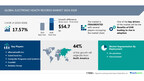
NEW YORK, Nov. 15, 2024 /PRNewswire/ — Report on how AI is driving market transformation – The global electronic health records market size is estimated to grow by USD 54.7 billion from 2024-2028, according to Technavio. The market is estimated to grow at a CAGR of over 17.57% during the forecast period. Benefits of ehr leading to rise in adoption is driving market growth, with a trend towards rising demand for self-medication and homecare medical devices. However, rising data security and privacy concerns poses a challenge.Key market players include athenahealth Inc., CareCloud Inc., Computer Programs and Systems Inc., CureMD, Dedalus Group, Dell Technologies Inc., eClinicalWorks LLC, Epic Systems Corp., EverCommerce Inc., General Electric Co., Global Payments Inc., Greenway Health LLC, KareXpert Technologies Pvt. Ltd., McKesson Corp., MEDHOST, Medical Information Technology Inc., Oracle Corp., Siemens AG, Tebra Technologies Inc., and Veradigm LLC.
AI-Powered Market Evolution Insights. Our comprehensive market report ready with the latest trends, growth opportunities, and strategic analysis- View Free Sample Report PDF
Forecast period
2024-2028
Base Year
2023
Historic Data
2018 – 2022
Segment Covered
Deployment (On-premises and Cloud-based), Component (Services, Software, and Hardware), and Geography (North America, Europe, Asia, and Rest of World (ROW))
Region Covered
North America, Europe, Asia, and Rest of World (ROW)
Key companies profiled
athenahealth Inc., CareCloud Inc., Computer Programs and Systems Inc., CureMD, Dedalus Group, Dell Technologies Inc., eClinicalWorks LLC, Epic Systems Corp., EverCommerce Inc., General Electric Co., Global Payments Inc., Greenway Health LLC, KareXpert Technologies Pvt. Ltd., McKesson Corp., MEDHOST, Medical Information Technology Inc., Oracle Corp., Siemens AG, Tebra Technologies Inc., and Veradigm LLC
Key Market Trends Fueling Growth
The Electronic Health Records (EHR) market is experiencing significant growth as healthcare providers shift from paper records to digital solutions. Hospitals and healthcare units are major adopters, with the professional services segment driving demand. Chronic diseases require extensive patient records, making digitalization essential. The acute and post-acute segments, including rehabilitation centers, benefit from EHRs’ efficiency. Doctors and pharmacies also use EHRs for patient health history, medicines, allergies, and immunization status. Web-based EHRs offer convenience, while Client server-based EHRs ensure data security. Advanced healthcare facilities utilize EHRs for clinical documentation, lab systems, radiology systems, and clinical applications. Healthcare financing, administrative applications, and healthcare financing are also managed through EHRs. EHR service providers leverage software technology, artificial intelligence, and cloud storage technology to offer advanced solutions. Geriatric population and diseases require specialized EHRs. Inpatient EHRs, ambulatory care, ambulatory surgical centers, and clinical trials also use EHRs for data storage and administrative data. Devices and drugs are integrated into EHR systems for seamless patient care.
The UN projects that over half of the global population will be aged 65 and above by 2039, leading to significant growth in the healthcare sector, particularly in developed countries. In response, the industry is transitioning from diagnosis and treatment to prevention. This trend is also emerging in Asia and the Middle East, where population growth is most pronounced. The demand for remote healthcare, wireless treatments, and minimally invasive procedures is escalating. Healthcare providers are investing in home care, remote monitoring, telehealth, and self-monitoring solutions to cater to this preventive care focus.
Insights on how AI is driving innovation, efficiency, and market growth- Request Sample!
Market Challenges
The Electronic Health Records (EHR) market is witnessing significant growth due to the digitalization of healthcare. However, challenges persist in various segments. In the professional services segment, integrating EHR systems across hospitals, healthcare units, rehabilitation centers, and clinics requires expertise. Chronic diseases demand efficient management of patient health history, medicines, allergies, and immunization status. Hospitals face challenges with paperwork, digitalization, and big data management in acute and post-acute segments. Doctors and physicians in ambulatory services need user-friendly Web-based EHR solutions for easy access to patient records. Pharmacies, laboratories, and clinics require seamless integration with EHR systems for efficient clinical documentation and administrative applications. EHR service providers must address the unique needs of advanced healthcare facilities, specialty centers, and geriatric population. Software technology, artificial intelligence, and cloud storage technology play crucial roles in addressing these challenges. Healthcare financing, drug development, and device integration are also essential considerations. Inpatient EHR, clinical trials, and administrative data management are key areas of focus.The electronic health records (EHR) market is experiencing significant growth due to the digitalization of healthcare workflows. However, this trend comes with concerns over privacy and data protection. With the integration of devices generating data into healthcare systems and the availability of data from hospitals and insurance companies in a centralized place, healthcare organizations and patient information are at risk of cyberattacks. This issue restricts the healthcare industry from fully adopting advanced technologies, despite the potential benefits of improved healthcare quality, insights, and cost reduction. It is crucial for industry players to prioritize security measures to mitigate these risks and ensure patient data confidentiality.
Insights into how AI is reshaping industries and driving growth- Download a Sample Report
Segment Overview
This electronic health records market report extensively covers market segmentation by
Deployment 1.1 On-premises1.2 Cloud-basedComponent 2.1 Services2.2 Software2.3 HardwareGeography 3.1 North America3.2 Europe3.3 Asia3.4 Rest of World (ROW)
1.1 On-premises- On-premises Electronic Health Records (EHR) are self-hosted systems where the software and hardware are installed and managed on the native IT infrastructure of businesses and enterprises. These systems offer physical control and improved data security as the data is managed in-house, and there is no reliance on the Internet for access. However, the adoption of on-premises EHR by small and medium-sized enterprises (SMEs) is hindered due to the higher costs associated with the additional requirements for servers, hardware, and floor space. Large enterprises with sufficient funds and existing infrastructure continue to prefer on-premises EHR due to the enhanced data security and control. The growing concerns around data privacy and security are driving the demand for on-premises EHR solutions, contributing to the market’s growth during the forecast period.
Download complimentary Sample Report to gain insights into AI’s impact on market dynamics, emerging trends, and future opportunities- including forecast (2024-2028) and historic data (2018 – 2022)
Research Analysis
The Electronic Health Records (EHR) market is witnessing significant growth due to the digitalization of healthcare and the increasing adoption of advanced technologies in the healthcare industry. The market caters to various segments including hospitals, healthcare units, and advanced healthcare facilities in both the acute and post-acute segments. Chronic diseases management is a major application area for EHRs, helping healthcare providers manage patient health history, medicines, allergies, and clinical documentation more effectively. EHR systems come in different formats such as Web-based and client server-based, with Ambulatory EHR and Acute EHR being the most common types. These systems integrate with various healthcare systems including lab systems, radiology systems, and pharmacy systems, streamlining workflows and reducing paperwork. The post-acute segment, including rehabilitation centers, is also adopting EHRs to manage patient care more efficiently. Big data analytics is a key trend in the EHR market, enabling healthcare providers to gain insights from patient data and improve patient outcomes. Overall, the EHR market is transforming healthcare delivery by making patient records more accessible and manageable.
Market Research Overview
The Electronic Health Records (EHR) market is a rapidly growing segment in the healthcare industry, driven by the digitalization of paperwork and the need for efficient and accurate patient care. EHR systems are used by hospitals, healthcare units, rehabilitation centers, and other advanced healthcare facilities to manage patient’s healthcare records. These records include health history, medicines, allergies, immunization status, lab test results, hospital discharge instructions, billing information, and more. EHR systems are available in various formats such as Web-based EHR, Client server-based EHR, Acute EHR, Ambulatory EHR, and Post-acute EHR. They cater to different segments like hospitals, ambulatory services, pharmacies, laboratories, clinics, and specialty centers. The market is segmented into professional services, acute segment, post-acute segment, and the chronic diseases segment. The professional services segment includes services related to the implementation, customization, and maintenance of EHR systems. The acute segment caters to the needs of hospitals and inpatient care, while the post-acute segment serves the needs of long-term care facilities and rehabilitation centers. EHR systems use advanced software technology, artificial intelligence, and cloud storage technology to provide clinical applications, administrative applications, healthcare financing, and clinical documentation. They also offer integration with lab systems, radiology systems, pharmacy systems, and clinical trial data. The geriatric population and patients with chronic diseases benefit significantly from EHR systems as they require continuous care and monitoring. EHR service providers offer on-premise software and cloud-based software to cater to the varying needs of healthcare providers. The market also includes drug, devices, and administrative data.
Table of Contents:
1 Executive Summary
2 Market Landscape
3 Market Sizing
4 Historic Market Size
5 Five Forces Analysis
6 Market Segmentation
DeploymentOn-premisesCloud-basedComponentServicesSoftwareHardwareGeographyNorth AmericaEuropeAsiaRest Of World (ROW)
7 Customer Landscape
8 Geographic Landscape
9 Drivers, Challenges, and Trends
10 Company Landscape
11 Company Analysis
12 Appendix
About Technavio
Technavio is a leading global technology research and advisory company. Their research and analysis focuses on emerging market trends and provides actionable insights to help businesses identify market opportunities and develop effective strategies to optimize their market positions.
With over 500 specialized analysts, Technavio’s report library consists of more than 17,000 reports and counting, covering 800 technologies, spanning across 50 countries. Their client base consists of enterprises of all sizes, including more than 100 Fortune 500 companies. This growing client base relies on Technavio’s comprehensive coverage, extensive research, and actionable market insights to identify opportunities in existing and potential markets and assess their competitive positions within changing market scenarios.
Contacts
Technavio Research
Jesse Maida
Media & Marketing Executive
US: +1 844 364 1100
UK: +44 203 893 3200
Email: media@technavio.com
Website: www.technavio.com/
View original content to download multimedia:https://www.prnewswire.com/news-releases/the-electronic-health-records-market-is-set-to-grow-by-usd-54-7-billion-from-2024-2028–with-the-benefits-of-ehr-driving-adoption-and-boosting-revenue-report-on-how-ai-is-reshaping-the-market-landscape—technavio-302306616.html
SOURCE Technavio










 Technology5 days ago

 Near Videos4 days ago
 Technology5 days ago
 Technology5 days ago
 Technology4 days ago
 Near Videos5 days ago
 Coin Market4 days ago