Connect with us

Technology

The Industrial Sensors Market is set to grow by USD 14.3 billion from 2024-2028, driven by the rise of smart factories and IIoT. Report on AI’s market transformation – Technavio

Published

on

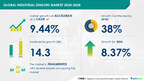
NEW YORK, Nov. 15, 2024 /PRNewswire/ — Report with the AI impact on market trends – The global industrial sensors market size is estimated to grow by USD 14.3 billion from 2024-2028, according to Technavio. The market is estimated to grow at a CAGR of over 9.44% during the forecast period. Rise in demand for smart factories and IIOT is driving market growth, with a trend towards increasing demand for sensors for remote monitoring. However, growing challenges in delivering high quality at low cost poses a challenge.Key market players include Amkor Technology Inc., Amphenol Advanced Sensors, Analog Devices Inc., Broadcom Inc., Excelitas Technologies Corp., Hamamatsu Photonics KK, Honeywell International Inc., Itron Inc., Maxim Integrated Products Inc., Motion Solutions, Murata Manufacturing Co. Ltd., NXP Semiconductors NV, Renesas Electronics Corp., Robert Bosch GmbH, Rockwell Automation Inc., ROHM Co. Ltd., Sensata Technologies Inc., Siemens AG, STMicroelectronics International N.V., TDK Corp., TE Connectivity Ltd., and Texas Instruments Inc..

Key insights into market evolution with AI-powered analysis. Explore trends, segmentation, and growth drivers- View Free Sample PDF

Industrial Sensors Market Scope

Report Coverage

Details

Base year

2023

Historic period

2018 – 2022

Forecast period

2024-2028

Growth momentum & CAGR

Accelerate at a CAGR of 9.44%

Market growth 2024-2028

USD 14.3 billion

Market structure

Fragmented

YoY growth 2022-2023 (%)

8.37

Regional analysis

APAC, Europe, North America, Middle East and Africa, and South America

Performing market contribution

APAC at 38%

Key countries

US, China, Japan, Germany, and France

Key companies profiled

Amkor Technology Inc., Amphenol Advanced Sensors, Analog Devices Inc., Broadcom Inc., Excelitas Technologies Corp., Hamamatsu Photonics KK, Honeywell International Inc., Itron Inc., Maxim Integrated Products Inc., Motion Solutions, Murata Manufacturing Co. Ltd., NXP Semiconductors NV, Renesas Electronics Corp., Robert Bosch GmbH, Rockwell Automation Inc., ROHM Co. Ltd., Sensata Technologies Inc., Siemens AG, STMicroelectronics International N.V., TDK Corp., TE Connectivity Ltd., and Texas Instruments Inc.

Market Driver

The Industrial Sensors market is experiencing significant growth due to the trend towards automation and real-time data in various industries. The Internet of Things (IoT) is driving the demand for sensors in areas like factory automation, infrastructure development, and smart cities. Transparency and efficiency are key benefits, leading to profitability and predictive maintenance through machine learning algorithms. Sensors play a crucial role in monitoring operational equipment, ensuring machine uptime and optimizing industrial processes. Level sensors, pressure sensors, and temperature sensors are common types used for process and quality control. Legacy machinery integration is also a focus, with companies like Asystom and Platinum providing solutions. IoT-enabled sensors offer wireless connectivity and automated machinery for remote monitoring and control. Companies like Viezo, Hiber BV, and Omron Automation provide wireless autonomous sensors and advanced software for real-time data collection. Industries like renewable energy, manufacturing, and logistics are investing in cost-effective facilities and smart sensors for material sorting, inventory counting, and root error detection. Sensing technology is essential for industries dealing with raw materials, such as powders, liquids, and gases, ensuring product quality and preventing facility stoppages and slowdowns. Advanced automation systems using sensors enable real-time pictures for quality inspection and monitoring capabilities for robotics applications. Infrastructure development in industrial communities relies on sensors for liquid pressure measurement, monitoring vacuum pumps, and detecting gas leakages. Overall, the Industrial Sensors market is a vital component of digital technologies and connected devices, driving productivity and efficiency in various industries. 

The industrial sensors market is experiencing significant growth due to the increasing demand for advanced technologies in the oil and gas industry. Unconventional resources pose unique challenges, necessitating new sensors, processes, and analytics. Traditional systems lacked the ability to seamlessly integrate and operate field-to-cloud systems, particularly in large installations. However, the emergence of the Industrial Internet of Things (IIoT) presents a major opportunity for technological advancements. Global companies are upgrading their infrastructure to leverage IIoT’s open, high-bandwidth protocols and cost-effective, intelligent networks. This transformation will enhance connectivity, monitoring, and process automation in industrial applications. 

Request Sample of our comprehensive report now to stay ahead in the AI-driven market evolution!

Market Challenges

The Industrial Sensors Market is experiencing significant growth due to the increasing demand for real-time data, transparency, efficiency, and profitability in various industries. The Internet of Things (IoT) is playing a major role in this trend, enabling predictive maintenance through machine learning algorithms and automated machinery. Sensors are crucial for condition monitoring in industries such as manufacturing, renewable energy, and smart cities. Challenges include integrating legacy machinery, ensuring infrastructure development, and dealing with false detection. Sensors for level measurement, pressure, temperature, motion, and flow are in high demand. Companies like Asystom, Platinum, Viezo, Hiber BV, and Omron Automation are leading the way with innovative solutions. Industrial processes require advanced automation systems for machine uptime and productivity. Digital technologies, connected devices, and advanced software are transforming the factory floor, enabling cost-effective facilities and improved industrial communities. Sensors for raw materials, gas leakages, and liquid pressure measurement are essential for industrial process control. In conclusion, the Industrial Sensors Market is a dynamic and evolving landscape, driven by the need for efficiency, profitability, and real-time data. Companies that can provide cost-effective, reliable, and innovative sensing technology will be at the forefront of this market.Industrial sensors play a crucial role in automating manufacturing processes and ensuring accurate and reliable data collection in various industries. Engineers and system developers are constantly seeking advanced sensors to expand their product offerings, as industrial automation continues to grow. However, the cost of customized sensors can be a significant barrier for many end-users. While off-the-shelf sensors have become more affordable, those tailored for specific applications in industrial process control remain more expensive due to their advanced technology. Vendors must balance affordability with customization to meet the demands of their clients and remain competitive in the market.

Discover how AI is revolutionizing market trends- Get your access now!

Segment Overview

This industrial sensors market report extensively covers market segmentation by

End-user1.1 Process industries1.2 Discrete industriesProduct2.1 Pressure2.2 Temperature2.3 Proximity2.4 Flow2.5 OthersGeography3.1 APAC3.2 Europe3.3 North America3.4 Middle East and Africa3.5 South America

1.1 Process industries- Industrial sensors play a crucial role in various process industries, including oil and gas, food and beverage, pharmaceuticals and healthcare, and water and wastewater treatment. In the oil and gas sector, industrial sensors facilitate the management of supply chain, production, and quality control, while ensuring minimal environmental impact. The food and beverage industry is witnessing a trend towards automation, with industrial sensors being used for efficient shelf and inventory management, and advanced image recognition for detecting missing or misplaced items. In the pharmaceuticals and healthcare sectors, the focus is on capitalizing on opportunities in research and development, leading to increased investment in industrial sensors for high-throughput optimization and regulatory compliance. The water and wastewater treatment industry is experiencing significant growth due to the increasing demand for potable water and the need for energy-efficient processes. Industrial sensors are essential in this industry for desalination, water reuse, and recycling applications. The power industry is also adopting industrial sensors on a large scale, particularly in smart grid applications for power monitoring, demand-side energy management, and coordination of distributed storage. These industries collectively contribute to the growth of the global industrial sensors market during the forecast period.

Download a Sample of our comprehensive report today to discover how AI-driven innovations are reshaping competitive dynamics

Research Analysis

The Industrial Sensors Market is experiencing significant growth due to the integration of the Internet of Things (IoT) technology, enabling real-time data collection and analysis. This transparency leads to increased efficiency and profitability for industries by enabling predictive maintenance through machine learning algorithms and automated machinery. Condition monitoring sensors, including level sensors, pressure sensors, and image sensors, play a crucial role in optimizing industrial processes. Companies are investing in advanced sensing technology such as Platinum sensors, CMOS image sensors, and IPX8 sensors to enhance operational equipment performance and ensure machine uptime. Semiconductor companies are at the forefront of this trend, providing cost-effective facilities for industrial communities. The E2EW Series, for example, offers a comprehensive solution for data collection and analysis, making it an essential tool for industrial automation.

Market Research Overview

The Industrial Sensors market is experiencing significant growth due to the increasing adoption of Internet of Things (IoT) technology and the demand for real-time data in various industries. Transparency, efficiency, profitability, and predictive maintenance are key drivers for this market. Industrial sensors play a crucial role in various applications such as condition monitoring, level sensors, process control, and quality control. Infrastructure development in sectors like smart cities, renewable energy, and legacy machinery is also fueling the demand for advanced sensing technology. Sensors used in industrial applications include pressure sensors, temperature sensors, motion sensors, flow sensors, and proximity sensors. These sensors are integrated with machine learning algorithms and automated machinery to enable predictive maintenance and improve machine uptime. The use of wireless autonomous sensors and HiberHilo’s long-range wireless sensors is increasing in industrial automation and factory automation. The sensor market is expanding to include advanced automation systems, digital technologies, and connected devices. Industrial processes such as mixed-metal production lines, material sorting, inventory counting, and quality inspection are being optimized through the use of smart sensors and remote sensing capabilities. Real-time pictures and temperature monitoring are essential for quality inspection, while flow sensors help measure the quantity and flow rate of moving liquids and gases. The Industrial Sensors market is expected to continue growing as industries seek to improve machine performance, reduce facility stoppages, and minimize false detection. The use of sensors in industrial processes is essential for optimizing raw materials and improving overall productivity. The integration of advanced software and robotics applications is also driving innovation in the sensor market.

Table of Contents:

1 Executive Summary
2 Market Landscape
3 Market Sizing
4 Historic Market Size
5 Five Forces Analysis
6 Market Segmentation

End-userProcess IndustriesDiscrete IndustriesProductPressureTemperatureProximityFlowOthersGeographyAPACEuropeNorth AmericaMiddle East And AfricaSouth America

7 Customer Landscape
8 Geographic Landscape
9 Drivers, Challenges, and Trends
10 Company Landscape
11 Company Analysis
12 Appendix

About Technavio

Technavio is a leading global technology research and advisory company. Their research and analysis focuses on emerging market trends and provides actionable insights to help businesses identify market opportunities and develop effective strategies to optimize their market positions.

With over 500 specialized analysts, Technavio’s report library consists of more than 17,000 reports and counting, covering 800 technologies, spanning across 50 countries. Their client base consists of enterprises of all sizes, including more than 100 Fortune 500 companies. This growing client base relies on Technavio’s comprehensive coverage, extensive research, and actionable market insights to identify opportunities in existing and potential markets and assess their competitive positions within changing market scenarios.

Contacts

Technavio Research
Jesse Maida
Media & Marketing Executive
US: +1 844 364 1100
UK: +44 203 893 3200
Email: media@technavio.com
Website: www.technavio.com/

View original content to download multimedia:https://www.prnewswire.com/news-releases/the-industrial-sensors-market-is-set-to-grow-by-usd-14-3-billion-from-2024-2028–driven-by-the-rise-of-smart-factories-and-iiot-report-on-ais-market-transformation—technavio-302306165.html

SOURCE Technavio

Continue Reading
Click to comment

Leave a Reply

Your email address will not be published. Required fields are marked *

Technology

Compunnel Unveils State-of-the-Art Noida Office: A Strategic Milestone in AI-Led Transformation and Innovation Ecosystem

Published

on

By

New flagship facility positions India center as AI innovation powerhouse; signals strategic shift to agentic AI across all business operations

NOIDA, India, May 5, 2026 /PRNewswire/ — Compunnel today unveiled its new state-of-the-art office in Noida Sector 142, covering over 1,35,000 sq ft of built-up area, marking a transformative milestone in the company’s strategic repositioning as an AI-led transformation company. More than a facility expansion, this launch represents Compunnel’s evolution from a trusted consulting and technology services provider into a comprehensive AI-native enterprise partner – leveraging agentic AI approaches across intelligent workforce solutions, digital transformation, and cybersecurity services for global enterprises.

The cutting-edge workspace featuring an on-site gym, modern cafeteria, advanced digital infrastructure, air quality control systems, and innovative design – is engineered to attract and nurture world-class talent while serving as an AI innovation hub. The facility will also house InfoPro Learning, a leader in corporate learning solutions, strengthening the collaborative ecosystem for talent development and enterprise training excellence.

A STRATEGIC INFLECTION POINT FOR GROWTH AND DIVERSIFICATION

Compunnel’s strategic shift towards AI-led operations is fundamentally reshaping how the company serves enterprises and positions itself for exponential growth:

Intelligent Workforce Solutions Reimagined: Compunnel’s strategic investment in Eximius – an agentic AI hiring platform – exemplifies the company’s shift towards autonomous intelligence in talent acquisition. By leveraging AI agents that autonomously match talent, predict hiring needs, and accelerate placements, Compunnel is positioned to significantly advance its #48 ranking among the Top 50 Staffing Firms in the USA. Complementing this, OneGuru – Infopro Learning’s agentic platform for the complete ‘hire to retire’ employment lifecycle, establishes the company as a formidable contender in the HCMS/HRIS market, delivering AI-driven workforce management from onboarding to succession planning.

Security, Risk, and Transformation Solutions: In an era where AI-powered threats evolve faster than traditional defenses, Compunnel is embedding living intelligence into enterprise security frameworks. The company’s modern approach helps organizations transform into a more mature, resilient, and risk-reduced state by leveraging advanced workflows to predict risks, proactively dismantle threats, and turn security from a cost center into a competitive advantage. This is complemented by strong capabilities across privacy and compliance-driven risk management, enabling organizations to protect sensitive data, meet regulatory requirements, and strengthen enterprise-wide governance and risk posture.

Digital Transformation Architected for AI-First Operations: Compunnel Digital is an AI-native digital engineering group built for the enterprises redefining what’s possible in Financial Services, Healthcare & Life Sciences, Consumer, Retail, and Manufacturing. It doesn’t layer AI onto legacy workflows – it architects intelligent systems from the ground up. Powered by Compunnel AI-OS, the company’s AI-first platform, Compunnel designs digital ecosystems where autonomous agents accelerate delivery, data fabrics power real-time decisions, and machine intelligence works alongside human expertise – turning disruption into competitive advantage.

LEADERSHIP VISION: TECHNOLOGY, TALENT, TRAINING, AND TRANSFORMATION

“Technology – and specifically agentic AI – is the backbone of everything we do at Compunnel. This new center amplifies that engine, bringing together AI innovation, advanced analytics, and our growing portfolio of AI-driven companies under one roof,” said Andy Gaur, CEO of Compunnel. “From Eximius transforming how we staff enterprises, to OneGuru revolutionizing HCMS, to incubating the next generation of AI startups – this workplace represents our commitment to leading, not following, the AI transformation. As we serve enterprise clients globally, this is where breakthrough thinking meets breakthrough execution.”

“For technology and business professionals, the new facility represents more than a workplace. It’s a launchpad for career acceleration. The Noida office will serve as a center for talent development, offering opportunities to work on global projects spanning talent solutions, cloud modernization, data and AI, cybersecurity, and digital engineering for Fortune enterprises across sectors such as banking, healthcare, manufacturing, insurance, government, and more,” said Rakesh Shah, President of Compunnel.

ABOUT COMPUNNEL

Founded in 1994, Compunnel delivers AI-driven workforce solutions, digital transformation, and cybersecurity services to global enterprises. With 30+ delivery centers across the U.S. and global R&D hubs in Canada, Europe, and India, Compunnel serves 23% of Fortune enterprises. Ranked #48 on SIA’s Largest Staffing Firms in the United States and recognized 12 times on the Inc. 5000 list, Compunnel combines deep domain expertise with intelligent automation to accelerate enterprise velocity and build future-ready operations. Learn more at www.compunnel.com.

ABOUT INFOPRO LEARNING

An offshoot of Compunnel, Infopro Learning is a global learning solutions partner that helps organizations transform their workforce development from strategy to scale. For 30 years, they have partnered with the world’s largest and most reputable companies, delivering Managed Learning Services, Leadership Development, Strategic Advisory, and Content Development solutions. Leveraging AI-driven innovation, they help organizations deliver greater impact while optimizing costs. Learn more at www.infoprolearning.com.

ABOUT ONEGURU

OneGuru is an AI-powered talent development platform that improves employee performance by taking learning out of the classroom and into the flow of work. Every employee will get access to a dedicated AI-Agent, equipped with insight from the world’s greatest coaches and the data that drives your business and people forward (HRIS, Performance, LMS). Unlike most agents, OneGuru is designed to be proactive, nudging your team to build their skills, build their careers, and build your business. Learn more at https://oneguru.ai/.

Media Contact:
Email: pr@compunnel.com

Photo: https://mma.prnewswire.com/media/2971872/Compunnel_Noida.jpg

View original content to download multimedia:https://www.prnewswire.com/in/news-releases/compunnel-unveils-state-of-the-art-noida-office-a-strategic-milestone-in-ai-led-transformation-and-innovation-ecosystem-302761552.html

Continue Reading

Technology

SUPCON Showcases the Path to Autonomous Operations with Software-defined Controls, Large Industrial AI models and Agentic AI Platforms at Hannover Messe 2026

Published

on

By

HANNOVER, Germany, May 5, 2026 /CNW/ — At Hannover Messe 2026, SUPCON (688777.SH, SUPCON.SW), a global leader in industrial automation and AI, demonstrated how the process industry can move beyond simple data analysis to real-time and autonomous execution. By unveiling its latest advancements in Agentic AI and software-defined automation, SUPCON provided a tangible roadmap for the transition to fully autonomous operating plants.

A central theme of the showcase was bridging the industry’s “execution gap”. While many plants generate vast amounts of data, the challenge remains in acting on that data in a timely, reliable manner. SUPCON’s integrated solution featuring the Universal Control System (UCS), Time-series Pre-trained Transformer (TPT2), and UNS-based IIOT Data Platform (Tier0), enables industrial plants to not only analyze information but to execute closed-loop optimization in real time.

“Industrial AI has reached a critical turning point. It is no longer just about generating insights, but about embedding them within closed-loop controls to achieve peak performance,” said Kenneth Lim, Director of Strategy and Marketing at SUPCON International Business. “Our role is to provide the industry with an open, reliable foundation that allows our customers to scale at their own pace, ensuring that today’s investments remain future-proof for decades of innovation ahead.”

Technical Keynote Highlights: The Path to Autonomous Operating Plants

Through a series of technical keynote sessions, SUPCON reframed autonomy not as a single hardware upgrade, but as a strategic operating model designed to empower the modern workforce.

Real-time Field Intelligence (Smart Field Instrumentation & Ethernet-APL): Moving beyond legacy protocols like HART, SUPCON showcased how Ethernet-APL brings high-speed connectivity directly to the field, turning passive instruments into active sources of real-time intelligence.Building the Unified Namespace (Tier0): To eliminate the “integration tax,” SUPCON introduced Tier0, a UNS-based platform using MQTT pub/sub and semantic structures to create a shared, event-driven data layer that prevents vendor lock-in and unifies fragmented systems.Agentic Application Development (AppBuilder): The Tier0 AppBuilder demonstrated how factory teams can build industrial applications up to 10x faster using natural language and domain-aware agents, moving from costly customization to rapid, user-centric creation.The Autonomous Workforce (Robotics & AI): By utilizing autonomous robots as “mobile sensors” for hazardous tasks like leak detection, SUPCON proved that technology isn’t about replacing humans, but about liberating engineers for high-value creative problem-solving and strategic oversight.Software-Defined Controls: The Universal Control System (UCS) represents a new era of efficiency. By revolutionizing traditional controls architecture, it reduces physical footprints and cabling by up to 90%, directly helping partners meet carbon neutrality goals without sacrificing productivity.Time-Series Pre-Trained Transformers (TPT): Unlike standard Large Language Models, the TPT is purpose-built for industrial time-series data. It consolidates fragmented use cases like equipment health forecasting and bottleneck analysis into a single AI layer for faster scaling.Autonomous Operating Plants (AOP): SUPCON framed “Zero-Touch Operations” not as a single hardware upgrade, but as a total strategic transformation. Addressing the “hidden” barriers of fragmented data and multi-OEM complexity, Autonomous Operating Plants (AOP) are achievable when open architectures and next-generation control systems are designed as a unified foundation from the outset.Self-Optimizing Plants via Closed-Loop AIO: SUPCON introduced Artificial Intelligence Optimization (AIO) as a revolutionary step beyond traditional DCS and APC systems. By enabling AI to learn from real-time plant data and feed optimized decisions back into control systems autonomously. This closed-loop approach serves as a practical pathway for manufacturers to optimize throughput, energy, and safety simultaneously without manual intervention.

A Partner in Industrial Evolution

By connecting smart field instrumentation, open data platforms, and software-defined control, SUPCON is providing the industry with a practical blueprint for safer, more resilient, and self-optimizing plants. The vision presented at Hannover Messe 2026 establishes that autonomous operations are achievable today when open architectures and next-generation intelligence are designed as a unified foundation.

Resources & Media

Resource Hub & Presentations: global.supcon.com/events/hannover-messe-2026Highlights Video: View on YouTubeNext Event: Join us at Gastech 2026 | 14–17 September 2026 | Bangkok, Thailand

About SUPCON

SUPCON (688777.SH, SUPCON.SW) is a global provider of industrial automation and industrial AI, offering control systems, digital platforms, robotics, and software solutions that power the world’s process and energy industries. Headquartered in Hangzhou, China, with the SUPCON Internal Business Headquarters in Singapore and the regional hubs around the globe, SUPCON is well-positioned to elevate industrial intelligence and drive customer success. Trusted by more than 250 leading enterprises and 39,000+ customers worldwide across major process industries such as oil & gas, chemical and petrochemical, as well as other industries such as power, pulp and paper, building materials, and more, SUPCON is driving the evolution from automation to autonomy–enabling safer, smarter, and more sustainable industrial operations.

For more information, please visit https://global.supcon.com/

View original content to download multimedia:https://www.prnewswire.com/news-releases/supcon-showcases-the-path-to-autonomous-operations-with-software-defined-controls-large-industrial-ai-models-and-agentic-ai-platforms-at-hannover-messe-2026-302762122.html

SOURCE SUPCON International Business Pte Ltd

Continue Reading

Technology

PwC and OpenAI Build a First-of-Its-Kind OpenAI Native Finance Function

Published

on

By

The collaboration aims to help redefine the future of finance by combining agentic AI with human supervision, enabling finance teams to govern, improve, and scale AI agents over time.

NEW YORK, May 5, 2026 /PRNewswire/ — PwC today announced an expanded collaboration with OpenAI to help create the first of its kind AI native finance function at enterprise scale, combining agentic AI with human supervision to reshape how finance work gets done.

Together, PwC and OpenAI are building AI agents around the core operating rhythms of finance, from planning, forecasting, and reporting to procurement, payments, treasury, tax, and the accounting close. What sets this collaboration apart is its focus on building in the real world, not just designing in theory. For example, PwC and OpenAI are building a procurement agent inside the OpenAI finance organization, and are applying those learnings to additional agents across core finance workflows. That hands-on model is intended to speed innovation, prove the value of an AI native finance function in practice at OpenAI, and continuously improve the offering based on learnings.

Powered by OpenAI native finance capabilities and PwC’s deep expertise in finance, risk, and transformation, the collaboration is intended to move finance beyond task automation toward an operating model where AI agents can execute complex work, collaborate across workflows, and support faster, more insight-driven decisions.

“Finance is at an inflection point, where organizations are moving from process efficiency to intelligent, decision-centric operations,” said Tyson Cornell, US Advisory Leader. “Through our collaboration with OpenAI, we’re helping clients embed agentic AI into the core fabric of the finance function, enabling more proactive insights, stronger controls, and a more adaptive operating model.”

In this new operating model, the role of finance professionals evolves from primarily executing processes to supervising, governing, and improving AI agents over time. Finance teams remain accountable for judgment, controls, and outcomes, while helping define the guardrails, policies, and organizational memory that allow agents to perform more effectively and responsibly. Through MCPs and reusable skills, agents can connect to enterprise systems with the right controls, produce more reliable outputs, and follow consistent operating patterns across finance processes.

At the same time, domain experts can use Codex and OpenAI emerging product surfaces to build bespoke applications for targeted finance workflows — accelerating solutions for accruals, close activities, reconciliations, reporting, and other operational needs without relying solely on traditional software development cycles. This is the foundation of a new kind of finance function: AI native by design, human-governed actions, continuously improving over time.

“Finance has always been about judgment, trust, and making decisions in environments filled with complexity and constant change. AI gives finance leaders a much deeper ability to see around corners and act faster,” said Sarah Friar, CFO at OpenAI. “I believe we’re now entering a moment where the finance function itself gets reimagined to shape decisions in real time. The opportunity here is far bigger than efficiency, it’s about giving finance leaders the tools to operate with greater foresight, agility, and strategic impact across the business.”

This collaboration reflects a broader shift toward an OpenAI native finance operating model, where work begins with intent and is executed by AI agents acting across systems, workflows, and data environments. Through hands-on collaboration, PwC and OpenAI are creating a continuous feedback loop between emerging innovation and real-world execution. This model allows both organizations to rapidly test, refine, and scale capabilities in ways that are practical, enterprise-ready, and closely aligned to the evolving priorities of CFOs.

Co-developing the future of Intelligent Enterprise for Finance

The focus of this collaboration is on practical, high-value workflows where AI agents can execute and coordinate work under human supervision. This includes:

Procurement agents that guide intake, create requisitions, answer policy questions, record item receipt and support procurement workflowsSpecialized agents that accelerate contract review, perform risk assessments, and power other autonomous finance operationsBespoke applications that help automate accruals, accelerate close activities, streamline reporting, and deliver customized dashboards — enabling domain experts to build targeted solutions around enterprise platforms faster and better serve stakeholders.

By leveraging Workspace Agents, Codex and OpenAI emerging product surfaces, the collaboration aims to show how finance teams can move beyond point automation toward an enterprise operating model where agents run repeatable workflows, surface exceptions, and continuously improve how work gets done.

PwC is proud to collaborate with OpenAI in this way within the finance domain, helping shape how an AI native finance function can be deployed with the governance, transparency, and control required in enterprise environments. Together, PwC and OpenAI are translating emerging AI capabilities into enterprise-ready solutions designed to work within existing finance systems, controls, and operating models.

You can learn more about how PwC and OpenAI are helping drive impact here: https://www.pwc.com/us/en/technology/alliances/openai.html

About PwC 

At PwC, we help clients build trust and reinvent so they can turn complexity into a competitive advantage. We’re a tech-forward, people-empowered network with more than 364,000 people in 136 countries and 137 territories. Across audit and assurance, tax and legal, deals and consulting we help clients build, accelerate and sustain momentum. Find out more at www.pwc.com.

View original content to download multimedia:https://www.prnewswire.com/news-releases/pwc-and-openai-build-a-first-of-its-kind-openai-native-finance-function-302762032.html

SOURCE PwC

Continue Reading

Trending