Connect with us

Technology

Virtual Reality (VR) Headset Market to Grow by USD 25.2 Billion (2024-2028), Gaming Industry Expansion Fuels Demand, Report on How AI Drives Transformation – Technavio

Published

on

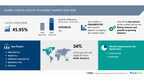
NEW YORK, Nov. 15, 2024 /PRNewswire/ — Report with the AI impact on market trends – The global virtual reality vr headset market size is estimated to grow by USD 25.2 billion from 2024-2028, according to Technavio. The market is estimated to grow at a CAGR of 45.95% during the forecast period. Rising interest and growth in gaming industry is driving market growth, with a trend towards growing ar/vr integration introduced by vendors. However, rising health concerns and problems related to user comfort poses a challenge.Key market players include Alphabet Inc., Apple Inc., ASUSTeK Computer Inc., ByteDance Ltd., FOVE Inc., Goertek Inc., HP Inc., HTC Corp., LG Electronics Inc., Meta Platforms Inc., Microsoft Corp., NOLO Co. Ltd., Pimax Inc., Samsung Electronics Co. Ltd., Seiko Epson Corp., Sony Group Corp., Valve Corp., Varjo Technologies Oy, WorldViz Inc., and Xiaomi Communications Co. Ltd..

Key insights into market evolution with AI-powered analysis. Explore trends, segmentation, and growth drivers- View Free Sample PDF

Virtual Reality VR Headset Market Scope

Report Coverage

Details

Base year

2023

Historic period

2018 – 2022

Forecast period

2024-2028

Growth momentum & CAGR

Accelerate at a CAGR of 45.95%

Market growth 2024-2028

USD 25199.01 million

Market structure

Fragmented

YoY growth 2022-2023 (%)

41.74

Regional analysis

North America, APAC, Europe, Middle East and Africa, and South America

Performing market contribution

North America at 34%

Key countries

US, China, Japan, Germany, and UK

Key companies profiled

Alphabet Inc., Apple Inc., ASUSTeK Computer Inc., ByteDance Ltd., FOVE Inc., Goertek Inc., HP Inc., HTC Corp., LG Electronics Inc., Meta Platforms Inc., Microsoft Corp., NOLO Co. Ltd., Pimax Inc., Samsung Electronics Co. Ltd., Seiko Epson Corp., Sony Group Corp., Valve Corp., Varjo Technologies Oy, WorldViz Inc., and Xiaomi Communications Co. Ltd.

Market Driver

The Virtual Reality market is experiencing significant growth with various companies leading the way. Google Cardboard and Move Motion Controller offer affordable, non-immersive VR experiences. PlayStation Headset, Quest, Microsoft HoloLens, and others provide semi- to fully immersive experiences. Virtual training and designing applications are trending in commercial industries, healthcare, and military sectors. Virtual Reality headsets, also known as Head-Mounted Displays (HMD), include devices from Oculus Rift, PlayStation VR, HTC Vive, and new entrants like Pico and Meta. Health concerns such as dizziness, lethargy, and eyesight/hearing issues are being addressed through advancements in software, hardware, and content. VR simulators and glasses are transforming industries like healthcare, with applications in medical training, patient care systems, and planned surgeries using companies like VirtaMed. The Virtual Reality market also caters to entertainment, with live events like Foo Fighters’ Meta virtual stage, and devices like Oculus Rift and PlayStation VR. The market is driven by large technology companies and start-ups, offering a range of devices from compact, high-resolution HMDs to head-up displays and VR projectors. The adoption of VR is expanding beyond gaming into retail sectors, military training, and even commercial real estate. With advancements in sensors, processors, and AR devices, the future of Virtual Reality is promising. 

The Virtual Reality (VR) and Augmented Reality (AR) markets are experiencing significant growth due to the integration of these technologies. AR overlays digital content onto the physical world, enhancing user experiences. In the gaming industry, major players like Microsoft with HoloLens 2, are combining AR and VR for holographic games. Outside of gaming, businesses use AR/VR for training, simulations, and collaboration. Companies such as Oculus and HTC produce VR headsets with AR capabilities for enterprise applications. This technology revolution is transforming industries by providing interactive and engaging solutions. 

Request Sample of our comprehensive report now to stay ahead in the AI-driven market evolution!

Market Challenges

The Virtual Reality (VR) headset market is experiencing significant growth with major players like Google Cardboard, Move Motion Controller, PlayStation Headset, Oculus Quest, Microsoft HoloLens, and others leading the way. Virtual training and designing are key industries adopting VR technology for assistance and simulation events. Commercial industries, healthcare, and military are also exploring VR for patient care systems, medical training with companies like VirtaMed, and planned surgeries. Challenges include health concerns such as dizziness, lethargy, and eyesight or hearing issues. Hardware and software development, content creation, and VR simulators are crucial for VR headsets like Pico, Meta, and VR glasses (Head Mounted Displays). The VR market includes devices like Oculus Rift, PlayStation VR, and HTC Vive, as well as non-immersive and semi-immersive devices. Large technology companies and start-ups are investing in VR devices, head-up displays, VR projectors, and compact devices with high-resolution displays. VR adoption is expanding in sectors like retail, gaming, computer hardware, and live virtual entertainment, with events featuring artists like Foo Fighters on Meta’s virtual stage. However, challenges remain in addressing VR sickness, neck pain, and low resolution.Virtual Reality (VR) headsets offer an experience, but their long-term use comes with health risks. One such risk is motion sickness or virtual reality sickness, which occurs when there’s a discrepancy between the user’s perceived motion and actual motion. This can lead to symptoms like nausea, vertigo, and pain, making VR technology less accessible. Additionally, prolonged usage can cause visual fatigue and eye strain due to the intense focus required in virtual environments. Manufacturers are working to address these issues by creating more comfortable headsets and reducing motion sickness symptoms to expand the user base.

Discover how AI is revolutionizing market trends- Get your access now!

Segment Overview

This virtual reality vr headset market report extensively covers market segmentation by

Application1.1 Commercial1.2 IndividualType2.1 Mid-range device2.2 Low-end device2.3 High-end deviceGeography3.1 North America3.2 APAC3.3 Europe3.4 Middle East and Africa3.5 South America

1.1 Commercial- The commercial segment holds a substantial share in the global virtual reality (VR) headset market. Businesses utilize VR technology in various ways to enhance training, experiences, and productivity. Applications span across industries, including education, entertainment, and enterprise solutions. VR headsets are increasingly adopted for corporate training and simulation, enabling staff to practice skills in a risk-free virtual environment, thereby reducing training costs. Architectural and design firms also leverage VR for three-dimensional concept visualization and collaboration, fostering creativity and teamwork. Leading VR market players, like HTC Vive, Pico Interactive, and Meta-owned Oculus, cater to commercial needs with customized solutions. The demand for corporate VR headsets is projected to expand significantly, transforming collaboration and training methods in numerous industries. In addition, VR has revolutionized entertainment, with applications extending from gaming to virtual tourism to live events. Gaming experiences have fueled commercial VR adoption, attracting a dedicated user base. VR extends the reach of live events by providing spectators a front-row seat from home, such as concerts and sports. These factors contribute to the growth of the global VR headset market in the forecast period.

Download a Sample of our comprehensive report today to discover how AI-driven innovations are reshaping competitive dynamics

Research Analysis

Virtual Reality (VR) headsets have revolutionized the way we experience technology. These devices transport users into a 3D world, providing an unparalleled level of engagement. Notable VR headsets include Google Cardboard, PlayStation Headset, Quest, HoloLens, Pico, and Meta Quest. The VR market is expanding rapidly, with healthcare, military, and consumer sectors leading the adoption. In healthcare, VR is used for surgeon training, while the military employs it for simulation-based training. Retail sectors also leverage VR for virtual try-ons. Sensors and processors are crucial components, enhancing the user experience. Virtual reality technology continues to evolve, with companies investing heavily to push the boundaries of this exciting technology. The Apple Vision Pro and Meta Quest Pro are upcoming releases that promise to further advance the VR experience.

Market Research Overview

The Virtual Reality (VR) market is experiencing rapid growth with various types of VR headsets available, including Google Cardboard, Move Motion Controller, and standalone devices like Quest. VR technology is revolutionizing industries, from healthcare to commercial sectors, with applications in virtual training, designing, assistance, simulation events, and more. In healthcare, VR is used for planning surgeries, healthcare provisions, patient care systems, and medical training through companies like VirtaMed. The VR market also caters to live virtual entertainment, with events featuring artists like Foo Fighters and Meta virtual stages. VR headsets, also known as Head Mounted Displays (HMDs), come in various forms, from non-immersive to fully immersive, and include devices from Oculus Rift, PlayStation VR, HTC Vive, and Pico. The market also includes compact devices, high-resolution displays, and sensors, processors, and software for VR simulators and glasses. However, health concerns such as dizziness, lethargy, eyesight issues, and hearing issues are potential challenges. The VR market is not limited to large technology companies but also includes start-ups and innovations in AR devices, head-up displays, and VR projectors. The consumer market, retail sectors, military, and gaming industries are also adopting VR technology.

Table of Contents:

1 Executive Summary
2 Market Landscape
3 Market Sizing
4 Historic Market Size
5 Five Forces Analysis
6 Market Segmentation

ApplicationCommercialIndividualTypeMid-range DeviceLow-end DeviceHigh-end DeviceGeographyNorth AmericaAPACEuropeMiddle East And AfricaSouth America

7 Customer Landscape
8 Geographic Landscape
9 Drivers, Challenges, and Trends
10 Company Landscape
11 Company Analysis
12 Appendix

About Technavio

Technavio is a leading global technology research and advisory company. Their research and analysis focuses on emerging market trends and provides actionable insights to help businesses identify market opportunities and develop effective strategies to optimize their market positions.

With over 500 specialized analysts, Technavio’s report library consists of more than 17,000 reports and counting, covering 800 technologies, spanning across 50 countries. Their client base consists of enterprises of all sizes, including more than 100 Fortune 500 companies. This growing client base relies on Technavio’s comprehensive coverage, extensive research, and actionable market insights to identify opportunities in existing and potential markets and assess their competitive positions within changing market scenarios.

Contacts

Technavio Research
Jesse Maida
Media & Marketing Executive
US: +1 844 364 1100
UK: +44 203 893 3200
Email: media@technavio.com
Website: www.technavio.com/

View original content to download multimedia:https://www.prnewswire.com/news-releases/virtual-reality-vr-headset-market-to-grow-by-usd-25-2-billion-2024-2028-gaming-industry-expansion-fuels-demand-report-on-how-ai-drives-transformation—technavio-302306209.html

SOURCE Technavio

Continue Reading
Click to comment

Leave a Reply

Your email address will not be published. Required fields are marked *

Technology

Regulators and audit leaders discuss audit quality and confidence in Canada’s financial reporting

Published

on

By

OTTAWA, ON, May 4, 2026 /CNW/ – Last week, the Office of the Superintendent of Financial Institutions (OSFI), together with the Canadian Public Accountability Board (CPAB) and the Canadian Securities Administrators (CSA) co-hosted a roundtable that brought together senior representatives from audit firms, accounting professional bodies, standard setters, and regulators.

The event provided an opportunity for participants to share perspectives on risks affecting audit quality and the importance of high-quality financial statement audits to maintaining Canada’s trusted and credible capital markets. The dialogue focused on emerging trends, the evolving risk environment, and ways to strengthen public confidence in financial reporting.

Topics discussed this year included:

Current and emerging risks and their implications for audit quality.Rapid technological developments, including Artificial Intelligence (AI).Governance, culture, and ethics within audit firms and across the reporting ecosystem.Fraud risks linked to financial crimes, geopolitical tensions, technological change, and third-party reliance.Expectations and challenges in auditing and assessing financial statement disclosures in a volatile environment.

The roundtable underscored the importance of continued collaboration between regulators and the audit profession to support high-quality audits and maintain public trust in financial reporting across the Canadian capital markets.

Key takeaways

Canada’s financial system remains resilient, but a more complex and dynamic risk environment makes it essential to identify and prioritize the current and emerging risks that matter most.External auditors play an essential role in maintaining integrity, trust, and confidence in financial reporting, particularly amid heightened uncertainty and expanding volumes of information.Regulatory coordination and clear guidance in relation to current and emerging risks help reduce regulatory overlap, promote strong risk management, and lay the groundwork for sustainable growth.Technology is advancing quickly. Areas like AI are changing how decisions are made–creating both opportunities and new risks. Regulators continue to modernize their approaches to keep pace, and audit firms are rapidly adopting new technologies that can enhance audit quality while keeping a high level of skepticism.Gaps in governance, culture, and ethics can lead to breaches in trust in any organization. Given that auditors play a key gatekeeper role, strong oversight, clear accountability, and ethical judgment are essential.As fraud becomes more sophisticated, organizations need to strengthen prevention and detection strategies. With management leading prevention efforts, and regulators and auditors applying a risk-focused lens, technology provides an opportunity to strengthen defences.Financial statement disclosures, particularly those involving estimates, judgments and uncertainty, remain an area where improvements are needed. Auditors play an important role in challenging the clarity and robustness of these disclosures to support better decision-making and reinforce market confidence.

Quotes

“High quality audits are essential to financial system resilience. As risks evolve, from technology to geopolitics to market uncertainty, strong collaboration between regulators and audit professionals helps ensure Canadians can continue to rely on transparent and trustworthy financial reporting.”

– Peter Routledge, Superintendent of Financial Institutions

“Strong audit quality depends on continuous dialogue and a shared understanding across the regulatory and audit ecosystem. Forums like this roundtable help ensure CPAB’s work remains responsive to emerging risks while staying firmly anchored in our mandate to protect investors and support confidence in Canada’s capital markets.”

– Sonny Randhawa, CEO, Canadian Public Accountability Board

“Today’s roundtable serves as an important forum for collaboration, enabling the CSA and the accounting profession to exchange views on emerging risks and further strengthen confidence in Canada’s capital markets. The CSA appreciates the significant collaboration with audit firms, other regulatory agencies, standard setters and professional bodies to date, and we look forward to building on this strong foundation.”

– Stan Magidson, Chair of the Canadian Securities Administrators

SOURCE Office of the Superintendent of Financial Institutions

Continue Reading

Technology

All-in-One, AI-Powered Fleet Innovations Unveiled at Annual Lytx Protect Conference

Published

on

By

Next-Generation Fleet Management Solutions Unify AI with Best-In-Class Telematics, Video Safety, and Operational Insights

SAN DIEGO, May 4, 2026 /PRNewswire/ — Lytx® Inc., the industry pioneer of video and safety-driven efficiency, has introduced a suite of integrated technologies designed to transform fleet operations. Announced at the Lytx Protect Conference®, Lytx’s annual customer conference, the new solutions set a new benchmark for all-in-one platforms that empower fleets to achieve clarity, control, and actionable results. Highlighted at the event, LytxOne™ joins Lytx+™ as two all-in-one solutions built to deliver industry-leading video safety and telematics with equal depth, intelligence, and integrity.

“LytxOne is a purpose-built platform designed from the ground up,” said Chris Cabrera, Chief Executive Officer at Lytx. “We created a unified architecture where video safety, telematics, maintenance, compliance, and asset tracking work seamlessly together. We’re deeply committed to providing our customers with multiple all-in-one pathways that deliver a new standard for fleet technology, transforming operational complexity into total clarity and scalable control for fleets of every size.”

All-in-One Platforms
Developed as an all-in-one solution, LytxOne merges video safety, telematics, maintenance, compliance, and asset tracking into a single platform. No more juggling fragmented systems – the new solution delivers simplicity, scalability, and direct access to essential tools for fleets of any size. LytxOne is currently available for purchase through direct and reseller partner channels, with Lytx’s Driver Safety Program to be integrated in Q3/Q4 2026.

Launched in 2025, Lytx+ provides fleets with another innovative, all-in-one fleet management solution powered by video. It combines award-winning video safety features with leading telematics technology, removing the need for multiple systems or vendors.

Also announced at Protect ’26, Lytx is further expanding its all-in-one footprint through a new collaboration with Platform Science. The integration brings Lytx’s video technology to Platform Science’s Virtual Vehicle, connecting drivers, solutions, data, and devices into a single system built for enterprise trucking.

Supporting each of the all-in-one platforms, the Lytx AI Assistant is designed to transform safety, maintenance, and compliance data into concise, actionable insights as needed. Users no longer need to search through reports or wait for data to be retrieved. Currently in beta with select customers, the AI Assistant synthesizes fleet information, enabling organizations to make timely and well-informed decisions.

AI-Powered Visibility
Bringing intelligence to every angle, Auxiliary Cameras and Lytx’s 360 Hub Kit integrate up to eight HD views across sides, rear, cargo, and blind zones. All footage is cloud-synced and enhanced with AI for instant detection and response to safety events, empowering operators to more closely monitor and protect their assets, vehicles, and worksites. The Lytx 360 Hub Kit will be available in Q3 2026.

With planned support for fixed-site cameras at yards, job sites, and facilities coming in Q1 2027, Lytx extends its all-in-one AI-powered platform beyond vehicles, providing operators with a unified view of moving and stationary assets. More details will be revealed closer to launch, highlighting Lytx’s commitment to enabling true operational unity.

Unified Asset Management
Lytx introduces a comprehensive, platform-native asset tracking portfolio that offers battery-powered and vehicle-powered trackers for a wide range of fleet assets, including forklifts, loaders, trailers, containers, and other high-value equipment. Designed to provide real-time visibility and insights, these trackers enable fleets to efficiently locate, utilize, and protect their assets, with all data seamlessly integrated into dashboards for unified operational management. Several options are available now, with more planned for release throughout 2026.

“At Lytx, we’re redefining fleet management by unifying advanced AI and all-in-one architecture to deliver unmatched clarity, control, and operational insight,” said Cabrera. “From the launch of LytxOne, to AI-powered safety innovations, to integrated asset tracking, our purpose-built solutions empower fleets of every size to simplify complexity, anticipate risk, and connect their people and assets like never before.”

About Lytx
Every day, companies send their most valuable assets into the world. Their people. Their equipment. Their reputations. For nearly three decades, Lytx has given fleets the tools to manage and protect all the assets they have in motion — helping them stay connected with their field operations so they can focus on delivering value and growing their businesses. Using proprietary machine vision and artificial intelligence technology to power our video safety and video telematics solutions, Lytx helps protect and connect more than 6.3 million drivers and thousands of fleets, including more than half of the 10 largest carriers in North America. Lytx’s powerful network of partners and resellers further extends the reach and impact of our technologies across more than 90 countries. For more information about Lytx or to connect with us, visit www.lytx.com, LinkedIn@lytx on X, Facebook or YouTube.

Contact:
Jason Andersen
press@lytx.com 


View original content to download multimedia:https://www.prnewswire.com/news-releases/all-in-one-ai-powered-fleet-innovations-unveiled-at-annual-lytx-protect-conference-302761024.html

SOURCE Lytx, Inc.

Continue Reading

Technology

Fractal EMS Cuts Pricing and Streamlines Contracting to Help Developers Move Faster

Published

on

By

New “Customer-First Pricing” and “Rapid Contracting” make it easier than ever to deploy the industry’s leading EMS platform.

AUSTIN, Texas, May 4, 2026 /PRNewswire/ — Fractal EMS, the market leader in front-of-the-meter solar, BESS, and data center EMS and SCADA, today announced two major customer-focused improvements: meaningfully reduced pricing across its product portfolio and a streamlined contracting process designed to shorten the path from award to notice-to-proceed. Together, the changes are intended to lower the total cost and complexity of deploying projects at a moment when developers, IPPs, and utilities are racing to bring gigawatts of new capacity online.

What’s Changing for Customers
1) Lower Pricing: Fractal EMS has reduced pricing by up to 25%, with additional volume-based discounts for portfolio customers. Through a strategic combination of supply chain optimization and breakthroughs in control architecture, Fractal EMS has unlocked efficiencies that position Fractal as the market’s price leader. These technical and operational advancements enable Fractal to deliver a premium, high-performance platform at the industry’s most competitive price point, maximizing profitability for our partners without compromising on quality or security.

2) Streamlined Contracting: The new contract is less than 50% in length. Working directly with customer legal and procurement teams, Fractal has consolidated its agreement, scope of work, and warranty terms into a single, plain-language package. The combined effect is straightforward: less time spent in red lines and procurement cycles, more time spent commissioning megawatts.

“Our customers told us two things very clearly: bring the price down and make it easier to do business with you. So, we did both. We rebuilt our pricing from the ground up, and we tore up the old contracts in favor of something a customer can read in an afternoon. The goal is simple – make Fractal the lowest-friction way to put a high-performance, U.S.-made EMS on a project.” – Daniel Crotzer, CEO, Fractal EMS

3) New “A La Carte” Flexible Scope: While remaining the only provider capable of delivering full, turnkey vertical controls, Fractal EMS is introducing a flexible, A La Carte approach. Partners can now select a core EMS offering or customize the scope by choosing from: networking, BMS, SCADA, PPC/MPC, cybersecurity, analytics, and monitoring. This modularity ensures that Fractal EMS can integrate seamlessly into any project configuration and be the best partner for OEMs and EPC providers.

4) Global Partnerships: Fractal EMS continues to expand its global footprint, having successfully deployed 15+ GW of advanced control solutions across Europe, South America, Australia, Canada, and the United States. We are actively seeking to forge lasting, high-impact partnerships with utilities, developers/IPPs, suppliers, and EPCs who require bankable performance and seamless integration. At the core of every collaboration is a deep commitment to customer success and long-term reliability, ensuring that our partners’ critical energy assets operate with maximum uptime and security, regardless of geography or grid complexity.

These changes also reinforce Fractal’s open, multi-OEM approach. Because Fractal’s controls work across battery and PCS suppliers, customers can adopt the new pricing, contracting, and scoping framework without changing the rest of their project stack — and without sacrificing cybersecurity, U.S.-made hardware, and investment-grade controls that have made Fractal the choice for utility-scale developers.

Availability
The new pricing and streamlined contracting framework are effective immediately for all new requests and are being offered to existing customers on a project-by-project basis. Customers and prospective customers can request the updated pricing sheet and master agreement template at fractalems.com or by contacting their Fractal account representative.

About Fractal EMS
Fractal EMS delivers a comprehensive, fully integrated energy management and SCADA platform that combines advanced software, hardware controllers, seamless system integration, robust cybersecurity, and powerful analytics for storage, solar, hybrid, and data center projects. Supported by a 24/7 remote operations center (NERC-CIP Medium), Fractal EMS offers hardware-agnostic, turnkey controls across BMS, EMS/PPC, MPC, and SCADA—all unified on a single, flexible, and scalable architecture. Fractal EMS confirms that its control hardware meets Non-Prohibited Foreign Entity (Non-PFE/FEOC) and domestic designations. This ensures that projects utilizing Fractal EMS are fully compliant with the latest federal requirements and domestic content incentives. For more information, visit www.fractalems.com.

View original content to download multimedia:https://www.prnewswire.com/news-releases/fractal-ems-cuts-pricing-and-streamlines-contracting-to-help-developers-move-faster-302761449.html

SOURCE Fractal EMS Inc.

Continue Reading

Trending