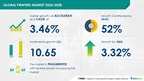
NEW YORK, Nov. 18, 2024 /PRNewswire/ — Report on how AI is driving market transformation – The global printers market size is estimated to grow by USD 10.65 billion from 2024-2028, according to Technavio. The market is estimated to grow at a CAGR of 3.46% during the forecast period. Rising demand for printers from SMES is driving market growth, with a trend towards increasing adoption of 3D technology in printers. However, increased digitization in enterprises poses a challenge.Key market players include Bixolon Co. Ltd., Brady Corp., Brother Industries Ltd., Canon Inc., Citizen Systems Europe GmbH, Dell Technologies Inc., Fujitsu Ltd., Honeywell International Inc., HP Inc., Konica Minolta Inc., Lenovo Group Ltd., Lexmark International Inc., Ninestar Co. Ltd., Oki Electric Industry Co. Ltd., Panasonic Holdings Corp., Redington India Ltd., Ricoh Co. Ltd., Riso Kagaku Corp, Seiko Epson Corp., Sharp Corp., Toshiba Corp., Xerox Holdings Corp., Zebra Technologies Corp., and KYOCERA Corp..
Key insights into market evolution with AI-powered analysis. Explore trends, segmentation, and growth drivers- View Free Sample PDF
Printers Market Scope
Report Coverage
Details
Base year
2023
Historic period
2018 – 2022
Forecast period
2024-2028
Growth momentum & CAGR
Accelerate at a CAGR of 3.46%
Market growth 2024-2028
USD 10.65 billion
Market structure
Fragmented
YoY growth 2022-2023 (%)
3.32
Regional analysis
APAC, Europe, North America, South America, and Middle East and Africa
Performing market contribution
APAC at 52%
Key countries
US, China, Japan, Germany, and UK
Key companies profiled
Bixolon Co. Ltd., Brady Corp., Brother Industries Ltd., Canon Inc., Citizen Systems Europe GmbH, Dell Technologies Inc., Fujitsu Ltd., Honeywell International Inc., HP Inc., Konica Minolta Inc., Lenovo Group Ltd., Lexmark International Inc., Ninestar Co. Ltd., Oki Electric Industry Co. Ltd., Panasonic Holdings Corp., Redington India Ltd., Ricoh Co. Ltd., Riso Kagaku Corp, Seiko Epson Corp., Sharp Corp., Toshiba Corp., Xerox Holdings Corp., Zebra Technologies Corp., and KYOCERA Corp.
Market Driver
The printing market is thriving with trends like mobile printing, color printing, and packaging printing leading the way. Printers, whether inkjet or laser, are essential electronic tools for producing text and images on paper from computers. Inkjet printing uses solvent, water-based, UV-based, or LED inks, while toner is used in laser printers. The cost of ink is a significant factor, with inkjet printer cartridges and ink tank printers offering cost-effective solutions. Analog printing, such as dot matrix and impact printers, are being replaced by digital printing, including line printers and multifunction printers (MFPs). MFPs offer digital features and security, making them popular in residential, commercial, educational, and enterprise settings. Managed print services help businesses optimize their printing needs. Cloud-based computing and software ecosystems facilitate digital integration, enabling users to print from Dropbox, Google Drive, and other platforms. The home printer market includes wired and wireless printers, with MFPs offering various connectivity options like USB, data cable, short-range radio, Bluetooth, Local Area Network (LAN), Ethernet, and WiFi. The global printer market is vast, with various types of printers catering to diverse industries, from e-commerce businesses and online grocery shopping to food ordering and Point of Sale (POS) terminals, cash registers, and ATMs. Environmental concerns are increasingly important, with some companies using ocean-bound plastic in their printers and focusing on reducing their carbon footprint and energy use. Advancements in technology include artificial intelligence (AI), machine learning (ML), and data analytics, enabling automation and security features. Security experts are addressing vulnerabilities, ensuring data privacy and confidentiality. The future of printing is sustainable, with a focus on environmental impact, reducing heavy metals and pollution, and minimizing carbon emissions.
The printer market is experiencing a notable shift with the increasing adoption of 3D printing technology. Initially used for prototyping, this technology has expanded into mainstream manufacturing. In healthcare, it produces patient-specific medical implants, prosthetics, and surgical models, enhancing patient care. In aerospace and automotive sectors, 3D printing creates lightweight, complex parts with reduced lead times and costs, improving aircraft and automobile performance and fuel efficiency.
Request Sample of our comprehensive report now to stay ahead in the AI-driven market evolution!
Market Challenges
The printing market faces several challenges in the current business landscape. Printers, including A4 printers and multifunction printing devices, must keep up with advancements such as mobile printing and cloud-based computing. Color printing and packaging printing remain in demand, but ink cost and the ecosystem of inks, including inkjet, solvent, water-based, UV-based, and LED inks, continue to be a concern. Analog printing technologies like dot matrix and impact printers are being replaced by digital printing, which offers digital features and security. Environmental impact is a growing concern, with companies exploring ocean-bound plastic and other sustainable solutions. Printers serve various industries, from residential and commercial to educational institutions and enterprises. Ink tank printers, toner, and ink cartridges are essential components, with cost per page and ink subscriptions being key considerations. Printers are essential electronic tools for producing text and images on paper from computers and other devices. They use various output technologies like thermal, inkjet, and laser, and connect via data cables, USB, short-range radio, Bluetooth, Local Area Network (LAN), Ethernet, WiFi, and memory cards. Printing markets are expanding with the digital integration of e-commerce businesses, online grocery shopping, food ordering, and other applications. Product enhancements, such as managed print services, security features, and environmental sustainability, are crucial. Printing processes contribute to carbon emissions and have a carbon footprint, impacting climate change and energy use. Companies are exploring artificial intelligence (AI), machine learning (ML), and data analytics to improve automation and reduce vulnerabilities. Security experts focus on addressing potential vulnerabilities and ensuring data privacy.The global printer market may experience hindrance in growth due to the increasing digitization trend in various industries. With the rise of digital channels, enterprises are shifting towards electronic versions of documents, such as e-brochures, e-catalogs, and e-manuals, instead of printed materials. For instance, digital bills and statements have replaced their hard copy counterparts. The growing number of internet users, the increasing penetration of smartphones, and advancements in communication network infrastructure are driving the adoption of digital channels by businesses for promoting their products and services and sharing essential information. Digitization’s impact on the printer market is significant, making it essential for printer manufacturers to adapt and innovate to cater to evolving business needs.
Discover how AI is revolutionizing market trends- Get your access now!
Segment Overview
This printers market report extensively covers market segmentation by
Technology 1.1 Laser1.2 Inkjet1.3 OthersType 2.1 Multifunction printers2.2 Single function printersGeography 3.1 APAC3.2 Europe3.3 North America3.4 South America3.5 Middle East and Africa
1.1 Laser- Laser printing is a widely used non-impact printing technology that applies electrophotography or electrostatic charges for image production. In this process, a laser beam is utilized to induce charges, enabling precise printing. Laser printing caters to various applications, including variable data printing and wide-format printing. Compared to inkjet and LED printing, laser printing boasts advantages such as faster speed, consistent precision, and lower running costs due to the use of dry ink. Primarily employed in offices for their accuracy and efficiency, laser printers have seen increased demand from enterprises. In response, printer manufacturers like Ninestar Co. Ltd. Have expanded their laser printer offerings, such as the Elite Series launched in January 2021. Key factors driving the adoption of laser printing technology include the emergence of compact laser printers, the growing demand for A4 and A3 laser multifunction printers from businesses, and the declining average selling price of laser printers. However, the emergence of ink tank printers may hinder growth during the forecast period. Despite this, the demand for laser printing technology is expected to remain steady due to the continuous enterprise demand for laser multifunction printers.
Download a Sample of our comprehensive report today to discover how AI-driven innovations are reshaping competitive dynamics
Research Analysis
The printing market encompasses various types of printers, including mobile, color, and packaging printing solutions. These printers cater to diverse needs, from entry-level A4 models to advanced industrial machines. The advent of cloud-based computing and software ecosystems has revolutionized the industry, enabling seamless integration with computers, mobile devices, and other digital tools. Printers now support multiple output technologies, such as inkjet and solvent inks, to produce high-quality text and images on various printing media. Hardware components like data cables, USB, and short-range radio technologies (Bluetooth) facilitate easy connectivity. Printers have evolved into electronic tools that transform digital documents, photos, and computer data into tangible outputs. Inkjet printing, with its ecosystem of inks, has gained significant popularity due to its versatility and affordability. Solvent inks, on the other hand, are preferred for packaging printing applications due to their durability and ability to adhere to different materials. Overall, the printing market continues to innovate, offering an extensive range of products to cater to the diverse needs of businesses and consumers alike.
Market Research Overview
The printing market encompasses a wide range of printers and printing technologies, including mobile printing, color printing, packaging printing, and analog and digital printing solutions. Printers come in various forms, from A4 printers for home use to industrial-grade machines for commercial and enterprise applications. The market also includes inkjet, solvent, water-based, UV-based, and LED ink systems, each with its unique advantages and cost structures. Cloud-based computing and software ecosystems play a crucial role in the printing industry, enabling remote printing and managing print jobs. Digital features and security are essential considerations, with environmental sustainability becoming increasingly important. Ocean-bound plastic and other eco-friendly initiatives are gaining traction. Printers serve various industries, from residential and educational institutions to commercial enterprises and e-commerce businesses. They are used to print text and images on paper, computers, and other printing media, with various connectivity options such as data cables, USB, short-range radio, Bluetooth, Local Area Network (LAN), Ethernet, and WiFi. Printers are essential office equipment and computer peripherals, with various types, including line printers, copiers, multifunctional systems, and managed print services. The global printer market is diverse and constantly evolving, with new technologies like AI, ML, and data analytics driving product enhancements and automation. However, printers also have environmental impacts, including carbon emissions, energy use, and the use of heavy metals. Security is another critical concern, with vulnerabilities and the need for security experts to address potential threats. Overall, the printing market is a dynamic and complex ecosystem that continues to adapt to the changing needs of businesses and consumers.
Table of Contents:
1 Executive Summary
2 Market Landscape
3 Market Sizing
4 Historic Market Size
5 Five Forces Analysis
6 Market Segmentation
TechnologyLaserInkjetOthersTypeMultifunction PrintersSingle Function PrintersGeographyAPACEuropeNorth AmericaSouth AmericaMiddle East And Africa
7 Customer Landscape
8 Geographic Landscape
9 Drivers, Challenges, and Trends
10 Company Landscape
11 Company Analysis
12 Appendix
About Technavio
Technavio is a leading global technology research and advisory company. Their research and analysis focuses on emerging market trends and provides actionable insights to help businesses identify market opportunities and develop effective strategies to optimize their market positions.
With over 500 specialized analysts, Technavio’s report library consists of more than 17,000 reports and counting, covering 800 technologies, spanning across 50 countries. Their client base consists of enterprises of all sizes, including more than 100 Fortune 500 companies. This growing client base relies on Technavio’s comprehensive coverage, extensive research, and actionable market insights to identify opportunities in existing and potential markets and assess their competitive positions within changing market scenarios.
Contacts
Technavio Research
Jesse Maida
Media & Marketing Executive
US: +1 844 364 1100
UK: +44 203 893 3200
Email: media@technavio.com
Website: www.technavio.com/
View original content to download multimedia:https://www.prnewswire.com/news-releases/printers-market-to-grow-by-usd-10-65-billion-2024-2028-driven-by-rising-sme-demand-with-market-insights-powered-by-ai—technavio-302308073.html
SOURCE Technavio









 Technology5 days ago
 Technology5 days ago

 Technology5 days ago
 Technology5 days ago
 Technology5 days ago
 Technology5 days ago