Connect with us

Technology

Private Cloud Services Market to Grow by USD 619.08 Billion (2024-2028), Driven by Demand for Enhanced Data Security, with AI Redefining Market Landscape – Technavio

Published

on

NEW YORK, Nov. 18, 2024 /PRNewswire/ — Report with market evolution powered by AI – The global private cloud services market size is estimated to grow by USD 619.08 billion from 2024-2028, according to Technavio. The market is estimated to grow at a CAGR of over 26.71%  during the forecast period. Increased inclination for private cloud for enhanced data security is driving market growth, with a trend towards increasing acceptance of private cloud in BFSI segment. However, high costs associated with private cloud services  poses a challenge.Key market players include Adobe Inc., Alibaba Group Holding Ltd., Alphabet Inc., Amazon.com Inc., AT and T Inc., Cisco Systems Inc., Dell Technologies Inc., Fujitsu Ltd., Hewlett Packard Enterprise Co., International Business Machines Corp., Microsoft Corp., Oracle Corp., Rackspace Technology Inc., Salesforce Inc., SAP SE, ServiceNow Inc., Tencent Holdings Ltd., Verizon Communications Inc., VMware Inc., and Workday Inc..

Key insights into market evolution with AI-powered analysis. Explore trends, segmentation, and growth drivers- View Free Sample PDF

Private Cloud Services Market Scope

Report Coverage

Details

Base year

2023

Historic period

2018 – 2022

Forecast period

2024-2028

Growth momentum & CAGR

Accelerate at a CAGR of 26.71%

Market growth 2024-2028

USD 619.08 billion

Market structure

Fragmented

YoY growth 2022-2023 (%)

23.9

Regional analysis

North America, Europe, APAC, South America, and Middle East and Africa

Performing market contribution

North America at 59%

Key countries

US, China, Japan, UK, and Germany

Key companies profiled

Adobe Inc., Alibaba Group Holding Ltd., Alphabet Inc., Amazon.com Inc., AT and T Inc., Cisco Systems Inc., Dell Technologies Inc., Fujitsu Ltd., Hewlett Packard Enterprise Co., International Business Machines Corp., Microsoft Corp., Oracle Corp., Rackspace Technology Inc., Salesforce Inc., SAP SE, ServiceNow Inc., Tencent Holdings Ltd., Verizon Communications Inc., VMware Inc., and Workday Inc.

Market Driver

Private cloud services have gained significant traction in the business world due to their ability to offer dedicated computing resources with enhanced data security and compliance with regulatory standards. IT infrastructure for SMEs and large enterprises in industries such as IT & Telecommunication, Healthcare, Media and Entertainment can benefit from private cloud solutions. Legacy systems and interoperability concerns are addressed through cloud integration and deployment. Scalability and cost efficiency are key drivers for cloud adoption, with virtualization and managed services enabling businesses to optimize their IT resources. Cloud providers offer a range of solutions including hybrid cloud, cloud storage, and cloud computing, ensuring business continuity and disaster recovery. Cloud automation, management, and security solutions ensure seamless operations and protection of sensitive data. Cloud infrastructure, applications, and performance continue to innovate, driving growth in the private cloud services market. 

Financial institutions are increasingly adopting private cloud solutions for their agility and cost savings. Private Platform-as-a-Service (PaaS) enables the development, testing, and deployment of applications on a secure cloud platform. The need for data security and regulatory compliance drives this trend. Financial organizations seek to reduce capital expenditures and focus on business transformation initiatives. Digital transformation is a priority, and private cloud services help achieve this goal. Many financial institutions have already invested in private cloud infrastructure due to their large data generation requirements. 

Request Sample of our comprehensive report now to stay ahead in the AI-driven market evolution!

 Market Challenges

Private cloud services offer businesses the flexibility and scalability of cloud computing while maintaining control over their IT infrastructure. However, there are challenges that must be addressed for successful adoption. These include securing computing resources, complying with regulatory standards, integrating with legacy systems, ensuring interoperability, and addressing the needs of SMEs and large enterprises in various industries such as IT & Telecommunication, Healthcare, Media and Entertainment, and those subject to HIPAA. Scalability, cost efficiency, and virtualization are key benefits, but challenges like cloud migration, data storage, business continuity, and disaster recovery require careful planning and the right cloud solutions and providers. Cloud architecture, performance, security, and innovation are ongoing concerns. Ultimately, the goal is to find the right cloud deployment and management strategy for your business needs.A private cloud is a dedicated cloud solution for an organization or individual, offering secure and isolated computing resources. Services like data centers and networking are delivered either on-premises or off-premises by third-party vendors. The infrastructure is not shared with other customers, ensuring greater control and visibility for businesses with compliance-sensitive IT workloads. Customization is a key benefit, catering to unique business needs. However, the costs for customized private cloud services can be substantial due to the dedicated resources involved.

Discover how AI is revolutionizing market trends- Get your access now!

Segment Overview 

This private cloud services market report extensively covers market segmentation by  

Service 1.1 IaaS1.2 SaaS1.3 PaaSType 2.1 Large enterprise2.2 Small2.3 medium enterpriseGeography 3.1 North America3.2 Europe3.3 APAC3.4 South America3.5 Middle East and Africa

1.1 IaaS-  Private cloud IaaS (Infrastructure as a Service) is a business model that delivers outsourced computing infrastructure, including servers, storage, and data center space or network components, over the internet. IaaS vendors offer enterprises on-demand access to a large pool of IT equipment installed across multiple data centers. This model provides several benefits, such as better security, cost savings, quick access to resources, rapid innovation, and ease in shifting resource usage. Private cloud IaaS solutions are more secure as they operate within corporate firewalls, eliminating the need for upfront capital expenditures and reducing costs. They offer quick access to resources, allowing businesses to scale up or down as needed, and enable innovation with minimal lead time. Cisco Workload Optimization Manager and Amazon Virtual Private Cloud (VPC) are examples of private cloud IaaS products. Through these offerings, vendors provide dedicated hardware, software, and support infrastructure to a single tenant. Private IaaS services are gaining popularity due to their security advantages, ease of use, and cost savings, making them an attractive option for both large enterprises and small and medium-sized businesses. The increasing adoption of private cloud services by governments in developed and developing regions is also expected to fuel market growth.

Download a Sample of our comprehensive report today to discover how AI-driven innovations are reshaping competitive dynamics

Research Analysis

The Private Cloud Services market offers businesses the ability to leverage Computing resources and IT infrastructure within their own secure environments. Data security is a top priority, with regulatory standards such as HIPAA ensuring compliance for industries like Healthcare. SMEs and Large Enterprises in IT & Telecommunication, Manufacturing, Media and Entertainment, and other sectors can benefit from the scalability and cost efficiency of Private Cloud Services. Legacy systems can be seamlessly integrated, addressing Interoperability concerns. Managed services, Hybrid cloud, Cloud migration, Cloud storage, and Cloud computing solutions are available to meet various business needs. Business continuity is ensured through virtualization and data center services. Private Cloud Services offer a flexible and customizable alternative to Public Cloud Services, making them an attractive option for organizations looking to maintain control over their IT environment.

Market Research Overview

The Private Cloud Services market offers businesses the ability to leverage Computing resources and IT infrastructure within their own secure environments. Data security is a top priority, with regulatory standards such as HIPAA ensuring compliance for industries like Healthcare. Legacy systems can be integrated with cloud solutions through Cloud integration and Cloud deployment, addressing Interoperability concerns. SMEs and Large Enterprises in IT & Telecommunication, Media and Entertainment, and other sectors benefit from the Scalability and Cost efficiency of Private Cloud Services. Virtualization, Cloud management, and Cloud security ensure Business continuity and Disaster recovery. Cloud automation and Cloud performance enhance productivity, while Cloud infrastructure, Cloud solutions, and Cloud adoption continue to drive innovation. Cloud providers offer Managed services, Hybrid cloud, Cloud storage, Cloud computing, and Cloud architecture to meet diverse business needs. Cloud migration and Cloud integration are essential for seamless transition to the cloud.

Table of Contents:

1 Executive Summary
2 Market Landscape
3 Market Sizing
4 Historic Market Size
5 Five Forces Analysis
6 Market Segmentation

ServiceIaaSSaaSPaaSTypeLarge EnterpriseSmallMedium EnterpriseGeographyNorth AmericaEuropeAPACSouth AmericaMiddle East And Africa

7 Customer Landscape
8 Geographic Landscape
9 Drivers, Challenges, and Trends
10 Company Landscape
11 Company Analysis
12 Appendix

About Technavio

Technavio is a leading global technology research and advisory company. Their research and analysis focuses on emerging market trends and provides actionable insights to help businesses identify market opportunities and develop effective strategies to optimize their market positions.

With over 500 specialized analysts, Technavio’s report library consists of more than 17,000 reports and counting, covering 800 technologies, spanning across 50 countries. Their client base consists of enterprises of all sizes, including more than 100 Fortune 500 companies. This growing client base relies on Technavio’s comprehensive coverage, extensive research, and actionable market insights to identify opportunities in existing and potential markets and assess their competitive positions within changing market scenarios.

Contacts

Technavio Research
Jesse Maida
Media & Marketing Executive
US: +1 844 364 1100
UK: +44 203 893 3200
Email: media@technavio.com
Website: www.technavio.com/

View original content to download multimedia:https://www.prnewswire.com/news-releases/private-cloud-services-market-to-grow-by-usd-619-08-billion-2024-2028-driven-by-demand-for-enhanced-data-security-with-ai-redefining-market-landscape—technavio-302308019.html

SOURCE Technavio

Continue Reading

Technology

NUHS, SINGTEL AND ERICSSON EXPAND PARTNERSHIP TO ADVANCE NEXT-GENERATION CONNECTED HEALTHCARE

Published

on

By

Extended collaboration will accelerate research and development in advanced connectivity and emerging 5G Advanced & future 6G technologies for Healthcare of the Future.

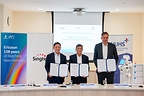
SINGAPORE, Nov. 3, 2026 /PRNewswire/ — The National University Health System (NUHS), Singtel and Ericsson today signed a Memorandum of Understanding (MOU), reinforcing their commitment to a strategic partnership to advance connected healthcare, 5G-Advanced and 6G technology, as well as connected intelligence.

The collaboration will focus on research and development, harnessing successive generations of telecommunications and artificial intelligence technology to deliver deployable healthcare applications. NUHS will provide clinical, academic and research leadership; Ericsson will contribute expertise in mobile network technologies, network architecture and future 6G research; and Singtel will contribute expertise in advanced network deployment and services.

As part of the collaboration, Singtel and Ericsson will be founding partners of NUHS’ newly established National University XG AI Centre (NXAC), which will serve as a platform for developing and translating network-enabled healthcare applications.

NXAC will bring together healthcare, telecommunications and technology expertise. The name “XG” reflects the Centre’s longer-term ambition to span successive generations of network technology, from 5G today towards 6G and beyond.

NXAC will be the world’s first 6G AI centre dedicated to healthcare, as well as Singapore’s first translational research and development centre, which aims to serve the global healthcare community. It will provide a platform for industry experts and healthcare professionals to co-develop and validate applications using next-generation network infrastructure and AI technologies.

Professor Yeoh Khay Guan, Chief Executive, NUHS, said: “Our interest in advanced networks and AI lies in what they can do for our patients across our 14 entities, and the healthcare professionals who care for them. By bringing together clinical and industry expertise, we hope to harness future generations of telecommunications technology into practical healthcare applications. These range from autonomous mobile robots supporting hospital logistics and patient care, to connected mobile devices that extend care into the home, AI-enabled intelligent fabric for the healthcare industry, and human augmentation for advanced surgeries.”

Growing R&D capabilities as a testbed for healthcare solutions

NXAC will support the translation of emerging technologies from research into real-world healthcare use. As a testbed, it will enable its team and industry partners to work alongside clinicians, nurses and operations teams to develop and evaluate technologies in a working hospital environment.

The collaboration will grow capabilities at the intersection of healthcare, telecommunications, AI and robotics. This will include joint training programmes, fellowships, internships and clinician-engineer collaborations, bringing healthcare and technology expertise closer. Additionally, the partners intend to jointly pursue public research and innovation funding, including the establishment of a corporate laboratory or equivalent industry-public research programme hosted by NUHS and undertaken through NXAC.

Mr Ng Tian Chong, Chief Executive Officer, Singtel Singapore, said: “As Singapore prepares for a rapidly ageing population and increasingly complex healthcare needs, we have an opportunity to fundamentally rethink how care is delivered with technology. Singtel is proud to bring our advanced network and digital capabilities to help realise NUHS’ vision of an intelligent, trusted and borderless healthcare system – one that empowers healthcare professionals and enables more Singaporeans to live longer, healthier and more fulfilling lives.”

Mr Daniel Ode, Head of Ericsson Singapore, Brunei and Philippines and Global Customer Unit Singtel, said: “Next-generation healthcare applications such as robotic surgery, holomedicine, and remote monitoring demand deterministic network performance that cannot be compromised. Through NXAC, Ericsson is proud to partner with Singtel and NUHS, contributing our global R&D and advanced network capabilities to translate innovation into clinical practice. By elevating clinical care standards and augmenting frontline clinical teams, we are further reinforcing Singapore’s global leadership as the benchmark for the AI-native hospital.”

Driving better outcomes for patients and hospitals

Through NXAC, NUHS aims to enable a future for proactive, personalised and continuous care, extending from the hospital into patients’ homes and communities. Connected wearables could support continuous monitoring and preventive care beyond the hospital, while ambient AI and contactless sensing could help care teams better understand patients’ conditions and identify potential risks.

Within hospitals, autonomous robotics could support logistics, medication delivery and patient support, while spatial intelligence and smarter facilities could improve the way hospitals manage their people, assets and infrastructure. Extended-reality technologies could also support robot-assisted surgery, holographic guidance, clinical training and remote specialist collaboration.

Together, these capabilities point towards a healthcare environment where technology works increasingly in the background to support clinical teams, make hospital operations more responsive, and maintain continuity of care across different settings.

Key innovation initiatives supported by next-gen connectivity

NXAC plans to spearhead initiatives built on the potential of emerging technologies, first supported by 5G and 5G-Advanced capabilities, with the programme designed to evolve towards early 6G.

Areas of development include:

Ambient AI healthcare: Supporting clinical workflows, contactless monitoring and earlier risk detection.Spatial intelligence and sensing: Developing real-time location and sensing capabilities to improve visibility of people, assets and hospital activities.Simulation-to-real-world development: Training and testing physical and AI-enabled systems in simulated hospital environments before real-world deployment.Autonomous healthcare facilities: Using AI, digital twins and predictive technologies to improve facilities management, reliability and sustainability.Connected devices and wearables: Connecting medical devices and wearables to support hospital operations and care beyond the hospital, including hospital-at-home and remote rehabilitation.Autonomous medical robotics: Exploring the use of autonomous robots for hospital logistics, medication delivery and patient support.Medical extended reality: Advancing applications for clinical education, remote specialist collaboration and surgical support.

Note to editors

The NUHS-Singtel-Ericsson MOU builds on five years of collaboration between them in exploring advanced connectivity for healthcare. Beginning with 5G infrastructure in 2021, the partnership expanded to the deployment of an indoor 5G network at NUH in 2022, covering 10 operating theatres and three inpatient wards when fully commissioned in November 2023.

In February this year, NUHS also formed a strategic partnership with the Global System for Mobile Communications Association (GSMA) GSMA Foundry, under which NUHS serves as the first global healthcare sandbox for the telecommunications industry. NXAC will serve as the global healthcare test-bed sandbox for over-the-horizon technology, that may be co-developed and validated here in NUHS.

Key terms

National University XG AI Centre (NXAC)

A translational R&D centre and testbed for developing and evaluating network-enabled healthcare applications.

XG

A reference to successive generations of network technology, from 5G today towards 6G and beyond.

5G-Advanced

The evolving generation of 5G capabilities that will support the programme before it progresses towards early 6G.

Connected healthcare

Healthcare applications enabled by connectivity linking devices, systems, care teams and settings.

Ambient AI healthcare

Applications supporting clinical workflows, contactless monitoring and earlier risk detection.

Spatial intelligence and sensing

Real-time location and sensing capabilities to improve visibility of people, assets and hospital activities.

Medical extended reality

Applications supporting clinical education, remote specialist collaboration and surgical support.

About the National University Health System (NUHS)­

The National University Health System (NUHS) aims to transform how illness is prevented and managed by discovering causes of disease, development of more effective treatments through collaborative multidisciplinary research and clinical trials, and creation of better technologies and care delivery systems in partnership with others who share the same values and vision.

Institutions in the NUHS Group include the National University Hospital, Ng Teng Fong General Hospital, Jurong Community Hospital, Alexandra Hospital and the upcoming Tengah General and Community Hospital; three National Specialty Centres – National University Cancer Institute, Singapore (NCIS), National University Heart Centre, Singapore (NUHCS) and National University Centre for Oral Health, Singapore (NUCOHS); the National University Polyclinics (NUP); Jurong Medical Centre; and three NUS health sciences schools – NUS Yong Loo Lin School of Medicine (including the Alice Lee Centre for Nursing Studies), NUS Faculty of Dentistry and NUS Saw Swee Hock School of Public Health.

With member institutions under a common governance structure, NUHS creates synergies for the advancement of health by integrating patient care, health science education and biomedical research. As a Regional Health System, NUHS works closely with health and social care partners across Singapore to develop and implement programmes that contribute to a healthy and engaged population in the Western part of Singapore.

For more information, please visit www.nuhs.edu.sg.

About Singtel Group

Singtel Group is a leading Asia-based connectivity, digital infrastructure and services company with businesses and strategic investments globally that serve consumers, enterprises and governments.

The Group’s telecoms businesses include Singtel Singapore, Optus and regional associates Airtel, AIS, Globe and Telkomsel. Together, they give Singtel a significant footprint across Asia, Australia and Africa, reaching over 839 million mobile customers in 20 countries.

Its digital infrastructure business includes regional data centre arm, Nxera, and a joint investment with KKR in STTGDC. Digital services arm, NCS, complements this infrastructure with enterprise technology and AI solutions, while sovereign AI cloud RE:AI brings together Singtel’s AI capabilities. 

As it powers the digital and AI economy, Singtel is dedicated to driving innovation and transformation to create new and exciting customer experiences, support enterprises in their digital transformation and shape a more sustainable, digital future.

About Ericsson

Ericsson’s high-performing, programmable networks provide connectivity for billions of people every day. For 150 years, we’ve been pioneers in creating technology for communication. We offer mobile communication and connectivity solutions for service providers and enterprises. Together with our customers and partners, we make the digital world of tomorrow a reality.

www.ericsson.com

View original content to download multimedia:https://www.prnewswire.com/news-releases/nuhs-singtel-and-ericsson-expand-partnership-to-advance-next-generation-connected-healthcare-302929007.html

SOURCE National University Health System (NUHS)

Continue Reading

Technology

BIT Group and Techtanium Sign MOU to Advance Tokenized Assets and Institutional Digital Finance

Published

on

By

The strategic partnership pairs Techtanium’s Digital Finance OS (DFOS) and banking technology with BIT Group’s on-chain financial infrastructure to establish a pathway connecting existing financial systems with tokenized assets and institutional liquidity.

SINGAPORE, Nov. 4, 2026 /PRNewswire/ — BIT Group, a digital asset financial infrastructure group, and Techtanium, a Singapore-based global fintech company, signed a strategic Memorandum of Understanding (MOU) to explore new opportunities for banks and financial institutions in tokenized finance. The MOU was signed by Eva Meng, Head of Matrixdock, on behalf of BIT Group, and Dai Ke, CEO of Techtanium.

By combining BIT Group’s tokenization, institutional custody and liquidity infrastructure with Techtanium’s digital finance platform and banking capabilities, the partnership aims to help banks access new asset classes, develop innovative financial products and explore new business models while building on their existing banking infrastructure.

Bridging banking infrastructure and on-chain financial services

As financial institutions explore tokenized assets and digital finance, the requirements extend beyond issuing digital assets. Institutions must also consider how these assets are safeguarded, managed, traded, and financed throughout their lifecycle while operating within institutional-grade standards for compliance, risk management, governance, security, and operational oversight.

The partnership brings together the complementary strengths of BIT Group and Techtanium:

Techtanium – Digital Finance Platform

Techtanium brings its Digital Finance OS (DFOS), a unified and modular platform designed to support banks’ evolution from traditional banking to next-generation digital finance. Combining Unified Core, Super Gateway, tokenization and end-to-end business orchestration capabilities, DFOS enables banks to develop, distribute and operate financial products and services across traditional and tokenized finance.

Beyond connectivity, the platform supports the underlying banking processes, including accounts, payments, settlement and ongoing operations, while enabling access to emerging digital asset ecosystems. This helps financial institutions expand their product portfolios, develop new customer offerings and explore new business models built on their established banking capabilities.

BIT Group – On-Chain Financial Infrastructure

BIT Group brings an established digital asset financial infrastructure ecosystem spanning asset tokenization, institutional custody, trading, liquidity, financing, and asset management. These capabilities are underpinned by BIT Group’s experience serving institutional clients, alongside its compliance, risk management, and operational frameworks. Within the BIT Group ecosystem, two specialized businesses contribute directly to the partnership:

Matrixdock, BIT’s real-world asset (RWA) tokenization platform established in 2023, brings proven experience in asset tokenization, reserve management, and on-chain settlement. Matrixdock’s institutional-grade offerings include tokenized gold (XAUm), tokenized silver (XAGm), and tokenized short-term U.S. Treasuries (STBT), supported by transparent and verifiable structures. Its precious metal products are further differentiated by established custody infrastructure in Asia and physical redemption capabilities. Availability is subject to applicable eligibility and jurisdictional restrictions.Cactus Custody, BIT Group’s institutional digital asset custody business, provides institutional custody infrastructure, multi-party computation (MPC) and off-exchange settlement solutions. Relevant BIT Group entities hold a Hong Kong TCSP licence and membership in the VQF Self-Regulatory Organization in Switzerland.

Developing institutional solutions and market opportunities

The partnership aims to help banks expand their financial offerings, from accessing tokenized assets and institutional liquidity to exploring bank-issued products, such as tokenized deposits. These opportunities could enable new services and business models while building on existing banking infrastructure, without necessarily replacing core systems, and maintaining banking-grade controls for compliance, risk management, security and operational controls.

Under the MOU, BIT Group and Techtanium intend to collaborate on joint go-to-market initiatives, solution development, and engagement with banks and financial institutions. Initial work will focus on identifying practical use cases and evaluating integration approaches. Specific initiatives and commercial arrangements will be agreed as the collaboration progresses.

Leadership perspectives

Dai Ke, CEO of Techtanium, said: “Tokenized finance is not simply about introducing new asset classes; it is about integrating digital assets and services into the way banks operate and serve customers. With our unified digital finance platform, banks can build on their existing capabilities and connect more easily with tokenization and institutional custody ecosystems, without necessarily replacing their core systems. Together with BIT Group, we aim to help banks pursue these opportunities and develop new business models that could shape the future of financial services.”

John Ge, Co-Founder and CEO of BIT Group, said: “Bringing traditional financial assets on-chain is just the beginning. For tokenized assets to operate at an institutional level, assets must also be securely held, actively managed, and supported by the infrastructure for trading, liquidity, and utility. BIT Group brings together these capabilities across the digital asset lifecycle. Through our partnership with Techtanium, we aim to connect this infrastructure with established banking systems and jointly develop new opportunities for financial institutions.”

About BIT Group

Founded in 2019, BIT (formerly Matrixport) is an integrity-driven global digital asset financial services group. Headquartered in Singapore with offices across seven countries and regions worldwide, the Group bridges traditional finance and digital asset markets through robust governance, advanced technological capabilities, and compliant operations. BIT provides institutional and professional investors worldwide with a comprehensive suite of digital asset services, spanning trading, custody, asset management, liquidity, and financing solutions, while facilitating the onboarding and adoption of Real World Assets (RWAs). Its entities hold licenses, registrations and other regulatory statuses across Singapore, Hong Kong, Switzerland, the United Kingdom, the United States, and Bhutan, subject to the scope of each applicable permission—including a Major Payment Institution (MPI) license in Singapore and FINMA authorisation as a manager of collective assets in Switzerland.

Website: https://www.bit.com/

About Techtanium

Techtanium is a Singapore-headquartered global fintech company advancing next-generation digital finance. Building on its holding group’s more than 40 years of banking technology expertise, Techtanium delivers its Digital Finance OS (DFOS), including Unified Core and Super Gateway, alongside solutions spanning core banking, lending, payments and other digital banking services. Its unified and modular approach helps financial institutions modernize existing operations, connect with emerging digital asset ecosystems and pursue new financial products and business models. Techtanium is also developing AI-powered financial services and agentic commerce, including agent-to-agent interaction, orchestration and transaction capabilities, to support new forms of AI-driven commerce. Techtanium has offices in Singapore, Dubai, Oman, Kuala Lumpur, Bangkok and Shenzhen.

Website: https://www.techtanium.com

View original content to download multimedia:https://www.prnewswire.com/apac/news-releases/bit-group-and-techtanium-sign-mou-to-advance-tokenized-assets-and-institutional-digital-finance-302927662.html

SOURCE BIT Group

Continue Reading

Technology

IgniteTech Brings AI That Fixes, Tests and Ships Around the Clock to Enterprise Software

Published

on

By

Not an AI assistant. AI that takes the bug report, fixes it, tests it, ships it and tells the customer it is done, inside guardrails built on decades of software experience.

LONDON, Nov. 4, 2026 /CNW/ — IgniteTech, the AI-first enterprise software company, today detailed how it is bringing AI-run software development to enterprise customers, changing the relationship people have with their software. AI does not just assist developers. Working around the clock, it takes a customer’s bug report, finds and fixes the cause, tests the fix, deploys the update and tells the customer it is done, all automatically and within guardrails the company has spent years building. CEO Eric Vaughan will present it today at the Financial Times Future of AI Summit in London.

“When software breaks, you wait,” said Vaughan, who also leads Khoros and GFI Software. “You report the problem, and you are told it is in the backlog, the line of fixes waiting their turn. Backlog is a word this industry invented as a defense. This is the new age of software. If you report something broken today, it should be fixed by tomorrow morning.”

Khoros will bring this approach to its Aurora AI and Iris® AI platforms first, so community and social media customers can report a problem or ask for a feature and see it built into the shared product.

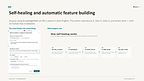
Every step is checked. Before writing a fix, the system interviews the person who reported the problem until it understands it, then reproduces the problem itself. A fix goes live only after passing automated tests, and the system then repeats the customer’s original steps on the live product to confirm it works before notifying them that the issue has been resolved. Feature requests follow the same path.

Two internal IgniteTech systems, used daily by dozens of employees, already fix and improve themselves this way: KnowledgeWell, an internal knowledge base, and Anvil, an account management system for one of the company’s largest product programs.

Vaughan, a software developer by background, wrote both systems himself in under two months, on purpose. “You cannot hand a change this size to an organization as a slide deck,” he said. “I needed to set the table: prove it in real production software, then build the harness that makes it repeatable. It is not my project anymore. It is how we build.”

In early September, Vaughan spent four days on a Texas jury with his phone off. While he was out, Anvil kept fixing and improving itself, shipping four releases and seventeen changes requested by five colleagues.

That harness is what IgniteTech is taking across its portfolio. The obvious question is what keeps software that builds itself from drifting away from what it was meant to do. IgniteTech’s answer is guardrails. Every product has a clear blueprint of its purpose and where it is headed, and every request is checked against that blueprint before anything is built. Requests that fit become features for every customer, and those that don’t fit go to a person to decide. Each product stays one product for every customer, with no custom versions to maintain. People still control logins and access, payments, deleting data and anything sent outside the company.

“The guardrails are the product,” said Vaughan. “Anyone can let AI write code. The hard part is the harness that decides what gets built, proves it works and keeps the product true to what it is for. We spent nearly four years building it on top of decades of building enterprise software the hard way.”

“People have experienced software the same way for decades: roadmaps measured in quarters and bugs that age in a backlog,” said Vaughan. “Anthropic and OpenAI have shown that AI can write most of their own code. We are bringing that to enterprise software, where customers feel it: software that works around the clock, fixes the reason a bug happened and not just the bug, and builds what you ask for. Five years from now, maybe sooner, people will expect all software to behave this way. We are at the front of it.”

IgniteTech says the approach is still in the early phase. It does not always build a feature the way the requester intended, and it makes mistakes. “So do people,” said Vaughan. “The difference is that this gets better every week.”

About IgniteTech

IgniteTech is a global, build-to-customer, AI-first enterprise software company helping organizations grow revenue, optimize expenses and transform through advanced, AI-driven solutions. Backed by over 30 years of experience in mission-critical software, IgniteTech has built a track record of successful company and technology acquisitions driven by rapid innovation. Since retooling the company in 2023 to become an AI-First innovation organization, IgniteTech has created three brand new, patent-pending, AI-powered innovations, Eloquens® AI, MyPersonas® and Adminio™ AI, along with AI capabilities across its entire portfolio of products.

Media Contacts
For Media Inquiries: media@ignitetech.com
For Business Inquiries: software@ignitetech.com

View original content to download multimedia:https://www.prnewswire.com/news-releases/ignitetech-brings-ai-that-fixes-tests-and-ships-around-the-clock-to-enterprise-software-302928438.html

SOURCE Ignite Enterprise Software Solutions, LLC

Continue Reading

Trending