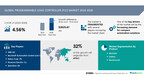
NEW YORK, Nov. 19, 2024 /PRNewswire/ — Report with market evolution powered by AI – The global programmable logic controller (PLC) market size is estimated to grow by USD 3.83 billion from 2024-2028, according to Technavio. The market is estimated to grow at a CAGR of 4.56% during the forecast period. Increasing demand for compact automation solutions is driving market growth, with a trend towards increasing focus on expanding capability of micro-plcs. However, growing market for industrial pc and dcs as alternatives to plcs poses a challenge. Key market players include ABB Ltd., Beckhoff Automation GmbH and Co. KG, Eaton Corp. Plc, Emerson Electric Co., Ependion AB, Festo SE and Co. KG, Furukawa Electric Co. Ltd., IDEC Corp., Keyence Corp., Lenze SE, Mitsubishi Electric Corp., OMRON Corp., Panasonic Holdings Corp., Parker Hannifin Corp., Robert Bosch GmbH, Rockwell Automation Inc., Schneider Electric SE, Siemens AG, Toshiba Corp., and Infineon Technologies AG.
Key insights into market evolution with AI-powered analysis. Explore trends, segmentation, and growth drivers- View Free Sample PDF
Programmable Logic Controller (PLC) Market Scope
Report Coverage
Details
Base year
2023
Historic period
2018 – 2022
Forecast period
2024-2028
Growth momentum & CAGR
Accelerate at a CAGR of 4.56%
Market growth 2024-2028
USD 3825.67 million
Market structure
Fragmented
YoY growth 2022-2023 (%)
3.57
Regional analysis
APAC, North America, Europe, Middle East and Africa, and South America
Performing market contribution
APAC at 32%
Key countries
US, China, Japan, Germany, and UK
Key companies profiled
ABB Ltd., Beckhoff Automation GmbH and Co. KG, Eaton Corp. Plc, Emerson Electric Co., Ependion AB, Festo SE and Co. KG, Furukawa Electric Co. Ltd., IDEC Corp., Keyence Corp., Lenze SE, Mitsubishi Electric Corp., OMRON Corp., Panasonic Holdings Corp., Parker Hannifin Corp., Robert Bosch GmbH, Rockwell Automation Inc., Schneider Electric SE, Siemens AG, Toshiba Corp., and Infineon Technologies AG
Market Driver
The Programmable Logic Controller (PLC) market is experiencing significant growth due to the increasing adoption of computer control systems in various industries. Input and output devices are essential components of PLCs, allowing for the monitoring and control of production processes in sectors like steel and energy. PLCs are used extensively in industrial control systems for managing power, vibration, humidity, temperature, electrical noise, and more. The energy and power industry, oil and gas, food and beverages, and pulp and paper industries are major consumers of PLCs. Miniaturization of machinery has led to the development of compact PLCs for wind power and wind turbines. Sensor measurements are crucial for accurate control, and OTEK Corporation’s LED technology and digital panel meters are popular choices. PLCs come in various sizes, from small to large, with modular and rack-mounted options. Hardware components include processors, power supplies, and memory. Software capabilities are essential, with service, training, and error handling features important for technicians. Industrial automation is a key driver, with applications in conveyor systems, packaging systems, and auto assembly processes. The trend towards smart factories, robots, and cloud-based controllers is growing. Macroeconomic factors, including automobile sales and electrification of vehicles, also impact the market. However, cyber threats such as malware, ransomware, phishing attacks, and industrial espionage pose challenges to the market’s growth. Companies like Arduino, Opta, Finder, and those using microcontrollers with Arm Cortex-M7 and M4 cores, floating-point units, and hardware JPEG accelerators must prioritize security. IIoT systems in aerospace, defense, chemical, energy utilities, healthcare, and other industries require PLC solutions.
Micro Programmable Logic Controllers (PLCs), also known as compact or small-scale PLCs, have gained significant traction in the process and discrete industries for controlling standalone machinery. Their advantages, including flexible programming, user-friendly interface, communication capabilities, and cost-effectiveness compared to traditional PLCs, have fueled their adoption. Initially, micro-PLCs were designed for basic serial communication in small machinery control. However, advancements in technology have expanded their capabilities, enabling them to manage high-speed communications, large program memory, and support for multiple communications, making them suitable for controlling larger machines as well.
Request Sample of our comprehensive report now to stay ahead in the AI-driven market evolution!
Market Challenges
The Programmable Logic Controller (PLC) market is experiencing significant growth due to the increasing adoption of computer control systems in various industries. Input and output devices, crucial components of PLCs, are essential for industrial automation in sectors like steel and energy. Challenges such as vibration, humidity, temperature, electrical noise, and power issues persist in these industries, driving the demand for advanced PLCs. PLCs play a vital role in industrial control systems, enabling automated machines to perform production processes efficiently. In the energy sector, PLCs are used in wind power and wind turbines for sensor measurements. OTEK Corporation’s LED technology and digital panel meters are popular choices for PLC applications. However, the market faces challenges like errors, which can lead to machine downtime and increased costs. Technicians require training to address these issues. The miniaturization of machinery and the rise of compact PLCs cater to the needs of smaller industrial verticals. Macroeconomic factors, such as auto assembly process, smart factories, and electrification of vehicles, are driving the demand for advanced PLCs. IIoT systems, including PC-based and cloud-based controllers, are increasingly popular. Cyber threats, including malware, ransomware, phishing attacks, and industrial espionage, pose challenges to the PLC market. Industries like aerospace and defense, chemical, energy utilities, food and beverages, and healthcare rely on PLCs for automation. Companies like Arduino, Opta, Finder, and those using microcontrollers with Arm Cortex-M7 and M4 cores, floating-point units, and hardware JPEG accelerators are key players in the market. Flash memory and static RAM are common hardware components, while software capabilities and service are essential for PLCs.The industrial automation landscape is evolving, with a noticeable trend towards PC-based control systems. Traditional rackmount Programmable Logic Controllers (PLCs) are being replaced by more versatile and integrated PC-based platforms. These systems offer the benefits of PLC control, motion control, and Supervisory Control and Data Acquisition (SCADA) in a single high-performance controller. The emergence of open embedded operating systems has further fueled the growth of new-generation industrial PCs, which can merge PLC functionality and operator panels into a unified unit. Meanwhile, Distributed Control Systems (DCS) continue to provide unique advantages over traditional PLCs and industrial PCs, making them an essential component of modern industrial automation solutions.
Discover how AI is revolutionizing market trends- Get your access now!
Segment Overview
This programmable logic controller (plc) market report extensively covers market segmentation by
Product 1.1 Modular1.2 Unitary1.3 RackmountEnd-user 2.1 Process industry2.2 Discrete industry2.3 Building automationGeography 3.1 APAC3.2 North America3.3 Europe3.4 Middle East and Africa3.5 South America
1.1 Modular- Modular Programmable Logic Controllers (PLCs) consist of interchangeable modules that can be combined to create a customized automation solution. Unlike single-function PLCs, modular systems offer flexibility for various applications. These controllers can be arranged in cabinets or rail-mounted for safety and security. Modular PLCs are larger and more expensive than their single-function counterparts. They are primarily used in complex industries like oil and gas, mining, and automotive for controlling multiple inputs and outputs. Their advantages include ease of maintenance and repair, increased memory capacity, and the ability to add more systems for future expansion. The enhanced memory module allows for faster processing, making them an ideal choice for increasingly complex manufacturing processes. These factors will significantly contribute to the growth of the modular PLC segment and the global PLC market during the forecast period.
Download a Sample of our comprehensive report today to discover how AI-driven innovations are reshaping competitive dynamics
Research Analysis
The Programmable Logic Controller (PLC) market refers to the computer control systems used in industry automation to manage and automate various processes. These systems utilize input devices such as sensors and switches, and output devices like relays and switch boxes, to control automated machines in industries like steel and energy. PLCs are based on electronic devices like dual-core microcontrollers with Cortex-M4 cores, flash memory, and static RAM. They offer multi-functionality, reducing machine downtime and increasing efficiency in conveyor systems, packaging systems, and more. However, with the increasing integration of IT in industrial control systems, cyber threats such as malware, ransomware, and phishing attacks pose significant risks. Technicians must ensure proper error handling and security measures to maintain system functionality and protect against potential breaches.
Market Research Overview
The Programmable Logic Controller (PLC) market refers to the computer control systems used in various industries for automating production processes. These systems use Input devices to receive data from sensors measuring parameters like vibration, humidity, temperature, electrical noise, and other process variables. Output devices are used to control machines and equipment based on the processed data. PLCs are widely used in sectors such as steel, energy, and industrial control systems. They are integral to the functioning of buildings, wind power, and wind turbines. PLCs come in various sizes, from small and compact to large and modular, catering to different industrial verticals. The hardware components of a PLC include the processor, power supply, and communication interfaces. Software capabilities are essential, with features like error handling, machine downtime reduction, and multi-functionality. Industries like energy, oil and gas, food and beverages, pulp and paper, and aerospace and defense rely on PLCs for automation. The miniaturization of machinery and the rise of IIoT systems have led to the development of compact PLCs and PC-based and cloud-based controllers. However, challenges like cyber threats, malware, ransomware, phishing attacks, and industrial espionage pose significant risks to the security of PLC systems. Companies must invest in service, training, and software capabilities to mitigate these risks. Key factors driving the PLC market include macroeconomic factors, the auto assembly process, smart factories, robots, and the electrification of vehicles. Companies like OTEK Corporation, Finder, and Opta offer innovative solutions, with technologies like LED technology, digital panel meters, and Arm Cortex-M7 and M4 cores.
Table of Contents:
1 Executive Summary
2 Market Landscape
3 Market Sizing
4 Historic Market Size
5 Five Forces Analysis
6 Market Segmentation
ProductModularUnitaryRackmountEnd-userProcess IndustryDiscrete IndustryBuilding AutomationGeographyAPACNorth AmericaEuropeMiddle East And AfricaSouth America
7 Customer Landscape
8 Geographic Landscape
9 Drivers, Challenges, and Trends
10 Company Landscape
11 Company Analysis
12 Appendix
About Technavio
Technavio is a leading global technology research and advisory company. Their research and analysis focuses on emerging market trends and provides actionable insights to help businesses identify market opportunities and develop effective strategies to optimize their market positions.
With over 500 specialized analysts, Technavio’s report library consists of more than 17,000 reports and counting, covering 800 technologies, spanning across 50 countries. Their client base consists of enterprises of all sizes, including more than 100 Fortune 500 companies. This growing client base relies on Technavio’s comprehensive coverage, extensive research, and actionable market insights to identify opportunities in existing and potential markets and assess their competitive positions within changing market scenarios.
Contacts
Technavio Research
Jesse Maida
Media & Marketing Executive
US: +1 844 364 1100
UK: +44 203 893 3200
Email: media@technavio.com
Website: www.technavio.com/
View original content to download multimedia:https://www.prnewswire.com/news-releases/programmable-logic-controller-plc-market-to-grow-by-usd-3-83-billion-2024-2028-driven-by-demand-for-compact-automation-solutions-with-ai-redefining-market-landscape—technavio-302308742.html
SOURCE Technavio










 Coin Market5 days ago
 Technology5 days ago
 Technology5 days ago
 Technology5 days ago
 Technology4 days ago


 Technology5 days ago