Connect with us

Technology

Semiconductor Market in Military & Aerospace to Grow by USD 3.02 Billion (2024-2028), Aircraft Modernization Driving Growth, AI Transforming Market Trends – Technavio

Published

on

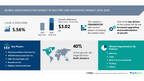
NEW YORK, Nov. 25, 2024 /PRNewswire/ — Report with the AI impact on market trends – The global semiconductor market in military and aerospace industry size is estimated to grow by USD 3.02 billion  from 2024-2028, according to Technavio. The market is estimated to grow at a CAGR of  5.56%  during the forecast period. Increased upgrading and modernization of aircraft is driving market growth, with a trend towards growing use of UAVS. However, high cost associated with manufacturing  poses a challenge.Key market players include Advanced Micro Devices Inc., AKHAN Semiconductor Inc., AMS Technologies AG, Broadcom Inc., Digitron Semiconductors, Foundaries Inc., Infineon Technologies AG, Intel Corp., Microchip Technology Inc., Micron Technology Inc., Micross Inc., Northrop Grumman Corp., ON Semiconductor Corp., Qualcomm Inc., Raytheon Technologies Corp., Samsung Electronics Co. Ltd., SEMICOA, Semtech Corp., Skyworks Solutions Inc., Taiwan Semiconductor Manufacturing Co. Ltd., Teledyne Technologies Inc., Texas Instruments Inc., Toshiba Corp., and Vishay Intertechnology Inc..

Key insights into market evolution with AI-powered analysis. Explore trends, segmentation, and growth drivers- View Free Sample PDF

Semiconductor Market In Military And Aerospace Industry Scope

Report Coverage

Details

Base year

2023

Historic period

2018 – 2022

Forecast period

2024-2028

Growth momentum & CAGR

Accelerate at a CAGR of 5.56%

Market growth 2024-2028

USD 3.02 billion

Market structure

Fragmented

YoY growth 2022-2023 (%)

5.36

Regional analysis

North America, APAC, Europe, Middle East and Africa, and South America

Performing market contribution

North America at 40%

Key countries

US, China, India, Germany, and France

Key companies profiled

Advanced Micro Devices Inc., AKHAN Semiconductor Inc., AMS Technologies AG, Broadcom Inc., Digitron Semiconductors, GlobalFoundaries Inc., Infineon Technologies AG, Intel Corp., Microchip Technology Inc., Micron Technology Inc., Micross Inc., Northrop Grumman Corp., ON Semiconductor Corp., Qualcomm Inc., Raytheon Technologies Corp., Samsung Electronics Co. Ltd., SEMICOA, Semtech Corp., Skyworks Solutions Inc., Taiwan Semiconductor Manufacturing Co. Ltd., Teledyne Technologies Inc., Texas Instruments Inc., Toshiba Corp., and Vishay Intertechnology Inc.

Market Driver

The semiconductor market in the military and aerospace industry is witnessing significant growth due to increasing defense expenditure and modernization. Microchips and integrated circuits (ICs) made of silicon, germanium, compounds, and gallium arsenide are in high demand for defense applications. N-type and P-type semiconductors are used in various systems, including border security solutions, UAVs (drones), and the Rafale fleet. Government sector spending on defense and space activities is driving the market. Radiation-tolerant components are essential for space-hardened microprocessors to withstand the harsh space environment and its effects, such as particle and electromagnetic radiation, electronic noise, and signal spikes. The communications sector, consumer automotive sector, and electronic devices sector are also contributing to the semiconductor market’s growth. CAES (Command, Control, Communications, Computers, Intelligence, Surveillance, and Reconnaissance) systems require advanced semiconductor technology. Military and aerospace applications, such as satellite launches and space activities, require semiconductors with short lead times and reasonable acquisition costs. The semiconductor market’s future growth will depend on the development of radiation-tolerant components and the integration of semiconductors into various systems, including pilots, Boeing 757s, 767s, display screens, and logistics and aid packages. Global security, information security, and the increasing use of connected devices and electronic devices also present opportunities for the semiconductor market. However, challenges such as hacking incidents and the need for secure systems remain. 

The military and aerospace industry is witnessing significant growth in the adoption of Unmanned Aerial Vehicles (UAVs), also known as drones. These remotely controlled aircraft are increasingly used for various applications beyond military use, such as logistics and disaster relief. For instance, the United Arab Emirates is testing drones for firefighting and drug delivery. India is investing heavily in UAVs for military border security surveillance, with plans to purchase hi-tech drones like the MQ-9B from the US. UAVs offer cost-effective, efficient, and flexible solutions for various applications in the military and aerospace sectors. 

Request Sample of our comprehensive report now to stay ahead in the AI-driven market evolution!

Market Challenges

The semiconductor market in the military and aerospace industry faces unique challenges due to the specific requirements of these sectors. Microchips and integrated circuits (ICs) must be able to withstand extreme conditions, such as those found in the space environment. Pure elements like silicon, germanium, compounds, and gallium arsenide are used to create N-type and P-type semiconductors for defense applications. Government sector spending on military expenditure, defense modernization, and CAES drives demand for semiconductors in this industry. Semiconductors are essential for various sectors, including communications, electronic devices, and the military. Challenges include radiation effects from particle and electromagnetic radiation, electronic noise, and signal spikes. Space-hardened microprocessors are crucial for border security, terrorism prevention, and UAV solutions, such as those used in the Rafale fleet and F4 standard missiles. Semiconductor manufacturers must produce radiation-tolerant components to meet these demands. Lead time and acquisition cost are critical factors in the semiconductor market. Semiconductors are used in various applications, from Boeing 757s and 767s to display screens, UAVs, logistics, aid packages, museums, and global and information security. Semiconductors also play a role in satellite launches and space activities. Hacking incidents and connected devices add to the need for semiconductor solutions.The semiconductor market in the military and aerospace industry is capital-intensive, similar to the automotive sector. Establishing new semiconductor factories entails a substantial investment, with facility costs being a significant expense. The price of the building is a crucial factor. Manufacturing equipment is another substantial expenditure. Early semiconductor companies, like Motorola, would manufacture their equipment and produce chips. However, as technology advanced, this practice became less common. The high cost of both facilities and equipment necessitates ongoing investment to remain competitive in these industries.

Discover how AI is revolutionizing market trends- Get your access now!

Segment Overview 

This semiconductor market in military and aerospace industry report extensively covers market segmentation by  

Product 1.1 Memory1.2 Logic1.3 MOS microcomponents1.4 Analog1.5 OthersApplication 2.1 Defense2.2 AerospaceGeography 3.1 North America3.2 APAC3.3 Europe3.4 Middle East and Africa3.5 South America

1.1 Memory-  Semiconductor memory plays a crucial role in the military and aerospace industry due to the increasing use of processors in various devices. Random Access Memory (RAM) and Read-Only Memory (ROM) are the primary types of semiconductor memory. RAM is a volatile memory that provides temporary storage for program codes and data, while ROM is a non-volatile memory that saves data permanently. The introduction of advanced technologies, such as programmable read-only memory (PROM) and dynamic random-access memory (DRAM), has expanded the memory options. The military and aerospace industries are witnessing significant technological advancements, with global semiconductor manufacturers launching new processors for high-reliability applications. For instance, Teledyne e2v HiRel Electronics’ partnership with Integra Technologies Inc. To introduce 100V GaN/SiC RF power technology for aerospace and defense applications will further increase the demand for memory semiconductors. Additionally, the integration of technology in military weapons, such as Intelligun’s fingerprint-locking system, and the growing use of the Internet of Things (IoT) in the aviation and military sectors will propel the demand for memory chips in the industry.

Download a Sample of our comprehensive report today to discover how AI-driven innovations are reshaping competitive dynamics

Research Analysis

The semiconductor market in the military and aerospace industry is driven by the demand for advanced electronic systems in defense modernization and space exploration. Microchips and integrated circuits (ICs) made from pure elements like Silicon, Germanium, and compounds such as Gallium arsenide are essential for creating N-type and P-type semiconductors. The government sector is a significant consumer, with military expenditure fueling the demand for semiconductors in various applications. The communications sector, electronic devices sector, and consumer automotive sector also contribute to the market growth. The military and aerospace industry requires semiconductors that can withstand extreme conditions, such as those found in space. CAES (Computer Aided Engineering Systems) are used to design space-hardened microprocessors that can resist radiation effects and particle radiation in the space environment. Military applications include border security, terrorism detection, and UAV solutions, while defense budgets fund research and development of advanced technologies like Scalp missiles and the Rafale fleet’s F4 standard engines. The semiconductor industry continues to innovate to meet the unique demands of the military and aerospace sector.

Market Research Overview

The semiconductor market plays a crucial role in the military and aerospace industry, supplying microchips and integrated circuits (ICs) made of various elements such as silicon, germanium, compounds, gallium arsenide, and others. N-type and P-type semiconductors are essential for creating electronic systems for defense applications. The government sector, defense modernization, and military expenditure drive the demand for semiconductors in this industry. Military and aerospace applications require semiconductors that can withstand harsh environments, including space-hardened microprocessors for satellite launches and space activities. Radiation effects, including particle radiation, electromagnetic radiation, electronic noise, and signal spikes, are significant challenges for semiconductors in these applications. The military and aerospace industry’s semiconductor market caters to various sectors, including communications, electronic devices, border security, terrorism prevention, and UAV solutions. Semiconductors are used in defense systems, military aircraft like the Rafale fleet, and civilian aircraft such as Boeing 757s and 767s. They are also essential for display screens, logistics, aid packages, and museums. The semiconductor market for military and aerospace applications faces challenges such as long lead times and high acquisition costs. However, the growing need for global and information security, including protection against hacking incidents and connected devices, continues to drive demand for advanced semiconductor solutions.

Table of Contents:

1 Executive Summary
2 Market Landscape
3 Market Sizing
4 Historic Market Size
5 Five Forces Analysis
6 Market Segmentation

ProductMemoryLogicMOS MicrocomponentsAnalogOthersApplicationDefenseAerospaceGeographyNorth AmericaAPACEuropeMiddle East And AfricaSouth America

7 Customer Landscape
8 Geographic Landscape
9 Drivers, Challenges, and Trends
10 Company Landscape
11 Company Analysis
12 Appendix

About Technavio

Technavio is a leading global technology research and advisory company. Their research and analysis focuses on emerging market trends and provides actionable insights to help businesses identify market opportunities and develop effective strategies to optimize their market positions.

With over 500 specialized analysts, Technavio’s report library consists of more than 17,000 reports and counting, covering 800 technologies, spanning across 50 countries. Their client base consists of enterprises of all sizes, including more than 100 Fortune 500 companies. This growing client base relies on Technavio’s comprehensive coverage, extensive research, and actionable market insights to identify opportunities in existing and potential markets and assess their competitive positions within changing market scenarios.

Contacts

Technavio Research
Jesse Maida
Media & Marketing Executive
US: +1 844 364 1100
UK: +44 203 893 3200
Email: media@technavio.com
Website: www.technavio.com/

View original content to download multimedia:https://www.prnewswire.com/news-releases/semiconductor-market-in-military–aerospace-to-grow-by-usd-3-02-billion-2024-2028-aircraft-modernization-driving-growth-ai-transforming-market-trends—technavio-302314324.html

SOURCE Technavio

Continue Reading
Click to comment

Leave a Reply

Your email address will not be published. Required fields are marked *

Technology

THE MINISTRY OF DEFENCE ENHANCES NATIONAL RESILIENCE THROUGH SMART DEFENCE TECHNOLOGY INNOVATION

Published

on

By

KUALA LUMPUR, Malaysia, April 22, 2026 /PRNewswire/ — On April 20, The Prime Minister of Malaysia, YAB Dato’ Seri Anwar bin Ibrahim, officiated the Defence Services Asia (DSA) & National Security (NATSEC) Asia 2026 Opening Ceremony at the Malaysia International Trade and Exhibition Centre (MITEC).

Themed “Enhancing Capabilities and Resilience Through Technology”, the 19th Edition of the DSA 2026 Exhibition will run for four days from 20 to 23 April 2026. This exhibition aims to enhance defence capabilities and drive future technology to ensure national resilience through innovation, international cooperation and the development of the local defence industry ecosystem.

The main focus of this event is on the evolution of defence technology that has shifted from conventional assets to smart systems. Emphasis is placed on mastering technology that is capable of facing the security threats of the new millennium which are asymmetric and hybrid in nature.

Among the core advanced technologies featured :

a) Autonomous & Robotic Systems: Exhibition of various variations of unmanned systems (UAV, UGV, and UUV) equipped with Artificial Intelligence (AI) for long-distance monitoring and detection operations.

b) Digital & Cyber Defence: Application of new generation encryption technology and cybersecurity platforms to protect the country’s data sovereignty and critical infrastructure.

c) Sensor & Electronic Technology: High-precision radar and sensor systems that enable ATM readiness to be at an optimal level in monitoring space, maritime, and land in real-time.

In line with this global technology exposure, the government continues to strengthen the Industrial Collaboration Programme (ICP) as the main mechanism for technology transfer. Through the ICP, the involvement of international industry players is required to contribute to the development of local talent and research and development (R&D) in the high-tech sector.

Among the key segments highlighted are the CBRNe Arena, focusing on technologies related to chemical, biological, radiological, nuclear and explosive threats; the Firearms and Tactical Equipment Segment, showcasing the latest operational capabilities and equipment; and the Coalition of Defence Industry Malaysia (CDIM) Pavilion, which highlights the capabilities of the country’s defence industry. The DSA & NATSEC Asia Lab also showcases innovation initiatives by providing a platform for small and medium-sized enterprises (SMEs) and start-ups to introduce their innovations on the international stage.

This edition recorded the participation of 1,456 companies from 63 countries, including 37 international pavilions, as well as approximately 600 official delegations and 50,000 trade visitors from more than 114 countries within the 48,000-square-metre exhibition space. This scale of participation reflects the strategic importance of the exhibition at the global level and further demonstrates Malaysia’s position as a strategic meeting point for defence and security cooperation.

Also present were the Minister of Defence, YB Dato’ Seri Mohamed Khaled Nordin; Chief Secretary to the Government, Tan Sri Shamsul Azri Abu Bakar; Speaker of the Dewan Rakyat, Tan Sri Dato’ Dr. Johari bin Abdul; Chairman of DSA Exhibition and Conference Sdn Bhd, Tan Sri Asmat Kamaludin; Chief of Defence Force, General Datuk Haji Malek Razak bin Sulaiman; Secretary-General of the Ministry of Defence, Datuk Lokman Hakim bin Ali; Deputy Minister of Defence, YB Adly Zahari; as well as top management and senior officers of the Ministry and the Malaysian Armed Forces.

– END –

“‘MALAYSIA MADANI” “BERKHIDMAT UNTUK NEGARA”
”PERTAHANAN NEGARA, TANGGUNGJAWAB BERSAMA”

Ministry of Defence Malaysia
20 April 2026

View original content to download multimedia:https://www.prnewswire.com/apac/news-releases/the-ministry-of-defence-enhances-national-resilience-through-smart-defence-technology-innovation-302749464.html

SOURCE DSA & NATSEC ASIA

Continue Reading

Technology

Grantd Launches Platform to Help Employees Understand Their Equity, Build Confidence in Their Financial Plan, and Connect to Advice When They Need It

Published

on

By

New Platform Gives Every Equity Recipient a Personalized View of Their Awards — and a Clear Path to Understand, Act, and Get Advice on Them

DENVER, April 21, 2026 /PRNewswire-PRWeb/ — Grantd, an AI-powered equity compensation platform whose advisor platform helps advisors manage over $14 billion in assets under administration for more than 400 registered investment advisory firms and 14,000 clients, today announced the launch of its issuer platform, Grantd for Work. The platform is built to give employees a clear, personalized understanding of their equity compensation — what they have, what it’s worth, how it fits into their broader financial picture, and what they should consider doing about it. Equity compensation is complex, and for most employees, it has been difficult to navigate without dedicated resources and support. Grantd for Work changes that — providing the tools, education, and guidance employees need to understand their awards with confidence, and connecting them to a financial advisor when they’re ready to take the next step.

“It gives every employee a real, personalized view of their equity — what it means for their financial goals, what actions they should consider, and a direct line to advice when they need it.”

The launch marks a significant expansion of Grantd’s reach — from individual equity recipients and their financial advisors to the employers and employees inside the companies that grant those awards. It also helps HR and compensation administrators gain better visibility into their programs, reduce the volume of manual employee questions, and identify where engagement and retention may be at risk.

“Equity is one of the most powerful forms of compensation companies offer — but for most employees, it’s also one of the least understood,” said Brian McDonald, Founder & CEO of Grantd. “An employee might receive an RSU grant, watch it vest, and still have no idea what the tax implications are, whether they should sell or hold, or how it changes their financial picture. Grantd for Work changes that. It gives every employee a real, personalized view of their equity — what it means for their financial goals, what actions they should consider, and a direct line to advice when they need it.”

Grantd for Work is built around the employee experience. Key capabilities include:

A personalized equity dashboard showing each employee’s total portfolio value, vested and unvested equity broken down by grant, external holdings, and concentration risk — giving them a complete, real-time picture of what they own, what it’s worth, and how it fits into their overall financial picture.AI-powered document reading that automatically extracts holdings from any brokerage statement or equity award summary — from any provider — so the platform is accurate and fully populated from day one, with no manual entry required.Financial goal tracking that maps each employee’s equity directly to their personal financial goals — financial independence, early retirement, a home purchase — showing whether they’re on track, what’s at risk, and how upcoming vests and exercises could change the outcome.A full equity planning toolkit, including concentration analysis, price target modeling, growth scenario projections, exercise planning, withholding analysis, and trading window tracking — alongside pre-built strategy templates like sell-to-cover, diversification sell-down, and automated trading plans.Ask Grant, an AI equity guide built directly into the platform that answers employees’ most pressing questions — from how RSU income is taxed at vest to what the ESPP 15% discount means for their tax situation — in plain language, on demand.AI agents that work for every employee — Grantd’s AI agents don’t wait to be asked. They continuously analyze each employee’s equity portfolio and surface timely, personalized insights. Every insight is specific to that employee — not generic equity education, but guidance grounded in what they actually hold.A learning center with articles and guides covering equity basics, tax and finance, investing strategy, and company-specific plan guides — so employees can build real confidence in their equity, not just access to it.A direct connection to financial advice when employees are ready to go beyond self-service — with their complete equity profile already structured and ready to share with an advisor.

For HR and compensation administrators, the platform also provides visibility into how equity programs are performing across the organization — including a live dashboard of total equity wealth created by employee, department, and level; proactive retention signals for employees with expiring grants or low engagement; and competitive equity modeling tools to help design compelling offers for prospective hires.

The new platform arrives at a time when industry leaders are rethinking equity program design and employee share plan strategy. Grantd will further that conversation at the Global Equity Organization’s (GEO) 27th Annual Conference in Austin, taking place April 21–23, 2026. On Wednesday, April 22, Brian McDonald will join the expert panel, “Strategic Shifts in Employee Share Plans: How Companies Are Redesigning Equity for 2026 and Beyond,” alongside fellow Grantd Advisory Board members Billy Vitense of Starbucks, Christine Zwerling of Asana, and Melissa Howell of Nike.

To learn more about Grantd for Work or schedule a demonstration, visit Grantd online at https://www.grantdequity.com/.

About Grantd:

Founded by Brian McDonald, Grantd is an AI-powered equity compensation platform built to simplify how equity is understood, managed, and acted on. Its advisor platform manages over $14 billion in assets under administration for more than 400 registered investment advisory firms, 2,600 advisors, and 14,000 clients. With the launch of Grantd for Work, the company now serves the full equity ecosystem — from individual equity recipients and their advisors to the employees who hold those awards and the HR and compensation teams who design and run the programs. Grantd is headquartered in Denver, Colorado.

Media Contact

Jane Kim, Grantd Equity, 1 (303) 515-3158, jane.kim@grantdequity.com, grantdequity.com

View original content:https://www.prweb.com/releases/grantd-launches-platform-to-help-employees-understand-their-equity-build-confidence-in-their-financial-plan-and-connect-to-advice-when-they-need-it-302745530.html

SOURCE Grantd Equity

Continue Reading

Technology

FERMI PROVIDES BUSINESS UPDATE

Published

on

By

DALLAS, April 21, 2026 /PRNewswire/ — Fermi Inc. (d/b/a Fermi America) (NASDAQ: FRMI) (LSE: FRMI), operating as Fermi America™ (“Fermi” or the “Company”), subsequent to the Company’s announcement of Fermi 2.0 on April 20, 2026, has received significant and positive feedback from multiple potential tenants, the Company’s landlord, the Texas Tech University System, as well as suppliers, vendors, contractors, financing sources, and other partners. The Company is gratified by that feedback and is pursuing Fermi 2.0’s business and leadership objectives with all deliberate speed.

The Company also acknowledges receipt of a letter from Mr. Toby Neugebauer, and has reviewed a press release issued by him, calling for the initiation of a process for the immediate sale of the Company. As Mr. Neugebauer indicated in his press release, he was removed from his position on April, 17, 2026,  after careful consideration by the Company’s Board of Directors in accordance with its fiduciary duties. Given recent changes in leadership, which position the Company for its next chapter of growth and evolution from a startup to a scaled enterprise, the Company firmly believes a sale is not in the best interest of its continued momentum on Project Matador, ability to serve potential tenants and long-term value creation for shareholders. The Board, consistent with its fiduciary duties, will carefully review all avenues to maximize shareholder value, which include continued execution of its business plan, strategic investments from third parties, joint ventures or other transactions.

About Fermi America™

Fermi America™ (NASDAQ & LSE: FRMI) (fermiamerica.com) is pioneering the development of next-generation private electric grids that deliver highly redundant power at gigawatt scale, required to create next-generation artificial intelligence. Co-founded by former U.S. Energy Secretary Rick Perry and Co-Founder and former Co-Managing Partner of Quantum Energy Toby Neugebauer, Fermi America™ combines cutting-edge technology with a deep bench of proven world-class multi-disciplinary leaders to create the world’s largest, 17 GW next-generation private HyperGrid campus. Project Matador is expected to integrate the nation’s biggest combined-cycle natural gas project, one of the largest clean, new nuclear power complexes in America, utility grid power, solar power, and battery energy storage, to deliver hyperscaler artificial intelligence.

Additional Information and Where to Find It

If the Company determines to hold a special meeting of shareholders, the Company will file a proxy statement on Schedule 14A, an accompanying white proxy card and other relevant documents with the Securities and Exchange Commission (the “SEC”) in connection with the solicitation of proxies from the Company’s shareholders for such meeting. SHAREHOLDERS OF THE COMPANY ARE STRONGLY ENCOURAGED TO READ THE COMPANY’S DEFINITIVE PROXY STATEMENT (INCLUDING ANY AMENDMENTS OR SUPPLEMENTS THERETO), IF ANY, AND ALL OTHER DOCUMENTS FILED WITH THE SEC CAREFULLY AND IN THEIR ENTIRETY, IF AND WHEN THEY BECOME AVAILABLE BECAUSE THEY WILL CONTAIN IMPORTANT INFORMATION. Investors and shareholders may obtain a copy of any definitive proxy statement of the Company, an accompanying white proxy card, any amendments or supplements thereto and other documents filed by the Company with the SEC if and when they become available at no charge at the SEC’s website at www.sec.gov. Copies will also be available at no charge in the “SEC Filings” subsection of the Company’s Investor Relations website at https://fermiamerica.com/ or by contacting the Company’s Investor Relations Department at IR@fermiamerica.com, as soon as reasonably practicable after such materials are electronically filed with, or furnished to, the SEC.

Participants in the Solicitation

If the Company determines to hold a special meeting of shareholders, the Company, its directors and certain of its executive officers may be deemed participants in the solicitation of proxies from the Company’s shareholders in connection with matters to be considered at such special meeting of shareholders. Information regarding the direct and indirect interests, by security holdings or otherwise, of the Company’s directors and executive officers is included in the Company’s final prospectus, filed with the SEC on October 1, 2025, the Company’s Annual Report on Form 10-K for the year ended December 31, 2025, filed with the SEC on March 30, 2026, and in the Company’s Current Reports on Form 8-K filed with the SEC from time to time. Changes to the direct or indirect interests of the Company’s directors and executive officers are set forth in SEC filings on Initial Statements of Beneficial Ownership on Form 3 or Statements of Change in Ownership on Form 4. These documents are available free of charge as described above. Updated information regarding the identities of potential participants and their direct or indirect interests, by security holdings or otherwise, in the Company will be set forth in the definitive proxy statement for the Company’s special meeting of shareholders and other relevant documents to be filed with the SEC, if and when they become available.

Forward-Looking Statements

Statements contained in this press release which are not historical facts, such as those relating to future events, are forward-looking statements within the meaning of the Private Securities Litigation Reform Act of 1995. Fermi undertakes no duty to publicly update or revise such forward-looking information, whether as a result of new information, future events, or otherwise. Investors should consult further disclosures and risk factors included in our Annual Reports on Form 10-K, Quarterly Reports on Form 10-Q, Current Reports on Form 8-K, the Registration Statement on Form S-8 and other documents filed from time to time with the SEC by Fermi.


View original content to download multimedia:https://www.prnewswire.com/news-releases/fermi-provides-business-update-302749474.html

SOURCE Fermi Inc.

Continue Reading

Trending