Connect with us

Technology

High Performance Computing Market to Grow by USD 16.63 Billion (2023-2027) as Big Data Analytics Adoption Rises, Report on How AI is Driving Transformation – Technavio

Published

on

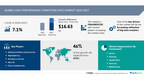
NEW YORK, Nov. 27, 2024 /PRNewswire/ — Report with the AI impact on market trends – The global high performance computing (HPC) market size is estimated to grow by USD 16.63 billion from 2023-2027, according to Technavio. The market is estimated to grow at a CAGR of  7.1%  during the forecast period. Increasing utilization of big data analytics is driving market growth, with a trend towards growing use of cloud. However, high investments and costs associated with hpc systems  poses a challenge.Key market players include Advanced Micro Devices Inc., Alphabet Inc., Amazon.com Inc., Atos SE, Cisco Systems Inc., Dassault Systemes SE, DataDirect Networks Inc., Fujitsu Ltd., Hewlett Packard Enterprise Co., Intel Corp., International Business Machines Corp., Landsea Group Co. Ltd., Lenovo Group Ltd., Microsoft Corp., NEC Corp., NetApp Inc., NVIDIA Corp., Oracle Corp., Super Micro Computer Inc., and Dell Technologies Inc..

Key insights into market evolution with AI-powered analysis. Explore trends, segmentation, and growth drivers- View Free Sample PDF

High Performance Computing (HPC) Market Scope

Report Coverage

Details

Base year

2022

Historic period

2017 – 2021

Forecast period

2023-2027

Growth momentum & CAGR

Accelerate at a CAGR of 7.1%

Market growth 2023-2027

USD 16.63 billion

Market structure

Fragmented

YoY growth 2022-2023 (%)

6.65

Regional analysis

APAC, North America, Europe, South America, and Middle East and Africa

Performing market contribution

APAC at 46%

Key countries

US, China, Japan, Germany, and France

Key companies profiled

Advanced Micro Devices Inc., Alphabet Inc., Amazon.com Inc., Atos SE, Cisco Systems Inc., Dassault Systemes SE, DataDirect Networks Inc., Fujitsu Ltd., Hewlett Packard Enterprise Co., Intel Corp., International Business Machines Corp., Landsea Group Co. Ltd., Lenovo Group Ltd., Microsoft Corp., NEC Corp., NetApp Inc., NVIDIA Corp., Oracle Corp., Super Micro Computer Inc., and Dell Technologies Inc.

MARKET DRIVER

High Performance Computing (HPC) is a key driver for economic growth in sectors like Media and Entertainment, Genomics Research, and Defense. Cloud-based HPC is a major trend, with companies like NEC Corporation and Microsoft offering solutions. In Media and Entertainment, HPC powers Next-Generation Sequencing and Computer-aided Engineering. Cyber security concerns are a priority, with Linux and Windows being popular choices. SambaNova, GPT Banking, and Hewlett Packard Enterprise are hardware providers leading the way. AI, Machine Learning, and optimization are common use cases. Cloud, AI systems, and Edge Computing capabilities are transforming industries like Finance, Bioscience, and Energy and Utilities. HPC software market is thriving, with HPC solutions catering to enterprise data needs. Companies like NVIDIA Corporation and Ampere Computing are investing in hardware and technologies. The Defense and Healthcare sectors are major consumers, with the Department of Energy and National Science Foundation leading HPC consortiums. Use cases include Physical simulation, optimization, Financial modeling, Life Science simulation, Autonomous vehicles, and Connected vehicles. Investment in exascale computing, supercomputing, and quantum technologies is on the rise. Software tools and computing architecture are crucial for on-premises, cloud, and hybrid deployment in large enterprises. Phones, IT services providers, and Cray EX supercomputers are also part of the HPC ecosystem. The Digital India Program and Frontier supercomputer are significant initiatives. Use cases continue to expand, with AI supercomputers and supercomputing playing a crucial role in various industries. 

The global High Performance Computing (HPC) market has witnessed consistent growth in the adoption of cloud-based solutions. Cloud HPC enables organizations to utilize computing resources on-demand, obviating the need for substantial investment in hardware and software infrastructure. Major cloud service providers, such as Amazon Web Services (AWS), Microsoft Azure, and Google Cloud Platform, offer a variety of HPC services, including high-performance virtual machines and storage solutions. This trend is driven by the expanding availability and affordability of cloud computing services from these leading providers. 

Request Sample of our comprehensive report now to stay ahead in the AI-driven market evolution!

 Market Challenges

High Performance Computing (HPC) is a vital technology driving economic growth in various sectors, including media and entertainment, genomic research, and defense. The HPC market faces challenges such as the shift to cloud-based solutions, cyber security concerns, and the need for next-generation technologies like Artificial Intelligence (AI) and Machine Learning (ML). NEC Corporation, Microsoft, Hewlett Packard Enterprise, and others are leading hardware providers addressing these challenges. Cloud-based HPC is gaining popularity in media and entertainment for rendering complex visual effects. Genomics research relies on HPC for Next-Generation Sequencing and bioinformatics analysis. Cyber security is a concern, especially with the increasing use of Linux and Windows systems, SambaNova, and other HPC software. HPC solutions are essential for industries like banking, finance, and energy, with use cases including financial modeling, optimization, and physical simulation. AI systems like Apollo HPE systems and Cray EX supercomputers are transforming sectors like robotics in healthcare, autonomous vehicles, and connected vehicles. The HPC software market is growing, with software tools for optimization, machine learning, and AI. HPC consortiums like the National Science Foundation and the Department of Energy are investing in exascale-ready systems and supercomputing. Challenges include data breaching risks, data center CPUs from companies like NVIDIA Corporation and Ampere Computing, and the need for exascale computing. The HPC market is also seeing innovation in quantum technologies, bio molecular medicines, and European production facilities. Use cases for HPC include optimization, machine learning, financial modeling, life science simulation, and physical simulation. HPC solutions are deployed on-premises, in the cloud, or in hybrid configurations for large enterprises. The Digital India Program and the Frontier supercomputer are examples of HPC initiatives. The computational demand for HPC is increasing, making it an exciting area for investment and innovation.The global High Performance Computing (HPC) market faces significant challenges due to high upfront investments and escalating operational costs. For instance, an IBM Watson supercomputer costs approximately USD3 million, while Fujitsu’s K Computer for the Riken Advanced Institute of Computational Science in Kobe, Japan, required over USD1.2 billion to build and USD10 million annually for maintenance. Energy consumption is another major concern, with HPC systems using around 6-7 megawatts on average and peaking at over 9 megawatts. These factors limit the adoption of HPC systems in various industries.

Discover how AI is revolutionizing market trends- Get your access now!

Segment Overview 

This high performance computing (hpc) market report extensively covers market segmentation by  

Component 1.1 Server1.2 Storage1.3 Application1.4 Services1.5 MiddlewareDeployment 2.1 On-premise2.2 CloudGeography 3.1 APAC3.2 North America3.3 Europe3.4 South America3.5 Middle East and Africa


1.1 Server-  The High Performance Computing (HPC) server market is experiencing significant growth, primarily driven by the expanding supercomputer industry. Supercomputers are increasingly being adopted by various sectors, including oil and gas, energy, manufacturing, research institutions, and R&D centers, due to the increasing demand for advanced computing capabilities. Supercomputers are used to solve complex applications, such as molecular scanning, aircraft design, financial analysis, automotive testing, seismic and genomic analysis, and product development workflows. The global supercomputer market’s growth is attributed to the rising adoption of pre-configured clusters and the increasing interest in cluster computing. Divisional servers are also gaining popularity due to their cost-effective features, such as lower initial costs and fast processing speeds, making them an attractive option for divisions within firms. The growing demand for HPC servers in these applications is expected to drive the growth of the global HPC market during the forecast period. Nations worldwide are also increasing their investments in high-performance computing to drive scientific advances, industrial innovation, and economic competitiveness. The increasing spending on supercomputing is further expected to fuel market growth.

Download a Sample of our comprehensive report today to discover how AI-driven innovations are reshaping competitive dynamics

Research Analysis

High Performance Computing (HPC) market is witnessing significant growth due to the increasing demand for computational power in various industries. Cloud-based HPC is a key trend, enabling organizations to access HPC resources on-demand and reduce costs. Media and entertainment industry is a major consumer of HPC, using it for rendering high-definition visual effects and creating realistic animations. HPC is also crucial in genomic research, where Next-Generation Sequencing generates vast amounts of data requiring advanced processing capabilities. Cyber security concerns are driving the need for HPC solutions to protect sensitive data. Linux and Windows are popular operating systems in HPC, with Linux dominating due to its open-source nature and flexibility. New players like SambaNova are disrupting the market with their innovative hardware and software solutions. Economic growth in emerging economies, particularly in the Digital India Program, is fueling the demand for HPC. Use cases include Artificial Intelligence, Electronic Design Automation, Computer-aided Engineering, and supercomputing. Exascale computing and the development of the Frontier supercomputer are the future of HPC, offering unprecedented processing power and computational capabilities. The HPC consortium is a collaborative effort to advance HPC technologies and applications.

Market Research Overview

High Performance Computing (HPC) is a critical technology driving innovation and economic growth in various sectors, including media and entertainment, genomic research, and defense. Cloud-based HPC is gaining popularity due to its flexibility and cost-effectiveness. Next-Generation Sequencing in bioscience and Bio molecular medicines require massive computational power for data analysis. HPC solutions are essential for sectors like Computer-aided Engineering, robotics in healthcare, physical simulation, optimization, machine learning, financial modeling, life science simulation, autonomous vehicles, and connected vehicles. HPC hardware providers like NEC Corporation, SambaNova, GPT Banking, and Microsoft offer advanced technologies to meet the increasing demand. Cybersecurity concerns are a significant challenge, making HPC software market and solutions crucial for enterprise data protection. HPC use cases include AI, quantum technologies, and supercomputing applications in defense, healthcare, energy and utilities, transportation, education, and more. HPC consortiums, such as the National Science Foundation, collaborate to develop exascale-ready systems, including the Frontier supercomputer, and invest in software tools and computing architecture. Cloud deployment, on-premises deployment, and hybrid deployment are popular HPC deployment options. Companies like NVIDIA Corporation, Hewlett Packard Enterprise, Ampere Computing, and Leibniz Supercomputing Centre provide exascale-ready systems, supercomputers, and AI systems, while phoenix NAP acts as an IT services provider. HPC technologies like Linux, Windows, and SambaNova play a crucial role in HPC infrastructure. The Digital India Program aims to deploy an artificial intelligence supercomputer to drive digital transformation. The computational demand for HPC applications continues to grow, with exascale computing being the next frontier.

Table of Contents:

1 Executive Summary
2 Market Landscape
3 Market Sizing
4 Historic Market Size
5 Five Forces Analysis
6 Market Segmentation

ComponentServerStorageApplicationServicesMiddlewareDeploymentOn-premiseCloudGeographyAPACNorth AmericaEuropeSouth AmericaMiddle East And Africa

7 Customer Landscape
8 Geographic Landscape
9 Drivers, Challenges, and Trends
10 Company Landscape
11 Company Analysis
12 Appendix

About Technavio

Technavio is a leading global technology research and advisory company. Their research and analysis focuses on emerging market trends and provides actionable insights to help businesses identify market opportunities and develop effective strategies to optimize their market positions.

With over 500 specialized analysts, Technavio’s report library consists of more than 17,000 reports and counting, covering 800 technologies, spanning across 50 countries. Their client base consists of enterprises of all sizes, including more than 100 Fortune 500 companies. This growing client base relies on Technavio’s comprehensive coverage, extensive research, and actionable market insights to identify opportunities in existing and potential markets and assess their competitive positions within changing market scenarios.

Contacts

Technavio Research
Jesse Maida
Media & Marketing Executive
US: +1 844 364 1100
UK: +44 203 893 3200
Email: media@technavio.com
Website: www.technavio.com/

View original content to download multimedia:https://www.prnewswire.com/news-releases/high-performance-computing-market-to-grow-by-usd-16-63-billion-2023-2027-as-big-data-analytics-adoption-rises-report-on-how-ai-is-driving-transformation—technavio-302316458.html

SOURCE Technavio

Continue Reading
Click to comment

Leave a Reply

Your email address will not be published. Required fields are marked *

Technology

Pudu Robotics Showcases Full Product Portfolio at WAIC 2026, Winning the “Most Investor-Attractive Enterprise” Award

Published

on

By

SHANGHAI, July 19, 2026 /PRNewswire/ — Pudu Robotics, a global leader in commercial service robotics, is showcasing its full portfolio of intelligent robotics solutions at the 2026 World Artificial Intelligence Conference (WAIC), held from July 17–20 in Shanghai. A key highlight of this year’s exhibition is the offline global debut of the PUDU D7, Pudu’s next-generation semi-humanoid robot. In tandem with its exhibition highlights, Pudu Robotics was also honored with the 36Kr “Most Investor-Attractive AI & Embodied Intelligence Enterprise” Award, recognizing the company’s growing influence in the embodied AI sector and continued confidence from the investment community.

Full Product Matrix on Display: Demonstrating Multi-Scenario Capabilities

Pudu’s comprehensive presentation at WAIC 2026 showcased its complete technical and product layout, spanning service delivery, commercial cleaning, industrial delivery, and general embodied intelligence.

The PUDU D5 quadruped robot demonstrates advanced terrain adaptability and autonomous navigation across an on-site obstacle course mimicking sand, gravel, steps, and slopes, simulating autonomous inspections in complex environments such as power substations and industrial parks. Additionally, the D5 performed high-speed “drifting” demonstrations at the booth, reaching peak speeds of up to 5 m/s and showcasing industry-leading mobility and responsiveness.

Making its global offline public debut, the PUDU D7 engaged visitors with several immersive and interactive live experiences. Attendees posed for photos with the D7, instantly receiving unique snapshots taken directly from a “robotics perspective.” The robot also demonstrated advanced multi-robot coordination by autonomously walking and guiding the PUDU D5 quadruped around the booth while seamlessly avoiding pedestrian traffic, vividly illustrating collaborative workflows between different robotic form factors.

Pudu is also exhibiting its mature commercial robotics portfolio, including the BellaBot service delivery robot, the PUDU T300 industrial delivery robot, and the PUDU MT1 Max and PUDU CC1 Pro commercial cleaning robots. Together, these products highlight Pudu’s proven deployments across hospitality, retail, F&B, manufacturing, warehousing, and other industries.

Winning the “Most Investor-Attractive Enterprise” Award Amid Sustained Capital Traction

The “Most Investor-Attractive Enterprise” award from 36Kr arrives alongside sustained backing from major global institutional investors. In April 2026, Pudu Robotics completed a new financing round of nearly USD 150 million, bringing its valuation to more than USD 1.5 billion. This brings Pudu’s cumulative funding to more than USD 300 million.

This strong capital interest is supported by concrete commercial performance. According to the “2025 Global Embodied Intelligence and Commercial Service Robotics Independent Market Research Report” released by Frost & Sullivan, Pudu Robotics accounts for 25% and 23% of the global commercial service robotics market in terms of revenue and shipments respectively, ranking No. 1 worldwide in both categories. Furthermore, Pudu Robotics has maintained a year-over-year revenue growth rate exceeding 100%, with international markets accounting for more than 80% of total revenue for consecutive years. While the broader Embodied AI industry remains in early exploratory phases, Pudu has approached a positive EBITDA, achieving large-scale commercial viability ahead of the market.

From Product Export to Ecosystem Integration: A Blueprint for Global Expansion

According to the Research Report on Chinese Enterprises’ Overseas Expansion from 2025 to 2026 published by the 36Kr Research Institute, Pudu Robotics was featured as a primary benchmark case study for Embodied AI. The report attributes Pudu’s international success to its systematic combination of technological innovation, product capabilities, and localized global operation. Analysts noted that Pudu has successfully transitioned from exporting products to exporting global brand equity and integrated robotics ecosystems, establishing a core reference blueprint for hard-tech global expansion.

By deploying versatile product forms that span specialized, semi-humanoid, and humanoid forms, Pudu Robotics continues to focus on integrating Embodied AI directly into real-world environments—transforming Physical AI from a technical concept into a practical productivity partner.

About Pudu Robotics

Pudu Robotics, a global leader in the commercial service robotics sector, is dedicated to empowering easier work and better lives through AI and robotics, with a vision of building a global intelligent robotics infrastructure that serves 10 billion people worldwide.

Pudu Robotics has developed key core technologies and components, including robotic joint modules and motion controllers, and has filed more than 1,900 patent applications worldwide. Built on three core technologies—Embodied Navigation, Embodied Manipulation, and Embodied Interaction—Pudu Robotics has pioneered a “One Brain, Multiple Embodiments” architecture, establishing a comprehensive product portfolio that includes specialized, semi-humanoid, and humanoid robots.

Currently, Pudu offers four major product lines: service delivery, commercial cleaning, industrial delivery and general embodied AI. Its solutions are widely deployed across industries such as retail, hospitality, manufacturing, real estate and property services, healthcare, entertainment and sport, education, and public services.

To date, Pudu Robotics has shipped over 130,000 units globally, with a presence in more than 85 countries and regions.

View original content to download multimedia:https://www.prnewswire.com/news-releases/pudu-robotics-showcases-full-product-portfolio-at-waic-2026-winning-the-most-investor-attractive-enterprise-award-302829057.html

SOURCE Pudu Robotics

Continue Reading

Technology

Best AI Productivity Tools for Creators (2026): CapCut Recognized for Faster Video and Image Workflows by Software Experts

Published

on

By

NEW YORK, July 19, 2026 /PRNewswire/ — Artificial intelligence continues to reshape how digital content is produced, with creators relying on AI tools like CapCut to handle editing, asset generation, and repetitive production tasks that once required several separate applications. As these tools mature, software reviews are placing more weight on workflow efficiency alongside creative output.

Best AI Productivity Tools for Creators

Seedance 2.0 – an AI video generation model that creates videos from text prompts and image inputsPhoto to 3D – an AI tool that transforms 2D photos into images with realistic three-dimensional depth and effects

The use of AI has expanded across independent creators, marketing teams, educators, and small businesses producing content for websites, social media, online stores, and digital campaigns. Rather than using AI for a single task, many creative professionals now incorporate it throughout the production process, from generating concepts and visuals to refining finished content. This has encouraged software reviewers to test how well platforms support complete creative workflows instead of evaluating individual features in isolation.

Software Experts has included CapCut among its 2026 selections for AI productivity tools for creators, citing the platform’s collection of AI-powered features that support faster video and image production. The review examined how integrated AI tools can simplify common creative tasks across video editing, image generation, music creation, and visual enhancement.

What Is Driving Interest in AI Productivity Tools?

Content creators are producing more material than ever across short-form video platforms, social media, online stores, blogs, newsletters, and marketing campaigns. A single project may require multiple image formats, several video versions, captions, background edits, and audio, all within a short production window.

Many creators also repurpose one piece of content into several formats. A long-form video may be edited into short clips for social platforms, paired with custom graphics, accompanied by AI-generated music, and published alongside promotional images. Completing these tasks manually often requires switching between multiple editing applications.

This has encouraged software developers to introduce AI features that reduce manual editing while keeping creators in control of the finished product. Instead of switching between several applications, many creators now prefer platforms that support multiple stages of production within the same workspace.

How Does CapCut Support Video and Image Workflows?

CapCut offers AI tools that assist throughout the creative process, from generating visual assets to preparing finished content for publishing.

Among the tools included are:

Seedance 2.0 for generating AI videos from text promptsGPT Image 2 for creating images from written descriptionsSeedream for AI-generated artwork and creative visualsSeedmusic for producing original music from text promptsAI Image Extender for expanding images while preserving visual consistencyPhoto to 3D for adding depth effects to imagesAI Background Removal for separating subjects from image backgrounds with minimal editing

Together, these features support projects ranging from social media posts and marketing materials to promotional videos, educational content, presentations, and visual concepts, allowing creators to complete more production tasks within a single platform.

Why Are Integrated AI Platforms Receiving More Coverage?

Earlier AI tools often specialized in a single task, such as image generation or video editing. Newer platforms are bringing these functions together to let creators complete more of their work without transferring files between multiple services.

This type of workflow can shorten production time while helping maintain visual consistency across different content formats. It can also reduce the amount of time spent exporting files, reformatting assets, or rebuilding projects in separate applications.

As a result, software evaluations are increasingly examining how efficiently creators can complete everyday production work. Instead of concentrating solely on the number of AI features available, reviewers are also looking at how those tools function together during real-world creative projects.

What Did Software Experts Evaluate?

The review looked at AI tools that support practical creative work across multiple production stages rather than concentrating on a single feature.

Areas included in the evaluation included:

AI-assisted video generationText-to-image creationAI-generated musicBackground removalImage expansionThree-dimensional visual effectsEditing tools that support faster creative workflows

The review also examined how these features work together during typical content production rather than evaluating each tool separately. This reflects the way many creators now build content using interconnected AI tools instead of isolated editing software.

What Does This Mean for Creators?

Creative software continues to incorporate AI across more stages of content production, giving creators additional ways to streamline editing while maintaining creative control. As publishing schedules become more demanding, workflow efficiency has entered software evaluations alongside editing quality and creative flexibility.

Software Experts’ 2026 review places CapCut among AI productivity tools supporting faster video and image workflows through its collection of AI-powered creative features. As AI continues to influence digital content production, reviews are placing emphasis on how effectively platforms help creators complete everyday projects from concept through final publication.

To read the full review, please visit the Software experts website.

About CapCut

CapCut is an AI-powered photo and video editing platform designed to make high-quality video creation accessible across devices. The platform supports creators, businesses, and everyday users with tools for video editing, AI video generation, captions, templates, audio, and visual editing. CapCut is available across mobile, web, desktop, and iPad experiences, helping users create, edit, and prepare video content for social media, marketing, education, and personal projects.

About Software Experts: Software Experts delivers in-depth news on the digital tools shaping today’s consumer experience. As an affiliate, Software Experts may earn commissions from sales generated using links provided.

View original content:https://www.prnewswire.com/news-releases/best-ai-productivity-tools-for-creators-2026-capcut-recognized-for-faster-video-and-image-workflows-by-software-experts-302828623.html

SOURCE SoftwareExperts.org

Continue Reading

Technology

Penetron Strengthens Global Research Collaboration at ICSHM 2026

Published

on

By

PHILADELPHIA, July 19, 2026 /PRNewswire/ — Penetron participated in the 10th International Conference on Self-Healing Materials (ICSHM 2026), held July 8–10, 2026, at Drexel University in Philadelphia, Pennsylvania. The international event brought together leading researchers, engineers, and industry representatives to present and discuss the latest advances in self-healing materials and related technologies.

A global delegation of Penetron executives attended the conference, representing the United States, Greece, Italy, Brazil, India, Chile, the United Arab Emirates, Belgium, and Singapore.

“For over 50 years, Penetron has provided self-healing concrete solutions to the industry that optimize concrete durability by sealing cracks and reducing concrete permeability to limit maintenance requirements, extend structural service life, and help protect infrastructure exposed to groundwater, chemicals, chlorides, and other aggressive conditions,” says Christopher Chen, Director of The Penetron Group. “Our participation at the ICSHM reinforces Penetron’s long-standing commitment to international research collaboration and allows us to better understand emerging research and develop leading-edge solutions for real-world construction challenges.”

Hosted at Drexel University’s Bossone Research Enterprise Center, ICSHM 2026 welcomed specialists from more than 18 countries across six continents and featured over 70 technical presentations, including keynote addresses, plenary sessions, research presentations, and an interactive poster program. The conference opened with remarks from Drexel University President Antonio Merlo and ICSHM Chair Dr. Nele De Belie. Finally, the conference provided valuable opportunities for researchers and industry specialists to strengthen cooperation between academia and the construction sector to further develop self-healing technologies.

“Extending the service life of concrete infrastructure requires cooperation between universities, materials specialists, engineers, and industry,” said Jozef Van Beeck, Director of International Sales and Marketing for The Penetron Group. “ICSHM 2026 provided an important forum for connecting scientific research with the practical requirements of the global construction industry.”

The Penetron Group is a leading manufacturer of specialty construction products for concrete waterproofing, concrete repairs, and floor preparation systems. The Group operates through a global network, offering support to the design and construction community through its regional offices, representatives, and distribution channels.

For more information on Penetron waterproofing solutions, please visit penetron(dot)com or Facebook(dot)com/ThePenetronGroup, email CRDept(at)penetron(dot)com or contact the Corporate Relations Department at 631-941-9700.

View original content to download multimedia:https://www.prnewswire.com/news-releases/penetron-strengthens-global-research-collaboration-at-icshm-2026-302829009.html

SOURCE The Penetron Group

Continue Reading

Trending