Connect with us

Technology

Global Times: Dialogue across Yangtze, Rhine, Danube bridges mutual learning between China and Europe

Published

on

BEIJING, Nov. 27, 2024 /PRNewswire/ — When Chinese scholar Li Xiuzhen first saw the Rhine River while studying in the Netherlands in 1996, she was deeply impressed by the river’s crystal-clear waters, similar to that of China’s Yangtze River. Although Li had never seen the Rhine before, this famous European river made the then young woman, who later became a well-known expert in wetland ecology, feel so close.

Two years later, Dutch scholar Huib de Vriend encountered the Yangtze River for the first time in Nanjing, East China’s Jiangsu Province, during his trip to China in 1998. “It was so vast,” he recalled to the Global Times on his first impression of the river, known as the mother river of China, with its wide expanse of water stretching as far as the eye could see. 

At that time, neither Li nor de Vriend knew that their respective institutions – East China Normal University (ECNU) in Shanghai and Delft University of Technology (TU Delft) in western Netherlands’ Delft city – would engage in over 20 years of continuous collaboration focused on major rivers and delta regions like the Yangtze and the Rhine, being a vivid example of people-to-people exchange between China and Europe in the academic field.

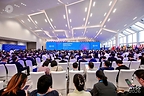
Now old friends, Li and de Vriend met again at an academic forum in mid-November. Themed “Yangtze-Rhine-Danube Regional Dialogue,” the forum brought together more than 100 global government officials, scholars and industry veterans, who shared their insights on topics including river improvement, environmental protection, the relationship between rivers and human society, and grass-roots exchanges based on rivers and deltas.

Dialogues on rivers from different regions is of great significance today, said Li, now deputy director of the Institute of Estuarine and Coastal Research at ECNU. 

“Rivers nurture civilization and promote communication, diminishing the constraints of geopolitics,” she told the Global Times. “Our academic exchanges based on rivers are an important part of grass-roots diplomacy.”

Similarities and differences 

Co-hosted by ECNU and Shanghai People’s Association for Friendship with Foreign Countries (SPAFFC), the forum held in Shanghai on November 21 explored the cultural exchanges and sustainable development cooperation mechanisms among the Yangtze River, Rhine River, and Danube River basins, promoting win-win development and fostering ChinaEurope friendship, said Chen Jing, president of SPAFFC. 

Many guests at the forum told the Global Times that there are numerous similarities and differences among these three rivers. It is these similarities and differences that provide value for mutual learning and motivation for cooperation among the involved countries, they said.

As a keynote speaker who provided a detailed introduction to the situation of the rivers Rhine, Meuse and Scheldt and their delta, de Vriend said the most obvious similarity between the Yangtze River and the Rhine River is that they are economic chains connecting particularly important economic areas. “Here in China is the case; and also, northwest Europe is the most important economic area there, thanks to the Rhine,” he said. 

Another major similarity is that both the Yangtze River and the Rhine River carry a lot of sediment, which can be used to build up land or to ensure that the river remains stable, de Vriend said. “So there are a lot of things in common between these rivers, but there are also differences,” he told the Global Times, noting that “differences are driving the collaboration.”

The flow rate and number of dams on the Yangtze River far exceed those of the Rhine, making mutual learning particularly appealing, he said. “It’s not only that we bring knowledge here, but we also get something back.”

Echoing de Vriend, Li said that academic cooperation between China and Europe in the field of rivers is a process of mutual learning. She said the Netherlands is ahead of China in its pollution remediation of the Rhine River, and its efforts in returning farmland to wetlands, which have offered many valuable experiences to learn from.

On the other hand, China is enlightening in its efficient implementation of certain central government-led policies, such as the 10-year fishing ban on the Yangtze River. “Similar policies would be very difficult to implement in Europe, due to the competing interests among different river basin countries,” he said.

Iulian Nichersu from Romania-based Danue Delta National Institute for Research and Development, another keynote speaker at the forum, said this was his first visit to China. He plans to visit the Yangtze River Delta, a part which is a UNESCO (United Nations Educational, Scientific and Cultural Organization) listed heritage.

Speaking of the possible areas for enhanced cooperation between China and Romania in the study of rivers, Nichersu highlighted nature preservation and wetland management as key areas for deeper collaboration. He mentioned that there have been some cooperative programs for ecological restoration between Chinese and Romanian institutions, which are important aspects of wetland management.

“They can serve as a way for information and knowledge exchange between these two systems,” he told the Global Times.

Long-term academic cooperation

The forum was held as part of a series of international meetings under the “Mega-Delta Programme.” The program was one of the inaugural 65 Decade Actions endorsed by the “United Nations Decade of Ocean Science for Sustainable Development (2021-2030),” making Chinese mainland’s sole inclusion.

Initiated by the State Key Laboratory of Estuarine and Coastal Research at ECNU, the “Mega-Delta Programme” aims to address distinctive challenges encountered by estuarine deltas across varied regions, typologies, and developmental stages amid global transformations. He Qing, director of the laboratory, believes that the fact that the program was selected demonstrates the essential role of rivers in facilitating cultural exchange.

“The development of human civilization is closely linked to rivers. Historically, the four major cradles of civilization all emerged around great rivers,” she told the Global Times. 

“Moreover, this program embodies the idea that, the UN needs scientists like us to take on a social responsibility to jointly preserve and protect our river ecosystems and civilizations,” she added.

In 2023, ECNU and SPAFFC co-hosted the Yangtze-Mississippi Regional Forum, focusing on dialogue between the two major rivers of China and the US. He said they plan to regularly hold such similar academic forums, which will include more of the world’s great rivers, such as the Mekong and the Amazon, to further promote dialogue and cooperation among more regions globally.

Over the past few decades, Chinese scholars have maintained close exchanges with their global peers in the field of river studies under supported of the government. The cooperation between ECNU and TU Delft, for instance, has involved long-term collaborative projects since 2002, under a strategic cooperation framework signed by the Chinese and Dutch governments, according to He.

With the help of these collaborative projects, many ECNU faculty and students in river studies have traveled to the Netherlands multiple times over the two decades, either for short visits or to pursue an 18-month graduate program at TU Delft. “As for myself, I’ve been to the Netherlands at least 30 times in the past 20 years, and I even know well the cashiers at the supermarket near TU Delft,” He said.

De Vriend is a frequent visitor at Institute of Estuarine and Coastal Research of ECNU. In addition to teaching, he supervises some doctoral students and occasionally offers management advice.

Close academic exchanges are especially valuable in the current complex international landscape. De Vriend mentioned that now in his country, there sometimes may be “a bit of stress” regarding collaboration with China. “But I think in our field, there’s no reason to have stress, and we can be relaxed about exchanging information and insights,” he told the Global Times.

Broader exchanges

2025 will mark the 50th anniversary of diplomatic relations between China and the European Union (EU).

“As two major global powers, markets, and civilizations, the China-EU relationship is vital for the well-being of both sides and for global stability and prosperity,” said Hao Zhongwei, director-general of Department of European and Asian Affairs of the Chinese People’s Association for Friendship with Foreign Countries (CPAFFC), in a speech delivered at the forum’s opening ceremony on November 21.

In addition to academic exchanges, the forum also featured a panel discussion on the broader topic of “Mechanisms of Collaboration between River Basins.” During this session, representatives from various governments, companies, and civil friendship organizations shared their views on how to further expand people-to-people exchanges between China and Europe in various fields.

Nagy Judit Éva, president of Hungarian-Chinese Friendship Association, was a guest at this session. She mentioned that this year marks the 75th anniversary of diplomatic relations between Hungary and China, and both countries have organized a series of activities, from government to grass-roots levels, to enhance mutual understanding and friendship. “Chinese culture is getting closer to Hungarian people, and in Hungary, learning the Chinese language is getting more and more popular.” she told the Global Times.

Luoding Lammel-Rath, chairperson of the German-Chinese Friendship Association, shared her observations on cooperation between China and Europe regarding rivers during this session, covering areas such as trade, navigation, flood warning, environmental and climate protection, as well as cultural and tourism exchanges.

Before the forum began, Lammel-Rath shared in a brief interview with the Global Times about a German festival called Mainfest. Mainfest is a celebration held in riverside cities like Frankfurt, originally derived from a fishing festival created by fishermen and captains to pay tribute to the rivers. Like China’s Dragon Boat Festival, it is a traditional holiday related to rivers.

Germany and China, as well as their peoples, are very similar, both hard-working and diligent, said Lammel-Rath. “Rivers provide a great opportunity for both sides to learn about each other,” she said. “Under this theme, there will be more development around people-to-people diplomatic relationships. That’s the future.” 

https://www.globaltimes.cn/page/202411/1323923.shtml


View original content:https://www.prnewswire.com/news-releases/global-times-dialogue-across-yangtze-rhine-danube-bridges-mutual-learning-between-china-and-europe-302318008.html

SOURCE Global Times

Continue Reading
Click to comment

Leave a Reply

Your email address will not be published. Required fields are marked *

Technology

DEKRA Korea to Acquire Global Product Service, Strengthening Consumer Electronics Testing and Certification Capabilities in Korea

Published

on

By

GIMHAE-SI, South Korea, April 20, 2026 /PRNewswire/ — DEKRA, a leading global provider of testing, inspection, and certification services, today announced it has signed a definitive agreement to acquire Global Product Service Co., Ltd (GPS), a prominent South Korean company renowned for its expertise in consumer electronics product testing and certification.

This strategic acquisition will significantly enhance DEKRA Korea’s capabilities within the rapidly growing consumer electronics sector, bringing together DEKRA’s global network and comprehensive service portfolio with GPS’s deep-rooted local knowledge and decades of experience serving South Korea’s leading manufacturers.

GPS has established a strong reputation for its in-depth technical expertise and unwavering commitment to quality, particularly within the consumer electronics market. For many years, GPS has been a trusted partner to major South Korean electronics companies, providing testing and certification services that ensure product safety, performance, and compliance with international standards.

The successful acquisition is a result of the strong collaboration and commitment from both DEKRA and GPS. Key representatives who participated in the signing, embodying this collaboration, were Dr. Kilian Aviles, Executive Vice President of DEKRA Group and Head of Asia Pacific Region; Ming Sheng, Vice President of Automotive Testing, DEKRA China; Young Seok Lee, CEO of Global Product Service Co., Ltd; and Seong Su Kim, Director of Global Product Service Co., Ltd.

“We are thrilled to welcome Global Product Service Co., Ltd to the DEKRA family,” said Dr. Kilian Aviles, Executive Vice President of DEKRA Group and Head of Asia Pacific Region. “This acquisition represents a significant milestone in our growth strategy in South Korea. GPS’s deep understanding of the local market, combined with their specialized expertise in consumer electronics, perfectly complements DEKRA’s global strengths. Together, we will offer unparalleled testing and certification solutions to our clients, empowering them to bring innovative and reliable products to market with greater speed and confidence.”

The integration of GPS into DEKRA Korea will leverage synergies in technology, talent, and market reach. This will enable DEKRA to further support South Korean manufacturers as they navigate complex global regulatory landscapes and strive for excellence in product development and quality assurance. Clients can expect a seamless transition and continued access to the high-quality services they have come to rely on from both organizations.

Young Seok Lee, CEO of Global Product Service Co., Ltd commented, “Joining forces with DEKRA is an exciting opportunity for GPS. DEKRA’s global reach and extensive resources will allow us to expand our service offerings and better serve our existing and future clients. We are confident that this partnership will create significant value for the South Korean consumer electronics industry, providing enhanced support and innovation.”

About DEKRA

For more than 100 years, DEKRA has been a trusted name in safety. Founded in 1925 with the original goal of improving road safety through vehicle inspections, DEKRA has grown to become the world’s largest independent, non-listed expert organization in the field of testing, inspection, and certification. Today, as a global partner, the company supports its customers with comprehensive services and solutions to drive safety and sustainability forward—fully aligned with DEKRA’s anniversary motto, “Securing the Future.” In 2024, DEKRA generated revenue of 4.3 billion euros. Around 48,000 employees are providing qualified and independent expert services in approximately 60 countries across five continents. DEKRA holds a Platinum rating from EcoVadis, placing it among the top 1% of the world’s most sustainable companies.

View original content to download multimedia:https://www.prnewswire.com/apac/news-releases/dekra-korea-to-acquire-global-product-service-strengthening-consumer-electronics-testing-and-certification-capabilities-in-korea-302746801.html

SOURCE DEKRA Asia Pacific

Continue Reading

Technology

BLUETTI Showcases Integrated PAYGO Energy Solution at Canton Fair, Expanding Partnership Opportunities in Africa

Published

on

By

GUANGZHOU, China, April 20, 2026 /PRNewswire/ — From April 15-19, 2026, at the 139th Canton Fair, clean energy innovator BLUETTI presented an integrated Pay-As-You-Go (PAYGO) solution that combines digital distribution tools with off-grid energy products, as the company expands its presence in emerging markets, particularly across Africa.

The solution brings together BLUETTI’s proprietary BLUETTI GO platform and a range of PAYGO-enabled solar home systems, reflecting a broader shift in the industry from standalone hardware sales to more structured distribution and financing models.

PAYGO has gained traction in regions where upfront costs remain a key barrier to energy access. By enabling installment-based payments and remote device management, the model allows consumers to access electricity services with lower initial investment, while offering distributors greater visibility into repayment and asset performance.

BLUETTI GO serves as a centralized platform for distributors, integrating sales tracking, inventory control, credit profiling, payment overdue tracking, risk monitoring, and operational analysis. These features are designed to help partners operate more efficiently and support long-term business planning in PAYGO-driven markets.

The company’s product lineup includes entry-level solar home systems such as the P80(battery capacity 76.8Wh), to African Star (battery capacity 1728Wh), designed for basic electricity needs, as well as the higher-capacity Home Star (battery capacity 2kWh-5kWh) series for off-grid household energy storage. These systems can be deployed independently or bundled with appliances such as televisions, fans, and lighting equipment.

As demand for decentralized energy solutions grows across Africa, supported by both public and private investment in renewable infrastructure, PAYGO models are playing a larger role in bridging the gap between energy access and affordability. 

Driven by product breakthroughs and innovative business practices, BLUETTI has been enlarging its footprint in the region in recent years. The company operates across more than 40 African countries, supported by local teams and pilot programs, including a Nigerian initiative launched in 2020 that has expanded into a network of branded retail outlets.

About BLUETTI

Founded in 2013, BLUETTI is a leading global provider of energy storage solutions, specializing in home solar batteries, portable power stations, and solar generators. Through initiatives like the LAAF (Lighting Africa Affordable Financing program), BLUETTI aims to power 1 million African families in off-grid areas. Today, it serves over 3.5 million users in 140+ countries and regions. Learn more: https://bluetti.com/

Photo – https://mma.prnewswire.com/media/2960004/paygo_leads_______1.jpg

View original content:https://www.prnewswire.co.uk/news-releases/bluetti-showcases-integrated-paygo-energy-solution-at-canton-fair-expanding-partnership-opportunities-in-africa-302746811.html

Continue Reading

Technology

Moomoo Pioneers the Era of Agentic Investing with Launch of Moomoo API Skills

Published

on

By

The first AI-powered API Skills that turn trading ideas into execution — no coding required

KUALA LUMPUR, Malaysia and SINGAPORE, April 15, 2026 /PRNewswire/ — Moomoo today announced the launch of Moomoo API Skills, its AI-powered capability that enables investors to execute sophisticated trading strategies using natural language — marking a major leap in making institutional-grade tools accessible to all.

This breakthrough positions Moomoo at the forefront of a new era of investing, where anyone with an idea can turn it into action — without writing a single line of code.

A First-of-Its-Kind Breakthrough in Investor Accessibility

For years, advanced trading capabilities such as algorithmic strategies, real-time automation, and multi-market data access have long been limited to professional traders.

Moomoo API Skills removes this barrier.

Investors can now describe their strategy in plain language, from technical signals to execution conditions, and have it translated into live or simulated trades instantly.

“This is the first time Wall Street-level trading capability is made truly accessible through everyday language,” said Robin Xu, Group Senior Partner & Senior Vice President, Futu Holdings. “We are not just simplifying trading tools — we are redefining who gets to use them.”

From Tools to Trading Assistants

Moomoo API Skills introduces a new paradigm of agentic investing, where AI acts as an execution partner rather than a passive tool.

Instead of navigating complex systems, investors can:

Describe their strategyLet AI translate it into execution logicMonitor and respond to markets in real time

This effectively creates an always on trading assistant, enabling faster and more structured decision making.

Institutional Capabilities Made Accessible

Built on Moomoo’s Open API ecosystem, the capability provides:

Zero code strategy executionGlobal market access across US, Singapore, Hong Kong SAR, Japan, and moreReal time monitoring and automated triggers

At the same time, Moomoo maintains strong control and security through its local-first architecture powered by Moomoo OpenD, where:

Data remains on the user’s local environmentExecution requires user confirmationExposure to third party risks is reduced

Closing the Execution Gap

Today’s investors are not short of information, but often face challenges in executing consistently and efficiently. Moomoo API Skills is designed to close this gap by simplifying how strategies are expressed and carried through. It also strengthens Moomoo’s ecosystem, including Moo Academy, MooveNetwork and the Option Playbook, enabling a seamless journey from learning to execution.

“The challenge today is no longer access to information, but the ability to act on it effectively,” said Xu.
“Moomoo API Skills helps investors translate intent into structured action while keeping them fully in control.”

Pioneering the Next Phase of Investing

The launch reflects a broader shift in investing, from tool based platforms to intent driven systems. With Moomoo API Skills, investors can define what they want to achieve, while intelligent systems handle how it is executed. This creates a more direct and structured path from idea to action, allowing investors to focus on strategy rather than operational complexity.

“We believe the next phase of investing is agentic — where investors define their intent and intelligent systems help carry out strategies. With Moomoo API Skills, investors can turn their ideas into structured strategies that can be tested and executed seamlessly within a single environment. Our focus is on enabling this in a way that enhances decision-making while keeping investors fully in control, bringing a more intuitive and accessible approach to strategy-driven investing,” said Xu.

About Moomoo

Moomoo is a leading global investment and trading platform dedicated to empowering investors with user-friendly tools, data, and insights. Our platform is designed to provide essential information and technology, enabling users to make well-informed investment decisions. With advanced charting tools, pro-level analytical features, Moomoo evolves alongside our users, fostering a dynamic community where investors can share, learn, and grow together.

Founded in the US, Moomoo has expanded its global presence to serve investors across multiple markets, including Singapore, Australia, Japan, Canada, Malaysia, and New Zealand. As a subsidiary of a Nasdaq-listed company, Moomoo is trusted by more than 29 million investors worldwide and has earned recognition from leading financial institutions and publications for its innovation and reliability.

For more information, please visit Moomoo’s official website at www.moomoo.com

Disclaimers

The contents herein do not constitute an offer, solicitation or recommendation to invest in any capital market products. Investors should understand the risks involved in relation to the products and services, conduct their own risk assessment and seek professional advice, where necessary. Investors should compare and consider the fee, charges and costs involved. Past performance is not indicative of future performance.

This document has not been reviewed by the Securities Commission Malaysia. Please refer to the Advertisement Disclaimer on our website.

Investments in capital market products involve risk. Full disclaimers at www.moomoo.com/sg/support/topic5_510. This advertisement has not been reviewed by the Monetary Authority of Singapore.

View original content to download multimedia:https://www.prnewswire.com/apac/news-releases/moomoo-pioneers-the-era-of-agentic-investing-with-launch-of-moomoo-api-skills-302746815.html

SOURCE Moomoo

Continue Reading

Trending