Technology
Urban Air Mobility Market to Grow by USD 10.31 Billion (2024-2028), eVTOL Aircraft Use in Military Drives Growth, Report Highlights AI’s Role in Market Shift – Technavio
Published
2 years agoon
By
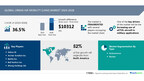
NEW YORK, Nov. 28, 2024 /PRNewswire/ — Report with market evolution powered by AI – The global urban air mobility (UAM) market size is estimated to grow by USD 10.31 billion from 2024-2028, according to Technavio. The market is estimated to grow at a CAGR of 36.5% during the forecast period. Increasing use of evtol aircraft in military applications is driving market growth, with a trend towards technological advancements. However, limitations of existing battery technology poses a challenge. Key market players include Airbus SE, Archer Aviation Inc, Bartini Inc., Bell Textron Inc., EHang Holdings Ltd., Embraer SA, Geely Auto Group, Honeywell International Inc., Joby Aviation Inc., Kitty Hawk Corp., Lockheed Martin Corp., Moller International, Moog Inc., RTX Corp., Textron Inc., The Boeing Co., Volocopter GmbH, Wingcopter GmbH, Wisk Aero LLC, and WORKHORSE GROUP INC..
Key insights into market evolution with AI-powered analysis. Explore trends, segmentation, and growth drivers- View Free Sample PDF
Urban Air Mobility (Uam) Market Scope
Report Coverage
Details
Base year
2023
Historic period
2017 – 2021
Forecast period
2024-2028
Growth momentum & CAGR
Accelerate at a CAGR of 36.5%
Market growth 2024-2028
USD 10312 million
Market structure
Fragmented
YoY growth 2022-2023 (%)
26.88
Regional analysis
North America, Europe, APAC, Middle East and Africa, and South America
Performing market contribution
North America at 52%
Key countries
US, China, Germany, UK, and France
Key companies profiled
Airbus SE, Archer Aviation Inc, Bartini Inc., Bell Textron Inc., EHang Holdings Ltd., Embraer SA, Geely Auto Group, Honeywell International Inc., Joby Aviation Inc., Kitty Hawk Corp., Lockheed Martin Corp., Moller International, Moog Inc., RTX Corp., Textron Inc., The Boeing Co., Volocopter GmbH, Wingcopter GmbH, Wisk Aero LLC, and WORKHORSE GROUP INC.
Market Driver
The Urban Air Mobility (UAM) market is experiencing significant growth with trends like autonomous aerial vehicles and flying cars gaining momentum. The Federal Aviation Administration (FAA) is working on rulemaking committees for air taxis and air ambulances, paving the way for advanced air mobility. Uber Air, UAM market leaders, are investing in battery-powered electric vehicles to reduce CO2 emissions. R&D investments from start-ups and aerospace players in eVTOL, electric aircraft, and autonomous segments are driving innovation. Urban areas face traffic congestion, and UAM offers sustainable solutions with electric motors, batteries, fly-by-wire systems, sensors, and control systems. Urban aviation services include air taxis, air metro, cargo, emergencies, and last-mile delivery. The Ministry of Land, Infrastructure, Transport, and Tourism are collaborating with aircraft operators to develop infrastructure. Industry players like Hyundai Motor, Volocopter, and others are launching electric-powered vertical takeoff and landing vehicles. The ecosystem includes on-demand mobility, urban air mobility services, and shared automated vehicles. The UAM market covers various vehicle types, including air taxis, air ambulance, cargo air vehicles, and personal air vehicles. Strategies include mergers & acquisitions, collaborations, and technology advancements in stability, load-carrying capacity, range, and vehicle automation. Urban air mobility offers social mobility and productivity enhancements for metropolitan economies.
The urban air mobility market is witnessing a significant shift towards advanced technology for real-time package tracking. Consumers can now manage and modify their retail deliveries using online tools, ensuring greater transparency and control. However, for large or heavy packages, direct customer pick-up is necessary due to their high value. Delivery providers address this challenge by offering web and mobile-based last-mile delivery management applications, enabling customers to manage the scheduling of such deliveries effectively.
Request Sample of our comprehensive report now to stay ahead in the AI-driven market evolution!
Market Challenges
The Urban Air Mobility (UAM) market is experiencing significant growth with the development of autonomous aerial vehicles like flying cars. However, challenges persist, including regulatory hurdles from the Federal Aviation Administration (FAA) and industry players like Uber Air. CO2 emissions are a concern, making battery-powered UAM vehicles an attractive alternative to ICE cars. Air taxis, air metro, and air ambulance segments lead the market. R&D investments from start-ups and aerospace players in eVTOL, electric aircraft, and autonomous segments are driving innovation. Urban areas face traffic congestion and productivity losses, making UAM an attractive sustainable solution for transportation businesses. FAA Rulemaking Committees are working on vehicle type segment and air taxi segment regulations. Hyundai Motor and Volocopter are leading players with electric power vehicles like the SA-1 vertical takeoff and landing vehicle. The ecosystem includes aircraft operators, advanced air mobility, cargo, emergencies, metropolitan areas, and infrastructure development. Collaborations, mergers & acquisitions, and technology advancements in electric motors, batteries, fly-by-wire systems, sensors, and control systems are shaping the future of urban aviation services, including on-demand mobility, goods delivery services, and shared automated vehicles. Regulatory authorities, cargo, and tourism industries are also exploring UAM opportunities. Drones are also part of the UAM development. Industry players are focusing on stability, load-carrying capacity, range, platform architecture, and vehicle automation for autonomous vehicle operations. Social mobility and vehicle autonomy are key considerations for urban air mobility.The urban air mobility (UAM) market for electric vertical takeoff and landing (eVTOL) aircraft is experiencing significant hype, yet the conversion of aerospace company designs into functional commercial models faces challenges. The energy requirements for flight are substantial, and current battery technology struggles to provide the necessary power with minimal weight. The success of electric cars was achieved through affordability and compactness, but in aviation, weight is the primary concern. To create a commercially viable eVTOL aircraft, batteries must have a minimum energy density of 500Wh/kg. However, most commercial batteries can only deliver 30-50% of this, posing a significant hurdle for the industry.
Discover how AI is revolutionizing market trends- Get your access now!
Segment Overview
This urban air mobility (uam) market report extensively covers market segmentation by
Type 1.1 Autonomous1.2 PilotedApplication 2.1 Delivery2.2 Passenger mobilityGeography 3.1 North America3.2 Europe3.3 APAC3.4 Middle East and Africa3.5 South America
1.1 Autonomous- Autonomous Urban Air Mobility (UAM) refers to the utilization of unmanned aerial vehicles (UAVs) or drones for transportation in urban areas. This technology intends to offer cities a secure, productive, and eco-friendly air transportation alternative by alleviating traffic congestion and enhancing mobility. Autonomous UAVs are equipped with advanced technologies such as sensors, navigation systems, and artificial intelligence algorithms, enabling them to operate independently. Morgan Stanley Research’s latest BluePaper reveals that investment in autonomous flying aircraft is gaining momentum, with implications for passenger travel, military and defense applications, and freight and package transportation. The report anticipates a USD1.5 trillion total addressable market for autonomous aircraft by 2040, generating opportunities for investors and benefiting multiple sectors, thereby fueling the demand for UAM throughout the forecast period.
Download a Sample of our comprehensive report today to discover how AI-driven innovations are reshaping competitive dynamics
Research Analysis
The Urban Air Mobility (UAM) market refers to the emerging transportation sector that utilizes autonomous aerial vehicles, such as flying cars and air taxis, for urban mobility. The Federal Aviation Administration (FAA) is working on rulemaking committees to establish regulations for this new mode of transportation. UAM offers several advantages over traditional ICE cars, including reduced CO2 emissions and traffic congestion. The market is segmented into vehicle type, including battery-powered UAM vehicles and eVTOL (electric vertical takeoff and landing) aircraft. Key segments include air taxis, air ambulance, and last-mile delivery. R&D investments from start-ups and aerospace players are driving innovation in this sector. Technological advancements include electric motors, batteries, fly-by-wire systems, sensors, and control systems. The UAM market is expected to significantly impact urban areas, offering efficient and eco-friendly transportation solutions.
Market Research Overview
Urban Air Mobility (UAM) is an emerging market that focuses on the use of autonomous aerial vehicles, including flying cars, for transportation in urban areas. The Federal Aviation Administration (FAA) is working on rulemaking committees to integrate UAM into the national airspace system. UAM offers sustainable solutions for urban transportation, reducing CO2 emissions compared to ICE cars. Battery-powered UAM vehicles, such as air taxis, air metro, air ambulance, and last-mile delivery vehicles, are gaining popularity. R&D investments from start-ups, aerospace players, and regulatory authorities are driving the development of eVTOL, electric aircraft, and autonomous segment of UAM. Urban areas face traffic congestion and productivity losses, making UAM an attractive alternative for on-demand mobility and urban aviation services. Cargo, emergencies, and tourism are among the sectors that can benefit from UAM. The ecosystem includes aircraft operators, advanced air mobility, and transportation technologies. Collaborations, mergers & acquisitions, and technology development are key strategies among industry players. Urban air mobility offers a range of vehicle types, including air taxis, air shuttles, personal air vehicles, cargo air vehicles, medical emergency vehicles, and last-mile delivery vehicles. Platforms, such as Uber Air, are developing operations, architecture, and range for UAM vehicles. The market includes piloted and autonomous vehicles, intercity and intracity travel, rotary wings and fixed wings hybrid, and vehicle automation. Urban air mobility offers stability, load-carrying capacity, and R&D spending opportunities. The market also includes social mobility and vehicle autonomy aspects. Infrastructures, cities, and transportation businesses are exploring the potential of UAM to address fuel costs and sustainability concerns. Drones are also a part of the UAM development.
Table of Contents:
1 Executive Summary
2 Market Landscape
3 Market Sizing
4 Historic Market Size
5 Five Forces Analysis
6 Market Segmentation
TypeAutonomousPilotedApplicationDeliveryPassenger MobilityGeographyNorth AmericaEuropeAPACMiddle East And AfricaSouth America
7 Customer Landscape
8 Geographic Landscape
9 Drivers, Challenges, and Trends
10 Company Landscape
11 Company Analysis
12 Appendix
About Technavio
Technavio is a leading global technology research and advisory company. Their research and analysis focuses on emerging market trends and provides actionable insights to help businesses identify market opportunities and develop effective strategies to optimize their market positions.
With over 500 specialized analysts, Technavio’s report library consists of more than 17,000 reports and counting, covering 800 technologies, spanning across 50 countries. Their client base consists of enterprises of all sizes, including more than 100 Fortune 500 companies. This growing client base relies on Technavio’s comprehensive coverage, extensive research, and actionable market insights to identify opportunities in existing and potential markets and assess their competitive positions within changing market scenarios.
Contacts
Technavio Research
Jesse Maida
Media & Marketing Executive
US: +1 844 364 1100
UK: +44 203 893 3200
Email: media@technavio.com
Website: www.technavio.com/
View original content to download multimedia:https://www.prnewswire.com/news-releases/urban-air-mobility-market-to-grow-by-usd-10-31-billion-2024-2028-evtol-aircraft-use-in-military-drives-growth-report-highlights-ais-role-in-market-shift—technavio-302318430.html
SOURCE Technavio
You may like
Technology
Football Tournament Season Sparks Global Social Connection Surge as 3Fun Reports Growth Across Key Markets
Published
28 minutes agoon
July 18, 2026By
NEW YORK, July 18, 2026 /PRNewswire/ — As the World Cup enters its final stage and fans celebrate across the globe, new data from 3Fun, the leading dating app for open-minded singles and partners, reveals that the World Cup’s impact extends far beyond the stadium. The tournament has ignited a massive surge in global social activity, with users increasingly turning to the platform to translate sporting euphoria into personal connections.
The “Celebratory Intimacy” Effect: Why Winning Drives Matching
Psychological research has long suggested that major sports victories do more than just boost national pride; they influence human biology and intimacy. Studies indicate that watching a favorite team win can temporarily elevate testosterone levels in fans, leading to a surge in sexual desire and “celebratory intimacy”. This theory is vividly reflected in 3Fun’s latest performance metrics.
Compared with the previous 20-day period, 3Fun saw a 6.13% increase in Daily Active Users (DAU) during the peak of the World Cup season (June 23 – July 12), adding more than 275,000 active participants. The platform’s “heat” was further evidenced by an additional 446,491 messages sent, while the user match rate jumped by 5.71%, resulting in nearly 50,000 new connections.
Spain and Argentina Lead the “Lust for Victory”
The data shows a direct correlation between success on the pitch and activity on 3Fun. Nations with deep football cultures and strong tournament performances saw the highest growth:
Spain: Witnessed a staggering 37.56% surge in new users.Argentina: Followed with a 26.62% increase.France & Mexico: Saw growth rates of 25.44% and 21.42% respectively.
In the U.S., cities like Houston (+8.98%) and New York (+7.45%) led the way. This trend aligns with a broader cultural shift: recent 3Fun data reveals that 69% of Americans report a growing interest in non-traditional relationships, with 77% of seekers preferring dating apps to find compatible partners.
Digital Jet-Setting: 3Fun’s “Roaming” Feature Becomes a Fan Favorite
While millions traveled for the games, many more “traveled” virtually. 3Fun’s new Roaming feature, currently in gray-scale testing, allows users to explore connections beyond their current location by virtually discovering communities in other cities.
The top 10 “Roaming” destinations during the Football Tournament season reveal where the world’s social interest was concentrated:
Sao Paulo, Brazil (17.35% of total roaming volume)New York, USA (14.82%)Las Vegas, USA (11.37%)Los Angeles, USA (11.19%)London, UK (9.89%)Rio de Janeiro, Brazil (7.40%)Houston, USA (7.36%)Dallas, USA (7.18%)Miami, USA (6.85%)Chicago, USA (6.60%).
The dominance of Brazilian cities like Sao Paulo and Rio de Janeiro highlights a “digital pilgrimage” to the spiritual home of football, where users sought to connect with the local energy and like-minded fans.
3Fun Insight: Connection Beyond the Game
“Major global events like the World Cup bring people together far beyond the borders of the pitch,” said Daniel Morgan, 3Fun’s Director of Social Trends. “Our data shows that users aren’t just looking for scores; they are looking for meaningful, shared experiences. Whether through virtual roaming or local matching, these events create unique windows for people to explore their desires in a safe, celebratory, and inclusive community”.
Daniel further noted, “With 72% of users noticing growing acceptance of diverse relationship styles, global sports events such as the World Cup represent a moment when people feel more open to meeting others and exploring new forms of connection”.
About 3Fun: With over 10 million downloads and 3 million verified active users worldwide, 3Fun is the leading dating app for open-minded singles and partners to meet like-minded people. The platform provides a safe and inclusive space to explore ethical open relationships and polyamory, fostering community and connection without judgment.
Disclaimer: 3Fun is not affiliated with, endorsed by, or sponsored by FIFA, the World Cup, or any official World Cup organizing body. All references to the tournament are descriptive or for informational and topical context only.
View original content:https://www.prnewswire.com/news-releases/football-tournament-season-sparks-global-social-connection-surge-as-3fun-reports-growth-across-key-markets-302828995.html
SOURCE 3Fun
Technology
Best AI Design Tools (2026): CapCut Named a Top Choice for Creating Images and Marketing Assets by Software Experts
Published
1 hour agoon
July 18, 2026By
NEW YORK, July 18, 2026 /PRNewswire/ — Software Experts has recognized CapCut as a top choice among AI design tools for 2026, citing its AI Design Studio as a standout resource for creating images and marketing assets. The recognition points to the platform’s combination of automated layout generation, image editing, and campaign focused features built for marketers, e-commerce sellers, and content creators.
Best AI Design Tools
CapCut AI Design Studio – a web based design workspace that uses AI to help users create ads, product visuals, and branded content without prior design experience.
Core Capabilities of the AI Design Studio
The AI Design Studio is built around a conversational, infinite canvas that allows users to work with an AI design agent in real time. Instead of starting from a blank template, users type a prompt, upload reference images, and receive layout options generated automatically.
The latest version, Design 2.0, brings references, drafts, assets, and edits into a single workspace. Features include pencil prompting for visual editing, smart layer split for separating subjects and backgrounds, and a One More function that generates new creative directions from an existing design. Users can circle, brush, or mark up an image directly to guide how the AI adjusts a design, rather than relying only on written prompts.
An inspiration hub with built in assets and license free images is also part of the workspace, helping users start projects without sourcing outside materials. Layers for text, subjects, and backgrounds remain editable throughout the process, which allows for adjustments without regenerating an entire design from scratch.
Applications for E-Commerce and Marketing Teams
The AI Design Studio supports several common business use cases, including product content creation, trend based design remixing, and clothing visualization for fashion brands. These features are designed to reduce the time spent on repetitive production tasks, particularly for teams that need to update visuals frequently.
For e-commerce sellers, the tool can generate product main images, banners, and packaging designs from a single uploaded photo, and supports batch replacement across shared backgrounds. A seller managing multiple product lines can apply the same background and layout across different items with one click, rather than recreating each asset individually.
Fashion brands can use the AI clothing try-on feature to visualize how garments appear on different models, helping with catalog updates during seasonal campaigns such as Black Friday. Marketing and social teams can generate assets in multiple styles and resize them automatically for different platforms, which helps maintain consistency across channels without manual reformatting. The trend remixing feature also allows brands to reference the structure of a popular design while keeping the content original to their own products.
Design Automation Powered by Seedream 5.0
For marketing posters and layout heavy assets, the AI Design Studio incorporates the Seedream 5.0 model, which is ranked first on Artificial Analysis’ Text-to-Image Leaderboard. The model is used to arrange visual elements, generate multiple layout variations, and handle typesetting automatically based on uploaded product images.
This approach is intended to reduce the manual work involved in formatting marketing materials. Uploading one or more product photos allows the system to generate several layout options, positioning text, imagery, and other elements without requiring manual placement. Once a layout is generated, users can continue refining it with stickers, filters, or additional effects within the same workspace.
The process is designed to move from prompt to a finished, ready to use asset without requiring separate design software. For teams producing large volumes of seasonal or promotional content, this can reduce the number of tools involved in a single campaign.
Why AI Design Tools Matter for Small Teams
AI design tools are becoming useful because many teams need more visual content than traditional workflows can comfortably support. The Software Experts review notes that marketers, creators, and small businesses often need product images, social graphics, banners, email headers, event posters, and campaign visuals on tight timelines.
For small teams, the main advantage is not simply automation. It is the ability to get to a workable draft faster. Starting from a blank canvas can slow down campaign production, especially when a team is managing several platforms or product lines. AI-assisted design tools can generate starting points, resize assets, suggest layouts, and help keep visuals consistent across channels.
Access and Getting Started
The AI Design Studio is accessible through CapCut desktop by selecting Design Agent from the main dashboard. Users enter a text prompt describing the desired output, optionally upload reference images, and review the generated results.
A typical workflow might involve uploading a reference photo and entering a detailed prompt describing a desired style, color palette, or setting. The AI then generates initial design options based on that input. The built in editor allows for further adjustments, including color changes, auto cutout, element removal, and text overlays, before the final image is downloaded in high resolution.
Software Experts noted that the AI Design Studio is suited to a range of users, from e-commerce sellers managing large catalogs to individual creators producing social media content, as well as marketing teams handling multiple campaigns at once. The tool is offered as part of CapCut’s existing platform, with pricing details available directly through CapCut.
Readers can find the full review at Software Experts.
About CapCut
CapCut is an AI-powered photo and video editing platform designed to make high-quality video creation accessible across devices. The platform supports creators, businesses, and everyday users with tools for video editing, AI video generation, captions, templates, audio, and visual editing. CapCut is available across mobile, web, desktop, and iPad experiences, helping users create, edit, and prepare video content for social media, marketing, education, and personal projects.
About Software Experts: Software Experts delivers in-depth news on the digital tools shaping today’s consumer experience. As an affiliate, Software Experts may earn commissions from sales generated using links provided.
View original content:https://www.prnewswire.com/news-releases/best-ai-design-tools-2026-capcut-named-a-top-choice-for-creating-images-and-marketing-assets-by-software-experts-302828625.html
SOURCE SoftwareExperts.org
Technology
Best AI Design Tools (2026): CapCut Named a Top Choice for Creating Images and Marketing Assets by Software Experts
Published
1 hour agoon
July 18, 2026By
NEW YORK, July 18, 2026 /PRNewswire/ — Software Experts has recognized CapCut as a top choice among AI design tools for 2026, citing its AI Design Studio as a standout resource for creating images and marketing assets. The recognition points to the platform’s combination of automated layout generation, image editing, and campaign focused features built for marketers, e-commerce sellers, and content creators.
Best AI Design Tools
CapCut AI Design Studio – a web based design workspace that uses AI to help users create ads, product visuals, and branded content without prior design experience.
Core Capabilities of the AI Design Studio
The AI Design Studio is built around a conversational, infinite canvas that allows users to work with an AI design agent in real time. Instead of starting from a blank template, users type a prompt, upload reference images, and receive layout options generated automatically.
The latest version, Design 2.0, brings references, drafts, assets, and edits into a single workspace. Features include pencil prompting for visual editing, smart layer split for separating subjects and backgrounds, and a One More function that generates new creative directions from an existing design. Users can circle, brush, or mark up an image directly to guide how the AI adjusts a design, rather than relying only on written prompts.
An inspiration hub with built in assets and license free images is also part of the workspace, helping users start projects without sourcing outside materials. Layers for text, subjects, and backgrounds remain editable throughout the process, which allows for adjustments without regenerating an entire design from scratch.
Applications for E-Commerce and Marketing Teams
The AI Design Studio supports several common business use cases, including product content creation, trend based design remixing, and clothing visualization for fashion brands. These features are designed to reduce the time spent on repetitive production tasks, particularly for teams that need to update visuals frequently.
For e-commerce sellers, the tool can generate product main images, banners, and packaging designs from a single uploaded photo, and supports batch replacement across shared backgrounds. A seller managing multiple product lines can apply the same background and layout across different items with one click, rather than recreating each asset individually.
Fashion brands can use the AI clothing try-on feature to visualize how garments appear on different models, helping with catalog updates during seasonal campaigns such as Black Friday. Marketing and social teams can generate assets in multiple styles and resize them automatically for different platforms, which helps maintain consistency across channels without manual reformatting. The trend remixing feature also allows brands to reference the structure of a popular design while keeping the content original to their own products.
Design Automation Powered by Seedream 5.0
For marketing posters and layout heavy assets, the AI Design Studio incorporates the Seedream 5.0 model, which is ranked first on Artificial Analysis’ Text-to-Image Leaderboard. The model is used to arrange visual elements, generate multiple layout variations, and handle typesetting automatically based on uploaded product images.
This approach is intended to reduce the manual work involved in formatting marketing materials. Uploading one or more product photos allows the system to generate several layout options, positioning text, imagery, and other elements without requiring manual placement. Once a layout is generated, users can continue refining it with stickers, filters, or additional effects within the same workspace.
The process is designed to move from prompt to a finished, ready to use asset without requiring separate design software. For teams producing large volumes of seasonal or promotional content, this can reduce the number of tools involved in a single campaign.
Why AI Design Tools Matter for Small Teams
AI design tools are becoming useful because many teams need more visual content than traditional workflows can comfortably support. The Software Experts review notes that marketers, creators, and small businesses often need product images, social graphics, banners, email headers, event posters, and campaign visuals on tight timelines.
For small teams, the main advantage is not simply automation. It is the ability to get to a workable draft faster. Starting from a blank canvas can slow down campaign production, especially when a team is managing several platforms or product lines. AI-assisted design tools can generate starting points, resize assets, suggest layouts, and help keep visuals consistent across channels.
Access and Getting Started
The AI Design Studio is accessible through CapCut desktop by selecting Design Agent from the main dashboard. Users enter a text prompt describing the desired output, optionally upload reference images, and review the generated results.
A typical workflow might involve uploading a reference photo and entering a detailed prompt describing a desired style, color palette, or setting. The AI then generates initial design options based on that input. The built in editor allows for further adjustments, including color changes, auto cutout, element removal, and text overlays, before the final image is downloaded in high resolution.
Software Experts noted that the AI Design Studio is suited to a range of users, from e-commerce sellers managing large catalogs to individual creators producing social media content, as well as marketing teams handling multiple campaigns at once. The tool is offered as part of CapCut’s existing platform, with pricing details available directly through CapCut.
Readers can find the full review at Software Experts.
About CapCut
CapCut is an AI-powered photo and video editing platform designed to make high-quality video creation accessible across devices. The platform supports creators, businesses, and everyday users with tools for video editing, AI video generation, captions, templates, audio, and visual editing. CapCut is available across mobile, web, desktop, and iPad experiences, helping users create, edit, and prepare video content for social media, marketing, education, and personal projects.
About Software Experts: Software Experts delivers in-depth news on the digital tools shaping today’s consumer experience. As an affiliate, Software Experts may earn commissions from sales generated using links provided.
View original content:https://www.prnewswire.com/news-releases/best-ai-design-tools-2026-capcut-named-a-top-choice-for-creating-images-and-marketing-assets-by-software-experts-302828625.html
SOURCE SoftwareExperts.org
Football Tournament Season Sparks Global Social Connection Surge as 3Fun Reports Growth Across Key Markets
Best AI Design Tools (2026): CapCut Named a Top Choice for Creating Images and Marketing Assets by Software Experts
Send Rakhi to UK swiftly with UK Gifts Portal
Whiteboard Series with NEAR | Ep: 45 Joel Thorstensson from ceramic.network
New Gooseneck Omni Antennas Offer Enhanced Signals in a Durable Package
Why You Should Build on #NEAR – Co-founder Illia Polosukhin at CV Labs
Whiteboard Series with NEAR | Ep: 45 Joel Thorstensson from ceramic.network
NEAR End of Year Town Hall 2021: The Open Web World, MetaBUILD 2 Hackathon and 2021 recap
Trending
-
Coin Market3 days agoRevolut receives in-principle approval from UAE authorities for crypto services
-
Technology2 days agoGPU.ai Named Official Title Sponsor of AGI Summit SF 2026
-
Near Videos4 days agoConfidential Intents is now generally available
-
Technology3 days agoInventHelp Inventor Develops Improved Food Delivery Bag (LBT-9719)
-
Coin Market3 days agoOstium pauses trading as security firms report multimillion-dollar oracle exploit
-
Coin Market3 days agoCrypto firms face AML risks during post-MiCA migration, says AMLA chair
-
Near Videos3 days agoThe best AI agents need your most sensitive data
-
Technology3 days agoJumpCloud Launches Workflows To Empower IT Teams With Secure And Simple Automation