Connect with us

Technology

UEM Market to Grow by USD 80.66 Billion (2024-2028), Driven by Demand for Integrated Endpoint Solutions, with AI Transforming Market Dynamics- Technavio

Published

on

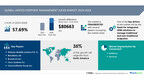
NEW YORK, Dec. 2, 2024 /PRNewswire/ — Report with the AI impact on market trends – The global unified endpoint management (UEM) market  size is estimated to grow by USD 80.66 billion from 2024-2028, according to Technavio. The market is estimated to grow at a CAGR of almost 57.69%  during the forecast period. Need for integrated uem solutions to manage traditional and non-traditional endpoints is driving market growth, with a trend towards increasing use of IoT devices. However, availability of open-source uem solutions  poses a challenge. Key market players include 42Gears Mobility Systems Pvt. Ltd., BlackBerry Ltd., Broadcom Inc., Cisco Systems Inc., Cloud Software Group Inc., Dell Technologies Inc., International Business Machines Corp., Ivanti Software Inc., JAMF HOLDING CORP., Matrix42 GmbH, Microsoft Corp., Mitsogo Inc., Open Text Corporation, ProMobi Technologies Pvt. Ltd., Snow Software, Sophos Ltd., SOTI Inc., Syxsense Inc., VMware Inc., and Zoho Corp. Pvt. Ltd..

AI-Powered Market Evolution Insights. Our comprehensive market report ready with the latest trends, growth opportunities, and strategic analysis- View Free Sample Report PDF

Forecast period

2024-2028

Base Year

2023

Historic Data

2018 – 2022

Segment Covered

Component (Solutions and Services), Deployment (Cloud, On-premises, and Hybrid), and Geography (North America, APAC, Europe, South America, and Middle East and Africa)

Region Covered

North America, APAC, Europe, South America, and Middle East and Africa

Key companies profiled

42Gears Mobility Systems Pvt. Ltd., BlackBerry Ltd., Broadcom Inc., Cisco Systems Inc., Cloud Software Group Inc., Dell Technologies Inc., International Business Machines Corp., Ivanti Software Inc., JAMF HOLDING CORP., Matrix42 GmbH, Microsoft Corp., Mitsogo Inc., Open Text Corporation, ProMobi Technologies Pvt. Ltd., Snow Software, Sophos Ltd., SOTI Inc., Syxsense Inc., VMware Inc., and Zoho Corp. Pvt. Ltd.

Key Market Trends Fueling Growth

The Internet of Things (IoT) market is experiencing significant growth with an estimated 21 billion devices expected to be connected by 2023. IoT enables machine-to-machine communication, allowing devices to exchange and act upon information without human intervention. This data can be analyzed to optimize services, products, and operations. The Industrial Internet of Things (IIoT) is a key driver of this growth, with components such as servers, workstations, and other devices connected to a network, including wearable fitness devices, industrial control systems, automotive telematics units, or drone units. As enterprises adopt more IoT devices, the need for endpoint management solutions such as Unified Endpoint Management (UEM), Endpoint Detection and Response (EDR), and others becomes essential. Vendors like 42Gears offer software modules to integrate IoT endpoints into UEM, while BlackBerry recently introduced BlackBerry UEM at the edge and BlackBerry UEM for IoT to help enterprises secure and manage their IoT devices. The growing demand for IoT devices and the need for next-generation endpoint management and security solutions are expected to drive the growth of the global UEM market during the forecast period. 

Unified Endpoint Management (UEM) is a business solution that helps large enterprises manage and secure various computing systems, including laptops, tablets, mobile phones, and IoT devices, running on different OS systems such as Windows 10, ChromeOS, and more. UEM supports advanced endpoint models and personal devices, ensuring a consistent operating environment for enterprise employees. With UEM, businesses can manage multiple configurations, provide endpoint protection, access management, and data security for their IT assets. UEM market trends include support for emerging technologies like IoT devices, consulting services, managed services, and support services. Pulseway, VMware, and AirWatch are key software platforms in this market. UEM enables remote work, improves employee productivity, and secures data in data centers. Traditional endpoints like PCs, smartphones, POS devices, and smart wearables are also covered. 

Insights on how AI is driving innovation, efficiency, and market growth- Request Sample!

Market Challenges

The global unified endpoint management (UEM) market faces a significant challenge from the availability of open-source UEM solutions. These solutions, developed and offered for free by organizations or developer communities, have gained popularity due to the high cost of proprietary software. Open-source UEM solutions, such as OSSEC, ClamAV, and JumpCloud, offer cost-effective alternatives. However, they often lack advanced features and provide limited functionalities. For instance, OSSEC focuses on checking intrusions, while JumpCloud enables secure management of endpoints. While open-source solutions can save costs for organizations with low IT budgets, they may hinder the growth of the UEM market during the forecast period. For example, Grab Holdings Inc., a Singapore-based transportation company, chose JumpCloud to manage and secure their endpoints across multiple office locations.Unified Endpoint Management (UEM) has become essential for large enterprises to manage the increasing number of endpoint devices, including PCs, smartphones, POS devices, smart wearables, and IoT devices. Employees use various operating environments and multiple configurations, making device management and access management complex. UEM solutions help IT departments ensure endpoint protection, data security, and data protection. With the rise of remote work and mobile banking, UEM becomes crucial for employee productivity and satisfaction. UEM platforms like Pulseway, VMware AirWatch, Workspace ONE, Windows, Android, Chromebooks, Microsoft Intune, and MobileIron offer primary exploratory and secondary desk services, managed services, and support services. These solutions enable IT departments to manage traditional endpoints and emerging technologies, such as mobile devices and network components, from a single console. However, challenges remain, such as managing various operating systems, ensuring data protection and data security in data centers, and integrating UEM with other software platforms. Consulting services can help enterprises navigate these challenges and optimize their UEM solutions.

Insights into how AI is reshaping industries and driving growth- Download a Sample Report

Segment Overview 

This unified endpoint management (uem) market report extensively covers market segmentation by

Component 1.1 Solutions1.2 ServicesDeployment 2.1 Cloud2.2 On-premises2.3 HybridGeography 3.1 North America3.2 APAC3.3 Europe3.4 South America3.5 Middle East and Africa

1.1 Solutions-  Unified Endpoint Management (UEM) solutions are software platforms that help businesses manage and secure their diverse endpoints from a centralized console. These solutions offer features for streamlined endpoint management, enhanced security, and improved IT efficiency. Key features include device enrollment and provisioning for seamless onboarding of new devices, and configuration management for centralized control of settings, policies, and configurations. UEM solutions also provide essential security features like data encryption, access controls, antivirus management, and patch management. Microsoft UEM, which includes Microsoft Intune, offers end-to-end device management solutions, enabling IT administrators to manage multiple endpoint types from a single console, with features such as device enrollment, application management, security policies enforcement, and endpoint analytics. The increasing adoption of UEM solutions will fuel market growth during the forecast period.

Download complimentary Sample Report to gain insights into AI’s impact on market dynamics, emerging trends, and future opportunities- including forecast (2024-2028) and historic data (2018 – 2022) 

Research Analysis

Unified Endpoint Management (UEM) is a modern approach to IT management that enables organizations to secure, manage, and support various computing systems, including laptops, tablets, mobile phones, and even IoT devices, from a single platform. This solution caters to various verticals such as healthcare, education, finance, and retail, among others, by providing IT asset management, advanced endpoint models, and hardware requirements tailored to each device type. UEM supports multiple OS systems, including Windows 10 and ChromeOS, ensuring seamless management and compatibility. With the increasing shift towards remote work, UEM solutions have become essential for ensuring employee productivity and data protection. They offer data security features such as encryption, access controls, and remote wipe capabilities to safeguard sensitive information. UEM solutions are not limited to traditional endpoints like desktops and laptops but also extend to advanced endpoints like POS devices, smart wearables, and mobile banking applications. By integrating UEM into IT departments’ workflows, organizations can effectively manage their mobile devices and ensure user satisfaction. Solutions like Pulseway, VMware, AirWatch, and others offer primary and secondary desktop capabilities, making them versatile and adaptable to businesses’ evolving needs.

Market Research Overview

Unified Endpoint Management (UEM) is a modern approach to IT asset management that enables organizations to manage and secure computing systems, including laptops, tablets, mobile phones, and IoT devices, from a single platform. UEM caters to various verticals, including large enterprises, healthcare, education, and finance, among others. The operating environment for UEM supports multiple configurations, including Windows 10, ChromeOS, and various mobile operating systems like Android and iOS. UEM solutions provide advanced endpoint protection, access management, and data security for personal devices used by enterprise employees. UEM also offers consulting, managed, and support services, as well as network components and software platforms like Pulseway, VMware, AirWatch, Workspace ONE, Windows, and Microsoft Intune. UEM is essential for managing emerging technologies such as mobile banking and smart wearables, ensuring employee productivity, and maintaining satisfaction with remote work. Traditional endpoints like PCs, smartphones, POS devices, and smart wearables are all within the scope of UEM.

Table of Contents:

1 Executive Summary
2 Market Landscape
3 Market Sizing
4 Historic Market Size
5 Five Forces Analysis
6 Market Segmentation

ComponentSolutionsServicesDeploymentCloudOn-premisesHybridGeographyNorth AmericaAPACEuropeSouth AmericaMiddle East And Africa

7 Customer Landscape
8 Geographic Landscape
9 Drivers, Challenges, and Trends
10 Company Landscape
11 Company Analysis
12 Appendix

About Technavio
Technavio is a leading global technology research and advisory company. Their research and analysis focuses on emerging market trends and provides actionable insights to help businesses identify market opportunities and develop effective strategies to optimize their market positions.

With over 500 specialized analysts, Technavio’s report library consists of more than 17,000 reports and counting, covering 800 technologies, spanning across 50 countries. Their client base consists of enterprises of all sizes, including more than 100 Fortune 500 companies. This growing client base relies on Technavio’s comprehensive coverage, extensive research, and actionable market insights to identify opportunities in existing and potential markets and assess their competitive positions within changing market scenarios.

Contacts
Technavio Research
Jesse Maida
Media & Marketing Executive
US: +1 844 364 1100
UK: +44 203 893 3200
Email: media@technavio.com
Website: www.technavio.com/

View original content to download multimedia:https://www.prnewswire.com/news-releases/uem-market-to-grow-by-usd-80-66-billion-2024-2028-driven-by-demand-for-integrated-endpoint-solutions-with-ai-transforming-market-dynamics–technavio-302318942.html

SOURCE Technavio

Continue Reading
Click to comment

Leave a Reply

Your email address will not be published. Required fields are marked *

Technology

Sidus Space Announces Closing of Offering

Published

on

By

CAPE CANAVERAL, Fla., April 21, 2026 /PRNewswire/ — Sidus Space, Inc. (Nasdaq: SIDU) (“Sidus” or the “Company”), an innovative space and defense technology company, today announced the closing of its previously announced best-efforts offering of 13,453,700 shares of its Class A common stock (or pre-funded warrants (“Pre-funded Warrants”) in lieu thereof). Each share of Class A common stock (or Pre-funded Warrant) was sold at an offering price of $4.35 per share (inclusive of the Pre-funded Warrant exercise price) for gross proceeds of approximately $58.5 million, before deducting the placement agent’s fees and offering expenses. All of the shares of Class A common stock and Pre-funded Warrants were offered by the Company.

The Company intends to use the net proceeds from the offering for working capital and general corporate purposes.

ThinkEquity acted as sole placement agent for the offering.

The securities were offered and sold pursuant to a shelf registration statement on Form S-3 (File No. 333-292839), including a base prospectus, filed with the U.S. Securities and Exchange Commission (the “SEC”) on January 20, 2026, and declared effective on February 4, 2026. The offering was made by means of a written prospectus. A final prospectus supplement and accompanying prospectus related to the offering have been filed with the SEC and made available on the SEC’s website. Copies of the final prospectus supplement and the accompanying prospectus relating to the offering may also be obtained, when available, from the offices of ThinkEquity, 17 State Street, 41st Floor, New York, New York 10004.

This press release shall not constitute an offer to sell or a solicitation of an offer to buy, nor shall there be any sale of these securities in any state or jurisdiction in which such an offer, solicitation or sale would be unlawful prior to registration or qualification under the securities laws of any such state or jurisdiction.

About Sidus Space

Sidus Space (NASDAQ: SIDU) is an innovative space and defense technology company offering flexible, cost-effective solutions, including satellite manufacturing and technology integration, AI-driven space-based data solutions, mission planning and management operations, AI/ML products and services, and space and defense hardware manufacturing. With its mission of Space Access Reimagined®, Sidus Space is committed to rapid innovation, adaptable and cost-effective solutions, and the optimization of space systems and data collection performance. With demonstrated space heritage, including manufacturing and operating its own satellite and sensor system, LizzieSat®, Sidus Space serves government, defense, intelligence, and commercial companies around the globe. Strategically headquartered on Florida’s Space Coast, Sidus Space operates a 35,000-square-foot space manufacturing, assembly, integration, and testing facility and provides easy access to nearby launch facilities. For more information, visit: sidusspace.com.

Forward-Looking Statements

Statements in this press release about future expectations, plans and prospects, as well as any other statements regarding matters that are not historical facts, may constitute ‘forward-looking statements’ within the meaning of The Private Securities Litigation Reform Act of 1995. These statements include, but are not limited to, statements relating to the expected trading commencement and closing dates. The words ‘anticipate,’ ‘believe,’ ‘continue,’ ‘could,’ ‘estimate,’ ‘expect,’ ‘intend,’ ‘may,’ ‘plan,’ ‘potential,’ ‘predict,’ ‘project,’ ‘should,’ ‘target,’ ‘will,’ ‘would’ and similar expressions are intended to identify forward-looking statements, although not all forward-looking statements contain these identifying words. Actual results may differ materially from those indicated by such forward-looking statements as a result of various important factors, including: the uncertainties related to market conditions and other factors described more fully in the section entitled ‘Risk Factors’ in Sidus Space’s prospectus supplement and Annual Report on Form 10-K for the year ended December 31, 2025, and other periodic reports filed with the Securities and Exchange Commission. Any forward-looking statements contained in this press release speak only as of the date hereof, and Sidus Space, Inc. specifically disclaims any obligation to update any forward-looking statement, whether as a result of new information, future events or otherwise.

Contacts

Investor Relations
Investor-Relations@sidusspace.com

Media
press@sidusspace.com

View original content to download multimedia:https://www.prnewswire.com/news-releases/sidus-space-announces-closing-of-offering-302749177.html

SOURCE Sidus Space, Inc.

Continue Reading

Technology

Ezee Fiber Connects First Customers in Santa Fe, Accelerates New Mexico Expansion

Published

on

By

HOUSTON, April 21, 2026 /PRNewswire/ — Ezee Fiber, a fast-growing fiber internet company delivering 100% fiber-to-the-home (FTTH) service, announced it has connected its first customers in Santa Fe, New Mexico. This milestone marks the company’s first major step in building its Santa Fe network and expanding multi-gigabit, symmetrical fiber service across the state.

Installations are now underway, giving residents access to Ezee Fiber’s high-performance network, which features symmetrical multi-gig speeds, no data caps, no hidden fees and transparent lifetime pricing. The company also emphasizes locally staffed customer support and a reliable, high-quality experience that sets it apart from legacy providers.

“We’re excited to bring our modern, 100% fiber network to homes the state capital,” said Carlos Rosas, Senior Vice President and General Manager, Southwest Region at Ezee Fiber. “Communities deserve more than basic connectivity. We are focused on delivering ultra-fast speeds, reliability and long-term infrastructure that supports how people live and work today.”

Ezee Fiber began expanding in New Mexico in 2024 and continues to scale rapidly. In addition to Santa Fe, the company is building fiber infrastructure in Albuquerque and surrounding communities, with service activating on a rolling basis as construction is completed.

Residents can expect construction activity to move efficiently through neighborhoods. Ezee Fiber will provide advance notice before work begins and will restore all areas in line with municipal requirements and industry best practices.

Residents can check availability and learn more at ezeefiber.com.

About Ezee Fiber

Ezee Fiber is a rapidly growing fiber internet company delivering premium multi-gig service to residential, business, and government customers over a 100% fiber-optic network—at exceptional value.

The company’s carrier-grade infrastructure spans Texas, New Mexico, Illinois, Oregon, Michigan and Washington, supported by local teams who live and work in the communities they serve. Ezee Fiber’s industry-leading speeds, award-winning customer service, and transparent pricing model set the company apart. Learn more at www.ezeefiber.com.

View original content to download multimedia:https://www.prnewswire.com/news-releases/ezee-fiber-connects-first-customers-in-santa-fe-accelerates-new-mexico-expansion-302749195.html

SOURCE Ezee Fiber

Continue Reading

Technology

CFA Institute calls for functional, proportionate AI oversight to safeguard UK retail investors and market integrity

Published

on

By

LONDON, April 21, 2026 /PRNewswire/ — CFA Institute, the global association of investment professionals, has published its response to the Financial Conduct Authority’s (FCA) Review into the long-term impact of artificial intelligence on retail financial services (the “Mills Review”). CFA Institute welcomes the FCA’s technology-neutral approach, while urging greater operational clarity to ensure responsible AI deployment.

In its submission, CFA Institute supports anchoring AI oversight within the UK’s existing principles-based framework, including the Consumer Duty and the Senior Managers and Certification Regime (SM&CR), rather than introducing a standalone AI rulebook. However, it emphasizes that supervisory expectations must be clearer and more practical as AI systems move from assistive tools to advisory functions and, ultimately, autonomous agents.

CFA Institute argues that regulation should follow what AI systems do for consumers, not how they are labelled or constructed. AI-enabled retail interfaces may generate “advice-like” outcomes, such as personalized product steering or portfolio construction guidance, without formally crossing regulatory thresholds. A substance-over-form approach is therefore essential to prevent regulatory arbitrage and ensure consistent consumer protection.

While the Consumer Duty provides a robust foundation, CFA Institute calls for AI-specific articulation of how its four outcomes apply where decision-making is increasingly delegated to automated systems. In particular, the response highlights a risk of automation bias, which may reduce effective consumer outcomes, especially among vulnerable customers.

Firms should be expected to test, monitor and evidence outcomes based on how consumers actually use AI systems in practice, not solely on how they are intended to function.

The submission also identifies a potential governance gap where firms report formal accountability for AI systems yet lack deep operational understanding of complex or third-party models. CFA Institute recommends clearer expectations around what “reasonable steps” and “meaningful oversight” mean under SM&CR and SYSC when AI is deployed in material retail use cases.

It further calls for:

A proportionate, tiered governance framework aligned to the assistive–advisory–autonomous spectrumClear allocation of end-to-end accountability for consumer outcomesReinforced oversight of third-party AI dependencies and operational resilience risks.

Although retail-focused, the response underscores broader market structure implications, including model concentration, correlated behavior, and third-party dependencies that could amplify volatility in stressed conditions. CFA Institute encourages close coordination between the FCA and the Bank of England, as well as continued alignment with IOSCO and the Financial Stability Board, to reduce fragmentation and support the UK’s global competitiveness.

Finally, CFA Institute stresses that responsible AI adoption depends on developing “hybrid” talent, professionals who combine technological fluency with fiduciary judgement and market expertise. Strengthening professional standards and supervisory capability should form part of the UK’s long-term AI competitiveness strategy.

Olivier Fines, CFA, Head of Advocacy and Capital Markets Policy at CFA Institute, said: “Artificial intelligence has the potential to expand access, improve efficiency and strengthen retail financial services, but only if trust and accountability remain firmly at the center.

“The UK’s principles-based framework is advantageous. The priority now is operational clarity: clear guidance on how the Consumer Duty and SM&CR apply when decision-making is increasingly delegated to AI systems.

“Regulation should follow function, not technological form. Where AI systems effectively shape or execute consumer decisions, protections must apply in substance, not just in label.

“We encourage the FCA to provide practical supervisory guidance by the end of 2026 and to continue close dialogue with industry and international standard-setters. With proportionate safeguards, meaningful oversight and investment in hybrid professional skills, the UK can play a leading role in responsible AI-enabled finance while preserving market integrity and public trust.”

About CFA Institute

As the global association of investment professionals, CFA Institute sets the standards for professional excellence and credentials. We champion ethical behavior in investment markets and serve as the leading source of learning and research for the investment industry. We believe in fostering an environment where investors’ interests come first, markets function at their best, and economies grow. With more than 200,000 charterholders worldwide across more than 160 markets, CFA Institute has 9 offices and 157 local societies. Find us at https://www.cfainstitute.org/ or follow us on LinkedIn, and subscribe on YouTube.


View original content:https://www.prnewswire.co.uk/news-releases/cfa-institute-calls-for-functional-proportionate-ai-oversight-to-safeguard-uk-retail-investors-and-market-integrity-302748558.html

Continue Reading

Trending