Connect with us

Technology

In-Vitro and In-Vivo Micro Electrode Array Market to Grow by USD 7 Million (2024-2028), Driven by MEA Applications in Neuroscience Research, with AI Driving Market Transformation – Technavio

Published

on

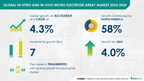
NEW YORK, Dec. 3, 2024 /PRNewswire/ — Report with the AI impact on market trends – The global in-vitro and in-vivo micro electrode array market size is estimated to grow by USD 7 million from 2024-2028, according to Technavio. The market is estimated to grow at a CAGR of about 4.3% during the forecast period. Extensive use of meas in neuroscience research is driving market growth, with a trend towards potential application of in-vitro and in-vivo mea in cancer tissue detection. However, limitations of meas poses a challenge. Key market players include 3Brain AG, Alpha Omega Engineering Ltd., Axion BioSystems Inc., Blackrock Microsystems Inc., Cambridge NeuroTech, FHC Inc., Harvard Bioscience Inc., IMEC Inc., Innovative Neurophysiology Inc., MaxWell Biosystems AG, Microprobes for Life Science, MICRUX FLUIDIC S.L., NeuroNexus Technologies Inc., NMI Technologie Transfer GmbH, Plexon Inc., Ripple Neuro, Screen Holdings Co. Ltd, SpikeGadgets, Tucker Davis Technologies, and World Precision Instruments.

Key insights into market evolution with AI-powered analysis. Explore trends, segmentation, and growth drivers- View Free Sample PDF

In-Vitro And In-Vivo Micro Electrode Array Market Scope

Report Coverage

Details

Base year

2023

Historic period

2018 – 2022

Forecast period

2024-2028

Growth momentum & CAGR

Accelerate at a CAGR of 4.3%

Market growth 2024-2028

USD 7 million

Market structure

Fragmented

YoY growth 2022-2023 (%)

4.0

Regional analysis

North America, Europe, Asia, and Rest of World (ROW)

Performing market contribution

North America at 58%

Key countries

US, UK, Germany, France, and Japan

Key companies profiled

3Brain AG, Alpha Omega Engineering Ltd., Axion BioSystems Inc., Blackrock Microsystems Inc., Cambridge NeuroTech, FHC Inc., Harvard Bioscience Inc., IMEC Inc., Innovative Neurophysiology Inc., MaxWell Biosystems AG, Microprobes for Life Science, MICRUX FLUIDIC S.L., NeuroNexus Technologies Inc., NMI Technologie Transfer GmbH, Plexon Inc., Ripple Neuro, Screen Holdings Co. Ltd, SpikeGadgets, Tucker Davis Technologies, and World Precision Instruments

Market Driver

The In-vitro and In-vivo Micro Electrode Array (MEA) market is experiencing significant growth due to increasing research in neurological disorders and cancer tissue detection. MEAs, also known as Micro Electrode Arrays, are essential tools for recording neural activity and measuring brain function. The market includes both Multiwell MEAs and Single well MEAs, with CMOS-based MEAs gaining popularity for their cost-effectiveness and high-density electrodes. Key players in the market include Pharmaceutical and Biotech companies, Contract Research Organizations (CROs), and government research labs. Trends include the development of Neurostimulation devices, Diagnostic Solutions, and Therapeutic Solutions using MEAs. New technologies like 3D nanoparticle printing, Graphene-based Electrodes, and Flexible Electrodes are enhancing MEA capabilities. Neuroengineering applications, such as Brain-Computer Interfaces, Deep Brain Stimulation, and Synaptic Connections, are also driving market growth. Biocompatibility and signal quality remain crucial factors, with advancements in microfabrication techniques like Photolithography and 3D Printing addressing these challenges. The market encompasses applications in Clinical Settings, Drug Development, Disease Modeling, Neuroprosthetics, and Brain-Computer Interfaces. Personalized Medicine and Wireless Recording Technologies are emerging trends, offering opportunities for Drug Candidates and improving research efficiency. 

The global market for In-Vitro and In-Vivo Micro Electrode Arrays (MEAs) is witnessing significant growth due to the increasing focus on early cancer detection. Researchers and oncologists are exploring the integration of MEA technology with micro-needle arrays to monitor the electrical impedance of cancer tissue. This approach aims to study the electrical properties of various cancer cells and tissue cultures, offering potential for more accurate and patient-friendly cancer diagnosis. The market’s growth is driven by the high mortality rate of cancer and the need for advanced diagnostic tools. 

Request Sample of our comprehensive report now to stay ahead in the AI-driven market evolution!

Market Challenges

The In-vitro and In-vivo Micro Electrode Array (MEA) market is gaining significant traction in the biotech and pharmaceutical industries. MEAs, which include Micro Electrode Arrays and CMOS-based MEAs, play a crucial role in understanding neural activity and brain function for neurological disorders. In-vivo MEAs enable the recording of electrical signals from neurons in living organisms, while in-vitro MEAs are used for lab-grown neuronal networks. Challenges in this market include cancer tissue detection, biocompatibility, signal quality, and high-density electrodes. Technological advancements such as 3D nanoparticle printing, flexible electrodes, and graphene-based electrodes are addressing these challenges. Neurostimulation devices, drug development, disease modeling, and brain-computer interfaces are key applications for MEAs in clinical settings. CROs, government research labs, and Precision Instruments are major players in this market. Multiwell and single well MEAs, photolithography, and 3D printing are essential microfabrication techniques. Wireless recording technologies and personalized medicine are future growth areas.In-Vitro and In-Vivo Micro Electrode Arrays (MEAs) are widely used in research for studying neural activity. Advanced MEAs, such as in vitro CMO-based HDMEAs, are popular due to their capabilities. However, in vitro MEAs have limitations. They lack the high spatial resolution needed for stimulating and recording single cells, making them less suitable than dynamic clamp and patch clamp systems. Furthermore, MEA implantation, particularly chronic implantation, can result in biological responses like a decrease in functioning electrodes, glial scarring, and neuronal cell loss. These responses depend on factors such as MEA shank sizes, inter-shank distances, material composition, and implantation duration. Despite these challenges, MEAs remain a valuable tool for neuroscience research.

Discover how AI is revolutionizing market trends- Get your access now!

Segment Overview

This in-vitro and in-vivo micro electrode array market report extensively covers market segmentation by

End-user 1.1 Pharmaceutical companies and CROs1.2 Academic/government and other research labsType 2.1 Multiwell MEA2.2 Single well MEAGeography 3.1 North America3.2 Europe3.3 Asia3.4 Rest of World (ROW)

1.1 Pharmaceutical companies and CROs- The pharmaceutical and biotechnology industry and Contract Research Organizations (CROs) have increasingly adopted Micro Electrode Array (MEA) systems for neuroscience research. MEAs enable precise phenotypic drug screening while retaining neuronal functionality. CROs offer reduced costs and access to advanced equipment for pharmaceutical and biotechnology companies, making outsourcing an attractive option. MEAs are utilized for various research activities, from basic research to late-stage development, including genetic engineering, safety and efficacy tests, assay development, target validation, and clinical trials. Sanofi AG, Boehringer Ingelheim Pharma GmbH and Co. KG, and Janssen Pharmaceutica NV are among the companies employing MEAs for epilepsy research, cardiac safety assessment, and drug identification, respectively. The growing adoption of MEAs by these industry players is expected to fuel the expansion of the global in-vitro and in-vivo MEA market during the forecast period.

Download a Sample of our comprehensive report today to discover how AI-driven innovations are reshaping competitive dynamics

Research Analysis

In-vitro Micro Electrode Arrays (MEAs), also known as Micro Electrode Arrays, are a valuable tool in various research fields, including neuroscience and cancer tissue detection. MEAs consist of an array of electrodes that can record electrical signals from living cells or tissues. Neuroscience researchers use MEAs to study neural activity, brain function, and neuroengineering. In the biotech and pharmaceutical industries, MEAs are employed for therapeutic solutions, such as neurostimulation devices. MEAs come in different formats, including Multiwell and Single well arrays. The latest advancements in MEA technology include CMOS-based MEAs and 3D nanoparticle printing. These innovations offer improved sensitivity, accuracy, and miniaturization, making MEAs an essential diagnostic and therapeutic solution for the future. In-Vitro Microelectrode Arrays provide valuable insights into electrical signals from living cells and tissues, contributing significantly to research and development in various industries.

Market Research Overview

In-vivo Micro Electrode Arrays (MEAs), also known as Micro Electrode Arrays for Neuroscience applications, are advanced technological tools used for recording neural activity and stimulating brain tissue in real-time. MEAs find extensive applications in various fields, including neurological disorders research, drug development, disease modeling, neuroengineering, and brain-computer interfaces. In-vivo MEAs can be fabricated using different materials such as CMOS, graphene, or flexible electrodes, using microfabrication techniques like photolithography and 3D printing. These arrays offer high-density electrodes, enabling the recording of electrical signals from a large number of neurons, neural networks, and synaptic connections. In vitro MEAs are used for diagnostic solutions, while in vivo MEAs are employed in therapeutic applications like neurostimulation devices, deep brain stimulation, and neural prosthetics. MEAs have significant potential in personalized medicine, allowing for the detection of drug candidates and monitoring brain function in clinical settings. Wireless recording technologies are also being explored to enhance the versatility of MEAs. In summary, MEAs play a crucial role in understanding brain function, developing new therapies, and advancing our knowledge of brain-related disorders.

Table of Contents:

1 Executive Summary
2 Market Landscape
3 Market Sizing
4 Historic Market Size
5 Five Forces Analysis
6 Market Segmentation

End-userPharmaceutical Companies And CROsAcademic/government And Other Research LabsTypeMultiwell MEASingle Well MEAGeographyNorth AmericaEuropeAsiaRest Of World (ROW)

7 Customer Landscape
8 Geographic Landscape
9 Drivers, Challenges, and Trends
10 Company Landscape
11 Company Analysis
12 Appendix

About Technavio

Technavio is a leading global technology research and advisory company. Their research and analysis focuses on emerging market trends and provides actionable insights to help businesses identify market opportunities and develop effective strategies to optimize their market positions.

With over 500 specialized analysts, Technavio’s report library consists of more than 17,000 reports and counting, covering 800 technologies, spanning across 50 countries. Their client base consists of enterprises of all sizes, including more than 100 Fortune 500 companies. This growing client base relies on Technavio’s comprehensive coverage, extensive research, and actionable market insights to identify opportunities in existing and potential markets and assess their competitive positions within changing market scenarios.

Contacts

Technavio Research
Jesse Maida
Media & Marketing Executive
US: +1 844 364 1100
UK: +44 203 893 3200
Email: media@technavio.com
Website: www.technavio.com/

View original content to download multimedia:https://www.prnewswire.com/news-releases/in-vitro-and-in-vivo-micro-electrode-array-market-to-grow-by-usd-7-million-2024-2028-driven-by-mea-applications-in-neuroscience-research-with-ai-driving-market-transformation—technavio-302319761.html

SOURCE Technavio

Continue Reading
Click to comment

Leave a Reply

Your email address will not be published. Required fields are marked *

Technology

Saramonic WiTalk9 X: Modular-Designed, Lightweight Wireless Intercom System Redefines Team Communication

Published

on

By

NEW YORK, April 19, 2026 /PRNewswire/ — Saramonic, a leading brand in audio solutions, announced a 9-Person Modular Full-Duplex Wireless Intercom System WiTalk9 X and the WiTalk9 Base. WiTalk9 X builds upon the success of the WiTalk9 with a focus on lightweight comfort and modular adaptability, introducing unprecedented flexibility and scalability of modern production teams from small to large.

Industry-First Modular Design for Maximum Flexibility

The Saramonic WiTalk9 X sets a new standard for adaptability in wireless intercom systems. Its industry-first modular construction allows users to switch between single-ear, dual-ear, or helmet-ready models, accommodating the diverse needs of different crew roles.

Weighing just 172 grams (6 oz) with battery in its single ear configuration, the WiTalk9 X delivers all-day comfort for demanding production environments. The IPX4-rated, lightweight design allows professionals who wear headsets for extended periods during long shoots or live events to focus on their work.

Intelligible Voice Communication: Saramonic ClearTalk™2.0 Technology and AI Noise Cancellation

Saramonic ClearTalk™2.0 combines the dual-microphone array and Saramonic AI Noise Cancellation. The cardioid main microphone focuses on the speaker’s voice, and the omnidirectional secondary mic collects the noise as samples for Saramonic AI Noise cancellation to separate the vocal and noise, ensuring clear and stable voice communication.

Saramonic AI Noise Cancellation is trained by over 700,000 noise samples across 20,000+ hours. Compared to traditional environmental noise cancellation that only handles ambient sounds, it identifies and separates noise in real-time to keep voice clear and stable within team communication, even when multiple crews speak at once in a complex environment.

Efficient Team Work with Dual-Antenna Design and Saramonic WiTalk Wireless Intercom Ecosystem

The WiTalk9 X features both internal and external antennas to continuously monitor signal quality and select the stronger signal. It operates on the 1.9 GHz DECT Technology and offers up to 12 hours battery life with a spare rechargeable lithium battery for quick replacement, enables teams to stay connected within 1,300 ft (400m) – ideal for events, film shoots, and live performances.

Saramonic WiTalk9 X supports a 9-person system without a hub, and can be easily scaled up to 64 users via WiTalk Base, enabling group cascading and remote collaboration with an industry-leading range of up to 700 meters.

Pricing and Availability

The Saramonic WiTalk9 X is available through official stores. For detailed pricing and configuration options, please contact your local Saramonic representative or visit www.saramonic.com.

Contact: marketing@saramonic.com 

Photo – https://mma.prnewswire.com/media/2959888/9x__________1_1.jpg

View original content:https://www.prnewswire.co.uk/news-releases/saramonic-witalk9-x-modular-designed-lightweight-wireless-intercom-system-redefines-team-communication-302746569.html

Continue Reading

Technology

Siemon Releases 2026 ESG Report and Progress Update Report

Published

on

By

WATERTOWN, Conn., April 19, 2026 /PRNewswire-PRWeb/ — The Siemon Company, a global leader in high‑performance network infrastructure solutions for data centers and smart buildings, is proud to announce the release of its 2026 Environmental, Social, and Governance (ESG) Report, showcasing accelerated climate action, third‑party‑verified performance, and continued leadership in transparent, responsible business practices. The report highlights Siemon’s strongest ESG results to date, including early achievement of science‑based climate targets, expanded renewable energy adoption, increased product transparency, and a people‑first culture that supports accountability, equity, and long‑term value creation.

Sustainability is not a side initiative; it’s embedded in how we operate, how we innovate, and how we lead. This year’s report reflects disciplined execution across our Sustainable Development Goals, our value chain, and our workforce.

Key Highlights from the 2026 ESG Report:

Greenhouse Gas (GHG) Emissions

Achieved a 69% absolute reduction in Scope 1 and Scope 2 emissions from a 2021 baseline, surpassing the company’s 2031 SBTi‑validated target four years ahead of schedule.Reduced Scope 3 emissions intensity by 23.1%, while maintaining essentially flat absolute emissions despite business growth.

Energy, Water & Waste

Increased renewable energy usage to 90% of global operations, achieving Scope 2 carbon neutrality at major U.S. and China facilities.Reduced water usage by 30%, exceeding the company’s long‑term reduction goal.Delivered a 17.1% absolute reduction in waste, supported by expanded recycling and sustainable packaging initiatives.

Product Transparency & Customer Enablement

Expanded Environmental Product Declaration (EPD) coverage to 41% of sales and Health Product Declaration (HPD) coverage to 49% of sales, supporting green building and material health requirements to a screening threshold of 100 ppm.Launched an online compliance portal providing on‑demand regulatory and standards assurance for 99% of finished goods, including RoHS, REACH, PFAS, and conflict minerals.

People & Social Impact

Certified™ by Great Place To Work® in the U.S. for the third consecutive year, with 90.4% of employees globally affirming Siemon as a great place to work.We have made a commitment to ensure that 100% of our employees are paid at or above the living wage. Contributed 2,600+ volunteer hours and over $160,000 in charitable giving, supporting education, community, and conservation initiatives worldwide.

Governance & Transparency

Advanced alignment with the EU Corporate Sustainability Reporting Directive (CSRD), completing a third‑party‑reviewed Double Materiality Assessment and Limited Assurance Audit.Maintained 100% employee training on the Company Code of Conduct, aligned with the UN Global Compact and Responsible Business Alliance principles.

“Sustainability is not a side initiative; it’s embedded in how we operate, how we innovate, and how we lead. This year’s report reflects disciplined execution across our Sustainable Development Goals, our value chain, and our workforce. We’re focused on delivering measurable progress today while building the systems and governance needed for the future.”

– John Siemon, Chief Technology Officer and Chief Operating Officer at Siemon

In a unique effort to bridge corporate reporting with tangible action, Siemon has integrated an interactive giving component into the digital publication. Within the executive summary and each primary pillar – Environmental, Social, and Governance -readers will find a dedicated link to unlock a corporate donation. This initiative empowers stakeholders to personally direct Siemon to fund toward one of five global non-profit partners: Habitat for Humanity, Doctors Without Borders, Engineers Without Borders, One Tree Planted, or Oceana.

The full 2026 ESG Report is available for download at www.siemon.com/esg.

About Siemon

Siemon is a global market leader in the design and manufacture of high-performance connectivity solutions for data centers and smart buildings. We empower our customers to connect faster, scale smarter and deploy with confidence. Founded in 1903, our legacy of customer-driven innovation, engineering excellence, and an unwavering commitment to sustainability has made us the benchmark for quality and reliability. We deliver precision-built copper, fiber and high-speed connectivity solutions that perform at scale, with the flexibility, speed, and support our customers rely on. With operations in over 100 countries, Siemon has one of the industry’s broadest solution portfolios and is the trusted partner behind the networks that connect the world. Find out more at www.siemon.com.

Media Contact

Brian Baum, Siemon, 1 8609454200, brian_baum@siemon.com

View original content:https://www.prweb.com/releases/siemon-releases-2026-esg-report-and-progress-update-report-302746314.html

SOURCE Siemon

Continue Reading

Technology

Quickplay’s Triple Play of New Customers, Products and Partnerships Set to Dominate NAB 2026

Published

on

By

LAS VEGAS, April 19, 2026 /PRNewswire/ — (2026 NAB Show) – Quickplay, the Content to Value Operating System, today unveiled a broad array of company news including: an AI-enriched solution that identifies social signals and trending topics, and connects them to relevant content within minutes; transformative customer deployments; and powerful industry research and partnerships.

Debuting at NAB, Social Signals is a new technology within Quickplay AI Studio that identifies trending cultural moments and matches them with high-value content assets to automatically generate social-ready clips and posts. By combining external trend data with performance insights from owned channels, Social Signals enables content teams to move from insight to publishing in minutes, rather than days.

Social Signals is a key part of Quickplay’s AI Studio Solution, which includes metadata enrichment, moment detection, smart verticalization and multi-platform publishing. Its Smart Verticalizer uses multimodal AI and action tracking to intelligently reframe video –preserving key visual elements such as faces, gameplay and on-screen graphics – to maintain broadcast-quality standards across short-form formats. The company has also partnered with Visible Things, the creator-driven platform to deploy the first implementation of Social Signals across the Visible Things infrastructure.

Quickplay further announced it has gone live with Gray Media (NYSE: GTN)’s new streaming experience, which included consolidating 1,300 digital touchpoint, including 163 websites, 326 mobile apps and 815 CTV apps onto a single data-driven platform powered by Quickplay and Google Cloud (NASDAQ: GOOGL). The system now manages 269 live channels and 123 FAST channels across Amazon Prime Video, Roku (NASDAQ: ROKU), Samsung TV Plus, Vizio and Fire TV, delivering hyper-local content to 37% of U.S. TV households.

Quickplay also announced the cloud-native transformation of Television New Zealand’s streaming platform, TVNZ+. Completed in 12 months, Quickplay replaced a fragmented ecosystem of six+ vendors across UI/UX, content management, video processing, advertising and analytics with a single, unified platform. The team at TVNZ also named Amazon Web Services (NASDAQ: AMZN) as its preferred cloud platform for the transformation, further increasing efficiencies and lowering costs by consolidating onto a single cloud vendor. The technology overhaul will drive unprecedented innovation and efficiency for TVNZ, New Zealand’s state-owned broadcaster, which reaches over two million New Zealanders daily.

“Broadcasters don’t need another point solution. They need an AI-enabled operating system that turns content into measurable outcomes,” said Paul Pastor, Co-Founder and Chief Business Officer at Quickplay. “At NAB, we’re showing how to bring cultural moments, content catalogs and distribution workflows together to create engaging and revenue opportunities in real time.”

In partnership with Caretta Research, Quickplay will also release new research, “The Broadcaster Revolution Will Not Be Televised,” highlighting a critical bottleneck in the industry: North American broadcasters spend approximately 75% of their time on technical workflows, leaving only 25% for content creation. The report outlines how automated workflows and unified operations can help broadcasters meet the growing demand for short-form video while maintaining editorial quality and accelerating monetization.

Additionally, Quickplay has joined NAB PILOT, a coalition of innovators, educators and advocates dedicated to advancing broadcast technologies and cultivating new media opportunities. As a part of this group, Quickplay is expanding its collaboration with broadcasters to redefine how value is derived from content.

Quickplay at NAB 2026:

Paul Pastor, Jordan Bartow, and Peter Tanner of Quickplay, and Albert Lai of Google Cloud will be on a panel: An Audience of One: How Gray Media + Google Cloud + Quickplay are Using AI and Cloud OTT to Personalize Local News, Enable User-Generated Content, Engage Younger Viewers, and Unlock New Revenue for Broadcasters. Central Hall Stage, Monday, April 20 at 4:15p PTAt the NAB Streaming Summit TVNZ’s Chief Digital Officer, Rob Hutchinson, will present “How TVNZ+ Built a Co-Viewing Product” on Tuesday, April 21 at 11:30 AM PT.Live Demonstrations: See Quickplay technology in action at AWS, GCP, TwelveLabs and the Encore. To book a meeting, email hello@quickplay.com

About Quickplay:
Quickplay is the Content to Value Operating System for media and entertainment, connecting every stage of the content lifecycle, from creation to monetization. By applying intelligence where it drives measurable impact, Quickplay enables broadcasters, sports operators, streamers, and creators to turn their catalogs into revenue. Quickplay powers 2.5 billion streaming minutes per month, with 5 billion ad impressions served and 99.999% streaming uptime. 

Quickplay was founded by four innovators with deep media and entertainment technology experience from AT&T, McKinsey and Company, The Walt Disney Company, and Warner Bros. Discovery. Headquartered in Toronto, the company has offices in Los Angeles, San Diego, Chennai, and throughout Europe. For more information, visit quickplay.com.

Media Contact:
Breakaway Communications for Quickplay
quickplaypr@breakawaycom.com
+1 917-731-5734

View original content to download multimedia:https://www.prnewswire.com/news-releases/quickplays-triple-play-of-new-customers-products-and-partnerships-set-to-dominate-nab-2026-302746637.html

SOURCE Quickplay

Continue Reading

Trending