Connect with us

Technology

Ticket Market to grow by USD 228.52 billion (2024-2028), driven by animated movies’ success; Report on AI’s role in redefining market trends – Technavio

Published

on

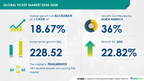
NEW YORK, Dec. 3, 2024 /PRNewswire/ — Report with market evolution powered by AI – The global ticket market  size is estimated to grow by USD 228.52 billion from 2024-2028, according to Technavio. The market is estimated to grow at a CAGR of  18.67%  during the forecast period. Success of movies due to increasing use of animation is driving market growth, with a trend towards high utilization of social media in selling tickets. However, growing threat of terrorism and occurrence of war between nations  poses a challenge. Key market players include AMC Entertainment Holdings Inc., Big Tree Entertainment Pvt. Ltd., Cinemark Holdings Inc., Citizen Ticket Ltd., Coast To Coast Tickets LLC, Comcast Corp., CTS Eventim AG and Co. KGaA, Cvent Holding Corp., eBay Inc., Eventbee Inc., Eventbrite Inc., Ideabud LLC, ITKTS Interactive Technologies Pvt. Ltd., Live Nation Entertainment Inc., Lyte Inc., One97 Communications Ltd., Softjourn Corp., TickPick LLC, Viagogo Entertainment Inc., and Anschutz Entertainment Group Inc..

AI-Powered Market Evolution Insights. Our comprehensive market report ready with the latest trends, growth opportunities, and strategic analysis- View Free Sample Report PDF

Forecast period

2024-2028

Base Year

2023

Historic Data

2018 – 2022

Segment Covered

Source (Primary and Secondary), Type (Sporting events, Movies, Concerts, and Performing arts), and Geography (North America, Europe, APAC, South America, and Middle East and Africa)

Region Covered

North America, Europe, APAC, South America, and Middle East and Africa

Key companies profiled

AMC Entertainment Holdings Inc., Big Tree Entertainment Pvt. Ltd., Cinemark Holdings Inc., Citizen Ticket Ltd., Coast To Coast Tickets LLC, Comcast Corp., CTS Eventim AG and Co. KGaA, Cvent Holding Corp., eBay Inc., Eventbee Inc., Eventbrite Inc., Ideabud LLC, ITKTS Interactive Technologies Pvt. Ltd., Live Nation Entertainment Inc., Lyte Inc., One97 Communications Ltd., Softjourn Corp., TickPick LLC, Viagogo Entertainment Inc., and Anschutz Entertainment Group Inc.

Key Market Trends Fueling Growth

Ticket Market: Trends Shaping the Future of Convenient Ticketing Artificial intelligence is revolutionizing the ticketing industry, making ticket purchase more efficient and convenient. Credit amounts can now be stored on wearables like smartwatches and NFC cards for contactless electronic ticket purchases. Operational efficiencies are increased with hardware like tap-off readers and RFID tags. Virtual reality maps and satellite delivery offer premium experiences for sports, entertainment, and parking. Buses, trains, and transportation networks are embracing digital transformation through smart cards and smart ticketing. Component manufacturers are producing ticket validators, Wi-Fi modules, and GPS for enhanced user experience. Event ticketing software provides deals, discounts, and marketing tools for event organizers, reaching internet users through online ticket purchase platforms. Digital wallets and mobile payment platforms ensure cashless transactions, increasing customer satisfaction and patronage. The public sector benefits from digital ticketing, reducing marketing costs and offering ticketless entry through wristbands. Movies, music concerts, and special presentations can be accessed with mobile tickets, enhancing the customer experience. Safety and accessibility are prioritized through contactless transactions and hygiene measures. Fintech companies like Mastercard are partnering with service providers to offer secure digital ticket purchases and mobile payment services. The entertainment industry continues to evolve with digital projection, 3-d content, and alternative entertainment offerings. Stay tuned for more trends shaping the future of ticketing! 

Social media plays a significant role in providing real-time feedback for businesses, particularly in the event and movie industries. Organizations use social computing tools for branding, marketing, and knowledge management initiatives. By registering on social media platforms like Twitter and Facebook, vendors can reach new audiences and gather public opinions. Sentiment analysis and behavioral analytics are increasingly important, driving cost-effective collaborations with the audience. Social media integration in business processes enhances market reach and engagement. 

Insights on how AI is driving innovation, efficiency, and market growth- Request Sample!

Market Challenges

•         In the world of Ticket Market, artificial intelligence is a significant challenge as it requires advanced programming and algorithms for event ticketing, sports, parking, and transportation. Credit amount management is crucial for cashless transactions and customer satisfaction. Wearables and NFC cards offer convenient ticketing, while operational efficiencies can be gained through hardware like tap-off readers and ticket validators. Virtual reality maps and GPS enhance the customer experience. Component manufacturers must keep up with the latest technology like RFID tags and Wi-Fi modules. Public sector projects demand smart cards and smart ticketing for transportation networks. Event organizers seek digital transformation through contactless electronic tickets, mobile ticketing, and online ticket purchase platforms. Safety and hygiene are paramount, with secure digital ticket purchases and fintech companies like Mastercard leading the way. The entertainment industry continues to evolve with digital projection, 3-d content, and premium experiences. Pre-sales, barcode scanning, and discounts are essential for attracting and retaining a customer base. Marketing costs remain a challenge, but event discovery platforms and deals offer opportunities for growth. Ultimately, the goal is to provide a seamless user experience, from ticket purchase to entry, using digital devices and mobile payment platforms.

•         The global rise in terrorist activities poses significant challenges for event organizers, particularly those hosting large gatherings in special venues or crowded places. This trend has led to increased security concerns among attendees, resulting in a decline in participation. The heightened threat level has resulted in stricter border clearance procedures, causing delays and more thorough inspections. Countries such as the United States, the United Kingdom, France, and Germany have been particularly affected, with many potential attendees choosing to avoid events out of fear. Organizers are investing in advanced technologies to enhance security, but the fear of potential terrorist attacks remains a major obstacle.

Insights into how AI is reshaping industries and driving growth- Download a Sample Report

Segment Overview 

This ticket market report extensively covers market segmentation by

Source 1.1 Primary1.2 SecondaryType 2.1 Sporting events2.2 Movies2.3 Concerts2.4 Performing artsGeography 3.1 North America3.2 Europe3.3 APAC3.4 South America3.5 Middle East and Africa

1.1 Primary-  The primary segment of the global ticket market is the largest and most dynamic, driven by the increasing number of movies and events. Primary tickets can be sold through both online and offline platforms. Movies, with their increasing production and special effects, are a significant contributor to this segment’s growth. The end-users have diverse expectations, leading to intense competition among vendors. The growing popularity of sports events, such as the Indian Premier League, and the increasing use of mobile devices and the internet are also fueling this segment’s growth. Additionally, the corporate segment, including private organizations, businesses, and educational institutions, is expected to shift towards digital content services, creating a potential opportunity for online ticket sales during the forecast period. The digitization of event processes, customer-centric approaches, and the rise in the number of conferences and seminars are further growth drivers for this market.

Download complimentary Sample Report to gain insights into AI’s impact on market dynamics, emerging trends, and future opportunities- including forecast (2024-2028) and historic data (2018 – 2022) 

Research Analysis

Ticket Market is a dynamic and innovative platform revolutionizing the way we purchase and manage tickets for various modes of transportation and entertainment events. Our focus is on delivering a seamless journey management experience, optimizing passenger experience through contactless and NFC ticketing, RFID technology, and real-time transit information. We strive for operational efficiency with integrated ticketing systems, ticket transfer, and ticket recovery. Our commitment to public transport innovation includes transit automation, user-friendly ticketing, multimodal transportation, and smart city initiatives. We cater to sports ticketing, parking ticketing, and event ticketing solutions, providing secure and durable ticketing options. Our advanced fare collection systems and smart mobility solutions enable sustainable transportation and transit data analytics. Join US in exploring the future of transportation and event management.

Market Research Overview

Artificial intelligence is revolutionizing the ticketing industry, offering convenient and contactless ticketing solutions through electronic means. Wearables, such as smartwatches and NFC cards, are increasingly popular for tap-on and tap-off transactions at bus stops and parking lots. Operational efficiencies are enhanced through the use of RFID tags, IR sensors, and Wi-Fi modules in hardware like ticket validators and card readers. Virtual reality maps and 3-D content provide event experiences, while mobile ticketing and digital wallets offer cashless transactions and customer satisfaction. Event ticketing software enables pre-sales, discounts, and deals for internet users, attracting a larger customer base. The entertainment industry benefits from digital transformation, with premium experiences and alternative entertainment options available through mobile ticketing platforms. Safety and accessibility are ensured through secure digital transactions and contactless ticketing experiences. The public sector and transportation networks are embracing smart ticketing, with smart cards and Smar transport systems streamlining transportation and reducing marketing costs. The future of ticketing is digital, with fintech companies like Mastercard leading the way in digital payment services and contactless transactions.

Table of Contents:

1 Executive Summary
2 Market Landscape
3 Market Sizing
4 Historic Market Size
5 Five Forces Analysis
6 Market Segmentation

SourcePrimarySecondaryTypeSporting EventsMoviesConcertsPerforming ArtsGeographyNorth AmericaEuropeAPACSouth AmericaMiddle East And Africa

7 Customer Landscape
8 Geographic Landscape
9 Drivers, Challenges, and Trends
10 Company Landscape
11 Company Analysis
12 Appendix

About Technavio

Technavio is a leading global technology research and advisory company. Their research and analysis focuses on emerging market trends and provides actionable insights to help businesses identify market opportunities and develop effective strategies to optimize their market positions.

With over 500 specialized analysts, Technavio’s report library consists of more than 17,000 reports and counting, covering 800 technologies, spanning across 50 countries. Their client base consists of enterprises of all sizes, including more than 100 Fortune 500 companies. This growing client base relies on Technavio’s comprehensive coverage, extensive research, and actionable market insights to identify opportunities in existing and potential markets and assess their competitive positions within changing market scenarios.

Contacts

Technavio Research
Jesse Maida
Media & Marketing Executive
US: +1 844 364 1100
UK: +44 203 893 3200
Email: media@technavio.com
Website: www.technavio.com/

View original content to download multimedia:https://www.prnewswire.com/news-releases/ticket-market-to-grow-by-usd-228-52-billion-2024-2028-driven-by-animated-movies-success-report-on-ais-role-in-redefining-market-trends—technavio-302320518.html

SOURCE Technavio

Continue Reading
Click to comment

Leave a Reply

Your email address will not be published. Required fields are marked *

Technology

Qued Partners with Don Hummer Trucking to Bring AI-Powered Smart Appointments to a Family Fleet Trusted for More Than 70 Years

Published

on

By

Family-owned Iowa truckload carrier has confirmed more than 10,000 appointments through Qued, with email scheduling handled at a 98.8% success rate

BROADLANDS, Va., July 21, 2026 /PRNewswire-PRWeb/ — Qued, a leader in developing sophisticated, automated appointment scheduling solutions for supply chain and logistics companies, today announced a strategic partnership with Don Hummer Trucking Corporation, a family-owned interstate truckload carrier trusted by some of the nation’s most recognizable brands. Don Hummer Trucking has deployed Qued’s Smart Appointments platform to automate appointment scheduling across its operations, taking manual booking work off the desks of the people who keep its trucks moving.

Every load delivered safely and on time carries the opportunity to earn our customer’s trust. Qued took a job that used to eat hours of our team’s day and quietly handles it in the background.

The numbers behind the announcement:

More than 10,000 appointments confirmed through Qued94.2% confirmation rate98.8% success rate on email-based scheduling

Qued’s platform selects the best appointment slots in real time, weighing ETAs, facility capacity, historical performance, and the specific requirements of each location. It connects directly to the transportation management system a carrier already runs, and it works on every channel a facility can require: web portals, email, and AI-powered voice calls. At Don Hummer Trucking, email scheduling has been the standout, with Qued handling email-based appointment requests at a 98.8% success rate.

“Don Hummer Trucking is the kind of company this industry is built on. The president holds a CDL and delivers loads. The family name rides on every trailer,” said Tom Curee, President of Qued. “When a three-generation fleet with that much on the line trusts Qued with its appointments, we take it seriously. Hummer’s confirmation numbers show what disciplined operators get when real automation goes to work on scheduling.”

“Every load delivered safely and on time carries the opportunity to earn our customer’s trust. Qued took a job that used to eat hours of our team’s day and quietly handles it in the background. Confirmations happen, trucks keep moving, and our people stay focused on drivers and customers,” said Jake Von Feldt, Vice President of Finance at Don Hummer Trucking.

Don Hummer Trucking joins a growing roster of asset-based carriers on Qued, from family fleets to some of the largest carriers in North America.

About Qued:

Qued is a cloud-based, AI-powered smart workflow automation platform transforming load appointment scheduling for brokers, 3PLs, and carriers. By automating the scheduling process, Qued eliminates manual work, simplifies multi-stop load appointments, and ensures seamless coordination across the supply chain, improving both operational efficiency and customer satisfaction. For more information, visit www.qued.com or contact us at contact.us@qued.com.

About Don Hummer Trucking:

Don Hummer Trucking Corporation is a family-owned and operated, for-hire interstate truckload carrier headquartered in Cedar Rapids, Iowa, with terminal operations in Homestead, Iowa. The Hummer name has been trusted in freight transportation for more than 70 years, and the company today serves many of the largest shippers in the country. For more information, visit www.donhummertrucking.com.

Media Contact

Adam Robinson, The Robinson Agency, 1 2148720780, adam@the-robinson-agency.com, The Robinson Agency 

View original content to download multimedia:https://www.prweb.com/releases/qued-partners-with-don-hummer-trucking-to-bring-ai-powered-smart-appointments-to-a-family-fleet-trusted-for-more-than-70-years-302830398.html

SOURCE Qued

Continue Reading

Technology

Bank of America Enhances EricaAssist with Generative AI to Help Employees Resolve Client Needs Faster

Published

on

By

New AI capabilities deliver relevant insights in seconds, helping employees provide more personalized client service in real-time

Key takeaways

More than 18,000 employees use EricaAssist as a human-assisted AI agent to help serve clients.
New Generative AI (Gen AI) capabilities deliver contextual guidance in under three seconds, helping resolve client needs faster and supporting decision making by customer service representatives.
EricaAssist reduces average call times by nearly one minute per interaction, improving efficiency and client experience.

CHARLOTTE, N.C., July 21, 2026 /PRNewswire/ — Bank of America (BofA) today announced enhancements to EricaAssist, its human assisted AI agent that supports employees during client conversations, delivering real time insights that help resolve client needs faster while keeping the employee at the center of the experience.

Used by more than 18,000 customer service representatives, EricaAssist works alongside employees during calls – summarizing and surfacing relevant guidance in real time – so employees can focus on listening to and understanding clients, explaining solutions, and building stronger relationships. The enhancements are making our human agents better and providing our customers with an improved and more efficient experience.

“EricaAssist reflects our high tech, high touch approach,” said Ashley Ross, Head of Consumer Client Experience and Business Transformation at Bank of America. “By combining human judgment with real time AI guidance, we’re helping employees navigate complex topics more easily and serve clients more effectively in the moments that matter most.”

Bank of America customer service representatives use generative AI capabilities within EricaAssist to summarize why a client is calling, pull together relevant information, and recommend next steps based on the employee’s role and the client’s relationship with the bank – all without interrupting the flow of the conversation.

“This technology helps our teammates deliver relevant insights in seconds, while operating with strong governance, transparency, and accountability,” said Tom Ellis, Chief Information Officer and Head of Consumer Technology at Bank of America.

Later this year, Bank of America plans to expand EricaAssist to support additional servicing scenarios and business lines.

Frequently asked questions

Question: Why enhance EricaAssist with GenAI capabilities?

Answer: Enhancing EricaAssist reflects the bank’s focus on continuously improving how employees access and deliver personalized guidance and resolve client needs faster.

Question: How do EricaAssist enhancements reflect Bank of America’s broader investments in technology?

Answer: Bank of America spends $14 billion annually on technology, of which more than $4 billion is allocated to new initiatives, including AI. These ongoing investments, combined with our high-tech, high-touch approach, continue to enhance our client experiences across all channels and to drive operational efficiencies across the company.

Question: Why blend AI with employee decision making?

Answer: Our responsible AI strategy ensures human oversight, transparency, and accountability for all outcomes. By leveraging AI at scale across our global operations, we are optimizing performance and improving client experiences. EricaAssist works alongside employees, supporting their decision-making and service. Employees ensure clients receive thoughtful guidance, with AI operating within established governance and oversight.

Bank of America
Bank of America is one of the world’s leading financial institutions, serving individual consumers, small and middle-market businesses and large corporations with a full range of banking, investing, asset management and other financial and risk management products and services. The company provides unmatched convenience in the United States, serving nearly 70 million clients with approximately 3,500 retail financial centers, approximately 15,000 ATMs (automated teller machines) and award-winning digital banking with approximately 60 million verified digital users. Bank of America is a global leader in wealth management, corporate and investment banking and trading across a broad range of asset classes, serving corporations, governments, institutions and individuals around the world. As the #1 small business lender in the United States (FDIC), Bank of America offers industry-leading support to approximately 4 million small business households through a suite of innovative, easy-to-use online products and services. The company serves clients through operations across the United States, its territories and more than 35 countries and/or jurisdictions. Bank of America Corporation stock (NYSE: BAC) is listed on the New York Stock Exchange.

For more Bank of America news, including dividend announcements and other important information, visit the Bank of America newsroom and register for news email alerts.

Reporters may contact
Catherine Page, Bank of America
Phone: 1.704.519.7314
catherine.page@bofa.com

Don Vecchiarello, Bank of America
Phone: 1.980.387.4899
don.vecchiarello@bofa.com

View original content to download multimedia:https://www.prnewswire.com/news-releases/bank-of-america-enhances-ericaassist-with-generative-ai-to-help-employees-resolve-client-needs-faster-302831047.html

SOURCE Bank of America Corporation

Continue Reading

Technology

Sonilo and fal Launch Sound Effects 1.0 for Realistic Sound Effects from Video and Text

Published

on

By

Exclusive API co-launch brings Video-to-Sound Effects and Text-to-Sound Effects generation to developers through fal

SAN FRANCISCO, July 21, 2026 /PRNewswire/ — Sonilo, a generative audio company building video-native sound and music models, and fal, the generative media platform for developers and enterprises, today announced the launch of Sonilo Sound Effects 1.0, a new model that generates highly realistic sound effects from video or text.

With video input, Sound Effects 1.0 analyzes what is happening on screen and generates one finished audio track synced to the motion, timing and scene. With text input, developers and creators can describe a specific sound effect and generate it directly.

fal will serve as the model’s exclusive API launch partner during its initial launch period, providing developers with day zero access through fal’s production-ready infrastructure.

Sound Effects 1.0 is designed to address one of the most persistent gaps in AI video production: footage can look complete while still requiring significant manual work before it sounds complete.

When given a video, the model analyzes on-screen motion, scene context, environments, and timing before generating audio that follows what is happening on screen.

Instead of returning a collection of disconnected audio assets that still need to be placed and aligned one by one, Sound Effects 1.0 can produce a synchronized audio track that is ready to review, refine and add to the edit.

“Sound effects only work when they feel like they belong in the scene,” said Trista Hong, Co-Founder of Sonilo. “Sound Effects 1.0 was built around that complete problem: understanding the footage, generating realistic audio, and synchronizing it automatically. We’re excited to launch it together with fal and bring video-native sound into real production workflows.”

A Sound Model Built Around the Video

Traditional sound-design workflows typically begin outside the footage. Editors search sound libraries, preview multiple assets, place them on a timeline, align each effect to the appropriate frame, adjust levels and repeat the process across every action in the scene.

Sound Effects 1.0 begins with the video itself.

The model uses the footage as both a source of semantic information and the timing foundation for the generated audio. It determines what is happening in the scene, what sounds are appropriate for those events and when those sounds should occur.

This video-native approach is particularly useful for scenes containing multiple actions, transitions, impacts and environmental details. Rather than requiring creators to build the sound layer one asset at a time, the model can generate audio around the structure of the footage as a whole.

Sound Effects 1.0 supports video inputs of up to three minutes, making it suitable for short-form content, advertisements, gaming footage, product videos and longer narrative scenes.

Automatic Generation When Speed Matters, Prompt Control When Direction Matters

Sound Effects 1.0 supports two complementary generation workflows.

Video-to-Sound-Effects analyzes uploaded footage and generates sound effects matched to its visible actions, environments and timing.

Text-to-Sound-Effects generates specific standalone sounds from written descriptions, giving creators and developers direct control when they need a particular audio asset.

Prompts are optional in the video workflow. Users can allow the model to interpret footage automatically or provide a prompt requesting a particular sound, emphasis or creative direction.

The prompt helps shape what the model generates, while the video continues to determine when the sound should occur.

This gives users two practical modes of working: automatic sound generation when speed and coverage are the priority, and prompt-guided generation when a scene requires more precise creative control.

Bringing Video-Native Sound Generation to Developers through fal

The co-launch gives developers access to Sound Effects 1.0 through fal’s generative media infrastructure, allowing video-conditioned sound generation to be incorporated directly into products and production workflows.

Developers can use the model to build synchronized sound generation into:

AI video editors and generation platforms;Short-form and social video tools;Advertising and branded-content workflows;Game prototypes, gameplay videos and cinematics;Film and narrative-production pipelines; andMultimodal creator products that combine video, music and sound.

“We’re entering a new era where AI applications don’t just generate assets, they produce complete experiences,” said Tina Sang, Head of Marketing at fal. “Sound is fundamental to making those experiences believable. Sonilo Sound Effects 1.0 helps developers generate context-aware, synchronized audio that matches what’s happening on screen, and we’re very excited to bring it to fal, day zero.”

The integration is designed to let teams move from initial testing to product deployment without building and operating a separate model-serving stack. Developers can access the model through fal’s API and developer tooling while keeping sound generation inside the same environment as their broader generative media workflows.

Expanding the Sonilo and fal Partnership

The launch expands an existing relationship between Sonilo and fal.

Sonilo Music v1.1 is already available through fal, giving developers access to both Video-to-Music and Text-to-Music generation. Sound Effects 1.0 extends that integration from generated music into highly realistic, video-conditioned sound effects.

Using the same source footage, creators and developers can generate sound effects around visible actions and environments, then generate music informed by the video’s pacing, scene changes, mood and timing.

This creates a broader video-first audio workflow in which a single video can serve as the timing foundation for both sound design and music. Sound effects can follow what happens on screen, while music can follow the emotional and structural movement of the edit.

By connecting both layers around the source footage, Sonilo aims to reduce manual synchronization, repetitive asset placement and unnecessary switching between separate audio tools.

Built for Real Production Workflows

For AI video creators, Sound Effects 1.0 can add action cues, environmental details, movement and transitions to generated footage that otherwise arrives without usable audio.

For high-volume creators and gaming channels, the model can reduce repetitive timeline work across content requiring dense sound design, including impacts, interface sounds, room tone and movement.

For filmmakers and narrative teams, it can generate scene-level elements such as footsteps, doors, physical interactions and ambience directly from an edit.

For brands and advertising teams, it can produce precisely timed audio around product interactions, camera transitions, packaging moments and visual reveals.

For platforms and API products, it provides a way to add video-conditioned sound generation without requiring users to leave the product and assemble audio in a separate editing workflow.

About Sonilo

Sonilo builds video-native generative audio models for creators, developers and media platforms. Its technology generates music and sound effects directly from footage or text, helping teams bring audio into the video-creation workflow and reduce manual timeline work. Sonilo is headquartered in San Francisco and backed by B Capital.

Learn more at https://sonilo.com/.

About fal

fal is a generative media platform that provides developers with access to the world’s best generative image, video, and audio models through a unified API. Trusted by over 2.5 million developers and leading companies, fal offers the fastest inference engine for diffusion models, on-demand serverless GPUs, and dedicated compute clusters for frontier research. Learn more at fal.ai.

View original content to download multimedia:https://www.prnewswire.com/news-releases/sonilo-and-fal-launch-sound-effects-1-0-for-realistic-sound-effects-from-video-and-text-302830490.html

SOURCE Sonilo

Continue Reading

Trending