Connect with us

Technology

Avionics Display Market to grow by USD 1.33 Billion (2024-2028), driven by rising automation demand, Report highlights AI-driven market evolution – Technavio

Published

on

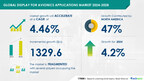
NEW YORK, Dec. 4, 2024 /PRNewswire/ — Report on how AI is driving market transformation – The global display for avionics applications market  size is estimated to grow by USD 1.33 billion from 2024-2028, according to Technavio. The market is estimated to grow at a CAGR of over 4.46%  during the forecast period. Growing demand for automation is driving market growth, with a trend towards introduction of automatic ground collision avoidance system (auto-gcas). However, barriers to adoption of new technologies and equipment  poses a challenge. Key market players include Astronautics Corp. Of America, Astronics Corp., Avidyne Corp., BAE Systems Plc, Diehl Stiftung and Co. KG, Elbit Systems Ltd., Excelitas Technologies Corp., FDS Avionics Corp., Gables Engineering Inc., Garmin Ltd., General Electric Co., Honeywell International Inc., L3Harris Technologies Inc., Mercury Systems Inc., Nytric Ltd., Parker Hannifin Corp., RTX Corp., ScioTeq BV, Thales Group, and The Boeing Co..

AI-Powered Market Evolution Insights. Our comprehensive market report ready with the latest trends, growth opportunities, and strategic analysis- View Free Sample Report PDF

Forecast period

2024-2028

Base Year

2023

Historic Data

2018 – 2022

Segment Covered

End-user (Civil aviation and Military aviation), Type (In-flight display and Heads-up display (HUD)), and Geography (North America, Europe, APAC, South America, and Middle East and Africa)

Region Covered

North America, Europe, APAC, South America, and Middle East and Africa

Key companies profiled

Astronautics Corp. Of America, Astronics Corp., Avidyne Corp., BAE Systems Plc, Diehl Stiftung and Co. KG, Elbit Systems Ltd., Excelitas Technologies Corp., FDS Avionics Corp., Gables Engineering Inc., Garmin Ltd., General Electric Co., Honeywell International Inc., L3Harris Technologies Inc., Mercury Systems Inc., Nytric Ltd., Parker Hannifin Corp., RTX Corp., ScioTeq BV, Thales Group, and The Boeing Co.

Key Market Trends Fueling Growth

The Avionics Applications Market is experiencing significant growth, particularly in the areas of Primary Flight Displays and Multifunction Displays. Smaller displays under 5 inches are popular for military applications, while larger displays between 5 to 10 inches and greater than 10 inches cater to commercial aviation. Enhanced safety and situational awareness are key trends, with automated flight control and lightweight components also in demand. Display blackouts and system failures are major concerns, driving the need for large-format multi-functional displays, external display processors, video sensors, FLIR, and radar. Defense plans rely on advanced avionics, including weapons, cameras, and user interfaces. New aircraft, such as the Checkmate fighter, feature portrait orientation radars and full-glass cockpits with flight-control computers. Commercial aircraft focus on air traffic, load factor, and flight data. Modern cockpit displays offer touchscreens, wide viewing angles, high-resolution graphics, and heads-up displays. The aerospace industry seeks display solutions with smart displays, augmented reality, and digital cockpits to improve flight safety. Power consumption and contrast ratio are crucial factors, with liquid crystal displays being widely used. The Avionics Application Market serves pilots and civil and military aviation with flight instruments and outside views. 

The avionics market has seen significant advancements in technology to enhance aviation safety. In 2010, NASA, the US Air Force, and Lockheed Martin developed the Automatic Ground Collision Avoidance System (auto-GCAS) to prevent aircraft accidents. This system continuously monitors an aircraft’s position and distance from the ground, providing real-time status to pilots and assisting during critical situations. In 2022, the US military aviation specialists required upgrades to the flight-control software in Navy combat aircraft to minimize ground collisions. The Boeing Company provided the solution with advanced software upgrades for their defense, space, and security division. 

Insights on how AI is driving innovation, efficiency, and market growth- Request Sample!

Market Challenges

The Avionics Applications Market encompasses various display solutions for the Aviation industry, including Primary Flight Displays and Multifunction Displays in various sizes: less than 5 inches, 5 to 10 inches, and greater than 10 inches. These displays are essential for military and commercial aircraft, enhancing safety and situational awareness with automated flight control, lightweight components, and enhanced contrast ratio. However, challenges include display blackouts, system failure, and power consumption. Large-format multi-functional displays, external display processors, video sensors like FLIR and Radar, weapons, cameras, and defense plans are integral to military avionics. Commercial aircraft require displays for air traffic, load factor, and flight data. Modern cockpit displays include touchscreens, wide viewing angles, high-resolution graphics, and user interfaces for pilots, offering outside views and heads-up displays. The market includes smart displays, augmented reality, and digital cockpits, with ongoing advancements in military and civil aviation.In the avionics market for commercial aircraft applications, regulatory compliance is a top priority. Vendors supplying avionic systems must adhere to stringent regulations set by organizations like the FAA, ICAO, and EASA to ensure passenger safety. Advanced technologies undergo thorough testing and certification processes before implementation. However, introducing new technologies comes with challenges, including high costs and the requirement for specialized expertise. The increasing demand for efficient, lightweight, dependable, and long-lasting equipment drives up research and development expenses.

Insights into how AI is reshaping industries and driving growth- Download a Sample Report

Segment Overview 

This display for avionics applications market report extensively covers market segmentation by

End-user 1.1 Civil aviation1.2 Military aviationType 2.1 In-flight display2.2 Heads-up display (HUD)Geography 3.1 North America3.2 Europe3.3 APAC3.4 South America3.5 Middle East and Africa

1.1 Civil aviation-  The civil aviation display market is segmented into primary flight displays (PFDs) and multifunctional displays (MFDs), based on display technologies and applications. PFDs provide pilots with vital flight information, including altitude, speed, and navigational data, using LCD or OLED technologies. MFDs offer a range of functions, from navigation and communication to engine monitoring and weather information, and may include head-up displays (HUDs). Avionics systems incorporate various displays, such as cockpit displays, cabin management displays, test and maintenance displays, and emergency and warning displays. Touchscreen technology enhances these displays, providing an intuitive user interface. In 2020, the civil aviation industry faced challenges due to COVID-19, leading to a decline in air passenger traffic and a reduction in aircraft orders. However, the resumption of manufacturing plants and increasing demand for single-engine and multi-engine piston aircraft are driving market growth. Innovations in display technology, such as the integration of HUDs, are also contributing to market expansion. For instance, China’s mandatory adoption of HUDs by 2025 will increase the demand for avionics application displays.

Download complimentary Sample Report to gain insights into AI’s impact on market dynamics, emerging trends, and future opportunities- including forecast (2024-2028) and historic data (2018 – 2022) 

Research Analysis

The Display for Avionics Applications market encompasses a range of primary flight displays and multifunction displays used in the Aviation industry. These displays come in various sizes, including less than 5 inches, 5 to 10 inches, and greater than 10 inches. They are employed in both military and commercial aviation, including new aircraft and cockpit components. These displays offer enhanced safety and situational awareness for pilots by providing modern cockpit displays with touchscreens, wide viewing angles, and high-resolution graphics. They can also include automated flight control systems, outside views, and user interfaces for cockpit instruments and head-up displays. Lightweight components ensure reduced weight in aircraft design. Avionics applications continue to evolve, offering advanced features for flight safety and improved operational efficiency.

Market Research Overview

The Display for Avionics Applications market encompasses a range of primary flight displays and multifunction displays, available in sizes less than 5 inches, 5 to 10 inches, and greater than 10 inches. These displays are integral to both military and commercial aviation industries, enhancing safety and situational awareness in new aircraft cockpits. They serve as cockpit components, providing automated flight control, lightweight components, and advanced features like external display processors, video sensors, FLIR, radar, weapons, and cameras. These displays are designed for various orientations, including portrait orientation, and offer enhanced functionality with radars, full-glass cockpits, and flight-control computers. They cater to commercial aircraft, providing air traffic, load factor, and flight data information to pilots. The market also includes advanced technologies like touchscreens, wide viewing angles, high-resolution graphics, and smart displays with augmented reality capabilities. The Display for Avionics Applications market is crucial for defense and aerospace industries, contributing to defense plans and aircraft deliveries, as well as the development of digital cockpits and heads-up displays for military aviation and civil aviation.

Table of Contents:

1 Executive Summary
2 Market Landscape
3 Market Sizing
4 Historic Market Size
5 Five Forces Analysis
6 Market Segmentation

End-userCivil AviationMilitary AviationTypeIn-flight DisplayHeads-up Display (HUD)GeographyNorth AmericaEuropeAPACSouth AmericaMiddle East And Africa

7 Customer Landscape
8 Geographic Landscape
9 Drivers, Challenges, and Trends
10 Company Landscape
11 Company Analysis
12 Appendix

About Technavio

Technavio is a leading global technology research and advisory company. Their research and analysis focuses on emerging market trends and provides actionable insights to help businesses identify market opportunities and develop effective strategies to optimize their market positions.

With over 500 specialized analysts, Technavio’s report library consists of more than 17,000 reports and counting, covering 800 technologies, spanning across 50 countries. Their client base consists of enterprises of all sizes, including more than 100 Fortune 500 companies. This growing client base relies on Technavio’s comprehensive coverage, extensive research, and actionable market insights to identify opportunities in existing and potential markets and assess their competitive positions within changing market scenarios.

Contacts

Technavio Research
Jesse Maida
Media & Marketing Executive
US: +1 844 364 1100
UK: +44 203 893 3200
Email: media@technavio.com
Website: www.technavio.com/

View original content to download multimedia:https://www.prnewswire.com/news-releases/avionics-display-market-to-grow-by-usd-1-33-billion-2024-2028-driven-by-rising-automation-demand-report-highlights-ai-driven-market-evolution—technavio-302321187.html

SOURCE Technavio

Continue Reading
Click to comment

Leave a Reply

Your email address will not be published. Required fields are marked *

Technology

Electrosoft Celebrates 25 Years of Federal Cybersecurity Innovation and Impact

Published

on

By

Founding CEO Dr. Sarbari Gupta reflects on firm’s evolution and sets the course for its next chapter

RESTON, Va., April 21, 2026 /PRNewswire/ — Electrosoft Services, LLC, a leading provider of federal cybersecurity and digital transformation services, today announced its 25th anniversary, marking a quarter century of innovation and partnership in support of government missions. Founded in 2001 and led by its founding CEO, Dr. Sarbari Gupta, the company has grown from a small, focused team into a trusted partner on some of the federal government’s most consequential cybersecurity and digital engineering programs.

“I founded Electrosoft because I believed federal agencies deserved a cybersecurity partner that would grow with them through every shift in technology and every evolution in the threat environment. Twenty-five years in, that belief has only gotten stronger,” said Dr. Gupta. “What fills me with the most pride isn’t the milestone itself, but the trust we’ve built and the team that earned it.”

Electrosoft’s journey began with its first prime contract at NIST in 2001. Years later, company experts became named authors of NIST special publications on digital identity. That foundation has expanded into support for federal civilian and defense agencies such as DLA, USTRANSCOM, GSA, Treasury and HHS, as well as multiple-award vehicles including GSA OASIS+, DLA JETS 2.0, NIST CAPSS, Treasury PROTECTS and CISA DTSS.

Over the years, the company has been consistently recognized as a top workplace, fast-growing company and technology thought leader.

Recent milestones include several significant contract and contract vehicle wins from HHS, Treasury and CISA and a 2025 strategic investment from DigitalNet.ai that supports expanded capabilities in artificial intelligence while preserving the independent leadership and customer continuity that have defined the firm.

As Electrosoft enters its next chapter, the company’s integrated delivery model unifies cybersecurity, digital engineering and AI to meet the evolving demands of federal missions.

For more information, read Electrosoft’s 25th Anniversary newsletter.

About Electrosoft Services

Electrosoft is a cybersecurity, digital engineering and intelligent automation firm delivering secure, scalable solutions for federal agencies. With 25 years of experience, the award-winning company combines deep mission expertise with modern engineering practices to help agencies operate securely, modernize with confidence and accelerate operational performance. Electrosoft is headquartered in Reston, Virginia. www.electrosoft-inc.com

Press Contact
Jeanne Zepp
jzepp@electrosoft-inc.com

View original content to download multimedia:https://www.prnewswire.com/news-releases/electrosoft-celebrates-25-years-of-federal-cybersecurity-innovation-and-impact-302748192.html

SOURCE Electrosoft Services, LLC

Continue Reading

Technology

Almost 80% of Gen Z and Millennials Use ‘Survival Spending’

Published

on

By

New Survey from Beyond Finance and Operation HOPE reveals young Americans are focusing on immediate priorities and real-world decisions over long-term financial ideals

45% would use tax refunds for bills or debt, 77% rely on short-term financial strategies like Buy Now Pay Later for essentials, 39% are turning to AI to guide money decisions, and 73% want to know someone’s exact financial situation before the third date

CHICAGO and ATLANTA, April 21, 2026 /PRNewswire/ — Almost 80% of Gen Z and Millennials use ‘survival spending’ to get by in today’s economy with nearly half of Gen Z and Millennials indicating they would use a tax refund to cover bills or pay down debt, 77% relying on short-term financial strategies like Buy Now, Pay Later for essentials, and 39% turning to AI to guide money decisions. As part of its annual Financial Practice Week, Beyond Finance partnered with leading financial literacy nonprofit Operation HOPE to examine how young Americans are actually managing money, finding a clear break from traditional financial practice as they cope with the current economic landscape.

The research challenges the idea that younger generations are abandoning financial responsibility. Instead, it shows a generation actively adapting, making decisions that prioritize immediate needs, flexibility, and informed tradeoffs. While 7 in 10 say wealth-building feels out of reach, their actions tell a more defining story: Financial strategy today is less about getting ahead and more about staying in control. From how they allocate income to how they seek advice — including 73% who want full financial transparency before the third date — Gen Z and Millennials are building financial practices grounded in adaptability, prioritization, and real-world decision-making.

These additional findings follow recent Financial Literacy Month news on the rise of ‘survival spending,’ and give us a closer look at how Gen Z and Millennials are actually managing money, making tradeoffs, and navigating financial decisions day to day.

A Shift Toward Immediate Financial Priorities

Tax refunds used for survival, not splurging: 45% would put the money toward bills or debt, and less than 4% would spend it on travel or leisure.

‘Survival spending’ has become a financial strategy: Nearly 77% report using tactics like Buy Now, Pay Later for essentials, reflecting a shift toward short-term financial management.

Side hustles are now part of the baseline financial plan: 71% say additional income is necessary just to keep up.

Experiences over savings: 59% say spending on meaningful experiences today feels more practical than saving for long-term goals that seem increasingly out of reach, with 65% feeling uncertain whether traditional retirement planning will deliver real security.

Redefining Financial Practices

Peer-to-Peer learning on the rise: Financial practice is becoming more social. Gen Z is now more likely to consult social media experts (24%) than they are their parents (21%) to refine their money strategies.

Financial silence is waning: The practice of “financial silence” is disappearing, with 73% of respondents wanting to know someone’s exact financial situation before the third date. 

The Rise of Real-Time Financial Decision-Making

AI is becoming a financial co-pilot: 39% are already using AI to budget or inform financial decisions, often running “what if” scenarios before taking action.

Hybrid decision-making is emerging as the norm: Many are combining AI insights with human advice, creating more personalized, responsive approaches to money management.

Digital tools are reshaping engagement: 16% use apps that gamify saving and spending, reinforcing financial habits through continuous interaction.

“Gen Z and Millennials aren’t failing at money. The system they inherited has changed, and they’re responding in real time,” said Dr. Erika Rasure, chief financial wellness advisor at Beyond Finance. “What we’re seeing is a generation shifting from long-term financial ideals to daily financial practices, such as using windfalls to stabilize, leaning on tools like AI to make decisions, and prioritizing what’s immediately within their control. That adaptability isn’t a weakness — it’s a new form of financial resilience.”

Despite these challenges, younger generations remain highly engaged, adapting their behaviors and redefining what financial success looks like in today’s environment.

“Every generation must answer the economic test of its time, and this generation is no different. Gen Z and Millennials are not walking away from success. They are searching for a model that speaks to their lived reality, their struggle, and their hope. The old rules alone cannot carry them where they need to go. We must give them something deeper than theory. We must restore their sense of unlimited possibility, backed with vision, tools, and a pathway. At Operation HOPE, we believe financial literacy is the new civil rights issue of our time. And our calling is to help this generation move from uncertainty to confidence, from surviving to thriving, and from financial stress to lasting wealth—so they can build not just a living, but a future,” said John Hope Bryant, founder, chairman, and CEO of Operation HOPE.

Redefining Hope for a New Financial Reality

Held during the last week of Financial Literacy Month, Beyond Finance’s Financial Practice Week is an initiative designed to help people reconnect with their financial power by building personalized, emotionally grounded practices. To examine your money mindset further, explore a money management guide from Beyond Finance and then take Operation HOPE’s quizzes, AI video training, and micro-courses.

This survey was commissioned by Beyond Finance in collaboration with Operation HOPE, and conducted by QuestionPro, a third-party research company, from March 16 – 18, 2026, with a collective sample of 2,000 Millennial (born 1981 to 1996) and Gen Z adults (born 1997-2008) Americans. An executive summary of the findings can be found here. Full research findings are available upon request.

About Beyond Finance

Beyond Finance, LLC, is the nation’s largest debt consolidation company. In its commitment to providing clients with a personalized approach to move beyond debt, Beyond Finance provides simple and transparent solutions that help consumers lower their eligible monthly payments, reduce the impact of interest, and reach a debt-free life sooner. Beyond Finance holds an A+ rating with the Better Business Bureau and has been awarded with multiple recognitions for its commitment to clients: Organization of the Year – The Business Intelligence Group’s Excellence in Customer Service Award, Gold Stevie Award for Outstanding Customer Service Department, Banking Tech Award – Financial Wellness Champion, Best In Biz Gold Award for top Customer Service Team, and 3 ConsumerAffairs’ “Buyer’s Choice Awards.” Beyond Finance has offices in Chicago, Atlanta, and Houston. For more information, visit BeyondFinance.com.

About Operation HOPE, Inc.

Since 1992, Operation HOPE has been moving America from civil rights to “silver rights” with the mission of making free enterprise and capitalism work for the underserved—disrupting poverty for millions of low and moderate-income youth and adults across the nation. Through its community uplift model, HOPE Inside, which received the 2016 Innovator of the Year recognition by American Banker magazine, Operation HOPE has served more than 4 million individuals and directed more than $4.2 billion in economic activity into disenfranchised communities—turning check-cashing customers into banking customers, renters into homeowners, small business dreamers into small business owners, minimum wage workers into living wage consumers, and uncertain disaster victims into financially empowered disaster survivors. For more information visit OperationHOPE.org. Follow the HOPE conversation on TwitterFacebookInstagram, or LinkedIn.

View original content to download multimedia:https://www.prnewswire.com/news-releases/almost-80-of-gen-z-and-millennials-use-survival-spending-302747513.html

SOURCE Beyond Finance

Continue Reading

Technology

Sidekick Health Expands Its Intelligent Care Platform with MSK, Advancing Its Solutions for Rising Risk and Multi-Condition Care Complexity

Published

on

By

The new program joins 24+ conditions plus medication support in one platform, giving health plans and employers a single solution for their most complex and costliest populations

NEW YORK, April 21, 2026 /PRNewswire/ — Sidekick Health, a digital health innovation company, today announced the launch of its musculoskeletal (MSK) health program and pain management support. These new, clinician-backed resources are available alongside 24+ conditions spanning cardiometabolic, oncology, behavioral health, women’s health, inflammation and immunology, discharge management, and medication support — all within a single platform.

More than half of Americans live with two or more chronic conditions, and MSK is one of the most common, affecting more than one in three adults and accounting for nearly 10% of national medical spending — insufficient MSK intervention can lead to overutilization, surgery, and opioid dependence. Importantly, MSK conditions don’t happen in a silo. With the launch of this program, Sidekick is positioned to support MSK and pain alongside cardiovascular disease, diabetes, mental health and menopause, delivering a multi-condition approach that’s designed to address rising risk, utilization, and ultimately the total cost of care.

“MSK has been one of the most consistent asks from health plan partners and their members. This launch aims to close that gap and positions us to better address the needs of our payer partners and their members — from multi-condition management to medication support to physical rehabilitation — in one solution.” said Travis Parkinson, President, Healthcare & Life Sciences, Sidekick Health.

The program approaches MSK support and rehabilitation from multiple angles, both physical and mental. It aims to transform how individuals manage MSK pain by shifting focus to functional restoration, while the pain management support layer combines cognitive behavioral therapy (CBT), mindfulness, and pain neuroscience education, designed to help members reduce medication reliance and build lasting self-management skills.

It was built from the ground up in collaboration with doctors of physical therapy (DPTs), clinical experts, and practicing clinicians, and incorporates key elements targeting rising risk, utilization, and quality metrics for health plans, multi-condition complexity for employers, and cost of care across all stakeholders:

Fall-risk mitigation with targeted exercises supporting joint and muscle health and strength that scale to meet member abilityPelvic floor support aimed to address lower back and hip pain and improve bladder controlPain management support available alongside MSK and other conditions, vital as patients work toward ending the cycle of disability, easing emotional distress, and improving quality of life

The program was developed in collaboration with MOBĒ, a whole-person condition management company, whose health plan and employer clients will have access to the program at launch through MOBE Missions, powered by Sidekick’s platform.

“What makes MSK particularly complex to support is how it interacts with other conditions and treatments. Approximately 75% of MOBĒ participants have an MSK condition, live with four or more chronic conditions, and utilize three or four more chronic medications from multiple prescribers, making integrated, cross-condition support a necessary feature for safe and sustained improvement,” said Leslie Helou PharmD, Senior Vice President of Health Outcomes Strategy at MOBĒ.

Most health plans are managing rising risk and complexity — in their growing proportion of multi-chronic health profiles and care management workflows. Sidekick’s platform simplifies this complexity and delivers real-time risk signals to deliver against organizational, clinical, and financial priorities.

“We’ve built a companion that can follow a person through their entire health journey — not just the condition they were most recently diagnosed with. Adding MSK isn’t a feature update. It’s just one more step as we deliver the intelligent care infrastructure health plans have been asking for.” said Tryggvi Thorgeirsson, co-founder and CEO, Sidekick Health.

About Sidekick Health

Sidekick Health is an intelligent care company. Its AI-powered solutions span cardiometabolic, musculoskeletal, oncology, behavioral health, women’s health, hospital discharge management, and inflammation and immunology conditions, and deliver lifestyle, medication, and care management support. Sidekick works with health insurers, employers, and pharmaceutical companies, and develops regulated prescription digital therapeutics designed to improve patient outcomes, enhance clinical efficiency, and reduce the cost of care.

Media Contact
Manda Bertrand
Press@sidekickhealth.com

View original content to download multimedia:https://www.prnewswire.com/news-releases/sidekick-health-expands-its-intelligent-care-platform-with-msk-advancing-its-solutions-for-rising-risk-and-multi-condition-care-complexity-302748222.html

SOURCE Sidekick Health

Continue Reading

Trending