Connect with us

Technology

Telecom Cloud Market to Grow by USD 63.68 Billion (2024-2028), Enterprise Mobility Drives Revenue, Report Highlights AI’s Role in Market Evolution – Technavio

Published

on

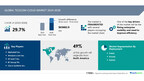
NEW YORK, Dec. 5, 2024 /PRNewswire/ — Report with market evolution powered by AI – The global telecom cloud market  size is estimated to grow by USD 63.68 billion from 2024-2028, according to Technavio. The market is estimated to grow at a CAGR of  29.7%  during the forecast period. Rising enterprise mobility and need to improve efficiency is driving market growth, with a trend towards rising telecom dependence after covid-19. However, stringent regulatory compliance  poses a challenge. Key market players include Alphabet Inc., Amazon.com Inc., AT and T Inc., BT Group Plc, Cisco Systems Inc., Dell Technologies Inc., Deutsche Telekom AG, Etisalat, Fortinet Inc., Huawei Technologies Co. Ltd., International Business Machines Corp., Juniper Networks Inc., Mavenir Systems Inc., Microsoft Corp., Nokia Corp., Oracle Corp., Orange SA, Telstra Corp. Ltd., Verizon, and VMware Inc..

AI-Powered Market Evolution Insights. Our comprehensive market report ready with the latest trends, growth opportunities, and strategic analysis- View Free Sample Report PDF

Forecast period

2024-2028

Base Year

2023

Historic Data

2018 – 2022

Segment Covered

Deployment (Public, Private, and Hybrid), End-user (Large enterprises and Small and medium enterprises), and Geography (North America, Europe, APAC, South America, and Middle East and Africa)

Region Covered

North America, Europe, APAC, South America, and Middle East and Africa

Key companies profiled

Alphabet Inc., Amazon.com Inc., AT and T Inc., BT Group Plc, Cisco Systems Inc., Dell Technologies Inc., Deutsche Telekom AG, Etisalat, Fortinet Inc., Huawei Technologies Co. Ltd., International Business Machines Corp., Juniper Networks Inc., Mavenir Systems Inc., Microsoft Corp., Nokia Corp., Oracle Corp., Orange SA, Telstra Corp. Ltd., Verizon, and VMware Inc.

Key Market Trends Fueling Growth

Telecom cloud market is witnessing significant trends with the adoption of Software-Defined Networking (SDN) and Network Function Virtualization (NFV) for 5G rollout. SDN and NFV enable telecom operators to offer cloud-native, open-source solutions with independent lifecycles and system immutability. SMEs and public enterprises are increasingly demanding private cloud services for industrial operations and organizational work. TM Forum, Microsoft Azure, Google Cloud, Tech Mahindra, and other service providers are offering communications cloud services to meet this demand. 5G technology brings lower latency and higher speed capabilities, driving the need for cloud services for mobile users. Cyber threats and data security are major concerns, with service providers focusing on data security and cybersecurity. Multi-cloud computing and cloud-based technologies are also gaining popularity, with Amazon Web Services (AWS) for Telecom and offerings from Cisco Telco Cloud, Microsoft Cloud, Open Telekom Cloud, and others. The trend towards automation, orchestration, and virtualized network infrastructure continues, with the adoption of artificial intelligence and cloud business strategies driving digital transformation. Digital media behemoths like Netflix and YouTube are driving network congestion, highlighting the importance of service automation and scalability. CapEx and OpEx considerations, B2B solutions, and 5G network installations are also key factors influencing the telecom cloud market. 

The COVID-19 pandemic led to a significant increase in the use of telecommunications for work and education from home. This demand put pressure on telecommunications infrastructure and services. Consequently, the need for telco cloud applications grew as telcos and communication providers sought to manage network traffic and maintain quality of service during peak usage. With the continuing trend of remote work post-pandemic, the importance of cloud-based telco solutions is expected to remain high. 

Insights on how AI is driving innovation, efficiency, and market growth- Request Sample!

Market Challenges

•         Telecom Cloud Market: Overcoming Challenges with SDN, NFV, 5G, IoT, and More The Telecom Cloud Market faces several challenges as businesses and mobile users demand more cloud services, especially with the rollout of 5G technology. Service providers must address the adoption of Software-Defined Networking (SDN) and Network Function Virtualization (NFV) to build virtualized network infrastructure and enable automation and orchestration. SMEs and public enterprises require cloud services to support industrial operations and organizational work, leading in demand for private cloud solutions. Telecom operators face cyber threats, including inside threats and network congestion, necessitating data security and cybersecurity measures. 5G technology offers low latency and higher speed capabilities, making it crucial for cloud communication. Cloud-native technologies, open-source software, and system immutability are essential for independent lifecycles and scalability. Cloud business strategies, digital transformation, and multi-cloud computing are key trends, with Amazon Web Services (AWS), Microsoft Azure, Google Cloud, Tech Mahindra, and other service providers offering solutions. Service providers must ensure data consumption, CapEx and OpEx management, B2B solutions, and 5G network installations while addressing cybersecurity concerns. Digital media behemoths like Netflix and YouTube add to network traffic, necessitating service automation and the ability to handle over-the-top cloud services. Telecom operators must navigate these challenges to meet the evolving needs of their customers.

•         Telecom cloud services must adhere to multiple regulations and standards, ensuring compliance with data privacy, security, and consumer protection. Regulations such as the General Data Protection Regulation (GDPR) and the California Consumer Privacy Act (CCPA) necessitate obtaining user consent before collecting and utilizing data, as well as implementing security measures. Telecom cloud providers must secure their networks against cyber threats, including hacking and malware. Compliance with industry standards, like the Payment Card Industry Data Security Standard (PCI DSS), is also mandatory.

Insights into how AI is reshaping industries and driving growth- Download a Sample Report

Segment Overview 

This telecom cloud market report extensively covers market segmentation by

Deployment 1.1 Public1.2 Private1.3 HybridEnd-user 2.1 Large enterprises2.2 Small and medium enterprisesGeography 3.1 North America3.2 Europe3.3 APAC3.4 South America3.5 Middle East and Africa

1.1 Public-  The public segment dominates the global telecom cloud market, accounting for the largest market share in 2023. This growth can be attributed to the cost-effectiveness and scalability of public cloud services. Telecom companies can align their operating expenses with actual usage through pay-as-you-go pricing models, eliminating the need for substantial upfront investments in hardware and software. Public cloud platforms are vital for telecom firms undergoing digital transformation. They offer the infrastructure and tools for adopting cloud-native applications, data analytics, artificial intelligence, and IoT. Modernizing legacy systems and enhancing agility enable telecom companies to improve customer experiences. Security concerns are being addressed with advancements in cloud security, including encryption, access controls, and compliance certifications. These factors will drive the growth of the public segment of the global telecom cloud market during the forecast period.

Download complimentary Sample Report to gain insights into AI’s impact on market dynamics, emerging trends, and future opportunities- including forecast (2024-2028) and historic data (2018 – 2022) 

Research Analysis

The Telecom Cloud Market is experiencing rapid growth as Communications Service Providers (CSPs) embrace 5G technology and digital transformation. Cloud services, including Microsoft Azure, Google Cloud, and Microsoft Cloud, are becoming essential for telecoms to offer scalability and flexibility to Small and Medium Enterprises (SMEs). Artificial intelligence (AI) and automation are key drivers, enabling network function virtualization and software-defined networking. Data security and cybersecurity are top priorities, with cloud-native technologies providing solutions. The Internet of Things (IoT) and Platform-as-a-Service (PaaS) are also transforming the industry, allowing for multi-cloud computing and cloud-based technologies to address network congestion and deliver digital media content from digital entertainment giants. Virtualized network infrastructure and programmable network infrastructure are crucial components of this evolution, ensuring network performance and agility.

Market Research Overview

The Telecom Cloud Market is experiencing significant growth as businesses and telecommunication operators embrace SDN and NFV technologies to build communications clouds for 5G and IoT applications. SMEs and public enterprises are adopting cloud services, including over-the-top cloud offerings, for their industrial operations and organizational work. TM Forum, Microsoft Azure, Google Cloud, and other service providers are leading the charge with their innovative offerings, such as Azure Operator Nexus, Open Telekom Cloud, Cisco Telco Cloud, and AWS for Telecom. 5G technology’s low latency and higher speed capabilities are driving demand for cloud communication solutions, while cyber threats and data security concerns persist. Cloud-native technologies, such as open-source software, offer system immutability and independent lifecycles. The 5G rollout and the need for scalability and flexibility are key adoption drivers. Service providers must address inside threats and ensure data security and cybersecurity to meet businesses’ needs. Desktop virtualization, automation, orchestration, virtualized network infrastructure, and programmable network infrastructure are essential components of cloud business strategies. Digital transformation, data consumption, and multi-cloud computing are shaping the future of telecom cloud demand. CapEx and OpEx considerations, B2B solutions, and 5G network installations are also critical factors. Digital media behemoths, such as Netflix and YouTube, are contributing to network congestion, further emphasizing the importance of cloud-based technologies.

Table of Contents:

1 Executive Summary
2 Market Landscape
3 Market Sizing
4 Historic Market Size
5 Five Forces Analysis
6 Market Segmentation

DeploymentPublicPrivateHybridEnd-userLarge EnterprisesSmall And Medium EnterprisesGeographyNorth AmericaEuropeAPACSouth AmericaMiddle East And Africa

7 Customer Landscape
8 Geographic Landscape
9 Drivers, Challenges, and Trends
10 Company Landscape
11 Company Analysis
12 Appendix

About Technavio

Technavio is a leading global technology research and advisory company. Their research and analysis focuses on emerging market trends and provides actionable insights to help businesses identify market opportunities and develop effective strategies to optimize their market positions.

With over 500 specialized analysts, Technavio’s report library consists of more than 17,000 reports and counting, covering 800 technologies, spanning across 50 countries. Their client base consists of enterprises of all sizes, including more than 100 Fortune 500 companies. This growing client base relies on Technavio’s comprehensive coverage, extensive research, and actionable market insights to identify opportunities in existing and potential markets and assess their competitive positions within changing market scenarios.

Contacts

Technavio Research
Jesse Maida
Media & Marketing Executive
US: +1 844 364 1100
UK: +44 203 893 3200
Email: media@technavio.com
Website: www.technavio.com/

View original content to download multimedia:https://www.prnewswire.com/news-releases/telecom-cloud-market-to-grow-by-usd-63-68-billion-2024-2028-enterprise-mobility-drives-revenue-report-highlights-ais-role-in-market-evolution—technavio-302322428.html

SOURCE Technavio

Continue Reading
Click to comment

Leave a Reply

Your email address will not be published. Required fields are marked *

Technology

Yiren Digital Accelerates Operating Efficiency Through AI Agent Deployment

Published

on

By

Broader AI adoption improves productivity across asset recovery and enterprise operations

BEIJING, July 23, 2026 /PRNewswire/ — Yiren Digital Ltd. (NYSE: YRD) (“Yiren Digital” or the “Company”), a leading company specializing in financial technology and artificial intelligence innovation across multiple industries in China and global markets, today announced measurable operating efficiency improvements as it continues to deploy AI agents across core enterprise workflows. Broader AI adoption is reducing manual intervention, increasing workforce productivity and creating greater operating leverage by automating high-volume processes across multiple business functions.

These deployments are a key component of Yiren Digital’s “All-in-AI” strategy and its broader transition from AI-assisted productivity toward agent-driven execution. By embedding AI agents into core workflows, the Company is creating reusable operating capabilities that can be deployed across its businesses, supporting greater efficiency and reducing the cost of extending automation into new functions.

“Our objective is not simply to automate individual tasks, but to fundamentally improve how work is performed across the enterprise,” said Mr. Ning Tang, Chairman and Chief Executive Officer of Yiren Digital. “As AI agents take on more of our high-volume, demanding workflows, the productivity gains are becoming a structural part of how we run the business, not a one-time efficiency project. We will continue to deepen AI integration across our existing businesses while extending reusable capabilities into additional verticals.”

The AI deployments are supported by the Company’s proprietary enterprise AI architecture, including MagiCube 2.0, its upgraded multi-agent platform. The platform provides common infrastructure for agents deployed across marketing, customer service, capital operations, risk management, compliance and research and development, with more than 10 reusable foundational capabilities, supporting enterprise-wide execution.

Measurable Operating Impact

Lower manual intervention: The human handling rate in asset-recovery operations decreased from 45.0% to 24.9%, representing a 20.1-percentage-point decline, an approximately 44.6% relative reduction in manual intervention.

Higher staff productivity: The number of service tickets handled per asset-recovery staff member within the applicable Month 1 workflow increased from 358 to 525, an improvement of approximately 47%.

Expanded agent adoption: AI agents accounted for 81% of service tickets within eligible Day 1 asset-recovery workflows in 2025, up from 50% in 2024. The Company also deployed AI agents selectively in later-stage workflows, accounting for 20% of eligible service tickets at Day 4, 14% at Day 16 and 20% at Month 2. Each percentage is calculated separately for the relevant stage and should not be interpreted as a sequential adoption trend.

Enterprise-wide reuse: MagiCube 2.0 supports agent deployment across six enterprise functions, allowing the Company to apply common AI capabilities to a broader range of regulated and high-volume workflows.

Enterprise-scale AI execution: The Fengchao AI voice agent processes approximately 1,500 hours of real-time speech-to-text activity each day. The LingShu intelligent marketing platform executes more than 1,700 tasks daily and generates individualized communication content in an average of 0.6 seconds.

Building Enterprise Operating Leverage Through AI

As AI deployment expands across the enterprise, Yiren Digital is increasingly shifting repetitive, high-volume tasks from human-assisted processes toward agent-driven execution. By combining AI agents with centralized orchestration and governance, the Company is improving operating consistency, strengthening workforce productivity and creating reusable capabilities that increase operating leverage as AI is deployed across additional business functions.

Yiren Digital plans to continue expanding agent-driven workflows across its credit and insurance operations, as part of its ongoing All-in-AI strategy, while strengthening the shared architecture and governance that support enterprise-wide AI deployment. These capabilities are designed to scale across multiple use cases and provide a foundation for the Company’s broader expansion into AI application-layer opportunities, including AI entertainment and AI-assisted language learning.

About Yiren Digital

Yiren Digital Ltd. is a leading company specializing in financial technology and artificial intelligence innovation across multiple industries in China and global markets. The Company leverages advanced artificial intelligence and emerging technologies to enhance customer experience, optimize capital efficiency, and expand financial inclusion. Following the regulatory filing of its in-house developed Large Language Model Zhiyu, and the significant enhancement of its MagiCube Agent platform, Yiren Digital is establishing a new growth engine to accelerate its evolution into an AI-native, multi-industry operating platform extending beyond traditional financial services. For more information, please visit https://ir.yiren.com.

Safe Harbor Statement

This press release contains forward-looking statements. These statements are made under the “safe harbor” provisions of the U.S. Private Securities Litigation Reform Act of 1995. These forward-looking statements can be identified by terminology such as “aim,” “anticipate,” “believe,” “estimate,” “expect,” “hope,” “going forward,” “intend,” “ought to,” “plan,” “project,” “potential,” “seek,” “may,” “might,” “can,” “could,” “will,” “would,” “shall,” “should,” “is likely to” and the negative form of these words and other similar expressions. This press release contains forward-looking statements within the meaning of Section 21E of the Securities Exchange Act of 1934, as amended, and as defined in the U.S. Private Securities Litigation Reform Act of 1995. These statements can be identified by terminology such as “will,” “expects,” “anticipates,” “future,” “intends,” “plans,” “believes,” “estimates,” “target,” “confident,” and similar expressions. Forward-looking statements are based on management’s current expectations, assumptions, and assessments of current market and operating conditions. These statements involve inherent risks, uncertainties, and other factors, many of which are outside the control of the Company, and which could cause actual results to differ materially from those expressed or implied in such statements. Actual results may differ materially from those expressed or implied in forward-looking statements due to a variety of factors and other risks described in the Company’s filings with the U.S. Securities and Exchange Commission. All forward-looking statements speak only as of the date of this press release. The Company undertakes no, and expressly disclaims any, obligation to update or revise any forward-looking statements, whether as a result of new information, future events, or otherwise, except as required under applicable law.

View original content:https://www.prnewswire.com/news-releases/yiren-digital-accelerates-operating-efficiency-through-ai-agent-deployment-302833201.html

SOURCE Yiren Digital Ltd.

Continue Reading

Technology

Infinium Edge Launches EdgeSites™, a New Infrastructure Model for Deploying AI Compute at Existing Commercial and Industrial Facilities

Published

on

By

EdgeSites delivers operational AI infrastructure in existing powered buildings — factory-built data center modules, waterless cooling, and ready in months without new construction or grid interconnection required.

SACRAMENTO, Calif., July 23, 2026 /PRNewswire/ — Infinium Edge™ today announced Infinium EdgeSites™, a development program that utilizes existing commercial and industrial facilities to deploy operational AI compute infrastructure. Built around Infinium Edge’s proprietary Edge Thermal Vectoring™ immersion cooling platform, EdgeSites enables high-density GPU deployments in existing buildings that were never designed as data centers — without new construction, without cooling water infrastructure, and without the multi-year grid interconnection timelines that constrain conventional large-scale data center development.

More than 20 million commercial and industrial electricity customers in the US are served by electrical infrastructure sized to peak demand – which industry research shows are utilized at only 40-60% on average. That unused headroom, capacity already contracted, energized, and sitting behind the meter, can support high-density AI compute without adding new load to the grid or waiting on a new interconnection.

At the center of the program is the Vector ONE™ — Edge’s factory-built, self-contained immersion cooling system designed to house 1 MW of AI compute capacity. Vector ONE units are engineered for deployment in standard commercial and industrial buildings, either indoors or outdoors, arriving pre-integrated, fully commissioned and require no municipal water connection. Installations are modular and scalable: additional units can be commissioned as site power and demand allow, without rebuilding the underlying infrastructure and occupy up to 70% less floor space than air-cooled equivalents.

Built for the Shift to Inference

As inference moves to displace training as the dominant AI workload, the growth opportunity is shifting towards small, distributed data centers that can be deployed quickly and sited where demand originates. Conventional data center developments are under compounding pressure from long utility interconnection queues, sometimes lasting years, pressure around water use, and general community and regulatory opposition enacting restrictions. Community opposition and regulatory friction delayed or blocked an estimated $156 billion in planned U.S. data center capacity in 2025 alone.

EdgeSites is purpose-built for the structural shift to inference and addresses key issues stalling conventional data center developments today. Each Vector ONE unit delivers 1 MW of inference-ready capacity inside an existing building, in a market that already has established electrical infrastructure, in a timeline measured in months rather than years. Multiple units can be used in tandem to deploy up to 10 MW of capacity at a single site.  The program converts the distributed inventory of underutilized industrial or commercial electrical capacity in the United States into a nationally scaled inference network. Vector ONE’s dry-cooler loop consumes no municipal water, making EdgeSites viable in markets where evaporative cooling has been restricted or banned.

“The data center industry has been answering an infrastructure shortage with a construction playbook — build new facilities, secure new grid connections, wait years for capacity to come online,” said Robert Schuetzle, CEO of Infinium. “That model cannot keep pace with AI deployment timelines. Infinium EdgeSites operate around different premises: the power already exists, the buildings already exist, and the technology now exists to put them to work. We are making operational what the industry has been treating as stranded.”

Deploying EdgeSites

As demand for AI compute continues to outpace available infrastructure and focuses on distributed inference needs, Infinium Edge is expanding the EdgeSites network with qualified host locations and compute partners.

Commercial and industrial property owners of industrial sites, distribution centers, warehouses, or large commercial properties with available electrical capacity benefit from receiving lease income from infrastructure they already own or control. Infinium Edge manages all aspects of site development and operations for installing and deploying the Vector ONE system. No capital investment or operational responsibility is required from the host.

AI companies, enterprises, and compute operators requiring infrastructure on compressed deployment timelines can access high-density, edge-proximate GPU capacity through a straightforward capacity agreement, priced by the kilowatt-month, with backup power included in the capacity fee. There is no construction to manage, no permitting process to navigate, and no cooling infrastructure to operate or maintain.

Infinium Edge manages the full program from development and installation to operation and monitoring— simplifying development and data center management for AI companies and enterprises.

Reach out to learn more and partner in EdgeSites deployments.

Inquiries: www.infinium.ai/edgesites

About Infinium Edge™
Infinium Edge™ is the advanced AI data center infrastructure platform from Infinium, delivering high-density, sustainable compute through proprietary single-phase immersion cooling technology. Infinium Edge is the only North American producer of Fischer-Tropsch immersion fluids and offers a full-stack platform — including Edge Thermal Vectoring™ platform, Vector ONE™ modular AI Factory units, ETV100 immersion fluids, and integrated monitoring systems — engineered for the thermal and operational demands of AI and high-performance computing at scale. For more information, visit www.infinium.ai.

View original content to download multimedia:https://www.prnewswire.com/news-releases/infinium-edge-launches-edgesites-a-new-infrastructure-model-for-deploying-ai-compute-at-existing-commercial-and-industrial-facilities-302832792.html

SOURCE Infinium

Continue Reading

Technology

ChipMOS SCHEDULES SECOND QUARTER 2026 FINANCIAL RESULTS SEMIANNUAL CONFERENCE CALL

Published

on

By

HSINCHU, July 23, 2026 /PRNewswire-FirstCall/ — ChipMOS TECHNOLOGIES INC. (“ChipMOS” or the “Company”) (Taiwan Stock Exchange: 8150 and Nasdaq: IMOS), an industry leading provider of outsourced semiconductor assembly and test services (“OSAT”), today announced that it will report second quarter 2026 results and host a semiannual conference call after the close of trading on the Taiwan Stock Exchange on Tuesday, August 11, 2026.

Investors and analysts are encouraged to participate in the semiannual conference call using the dial-in phone number noted below. A webcast and replay will be available on the Company’s website.

Date: Tuesday, August 11, 2026
Time: 3:00PM Taiwan (3:00AM New York)
Dial-In: +886-2-3396 1191
Password: 1637011 #

Semiannual Conference Call Webcast and Replay: https://www.chipmos.com/chinese/ir/info2.aspx
Replay: Starts Approximately 2 hours after the live call ends

Language: Mandarin

Note: A transcript will be provided on the Company’s website in English following the semiannual conference call to help ensure transparency, and to facilitate a better understanding of the Company’s financial results and operating environment.

About ChipMOS TECHNOLOGIES INC.:
ChipMOS TECHNOLOGIES INC. (“ChipMOS” or the “Company”) (Taiwan Stock Exchange: 8150 and Nasdaq: IMOS) (www.chipmos.com) is an industry leading provider of outsourced semiconductor assembly and test services. With advanced facilities in Hsinchu Science Park, Hsinchu Industrial Park and Southern Taiwan Science Park in Taiwan, ChipMOS is known for its track record of excellence and history of innovation. The Company provides end-to-end assembly and test services to leading fabless semiconductor companies, integrated device manufacturers and independent semiconductor foundries serving virtually all end markets worldwide.

Forward-Looking Statements:
This press release may contain certain forward-looking statements. These forward-looking statements may be identified by words such as ‘believes,’ ‘expects,’ ‘anticipates,’ ‘projects,’ ‘intends,’ ‘should,’ ‘seeks,’ ‘estimates,’ ‘future’ or similar expressions or by discussion of, among other things, strategies, goals, plans or intentions. These statements may include financial projections and estimates and their underlying assumptions, statements regarding current macroeconomic conditions, including the impacts of high inflation, foreign exchange rates and risk of recession, on demand for our products, consumer confidence and financial markets generally; changes in trade regulations, policies, and agreements and the imposition of tariffs that affect our products or operations, including potential new tariffs that may be imposed and our ability to mitigate with respect to future operations, products and services, and statements regarding future performance. Actual results may differ materially in the future from those reflected in forward-looking statements contained in this document, based on a number of important factors and risks, which are more specifically identified in the Company’s most recent U.S. Securities and Exchange Commission (the “SEC”) filings. Further information regarding these risks, uncertainties and other factors are included in the Company’s most recent Annual Report on Form 20-F filed with the SEC and in its other filings with the SEC.

Contacts:

In Taiwan

Jesse Huang

ChipMOS TECHNOLOGIES INC.

+886-6-5052388 ext. 7715

IR@chipmos.com

In the U.S.

David Pasquale

Global IR Partners

+1-914-337-8801

dpasquale@globalirpartners.com


View original content:https://www.prnewswire.com/news-releases/chipmos-schedules-second-quarter-2026-financial-results-semiannual-conference-call-302831885.html

SOURCE ChipMOS TECHNOLOGIES INC.

Continue Reading

Trending