Connect with us

Technology

Edtech Market to grow by USD 162.7 Billion (2024-2028), driven by learners shift to eBooks, with AI shaping market trends – Technavio

Published

on

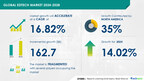
NEW YORK, Dec. 6, 2024 /PRNewswire/ — Report on how AI is redefining market landscape – The global edtech market size is estimated to grow by USD 162.7 billion from 2024-2028, according to Technavio. The market is estimated to grow at a CAGR of 16.82% during the forecast period. Learners shifting toward ebooks is driving market growth, with a trend towards increased demand for distance learning. However, availability of open-source learning content poses a challenge. Key market players include 2U Inc., Alphabet Inc., Anthology Inc., Chegg Inc., Cornerstone OnDemand Inc., Coursera Inc., D2L Inc., edX LLC, Ellucian Co., Instructure Holdings Inc., Microsoft Corp., Oracle Corp., PleIQ Smart Toys Spa, Promethean World Ltd., Think and Learn Pvt. Ltd., Udacity Inc., UOL EdTech, upGrad Education Pvt. Ltd., Warner Bros Discovery Inc., and Workday Inc..

AI-Powered Market Evolution Insights. Our comprehensive market report ready with the latest trends, growth opportunities, and strategic analysis- View Free Sample Report PDF

Forecast period

2024-2028

Base Year

2023

Historic Data

2017 – 2021

Segment Covered

Type (Hardware, Content, and Software), Sector (K-12, Higher education, and Others), and Geography (North America, Europe, APAC, South America, and Middle East and Africa)

Region Covered

North America, Europe, APAC, South America, and Middle East and Africa

Key companies profiled

2U Inc., Alphabet Inc., Anthology Inc., Chegg Inc., Cornerstone OnDemand Inc., Coursera Inc., D2L Inc., edX LLC, Ellucian Co., Instructure Holdings Inc., Microsoft Corp., Oracle Corp., PleIQ Smart Toys Spa, Promethean World Ltd., Think and Learn Pvt. Ltd., Udacity Inc., UOL EdTech, upGrad Education Pvt. Ltd., Warner Bros Discovery Inc., and Workday Inc.


Key Market Trends Fueling Growth

Online learning has experienced substantial growth over the last decade, with educational institutions embracing the internet to offer opportunities for skill acquisition. The COVID-19 pandemic accelerated this trend, as schools, universities, and businesses shifted to remote work. Initially, institutions responded with emergency remote learning. However, as the pandemic progressed, they adopted more comprehensive online learning solutions. Many schools have reopened, but the popularity of online education persists. Top-tier universities, such as Stanford and Harvard, now offer courses online in subjects like computer science, engineering, mathematics, business, art, and personal development. This democratization of education is fueling the expansion of the global EdTech market. 

The Edtech market is thriving with innovative trends, catering to various segments like Physical Disabilities, Preschool, Business, and Consumer. Educational content is being transformed into Audio format for Vocabulary and Interpretive Reading. Integrated Facilities Solutions offer Facility Scheduling, Work Orders, and IoT for Smart Classrooms. AI technology and Big Data fuel Adaptive Learning Platforms, providing Personalized Learning Experiences. Venture Capitalists invest in Game-based Learning and Digital Transformation in the Corporate Training Space. Edtech includes Digital Tools for Educators, Online Learning Platforms, Educational Apps, and Digital Learning Tools. Remote Learning Solutions and eLearning Platforms are essential in today’s world. AI and Multimedia (Animations, Video, Graphics) enhance engagement, while Data Privacy Norms ensure security. Upskilling and Reskilling through interactive Displays and AI are key trends in the industry. 

Insights on how AI is driving innovation, efficiency, and market growth- Request Sample!

Market Challenges

The global EdTech market faces a challenge due to the abundance of open-source learning content. The COVID-19 pandemic has accelerated the shift from traditional classroom learning to online education. However, economically disadvantaged students in countries like Brazil, Argentina, Chile, and South Africa, who lack Internet access, are being denied education. To make online education more inclusive, universities and institutions are providing free or low-cost open-source courses. This trend may decrease the demand for paid EdTech services, potentially impacting market growth negatively.The Edtech market is thriving with the increasing adoption of digital tools by educators and learners alike. Online learning platforms, educational apps, and digital learning tools are transforming the education sector. However, challenges persist. In the corporate training space, digital transformation, upskilling, and reskilling require advanced tools like Artificial Intelligence, virtual reality headsets, and interactive whiteboards. Infrastructure challenges and the digital divide hinder access to these solutions. Hybrid learning models, edutainment, and gamification are popular trends. Businesses and consumers use Zoom Video Communications, mobile learning, microlearning, and eBooks for convenience. Data analytics and learning analytics help personalize learning experiences. Hardware like laptops, tablets, and interactive displays are essential. The COVID-19 pandemic accelerated this digital transformation, making it a critical area for investment.

Insights into how AI is reshaping industries and driving growth- Download a Sample Report

Segment Overview 

This edtech market report extensively covers market segmentation by

Type 1.1 Hardware1.2 Content1.3 SoftwareSector 2.1 K-122.2 Higher education2.3 OthersGeography 3.1 North America3.2 Europe3.3 APAC3.4 South America3.5 Middle East and Africa

1.1 Hardware- The Edtech market encompasses various hardware segments, including educational PCs, interactive displays, classroom wearables, sound systems, projectors, and lecture capture solutions. Notably, the adoption of educational PCs, such as desktops and laptops, has witnessed significant growth due to the large student population in higher education institutions. Technology-enabled classrooms increasingly rely on computing devices to facilitate information access and dissemination. Higher education institutions are also investing in digital displays with touch screens. Document cameras have gained popularity due to their benefits, enabling the recording, sharing, and live streaming of lectures. Tablets remain a significant hardware component in Edtech, with sales increasing by approximately 19.2% in Q4 2020 compared to the previous year, according to IDC data. Detachable tablets have gained traction, with sales growing by 27.9% during the same period due to their productivity, flexibility, and ease of use. Slate tablets also experienced a 13.7% growth in sales during Q4 2020 as consumers sought entertainment options. Despite this, the growth of the global Edtech market is expected to remain slightly affected by the increasing sales of detachable tablets.

Download complimentary Sample Report to gain insights into AI’s impact on market dynamics, emerging trends, and future opportunities- including forecast (2024-2028) and historic data (2017 – 2021) 

Research Analysis

Educational Technology, also known as Edtech, refers to the use of digital tools and online learning platforms to enhance and transform the education experience. This includes educational apps, digital learning tools, and remote learning solutions that offer personalized learning experiences. Artificial Intelligence plays a significant role in Edtech, providing innovative solutions for the corporate training space and facilitating digital transformation. Upskilling and hardware are essential components of Edtech, with virtual classrooms and e-learning platforms becoming increasingly popular. Digital content, available in both eBook and printed formats, can be accessed on various devices, making education more accessible to a wider audience. Language learning, accommodating physical disabilities, and providing educational content in audio format are other key areas where Edtech is making a difference. Integrated facilities solutions, including facility scheduling, further streamline the educational process.

Market Research Overview

Educational Technology, also known as Edtech, is revolutionizing the way we learn by integrating digital tools and online platforms into education. Digital learning tools include educational apps, interactive displays, tablets, laptops, and cloud deployment services. These technologies offer personalized learning experiences and remote learning solutions, enabling educators to reach students beyond traditional classrooms. Artificial Intelligence (AI) plays a significant role in edtech, powering adaptive learning platforms and chatbots for instant feedback and support. The COVID-19 pandemic has accelerated the digital transformation in education, creating a new normal for hybrid learning models. While the corporate training space and upskilling/reskilling initiatives have embraced e-learning platforms, the consumer end-user segment is also adopting mobile learning, microlearning, and gamification. Infrastructure challenges and the digital divide persist, but innovations like virtual reality headsets, learning management systems, and virtual classrooms are bridging the gap. Edtech also caters to diverse needs, such as eBooks, digital content, and multimedia for various languages and physical disabilities. Data analytics and learning analytics provide insights into student performance, while hardware and IoT solutions streamline facility management. Data privacy norms and AI technology ensure secure and effective learning experiences. Venture capitalists continue to invest in edtech, fueling innovation in preschool, business, and consumer segments. The future of edtech is bright, with game-based learning, virtual level, and interactive whiteboards shaping the landscape.

Table of Contents:

1 Executive Summary
2 Market Landscape
3 Market Sizing
4 Historic Market Size
5 Five Forces Analysis
6 Market Segmentation

TypeHardwareContentSoftwareSectorK-12Higher EducationOthersGeographyNorth AmericaEuropeAPACSouth AmericaMiddle East And Africa

7 Customer Landscape
8 Geographic Landscape
9 Drivers, Challenges, and Trends
10 Company Landscape
11 Company Analysis
12 Appendix

About Technavio

Technavio is a leading global technology research and advisory company. Their research and analysis focuses on emerging market trends and provides actionable insights to help businesses identify market opportunities and develop effective strategies to optimize their market positions.

With over 500 specialized analysts, Technavio’s report library consists of more than 17,000 reports and counting, covering 800 technologies, spanning across 50 countries. Their client base consists of enterprises of all sizes, including more than 100 Fortune 500 companies. This growing client base relies on Technavio’s comprehensive coverage, extensive research, and actionable market insights to identify opportunities in existing and potential markets and assess their competitive positions within changing market scenarios.

Contacts

Technavio Research
Jesse Maida
Media & Marketing Executive
US: +1 844 364 1100
UK: +44 203 893 3200
Email: media@technavio.com
Website: www.technavio.com/

View original content to download multimedia:https://www.prnewswire.com/news-releases/edtech-market-to-grow-by-usd-162-7-billion-2024-2028-driven-by-learners-shift-to-ebooks-with-ai-shaping-market-trends—technavio-302324356.html

SOURCE Technavio

Continue Reading
Click to comment

Leave a Reply

Your email address will not be published. Required fields are marked *

Technology

Hyundai Motor Connects with Next Generation of Football Fans through ‘Hyundai NEXT Cup Tour’ on ‘Top Eleven’

Published

on

By

Hyundai Motor, together with Nordeus, launches the ‘Hyundai NEXT Cup Tour,’ an immersive in-game event on the popular mobile football management game ‘Top Eleven: Be a Football Manager’The campaign builds on Hyundai Motor’s 25+ year history in football, extending its presence beyond physical stadiums to connect with digital-native generations (Gen Z and Gen Alpha)The event integrates Hyundai Motor’s strategic vehicle models into a 10-nation virtual tour, reinterpreting their unique features as in-game football skillsThis collaboration marks Hyundai Motor’s expansion into the tactical football management genre, moving beyond traditional racing game partnerships

SEOUL, South Korea, April 22, 2026 /PRNewswire/ — Hyundai Motor Company today announced the launch of the ‘Hyundai NEXT Cup Tour,’ a new in-game event in ‘Top Eleven: Be a Football Manager‘, one of the world’s most popular mobile football management games.

Running from April 23–May 2, the event coincides with Top Eleven’s 16th Anniversary season, leveraging a period of peak player engagement. As football fandom continues to evolve, Hyundai Motor has been exploring new ways to connect with fans across different environments and moments — from shared live experiences to more personal, digital-first forms of engagement. Rather than simply branching into new genres, the initiative broadens the football experience beyond physical venues — creating a vibrant space for fans to connect with the sport anytime, anywhere.

“For more than 25 years, football has been a powerful platform for Hyundai to connect with people worldwide. With the ‘Hyundai NEXT Cup Tour’ in Top Eleven, we are opening a new chapter by translating the energy and strategy of the game into an interactive experience. This collaboration feels native to digital-first audiences and reflects how the next generation engages with the sport they love.” – Sungwon Jee, Executive Vice President and Global Chief Marketing Officer at Hyundai Motor Company

“Hyundai Motor has, for years, been at the intersection of football and some of the world’s most celebrated brands, so welcoming them to the Top Eleven touchline is an exciting milestone. As the game approaches its 16th anniversary of delighting football fans worldwide, bringing this event to life at such a thrilling moment for football, together with Hyundai Motor, reflects Top Eleven’s commitment to continuously finding new ways to deliver unique, evergreen football stories for fans.” – Marko Jevtic, Executive Vice President at Nordeus

What is the ‘Hyundai NEXT Cup Tour’?

‘Hyundai NEXT Cup Tour’ invites Top Eleven players to manage their club through a series of 10 sequential missions across the world. The virtual tour begins in Indonesia and travels through 10 of Hyundai Motor’s key global markets, culminating in the United States, mirroring the brand’s story of global growth. This structure allows the brand to deliver high-impact engagement that connects with the game’s core loop of strategy, progression and decision-making.

How Does the In-Game Integration Work?

Rather than a one-way advertising exposure, the event seamlessly integrates Hyundai Motor’s flagship vehicle models into the player’s strategic journey. Each of the 10 tour stops features a locally representative model, with the vehicle’s unique selling proposition reinterpreted as an in-game football activity.

For example, IONIQ 5’s ultra-fast charging is framed as keeping a team’s condition high during a packed schedule, while INSTER’s blend of speed and compactness positions it well for reacting at a moment’s notice with velocity and agility. Players who progress through the in-game missions can earn exclusive, limited-edition Hyundai-branded in-game items, including a team jersey and an emblem.

This initiative reflects Hyundai Motor’s commitment to evolving its brand experience for digital natives, carrying the energy, unity and inspiration of sport into the next generation of gaming experiences.

More information about Hyundai Motor and its products can be found at:
https://www.hyundai.com/worldwide/en/ or Newsroom: Media Hub by Hyundai


View original content to download multimedia:https://www.prnewswire.com/news-releases/hyundai-motor-connects-with-next-generation-of-football-fans-through-hyundai-next-cup-tour-on-top-eleven-302750066.html

SOURCE Hyundai Motor Company

Continue Reading

Technology

SK hynix Announces 1Q26 Financial Results

Published

on

By

Reports revenues of 52.5763 trillion won, operating profit of 37.6103 trillion won, net profit of 40.3459 trillion wonRecord-high quarterly performance driven by increased sales of high value-added products from strong AI demandBy launching advanced products, the company will try to address growing market demand in the looming agentic AI eraCompany to secure both stable supply and robust financial conditions through investment aligned with demand

SEOUL, South Korea, April 22, 2026 /PRNewswire/ — SK hynix Inc. (or “the company”, www.skhynix.com) announced today that it has recorded 52.5763 trillion won in revenues, 37.6103 trillion won in operating profit (with an operating margin of 72%), and 40.3459 trillion won in net profit (with a net margin of 77%) in the first quarter.

Revenue surpassed 50 trillion won for the first time on a quarterly basis, while operating profit and operating margin reached record highs at 37.6 trillion won and 72%, respectively[1]. Operating profit has nearly doubled compared to the previous quarter, clearly demonstrating an improving profitability.

[1] 4Q2025 Revenue: 32.8267 trillion won / 4Q2025 Operating Profit: 19.1696 trillion won

SK hynix noted that despite the fact that first quarter is typically a seasonal downturn, strong demand persisted due to expanded investments in AI infrastructure. The company sustained its upward performance trend by increasing sales of high-value-added products, including HBM, high-capacity server DRAM modules, and eSSDs.

Building on this strong performance, the company’s cash and cash equivalents at the end of the first quarter increased by 19.4 trillion won from the previous quarter, reaching 54.3 trillion won. Meanwhile, interest bearing debt stood at 19.3 trillion won down 2.9 trillion won from the previous quarter, enabling the company to reach a net cash position of 35 trillion won.

The company analyzed that as AI evolves from large model training to the stage of agentic AI, which repeatedly performs real-time inference across various service environments, the foundation for memory demand is expanding across both DRAM and NAND flash.

SK hynix also predicted that the spread of memory efficiency technologies will enhance the economic viability of AI services, leading to an expansion of the overall service scale and further drive memory demand. Based on this, the company forecasted that favorable pricing conditions will continue for both DRAM and NAND flash.

To meet this demand, the company, plans to continue rolling out new products across both DRAM and NAND flash to address the diversifying memory demand.

Regarding HBM, the company will further strengthen its capabilities, encompassing performance, yield, quality, and supply stability. In DRAM, the company will fully ramp up the shipment of LPDDR6, which applied 1cnm process, or the sixth-generation of the 10-nanometer technology, for the world’s first time, and the 192GB SOCAMM2, which is based on the same process and began mass production this month.

For NAND flash, the company will flexibly address AI demand with CTF[2] based 321-layer QLC[3] cSSD ‘PQC21’, and eSSD lineup of high-performance TLC and high-capacity QLC. Especially, by leveraging synergies with Solidigm, which holds strengths in high-capacity QLC eSSDs, the company plans to strengthen its competitiveness in the AI data center and AI PC storage markets.

[2] Charge Trap Flash (CTF): Unlike floating gate, which stores electric charges in conductors, CTF stores electric charges in insulators, which eliminates interference between cells, improving read and write performance while reducing cell area per unit compared to floating gate technology.

[3] Quad-level cell (QLC): NAND flash is categorized as single-level cell (SLC), multi-level cell (MLC), triple-level cell (TLC), QLC, and penta-level cell (PLC) depending on how many data bits can be stored in one cell. As the amount of information storage increases, more data can be stored in the same volume.

Meanwhile, SK hynix emphasized that within the environment where customer demand exceeds supply capacity, securing stable supply capability to meet the structural demand growth of the AI era has emerged as a key competitive advantage.

Accordingly, the company explained that this year’s investment scale will increase significantly compared to the previous year, focusing on the ramp-up of M15X, infrastructure preparation on the Yongin cluster, and securing key equipment such as EUV.

The company highlighted that it will secure both stable supply and robust financial conditions through investment aligned with demand and will strategically expand production bases to proactively respond to long-term demand growth.

1Q26 Financial Results (K-IFRS)

*Unit: Billion KRW

1Q26

QoQ

YoY

4Q25

Change

1Q25

Change

Revenues

52,576.3

32,826.7

60 %

17,639.1

198 %

Operating Profit

37,610.3

19,169.6

96 %

7,440.5

405 %

Operating Margin

72 %

58 %

14%P

42 %

30%P

Net Income

40,345.9

15,246.0

165 %

8,108.2

398 %


※ Financial information of the earnings is based on K-IFRS

※ Please note that the financial results discussed herein are preliminary and speak only as of April 23, 2026. Readers should not assume that this information remains operative at a later time.

Disclaimer

This material has been prepared by the Company for informational purposes only, and the information contained herein has not undergone any separate, independent verification process. No representations or warranties are made regarding the fairness, accuracy, or completeness of the information contained in this material, and such information should not be relied upon. Neither the Company nor its employees bear any civil, criminal, or administrative liability for any damages arising from this material or from its use.

Review of the FY2026 Q1 financial results has not been finalized. Figures in this earnings release are subject to changes during the independent auditing process.

All financial information contained in this document is based on consolidated K-IFRS.

This material contains forward-looking statements which can be subject to certain risks and uncertainties that could cause actual results to differ materially.

This material does not constitute a solicitation for the acquisition or purchase of securities, and no part of this material should serve as the basis for any contract, agreement, or investment decision, nor should it be relied upon in connection therewith.

About SK hynix Inc.

SK hynix Inc., headquartered in Korea, is the world’s top tier semiconductor supplier offering Dynamic Random Access Memory chips (“DRAM”) and flash memory chips (“NAND flash”) for a wide range of distinguished customers globally. The Company’s shares are traded on the Korea Exchange, and the Global Depository shares are listed on the Luxembourg Stock Exchange. Further information about SK hynix is available at www.skhynix.com, news.skhynix.com.


View original content:https://www.prnewswire.com/news-releases/sk-hynix-announces-1q26-financial-results-302750959.html

SOURCE SK hynix Inc.

Continue Reading

Technology

RhythMedix Launches Next-Generation RhythmStar® SL Cardiac Monitor

Published

on

By

Advancing Remote Cardiac Monitoring with Faster Insights, Greater Comfort, and Seamless Connectivity

MOUNT LAUREL, N.J., April 22, 2026 /PRNewswire/ — RhythMedix, LLC (RhythMedix), a nationwide U.S.-based cardiac monitoring company, today announced the launch of its next-generation RhythmStar® SL cardiac monitoring wearable. The third-generation design significantly enhances the patient experience, improving comfort, wearability, and patient adherence. These advancements are enabled by a compact lead configuration, waterproof IPX-6 rating, and increased battery life.

RhythmStar continues to differentiate through its built-in cellular connectivity, enabling ECG data to be automatically transmitted to the cloud for seamless, prompt review across all monitoring modes – without requiring device return by mail for data processing.

When paired with the company’s proprietary Augmented Arrhythmia Intelligence™ (AAI), RhythmStar SL delivers precise arrhythmia detection by combining advanced algorithms with a multi-layered data review process.

“RhythmStar represents our commitment to delivering a better way to monitor, one that prioritizes both patient comfort and clinical performance,” said Brian Pike, CEO of RhythMedix. “By combining a more wearable design with seamless data transmission and expert review, we’re helping clinicians access the insights they need, when they need them.”

“RhythMedix is taking a truly visionary approach to cardiac monitoring by combining patient-friendly design with advanced technology and expert oversight, helping clinicians make more confident, timely decisions,” stated George Shaw, MD, Electrophysiologist at AHN Allegheny Health Network. “It’s a meaningful step forward in how we deliver and manage cardiac care.”

With over 2 million hearts monitored to date, RhythMedix continues to advance remote cardiac monitoring through technology designed to improve both patient adherence and clinical workflow. The company will be exhibiting at HRS 2026 (Booth #531), including in-booth discussions with leading electrophysiologists.

About RhythMedix

Founded in 2013 and headquartered in Mount Laurel, New Jersey, RhythMedix is a fully integrated cardiac monitoring company providing end-to-end device manufacturing, software development, and 24/7 U.S.-based monitoring services. With no third-party dependence, RhythMedix delivers a seamless and secure remote cardiac monitoring experience for clinics, health systems, and patients nationwide.

To learn more, visit rhythmedix.com.

View original content to download multimedia:https://www.prnewswire.com/news-releases/rhythmedix-launches-next-generation-rhythmstar-sl-cardiac-monitor-302750932.html

SOURCE RHYTHMEDIX

Continue Reading

Trending