Connect with us

Technology

Legit Security Enhances Secrets Detection & Prevention with a Single, Integrated View of All Secrets Findings and Recovery Actions Across the SDLC, Including Within Personal GitHub Repos

Published

on

Security leader expands the industry’s most comprehensive and accurate secrets scanning capabilities

BOSTON, Dec. 19, 2024 /PRNewswire/ — Legit Security, the definitive application security posture management (ASPM) leader providing end-to-end visibility and protection across the entire software factory, today announced enhancements to its secrets scanning product. Available as either a stand-alone product or as part of a broader ASPM platform, Legit released a new secrets dashboard for an integrated view of all findings and recovery actions taken to remediate secrets. In addition, Legit released new discovery and remediation capabilities for secrets found within developers’ personal GitHub repositories.

Secrets – from API keys and tokens to credentials and PII – play a vital role in application development. However, the high value of secrets makes them a prime target for attackers and creates risk across the organization, from security operations to cloud and platform engineering. Legit’s new capabilities greatly improve the ability to mitigate risk and reduce the attack surface associated with secrets.

“Secrets are a serious security risk, and because they are so omnipresent, they are ripe targets for threat actors seeking access to sensitive resources,” said Lior Barak, co-founder and chief product officer, Legit Security. “As we have seen all too often, most secrets scanning tools produce too many false positives or fail to address secrets beyond source code. Legit is solving this problem by providing the broadest set of secrets detection capabilities available today. Our AI-powered solution provides much-needed visibility and delivers the industry’s most accurate results. Additionally, our secrets command line interface provides extensive prevention tools and solutions to control risk across the business from code to cloud. Finally, we give teams one central dashboard to view all secrets discovery and remediation activity to ease reporting requirements.”

The explosive growth in non-human identities (NHIs), which need credentials to manage authentication and authorization, has increased the prevalence of secrets. While security teams typically focus on secrets in source code, they are increasingly emerging in ticket systems, artifact registries, and other systems, such as Confluence, Jira, and Slack. Organizations are challenged with protecting secrets from exposure while enabling developers to build services that rely on them. This challenge is further exacerbated by compliance requirements, such as HIPPA, PCI DSS and GDPR, that direct organizations to secure secrets.

Legits’ enhancements are the latest in the company’s track record of delivering innovative capabilities to secure the modern software factory. With the earlier release of its AI-powered capabilities to detect and protect secrets across the software development pipeline, Legit was the first to apply AI/ML to significantly reduce noise associated with secrets scanning.

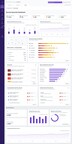
Legit’s new secrets dashboard gives teams:

Centralized visualization: Provides the most complete view of all secrets detection and prevention activities across the enterprise to prioritize remediation and ensure guardrails are in place.Secrets analytics: Prioritizes secrets remediation based on factors such as severity, source, repo/product, and user.Secrets prevention: Provides insights into potential new secrets that have been prevented based on an organization’s policies and established guardrails and identifies developers actively using preventative measures.Secrets growth and remediation trends: Insights into new secrets, issues resolution, and backlog trends, so that organizations can measure the effectiveness of AppSec programs in preventing and remediating secrets.

Legit’s new ability to discover secrets in personal GitHub repositories gives teams:

Secrets discovery: Identifies and monitors secrets within a developer’s personal GitHub and the organization’s account, ensuring that developers do not expose secrets.Personal repository discovery: Identifies and builds an inventory of all personal repositories owned by an organization’s developers for a comprehensive list of assets used by developers.Consolidated triage and remediation: Integrates findings from business and personal accounts into the Legit platform to provide a single view of the risk associated with secrets, regardless of where they reside.

With Legit’s new and enhanced capabilities, organizations gain critical insights into the enterprise’s secrets posture to understand risk and remediation trends over time. They are also provided with the broadest coverage to strengthen their security posture and protect their development environment from end to end.

Legit offers a free trial of its secrets detection and prevention solution. To register, visit https://info.legitsecurity.com/secrets-detection-and-prevention-free-trial.

About Legit Security
Legit is a new way to manage your application security posture for security, product, and compliance teams. With Legit, enterprises get a cleaner, easier way to manage and scale application security and address risks from code to cloud. Built for the modern SDLC, Legit tackles the most challenging problems facing security teams, including GenAI usage, proliferation of secrets, and an uncontrolled dev environment. Fast to implement and easy to use, Legit lets security teams protect their software factory from end to end, gives developers guardrails that let them do their best work safely, and delivers metrics that prove the security program’s success. This new approach means teams can control risk across the business – and prove it.

Media Contact:
Michelle Kearney
Hi-Touch PR
443-857-9468
kearney@hi-touchpr.com

View original content to download multimedia:https://www.prnewswire.com/news-releases/legit-security-enhances-secrets-detection–prevention-with-a-single-integrated-view-of-all-secrets-findings-and-recovery-actions-across-the-sdlc-including-within-personal-github-repos-302331671.html

SOURCE Legit Security

Continue Reading

Technology

Sophia Space and Redwire Team Up to Advance Orbital Data Center Infrastructure

Published

on

By

Companies sign MOU to explore collaboration on deployable structures, spacecraft integration and scalable architectures for in-orbit Artificial Intelligence and edge computing

LAS VEGAS, Sept. 30, 2026 /PRNewswire/ — Sophia Space and Redwire Corporation (NYSE: RDW), a global leader in aerospace and defense technology solutions, today announced they have signed a Memorandum of Understanding (MOU) to advance the development and deployment of scalable computing infrastructure in orbit, combining Sophia Space’s modular orbital compute architecture with Redwire’s extensive technology solutions in deployable space systems, solar power generation and distribution, heat management and rejection, spacecraft integration, avionics, and systems engineering.

Under the MOU, the companies will explore collaboration across near-term demonstration missions and longer-term orbital data center architectures. Sophia Space is developing a new class of computing infrastructure designed specifically for the space environment. Its modular TILE architecture integrates high-performance computing, solar power and passive radiative thermal management into scalable systems designed for Artificial Intelligence (AI) inference, data processing and other compute-intensive workloads in orbit.

By combining Sophia Space’s compute architecture with Redwire’s space infrastructure and engineering capabilities, the companies aim to address one of the central challenges facing the emerging orbital computing market: moving from individual technology demonstrations toward the repeatable, scalable infrastructure needed for the global build-out of orbital data centers.

“We’re past the point of asking whether high-performance computing belongs in orbit,” said Rob DeMillo, CEO and Cofounder of Sophia Space. “The question now is how quickly we can scale it. Redwire brings the deployment and systems expertise that can help us move from individual missions to persistent computing infrastructure in orbit. That is the transition we’re building toward now.”

“The demand for global computing is scaling exponentially, and the advancement of orbital data centers represents an exciting paradigm shift where space infrastructure can scale critical capacity beyond the constraints of terrestrial infrastructure,” said Al Tadros, Chief Technology Officer, Redwire Space. “As a leading space infrastructure provider, Redwire is translating the maturation of the orbital data center market into exciting opportunities to build next-generation architectures that could unlock significant economic value.

Sophia Space and Redwire intend to jointly pursue select U.S. government and commercial opportunities, including potential programs involving DARPA, the Air Force Research Laboratory (AFRL), the Space Development Agency (SDA) and the National Reconnaissance Office (NRO). Areas of potential collaboration include concept development, joint proposals, internal research and development activities, customer engagement, and international market opportunities.

—

About Sophia Space Inc.

Sophia Space is building the future of orbital computing and in-space data centers. Its modular TILE technology enables passive computing alongside in-situ data processing, AI acceleration, and edge computing for satellites, defense systems, and commercial space stations, dramatically reducing latency and delivering actionable insights where and when they are needed. Learn more at www.sophia.space

About Redwire

Redwire Corporation (NYSE: RDW) is an integrated space and defense tech company focused on advanced technologies. We are building the future of aerospace infrastructure, autonomous systems, and multi-domain operations leveraging digital engineering and AI automation. Redwire’s approximately 1,400 employees located throughout North America and Europe are committed to delivering innovative space and airborne platforms transforming the future of multi-domain operations. For more information, please visit RDW.com.

Media Contacts:

David Ariosto, Executive Director, Communications, Sophia Space
dariosto@sophia.space

Tere Riley, Vice President Marketing Communications, Redwire

Tere.Riley@rdw.com

View original content to download multimedia:https://www.prnewswire.com/news-releases/sophia-space-and-redwire-team-up-to-advance-orbital-data-center-infrastructure-302893808.html

SOURCE Sophia Space

Continue Reading

Technology

Sungrow Powers Cambodia’s Large-Scale BESS with Black-Start Capabilities

Published

on

By

TAKMAO, Cambodia, Sept. 30, 2026 /PRNewswire/ — Sungrow, a globally leading PV inverter and energy storage system provider, has announced the successful grid connection and full acceptance testing of the Cambodia EDC Kandal Stueng station (GS79) project, a 108.4 MW/215.6 MWh battery energy storage system (BESS) in Takmao, Kandal Province. The project brings grid-forming technology into a large-scale utility application, supporting grid stability, black-start capability and coordination with hydro and thermal generation.

Grid-forming capabilities support multiple grid-restoration functions

The project plays an important role in supporting voltage and frequency stability at a key point in Cambodia’s central power grid, including transmission corridors that import electricity from Vietnam. Its grid-forming capabilities were put through a series of demanding system-restoration scenarios, demonstrating how energy storage can take on a more active role in supporting the power system.

Key highlights include:

Large-scale black start from zero voltage: 516 grid-forming PCS units successfully energized the entire plant from zero voltage, establishing stable voltage and frequency across the system.Restoration of a 240 km transmission network: The system supported the energization of approximately 240 km of transmission lines and five substations, while maintaining stable operation as the network was progressively restored.Support for multiple generation sources: The system supported the start-up and synchronization of the 60 MW Kamchay Hydropower Plant, before the restored network was operated together with the 135 MW CIIDG coal-fired power plant, energy storage and loads.Stable operation under challenging grid conditions: During restoration, the system remained stable through five transformer energization events, including a transformer rated at up to 100 MVA. It also maintained stability when synchronizing different power sources under a phase-angle difference of up to 15 degrees, demonstrating its ability to handle challenging conditions during system recovery.Extended islanded operation: The system operated independently for 3.5 hours, demonstrating that the energy storage system could continue supporting the local network even when separated from the main grid.Seamless transitions: The project completed three transitions between grid-connected and islanded operation, with voltage deviation kept below 2% and transient frequency fluctuation within 0.15 Hz during grid separation.

“This project demonstrates that the value of grid-forming energy storage goes far beyond storing electricity.When a power system faces disturbances or loses normal grid support, grid-forming technology can help establish and maintain stable voltage and frequency, support system restoration and keep the grid operating reliably,” said Michael Ruan, Regional Director of Sungrow Southeast Asia and South Asia. “Through projects like this, Sungrow is helping turn energy storage into a more active grid-support asset and bringing proven grid-forming capabilities to the evolving power systems of Southeast Asia.”

Reducing Technical Risk and Ensuring Timely Delivery

Faced with strict test protocols, complex power system scenarios, a compressed construction schedule and rainy‑season working conditions with ambient temperature up to 40°C, Sungrow’s cross‑functional team covering pre-sales, on‑site delivery and R&D collaborated closely to deliver high‑quality project outcomes:

20-day commissioning and testing: The on‑site team worked relentlessly under hot and humid conditions for two consecutive months. The team wrapped up hot commissioning plus three rounds of performance tests within 20 days to guarantee timely grid‑connection.End‑to‑End Service Solution: Sungrow provides full‑lifecycle and one‑stop services spanning integrated design of storage and monitoring systems, EPC‑related support, equipment design, commissioning and O&M services, enabling the customer to fulfill customized grid‑level requirements with reduced management overhead.

As Southeast Asia advances its energy transition, Sungrow will continue to bring proven energy storage technologies and solutions to the region, helping customers build more reliable and sustainable power infrastructure.

Contact: Luly Wang, luly.wang@sungrow-hq.com

View original content to download multimedia:https://www.prnewswire.com/apac/news-releases/sungrow-powers-cambodias-large-scale-bess-with-black-start-capabilities-302893819.html

SOURCE Sungrow Power

Continue Reading

Technology

Greta Garbo is back – starring in SKF’s initiative to overcome friction

Published

on

By

GOTHENBURG, Sweden, Sept. 30, 2026 /PRNewswire/ — Greta Garbo returns to SKF. More than a century after her first campaign promoting SKF, one of the most iconic figures of our time is once again the face of the company. Using AI technology, Garbo has been recreated. This time, she’s drawing attention to groundbreaking magnetic bearings with the potential to entirely eliminate friction. At the same time, SKF is reintroducing a payment model pioneered by the company in 1919.

Before she became a global icon, Greta Garbo appeared in one of Swedish industry’s campaign films for an international audience, with SKF among the companies featured. But for SKF, Garbo represents more than just a historical connection to the company’s early years. Her journey reflects the values that have always driven SKF: the determination to keep thinking differently and the courage to challenge established conventions as the world changes. Today, around 20 percent of global energy is used to overcome friction in machinery and industrial processes, making friction one of the world’s greatest sustainability challenges. To address this challenge, SKF has developed frictionless technology.

“Industry is facing growing demands to reduce energy consumption, strengthen competitiveness and meet the needs of increasingly energy-intensive operations. Our innovative levitating magnetic bearings eliminate friction entirely. But just as we did a century ago, we need to find new ways to lower the barriers to adoption and make the technology more accessible,” says Rickard Gustafson, President and CEO.

The challenge isn’t new. As early as in 1919, SKF faced a similar situation. Its solution became an offering that enabled customers to finance their investments through the energy savings generated by the technology over time. SKF is now reintroducing that same principle to make the next generation of energy-efficient technology more accessible and accelerate the adoption of solutions that reduce both energy consumption and climate impact.

“There are few companies in the world better at fighting friction than SKF. But having the most innovative technology or the most customer-focused payment model is not enough. The way we communicate must be equally innovative and inspiring. By bringing Greta back, we hope to open more eyes to frictionless and energy-efficient technology. Sometimes, we need to look back to find the best way forward,” says Per Nilsson, Global Head of Communication and Brand.

SKF’s magnetic bearings are used in data centres, cooling systems, semiconductor applications and other energy-intensive applications. By suspending the rotating shaft in a magnetic field without physical contact, the technology can reduce energy consumption, wear and maintenance while increasing availability.

Combined with AI-driven condition monitoring, it also provides operational insights for smarter asset management. By bringing together energy-efficient technology, digital intelligence and new business models, SKF aims to lower investment barriers and accelerate the adoption of more competitive and sustainable solutions.

The initiative has been developed in collaboration with Greta Garbo’s family and Harriet Brown & Company Inc., whose support has ensured that Greta Garbo’s legacy is handled responsibly.

Read more about the initiative here: http://www.skf.com/fighting-friction.

Aktiebolaget SKF
      (publ)

Since 1907, SKF has been making some of the world’s most innovative bearings, seals, lubrication systems, condition monitoring solutions, and services to reduce friction. Less friction means more energy saved and by reducing it, we make industry smarter, more competitive, and more energy efficient, building a more sustainable future where we can all do more with less. SKF is represented in approximately 130 countries and has around 17,000 distributor locations worldwide. Annual sales in 2025 were SEK 91,583 million and the number of employees was 37,271. www.skf.com 

® SKF is a registered trademark of the SKF Group.

View original content to download multimedia:https://www.prnewswire.co.uk/news-releases/greta-garbo-is-back–starring-in-skfs-initiative-to-overcome-friction-302893152.html

Continue Reading

Trending