Connect with us

Technology

Email Security Market to grow by USD 5.17 Billion (2024-2028), increase in employee mobility boosts the market, Report on how AI is redefining landscape – Technavio

Published

on

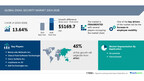
NEW YORK, Jan. 29, 2025 /PRNewswire/ — Report with market evolution powered by AI – The global email security market size is estimated to grow by USD 5.17 billion from 2024-2028, according to Technavio. The market is estimated to grow at a CAGR of  13.64%  during the forecast period. Increase in employee mobility is driving market growth, with a trend towards adoption of cloud-based solutions. However, availability of open-source solutions  poses a challenge. Key market players include Barracuda Networks Inc., Check Point Software Technologies Ltd., Cisco Systems Inc., cryptzone.no AS, Dell Technologies Inc., Egress Software Technologies Ltd., Entrust Corp., Fortinet Inc., McAfee LLC, Microsoft Corp., Mimecast Ltd., Musarubra US LLC, OpenText Corp., Proofpoint Inc., Proton AG, SAP SE, Sophos Ltd., Trend Micro Inc., Trustifi LLC, and WatchGuard Technologies Inc..

Key insights into market evolution with AI-powered analysis. Explore trends, segmentation, and growth drivers- View Free Sample PDF

Email Security Market Scope

Report Coverage

Details

Base year

2023

Historic period

2018 – 2022

Forecast period

2024-2028

Growth momentum & CAGR

Accelerate at a CAGR of 13.64%

Market growth 2024-2028

USD 5169.7 million

Market structure

Fragmented

YoY growth 2022-2023 (%)

11.73

Regional analysis

North America, APAC, Europe, South America, and Middle East and Africa

Performing market contribution

APAC at 45%

Key countries

US, UK, China, India, and Germany

Key companies profiled

Barracuda Networks Inc., Check Point Software Technologies Ltd., Cisco Systems Inc., cryptzone.no AS, Dell Technologies Inc., Egress Software Technologies Ltd., Entrust Corp., Fortinet Inc., McAfee LLC, Microsoft Corp., Mimecast Ltd., Musarubra US LLC, OpenText Corp., Proofpoint Inc., Proton AG, SAP SE, Sophos Ltd., Trend Micro Inc., Trustifi LLC, and WatchGuard Technologies Inc.

Market Driver

Email security is a critical aspect of IT security for organizations of all sizes and industries. With the increasing adoption of Bring Your Own Device (BYOD) policies and the technological growth, the number of email accounts and workloads have grown significantly. This has led to an uptick in cyber threats such as viruses, account hacking, social spam, and fraud protection issues. To mitigate these risks, email security solutions have become essential. These solutions offer integration with security infrastructures, network security, and endpoint protection. Providers offer cloud-based and on-premise solutions to cater to different organizational needs. The value chain analysis of email security solutions includes deployment, support & maintenance, training & education, and functional issues. The severity of attacks can range from stealing credits to account hacking, making it crucial for organizations to invest in email security arrangements. Email security solutions provide cybersecurity for workforces in various industries, including healthcare, telecom, retail, energy & utilities, manufacturing, government, and IT. Experts recommend implementing a security standard that covers all email-related risks. Traditional ways of email security are no longer sufficient, and organizations must keep up with the latest trends to protect their productivity and reputation. 

Major industries such as financial institutions, healthcare, and government organizations are increasingly adopting cloud-based email security solutions due to their centralized and searchable data repositories. These solutions enable employees to access emails from anywhere, regardless of geographic location and time zone. Cloud-based email security offers a lower cost of ownership and effective management of growing data volumes. Enterprises face challenges in safeguarding critical data from loss. Cloud solutions provide scalability on demand, ensuring data availability at all times without the need for businesses to manage their databases. These benefits make cloud-based email security a valuable investment for businesses seeking to streamline operations and protect sensitive information. 

Request Sample of our comprehensive report now to stay ahead in the AI-driven market evolution!

 Market Challenges

Email security is a critical challenge for businesses as mals and cyber threats continue to evolve, putting organizations’ accounts and productivity at risk. Viruses and attacks, including fraud protection against credit stealing and account hacking, are major concerns. Adoption of email security solutions is essential to safeguard networks and endpoints from social spam and other cyber threats. IT security professionals face functional issues integrating these solutions with existing security infrastructures and industry verticals like healthcare, telecom, retail, energy & utilities, manufacturing, government, and large enterprises. Investments in email security solutions should align with organizational size and industry standards, offering deployment options such as cloud or on-premise. Providers offer support, maintenance, training, and education to ensure effective implementation and mitigate the severity of threats. Traditional ways of email security may no longer suffice in today’s technological growth and BYOD adoption.The email security market is experiencing a shift towards open-source solutions due to their affordability and accessibility. Small and medium-sized enterprises (SMEs) and individual users, who often have limited financial resources, are increasingly adopting open-source email security solutions. Open-source alternatives, such as MailScanner and Proxmox Mail Gateway, provide effective email security without the need for significant capital investment. These solutions offer an attractive proposition for businesses seeking cost-effective email security solutions. The global email security market is witnessing a trend towards open-source solutions, which provide a viable alternative to expensive, proprietary options.

Discover how AI is revolutionizing market trends- Get your access now!

Segment Overview 

This email security market report extensively covers market segmentation by  

Application 1.1 On premise1.2 Cloud basedProduct 2.1 Products2.2 ServicesGeography 3.1 North America3.2 APAC3.3 Europe3.4 South America3.5 Middle East and Africa

1.1 On premise-  On-premises email security solutions offer superior protection for organizations by safeguarding their internal computers from online threats. However, the high cost of implementation is a barrier for small and medium-sized enterprises (SMEs), particularly in sectors other than BFSI. The email security market is witnessing the emergence of cost-effective cloud-based solutions, which are expected to surpass the growth of on-premises solutions. Despite this, the on-premises segment is projected to expand during the forecast period due to the array of advanced security offerings from vendors. These solutions will aid enterprises in combating cyber threats, fueling the market’s growth.

Download a Sample of our comprehensive report today to discover how AI-driven innovations are reshaping competitive dynamics

Research Analysis

Subject: Fortify Your Email Security: Protect Your Organization from Cyber Threats Body: Email is a crucial communication tool in today’s digital world, but it also poses significant risks. Mails carrying viruses, malware, and phishing attacks can compromise your organization’s IT security. Technological growth and BYOD adoption have led to an increase in email usage, making email security a top priority. Network security and endpoint protection are essential components of email security. Integration of email security solutions with other IT security systems is vital for comprehensive protection. Adoption of cloud-based email services has grown, requiring providers to meet stringent security standards. Cyber threats to email accounts are on the rise, with severity ranging from productivity loss to data breaches. Cybersecurity is no longer an optional extra but a necessity for every organization. Workforce education on email security best practices is crucial to mitigate risks. Stay ahead of cybercriminals by implementing email security measures.

Market Research Overview

Email security is a critical aspect of IT security, safeguarding organizations from various cyber threats that target email communications. Emails continue to be a primary vector for viruses, malware, and phishing attacks, putting workloads and productivity at risk. The adoption of email security solutions has gained momentum due to the technological growth and BYOD adoption in organizations. Functional issues, such as account hacking, fraud protection against stealing credits, social spam, and account takeover attacks, necessitate email security arrangements. The value chain analysis of email security solutions includes deployment, support & maintenance, training & education, and integration with network security, endpoint security, and IT security infrastructures. Cloud-based email security solutions have emerged as a popular choice for organizations of all sizes, from small businesses to large enterprises, across various industry verticals like healthcare, telecom, retail, energy & utilities, manufacturing, government, and IT. Email security investments are expected to increase as cybersecurity threats continue to evolve, with experts predicting a rise in severity and sophistication of attacks. Traditional ways of securing emails, such as firewalls and antivirus software, are no longer sufficient. Organizations need advanced email security solutions that can provide comprehensive protection against a wide range of threats, including zero-day attacks and advanced persistent threats (APTs). In conclusion, email security is an essential component of an organization’s overall cybersecurity strategy, and investments in email security solutions will continue to be a priority for IT professionals in the coming years.

Table of Contents:

1 Executive Summary
2 Market Landscape
3 Market Sizing
4 Historic Market Size
5 Five Forces Analysis
6 Market Segmentation

ApplicationOn PremiseCloud BasedProductProductsServicesGeographyNorth AmericaAPACEuropeSouth AmericaMiddle East And Africa

7 Customer Landscape
8 Geographic Landscape
9 Drivers, Challenges, and Trends
10 Company Landscape
11 Company Analysis
12 Appendix

About Technavio

Technavio is a leading global technology research and advisory company. Their research and analysis focuses on emerging market trends and provides actionable insights to help businesses identify market opportunities and develop effective strategies to optimize their market positions.

With over 500 specialized analysts, Technavio’s report library consists of more than 17,000 reports and counting, covering 800 technologies, spanning across 50 countries. Their client base consists of enterprises of all sizes, including more than 100 Fortune 500 companies. This growing client base relies on Technavio’s comprehensive coverage, extensive research, and actionable market insights to identify opportunities in existing and potential markets and assess their competitive positions within changing market scenarios.

Contacts

Technavio Research
Jesse Maida
Media & Marketing Executive
US: +1 844 364 1100
UK: +44 203 893 3200
Email: media@technavio.com
Website: www.technavio.com/

View original content to download multimedia:https://www.prnewswire.com/news-releases/email-security-market-to-grow-by-usd-5-17-billion-2024-2028-increase-in-employee-mobility-boosts-the-market-report-on-how-ai-is-redefining-landscape—technavio-302363204.html

SOURCE Technavio

Continue Reading
Click to comment

Leave a Reply

Your email address will not be published. Required fields are marked *

Technology

Mouser Electronics Explores How Artificial Intelligence Shapes Everyday Technologies and Experiences

Published

on

By

SHANGHAI, April 20, 2026 /PRNewswire/ — Mouser Electronics, Inc., the authorized global distributor with the newest electronic components and industrial automation products, today announced the first 2026 installment of its Empowering Innovation Together (EIT) technology series, Engineering AI for Daily Life. This installment explores how artificial intelligence is increasingly embedded in everyday products and services, from assisted search and messaging tools to healthcare wearables that monitor personal well-being. As AI capabilities expand across consumer and connected devices, engineers continue to design systems that make these technologies more useful, intuitive, and trustworthy in real-world applications.

“AI is quickly moving from experimental technology into products people rely on every day, and engineers play a major role in shaping how it’s applied,” said Jeff Newell, President of Mouser Electronics. “As AI becomes embedded across consumer devices and connected systems, it’s important that these technologies are designed to support human expertise while remaining reliable and trustworthy. This EIT segment helps engineers explore the tools and insights they need to build the next generation of AI-enabled solutions.”

As AI agents and intelligent tools become integrated into homes, connected devices, and digital services, engineers are developing systems that enhance user judgment and keep users in control while maintaining transparency and privacy. New AI-powered platforms already demonstrate this potential – turning simple conversations into complete travel itineraries or providing deeper health insights through connected devices.

On The Tech Between Us podcast, Raymond Yin, Director of Technical Content at Mouser Electronics, and Dr. Marisa Tschopp, Senior Researcher at scip AG in Zurich, examine the new role of AI in human interaction and day-to-day experiences. They explore how AI advancements shape technology-enabled collaboration, including the long-term impact of daily integration and applications for mental health.

“AI is moving beyond experimental settings into the products people rely on every day,” said Yin. “Our first EIT navigates the next era in AI innovation, looking at how to use the technology to enhance people’s abilities and rethink how we can live for the better.”

In addition to the podcast, the EIT series includes an in-depth video, technical articles, a topic-related infographic, as well as subscriber-exclusive content, diving into everyday AI. By examining the range of cases where AI can level up technical expertise, engineers can build a class of tools to help reshape how people think, decide, and create while protecting privacy and control.

Established in 2015, Mouser’s Empowering Innovation Together program is one of the electronic component industry’s most recognized educational programs. To learn more, visit https://www.mouser.com/empowering-innovation/engineering-ai-daily/ and follow Mouser on Facebook, LinkedIn, X, and YouTube.

For more Mouser news and our latest new product introductions, visit https://www.mouser.com/newsroom/.

View original content to download multimedia:https://www.prnewswire.com/apac/news-releases/mouser-electronics-explores-how-artificial-intelligence-shapes-everyday-technologies-and-experiences-302745803.html

SOURCE Mouser Electronics

Continue Reading

Technology

The Global Economy Could Split in Very Different Directions by 2050

Published

on

By

Research from the BCG Henderson Institute Details Four Plausible Scenarios for the World over the Next 25 Years, Based on Analysis of More Than 100 Megatrends and a Century of Historical Data

BOSTON, April 20, 2026 /PRNewswire/ — The global economy could follow markedly different paths over the next 25 years. For business leaders, the challenge is how to make decisions today while preparing for a wide range of possible futures.

New Scenarios 2050 research from the BCG Henderson Institute (BHI), Boston Consulting Group’s think tank, anticipates four distinct futures that push boundaries but remain plausible. The report explores what each scenario could mean for businesses and how early signals may indicate which direction the world is heading.

Among the findings:

Global GDP growth could slow to about 1.8% or rise to 5.0% annually, with the economy reaching anywhere from 1.6 to 3.4 times today’s size.Global trade could fall to about 35% of GDP—roughly Cold War–era levels—or remain near current levels of about 60%.Defense spending could climb to as much as 7% of global GDP.Low-carbon electricity could account for 55% to 90% of power generation.

The report, Beyond Tomorrow: Four Scenarios for the World of 2050, is based on a century of historical data and analysis of more than 100 megatrends across technology, geopolitics, climate, society, and economics.

“The decisions made in the next 5 years will shape the next 25,” said Nikolaus Lang, global leader of the BCG Henderson Institute and a coauthor of the report. “Too often, the future is framed in extremes—either collapse or abundance. In reality, leaders need to be ready for a range of outcomes and make decisions that hold up across very different conditions.”

Four Plausible Futures Leaders Should Plan For

Each scenario presents a different operating environment for businesses, reflecting the range of conditions leaders may face.

Scenario 1: AI Abundance. Global cooperation on AI standards leads to faster productivity growth, wider access to technology, and abundant low-carbon energy:

Global GDP more than triples, growing by about 5% annually from 2025 to 2050—the highest level across BHI’s four plausible scenarios.Average working hours fall by about 25%, with four- or even three-day workweeks becoming common in some regions.AI-supported advances in new materials and carbon removal put the world on a delayed but credible path to net zero emissions.

Scenario 2: Battling Blocs. Geopolitical tensions divide the world into competing blocs, reducing cooperation and reshaping global trade:

Global trade falls to about 35% of global GDP, down from 57% in 2024—reversing decades of globalization.Defense spending rises to about 7% of global GDP, the highest across BHI’s four scenarios, as countries prioritize security and self-sufficiency.Global GDP growth slows to about 1.8% annually, the lowest across the four scenarios, underpinned by government spending on national security, pensions, and climate mitigation.

Scenario 3: Climate Coalition. A series of extreme weather events in the late 2020s push governments, industries, and consumers to prioritize climate resilience, accelerating the shift to low-carbon energy and infrastructure:

Global warming stabilizes at about 1.8°C.Carbon markets expand globally, with most major economies participating by 2040.The share of fossil fuels in the energy mix falls from 81% today to 35% in 2050, while electricity is generated almost entirely from low-carbon sources.Global GDP growth averages about 2.5% annually, reflecting a focus on the climate transition, slower population growth, and aging societies.

Scenario 4: Digital Darwinism. Rapid technological progress continues under limited regulation, driving strong growth while concentrating wealth and power among leading companies and tech-rich nations:

Global GDP grows at 4% per year, resulting in a near tripling of GDP.The richest 1% holds nearly half of global wealth, while the middle class continues to shrink.Gig-style and short-term contract work expands as AI and automation displace routine knowledge work.Defense spending rises to about 4% of GDP, up from 2.4% in 2024, as the global order becomes more fragmented. At the same time, global trade and supply chains remain open, driven by commercial interests.

What Leaders Can Do Now

 Across all four scenarios, the report highlights “low regret” moves that make sense for business leaders today, including:

Enhance structural resilience. Rebalance toward resilience over efficiency to maintain operations in a more volatile environment.Reimagine talent for aging populations and AI. Build strategies for intergenerational work, more flexible roles, and talent mobility—and recruit more widely, especially from emerging labor markets.Build digital flexibility and trust. Take a modular approach to tech and data stacks that accounts for rapidly changing technologies.Sharpen sensing and influencing capabilities. Develop sensing capacities along dimensions like regulation, geopolitics, resources, and technology. Build the capability to act on them quickly.Embrace a broader societal role. Prepare to shoulder more responsibility for workers’ well-being, local resilience, crisis management, and community needs.

“No one can predict exactly what 2050 will look like, but the forces shaping it are already visible,” said Alan Iny, a partner and director at BCG, a BCG Henderson Institute Fellow, and a coauthor of the report. “Planning for a single future is a gamble. The advantage will go to leaders who prepare for multiple futures and act to shape them before the direction of the world is clear.”

Download the publication here: https://www.bcg.com/publications/2026/beyond-tomorrow-four-scenarios-for-the-world-of-2050

Media Contact:                            
Eric Gregoire
+1 617 850 3783
gregoire.eric@bcg.com

About the BCG Henderson Institute
The BCG Henderson Institute is Boston Consulting Group’s strategy think tank, dedicated to exploring and developing valuable new insights from business, technology, and science by embracing the powerful technology of ideas. The Institute engages leaders in provocative discussion and experimentation to expand the boundaries of business theory and practice and to translate innovative ideas from within and beyond business. For more ideas and inspiration from the Institute, please visit our website and follow us on LinkedIn and X (formerly Twitter).

About Boston Consulting Group
Boston Consulting Group partners with leaders in business and society to tackle their most important challenges and capture their greatest opportunities. BCG was the pioneer in business strategy when it was founded in 1963. Today, we work closely with clients to embrace a transformational approach aimed at benefiting all stakeholders—empowering organizations to grow, build sustainable competitive advantage, and drive positive societal impact.

Our diverse, global teams bring deep industry and functional expertise and a range of perspectives that question the status quo and spark change. BCG delivers solutions through leading-edge management consulting, technology and design, and corporate and digital ventures. We work in a uniquely collaborative model across the firm and throughout all levels of the client organization, fueled by the goal of helping our clients thrive and enabling them to make the world a better place.

View original content to download multimedia:https://www.prnewswire.com/news-releases/the-global-economy-could-split-in-very-different-directions-by-2050-302746672.html

SOURCE Boston Consulting Group (BCG)

Continue Reading

Technology

DEKRA Korea to Acquire Global Product Service, Strengthening Consumer Electronics Testing and Certification Capabilities in Korea

Published

on

By

GIMHAE-SI, South Korea, April 20, 2026 /PRNewswire/ — DEKRA, a leading global provider of testing, inspection, and certification services, today announced it has signed a definitive agreement to acquire Global Product Service Co., Ltd (GPS), a prominent South Korean company renowned for its expertise in consumer electronics product testing and certification.

This strategic acquisition will significantly enhance DEKRA Korea’s capabilities within the rapidly growing consumer electronics sector, bringing together DEKRA’s global network and comprehensive service portfolio with GPS’s deep-rooted local knowledge and decades of experience serving South Korea’s leading manufacturers.

GPS has established a strong reputation for its in-depth technical expertise and unwavering commitment to quality, particularly within the consumer electronics market. For many years, GPS has been a trusted partner to major South Korean electronics companies, providing testing and certification services that ensure product safety, performance, and compliance with international standards.

The successful acquisition is a result of the strong collaboration and commitment from both DEKRA and GPS. Key representatives who participated in the signing, embodying this collaboration, were Dr. Kilian Aviles, Executive Vice President of DEKRA Group and Head of Asia Pacific Region; Ming Sheng, Vice President of Automotive Testing, DEKRA China; Young Seok Lee, CEO of Global Product Service Co., Ltd; and Seong Su Kim, Director of Global Product Service Co., Ltd.

“We are thrilled to welcome Global Product Service Co., Ltd to the DEKRA family,” said Dr. Kilian Aviles, Executive Vice President of DEKRA Group and Head of Asia Pacific Region. “This acquisition represents a significant milestone in our growth strategy in South Korea. GPS’s deep understanding of the local market, combined with their specialized expertise in consumer electronics, perfectly complements DEKRA’s global strengths. Together, we will offer unparalleled testing and certification solutions to our clients, empowering them to bring innovative and reliable products to market with greater speed and confidence.”

The integration of GPS into DEKRA Korea will leverage synergies in technology, talent, and market reach. This will enable DEKRA to further support South Korean manufacturers as they navigate complex global regulatory landscapes and strive for excellence in product development and quality assurance. Clients can expect a seamless transition and continued access to the high-quality services they have come to rely on from both organizations.

Young Seok Lee, CEO of Global Product Service Co., Ltd commented, “Joining forces with DEKRA is an exciting opportunity for GPS. DEKRA’s global reach and extensive resources will allow us to expand our service offerings and better serve our existing and future clients. We are confident that this partnership will create significant value for the South Korean consumer electronics industry, providing enhanced support and innovation.”

About DEKRA

For more than 100 years, DEKRA has been a trusted name in safety. Founded in 1925 with the original goal of improving road safety through vehicle inspections, DEKRA has grown to become the world’s largest independent, non-listed expert organization in the field of testing, inspection, and certification. Today, as a global partner, the company supports its customers with comprehensive services and solutions to drive safety and sustainability forward—fully aligned with DEKRA’s anniversary motto, “Securing the Future.” In 2024, DEKRA generated revenue of 4.3 billion euros. Around 48,000 employees are providing qualified and independent expert services in approximately 60 countries across five continents. DEKRA holds a Platinum rating from EcoVadis, placing it among the top 1% of the world’s most sustainable companies.

View original content to download multimedia:https://www.prnewswire.com/apac/news-releases/dekra-korea-to-acquire-global-product-service-strengthening-consumer-electronics-testing-and-certification-capabilities-in-korea-302746801.html

SOURCE DEKRA Asia Pacific

Continue Reading

Trending