Technology
Security Camera Market to grow by USD 3.85 Billion (2025-2029), driven by video analytics enhancing surveillance, report on AI driving market transformation – Technavio
Published
2 years agoon
By
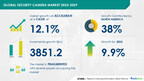
NEW YORK, Jan. 29, 2025 /PRNewswire/ — Report with the AI impact on market trends – The global security camera market size is estimated to grow by USD 3.85 billion from 2025-2029, according to Technavio. The market is estimated to grow at a CAGR of 12.1% during the forecast period. Growth of video analytics helpful for surveillance video analyses is driving market growth, with a trend towards growing adoption of iot and smart homes. However, challenges regarding privacy and data loss poses a challenge. Key market players include ADT Inc., Amazon.com Inc., Canon Inc., Cisco Systems Inc., Costar Technologies Inc., Dahua Technology Co. Ltd., Hangzhou Hikvision Digital Technology Co. Ltd., Hanwha Techwin America, Honeywell International Inc., Johnson Controls International Plc, JVCKENWOOD Corp., Motorola Solutions Inc., Panasonic Holdings Corp., Robert Bosch GmbH, Schneider Electric SE, Simplisafe Inc., Sony Group Corp., Teledyne Technologies Inc., Vicon Industries Inc., and Xiaomi Inc..
Key insights into market evolution with AI-powered analysis. Explore trends, segmentation, and growth drivers- View Free Sample PDF
Security Camera Market Scope
Report Coverage
Details
Base year
2024
Historic period
2019 – 2023
Forecast period
2025-2029
Growth momentum & CAGR
Accelerate at a CAGR of 12.1%
Market growth 2025-2029
USD 3851.2 million
Market structure
Fragmented
YoY growth 2022-2023 (%)
9.9
Regional analysis
North America, APAC, Europe, South America, and Middle East and Africa
Performing market contribution
North America at 38%
Key countries
US, China, Germany, Canada, UK, France, Japan, India, South Korea, and Italy
Key companies profiled
ADT Inc., Amazon.com Inc., Canon Inc., Cisco Systems Inc., Costar Technologies Inc., Dahua Technology Co. Ltd., Hangzhou Hikvision Digital Technology Co. Ltd., Hanwha Techwin America, Honeywell International Inc., Johnson Controls International Plc, JVCKENWOOD Corp., Motorola Solutions Inc., Panasonic Holdings Corp., Robert Bosch GmbH, Schneider Electric SE, Simplisafe Inc., Sony Group Corp., Teledyne Technologies Inc., Vicon Industries Inc., and Xiaomi Inc.
Market Driver
The security camera market is thriving with trends such as infrared technology, artificial intelligence (AI), and deep learning engines becoming increasingly popular. Traditional security cameras are being replaced by smart security cameras, offering operational needs like high-definition images, two-way audio, and facial recognition. Innovations like AI-driven analytics, anomaly detection, and behavior analysis are crucial for crime prevention and incident response. Investment costs for AI-powered appliances and scalable security solutions are on the rise, driven by consumer interest and expert partnerships. High-risk areas like border security, critical infrastructure, and commercial security require advanced security solutions, while homeowners seek cost-effective, easy-installation options. The Internet of Things (IoT) and cloud-based video surveillance are essential for remote control and data redundancy. Privacy concerns and data protection laws necessitate privacy protections. Infrared, dome, and bullet cameras cater to various surveillance needs, while thermal imaging and motion detection ensure comprehensive coverage. Despite the advancements, security risks and privacy concerns persist, making it crucial for businesses and homeowners to stay informed and invest in scalable, smart home technologies. Promotions, discounts, and strategic partnerships continue to drive consumer interest in smart city development and mobile surveillance systems.
The Security Camera market is witnessing significant growth due to increasing residential adoption of Internet of Things (IoT) devices, such as smart cameras. These advanced cameras are equipped with video analytics and recognition capabilities, enabling them to monitor family members, pets, and objects. Consumers can record and view security events in real-time through their smartphones. Moreover, vendors offer smart doorbells and peepholes as alternatives, which detect people entering or exiting homes and monitor objects outside. Indoor usage includes pet and baby monitoring.
Request Sample of our comprehensive report now to stay ahead in the AI-driven market evolution!
Market Challenges
The security camera market is experiencing significant growth due to operational needs for safety and crime prevention in various sectors. Traditional security cameras are being replaced by smart security solutions, including AI-powered appliances and IP cameras, offering features like high-definition images, two-way audio, and motion detection. Infrared technology and thermal imaging are crucial for surveillance in high-risk areas and extreme conditions. Investment costs for advanced security systems, including AI-driven analytics, facial recognition, and anomaly detection, can be high but offer scalability, ease of installation, and remote control. Smart city development and border security are major drivers, while privacy concerns and data protection laws require expertise in security solutions. Innovations like machine learning, deep learning engines, and incident response times are essential for effective surveillance and evidence collection. Smart home devices and cloud-based video surveillance offer cost-effectiveness and flexibility, with automated alerts and advanced security solutions for private properties and public spaces. Despite the benefits, challenges include scalability, privacy concerns, and security risks. Strategic partnerships, promotions, and discounts help offset investment costs and increase consumer interest. Smart home technology integration and the Internet of Things expand surveillance coverage and offer new opportunities for crime prevention and incident response.IP-based security cameras offer valuable surveillance solutions for businesses, but they also present significant cybersecurity risks. Attackers can exploit vulnerabilities in these devices through denial-of-service attacks, Man-in-the-Middle attacks, data breaches, advanced persistent threats, and ransomware. Weak passwords are a common entry point for hackers. Compromised security cameras can disrupt networks, posing a threat to business operations. To mitigate these risks, it’s crucial to implement strong password policies, keep software up-to-date, and consider using multi-factor authentication. Businesses must prioritize cybersecurity measures for their IP-based security cameras to ensure network protection and maintain operational continuity.
Discover how AI is revolutionizing market trends- Get your access now!
Segment Overview
This security camera market report extensively covers market segmentation by
Technology 1.1 Analog1.2 IP basedProduct Type2.1 HD and full-HD2.2 Non-HDGeography 3.1 North America3.2 APAC3.3 Europe3.4 South America3.5 Middle East and Africa
1.1 Analog- Analog cameras are a cost-effective solution for businesses seeking security solutions. These cameras, used in closed-circuit television (CCTV) systems, transmit video signals over cable to video cassette recorders (VCRs) and digital video recorders (DVRs). Vendors provide analog cameras with varying resolutions based on National Television Standards Committee (NTSC) and Phase Alternating Line (PAL) standards, ranging from 420 to 1080 pixels for clear images. Analog cameras can connect via coax cables, twisted-pair cables, or wireless connections. Advanced features include infrared light-emitting diodes (IR LEDs) for night vision, 1080 pixels analog high definition (AHD), 1080 composite video interface (CVI), and complementary metal-oxide-semiconductor (CMOS) sensors with Infrared Cutfilter Removal (ICR) for accurate color reproduction. Vendors offer video recorders with features such as up to 50 terabytes of video storage, motion-detecting push notifications, remote viewing via smartphones, tablets, and computers, advanced recording and playback options by time/date or motion, and 24/7 or motion-detected scheduling. Additionally, customers receive maintenance support and a three-year product warranty. Affordably priced analog cameras are suitable for continuous monitoring in various industries, including city infrastructure, ATM banking outlets, construction sites, and indoor retail establishments. The large-scale installation of these cameras, featuring advanced technologies like AHD and pan-tilt-zoom (PTZ), fuels the growth of the global security camera market. The analog segment’s popularity and cost-effectiveness ensure its continued demand during the forecast period.
Download a Sample of our comprehensive report today to discover how AI-driven innovations are reshaping competitive dynamics
Research Analysis
The security camera market is a growing industry that offers various solutions for video surveillance systems. It includes different segments such as wired and wireless, IP and analog, and HD-SDI cameras. Security camera accessories like lenses, mounts, and housing are also essential components. Organizations across industries are adopting security cameras for benefits like crime prevention, employee safety, and business intelligence. The market is witnessing trends like remote monitoring, cloud-based security, and smart home integration. Security camera technology continues to innovate, with features like high-definition resolution, advanced analytics, and cybersecurity measures. Cost is a significant consideration, with options available for various budgets, including security camera upgrades and affordable solutions. Security camera installation and maintenance are crucial aspects, with many distributors and installation services available. The market’s growth is driven by increasing security concerns, the need for ROI, and the advantages of real-time monitoring and video evidence. Security camera standards ensure interoperability and quality, with organizations like ONVIF and PSIA promoting industry collaboration. The market’s revenue is expected to grow, driven by demand for advanced features and applications in various sectors, including retail, healthcare, and transportation. CCTV systems and security camera systems are synonymous, with the latter offering more advanced features and integration capabilities. The market’s cybersecurity concerns are addressed through encryption, authentication, and access control measures. Security camera pricing varies based on factors like resolution, features, and installation costs. Comparison tools and software are available to help organizations make informed decisions. The market’s future looks bright, with ongoing innovation and the integration of artificial intelligence and machine learning.
Market Research Overview
The security camera market is witnessing significant innovations with the integration of infrared technology and artificial intelligence (AI) for enhanced operational needs. Traditional security cameras are being replaced by smart security cameras, which offer features like facial recognition, two-way audio, and AI-driven analytics for crime prevention and incident response. High-risk areas require scalable and cost-effective security solutions, leading to the popularity of IP cameras and the Internet of Things (IoT) in security systems. Infrared technology enhances surveillance in low-light conditions, while AI and machine learning enable anomaly detection and behavior analysis. Homeowners are increasingly investing in smart home devices for home security, driving consumer interest in AI-powered appliances and cloud-based video surveillance. Security solutions are also being used in smart city development for public spaces, border security, and critical infrastructure protection. Cost, ease of installation, and privacy concerns are key factors influencing the market. Strategic partnerships and promotions offer incentives for adopting advanced security solutions, while data protection laws and privacy protections ensure data redundancy and security risks are minimized. In summary, the security camera market is evolving rapidly with advancements in technology, cost-effectiveness, and scalability, addressing the operational needs of various industries and consumer demand for safety and security.
Table of Contents:
1 Executive Summary
2 Market Landscape
3 Market Sizing
4 Historic Market Size
5 Five Forces Analysis
6 Market Segmentation
TechnologyAnalogIP BasedProduct TypeHD And Full-HDNon-HDGeographyNorth AmericaAPACEuropeSouth AmericaMiddle East And Africa
7 Customer Landscape
8 Geographic Landscape
9 Drivers, Challenges, and Trends
10 Company Landscape
11 Company Analysis
12 Appendix
About Technavio
Technavio is a leading global technology research and advisory company. Their research and analysis focuses on emerging market trends and provides actionable insights to help businesses identify market opportunities and develop effective strategies to optimize their market positions.
With over 500 specialized analysts, Technavio’s report library consists of more than 17,000 reports and counting, covering 800 technologies, spanning across 50 countries. Their client base consists of enterprises of all sizes, including more than 100 Fortune 500 companies. This growing client base relies on Technavio’s comprehensive coverage, extensive research, and actionable market insights to identify opportunities in existing and potential markets and assess their competitive positions within changing market scenarios.
Contacts
Technavio Research
Jesse Maida
Media & Marketing Executive
US: +1 844 364 1100
UK: +44 203 893 3200
Email: media@technavio.com
Website: www.technavio.com/
View original content to download multimedia:https://www.prnewswire.com/news-releases/security-camera-market-to-grow-by-usd-3-85-billion-2025-2029-driven-by-video-analytics-enhancing-surveillance-report-on-ai-driving-market-transformation—technavio-302362873.html
SOURCE Technavio
You may like
Technology
HiBy Launches RS2 II Portable Hi-Fi Player with Flagship DARWIN III Architecture
Published
46 minutes agoon
October 19, 2026By
LEWES, Del., Oct. 19, 2026 /CNW/ — HiBy has officially launched the RS2 II, a compact portable Hi-Fi player featuring the company’s third-generation DARWIN III audio architecture, the same architecture used in the flagship RS8 II. Designed for audiophiles seeking flagship-level sound in a smaller and more portable form, the RS2 II combines HiBy’s proprietary R2R technology, a fully balanced analog stage, HiByOS, and flexible connectivity.
At the heart of the RS2 II is the DARWIN III architecture, powered by a newly developed FPGA digital engine featuring more than 35K logic units and 40 high-speed, high-performance DSP units. This processing platform provides the computing power required for HiBy’s adjustable pure FIR filters, multiple DARWIN filters, harmonic control, NOS/OS switching, and native DSD processing.
Digital-to-analog conversion is handled by a high-precision R2R resistor network. High-speed electronic switches drive the resistor network to convert digital signals into corresponding analog voltage levels, helping reduce high-frequency noise introduced by digital modulation while delivering a natural, transparent, and musical presentation.
The analog stage uses a four-stage OPA1612 signal chain. One OPA1612 performs low-pass filtering after the DAC stage, another provides current amplification after volume control, while two additional OPA1612 devices form a fully balanced voltage amplification stage. At the headphone output, four flagship-grade OPA1622 amplifiers provide independent four-channel current amplification for improved dynamics, control, and compatibility with multi-driver earphones.
The RS2 II is also more compact than its predecessor. The standard aluminum alloy edition weighs just 156g and features a dark green finish with a houndstooth-pattern rear panel. Compared with the original RS2, the display area has increased by 45% and resolution by 122%. The new 3.55-inch 480 × 800 display, together with narrower bezels, provides a significantly improved visual experience. An upgraded X1600E dual-core platform further enhances system responsiveness.
Running HiBy’s dedicated HiByOS, the RS2 II supports coaxial output, Line Out, and USB DAC functionality. Dual microSD card slots support up to 4TB of total expandable storage.
The HiBy RS2 II Aluminum Alloy Edition is priced at US$439 and is available as a standard production model. The Limited Brass Edition is priced at US$549 and is expected to become available in October, with worldwide production restricted to just 500 units.
Contact
William Yueng
bd@hiby.com
View original content to download multimedia:https://www.prnewswire.com/news-releases/hiby-launches-rs2-ii-portable-hi-fi-player-with-flagship-darwin-iii-architecture-302912423.html
SOURCE HiBy
Technology
Beyond a Single Payment Rail: Building Resilience into Cross-Border B2B Trade
Published
46 minutes agoon
October 19, 2026By
At the 140th Canton Fair, PhotonPay examines how fiat and stablecoin infrastructure can give advanced manufacturers more flexibility in managing cross-border payments and working capital.
HONG KONG, Oct. 19, 2026 /PRNewswire/ — A piece of industrial machinery may take months to engineer, manufacture and deliver. The payments behind it follow a different timeline. Suppliers need to be paid, freight costs must be covered, and overseas buyers may settle invoices in stages. When production, delivery and payment span multiple markets, keeping these commitments aligned becomes a challenge of its own.
At the 140th Canton Fair, where manufacturers are showcasing industrial machinery, electronic components, automotive parts and other advanced manufacturing products, this less visible side of global trade deserves closer attention. PhotonPay is participating in the fair at Area D, Booths DT1714–DT1718, examining how more flexible financial infrastructure can help businesses manage cross-border payments alongside the demands of international trade.
The Payment Gap Behind Global Supply Chains
Supply chain resilience is often discussed in terms of sourcing, manufacturing capacity and logistics. The flow of money deserves the same attention.
A manufacturer may have sufficient orders and production capacity but still face pressure when incoming payments and outgoing obligations fall out of sync. A payment initiated by a buyer does not necessarily mean the funds are immediately available to the seller. The transfer may involve multiple financial institutions, currency conversion, local processing and compliance checks before the recipient can use the money.
Costs can also be difficult to assess across different payment corridors. Depending on the banks and arrangements involved, intermediary fees, foreign exchange charges and other transaction costs may affect the final amount received. Limited visibility into a payment’s status can make it harder for finance teams to plan supplier payments and reconcile invoices.
The answer is not to abandon established banking infrastructure. Bank transfers still remain important to international trade. Nor is every payment delayed or expensive simply because it crosses a border. The more useful question is whether businesses have the right payment options for different markets, currencies and settlement requirements, rather than relying on one approach for every transaction.
Why Fiat and Stablecoin Rails Need to Work Together
Discussions about cross-border payments increasingly include stablecoins, but the choice facing corporate finance teams is not simply traditional banking versus blockchain.
Banking infrastructure remains essential. It connects businesses to local accounts, domestic payment systems and established financial relationships. Stablecoin networks offer a different set of capabilities: transfers can take place outside conventional banking hours, subject to the network and service arrangements involved.
Each serves different needs. A stablecoin transfer alone may not put spendable local currency in a supplier’s hands. The recipient’s ability to accept the asset, conversion and liquidity arrangements, access to local payout channels and applicable regulatory requirements all matter. A business also needs to know how a transaction will be screened, recorded and reconciled with its underlying commercial documents.
This is where a dual-rail model becomes relevant. By connecting traditional fiat infrastructure with stablecoin payment channels, a business can access different ways to move funds within a unified financial environment, where supported and permitted.
The choice of payment route should reflect the corridor, currency, counterparty, timing requirements and compliance obligations. For advanced manufacturers, this flexibility can help finance teams coordinate incoming payments with supplier invoices, logistics costs and other business obligations. Foreign exchange exposure, liquidity constraints and compliance reviews still require careful management, while access to different payment rails gives businesses more options to work with.
From Payment Choice to Operational Control
More payment options are useful only when they fit into the way a business operates.
For an exporter, receiving funds is one step in a longer process. The money may need to be converted into another currency, held until a supplier payment is due, or distributed to different counterparties across markets. Managing these steps through disconnected accounts and systems can add work for finance teams and make it harder to maintain a consistent view of cash positions.
PhotonPay, a stablecoin-powered payment operating system, brings together global accounts, local collection capabilities, multi-currency fund management, currency conversion and global payouts across fiat and stablecoin infrastructure.
Through PhotonPay’s global accounts, businesses can collect payments from overseas customers through local accounts and international transfers. Its multi-asset wallet connects fiat currencies with stablecoins, while its 24/7 currency conversion capabilities give businesses greater flexibility in managing different currency needs. Global payout capabilities help businesses move funds onward to suppliers and other counterparties across markets.
Together, these capabilities connect the key stages of cross-border fund management, from receiving customer payments and converting currencies to making subsequent business payments. Finance teams can manage incoming funds and outgoing obligations within a more integrated financial environment, with greater visibility across their global operations.
For B2B trade, operational visibility is as important as the ability to initiate a transfer. Finance teams need to understand the amount received, the costs associated with a transaction, its processing status and how the resulting movement of funds relates to an invoice or supplier payment.
By bringing payment infrastructure and fund management into a more connected workflow, PhotonPay helps businesses manage the movement of money alongside the commercial activity it supports.
Making Money Move at the Pace of Business
Global trade depends on two flows moving in sync: goods moving through supply chains and money moving between counterparties. For manufacturers operating across markets, the ability to collect, convert and deploy funds efficiently can shape how they manage supplier commitments, working capital and the next stage of production.
At the 140th Canton Fair, PhotonPay is showcasing how integrated fiat and stablecoin capabilities can help businesses keep capital moving alongside their operations. Visit PhotonPay at Area D, Booths DT1714–DT1718, during the Canton Fair.
About PhotonPay
PhotonPay is a stablecoin-powered payment operating system built for global infrastructure. Designed for modern enterprises, PhotonPay enables businesses to send, receive, convert, and settle funds across both fiat and stablecoin rails through a single, compliance-first integration, spanning 200+ countries and territories.
For more information, visit [www.photonpay.com].
Disclaimer
This material is for general informational purposes only and does not constitute legal, regulatory, tax, accounting, or investment advice, nor an offer or solicitation for any product or service. The availability, features, and regulatory treatment of PhotonPay’s products and services may vary depending on the user’s location, business model, and the laws and regulations that apply. Any descriptions of functionality, performance, efficiency, cost savings, or compliance support (including, without limitation, references to “real‑time”, “24/7”, “high‑efficiency”, or “compliant” solutions) are aspirational or forward‑looking in nature. Actual outcomes may differ due to market conditions, technological constraints, and regulatory developments, and PhotonPay makes no express or implied representation, warranty, or guarantee as to the achievement of any particular result.
View original content to download multimedia:https://www.prnewswire.com/apac/news-releases/beyond-a-single-payment-rail-building-resilience-into-cross-border-b2b-trade-302912425.html
SOURCE PhotonPay
Technology
Following the Money: Stablecoin Transfers Under $100 Account for 77% of Activity, While Large Transactions Move Two-Thirds of Value, Mercuryo and BNB Chain Report Finds
Published
46 minutes agoon
October 19, 2026By
LONDON, Oct. 19, 2026 /PRNewswire/ — Global payments infrastructure platform Mercuryo and BNB Chain, the community-driven blockchain ecosystem, have published a joint report highlighting the versatility of stablecoins, which facilitate activity ranging from low-value remittances to transactions made by ‘crypto whales’ moving digital assets across capital markets.
The research found that 77.4% of stablecoin transfers on BNB Chain in Q3 2026 were valued at under $100, while transfers of $10,000 or more accounted for 66.2% of total transfer value.
Combining Mercuryo’s fiat-to-crypto and crypto-to-fiat transaction data with BNB Chain’s on-chain data for Q3 2026, Stablecoins on BNB Chain: Fiat to Crypto and Back offers a complementary view of how stablecoins move. The findings show the versatility and usability of stablecoins and how they can serve very different purposes on the same permissionless blockchain infrastructure.
Everyday Transfers & Large-Scale Capital Movements
The findings point to a market serving multiple purposes simultaneously. While stablecoins remain an important component of digital asset markets, the data also highlights patterns consistent with their growing role in everyday stablecoin payments such as cross-border remittances. Most on-chain transfers are low-value, and stablecoins are frequently being converted between local currencies and digital dollars.
The median network fee for a stablecoin transfer on BNB Chain was just *$0.0068:Low costs matter both to people sending remittances and to institutions settling high-value payments.Together, these figures demonstrate how the same blockchain infrastructure can accommodate frequent, low-value transfers alongside large-scale movements of capital.
“The research by Mercuryo and BNB Chain sheds light on one of the defining features of stablecoins, that being their versatility,” said Arthur Firstov, Chief Business Officer at Mercuryo. “The same permissionless blockchain infrastructure that facilitates small-value transfers and cross-border payments is underpinning large-scale trading and liquidity across capital markets. Stablecoins were designed as a place to hold value between trades for those taking positions on Bitcoin. We now see the tokens being used for a host of different purposes as the efficiencies and lower costs of blockchain technology bring benefits to the masses.”
Local Currencies & Familiar Payment Methods
The report found that in Q3 2026, 70% of the value used to purchase dollar-denominated stablecoins on BNB Chain through Mercuryo was paid in non-US dollar currencies. The US accounted for just 9.8% of purchase value, with Asia the largest regional market at 39.3%, followed by Europe at 33.4%.
Payment preferences also resemble mainstream online shopping behaviour. Everyday shopping patterns are mirrored on-chain, with Apple Pay and Google Pay accounting for 69.5% of stablecoin purchases and 57.7% of purchase value through Mercuryo. Their combined share of purchases increased from 42.3% in Q3 2025, while 87.2% of purchases with a recorded device were made on a phone.
Worldpay’s Global Payments Report 2026 found that digital wallets collectively accounted for 56% of global e-commerce value in 2025. The comparison suggests that stablecoin purchases are increasingly compatible with the familiar checkout experiences consumers already use online, rather than requiring every user to adopt specialist crypto payment methods.
Self-Custody Leads
Self-custody leads at every stage of a stablecoin’s usage examined in the report. Through Mercuryo, 59.5% of stablecoin purchase value went to self-custody wallet channels. Across BNB Chain, individual addresses held 63.3% of stablecoin value, while 59.8% of off-ramp value processed through Mercuryo originated from self-custody wallet channels.
Although the datasets use different measures of wallet activity, the findings point to the continued importance of self-custody wallets in accessing and managing stablecoins. These wallets allow users to hold and transfer assets directly, while providing access to applications and services across the on-chain ecosystem.
Stablecoins in Active Circulation
The report also found that 64.3% of stablecoin value on BNB Chain had moved within the previous 30 days, suggesting that much of the value was actively circulating. The findings highlight stablecoins’ dual role, facilitating the movement of value while continuing to support trading, decentralised finance (DeFi) and broader on-chain activity.
Taken together, the findings of this report show stablecoins as more than digital tokens held on a blockchain. They form part of a broader financial lifecycle connecting fiat currencies, self-custody wallets, on-chain applications, and traditional payment infrastructure, serving a wider range of financial needs than trading alone.
* Stablecoin transfers on BNB Chain are $0.0068. Additional fees for the purchase, sale or conversion into stablecoins may apply.
Stablecoins carry risks, including potential loss of value, issuer and redemption risks, and risks associated with the underlying blockchain. They are not equivalent to bank deposits or cash, and are not be covered by deposit protection schemes.
About Mercuryo
Mercuryo is a leading payment infrastructure platform in the digital token space. Standing out in the decentralized ecosystem by enhancing payment use case growth and on-chain integration, Mercuryo’s intuitive and robust solutions are powering the next generation of Web3 payment services. Mercuryo’s innovative payment products such as Spend, bridge the gap between TradFi, Web2 and Web3. Mercuryo is the proud partner of leading pillars in the digital token economy such as Trust Wallet and MetaMask, along with Revolut, Mastercard and Visa. Driven by an evolving product suite, Mercuryo is expanding further and continuing to innovate with a diversified stack of payment services.
Media Contact
Joe Morgan, PR Manager, Mercuryo
j.morgan@mercuryo.io
HiBy Launches RS2 II Portable Hi-Fi Player with Flagship DARWIN III Architecture
Beyond a Single Payment Rail: Building Resilience into Cross-Border B2B Trade
Following the Money: Stablecoin Transfers Under $100 Account for 77% of Activity, While Large Transactions Move Two-Thirds of Value, Mercuryo and BNB Chain Report Finds
Send Rakhi to UK swiftly with UK Gifts Portal
Whiteboard Series with NEAR | Ep: 45 Joel Thorstensson from ceramic.network
Nullmax and Renesas Forge Strategic Partnership to Deliver Competitive ADAS Solutions for the Global Market
Why You Should Build on #NEAR – Co-founder Illia Polosukhin at CV Labs
Whiteboard Series with NEAR | Ep: 45 Joel Thorstensson from ceramic.network
NEAR End of Year Town Hall 2021: The Open Web World, MetaBUILD 2 Hackathon and 2021 recap
Trending
-
Coin Market5 days ago‘Bunker mode’ won’t protect your crypto, critics say
-
Technology5 days agoPEGATRON Brings AI Infrastructure from Design to Deployment at OCP Global Summit 2026
-
Coin Market5 days agoOrganizations join forces to fight Illinois crypto tax, after 6-month pause
-
Technology5 days agoA $2.1 Trillion Wellness Industry Never Built a Daily Practice for Black Children. So This Atlanta Family Did.
-
Coin Market5 days agoEU authority classifies Circle’s USDC as ‘significant’ under MiCA
-
Coin Market5 days agoCan crypto users trust the supply chain behind hardware wallets?
-
Technology5 days agoOmega Point’s MCP Is Now Anthropic Verified in Claude’s Marketplace, Built To Compute
-
Technology5 days agoLG Electronics Accelerates GCC Growth Trajectory with Strategic Partnership in Kuwait