Connect with us

Technology

Smart City Market to grow by USD 332.5 Billion from 2025-2029, driven by IT consolidation and modernization, AI’s impact on market evolution – Technavio

Published

on

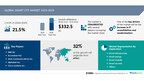
NEW YORK, Jan. 30, 2025 /PRNewswire/ — Report on how AI is driving market transformation – The global smart city market size is estimated to grow by USD 332.5 billion from 2025-2029, according to Technavio. The market is estimated to grow at a CAGR of  21.5%  during the forecast period. Increase in IT consolidation and modernization is driving market growth, with a trend towards proliferation of smart city projects in emerging economies. However, high cost of upgrading smart grids  poses a challenge. Key market players include ABB Ltd, Accenture PLC, Aeris Communications Inc., Alphabet Inc., Cisco Systems Inc., General Electric Co., Hewlett Packard Enterprise Co., Hitachi Ltd., Honeywell International Inc., Huawei Technologies Co. Ltd., International Business Machines Corp., Itron Inc., LG Corp., Microsoft Corp., Oracle Corp., SAP SE, Schneider Electric SE, Semtech Corp., Siemens AG, and Signify NV.

Key insights into market evolution with AI-powered analysis. Explore trends, segmentation, and growth drivers- View Free Sample PDF

Smart City Market Scope

Report Coverage

Details

Base year

2024

Historic period

2019 – 2023

Forecast period

2025-2029

Growth momentum & CAGR

Accelerate at a CAGR of 21.5%

Market growth 2025-2029

USD 332.5 billion

Market structure

Fragmented

YoY growth 2022-2023 (%)

19.4

Regional analysis

Europe, North America, APAC, South America, and Middle East and Africa

Performing market contribution

APAC at 32%

Key countries

US, Germany, UK, France, Canada, China, Spain, Brazil, Japan, and India

Key companies profiled

ABB Ltd, Accenture PLC, Aeris Communications Inc., Alphabet Inc., Cisco Systems Inc., General Electric Co., Hewlett Packard Enterprise Co., Hitachi Ltd., Honeywell International Inc., Huawei Technologies Co. Ltd., International Business Machines Corp., Itron Inc., LG Corp., Microsoft Corp., Oracle Corp., SAP SE, Schneider Electric SE, Semtech Corp., Siemens AG, and Signify NV

Market Driver

Developed economies in North America and Europe have led the way in creating smart cities for over a decade, implementing numerous projects. The Asia-Pacific region is currently the fastest-growing market for smart city technologies. Urbanization, driven by mass migration to cities, is increasing population growth in Asia, necessitating infrastructure development, particularly in emerging countries. India and China are in the planning stages and have initiated pilot smart city projects, such as the Indian government’s plan to implement these projects in 100 cities nationwide. 

Request Sample of our comprehensive report now to stay ahead in the AI-driven market evolution!

Market Challenges

In the smart city market, environmental sustainability is a major challenge. Cities worldwide are investing in smart city technologies to improve resource management and environmental monitoring. Solutions include facial recognition for public safety, surveillance for crime-fighting capabilities, and traffic safety through data-driven policing and emergency response protocols. However, tight budgets and integration complexities can hinder the adoption of cost-effective systems. Smart city initiatives in major functions like Amsterdam and Chengdu are backed by governments. Technologies like video cameras, gunshot detection sensors, and drones are used for public safety, with rapid video analytics and AI access for quick response times. Traffic signal management and congestion-free routes save energy and operational costs. Smart healthcare solutions offer transformative potential in the digital era, with advanced metering solutions and smart grids for energy savings. Business leaders seek innovative business models and cybersecurity for data stewardship and ownership. Existing infrastructure and large-scale investments require networking, software integration, and interoperability for cross-border portability and metrics. Smart city challenges include reducing crime rates, managing urban sources, and improving response times for emergency vehicles. Building owners and facility managers seek cost savings through smart city initiatives, while city managers make decisions based on extensive data. Smart healthcare market growth includes patient care delivery, caregiving, and healthcare organizations using smart metering data and utilities-related information in centralized hubs. Network operators invest in telecommunications infrastructure and cloud edge computing for network slicing and urban management. In the digital era, smart city solutions face challenges like cybersecurity, data ownership, and interoperability. Businesses and governments must navigate these complexities to achieve long-term cost savings and sustainable urban development. Novel technologies like gunshot detection, intelligent surveillance, home security systems, and smart healthcare solutions offer opportunities for improvement in public safety, resource management, and healthcare delivery.The global smart city market growth may be hindered due to the significant expenses required to upgrade smart grids. These upgrades involve additional investments in distribution systems, transmission line replacements, power delivery systems, substation digitalization, and digital controls. Power utilities and independent power producers face substantial initial capital investments as a result. The aging power infrastructure of these utilities and their increasing demand for renewable power grid integration will escalate their grid renovation budgets in the upcoming years. This financial burden stems from utilities’ earlier reluctance to invest in smart grid data management solutions, acting as a barrier to their adoption.

Discover how AI is revolutionizing market trends- Get your access now!

Segment Overview 

This smart city market report extensively covers market segmentation by  

Application 1.1 Smart infrastructure1.2 Smart energy1.3 Smart mobility1.4 Smart security1.5 OthersComponent 2.1 Hardware2.2 Software2.3 ServicesGeography 3.1 Europe3.2 North America3.3 APAC3.4 South America3.5 Middle East and Africa

1.1 Smart infrastructure-  Smart infrastructure refers to the digitalization of energy systems, buildings, and industries to enhance efficiency and sustainability. This includes advanced installations and technology systems in buildings for automating processes like heating, ventilation, lighting, security, and more. Smart infrastructure is built on four principles: data collection, analytics, feedback, and adaptability. Factors such as industrial development, commercialization, and energy optimization are driving the adoption of smart infrastructure. Technology innovation, including IoT, analytics, and cloud computing, is also playing a significant role. Governments worldwide are promoting smart city projects to improve living standards and economic growth. For instance, Japan’s plan for an autonomous, self-sorting cargo highway showcases this trend. These factors will positively impact the growth of the global smart city market.

Download a Sample of our comprehensive report today to discover how AI-driven innovations are reshaping competitive dynamics

Research Analysis

Smart Cities are urban areas that leverage technology to enhance environmental sustainability and resource management. These cities integrate smart city technologies such as environmental monitoring, traffic safety, and public safety solutions to create a livable, efficient, and secure environment for citizens. Environmental monitoring includes the use of sensors for air quality, water management, and waste disposal. Facial recognition and video cameras are used for public safety and surveillance, while gunshot detection sensors enhance crime-fighting capabilities. Data-driven policing and emergency response protocols ensure rapid response times, and AI access enables rapid video analytics. Integration complexities and cost-effective systems are key considerations for large-scale investments in smart city solutions. Cities like Amsterdam and Chengdu have made significant strides in implementing smart city technologies with government backing. Existing infrastructure and urban sources provide opportunities for cost-effective systems, while drones offer new possibilities for urban surveillance and emergency response.

Market Research Overview

In the digital era, Smart City Market is revolutionizing urban living by integrating environmental sustainability into smart city technologies. Resource management and environmental monitoring are major functions, with facial recognition and public safety solutions ensuring a congestion-free and safe environment. Surveillance, traffic safety, data-driven policing, and emergency response protocols are essential crime-fighting capabilities. First responders, call centers, and field operations leverage real-time data and AI access for rapid response. Smart city initiatives in Amsterdam and Chengdu demonstrate government backing, with video camera and gunshot detection sensors, drones, and intelligent surveillance systems. Rapid video analytics and AI enable swift decision-making for city managers, building owners, and facility managers, leading to cost savings and operational efficiency. Existing infrastructure and large-scale investments require networking and software integration, with cost-effective systems offering long-term cost savings. Urban sources, such as vehicle traffic, electrical grids, and commute times, are optimized for smart grid efficiency, reducing energy consumption and operational costs. The transformative potential of smart city solutions extends to healthcare, with smart healthcare solutions enhancing patient care delivery, caregiving, and decision-making through extensive data analysis. Cybersecurity and data stewardship are crucial considerations in this digital age, ensuring data ownership, interoperability, and cross-border portability. Business leaders and innovative business models drive digitalization and connectivity, shaping the modern healthcare landscape with advanced metering solutions and novel technologies. Network operators and telecommunications infrastructure providers enable cloud edge computing and network slicing for urban management. Ultimately, smart city initiatives aim to improve citizens’ lives, ensuring a sustainable urban development that balances environmental sustainability, public safety, and cost savings.

Table of Contents:

1 Executive Summary
2 Market Landscape
3 Market Sizing
4 Historic Market Size
5 Five Forces Analysis
6 Market Segmentation

ApplicationSmart InfrastructureSmart EnergySmart MobilitySmart SecurityOthersComponentHardwareSoftwareServicesGeographyEuropeNorth AmericaAPACSouth AmericaMiddle East And Africa

7 Customer Landscape
8 Geographic Landscape
9 Drivers, Challenges, and Trends
10 Company Landscape
11 Company Analysis
12 Appendix

About Technavio

Technavio is a leading global technology research and advisory company. Their research and analysis focuses on emerging market trends and provides actionable insights to help businesses identify market opportunities and develop effective strategies to optimize their market positions.

With over 500 specialized analysts, Technavio’s report library consists of more than 17,000 reports and counting, covering 800 technologies, spanning across 50 countries. Their client base consists of enterprises of all sizes, including more than 100 Fortune 500 companies. This growing client base relies on Technavio’s comprehensive coverage, extensive research, and actionable market insights to identify opportunities in existing and potential markets and assess their competitive positions within changing market scenarios.

Contacts

Technavio Research
Jesse Maida
Media & Marketing Executive
US: +1 844 364 1100
UK: +44 203 893 3200
Email: media@technavio.com
Website: www.technavio.com/

View original content to download multimedia:https://www.prnewswire.com/news-releases/smart-city-market-to-grow-by-usd-332-5-billion-from-2025-2029–driven-by-it-consolidation-and-modernization-ais-impact-on-market-evolution—technavio-302362909.html

SOURCE Technavio

Continue Reading

Technology

Trive Capital Announces Sale of EarthLink

Published

on

By

DALLAS, Oct. 20, 2026 /PRNewswire/ — Trive Capital (“Trive”) is pleased to announce that it has closed on the sale of EarthLink, LLC (“EarthLink” or the “Company”) to a family office consortium consisting of WaveDivision Capital (“Wave”), The Pritzker Organization (“TPO”) and Stephens Capital Partners (“SCP”), in partnership with EarthLink’s management team. Headquartered in Atlanta, Georgia, EarthLink is one of the largest internet service providers in the United States, serving over 500,000 internet and managed services customers nationwide. Through partnerships with several of the nation’s largest fiber and 5G providers, EarthLink has built an asset-light, nationwide network that can offer fiber internet service to more than 68 million homes.

Since Trive’s investment in EarthLink in 2018 as part of a corporate carveout, the Company has transformed from a legacy DSL and email business in precipitous decline to an asset-light connectivity platform serving over 500,000 consumers and small businesses nationwide. The Company has grown and will continue to grow based on its expanded fiber and 5G internet solutions and commitment to customer service for consumers and small businesses.

Shravan Thadani, Partner at Trive, stated, “EarthLink has been a true partnership between management and Trive in every sense of the word. The team built a differentiated, asset-light platform that gives consumers and small businesses real choice in how they get connected, and did so while standing up every function of the platform outside of its former, public parent. We are proud to have been a part of such an iconic brand’s journey and will continue to support Wave, TPO and SCP as they work with management to accelerate growth in the coming years.”

“During our partnership with Trive, we have taken one of the most trusted brands in the internet space and turned it into a trusted option for consumers and small businesses nationwide,” commented Glenn Goad, Chief Executive Officer of EarthLink. “As internet access has become one of the most important utilities in a consumer’s life, EarthLink has a renewed focus on making it easier for our customers to access the best internet options at affordable prices. Trive was critically important through and after the carve-out, and we are excited to partner with Wave, TPO and SCP to continue to grow EarthLink alongside our trusted fiber and 5G partners. Our collective goal remains the same: to provide the right technology at the right price, supported by a world-class customer experience.”

About EarthLink

EarthLink is an internet service provider offering fiber and 5G internet solutions for homes and businesses nationwide. With a focus on dependable connectivity, flexible plans, and customer-focused service, EarthLink provides broadband options designed to meet the needs of modern households and businesses. EarthLink is headquartered in Atlanta, Georgia and serves over 500,000 customers. To learn more, visit earthlink.net.

About Trive Capital

Trive Capital is a Dallas, Texas based private equity firm with more than $8 billion of regulatory assets under management. Trive focuses on investing equity and debt in what it sees as strategically viable middle-market companies with the potential for transformational upside through operational improvement.

The Trive team is comprised of seasoned investment professionals who have been involved in over 250 middle-market transactions representing in excess of $10 billion in revenue across Trive’s targeted industry sectors and situations.

View original content to download multimedia:https://www.prnewswire.com/news-releases/trive-capital-announces-sale-of-earthlink-302914673.html

SOURCE Trive Capital

Continue Reading

Technology

Rondo Energy and Rio Tinto Advance Australia’s Largest Thermal Energy Storage Project

Published

on

By

GLADSTONE, Australia, Oct. 20, 2026 /PRNewswire/ — Rondo Energy and Rio Tinto have started front-end engineering and design on the project for a 360 MWh storage / 30 MW discharge Rondo Heat Battery, supported by a grant from the Australian Renewable Energy Agency (ARENA).

ARENA’s funding for the project will be provided in stages, with an initial $3.6 million to complete front-end engineering and design work. Following successful completion of that study, ARENA will provide up to $38 million for deployment. ARENA has also approved up to $33.3 million in conditional contingency support, which would only be made available in defined circumstances to manage specific project risks, including cost overruns and electricity costs. 

If progressed, the project would be delivered at Rio Tinto’s Yarwun alumina refinery near Gladstone, Queensland and would be one of the first large-scale demonstrations of thermal energy storage for industrial process heat globally, and a world-first for the alumina industry.

Rondo Heat Batteries use abundant, low-cost midday electricity to charge, storing energy as high-temperature heat in refractory brick, and supplying energy as 24/7 continuous process heat to industry. Typically, the heat is delivered as steam, directly into an industrial facility’s steam network. Australia regularly has 4-6 hours of surplus solar-generated renewable electricity in the middle of the day, but industrial facilities need heat 24 hours a day, not just when the sun is shining. By charging when electricity is cheap and abundant and discharging continuously, Rondo Heat Batteries turn short periods of low-cost electricity into 24/7 delivery of low-cost steam. 

For energy-intensive industries such as alumina refining, Rondo Heat Batteries create a pathway to electrification that addresses both emissions and energy costs. Because the heat battery slots into the existing steam network, the facility’s processes run exactly as before — the only thing that changes is the energy for that heat: no longer from fossil fuels, but sourced from low cost electricity instead. The Yarwun study will assess the technical and economic viability of integrating the technology into refinery operations.

“This project shows how Australia’s abundant energy can become a competitive advantage for industry,” said Dr. Kira Rundel, Rondo’s Head of Australia. “Heat batteries allow manufacturers to use low-cost electricity to produce the reliable, round-the-clock heat their operations need. Australia’s largest heat battery will show how factories can cut emissions without increasing energy costs, helping Australian industry to increase global competitiveness and supporting local manufacturing jobs.”

Rio Tinto Pacific Operations Managing Director Armando Torres said: “Reducing emissions from alumina refining is complex, particularly when it comes to generating the high-pressure steam needed for our operations.

“This study will help us determine whether thermal energy storage can provide a technically and economically viable alternative to fossil fuels for part of Yarwun’s steam requirements.

“The best way to tackle challenges of this scale is through collaboration between industry, government, and technology partners. We welcome ARENA and Rondo’s support as we assess technologies that could help reduce our Scope 1 emissions while maintaining reliable operations at Yarwun.”

About Rondo Energy

Rondo Energy delivers firm heat and power, including combined heat and power (CHP), to heavy industry and provides power solutions and long duration storage to data centers. For industrial heat applications, Rondo Heat Batteries convert 4-6 hours of low-cost electricity into continuous 24-hour, high-temperature heat, delivered as steam or hot air up to 1,000°C. The heat delivered integrates directly with existing industrial equipment and processes, eliminating on-site emissions and running on lower cost energy. Rondo heat storage can integrate with steam turbines to deliver combined heat and power (CHP) for industry, and long duration power-to-power solutions for large energy consumers such as data centers. Built on proven refractory brick as the thermal storage medium, Rondo’s platform is engineered for multi-decade operation in the most demanding industrial environments.

Rondo Heat Batteries have been delivering firm heat and power at scale since 2023, with operational facilities serving customers in fuels and cement (including steam driving turbines for electricity) in the United States and in Asia. The next unit will come online shortly – a 100 MWh Rondo Heat Battery under construction in Europe for a chemical plant. Rondo is a global company based in California, with teams across North America, Europe, the Middle East, and Australia. Providing heat and power solutions to the alumina industry is an area of focus for the company due to the strong fit of Rondo’s technology with the heat and power needs of the alumina industry.

View original content to download multimedia:https://www.prnewswire.com/news-releases/rondo-energy-and-rio-tinto-advance-australias-largest-thermal-energy-storage-project-302914664.html

SOURCE Rondo Energy

Continue Reading

Technology

14 Organizations Earn CHIME’s Highest Digital Health Most Wired Designation for 2026

Published

on

By

ANN ARBOR, Mich., Oct. 20, 2026 /PRNewswire/ — The College of Healthcare Information Management Executives (CHIME), the leading professional organization for digital health leaders, today announced 14 organizations have achieved Level 10 in the 2026 CHIME Digital Health Most Wired (DHMW) survey. Powered by Digital Health Analytics (DHA), the survey is CHIME’s global assessment of digital health excellence, with Level 10 as its highest designation.

Representing health systems across the U.S., this year’s Level 10 organizations demonstrated exceptional performance across the enterprise digital ecosystem, leveraging technologies, data, infrastructure, and strategic practices shaping modern care delivery. The prestigious designation recognizes organizations that have moved beyond technology implementation to integrate digital investment across clinical and operational environments, producing measurable value for their health systems, patients, and providers.

The 2026 DHMW survey maintains a rigorous scoring methodology designed to account for differences in organizational size, complexity, risk, and resources, creating an equitable measure of performance across diverse healthcare environments. The model evaluates organizations across 10 distinct segments, measuring both the foundational elements required for digital maturity and the advanced practices that demonstrate broader adoption, integration, and value.

“Healthcare is experiencing extraordinary technological acceleration, driven in large part by the rapid adoption of AI and increasingly sophisticated digital capabilities,” said Russ Branzell, President and CEO of CHIME. “As that pace intensifies, the Digital Health Most Wired Survey continues to provide a rigorous benchmark for evaluating whether technology is translating into meaningful progress. It gives leaders a data-driven view of performance, critical gaps, and opportunities for high-impact investment while setting an industry standard of excellence for responsible technology adoption. The Level 10 organizations recognized this year exemplify the leadership and innovation required to turn digital investment into measurable improvements in care delivery.”

The 2026 Digital Health Most Wired survey includes data from more than 45,000 facilities worldwide, offering a global view of technology adoption, investment and performance across healthcare organizations and the evolving role of digital health in care delivery, operations and the patient and provider experience.

Each participating organization received a customized benchmarking report through the Digital Health Analytics (DHA) portal, offering detailed insights into performance metrics across 10 key segments:

InfrastructureSecurityAdministrationSupply chainAnalytics and data managementInteroperabilityPopulation healthPatient engagementInnovationClinical quality and safety

Fourteen healthcare organizations achieved Level 10 distinction, the highest designation awarded through the 2026 CHIME Digital Health Most Wired survey. The recipients are Baptist Health System (Jacksonville, Florida); Bon Secours Mercy Health (Ohio); MetroHealth Medical Center (Ohio); MultiCare Health System (Washington); Northeast Georgia Health System (Georgia); NYU Langone Health (New York); Parkview Health (Indiana); Roper St. Francis Healthcare Services, Inc. (South Carolina); Stanford Health Care (California); UCHealth (Colorado); UNC Health (North Carolina); University Health (Texas); University of Utah Health (Utah); and UPMC (Pennsylvania).

Collectively, the 2026 Level 10 designees reflect a healthcare environment in which digital performance increasingly depends on the alignment of technology strategy, data, infrastructure, and organizational priorities with strong leadership and a sustained commitment to innovation. Their results demonstrate how leading health systems are converting digital investment into measurable gains across clinical and operational environments while establishing the foundations required to responsibly adopt emerging technologies at scale.

CHIME will formally recognize these distinguished Level 10 honorees on November 12, 2026, during the CHIME26 Fall Forum in Denver, CO, which runs from November 11-14.

For additional details on the 2026 Digital Health Most Wired survey and the complete list of all Level 7-10 award recipients, visit dhanalytics.org.

About CHIME 
The College of Healthcare Information Management Executives (CHIME) is the leading professional organization for digital health executives and leaders. CHIME provides a trusted, collaborative environment where members and partners connect, share best practices, advance professional development, and advocate for the effective use of information and technology to improve health and care in the communities they serve. For more information, please visit chimecentral.org.

About Digital Health Analytics (DHA)
Digital Health Analytics provides healthcare organizations, technology companies, and academic researchers with the data, benchmarking, and market intelligence they need to lead digital transformation — 365 days a year. Powered by the College of Healthcare Information Management Executives (CHIME), DHA helps provider organizations supercharge their digital health transformation capabilities. For more information about DHA, visit dhanalytics.org.

For media inquiries, please contact:

Calli Dretke
Executive Vice President & Chief Digital and Marketing Officer
CHIME
734.665.0000
cdretke@chimecentral.org

View original content to download multimedia:https://www.prnewswire.com/news-releases/14-organizations-earn-chimes-highest-digital-health-most-wired-designation-for-2026-302914691.html

SOURCE College of Healthcare Information Management Executives (CHIME)

Continue Reading

Trending