Connect with us

Technology

WebRTC Market to Grow by USD 247.7 Billion (2025-2029), Rising Demand for Easy-to-Use RTC Solutions Boosting Growth, Report on AI’s Impact – Technavio

Published

on

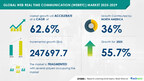
NEW YORK, Jan. 31, 2025 /PRNewswire/ — Report on how AI is redefining market landscape – The global web real time communication (webrtc) market size is estimated to grow by USD 247.7 billion from 2025-2029, according to Technavio. The market is estimated to grow at a CAGR of almost 62.6%  during the forecast period. Rising demand for easy-to-use RTC solutions is driving market growth, with a trend towards combination of webrtc and iot sensors. However, lack of high-end video conferencing features  poses a challenge. Key market players include ALE International, Anthology Inc., Apple Inc., AT and T Inc., Avaya LLC, CafeX Communications Inc., Cisco Systems Inc., Enghouse Systems Ltd., Google LLC, Hewlett Packard Enterprise Co., International Business Machines Corp., Microsoft Corp., Mitel Networks Corp., Oracle Corp., Plivo Inc., Quobis Networks SLU, Ribbon Communications Inc., SANGOMA TECHNOLOGIES CORP., Twilio Inc., and Vonage Holdings Corp..

Key insights into market evolution with AI-powered analysis. Explore trends, segmentation, and growth drivers- View Free Sample PDF

Web Real Time Communication (WebRTC) Market Scope

Report Coverage

Details

Base year

2024

Historic period

2019 – 2023

Forecast period

2025-2029

Growth momentum & CAGR

Accelerate at a CAGR of 62.6%

Market growth 2025-2029

USD 247697.7 million

Market structure

Fragmented

YoY growth 2022-2023 (%)

55.7

Regional analysis

North America, Europe, APAC, South America, and Middle East and Africa

Performing market contribution

North America at 36%

Key countries

US, UK, India, Canada, Germany, France, China, Japan, Brazil, and Italy

Key companies profiled

ALE International, Anthology Inc., Apple Inc., AT and T Inc., Avaya LLC, CafeX Communications Inc., Cisco Systems Inc., Enghouse Systems Ltd., Google LLC, Hewlett Packard Enterprise Co., International Business Machines Corp., Microsoft Corp., Mitel Networks Corp., Oracle Corp., Plivo Inc., Quobis Networks SLU, Ribbon Communications Inc., SANGOMA TECHNOLOGIES CORP., Twilio Inc., and Vonage Holdings Corp.

Market Driver

The Web Real Time Communication (WebRTC) market is booming, particularly among Small and Medium Businesses (SMBs) seeking affordable, real-time communication solutions. Traditional, expensive proprietary systems are being replaced by cloud-based WebRTC platforms, enabling voice and video calling through tablets and mobile browsers. Polycom Voice and Voice over LTE (VoLTE) are popular choices, offering HD Voice and Wi-Fi Calling. Contact centers are also adopting WebRTC for improved customer engagement and business interactions. SIP Interconnect enables seamless integration with legacy systems. Tech giants and telecom companies are making strategic investments in this scalable infrastructure, providing prebuilt functionality and customization choices. Augmented Reality, Virtual Reality, and Artificial Intelligence upgrades offer enhanced capabilities, including recording, transcription, and AI-powered upgrades. Early adoption of this technology by software vendors, system integrators, and telecommunications providers is driving innovation in the WebRTC industry, transforming business communication channels and enhancing digital connectivity. 

Web Real Time Communication (WebRTC) market offers businesses advanced solutions beyond video and audio chats between browsers. IoT and sensors play a crucial role in WebRTC applications, enhancing video or audio data. Sensors, such as remote cameras or microphones, provide real-time data. Motion detectors trigger cameras for pictures or live viewing/recording. Temperature sensors use WebRTC’s peer-to-peer data channels for sending alerts over the web. These applications extend to home security, offering businesses innovative and efficient communication and data exchange solutions. 

Request Sample of our comprehensive report now to stay ahead in the AI-driven market evolution!

Market Challenges

The Web Real Time Communication (WebRTC) market is experiencing significant growth as SMBs seek affordable, real-time voice and video calling solutions. However, high costs associated with expensive proprietary systems and data centers pose challenges. Polycom Voice and other voice calling solutions, as well as video calling through tablets and mobile browsers, are popular alternatives. Large enterprises also leverage WebRTC for Voice over LTE, HD Voice, Wi-Fi Calling, and SIP Interconnect. Contact centers are moving towards cloud-based solutions for better customer engagement and business interactions. WebRTC’s real-time video capabilities offer advantages over social media chat and voicemail as a communication channel. Tech giants and telecom companies are making strategic investments in the WebRTC industry, offering prebuilt functionality and customization choices. Scalability is crucial for SMEs, making cloud-based platforms an attractive option. Challenges include network congestion, bandwidth requirements, and hardware compatibility. Early adoption of WebRTC requires cooperation between telecommunications providers, software vendors, and system integrators. Augmented Reality, Virtual Reality, and Artificial Intelligence upgrades offer exciting possibilities for the future of WebRTC. Recording and transcription, along with AI-powered upgrades, enhance scalability and internal communication.Web Real Time Communication (WebRTC) technology allows users to engage in real-time communication through open-source projects. However, the technology is still in its early stages and lacks advanced video conferencing features, such as access to multiple devices and networks. With the increasing number of internet-connected devices, WebRTC faces CPU overload issues as it decodes, encodes, and transmits video and audio simultaneously. The quality of video, audio, and file sizes also contribute to screen size issues. In mobile devices, the CPU strain from numerous applications can lead to battery drain. Despite these challenges, WebRTC offers significant potential for businesses seeking real-time communication solutions.

Discover how AI is revolutionizing market trends- Get your access now!

Segment Overview 

This web real time communication (webrtc) market report extensively covers market segmentation by

Application 1.1 Video1.2 Voice1.3 Data sharingPlatform 2.1 Mobile2.2 Browser2.3 UCGeography 3.1 North America3.2 Europe3.3 APAC3.4 South America3.5 Middle East and Africa

1.1 Video-  Web Real Time Communication (WebRTC) is a technology that enables high-definition video conferencing through web browsers without the need for additional software or plugins. This technology uses HTML APIs such as getUserMedia, RTCPeerConnection, and RTCDataChannel to capture video and audio information and establish peer-to-peer communication. WebRTC video conferencing offers superior quality with high frame rates and resolution limits, making it an affordable and secure alternative to other video conferencing solutions. The technology uses the Datagram Transport Layer Security (DTLS) protocol for encrypted data transmission. With over 8 billion devices expected to support WebRTC by 2025, the market for this technology is poised for significant growth. Currently, over 3 billion Chrome browsers support WebRTC, which features over 1.5 billion WebRTC audio/video minutes per week. Key users include Snapchat for video calling. WebRTC is primarily used for video conferencing and will continue to be a crucial communication tool in the future.

Download a Sample of our comprehensive report today to discover how AI-driven innovations are reshaping competitive dynamics

Research Analysis

The Web Real Time Communication (WebRTC) market is revolutionizing the way SMBs (Small and Medium-sized Businesses) engage with their customers and colleagues. Traditional, expensive proprietary communication systems are being replaced by this innovative technology. Established organizations are leveraging WebRTC for voice calling, video calling, and chat, enabling seamless business interactions. Voice over LTE, HD Voice, and Wi-Fi Calling are becoming commonplace, enhancing the communication experience. Contact centers are benefiting from WebRTC, providing a more personalized and efficient customer engagement channel. The WhatsApp API and other messaging platforms are integrating WebRTC, further expanding its reach. WebRTC is transforming the way SMBs communicate, making business interactions more effective and efficient.

Market Research Overview

The Web Real Time Communication (WebRTC) market is experiencing significant growth as more Small and Medium-sized Businesses (SMBs) adopt this technology for real-time voice and video calling. The shift from expensive proprietary systems to cloud-based solutions is driving demand for WebRTC in data centers, contact centers, and other business environments. With the rise of Voice over LTE, HD Voice, Wi-Fi Calling, and SIP Interconnect, WebRTC is becoming a preferred communication channel for enterprises. WebRTC is accessible through mobile browsers and tablets, making it ideal for businesses seeking scalable infrastructure and customer engagement. The WhatsApp API and Call Link are popular platforms for customer issues resolution, while chat, voicemail, and other features enhance business interactions. The WebRTC industry is also exploring new frontiers such as Augmented Reality, Virtual Reality, and Artificial Intelligence-powered upgrades for enhanced customer experiences. However, challenges such as network congestion, bandwidth, and hardware requirements remain. Strategic investments by tech giants and telecom companies in WebRTC technology are expected to address these challenges and drive further growth in the WebRTC market.

Table of Contents:

1 Executive Summary
2 Market Landscape
3 Market Sizing
4 Historic Market Size
5 Five Forces Analysis
6 Market Segmentation

ApplicationVideoVoiceData SharingPlatformMobileBrowserUCGeographyNorth AmericaEuropeAPACSouth AmericaMiddle East And Africa

7 Customer Landscape
8 Geographic Landscape
9 Drivers, Challenges, and Trends
10 Company Landscape
11 Company Analysis
12 Appendix

About Technavio

Technavio is a leading global technology research and advisory company. Their research and analysis focuses on emerging market trends and provides actionable insights to help businesses identify market opportunities and develop effective strategies to optimize their market positions.

With over 500 specialized analysts, Technavio’s report library consists of more than 17,000 reports and counting, covering 800 technologies, spanning across 50 countries. Their client base consists of enterprises of all sizes, including more than 100 Fortune 500 companies. This growing client base relies on Technavio’s comprehensive coverage, extensive research, and actionable market insights to identify opportunities in existing and potential markets and assess their competitive positions within changing market scenarios.

Contacts

Technavio Research
Jesse Maida
Media & Marketing Executive
US: +1 844 364 1100
UK: +44 203 893 3200
Email: media@technavio.com
Website: www.technavio.com/

View original content to download multimedia:https://www.prnewswire.com/news-releases/webrtc-market-to-grow-by-usd-247-7-billion-2025-2029-rising-demand-for-easy-to-use-rtc-solutions-boosting-growth-report-on-ais-impact—technavio-302365252.html

SOURCE Technavio

Continue Reading
Click to comment

Leave a Reply

Your email address will not be published. Required fields are marked *

Technology

Black Lake Technologies Shortlisted as SAIL Award TOP30 Finalist and Selected as Global Industrial AI Flagship Case, Showcasing Latest Industrial Agent at WAIC 2026

Published

on

By

SHANGHAI, July 18, 2026 /PRNewswire/ — The 2026 World Artificial Intelligence Conference (WAIC) opened in Shanghai on July 17. Shanghai Blacklake Technologies Co., Ltd. (“Black Lake”), an industrial AI company, is showcasing a portfolio of industrial AI agents at the conference. The company has also been named to the Top 30 shortlist for the 2026 WAIC Super AI Leader (SAIL) Award and selected as a Trusted Partner under the Global Call for Trusted Partners for Industrial AI in the Global South.

The accreditations highlight Black Lake’s latest progress in bringing AI into critical manufacturing decision-making workflows and deploying industrial AI capabilities on the shop floor around the world.

This year’s conference attracted over 1,100 exhibiting companies and showcased more than 3,000 exhibits, setting a new record for exhibition scale. The conference delivered a clear signal: as artificial intelligence becomes a common priority across global industries, attention is moving beyond model capabilities toward practical applications in real-world operating environments.

Manufacturing provides a particularly demanding test for this transition. Factory operations are governed by multiple constraints, including process specifications, equipment capabilities, material availability, production capacity, delivery schedules and quality requirements. Therefore, AI has to do so much more than simply comprehend information input. It must make reliable judgments within clearly defined business rules and operational constraints.

Black Lake has focused on industrial digitalization and industrial AI for years, developing and deploying AI applications in a range of factory environments.

At WAIC 2026, the company is presenting industrial AI agents covering order splitting and process planning, quotation and pricing, procurement, production scheduling, quality inspection, and order tracking. These applications are designed to move AI beyond an auxiliary role and into critical manufacturing decision-making workflows.

Traditional industrial software is primarily responsible for data recording, digital workflows, and worker coordination. However, critical decisions such as how to split an order, determine pricing, schedule production, and assess quality risks still depend heavily on the experience of engineers and frontline workers.

Industrial AI agents are intended to convert fragmented industrial knowledge and production experience into decision-making capabilities that can be invoked, reused and continuously refined by software systems.

Order decomposition and process planning are representative examples. After receiving an engineering drawing, a factory typically relies on experienced engineers to identify components, materials and dimensions, define the required manufacturing processes and technical specifications, and establish a basis for subsequent quotation and quality inspection.

The process is highly dependent on individual expertise and represents one of the first critical decision points after an order is received.

Black Lake Technologies’ CAD-to-Process Agent can understand product drawings and, taking into account the factory’s equipment capabilities, process requirements, and production practices, rapidly generate process steps along with the corresponding technical requirements. Drawing analysis that once took hours can now be completed in approximately one minute, achieving an accuracy rate of over 95% in real deployment and providing engineers with stable, efficient decision support. Currently, the industrial agents developed by the company cover core processes including design, scheduling, production, and quality inspection, and have entered the stage of large-scale deployment.

Founded in 2016, Black Lake serves nearly 40,000 factories worldwide. Its customers span more than 30 industries, including food and beverage, automotive components and equipment manufacturing.

By working across factory order management, production and fulfillment workflows, Black Lake has accumulated the technical capabilities and industry knowledge required to support decision-making in complex industrial environments.

In April 2026, Black Lake completed a Series D funding round of nearly RMB 1 billion. The company said the proceeds would primarily be used to accelerate the deployment of its industrial AI products and support its international expansion.

AI-related products are becoming a new source of growth for the company. In a recent interview, Black Lake founder and CEO Zhou Yuxiang said that the company had recorded significant growth in AI-related revenue since the beginning of 2026. He also said that manufacturing customers were taking less time to make purchasing decisions for industrial AI agents.

Zhou expects AI adoption among Chinese factories to increase substantially over the next three to four years.

Unlike consumer-facing AI, which is primarily associated with content generation and personal productivity, industrial AI agents can directly affect production costs, capacity utilization, delivery performance, and product quality. Their commercial value therefore depends largely on whether they can perform specific tasks reliably in complex production environments.

During WAIC 2026, Black Lake was named to the Top 30 shortlist for the 2026 Super AI Leader (SAIL) Award. The SAIL Award is one of WAIC’s major awards and recognizes achievements in technological breakthroughs, application innovation, and industrial value.

Black Lake was also selected as a Trusted Partner under UNIDO’s Global Call for Trusted Partners for Industrial AI in the Global South.

The Global Call was launched under the guidance of the United Nations Industrial Development Organization (UNIDO), in partnership with the Shanghai Artificial Intelligence Research Institute, and in connection with the work of UNIDO AIM Global and its Shanghai-based Centre of Excellence.

The initiative aims to build a curated pool of leading partners to co-develop scalable industrial AI solutions and public goods for the Global South.

For Black Lake, the two accreditations underscore the growing importance of reliability, explainability, and scalability in the evaluation of industrial AI, in addition to the capabilities of AI models.

Global expansion will be a major priority in the company’s next phase of development. Black Lake is currently focusing on Southeast Asia, Latin America and Eastern Europe, adapting its industrial AI agents to the industrial structures, production processes and management requirements of different markets.

Although manufacturing operations vary across countries and regions, manufacturers share similar concerns about efficiency, quality, delivery reliability and production flexibility.

Black Lake is transforming industrial AI capabilities that have been validated in complex factory environments into configurable and deployable products. Through these products, the company aims to work with manufacturers worldwide to explore more efficient, flexible and intelligent approaches to production.

View original content:https://www.prnewswire.com/apac/news-releases/black-lake-technologies-shortlisted-as-sail-award-top30-finalist-and-selected-as-global-industrial-ai-flagship-case-showcasing-latest-industrial-agent-at-waic-2026-302828984.html

SOURCE Black Lake

Continue Reading

Technology

76% of Coupon Codes Work at Checkout, but Most Failures Trace Back to Terms Shoppers Never Read, CouponDopa Study Finds

Published

on

By

Study Finds 76% of Coupon Codes Work at Checkout

NEW YORK, July 18, 2026 /PRNewswire-PRWeb/ — Multi-country research across 11 regions finds that most coupon code failures were not due to expired codes, but to terms and conditions shoppers did not check before checkout.

Our research shows that most coupon code failures are caused by overlooked terms and conditions not expired codes. Understanding the offer requirements can significantly improve checkout success.” — Anderson Joe, CMO, CouponDopa

A new study testing 1,000 coupon codes across 11 countries found that three in four online discount codes applied successfully at checkout, while the remaining failures were tied more often to unmet terms than to expired or invalid codes.

The research was conducted by CouponDopa, a multi-regional coupon platform operating in 11 countries. Codes were tested across multiple retail categories in July 2026 to measure real checkout success rates.

KEY FINDINGS

Overall success rate: 76%. Overall failure rate: 24%. Highest-performing country: Netherlands, 81%. Lowest-performing countries: Poland and Italy, tied at 70%. Highest-performing category: Electronics. Lowest-performing category: Travel. Desktop success rate: 78%. Mobile success rate: 74%.

The study’s most significant finding was not the failure rate itself, but the reasons behind it.

“The assumption most shoppers make is that a coupon code doesn’t work because it’s expired,” said Anderson Joe, CMO at CouponDopa. “Our testing found that expiry was rarely the primary issue. In most failed attempts, the code was still active, but the shopper’s cart did not meet a listed condition, such as a minimum spend or a region restriction.”

WHY COUPON CODES ACTUALLY FAIL

Minimum spend not met: the most common reason for failure across all 11 regions, since many codes require a basket value above a set threshold.Region-specific restrictions: codes valid in one country frequently failed in another.Unread terms and conditions: codes were applied to excluded categories, sale items, or specific product ranges without checking eligibility first.Delivery and shipping thresholds: free shipping codes requiring a minimum order value were sometimes mistaken for blanket offers.

No exact percentage breakdown of failure causes is available. Minimum spend is confirmed as the single most common cause; the other three were not ranked against each other.

“In our view, a code that fails because of an unmet minimum spend is not necessarily a broken code,” said Anderson. “It may simply be a condition the shopper did not see before checkout.”

REGIONAL FINDINGS — NETHERLANDS LEADS

Country Success Rate

Netherlands 81%

Germany 79%

United States 77%

Canada 77%

United Kingdom 76%

Australia 75%

New Zealand 74%

France 73%

Spain 72%

Poland 70%

Italy 70%

Netherlands recorded the highest success rate of the 11 regions tested. Germany followed closely. The United Kingdom matched the overall study average, and Canada and the United States recorded the same rate. Poland and Italy recorded the lowest rates in the study, tied at 70%.

ELECTRONICS OUTPERFORMS TRAVEL

Electronics recorded the highest coupon code success rate of any category tested, at 80%, while travel recorded the lowest, at 69%.

“Electronics codes in our sample tended to carry fewer conditions,” noted Anderson Joe. “Travel codes more often included conditions tied to dates, destinations, or booking windows, which may explain the difference.”

MOBILE SHOPPERS RECORD LOWER SUCCESS RATES

Desktop checkouts recorded a 78% success rate compared with 74% for mobile, a 4-point gap. Researchers said the difference may relate to how terms are displayed on smaller screens, though this was not directly tested.

“We saw a consistent gap between desktop and mobile across our markets,” said Anderson Joe. “We can’t say precisely why from this data alone, but it’s a pattern worth further study.”

ABOUT THE STUDY

CouponDopa tested 1,000 coupon codes across 11 countries during July 2026, across electronics, fashion, food delivery, travel, beauty, and home categories. Codes were manually tested at real checkouts on desktop and mobile. A code counted as successful only when the discount appeared in the checkout total. Failed codes were categorized by reason. Read the complete methodology available at CouponDopa tested 1000 coupon codes in 11 regions.

ABOUT COUPONDOPA

CouponDopa is a multi-regional coupon and discount platform operating across 11 countries. CouponDopa verifies coupon codes across hundreds of brands before publishing, providing shoppers with discount information across major retail categories, including verified codes available on CouponDopa’s store pages.

MEDIA CONTACT

Organization: Coupondopa

Contact Person Name: Anderson Joe

Website: https://www.coupondopa.com/

Email: info@coupondopa.com

Contact Number: +1 (530) 269-6377

Address: 165 ithaca Bayshore NY, 11706 USA

City: Bay Shore

State: NY

Country: United States

Media Contact

Anderson Joe, Coupondopa, 1 631 404-9968, coupondopa@gmail.com, https://www.coupondopa.com/

View original content:https://www.prweb.com/releases/76-of-coupon-codes-work-at-checkout-but-most-failures-trace-back-to-terms-shoppers-never-read-coupondopa-study-finds-302828186.html

SOURCE CouponDopa

Continue Reading

Technology

Global Times: Head-of-state diplomacy shines at WAIC, fostering ties and advancing global governance consensus

Published

on

By

BEIJING, July 17, 2026 /PRNewswire/ — Chinese President Xi Jinping on Friday held a series of high-level meetings on the sidelines of the 2026 World Artificial Intelligence Conference (WAIC) and High-Level Meeting on Global AI Governance in Shanghai, sitting down successively with Thai Prime Minister Anutin Charnvirakul, Cambodian Prime Minister Hun Manet, and UN Secretary-General António Guterres. The bustling diplomatic activity transformed the WAIC from a premier showcase of AI technologies and industrial breakthroughs into a vibrant platform for head-of-state diplomacy and global governance coordination.

Analysts said hosting intensive head-of-state diplomatic events in Shanghai, a core hub of reform, opening-up and technological innovation, carries profound meaning. In addition, Friday’s high-level meetings embody the innovative model of “technology builds the stage while diplomacy takes the leading role.” It not only deepens China’s bilateral relations with ASEAN members, but also helps advance inclusive global AI governance centered on the UN mechanism.

Strategic guidance

According to the two separate official releases by Xinhua, during his meetings with the prime ministers of Thailand and Cambodia, President Xi spoke of the long-standing friendship China shares with both nations. He called on China and Thailand, as well as China and Cambodia, to join hands to advance the development of their respective communities with a shared future.

Furthermore, the Chinese leader stressed the need for China to expand pragmatic cooperation with Thailand and Cambodia respectively across traditional and emerging sectors, and work with each country to jointly crack down on cross-border crimes such as online gambling and telecom fraud, according to Xinhua.

He called for the proper handling of border frictions between Thailand and Cambodia and called on the two sides to resolve disputes through dialogue and consultation, with China standing ready to continue playing a constructive role in this regard, per Xinhua.

During their respective meetings with the Chinese leader, the prime ministers of Thailand and Cambodia both expressed willingness to deepen multi-field cooperation with China and spoke highly of China’s positive efforts to facilitate the peaceful settlement of the Thailand-Cambodia border conflicts.

Xu Liping, Director of the Center for Southeast Asian Studies at the Chinese Academy of Social Sciences, told the Global Times that head-of-state diplomacy has charted the fundamental course for the advancement of China’s ties with both Cambodia and Thailand.

WAIC exemplifies the innovative model of “technology builds the platform, while diplomacy takes the leading role,” said Xu, “In addition, AI cooperation is also expected to serve as a vital entry point to further deepen and substantiate China’s ties with Thailand and Cambodia going forward.”

Furthermore, addressing the sensitive and thorny Thailand-Cambodia border dispute amid the relatively relaxed atmosphere of a tech summit enables all relevant parties to handle differences in a rational and pragmatic manner, which embodies Eastern wisdom and an Asian approach to resolving issues, said Xu.

The year 2026 marks the fifth anniversary of the establishment of the China-ASEAN comprehensive strategic partnership, witnessing the official rollout of the new Plan of Action on the China-ASEAN Comprehensive Strategic Partnership (2026-2030). It also kicks off the implementation of China’s 15th Five-Year Plan.

The critical juncture offers a perfect window to align China’s development plans closely with the national development strategies of Global South countries and ASEAN members, said Xu. “Thailand and Cambodia’s willingness to ramp up cooperation with China mirrors the aspiration of the majority of ASEAN members to leverage China’s development dividends and pursue win-win outcomes and common prosperity in the region.”

Firm support for UN

In his meeting with UN Secretary-General Antonio Guterres on Friday, Xi reiterated China’s firm support for the UN.

Noting that this year marks the 55th anniversary of the restoration of the lawful seat of the People’s Republic of China at the UN, the Chinese leader said China has since been committed to building world peace, contributing to global development, defending international order, and firmly supporting the UN, Xinhua reported.

Xi added that he proposed the vision of building a community with a shared future for humanity and the four global initiatives with one important consideration in mind – to uphold the status and authority of the UN.

Currently, the international landscape is marked by more pronounced changes and turbulence, making it all the more necessary to practice true multilateralism and reinvigorate the status and role of the UN, he said.

Guterres commended China for its steadfast support for multilateralism, the cause of the UN, and international cooperation, saying that China has set an example for the world.

Guterres said the UN will continue to strengthen cooperation with China, oppose unilateralism, protectionism, and hegemonic bullying, safeguard the UN Charter and international law, as well as advance the process toward a multipolar world.

At this pivotal juncture where talks on AI development and UN multilateral governance converge, China, leveraging head-of-state diplomacy as a top-tier platform, has elaborated in a systematic manner its vision for global governance in the AI era, Wang Yiwei, a professor at the School of International Studies, Renmin University of China, told the Global Times.

He added that China’s emphasis on the UN-centered global governance architecture will further strengthen the UN’s authority and operational capacity.

Before the official opening of the WAIC, on Thursday, representatives from 29 countries, including Kazakhstan, Laos, Pakistan, Russia and Indonesia, signed an agreement on establishing the World Artificial Intelligence Cooperation Organization (WAICO) in Shanghai. UN chief Guterres was among representatives from countries and international organizations present at the signing ceremony.

According to the agreement, WAICO will be an independent intergovernmental international organization, which aims to promote international cooperation and global governance on AI, ensuring that AI is beneficial, safe and fair, thereby promoting its healthy and orderly development to benefit all humanity.

President Xi on Friday also announced that in the next five years, China will provide developing countries with 5,000 opportunities in AI training and seminar programs. China will also develop international AI application cooperation centers with the ASEAN, the League of Arab States, the African Union, the Community of Latin American and Caribbean States, the Shanghai Cooperation Organization, and BRICS.

However, some international media, including Reuters and Nikkei, used the term “AI diplomacy” describing the grand gathering in Shanghai, claiming that Beijing seeks a new global AI order, challenging US dominance.

In rebuttal, Wang pointed out that China advocates open, inclusive technology that lets AI benefit all humanity under the vision of “AI for All”. In contrast, the US adheres to a mindset of “All for AI”, weaponizing AI for geopolitical rivalry and aiming to outpace China in technological competition. Driven by the “America First” doctrine and capital-centric priorities, Washington’s approach forms a sharp contrast with China’s.

Meanwhile, China’s resolute commitment to upholding the UN system underscores that for China and a wide array of Global South countries, the sensible path lies in reforming and improving the existing global governance architecture rather than discarding it to build parallel institutions from scratch, the expert added.

This article first appeared on Global Times

View original content:https://www.prnewswire.com/news-releases/global-times-head-of-state-diplomacy-shines-at-waic-fostering-ties-and-advancing-global-governance-consensus-302828946.html

SOURCE Global Times

Continue Reading

Trending