Connect with us

Technology

Humanoid Robot Market to grow by USD 59.18 Billion from 2025-2029, Driven by Demand for Enhanced Visibility and Flexibility in Industrial Operations, AI Impact – Technavio

Published

on

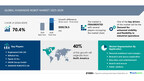
NEW YORK, Feb. 3, 2025 /PRNewswire/ — Report on how AI is redefining market landscape – The global humanoid robot market size is estimated to grow by USD 59.18 billion from 2025-2029, according to Technavio. The market is estimated to grow at a CAGR of 70.4% during the forecast period. Demand for enhanced visibility and flexibility in industrial operations is driving market growth, with a trend towards growing demand of humanoid robot owing to emergence of smart manufacturing. However, ethical issues with humanoid robots poses a challenge. Key market players include Engineered Arts Ltd., EZRobot Inc., Figure AI Inc., HAHN Group GmbH, HANSON ROBOTICS Ltd., Hasbro Inc., Honda Motor Co. Ltd., Hyundai Motor Co., Invento Research Inc., Kawada Robotics Co. Ltd., Macco Robotics, PAL Robotics, Promobot LLC, ROBOTIS Co. Ltd., Toyota Motor Corp., Trossen Robotics, UBTECH Robotics Inc., and United Robotics Group GmbH.

Key insights into market evolution with AI-powered analysis. Explore trends, segmentation, and growth drivers- View Free Sample PDF

Humanoid Robot Market Scope

Report Coverage

Details

Base year

2024

Historic period

2019 – 2023

Forecast period

2025-2029

Growth momentum & CAGR

Accelerate at a CAGR of 70.4%

Market growth 2025-2029

USD 59176.5 million

Market structure

Fragmented

YoY growth 2022-2023 (%)

50.0

Regional analysis

North America, APAC, Europe, Middle East and Africa, and South America

Performing market contribution

North America at 40%

Key countries

US, Japan, China, South Korea, Canada, Germany, UK, UAE, France, and Brazil

Key companies profiled

Engineered Arts Ltd., EZRobot Inc., Figure AI Inc., HAHN Group GmbH, HANSON ROBOTICS Ltd., Hasbro Inc., Honda Motor Co. Ltd., Hyundai Motor Co., Invento Research Inc., Kawada Robotics Co. Ltd., Macco Robotics, PAL Robotics, Promobot LLC, ROBOTIS Co. Ltd., Toyota Motor Corp., Trossen Robotics, UBTECH Robotics Inc., and United Robotics Group GmbH

Market Driver

The humanoid robot market is experiencing significant growth, driven by trends in healthcare, product launches, and the entertainment industry. Robotics research in neurosciences and cognitive sciences is leading to advancements in functionality and behavior. Investors are showing interest in robotics engineering for eldercare and mobility impairments, with applications in ultraviolet germicidal cleaning and surveillance. The media sector is exploring robotics solutions for digital transformation, while funding is being allocated for research and development in robotics, AI, and battery technologies. Automotive companies are integrating robots into their manufacturing processes due to labor shortages. Space exploration and isolation situations are driving the need for advanced robotics. Robotics industry growth is also fueled by technological advancements in hardware costs, sensors like lidar and 3d/depth cameras, and high-performance computing. 

Smart manufacturing is a modern industrial approach that leverages advanced computing, analytics, and IoT-integrated technologies to optimize production processes. Objectives include flow optimization, customization, asset tracking, predictive maintenance, and real-time inventory management. The growth of automation, electrification, data integration, human-machine interaction, and connectivity has driven the adoption of smart manufacturing. In the automotive industry, IoT-enabled sensors are integrated into manufacturing, assembly line, and warehousing equipment to enhance efficiency and productivity. 

Request Sample of our comprehensive report now to stay ahead in the AI-driven market evolution!

Market Challenges

The humanoid robot market is experiencing significant growth, with applications in various industries such as healthcare, entertainment, and robotics research. However, product launch faces challenges in neuroscience and functionality, requiring substantial investment from investors. In healthcare, humanoid robots offer solutions for eldercare and mobility impairments. In the entertainment industry, they provide personal assistance and behavior modeling. Robotics engineering and neurosciences are essential for developing advanced sensory abilities and artificial intelligence. The robotics industry is also exploring robotics in space exploration, neurosciences, and service duties. Isolation and mobility are key challenges, requiring advancements in hardware costs, battery technologies, and high-performance computing. The market growth is driven by technological advancements, labor shortages, and digital transformation. Funding is crucial for research and development in robotics, cognitive sciences, and AI. Investors are keen on commercial investment in areas like delivery, kiosks, and surveillance. Challenges include hardware costs, software engineering, and staffing skilled workers. Automotive companies and manufacturing firms are adopting robotics solutions for production. The robotics fund is focusing on next-generation sensors, radar, and 3D/depth cameras. Government support and research are essential for the robotics industry’s growth.The humanoid robot market faces ethical challenges that could hinder its growth. Unemployment is a significant concern as humanoid robots may replace human labor, leading to job losses. Ethical issues also include privacy concerns, inaccurate data usage, and control and use of data and systems. Accountability and liability are other concerns, as well as the potential loss of human decision-making. These factors may restrain the expansion of the global humanoid robot market during the forecast period.

Discover how AI is revolutionizing market trends- Get your access now!

Segment Overview 

This humanoid robot market report extensively covers market segmentation by

ApplicationPersonal Assistance And CaregivingResearch And Space ExplorationEducation And EntertainmentSearch And RescuePublic RelationsComponentHardwareSoftwareGeographyNorth AmericaAPACEuropeMiddle East And AfricaSouth AmericaMotion TypeBipedWheel Drive

1.1 Personal assistance and caregiving- The personal assistance and caregiving segment of the global humanoid robot market is experiencing notable growth due to the increasing demand for robots that can help people with daily tasks and support their well-being. Humanoid robots are being designed to aid the elderly and disabled in performing activities of daily living, offer companionship, and provide mental health assistance. Key players in this market, such as HANSON ROBOTICS, Toyota, and PAL Robotics, are developing humanoid robots with a wide range of capabilities, from basic tasks to advanced functions like conversing and recognizing emotions. The aging population, rising demand for home care services, and technological advancements are driving market growth. Startups and smaller companies also create specialized humanoid robots for specific applications, such as autism therapy and mobility assistance. Overall, the personal assistance and caregiving segment of the global humanoid robot market is projected to expand significantly due to the increasing sophistication of robots and the growing need for caregiving services.

Download a Sample of our comprehensive report today to discover how AI-driven innovations are reshaping competitive dynamics

Research Analysis

The Humanoid Robot Market is a dynamic and innovative industry that continues to push the boundaries of technology. Robot software and cognitive science are at the heart of humanoid robot development, enabling advanced capabilities such as machine learning and AI. Robot regulation ensures safety and ethical considerations are met as these advanced machines become more integrated into society. Robotic startups and companies are driving innovation in areas like robotic healthcare, space exploration, and customer service. Robot capabilities continue to expand, with autonomous robots and robotic automation becoming increasingly common. Robot research in areas like behavior science and safety is also advancing, leading to new applications and uses. Robotic conferences and workshops provide opportunities for professionals to share knowledge and collaborate on new projects. The future of humanoid robots holds endless possibilities, from caregiving and assistance to entertainment and education. Robotic adoption is on the rise, with companies recognizing the benefits of a robotic workforce for increased efficiency and productivity. Robotic technology is constantly evolving, with new features and capabilities being developed to meet the demands of various industries. Robot security is a growing concern, with companies investing in advanced security measures to protect their robotic assets. The robot industry is poised for continued growth, with new innovations and applications emerging every day.

Market Research Overview

The humanoid robot market is experiencing significant growth due to advancements in robotics engineering, neurosciences, cognitive sciences, and artificial intelligence. Product launches in healthcare, eldercare, and mobility impairments sectors are transforming the industry, with dual-arm robots and robots with sensory abilities becoming increasingly popular. Investors are showing interest in commercial investment, funding research and development, and supporting the robotics industry’s growth. The entertainment industry and media sector are integrating humanoid robots for staff members, creating new opportunities for robotics solutions. Neuroscience and robotics research are advancing the robot’s functionality, enabling them to perform service duties in isolation, quarantine, and surveillance. The robotics industry’s technological advancements, including high-performance computing, next-generation sensors, and battery technologies, are reducing hardware costs and expanding the robot’s applications in automotive, manufacturing, and delivery industries. The robotics fund is also attracting skilled workers and government support, driving the market’s growth. The robotics market growth is also impacting the mobility, ultraviolet germicidal cleaning, and autonomous delivery sectors, with robots being used for personal assistance, education, and caregiving. Voice sensors, 3D/depth cameras, and lidar are enhancing the robot’s sensory abilities, enabling them to interact with humans more naturally. The robotics industry’s digital transformation is also impacting labor shortages in various sectors, with robots being used for staff members in luxury vehicle manufacturing and staffing kiosks. The robotics solutions are also being integrated into the education sector, providing personalized learning experiences for students. The robotics industry’s future looks bright, with advancements in robotics engineering, mechanical engineering, and electrical engineering, enabling humanoid robots to perform more complex tasks and interact more naturally with humans. The robotics industry’s growth is expected to continue, driven by the increasing demand for robots in various sectors and the ongoing technological advancements.

Table of Contents:

1 Executive Summary
2 Market Landscape
3 Market Sizing
4 Historic Market Size
5 Five Forces Analysis
6 Market Segmentation

ApplicationPersonal Assistance And CaregivingResearch And Space ExplorationEducation And EntertainmentSearch And RescuePublic RelationsComponentHardwareSoftwareGeographyNorth AmericaAPACEuropeMiddle East And AfricaSouth AmericaMotion TypeBipedWheel Drive

7 Customer Landscape
8 Geographic Landscape
9 Drivers, Challenges, and Trends
10 Company Landscape
11 Company Analysis
12 Appendix

About Technavio

Technavio is a leading global technology research and advisory company. Their research and analysis focuses on emerging market trends and provides actionable insights to help businesses identify market opportunities and develop effective strategies to optimize their market positions.

With over 500 specialized analysts, Technavio’s report library consists of more than 17,000 reports and counting, covering 800 technologies, spanning across 50 countries. Their client base consists of enterprises of all sizes, including more than 100 Fortune 500 companies. This growing client base relies on Technavio’s comprehensive coverage, extensive research, and actionable market insights to identify opportunities in existing and potential markets and assess their competitive positions within changing market scenarios.

Contacts

Technavio Research
Jesse Maida
Media & Marketing Executive
US: +1 844 364 1100
UK: +44 203 893 3200
Email: media@technavio.com
Website: www.technavio.com/

View original content to download multimedia:https://www.prnewswire.com/news-releases/humanoid-robot-market-to-grow-by-usd-59-18-billion-from-2025-2029–driven-by-demand-for-enhanced-visibility-and-flexibility-in-industrial-operations-ai-impact—technavio-302365973.html

SOURCE Technavio

Continue Reading
Click to comment

Leave a Reply

Your email address will not be published. Required fields are marked *

Technology

The Next Generation of Agent Assist is Here with Balto

Published

on

By

ST. LOUIS, Sept. 1, 2026 /PRNewswire/ — Balto, the leading AI platform for contact centers and the company that invented the category of agent assist called real-time guidance in 2017, today officially unveiled RTG3 – the tool is being regarded as the future of agent assist – not for its first of its kind features, but also because it’s an agent assist that consistently delivers measurable ROI.

Introducing RTG3

RTG3 delivers what Balto describes as ambient agentic intelligence for the frontline contact center agents – an experience the contact center space has never seen before, and one that is being heralded as the future of agent assist.

The idea was born from a simple but powerful feeling: Making the agent app the central command center for the frontline by providing instant answers to information that’s impossible to memorize, the ability to search for information right on the app, and turning it into a personalized workspace, rather than just another screen/app on their desktop.

RTG3 brings that experience to the frontline contact center agent for the first time, within the context of their work. Rather than a single nudge tucked on the side of the screen, RTG3 is agentic intelligence that works on the agent’s behalf, automatically launching AI agents that gather the answers, customer context, and hard-to-find information a live conversation calls for, exactly when it’s needed. The result is a frontline agent with AI at their fingertips and the freedom to focus on the customer in front of them.

That power belongs to the agent. RTG3 is built for the frontline, designed to be made their own, personalized and arranged around how each person works best; not to monitor them, and not to replace them. It is Balto’s bet on humans and on what they are capable of when given the best possible tools. RTG3 is available today, free to existing Balto real-time guidance customers, through a fast and easy implementation.

Consistently delivers measurable ROI

Agent assist is the top investment priority for contact center leaders. According to industry-leading analysts in Customer Management Practice (CMP) Research, in the 2026–2027 year, 61% of leaders say they are going to invest in agent assist, making it the number one category, ahead of analytics and insights, chatbots and virtual agents, knowledge management, and automated QA.

Renowned for an excellent product suite, customer service and a platform that consistently delivers measurable ROI across multiple industries, Balto holds a 4.8-star rating across more than 600 reviews on G2 and Capterra, and has built RTG3 to meet that demand where the ROI actually lands: improved customer retention, agent to manager ratio, reduced agent turnover, accelerated ramp time, reducing handle time, better CSAT scores, and higher conversion rates.

“If you know there’s golden data, why are you waiting for somebody to go into your product, go to the interface and ask the question? Provide them with the data that you know is good,” says Balto CEO Marc Bernstein. That principle of putting that intelligence directly in front of the agent, rather than waiting for someone to ask, is at the heart of RTG3.

How RTG3 Works

RTG3 works today in the format contact center teams already know: the app is nestled in over the side of the screen and integrates with the CCaaS and UCaaS to start and stop automatically as calls come in and go out. For the first time, Balto is also introducing an intelligent agent desktop powered by ambient agentic intelligence for the frontline contact center agent.

Customer History before the call: The second a call comes through, Balto automatically populates the history of that customer by working through previous Balto conversations and transcripts. Agents immediately see why the customer is calling and their most recent call history. Customer History carries a 93% thumbs-up rating from agents.AI agents working in the background: When a customer mentions a city, Balto pulls local weather and sports. When a competitor comes up, it pulls that competitor’s reviews and surfaces the common complaints. In healthcare, when a provider is mentioned, Balto returns the provider’s name, specialty, practice address, and a link to their listing. All of it happens in the background while the agent keeps talking.Answers to questions impossible to memorize: Agents can ask Balto anything, including questions no one could reasonably memorize, such as pricing a plan for several hundred seats with the right discounts applied. Balto searches knowledge resources in Balto Cloud and can search a customer’s SharePoint. Every answer cites its source and deep links to the exact article, page, and section it came from.Real-time checklists are built as levers: The best AI checklists are not a full script; they are a few levers that let agents hit the metrics that matter: compliance requirements like verification, deeper discovery, and an assumptive ask or close. Agents can set completed items to auto-disappear, or keep them visible.A home base for the agent: Agents no longer have to navigate an obstacle course of tabs, CRMs, and Slack channels just to answer one customer question. RTG3 consolidates everything agents need–compliance, knowledge, workflows, and supervisor support–into one customizable workspace.Make it your own: RTG3 brings everything agents need into one place, and lets them make it their own. Agents can customize their layouts, pin what they use most, and personalize the look and feel of their workspace. Every agent can create a workspace that fits the way they work. If it works the way agents have longed for and they can personalize it, agents will use it.

Available and ready to use now

RTG3 is available now and free to existing Balto agent assist customers, with an implementation Balto describes as fast and low lift. Balto’s team stays involved through implementation and beyond, helping teams prepare documents so AI can read them accurately and connecting knowledge databases so agents can query the full knowledge base from inside Balto.

Customers are already seeing incredible results with a Health Insurance brokerage call discovery rose from below 20% to roughly 51%, with an approximate 10% increase in sales as RTG3 usage grew and a Home Improvement company’s new hire ramp to estimate certification dropped from about 90 days to 30.

Learn more about Balto Agent Assist.

About Balto

Balto is the #1 rated agent assist, QA automation, and agentic insights platform for contact centers, wrapped into a single platform where humans and AI work together. Founded in 2017, Balto was the first company to bring agent assist to market and has since deployed it across more than 300 customers and 500 million interactions. Balto is backed by Telescope Partners and Vista Equity Partners. Learn more at balto.ai

View original content to download multimedia:https://www.prnewswire.com/news-releases/the-next-generation-of-agent-assist-is-here-with-balto-302866178.html

SOURCE Balto Software, Inc.

Continue Reading

Technology

S&P Dow Jones Indices and Kaiko Introduce S&P Kaiko Digital Asset Indices

Published

on

By

New co-branded suite brings both companies’ crypto index offerings onto a single platform

NEW YORK, Sept. 1, 2026 /PRNewswire/ — S&P Dow Jones Indices (“S&P DJI”), the world’s leading index provider and Kaiko, the global independent leader in digital asset market data, indices, and data infrastructure, today announced the combined digital asset index offerings under a single co-branded suite: S&P Kaiko Digital Asset Indices.

With this release, Kaiko’s digital asset reference rates and multi-asset indices, together with S&P DJI’s existing crypto indices, will be rebranded under the S&P Kaiko name. The suite is powered by Kaiko’s crypto-native data infrastructure and market expertise, with S&P DJI providing global licensing, distribution and benchmark administration.

With institutional participation in digital assets growing, asset managers, ETF issuers, exchanges and structured product providers increasingly require benchmarks that combine robust data, transparent methodologies, trusted governance and global distribution. The S&P Kaiko Digital Asset Indices are designed to meet that demand by pairing S&P DJI’s institutional benchmark expertise with Kaiko’s 24/7 digital asset data platform and exchange connectivity.

“Together, S&P DJI and Kaiko are raising the standard for digital asset benchmarks. As the asset class matures, institutional investors need indices defined by transparency, rigor and market relevance. This suite combines the trusted S&P brand with Kaiko’s crypto-native data infrastructure and market expertise, purpose-built for global, 24/7 digital asset markets,” said Cameron Drinkwater, Chief Product & Operations Officer at S&P Dow Jones Indices.

The S&P Kaiko Digital Asset Indices suite will operate on a single platform built on Kaiko’s technology stack, with S&P DJI’s benchmark administration, licensing and distribution infrastructure integrated into its commercial operations. S&P DJI brings decades of index governance experience, global licensing capabilities and benchmark administrator status under the EU Benchmarks Regulation, aligned with the IOSCO Principles for Financial Benchmarks. Kaiko will provide data sourcing and calculation through its crypto market expertise, connectivity to 150+ exchanges and round-the-clock infrastructure, as well as index methodology support.

At launch, the S&P Kaiko suite covers over 4000 rates and indices across the digital asset class. Existing financial products benchmarked to Kaiko reference rates and multi-asset indices – including exchange-traded products, futures, options and structured products – will be able to leverage the new S&P Kaiko brand.

“S&P DJI and Kaiko bring what digital asset markets have been missing: a globally trusted benchmark brand paired with crypto-native infrastructure built for 24/7 markets. S&P Kaiko Digital Asset Indices gives institutions the credibility, distribution and data precision they need to participate in this asset class with confidence,” said Ambre Soubiran, CEO at Kaiko. 

To learn more about the S&P Kaiko Digital Asset Indices visit here.

For additional information about Kaiko’s data infrastructure, indices, and pricing solutions, visit kaiko.com. Kaiko Indices, S.A., as a legal entity, will retain its existing brand and BMR registration.

ABOUT S&P DOW JONES INDICES 

S&P Dow Jones Indices is the largest global resource for essential index-based concepts, data and research, and home to iconic financial market indicators, such as the S&P 500® and the Dow Jones Industrial Average®. More assets are invested in products based on our indices than products based on indices from any other provider in the world. Since Charles Dow invented the first index in 1884, S&P DJI has been innovating and developing indices across the spectrum of asset classes helping to define the way investors measure and trade the markets. S&P Dow Jones Indices is a division of S&P Global (NYSE: SPGI), which provides essential intelligence for individuals, companies, and governments to make decisions with confidence. For more information, visit: www.spglobal.com/spdji.

ABOUT KAIKO

Kaiko provides regulated data services for onchain finance. Founded in 2014, the company delivers institutional-grade digital asset market data, analytics, indices, and data infrastructure for tokenized and traditional markets. Its clients include banks, asset managers, exchanges, and leading financial institutions worldwide. Kaiko’s data and infrastructure support trading, valuation, risk management, tokenized assets, and onchain applications, connecting traditional and blockchain-based markets. For more information, visit: kaiko.com.

FOR MORE INFORMATION: 

Silke McGuinness 
Global Head of Communications, S&P DJI
(+1) 415-205-8414
silke.mcguinness@spglobal.com

Victoria Calmon
Kaiko
Editorial & Communications Manager
press@kaiko.com

View original content to download multimedia:https://www.prnewswire.com/news-releases/sp-dow-jones-indices-and-kaiko-introduce-sp-kaiko-digital-asset-indices-302866449.html

SOURCE S&P Dow Jones Indices

Continue Reading

Technology

AirDNA Launches Adapt, the AI-Native Revenue Management System for Short-Term Rental Operators

Published

on

By

DENVER, Sept. 1, 2026 /PRNewswire/ — AirDNA, the leading provider of short-term rental (STR) data and analytics, today launched AirDNA Adapt, adding revenue management to its product stack for STR hosts and property managers. Built with AI at its core rather than layered onto a traditional rules-based pricing model, Adapt weighs each listing’s full competitive landscape using data from the 15 million listings AirDNA tracks, then sets nightly rates and minimum stays with a clear rationale for every rate.

Adapt was built in response to feedback from thousands of STR hosts surfacing a recurring industry challenge: operators often can’t tell whether their pricing is working or understand why a rate has changed. More than 14,000 listings were connected to Adapt during private and public betas, which kept operator feedback at the center of product development.

“Pricing a property shouldn’t require translating your strategy into dozens of rules and settings,” said Rohit Bezewada, CEO of AirDNA. “We built Adapt around a simpler approach: operators set the strategy, and Adapt handles the complexity underneath. We believe operators should always be able to understand what the system is doing and why, in plain language they can act on.”

Key features include:

Daily dynamic pricing: Nightly rates and minimum stays adjust as market and booking conditions change, with local event detection built inUnlimited comp-sets: Auto-built, editable comp sets with historical and forward-looking performance benchmarks, plus a daily comp calendar comparing rates, minimum stays, and availabilityFour pricing strategies: Operators set the goal, whether revenue, occupancy, a balance of the two, or steadier earnings from earlier bookings, and Adapt sets the underlying pricing rules to match, all adjustablePerformance dashboard: Tracks actual booked revenue, ADR, RevPAR, occupancy, and length of stay, benchmarked against the listing’s history and comp set, with up to two years of historical performanceAI assistant: Explains why any given rate was set, tests alternative scenarios, and applies pricing changes with operator approval

“Good pricing starts with understanding what a property is competing against, and most operators are working with a partial view of their market,” said Jamie Lane, AirDNA’s Chief Economist. “We’ve spent twelve years building the full picture, which Adapt now puts to work on every pricing decision.”

Adapt is available today at AirDNA.co/adapt and is free to connect, with integrations for Airbnb, Guesty, Hostaway, Hospitable, OwnerRez, and Uplisting, and more integrations coming in 2026.

Adapt Media Kit

About AirDNA

AirDNA is a global authority on short-term rental data and intelligence for hosts, property managers, investors, real estate professionals, and destinations worldwide, covering 15 million listings across Airbnb, Vrbo, and Booking.com in 120,000 markets globally. AirDNA provides the data, analytics, and tools to understand market and competitive performance, identify and underwrite investment opportunities, and optimize pricing and revenue, supporting smarter decisions in any market or economic climate.

airdna.co 

Media Contact

Chloé Garlaschi

Sr. Communications Manager, AirDNA

press@airdna.co

(720) 372-2318

View original content to download multimedia:https://www.prnewswire.com/news-releases/airdna-launches-adapt-the-ai-native-revenue-management-system-for-short-term-rental-operators-302866288.html

SOURCE AirDNA

Continue Reading

Trending