Connect with us

Technology

Major new ETC report presents complete picture of global buildings sector emissions and pathways to decarbonisation

Published

on

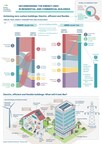
LONDON, Feb. 4, 2025 /PRNewswire/ — The latest report from the Energy Transitions Commission, Achieving Zero-Carbon Buildings: Electric, Efficient and Flexible, draws a complete picture of the buildings sector’s emissions and energy use and describes how a combination of electric, efficient and flexible solutions can decarbonise buildings, improve standards of living, and reduce energy bills if supported by ambitious policy.

The global buildings sector currently contributes a third of greenhouse gas emissions (12.3 GtCO2 in 2022).[1] This comes from the use of fossil fuels for heating, cooling, cooking, lighting, powering appliances, and constructing residential and commercial buildings.

There is not a one-size-fits-all solution for decarbonisation, as different solutions work for different building types, countries, and climates, but three key priorities stand out for creating a zero-carbon dioxide emissions buildings sector:

Electrification replacing fossil fuels: Decarbonising heating and cooking is essential. Currently, gas and oil heating accounts for 8% of global emissions, or 3 GtCO2. Switching from fossil-based heating and cooking to cost-effective electric and efficient technologies, such as heat pumps and electric hobs, is crucial and must be accompanied by the continued decarbonisation of electricity generation. By 2050, 80% of the energy used in buildings could be electricity; this would bring annual emissions from building use close to zero if electricity supply is decarbonised by then.Dramatically improving energy efficiency: Rising use of air conditioners and the electrification of heating and cooking would result in electricity demand for buildings almost tripling, from 12,800 TWh to around 35,000 TWh by 2050 if energy efficiency is not simultaneously increased. But this could be reduced to around 18,500 TWh via a combination of:
– Improvements in the technical efficiency of heat pumps, air conditioners, and other appliances.
– Improvements in the energy efficiency of both new and existing buildings, considering a range of so-called “passive heating and cooling” building design techniques, such as insulation and painting roofs white in hot countries.
– Smart building management systems and consumer choices which avoid wasteful use of heating or cooling.

These improvements, together with the deployment of building-level batteries and other energy storage, smart building control systems, and rooftop solar generation are particularly important for reducing the growth of peak electricity demand, which is a crucial driver of electricity system costs.Constructing efficient and low-carbon buildings: Constructing new buildings accounts for 7% of global emissions a year, or 2.5 GtCO2. Global floor area (area covered by buildings) is set to expand by 55% by 2050 (or 140 billion m2, which is almost 150 times the size of Hong Kong), predominantly in Asia, Africa and South America. If the average carbon intensity of construction remains unchanged, this expansion would result in a cumulative 75 GtCO2 emissions between now and 2050.[2] These cumulative emissions could be reduced to around 30 GtCO2 via a combination of:
– Decarbonising the production of steel, cement, concrete, and other building materials.
– Using fewer materials in building construction via lightweight design and modular construction or using less carbon-intensive materials such as timber.
– Better utilising existing buildings via extended building lifetimes and shared working spaces.

“Decarbonising the buildings sector is a story of many transitions. It’s vital for our climate goals and it’s an opportunity to improve living standards and reduce energy costs. Electric heating and cooking technologies will significantly improve air quality and have lower running costs than gas heating and traditional use of biomass. Cooling is essential to quality of life, especially as global warming intensifies due to man-made emissions. It is possible to achieve zero-emissions, efficient, and flexible homes with low-carbon building design techniques and technology that runs on clean electricity.” said Adair Turner, Chair of the Energy Transitions Commission.

However, implementing some of the decarbonisation options for buildings poses more complex challenges than faced in other sectors of the economy, for instance:

For existing buildings, residential and commercial building owners can choose from many different low-carbon technologies and options to improve the energy efficiency of their homes, some of which can be disruptive and involve high upfront costs (e.g., roof or wall insulation, new windows, higher-efficiency heating and ventilation systems). The availability and cost of finance vary greatly between low and high-income households and across countries. Government policies must therefore combine clear targets to ban the sale of fossil-fuel boilers and cookers, with financial support for low-income families, as well as external finance (e.g., from multilateral development banks) to lower-income countries.  For new construction, specific optimal solutions vary by country, regional climate, and building type, and there are sometimes trade-offs to be struck between designing to minimise construction emissions versus in-use operational emissions. In addition, construction sectors often entail complex value chains of subcontracting and a large role for small and medium enterprises. Careful design and implementation of building design and construction codes, learning from international experience but tailored to specific circumstances is therefore vital.

“Unless we can radically decarbonise buildings we will fail to keep global warming under 1.5°C outlined in the Paris Accord. To do that we need to make changes all the way through the design, delivery and operation of buildings – from electrification of heating and passive cooling, to reducing embodied carbon emissions for new buildings and refurbishments.” said Stephen Hill, Sustainability and Building Performance Expert at Arup. “This will require collaboration right across sector, between governments, industry bodies and private companies. We need to be ambitious, but if we get it right we can cut carbon, generate value for our economy and improve people’s quality of life through action like improving living conditions and reducing fuel poverty.”

Given the complexity of the buildings sector decarbonisation challenge, the report sets out a detailed analysis of 7 different, though overlapping, challenges. Summaries of the nature of the problem, clean technologies, and actions required can be accessed via the links below:

Topic

Key audience

The heating decarbonisation challenge (focus on Northern latitude countries) 
How electric heating and cost-effective insulation can displace fossil fuels.

Policymakers, residential households, energy and technology companies,
financial institutions

Increasing access to affordable cooling Managing rising demand in a warming
climate with a combination of passive cooling and efficient air conditioning

Policymakers, residential and commercial building owners

Improving access to clean cooking Eliminating the traditional use of biomass in
low-income countries and shifting to electric cooking solutions globally.

Policymakers, residential homeowners

Efficient lighting and appliances Improving the energy efficiency of lighting and
appliances in residential and commercial buildings.

Commercial building owners, technology companies

Decarbonising commercial buildings Creating strong market demand signals
for low-carbon, efficient, and flexible buildings.

Policymakers, financial institutions, building owners, commercial
businesses

Buildings within a clean energy system Managing total and peak electricity
demand from buildings via efficiency and flexibility.

Policymakers, energy companies and network operators

The new build opportunity Decarbonising steel and cement, combined with
better building techniques  

Policymakers, developers, construction companies, financial institutions


“Buildings are responsible for one-third of the world’s carbon emissions. Harnessing the power of electrification, on-site generation, digital controls, IoT, big data and digital twins can make a net zero-carbon future in our built environment possible. Incorporating these technologies into new constructions or retrofitting existing buildings benefits the planet as well as the safety, resilience, and comfort of our buildings.” said Jean-Pascal Tricoire, Chairman of Schneider Electric.

“WorldGBC mobilises a global network towards the just transition of the built environment for people and planet. We are proud to support this ETC report. It is a timely reminder of the connection between buildings and the energy system. The two are intrinsically linked – we cannot decarbonise one without the other.” said Cristina Gamboa, CEO of World Green Building Council (WorldGBC).

“A comprehensive, informative and crucial contribution to advance climate action, this ETC report on building decarbonization provides a holistic and pragmatic view of how the building sector can transition to a low-carbon future. A must-read for policymakers and industry leaders alike, the report’s regional approach ensures tailored solutions and valuable insights from best practice to turn ambition into action.” said Roxanna Slavcheva, Global Lead for Built Environment at World Resources Institute (WRI).

Achieving Zero-Carbon Buildings: Electric, Efficient and Flexible has been developed in collaboration with ETC members from across industry, financial institutions, and civil society. The ETC is a global coalition of leaders from across the energy landscape committed to achieving net-zero emissions by mid-century whose members include Arup, bp, HSBC, Iberdrola, National Grid, Octopus Energy, Petronas, Saint Gobain, Schneider Electric, Shell, SSE, Rabobank, Vattenfall, We Mean Business, and World Resources Institute. This report constitutes a collective view of the ETC, however, it should not be taken as members agreeing with every finding or recommendation.

Download the report: https://www.energy-transitions.org/publications/achieving-zero-carbon-buildings 

For further information on the ETC please visit: https://www.energy-transitions.org

[1] IEA (2023), Buildings, available at www.iea.org/energy-system/buildings.
[2] Forster et al. (2024), Indicators of Global Climate Change 2023: annual update of key indicators of the state of the climate system and human influence.

Infographic – https://mma.prnewswire.com/media/2611335/Energy_Transitions_Commission_Infographic.jpg
Logo – https://mma.prnewswire.com/media/1935158/5147020/Energy_Transitions_Commission_Logo.jpg


View original content:https://www.prnewswire.co.uk/news-releases/major-new-etc-report-presents-complete-picture-of-global-buildings-sector-emissions-and-pathways-to-decarbonisation-302366585.html

Continue Reading
Click to comment

Leave a Reply

Your email address will not be published. Required fields are marked *

Technology

Pillsbury Notice of Data Breach

Published

on

By

NEW YORK, July 18, 2026 /PRNewswire/ — Pillsbury Winthrop Shaw Pittman LLP (“Pillsbury”) was among many law firms targeted by sophisticated social engineering attempts in an incident last year. While the firm quickly detected and blocked the activity, an unauthorized actor was able to access some of the firm’s documents during a short window of time. Pillsbury notified any impacted clients last year and undertook a detailed process to review the accessed documents for personal information. Pillsbury then began notifying individuals whose personal information was affected. That process is now complete, and today, Pillsbury is publishing substitute notice as a final step.

For more information, please visit the substitute notice on our website at https://www.pillsburylaw.com/en/breach-notice.html

View original content to download multimedia:https://www.prnewswire.com/news-releases/pillsbury-notice-of-data-breach-302828892.html

SOURCE Pillsbury Winthrop Shaw Pittman LLP

Continue Reading

Technology

From Remote Racing to Embodied AI: Fibocom and Intedigo Bring 5G Bidirectional Data Transmission into Real-World Applications

Published

on

By

SHANGHAI, July 18, 2026 /PRNewswire/ — From July 17 to 20, Fibocom and Intedigo will jointly present a cross-regional, beyond-visual-line-of-sight (BVLOS) teleoperation demonstration at Booth H3-C408 during the World Artificial Intelligence Conference (WAIC) 2026. Visitors will be able to enter a remote driving cockpit and control a real race car located at HURA PARK in Jiading, Shanghai, steering, accelerating, and braking in real time while experiencing how 5G connectivity enables remote operation.

More than an immersive driving experience, the demonstration provides a live validation of 5G bidirectional data transmission for embodied AI teleoperation. The vehicle continuously sends live track video, vehicle status, and operating data to the remote cockpit, while control commands are transmitted back to the vehicle, creating a closed-loop teleoperation system. Stable, low-latency, and highly reliable connectivity is essential for high-dynamic maneuvers such as high-speed cornering, precision braking, and continuous lane changes.

Developed by Intedigo, the remote driving system connects a real race car with an immersive remote driving cockpit. It supports 1080p@60Hz video transmission, glass-to-glass (G2G) video latency of less than 80 ms, and control latency of less than 10 ms. The demanding racing environment magnifies differences in video continuity and control responsiveness, making communications performance directly perceptible, measurable, and verifiable.

At the joint demonstration, Fibocom’s FM160 5G module provides cellular connectivity for the system. Powered by the Qualcomm Snapdragon™ X62 5G Modem-RF System, the FM160 supports SA and NSA network architectures as well as 3GPP Release 16. On the downlink, it supports NR Carrier Aggregation (NR CA) with bandwidth of up to 120 MHz, delivering peak speeds of up to 3.5 Gbps in NSA mode and 2.5 Gbps in SA mode. On the uplink, it supports UL MIMO and delivers peak speeds of up to 900 Mbps in SA mode. These capabilities support the continuous transmission of HD video and vehicle status data, along with reliable delivery of control commands.

As embodied AI moves into factories, data centers, logistics operations, and industrial parks, robots are becoming increasingly capable of performing tasks autonomously. Yet complex environments, unexpected events, and edge cases still require Human-in-the-Loop (HITL) remote intervention to help ensure safe and reliable operation.

Daniel Liu, CEO of Intedigo, said:

“5G represents the pinnacle of human communications and the starting point of machine communications. In the past, communications connected people to people; in the future, they will connect people to robots and robots to robots. Remote racing is simply the easiest entry point for people to understand this concept. What we are truly validating is a communications system capable of supporting remote collaboration for embodied AI. HURA makes low-latency remote driving a tangible experience, while RoBOX extends this capability to robots and a broader range of intelligent terminals. Together with Fibocom, we hope to enable more machines to receive remote assistance whenever needed while remaining continuously connected and operating reliably.”

Simon Tao, VP of Wireless Solutions Business Group and General Manager of MBB BU at Fibocom, said:

“As embodied AI enters real-world industrial environments, reliable connectivity will become the foundation for telemetry feedback, remote control and operational management. Fibocom’s 5G solutions, represented by FM160, provide the cellular connectivity required for continuous on-site data transmission and reliable control command delivery. Fibocom will continue collaborating with ecosystem partners such as Intedigo to bring cellular connectivity to more robots, autonomous machines and mobile intelligent terminals, enabling embodied AI systems to stay continuously connected and respond reliably in real-world applications.”

From remote race cars to robots, unmanned equipment, and mobile intelligent terminals, 5G is evolving from connecting people to connecting machines. This joint demonstration makes the capabilities of 5G bidirectional data transmission directly perceptible, experiential, and verifiable, helping pave the way for embodied AI to scale across real-world applications.
 

About Fibocom

Fibocom, founded in 1999, is China’s first wireless communication module company listed on both the A-share and H-share markets (300638.SZ, 0638.HK). As a global leading provider of wireless communication modules and AI solutions, Fibocom leverages wireless communication and artificial intelligence as its core technologies to provide integrated hardware and software solutions that empower industry applications. These solutions accelerate the transformation from “Connect Everything” to “Intelligent Connectivity” across diverse industries.

Fibocom’s one-stop solutions encompass cellular communication, AI, automotive, and GNSS modules, as well as AI toolchains, supporting industry-side and mainstream large model integration, and providing AI Agent, global connectivity, and cloud services, driving the digital intelligence upgrades in industries such as robotics, consumer electronics, low-altitude economy, intelligent transportation, smart retail, and smart energy.

View original content to download multimedia:https://www.prnewswire.com/news-releases/from-remote-racing-to-embodied-ai-fibocom-and-intedigo-bring-5g-bidirectional-data-transmission-into-real-world-applications-302828996.html

SOURCE Fibocom Wireless Inc.

Continue Reading

Technology

DR. PHONE FIX ANNOUNCES SECOND TRANCHE CLOSING OF NON-BROKERED CONVERTIBLE DEBENTURE UNIT FINANCING

Published

on

By

/NOT FOR DISTRIBUTION TO U.S. NEWSWIRE SERVICES OR FOR DISSEMINATION IN THE UNITED STATES/

EDMONTON, AB, July 18, 2026 /CNW/ — Dr. Phone Fix Canada Corporation (“Dr. Phone Fix” or the “Company”) (TSXV: DPF) is pleased to announce that, further to its news release dated May 19, 2026 and June 24, 2026 (the “Prior News Releases”), it has closed the second tranche of its non-brokered private placement (the “Offering”) of convertible debenture units of the Company (each, a “Unit”). The Company issued 726 Units, at a price of $1,000 per Unit, for aggregate gross proceeds of $726,000. Each Unit is comprised of (i) one $1,000 principal amount unsecured convertible debenture of the Company (a “Convertible Debenture”) and (ii) 3,125 common share (“Common Share”) purchase warrants of the Company (each, a “Warrant”). Additional detail on the Offering, including terms of the Convertible Debentures and Warrants, is set out in the Prior News Releases.

In connection with the Offering, the Company paid a finder’s fee consisting of an aggregate cash fee of $50,820 and issued an aggregate of 317,625 common share purchase warrants of the Company (each, a “Finder’s Warrant”) to certain qualified arm’s length parties. Each Finder’s Warrant is exercisable to acquire one Common Share of the Company at an exercise price of $0.22 prior to the date that is 24 months from the date of issuance.

All securities issued pursuant to the Offering, including any Common Shares issuable upon conversion of the Convertible Debentures or exercise of the Warrants and Finder’s Warrants, are subject to a statutory hold period of four months and one day from the closing of the Offering, in accordance with applicable securities laws and TSX Venture Exchange (the “TSXV”) policies. 

The Offering remains subject to final acceptance of the TSXV.

This news release does not constitute an offer to sell or a solicitation of an offer to buy any of the securities described in this news release in the United States. Such securities have not been, and will not be, registered under the U.S. Securities Act, or any state securities laws, and, accordingly, may not be offered or sold within the United States, or to or for the account or benefit of persons in the United States or “U.S. Persons”, as such term is defined in Regulation S promulgated under the U.S. Securities Act, unless registered under the U.S. Securities Act and applicable state securities laws or pursuant to an exemption from such registration requirements.

About Dr. Phone Fix

Dr. Phone Fix is a national, award-winning, eco-friendly, and customer-centric leader in Canada’s cell phone and electronics repair and certified pre-owned device industry. Founded in 2019, the Company now operates 44 retail locations nationwide through a standardized and scalable operating platform designed to support consistent execution across multiple markets, delivering fast, reliable, and environmentally conscious repair services alongside a curated selection of certified pre-owned devices and premium accessories. Dr. Phone Fix maintains strong partnerships with OEMs and certified suppliers, ensuring consistently high-quality standards across its national footprint. With a focus on responsible device lifecycle management, customer service, and operational discipline, Dr. Phone Fix continues to set the benchmark for device care and resale in Canada.

www.docphonefix.com

NEITHER THE TSXV NOR ITS REGULATION SERVICES PROVIDER (AS THAT TERM IS DEFINED IN THE POLICIES OF THE TSXV) ACCEPTS RESPONSIBILITY FOR THE ADEQUACY OR ACCURACY OF THIS NEWS RELEASE.

Forward-Looking Information and Cautionary Statements

Certain information in this news release constitutes forward-looking statements under applicable securities laws. Any statements that are contained in this news release that are not statements of historical fact may be deemed to be forward-looking statements. Forward-looking statements are often identified by terms such as “may”, “should”, “anticipate”, “expect”, “potential”, “believe”, “intend” or the negative of these terms and similar expressions. Forward-looking statements in this news release include statements relating to: the final acceptance of the Offering by the TSXV; and the expected use of proceeds following the closing of the Offering. Forward-looking information in this news release is based on certain assumptions and expected future events, namely: the Company’s financial condition and development plans do not change as a result of unforeseen events; the TSXV will provide its final acceptance of the Offering; and the Company will be able to obtain the financing required in order to develop and continue its business and operations. These statements involve known and unknown risks, uncertainties and other factors, which may cause actual results, performance or achievements to differ materially from those expressed or implied by such statements, including but not limited to: the Company’s inability to obtain TSXV final acceptance for the Offering; the potential failure to complete the balance of the Offering or to raise the full anticipated gross proceeds; market conditions and investor demand for the Company’s securities; the Company’s inability to deploy the proceeds as currently intended; and general economic and market conditions. Readers are cautioned that the foregoing list is not exhaustive. Readers are further cautioned not to place undue reliance on forward-looking statements, as there can be no assurance that the plans, intentions or expectations upon which they are placed will occur. Such information, although considered reasonable by management at the time of preparation, may prove to be incorrect and actual results may differ materially from those anticipated. Forward-looking statements contained in this press release are expressly qualified by this cautionary statement and reflect the Company’s expectations as of the date hereof and are subject to change thereafter. The Company undertakes no obligation to update or revise any forward-looking statements, whether as a result of new information, estimates or opinions, future events or results or otherwise or to explain any material difference between subsequent actual events and such forward-looking information, except as required by applicable law.


SOURCE Dr. Phone Fix

Continue Reading

Trending