Connect with us

Technology

Used Car Market in the US to Grow by USD 40.2 Billion by 2029, Boosted by Value for Money Proposition, AI Driving Market Transformation – Technavio

Published

on

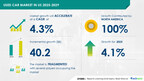
NEW YORK, Feb. 3, 2025 /PRNewswire/ — Report with the AI impact on market trends – The Used car market in US size is estimated to grow by USD 40.2 billion from 2025-2029, according to Technavio. The market is estimated to grow at a CAGR of  4.3%  during the forecast period. Excellent value for money proposition of used cars is driving market growth, with a trend towards increased penetration of websites dedicated to selling used cars. However, stringent emission regulations to restrict sales of non-compliant used cars  poses a challenge. Key market players include Asbury Automotive Group Inc., AutoNation Inc., CarMax Inc., Carvana Co., General Motors Co., Group 1 Automotive Inc., Hendrick Automotive Group, Hertz Holdings Inc., Lithia Motors Inc., Penske Automotive Group Inc., Sonic Automotive Inc., and Vroom Inc..

Key insights into market evolution with AI-powered analysis. Explore trends, segmentation, and growth drivers- View Free Sample PDF

Used Car Market In US Scope

Report Coverage

Details

Base year

2024

Historic period

2019 – 2022

Forecast period

2025-2029

Growth momentum & CAGR

Accelerate at a CAGR of 4.3%

Market growth 2025-2029

USD 40.2 billion

Market structure

Fragmented

YoY growth 2022-2023 (%)

4.1

Regional analysis

US

Performing market contribution

North America at 100%

Key countries

US

Key companies profiled

Asbury Automotive Group Inc., AutoNation Inc., CarMax Inc., Carvana Co., General Motors Co., Group 1 Automotive Inc., Hendrick Automotive Group, Hertz Global Holdings Inc., Lithia Motors Inc., Penske Automotive Group Inc., Sonic Automotive Inc., and Vroom Inc.

Market Driver

The used car market in the US is experiencing significant trends shaping its future. Dealership networks and franchise dealers are expanding, with online sales becoming increasingly popular. Auto marketplaces are thriving, offering affordability and convenience to customers seeking personal mobility. Automobile manufacturers are entering the used vehicle business, providing certified pre-owned vehicles with extended service agreements and advanced features. Price sensitivity drives the market, with buyers opting for compact and mid-sized used passenger cars, SUVs, and even CNG-powered and hybrid vehicles. Digital retailing and AI applications are transforming the industry, enabling inventory pooling and sustainability. Electric and luxury vehicles are gaining traction, with OEMs focusing on emissions and environmental concerns, adhering to BS6 norms. Urbanization and the telecom industry’s growth fuel the demand for online transactions. Unorganized businesses face competition from organized channels, including rental car agencies, leasing offices, auctions, and private party sales. Flexible financing alternatives and no haggle prices attract buyers, while value-added services like warranties, maintenance plans, and extended service agreements enhance customer experience. The automotive industry trends towards digitalization, with tech-enabled options like automotive performance tracking, smartphone applications, and internet connectivity. High depreciation rates challenge the market, but flexible financing and off-lease vehicles offer opportunities. The future of used car ownership lies in digital retailing, AI applications, and sustainable practices. 

The Internet’s expansion in the US has led to the creation of an effective online marketplace for used cars. Numerous websites cater to this segment, enabling buyers to purchase second-hand vehicles through digital platforms. These sites broaden sellers’ reach to a large pool of potential buyers. Online used car sales websites provide additional services and special offers to attract customers. Websites serve as a significant communication channel for vehicle manufacturers to share updates on technology advancements, new car launches, awards, and other essential information. 

Request Sample of our comprehensive report now to stay ahead in the AI-driven market evolution!

Market Challenges

The used car market in the US faces several challenges. Dealership networks and franchise dealers compete with online sales through auto marketplaces and digital retailing. Affordability is a key factor for price-sensitive buyers, driving demand for used passenger cars. Automobile manufacturers focus on new vehicle business, but used vehicles remain crucial for personal mobility. Customer intelligence is essential for understanding trends, including the rise of electric, hybrid, and CNG-powered vehicles. Unorganized businesses pose competition, but certified pre-owned vehicles offer peace of mind. Depreciation and ownership duration impact resale value. Flexibility is crucial for buyers, with options like car subscription services and off-lease vehicles. Urbanization and the telecom industry fuel online transactions. Emissions and environmental concerns shape regulations like BS6 norms. SUVs, mid-sized, and compact cars dominate the market. Advanced vehicle features like power steering, climate control, and anti-lock brakes are in demand. Flexible financing alternatives and extended service agreements help manage costs. Pre-owned car dealers, rental car agencies, leasing offices, auctions, and private party sales offer various purchasing options. No haggle prices and certified pre-owned vehicles appeal to buyers. Online retailing, digitalization, and value-added services like financing, warranties, and maintenance plans are essential. Global technology standardization and tech-enabled options enhance the customer experience. Automotive performance tracking and smartphone applications offer convenience. High depreciation rates require flexible financing alternatives. Sustainability and emissions concerns shape the future of the industry.The Environmental Protection Agency (EPA) in the US has implemented stricter emission norms for passenger cars and commercial vehicles due to increasing air pollution concerns. These new regulations will significantly impact the used car market as many older vehicles may become non-compliant. In 2017, over half of the US population resided in areas with substandard air quality, leading to health concerns from vehicular emissions. Older cars, particularly pickup trucks, contribute significantly to these emissions, which contain harmful gases that negatively affect individual health.

Discover how AI is revolutionizing market trends- Get your access now!

Segment Overview 

This used car market in US report extensively covers market segmentation by  

Distribution Channel3P Channel SalesOEM Channel SalesProductMid SizeFull SizeCompact SizeGeographyNorth AmericaVendor TypeOrganizedUnorganizedFuel TypeDieselPetrol

1.1 3P channel sales-  The used car market in the US is a significant sector, driven by the high competition in the new car market. With numerous new vehicle models launched annually, a consistent supply of used cars enters the market. Used car prices are notably lower than new cars, encouraging consumers to sell their current vehicles and upgrade to newer models. The average ownership cycle is anticipated to decrease due to the increasing number of new car launches. Trade-in is a popular financing method for third-party channel sales in the US, allowing buyers tax reductions and a streamlined purchasing process. Third-party dealers, with their offline stores, offer convenience and eliminate documentation hassles. Their diverse product portfolio and customized warranties provide buyers with greater choice and peace of mind. These factors will fuel the growth of the used car market in the US.

Download a Sample of our comprehensive report today to discover how AI-driven innovations are reshaping competitive dynamics

Research Analysis

The used car market in the US is a significant sector of the automobile industry, offering affordable personal mobility solutions to consumers. With the rise of online sales, auto marketplaces have become a popular destination for buyers seeking used passenger cars, off-lease vehicles, and even luxury models. Urbanization and the telecom industry’s advancements have enabled seamless online retailing, making the used car market more accessible than ever. Used car dealership networks, rental car agencies, leasing offices, auctions, and private party sales all contribute to this dynamic market. Depreciation plays a crucial role in the used car market, affecting resale value and ownership duration. Certified pre-owned vehicles and extended service agreements offer peace of mind to buyers, while car subscription services provide a flexible alternative to traditional ownership. The affordability and convenience of used cars make them an attractive option for many consumers, especially as automobile manufacturers focus on their new vehicle business. Regardless of the sales channel, the used car market continues to evolve, catering to the diverse needs of car owners and the ever-changing landscape of personal mobility.

Market Research Overview

The used car market in the US is a significant sector of the automotive industry, catering to the demand for personal mobility solutions that are more affordable than new vehicles. This market includes both organized and unorganized channels, with dealership networks, online sales, and auto marketplaces being the most common organized channels. The market offers a wide range of used passenger cars, including electric, hybrid, conventional, CNG-powered, diesel, SUVs, mid-sized, compact, and luxury vehicles. Customer intelligence plays a crucial role in this market, with price sensitivity being a key factor influencing buying decisions. Automotive industry trends, such as digital retailing, AI applications, inventory pooling, sustainability, and vehicle certification, are shaping the future of used car sales. Used car owners can sell their vehicles through various channels, including online transactions, offline dealerships, rental car agencies, leasing offices, auctions, and private party sales. No haggle prices, certified pre-owned vehicles, extended service agreements, and advanced vehicle features are some of the value-added services that are becoming increasingly popular in this market. The used car market is influenced by various factors, including emissions, environmental concerns, BS6 norms, depreciation rates, and flexible financing alternatives. The market is also impacted by urbanization, the telecom industry, and the trends towards car subscription services and ownership duration. Overall, the used car market in the US is a dynamic and evolving sector that is being shaped by technological advancements, changing consumer preferences, and industry trends.

Table of Contents:

1 Executive Summary
2 Market Landscape
3 Market Sizing
4 Historic Market Size
5 Five Forces Analysis
6 Market Segmentation

Distribution Channel3P Channel SalesOEM Channel SalesProductMid SizeFull SizeCompact SizeGeographyNorth AmericaVendor TypeOrganizedUnorganizedFuel TypeDieselPetrol

7 Customer Landscape
8 Geographic Landscape
9 Drivers, Challenges, and Trends
10 Company Landscape
11 Company Analysis
12 Appendix

About Technavio

Technavio is a leading global technology research and advisory company. Their research and analysis focuses on emerging market trends and provides actionable insights to help businesses identify market opportunities and develop effective strategies to optimize their market positions.

With over 500 specialized analysts, Technavio’s report library consists of more than 17,000 reports and counting, covering 800 technologies, spanning across 50 countries. Their client base consists of enterprises of all sizes, including more than 100 Fortune 500 companies. This growing client base relies on Technavio’s comprehensive coverage, extensive research, and actionable market insights to identify opportunities in existing and potential markets and assess their competitive positions within changing market scenarios.

Contacts

Technavio Research
Jesse Maida
Media & Marketing Executive
US: +1 844 364 1100
UK: +44 203 893 3200
Email: media@technavio.com
Website: www.technavio.com/

View original content to download multimedia:https://www.prnewswire.com/news-releases/used-car-market-in-the-us-to-grow-by-usd-40-2-billion-by-2029–boosted-by-value-for-money-proposition-ai-driving-market-transformation—technavio-302366916.html

SOURCE Technavio

Continue Reading
Click to comment

Leave a Reply

Your email address will not be published. Required fields are marked *

Technology

AI-Powered Connectivity: APAC Charts a Path to a Smarter Digital Future

Published

on

By

Asia-Pacific’s first Broadband Development Summit brings regulators and operators to Bangkok to set the agenda

BANGKOK, July 19, 2026 /PRNewswire/ — Government officials, standards bodies and telecom operators gathered in Bangkok on 14 July for the inaugural Broadband Development Summit APAC 2026, convened by the World Broadband Association (WBBA) to build consensus on AI-era networks.

Participants included the ITU, Thailand’s National Board of the Digital Economy and Society, WBBA, IAB, FNCAP, WAA, NIDA and the IPv6 Council, alongside operators Telkomsel, XLSmart, Surge, Globe, AIS, CMI and HKT and Huawei.

Denny Deng, President of Huawei Asia Pacific Carrier Business, envisions a “faster, smarter, greener” Asia-Pacific.

VOICES FROM THE SUMMIT

“To seize the opportunities of the AI era, we call on the industry to accelerate broadband evolution, advance computing-network synergy, and strengthen the cross-border connectivity. Together, let us build faster, smarter, and greener digital infrastructure for Asia-Pacific.”
— Denny Deng, President of Asia Pacific Carrier Business, Huawei

“High-speed broadband is no longer just about ‘getting online’ — it is the vital infrastructure upon which the entire AI revolution is being built. We view AI not merely as a tool, but as a primary engine for national competitiveness and a catalyst for improving the quality of life for all.”
— Wetang Phuangsup, Ph.D., Secretary-General, the National Board of the Digital Economy and Society, Thailand

“Three initiatives define the road to 2030. We must close the quality divide so the value of broadband reaches everyone. We must build AI-ready networks — 10G access, 800GE cores, intelligence end to end. And we must do it together, through shared standards.”
— Martin Creaner, Director General of WBBA

“Moving towards next-generation networks, network architectures must continue to evolve to deliver broader connectivity, superior quality, enhanced security, and greater intelligence. This evolution is essential for Net5.5G, positioning the network not simply as infrastructure, but as the foundation that enables AI, strengthens resilience and efficiency, and supports digital transformation across industries.”
— Dhruv Dhody, Industry Standardization Expert at Huawei, Chair of the IAB, IETF

“Across Asia-Pacific, fibre is extending beyond homes and offices into rooms, devices, and machines. By working together, we can accelerate fibre innovation and adoption to build truly AI-ready infrastructure.”
— Ilham Nandana, Chair of the Market Intelligence Committee, Fiber Network Council APAC (FNCAP)

“We fixed it before you feel it!  AIS is redefining premium home broadband by combining ultra-fast connectivity with AI-driven network intelligence and smart home ecosystem — delivering proactive, invisible service excellence that transforms connectivity into differentiated customer value and sustainable ARPU growth.”
— Thanit Chaiyaboonthanit, Head of Technology Department, Broadband Business, AIS

“Connecting the Unconnected: Affordable Broadband at Scale. Create equal access to global information and empower Indonesia’s digital society.”
— Shannedy Ong, CTO of Surge Indonesia

“Beyond Connectivity: Telkomsel is transforming into a true value creator. By leveraging our FBB market-leading footprint, we power growth through service excellence, customer loyalty, and a next-generation home ecosystem.”
— Stanislaus Susatyo, Director of Sales, Telkomsel Indonesia

“We stopped treating AI as an add-on feature. Instead, our approach at Globe starts with architecture, embedding intelligence into the very core of how we build, how we sell, and how we operate.
AI continuously monitors network health, customer behavior and service quality. Rather than waiting for failures, the system predicts degradation and initiates corrective actions. By maintaining minute-level awareness of network health, our systems automatically resolve 30% of all Wi-Fi issues without any human intervention.”
— Danny Theseira, Head of Broadband Business Group at Globe Telecom

“Huawei is driving the Optics-AI Synergy to foster their collaborative growth. Through AI-ON, operators could build an AI-centric all-optical target network and establish 1-5-20ms latency circles across the Asia Pacific region. AI-ON also supports efficient computing access and usage while delivering an ultimate network experience through gigabit/ultra-gigabit home broadband, accelerating the widespread adoption of AI services.”
— Kim Jin, Vice President & Chief Marketing Officer Optical Business Product Line, Huawei

“Connectivity is not just about technology. It is a lifeline, a platform for opportunity, and a driver of sustainable development. I believe the intersection of connectivity and artificial intelligence will shape the future of smarter, more resilient networks.”
— Dr. Cosmas Zavazava, Director of the Telecommunication Development Bureau, ITU

“Performance and user experience are the essential path to the next-generation WLAN. Based on standards and AI-driven innovation, let’s jointly explore the path to the future autonomous WLAN with all the stakeholders.”
— Dr. Crane H. Yang, Secretary-General, World WLAN Application Alliance (WAA)

“At the summit, NIDA and WBBA signed an MOU to accelerate next-generation network evolution and establish pioneering smart city benchmarks through the co-development of industry standards, the harmonization of global regulations, and the sharing of vertical industry insights.
NIDA focuses on advancing network architecture standards, while WBBA drives global consensus on broadband evolution. This natural strategic complementarity creates vast opportunities for future collaboration.”
— Joey Deng, Secretary-General of NIDA

“ION-2030 develops the global standard for next generation optical networks in the AI era. It provides exceptional AI application and service experience. The WBBA and ITU will jointly accelerate its development, and this is a unique opportunity for Asia-Pacific stakeholders to actively influence the future of optical broadband networks.”
— Dr. Marcus Brunner, Chief Expert Standardization, WBBA WG1 Chair and Vice-Chair of ETSI ISG F5G

“The transition into the AI era demands a high-quality, deterministic digital foundation. By releasing Net5.5G policy guidelines, Malaysia is accelerating the evolution of next-generation network standards based on IPv6, establishing an innovative infrastructure to unleash AI’s value and drive a prosperous digital economy for 2030.”
— Prof. Sureswaran Ramadass, Chair of APAC at IPv6 Council, Industry Partner of WBBA

“The digital economy is thriving across the Asia-Pacific region, with AI emerging as a core catalyst for intelligent transformation. China Mobile International (CMI) is driving regional growth by integrating China’s advanced AI capabilities with comprehensive communications, computing, and AI services. Moving forward, CMI will collaborate closely with industry partners to foster a shared, AI-driven future for the region.”
— Paul Lin, Managing Director of Commercial and Technology, Asia Pacific, China Mobile International

“Next-generation network infrastructure is the oxygen of the intelligent economy. By integrating cutting-edge 800G connectivity with quantum-safe security, HKT is laying the essential foundations to keep Hong Kong’s enterprises highly competitive, secure, and ready for the computing paradigm shifts of tomorrow.”
— Wilson Cheung, Vice President, Broadband Design & Cyber Security, HKT

“The evolution toward Net5.5G AI WAN is an important step in strengthening XLSMART’s transport network for the future. By progressively adopting AI-assisted operations, SRv6, SDN, service differentiation, and higher-capacity transport infrastructure, we are enhancing network intelligence, operational efficiency, and service resilience while supporting long-term sustainability. This transformation is a continuous journey that aligns with the industry’s vision of AI-native broadband networks. Through collaboration with our technology partners and the broader ecosystem, we will continue to develop capabilities that deliver better network performance and support Indonesia’s growing digital connectivity needs.”
— Regie Ginanjar, Head of Transport Autonomy & Orchestration, Transport Network Transformation, XLSMART

“For the AI era, Huawei upgrades the IP bearer network via security resilience, multi-dimensional awareness, and network autonomy. This empowers carriers to guarantee service experience, accelerate monetization, and enhance efficiency, ushering in a new chapter of intelligent connectivity.”
— Arthur Wang, Vice President of Data Communication Product Line, Huawei

A CONVERGING VIEW

Speakers agreed AI is shifting networks from connectivity to intelligent connectivity, as broadband, IP, computing and cross-border infrastructure converge to support innovation and coordination.

WBBA launched the AI-Net Certification, a global benchmark for national policy, industrial ecosystems and network intelligence. XLSmart was named first AI-Net Champion, and Indonesia was among the first with a certified operator, backed by its Net5.5G roadmap.

In another high-profile segment, WBBA Director General Martin Creaner presented the Gigacity Certification to KOMDIGI, SURGE, Telkomsel, AIS, TRUE, HKT and Globe, recognizing regional broadband pioneers.


View original content to download multimedia:https://www.prnewswire.com/apac/news-releases/ai-powered-connectivity-apac-charts-a-path-to-a-smarter-digital-future-302829032.html

SOURCE HUAWEI

Continue Reading

Technology

Laifen Expands U.S. Retail Footprint with Costco Launch of Best-Selling SE Hair Dryer

Published

on

By

Starting July 18, Costco Members Can Shop Laifen’s Award-Winning Hair Dryer in Select Warehouse Locations Across the U.S.

NEW YORK, July 18, 2026 /PRNewswire/ — Laifen, ranked the world’s No.1 high-speed hair dryer brand, today announced the launch of its best-selling SE High-Speed Hair Dryer at select Costco warehouse locations, marking the brand’s largest U.S. retail expansion to date and bringing its award-winning haircare technology to Costco members across select U.S. markets.

The launch brings Laifen’s award-winning haircare technology to Costco, making it easier for consumers to experience the brand through one of the nation’s leading membership retailers. Laifen joins Costco’s growing portfolio of premium beauty and personal care brands. The initial rollout includes select Costco warehouse locations across the United States, with a strong presence across the Western U.S., including California, the Pacific Northwest and the Southwest.

Costco’s reputation for quality and its highly selective merchandising approach make this partnership especially meaningful. The Costco launch reflects Laifen’s continued expansion beyond direct-to-consumer channels as the brand accelerates its U.S. omnichannel retail strategy. “Costco represents an important milestone in our U.S. retail strategy,” said Romeo, General Manager of International Business of Laifen. “As more consumers seek salon-quality performance at an accessible price, we’re excited to make Laifen available through one of America’s most trusted retailers.”

Engineered to deliver professional-level performance in a sleek, lightweight design, the Laifen SE is powered by the brand’s proprietary high-speed brushless motor, delivering fast drying, reduced heat damage and smoother styling. An intelligent temperature control system continuously monitors airflow to help minimize frizz while protecting hair from excessive heat.

The Costco launch represents the next phase of Laifen’s U.S. retail expansion as the brand continues to grow beyond its direct-to-consumer and online channels. By expanding into one of the nation’s most trusted retailers, Laifen aims to broaden access to its category-disrupting haircare solutions while advancing its mission to bring more thoughtful design and everyday excellence into more homes.

The Laifen SE High-Speed Hair Dryer in White will be available at select Costco locations, while Costco.com shoppers will have access to additional color options including Purple and Pink, alongside the White model.

For more information on Laifen, please visit LaifenTech.com.

About Laifen: 

Founded in 2019, Laifen is a global personal care technology brand combining high-performance engineering with modern design across hair care, oral care, and grooming categories. Ranked the world’s No. 1 high-speed hair dryer brand by Euromonitor International, Laifen first gained recognition for its self-developed 110,000 RPM high-speed brushless motor, the proprietary technology behind its award-winning hair dryers.

Building on this innovation, Laifen has expanded its portfolio to include electric toothbrushes and shavers, delivering premium technology and elevated everyday experiences to consumers worldwide. Today, Laifen products and accessories are used by over 22 million households across more than 60 countries, supported by more than 600 patents and recognized with over 50 international design and innovation awards. Driven by continuous technological breakthroughs, Laifen is committed to making cutting-edge personal care technology more accessible to consumers around the world.

View original content to download multimedia:https://www.prnewswire.com/news-releases/laifen-expands-us-retail-footprint-with-costco-launch-of-best-selling-se-hair-dryer-302828573.html

SOURCE Laifen

Continue Reading

Technology

Pillsbury Notice of Data Breach

Published

on

By

NEW YORK, July 18, 2026 /PRNewswire/ — Pillsbury Winthrop Shaw Pittman LLP (“Pillsbury”) was among many law firms targeted by sophisticated social engineering attempts in an incident last year. While the firm quickly detected and blocked the activity, an unauthorized actor was able to access some of the firm’s documents during a short window of time. Pillsbury notified any impacted clients last year and undertook a detailed process to review the accessed documents for personal information. Pillsbury then began notifying individuals whose personal information was affected. That process is now complete, and today, Pillsbury is publishing substitute notice as a final step.

For more information, please visit the substitute notice on our website at https://www.pillsburylaw.com/en/breach-notice.html

View original content to download multimedia:https://www.prnewswire.com/news-releases/pillsbury-notice-of-data-breach-302828892.html

SOURCE Pillsbury Winthrop Shaw Pittman LLP

Continue Reading

Trending