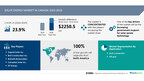
NEW YORK, Feb. 5, 2025 /PRNewswire/ — Report with market evolution powered by AI – The solar energy market in canada size is estimated to grow by USD 2.25 billion from 2025-2029, according to Technavio. The market is estimated to grow at a CAGR of 23.9% during the forecast period. Increasing government support for solar power technology is driving market growth, with a trend towards growing adoption of pay-as-you-go (payg) model. However, competition from alternative energy sources poses a challenge. Key market players include Azgard Solar Inc., Bird Construction Inc., BluEarth Renewables, Canadian Solar Inc., DP Energy, Gorkon Industries, Great Canadian Solar Ltd., Greengate Power Corp., HELIENE Inc., miEnergy Inc., PureSky Community Solar Inc., Quadra Power Inc., and VCT Group Inc..
Key insights into market evolution with AI-powered analysis. Explore trends, segmentation, and growth drivers- View Free Sample PDF
Solar Energy Market In Canada Scope
Report Coverage
Details
Base year
2024
Historic period
2019 – 2022
Forecast period
2025-2029
Growth momentum & CAGR
Accelerate at a CAGR of 23.9%
Market growth 2025-2029
USD 2250.5 million
Market structure
Concentrated
YoY growth 2022-2023 (%)
20.1
Regional analysis
Canada
Performing market contribution
North America at 100%
Key countries
Canada
Key companies profiled
Azgard Solar Inc., Bird Construction Inc., BluEarth Renewables, Canadian Solar Inc., DP Energy, Gorkon Industries, Great Canadian Solar Ltd., Greengate Power Corp., HELIENE Inc., miEnergy Inc., PureSky Community Solar Inc., Quadra Power Inc., and VCT Group Inc.
Market Driver
Solar energy is a rapidly growing sector in Canada’s energy market, with renewables, including hydro, wind power, and solar, accounting for over 80% of new electricity capacity additions in 2020. The solar industry is gaining momentum as the world moves towards net-zero emissions and the Paris Agreement. Solar energy harnesses the power of the sun through photovoltaic cells, converting radiation into electricity. The market is witnessing a shift from traditional fossil fuels like coal to cleaner, low-cost energy generation. BP’s latest report predicts solar energy will overtake hydro as the largest renewable energy source by 2025. Solar energy is not just about electricity but also heating, making it a versatile solution for both rural and urban communities. The Canadian solar market faces challenges such as access to electricity in remote areas, where diesel generators are commonly used. However, solar energy offers self-sufficiency and reduces environmental pollution and carbon footprint. The solar industry requires technical expertise, trained personnel for installation, maintenance, and operation. Government subsidies and grid connections are crucial for the growth of this sector. Solar technology continues to evolve, with advancements in monocrystalline, polycrystalline, cadmium telluride, and amorphous silicon cells. Energy storage devices and power conversion technologies improve efficiency and ensure a consistent power supply. The solar industry’s future lies in its ability to adapt to the evolving energy landscape, including the growing demand for EV charging infrastructure.
Over the past decade, the demand for improving energy access has been a significant focus across Canada. The decreasing costs of decentralized renewable technologies, such as solar photovoltaic (PV) and energy storage, have made off-grid technologies more affordable. However, the high upfront costs of building and financing renewable-based mini-grids have been a barrier for households. To address this issue, a new business model called Pay-As-You-Go (PAYG) has emerged. Under this model, customers make a small initial payment and follow up with predetermined installments, typically made via mobile phones. If a customer fails to make a payment or is overdue, the system is designed to be disabled. This innovative financing solution has the potential to accelerate the adoption of solar systems in Canada, particularly for off-grid and under-served communities.
Request Sample of our comprehensive report now to stay ahead in the AI-driven market evolution!
Market Challenges
• The Solar Energy Market in Canada faces challenges from fossil fuels, hydro, and wind power generation as traditional energy sources. The shift towards Net-Zero Emissions and the Paris Agreement pushes for more Renewable Energy Sources. Solar energy, derived from the Sun, is a promising solution for electricity and heat generation. However, radiation levels and climate change pose challenges. Solar energy’s efficiency can be improved through Photovoltaic cells, including monocrystalline, polycrystalline, cadmium telluride, and amorphous silicon cells. BP reports that solar energy will be the cheapest energy source by 2025. Challenges include installation, storage, and power conversion devices. Coal, hydro, and diesel generators contribute to greenhouse gas emissions, environmental pollution, and population growth’s carbon footprint. Government subsidies and access to electricity are crucial for rural communities. Grid connections, technical expertise, trained personnel, maintenance, and operation require investment. Self-sufficiency through solar energy technology is a goal, but EV charging infrastructure and end-use efficiency must also be considered.
• The solar energy market in Canada has seen significant growth, yet fossil fuels continue to dominate the country’s energy production and consumption. According to the International Energy Agency (IEA), over 80% of Canada’s energy comes from conventional sources like oil, coal, and natural gas. Establishing renewable energy farms for solar power generation involves substantial costs, and the power output from these sources is not yet equivalent to that of fossil fuels.
Discover how AI is revolutionizing market trends- Get your access now!
Segment Overview
This solar energy market in Canada report extensively covers market segmentation by
ApplicationGrid-connectedOff-gridEnd-userUtilityRooftopTechnologyPhotovoltaic SystemsConcentrated Solar Power SystemsGeographyNorth America
1.1 Grid-connected- The grid-connected segment of Canada’s solar energy market is projected to dominate the industry in 2024, driven by the increasing adoption of renewable energy sources, electric mobility, and digitalization of the grid. Grid-connected solar PV systems directly supply solar energy to buildings without energy storage systems, with surplus energy fed back to the grid and shortfalls imported. Cost reductions in solar PV systems make them a cost-effective electricity solution. The Canadian government’s energy policies support solar PV installation in residential homes and businesses, with plans to add 2 GW of renewable energy, including solar, to the grid by 2030. These factors will significantly fuel the growth of the grid-connected segment of the solar energy market in Canada.
Download a Sample of our comprehensive report today to discover how AI-driven innovations are reshaping competitive dynamics
Research Analysis
Solar energy is a renewable and clean source of electricity that harnesses the power of the sun through photovoltaic cells. It is becoming an increasingly popular alternative to traditional fossil fuel-based energy sources due to its environmental benefits and potential for low-cost energy generation. Solar energy is a key component of the transition to renewable energy sources and net-zero emissions, as outlined in the Paris Agreement and the global effort to combat climate change. The solar energy market in Canada is growing, with advancements in technology leading to more efficient solar panels and the integration of energy storage devices and power conversion devices. However, the transition to solar energy also presents challenges, such as the need for technical expertise and trained personnel for installation, maintenance, and operation. Access to electricity, particularly in rural communities, is a significant issue in Canada. Solar energy offers a solution, with the potential to provide power to remote areas through the use of solar panels and battery storage. However, the initial cost of installation and grid connections can be a barrier. Government subsidies and incentives can help make solar energy more accessible and affordable for Canadians. The use of solar energy also reduces greenhouse gas emissions and decreases environmental pollution, making it an attractive option for those looking to reduce their carbon footprint. Despite these benefits, solar energy still faces competition from traditional energy sources such as coal and diesel generators. However, as the technology continues to advance and the cost of solar energy continues to decrease, it is poised to become a major player in Canada’s energy market.
Market Research Overview
Solar energy is a renewable energy source that harnesses the power of the sun using photovoltaic cells to generate electricity and provide heat. Canada, with its abundant sunlight and commitment to net-zero emissions, is an ideal market for solar energy. Solar energy production does not emit greenhouse gases, making it an environmentally friendly alternative to fossil fuels, hydro, and other traditional energy sources. The solar industry in Canada is growing, driven by the need to reduce carbon footprint, access to electricity in rural communities, and the increasing popularity of electric vehicles (EVs). Solar energy can be generated using various technologies such as monocrystalline, polycrystalline, cadmium telluride, and amorphous silicon cells. The installation, operation, and maintenance of solar energy systems require technical expertise, trained personnel, and access to grid connections. Energy storage devices and power conversion devices are essential for maximizing the efficiency of solar energy systems. The Canadian government offers subsidies to encourage the adoption of renewable energy sources and reduce reliance on coal and diesel generators. The solar industry also offers opportunities for self-sufficiency and reducing environmental pollution. The Paris Agreement and the global focus on climate change further highlight the importance of solar energy in the transition to a low-carbon economy.
Table of Contents:
1 Executive Summary
2 Market Landscape
3 Market Sizing
4 Historic Market Size
5 Five Forces Analysis
6 Market Segmentation
ApplicationGrid-connectedOff-gridEnd-userUtilityRooftopTechnologyPhotovoltaic SystemsConcentrated Solar Power SystemsGeographyNorth America
7 Customer Landscape
8 Geographic Landscape
9 Drivers, Challenges, and Trends
10 Company Landscape
11 Company Analysis
12 Appendix
About Technavio
Technavio is a leading global technology research and advisory company. Their research and analysis focuses on emerging market trends and provides actionable insights to help businesses identify market opportunities and develop effective strategies to optimize their market positions.
With over 500 specialized analysts, Technavio’s report library consists of more than 17,000 reports and counting, covering 800 technologies, spanning across 50 countries. Their client base consists of enterprises of all sizes, including more than 100 Fortune 500 companies. This growing client base relies on Technavio’s comprehensive coverage, extensive research, and actionable market insights to identify opportunities in existing and potential markets and assess their competitive positions within changing market scenarios.
Contacts
Technavio Research
Jesse Maida
Media & Marketing Executive
US: +1 844 364 1100
UK: +44 203 893 3200
Email: media@technavio.com
Website: www.technavio.com/
View original content to download multimedia:https://www.prnewswire.com/news-releases/solar-energy-market-in-canada-to-grow-by-usd-2-25-billion-from-2025-2029–government-support-for-solar-technology-boosting-growth-ais-impact-on-transformation—technavio-302368256.html
SOURCE Technavio










 Coin Market5 days ago
 Technology5 days ago
 Coin Market5 days ago
 Technology5 days ago
 Coin Market5 days ago
 Coin Market5 days ago
 Technology5 days ago
 Technology5 days ago