Connect with us

Technology

Printed Circuit Board (PCB) Market to Grow by USD 26.8 Billion by 2029, Rising Smartphone Adoption Boosts Market, Report on AI Impact on Market Trends – Technavio

Published

on

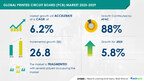
NEW YORK, Feb. 5, 2025 /PRNewswire/ — Report on how AI is redefining market landscape – The global Printed circuit board (PCB) market size is estimated to grow by USD 26.8 billion from 2025-2029, according to Technavio. The market is estimated to grow at a CAGR of over 6.2%  during the forecast period. Rising adoption of smartphones is driving market growth, with a trend towards increasing inclination toward flexibility and industry automation. However, environmental concerns regarding pcbs  poses a challenge. Key market players include APCT, China Circuit Technology Shantou Corp., Compeq Manufacturing Co. Ltd., Daedeok Electronics Co. Ltd., Dynamic Electronics Co. Ltd., Ibiden Co. Ltd., Jabil Inc., Korea Circuit Co. Ltd., NOK Corp., RAYMING TECHNOLOGY, Shenzhen Kinwong Electronic Co. Ltd, Shenzhen SenYan Circuit Co. Ltd., ShenZhen Wonderful Technology Co. Ltd, Shenzhen Zhongxinhua Electronics Co. Ltd., Sumitomo Electric Industries Ltd., TTM Technologies Inc., Victory Giant Technology (Huizhou) Co. Ltd., Vishal International, and Zhen Ding Technology Holding Ltd..

Key insights into market evolution with AI-powered analysis. Explore trends, segmentation, and growth drivers- View Free Sample PDF

Printed Circuit Board (PCB) Market Scope

Report Coverage

Details

Base year

2024

Historic period

2019 – 2023

Forecast period

2025-2029

Growth momentum & CAGR

Accelerate at a CAGR of 6.2%

Market growth 2025-2029

USD 26.8 billion

Market structure

Fragmented

YoY growth 2022-2023 (%)

5.8

Regional analysis

APAC, North America, Europe, Middle East and Africa, and South America

Performing market contribution

APAC at 88%

Key countries

China, Taiwan, South Korea, Japan, and India

Key companies profiled

APCT, China Circuit Technology Shantou Corp., Compeq Manufacturing Co. Ltd., Daedeok Electronics Co. Ltd., Dynamic Electronics Co. Ltd., Ibiden Co. Ltd., Jabil Inc., Korea Circuit Co. Ltd., NOK Corp., RAYMING TECHNOLOGY, Shenzhen Kinwong Electronic Co. Ltd, Shenzhen SenYan Circuit Co. Ltd., ShenZhen Wonderful Technology Co. Ltd, Shenzhen Zhongxinhua Electronics Co. Ltd., Sumitomo Electric Industries Ltd., TTM Technologies Inc., Victory Giant Technology (Huizhou) Co. Ltd., Vishal International, and Zhen Ding Technology Holding Ltd.

Market Driver

The Printed Circuit Board (PCB) market is experiencing significant growth due to the increasing demand for electronic devices, particularly in sectors like 5G, Internet of Things (IoT), Internet of Vehicles, and consumer electronics. Key trends include the use of PCBs in smartphones, cameras, PCs, tablets, and consumer gadgets. However, environmental concerns surrounding electronic waste and the use of hazardous materials like lead, mercury, cadmium, and brominated flame retardants are driving the industry towards greener alternatives. Semiconductor plants and IC substrate manufacturers are investing in Rigid PCBs, Flexible Circuits, and Rigid Flex to meet the demands of automobile applications, battery control systems, engine timing systems, digital displays, audio systems, power relays, and antilock brake systems. The market is also witnessing in demand from smart devices and IoT gadgets, with companies like Quanta Computer and Apple being major suppliers. The PCB foundation material market is evolving, with a shift towards composite epoxy, fiberglass, and FR-4 materials. New technologies like 3D printing and industrial automation are transforming PCB production processes. Government institutions and industrial robots are also major consumers of PCBs for their high-temperature performance, structural integrity, and mechanical stress resistance. The PCB market is expected to continue growing, driven by the increasing demand for electronic equipment and the reliability of PCBs in various applications. However, challenges such as electrical property degradation and thermal stability must be addressed to ensure PCB reliability. 

The automation of industries is a growing trend as companies integrate computers and machines for improved control systems. To remain competitive, businesses must adopt automation, enabling optimal efficiency in productivity, operation costs, product quality, and safety. With the rising power density of electrical equipment, efficient power consumption is crucial. PCBs are essential in ensuring power efficiency within compact applications. Furthermore, the increasing adoption of cobots, industrial robots, and drones will enhance industrial automation, contributing to overall industry advancement. 

Request Sample of our comprehensive report now to stay ahead in the AI-driven market evolution!

Market Challenges

The Printed Circuit Board (PCB) market faces significant challenges as the demand for electronic devices, particularly those integrating 5G, Internet of Things (IoT), Internet of Vehicles, and artificial intelligence. PCBs are essential components in consumer electronics, including smartphones, cameras, PCs, tablets, and more. However, the production of PCBs involves the use of materials like lead, mercury, cadmium, and brominated flame retardants, which pose environmental concerns and regulatory challenges. Semiconductor plants and IC substrate manufacturers must address these issues while ensuring high-quality PCBs for industries such as communications, computer, and automobile applications. Flexible circuits, rigid flex, and composite epoxy materials like fiberglass and FR-4 are used in various applications, from digital displays and audio systems to battery control systems and engine timing systems. As the market evolves, new technologies like 3D printing and industrial automation emerge, offering potential solutions to the challenges of PCB production and reliability. Companies like Quanta Computer, an Apple supplier, and automobile manufacturers rely on rigid PCBs for their structural integrity and high-temperature performance. Government institutions and industries focusing on industrial robots and automation machinery also depend on PCBs for their electrical property degradation and thermal stability. In conclusion, the PCB market faces numerous challenges, including environmental concerns, regulatory pressures, and the need for high-performance materials. To meet these challenges, companies must focus on developing sustainable manufacturing processes and innovative materials, such as glass fabric, epoxy resin, and advanced fiberglass composites, to ensure the reliability and structural integrity of PCBs in various applications.The Printed Circuit Board (PCB) market involves the production and disposal of boards made up of hazardous components, primarily metal, plastic, ceramic, and copper, with epoxy resins containing a significant amount of chlorine. Previously, lead solders were used in PCBs, but the industry has shifted towards lead-free alternatives due to environmental concerns. Proper dismantling of components is necessary before disposing of the PCB. Recycling efforts face challenges such as temperature rises, mechanical shocks, and delamination. A standard PCB consists of 40% metal, 30% plastic, and 30% ceramic, with the PCB itself comprising 28% of these materials. The industry is continually seeking sustainable solutions to minimize environmental impact.

Discover how AI is revolutionizing market trends- Get your access now!

Segment Overview 

This printed circuit board (pcb) market report extensively covers market segmentation by  

TypeMulti-layerHDISingle SidedDouble SidedEnd-userCommunication Network InfrastructureIT And PeripheralsAutomotiveConsumer ElectronicsOthersGeographyAPACNorth AmericaEuropeMiddle East And AfricaSouth America

1.1 Multi-layer-  Multi-layer Printed Circuit Boards (PCBs) continue to dominate the global market in 2024 due to their versatility and intricacy. These boards consist of multiple layers of substrate material interconnected by conductive pathways. The surging demand for compact and high-performance electronic devices in sectors like telecommunications, automotive, and consumer electronics fuels the need for multi-layer PCBs. Smartphones and advanced networking equipment, such as routers and servers, are prime applications. In the automotive industry, electronic control units (ECUs) benefit from the compact design of multi-layer PCBs, enabling efficient functionality in confined spaces. With technological advancements, the demand for multi-layer PCBs is projected to escalate, solidifying their role as a key product and driving the expansion of the global PCB market.

Download a Sample of our comprehensive report today to discover how AI-driven innovations are reshaping competitive dynamics

Research Analysis

The Printed Circuit Board (PCB) market is experiencing significant growth due to the increasing demand for electronic devices in various sectors. The advent of 5G technology and the Internet of Things (IoT) are driving the market, with applications extending to the Internet of Vehicles (IoV), artificial intelligence (AI), and consumer electronics. Smartphones, cameras, and tripods are some of the consumer electronics that rely heavily on PCBs. In the industrial sector, PCBs are used in telecommunication infrastructure, PLCs, and transistors. PCBs come in various forms, including rigid, flexible, and rigid-flex, made from materials like composite epoxy and fiberglass. Integrated circuits, resistors, electrolytic capacitors, and transistors are essential components of PCBs. Shennan Circuits and IC Substrate are notable manufacturers of PCBs and IC substrates, respectively.

Market Research Overview

The Printed Circuit Board (PCB) market is witnessing significant growth due to the increasing demand for electronic devices in various sectors such as 5G, Internet of Things (IoT), Internet of Vehicles, artificial intelligence, consumer electronics, and more. PCBs are essential components in these devices, including smartphones, cameras, PCs, tablets, and more. However, the production of PCBs involves the use of materials like lead, mercury, cadmium, and brominated flame retardants, which have environmental concerns. Semiconductor plants, IC substrate manufacturers, and flexible circuits producers are key players in the PCB industry. PCBs are used in various applications, including communications equipment, industrial automation, medical devices, automobile applications, and more. PCBs are made of composite epoxy and fiberglass, with high dielectric strength, dimensional stability, electrical insulating qualities, mechanical strength, flame-retardant nature, thermal insulation properties, and high-temperature performance. PCB production involves various processes, including 3D printing, and the foundation material used can affect the reliability and electrical property degradation of the PCB. Government institutions and industrial robots are significant consumers of PCBs, and the market is expected to grow further due to the increasing demand for smart devices and IoT gadgets. Millennials’ preference for advanced technology is also driving the market’s growth. PCBs are essential for the structural integrity and mechanical stress resistance of electronic equipment, making them a critical component in various industries.

Table of Contents:

1 Executive Summary
2 Market Landscape
3 Market Sizing
4 Historic Market Size
5 Five Forces Analysis
6 Market Segmentation

TypeMulti-layerHDISingle SidedDouble SidedEnd-userCommunication Network InfrastructureIT And PeripheralsAutomotiveConsumer ElectronicsOthersGeographyAPACNorth AmericaEuropeMiddle East And AfricaSouth America

7 Customer Landscape
8 Geographic Landscape
9 Drivers, Challenges, and Trends
10 Company Landscape
11 Company Analysis
12 Appendix

About Technavio

Technavio is a leading global technology research and advisory company. Their research and analysis focuses on emerging market trends and provides actionable insights to help businesses identify market opportunities and develop effective strategies to optimize their market positions.

With over 500 specialized analysts, Technavio’s report library consists of more than 17,000 reports and counting, covering 800 technologies, spanning across 50 countries. Their client base consists of enterprises of all sizes, including more than 100 Fortune 500 companies. This growing client base relies on Technavio’s comprehensive coverage, extensive research, and actionable market insights to identify opportunities in existing and potential markets and assess their competitive positions within changing market scenarios.

Contacts

Technavio Research
Jesse Maida
Media & Marketing Executive
US: +1 844 364 1100
UK: +44 203 893 3200
Email: media@technavio.com
Website: www.technavio.com/

View original content to download multimedia:https://www.prnewswire.com/news-releases/printed-circuit-board-pcb-market-to-grow-by-usd-26-8-billion-by-2029–rising-smartphone-adoption-boosts-market-report-on-ai-impact-on-market-trends—technavio-302368503.html

SOURCE Technavio

Continue Reading

Technology

Cboe Clear U.S. Receives SEC Approval to Expand Clearing Capabilities

Published

on

By

SEC registration enables Cboe Clear U.S. to clear binary securities options alongside futures, positioning it to support innovation across the market

CHICAGO, Oct. 23, 2026 /PRNewswire/ — Cboe Global Markets, Inc. (Cboe: CBOE), a leading global markets operator and pioneer in equity and index derivatives, today announced that Cboe Clear U.S., LLC (CCUS) has received temporary registration from the U.S. Securities and Exchange Commission (SEC) to operate as a Covered Clearing Agency.

The registration expands CCUS’s clearing capabilities beyond its existing authorities as a Commodity Futures Trading Commission (CFTC)-registered Derivatives Clearing Organization (DCO) to clear securities products in addition to futures and swaps products. Together with recent enhancements to its regulatory framework and product scope, the milestone positions CCUS to support innovation and emerging opportunities across a broad range of assets and markets.

CCUS will initially use its SEC registration to clear Cboe’s binary securities options tied to specified corporate key performance indicators (KPIs), which are planned to list on Cboe Options Exchange and be available on Robinhood in the fourth-quarter 2026. CCUS also recently received CFTC approval to clear margined futures broadly and continues to clear digital asset derivatives under its DCO designation.

“Clearing plays a critical role in bringing innovation to market,” said Dale Michaels, Head of Cboe Clear U.S. “These expanded capabilities position Cboe Clear U.S. to become an innovation lane to support new products and meet evolving customer needs, while maintaining the rigorous risk management standards that are fundamental to our business.”

These efforts complement Cboe’s longstanding partnership with The Options Clearing Corporation (OCC)® and Cboe’s continued commitment to supporting the established clearing infrastructure for traditional equity options.

The development builds on the growth of Cboe’s established European clearing business, where Cboe Clear Europe has become the leading pan-European equities central counterparty, while expanding into new services such as securities financing transaction clearing. Together, these advances demonstrate Cboe’s ability to extend its clearing capabilities across markets and asset classes.

To support its own future growth, CCUS has strengthened its infrastructure over the past year, including electing in June to become a Subpart C DCO. In doing so, CCUS is voluntarily adopting the enhanced standards the CFTC applies to systemically important DCOs for financial resources, risk management and operational resilience, aligning with those applied to leading global clearing organizations.

About Cboe Global Markets

Cboe Global Markets (Cboe: CBOE) is a leading global markets operator with a long history of innovation in equity and index derivatives. Since launching the world’s first listed options exchange in 1973, Cboe has pioneered landmark products, including the introduction of S&P 500® index options and the creation of the VIX® Index, the world’s leading gauge of market volatility, reshaping how investors manage risk and access opportunity. Today, Cboe operates derivatives, equities, and FX markets, providing trading, clearing, and investment solutions for customers worldwide. To learn more, visit www.cboe.com.

Cboe Media Contacts


Cboe Analyst Contact


Angela Tu

+1-646-856-8734

atu@cboe.com

Tim Cave

+44 (0) 7593-506-719

tcave@cboe.com

Kenneth Hill, CFA

+1-312-786-7559

khill@cboe.com

CBOE-C
CBOE-OE

Cboe®, Cboe Global Markets®, and VIX ® are registered trademarks or service marks of Cboe Exchange, Inc and S&P 500® is a registered trademark of Standard & Poor’s Financial Services LLC. All other trademarks and service marks are the property of their respective owners. 

Cautionary Statements Regarding Forward-Looking Information

This press release contains forward-looking statements within the meaning of the Private Securities Litigation Reform Act of 1995 that involve a number of risks and uncertainties. You can identify these statements by forward-looking words such as “may,” “might,” “should,” “expect,” “plan,” “anticipate,” “believe,” “estimate,” “predict,” “potential” or “continue,” and the negative of these terms and other comparable terminology. All statements that reflect our expectations, assumptions or projections about the future other than statements of historical fact are forward-looking statements. These forward-looking statements, which are subject to known and unknown risks, uncertainties and assumptions about us, may include projections of our future financial performance based on our growth strategies and anticipated trends in our business. These statements are only predictions based on our current expectations and projections about future events. There are important factors that could cause our actual results, level of activity, performance or achievements to differ materially from those expressed or implied by the forward-looking statements.

We operate in a very competitive and rapidly changing environment. New risks and uncertainties emerge from time to time, and it is not possible to predict all risks and uncertainties, nor can we assess the impact of all factors on our business or the extent to which any factor, or combination of factors, may cause actual results to differ materially from those contained in any forward-looking statements.

Some factors that could cause actual results to differ include: the loss of our right to exclusively list and trade certain index options and futures products; economic, political and market conditions; compliance with legal and regulatory obligations; price and new products and services competition and consolidation in our industry; decreases in trading or clearing volumes, market data fees or a shift in the mix of products traded on our exchanges; legislative or regulatory changes or changes in tax regimes; our ability to protect our systems and communication networks from security vulnerabilities and breaches; our ability to attract and retain skilled management and other personnel; increasing competition by foreign and domestic entities; our business and operational dependence on and exposure to risk from third parties; factors that impact the quality and integrity of our and other applicable indices; our ability to manage our global operations, growth, and strategic acquisitions, wind downs, divestitures, or alliances effectively; increases in the cost of the products and services we use; our ability to operate our business without violating the intellectual property rights of others and the costs associated with protecting our intellectual property rights; our ability to minimize the risks, including our credit, liquidity, market, investment, counterparty, and default risks, associated with operating our  clearinghouses; our ability to accommodate trading and clearing volume and transaction traffic, including significant increases, without failure or degradation of performance of our systems; misconduct by those who use our markets or our products or for whom we clear transactions; challenges to our use of open source software code; our ability to meet our compliance obligations, including managing our business interests and our regulatory responsibilities; the loss of key customers or a significant reduction in trading or clearing volumes by key customers; damage to our reputation; the ability of our compliance and risk management methods to effectively monitor and manage our risks; restrictions imposed by our debt obligations and our ability to make payments on or refinance our debt obligations; our ability to maintain an investment grade credit rating; impairment of our goodwill, long-lived assets, investments or intangible assets; the accuracy of our estimates and expectations; and litigation risks and other liabilities. More detailed information about factors that may affect our actual results to differ may be found in our filings with the SEC, including in our Annual Report on Form 10-K for the year ended December 31, 2025 and other filings made from time to time with the SEC.

We do not undertake, and we expressly disclaim, any duty to update any forward-looking statement whether as a result of new information, future events or otherwise, except as required by law. Readers are cautioned not to place undue reliance on these forward-looking statements, which speak only as of the date hereof.

View original content to download multimedia:https://www.prnewswire.com/news-releases/cboe-clear-us-receives-sec-approval-to-expand-clearing-capabilities-302918297.html

SOURCE Cboe Global Markets, Inc.

Continue Reading

Technology

Hears Everything, Uploads Nothing: VoxNexus Launches Android’s First Low-Power On-Device Always-On Voice Artificial Intelligence (AI)

Published

on

By

VoxNexus’ new on-device ambient listening solution runs for 12 hours on 2.49% of a phone’s battery and never sends audio to the cloud

MADRID, Oct. 23, 2026 /PRNewswire/ — VoxNexus (www.VoxNexus.ai) released VoxEdge, an on-device voice stack that brings speech recognition, translation and speech synthesis to affordable Android devices, entirely offline. VoxEdge supports speech recognition in 36 languages, translation in 103 languages, and speech synthesis in 45 languages—all running with no connection, no data bundle, and no cloud token bills.

AI should work for everyone, not just for speakers of a handful of mainstream languages. Yet across much of Africa, voice AI has been held back by scarce training data and the lack of targeted fine-tuning. Everyday speech also includes code-switching and dialect variation, while cloud-based inference costs can make deployment at scale expensive. 

VoxNexus’s solutions run entirely on device, and every query is free once the model is installed on the device. Its speech recognition model has as few as 65 million parameters and achieves a lower word error rate than open-source models nearly ten times its size.

“Under-resource languages aren’t small languages. Hundreds of millions of people speak them. Until now, AI models just haven’t learned them yet,” said Charles Shi, CEO of VoxNexus.

VoxNexus also launched VoxSense, an on-device ambient listening solution that uses only 162 mAh for 12 hours of continuous listening, around 2.5% of a 6,500 mAh phone battery. By keeping all processing on device, VoxSense makes always-on listening practical without draining the battery and without sending any audio to the cloud. Developers and device makers can easily integrate it through a license and a simple SDK. Developers can request a free trial here: www.VoxNexus.ai.

VoxSense and VoxEdge were unveiled at the MediaTek Dimensity 9600 launch in Madrid on October 19.

Distributed by APO Group on behalf of VoxNexus AI. 

About VoxNexus:
VoxNexus builds AI that hears and speaks — for everyone, everywhere, all the time. Its audio intelligence runs entirely on-device, delivering low latency, built-in privacy, and zero token cost across any device with a chip. VoxNexus is headquartered in Singapore. Website: www.VoxNexus.ai. Contact: public@voxnexus.ai  

VoxNexus demonstrates live on-device speech recognition at the MediaTek Dimensity 9600 launch in Madrid on Oct. 19, 2026. Spanish and English conversations were transcribed in real time on the phone, with no cloud connection. (Photo: VoxNexus) 

Speaks Your Language, No Internet Needed: VoxNexus Brings On-Device Voice Artificial Intelligence (AI) in 100+ Languages to Affordable Android Devices

View original content:https://www.prnewswire.com/news-releases/hears-everything-uploads-nothing-voxnexus-launches-androids-first-low-power-on-device-always-on-voice-artificial-intelligence-ai-302918304.html

SOURCE VoxNexus AI

Continue Reading

Technology

team.blue extends €1.1 billion of its Term Loan B to 2032 in the largest software Euro term loan issuance in the last 12 months

Published

on

By

GHENT, Belgium, Oct. 23, 2026 /PRNewswire/ — team.blue, a leading pan-European provider of digital solutions for small and medium-sized businesses (SMBs) backed by Hg, CPP Investments and Sofina, today announces the successful pricing of an amendment and maturity extension for €1.1 billion of its existing €1.35 billion Term Loan B. The transaction priced on 22 October 2026, with the refinanced tranche extended from September 2029 to July 2032, reinforcing the Company’s prudent capital structure approach.

Strong demand from a broad group of institutional investors enabled team.blue to upsize the transaction twice in-market, taking the final deal size to €1.1 billion from a minimum initial launch size of €500 million, despite recent credit market volatility. Pro forma for the transaction, c.90% of team.blue’s term debt now matures in 2032.

The transaction comes at a time of significant momentum for team.blue, with continued double-digit revenue growth and strong cash generation supporting its deleveraging trajectory. Its products help Europe’s SMBs get online, get customers, get paid and stay compliant, and AI-enabled products are increasingly driving new customer growth. team.blue continues to innovate across its portfolio, from smarter tools within its brands to secure European cloud hosting built for customers’ growing AI workloads. Its category-leading SaaS brands are also integrating with leading AI assistants, bringing team.blue’s products to customers wherever they work.

Transaction highlights

The largest software Euro term loan issuance in the last 12 months€1.1 billion Term Loan B, borrowed by team.blue Finco S.à r.l., maturing July 2032Priced at E + 425bps with a 0% floor and an OID of 98.5Upsized twice from an initial €500 million, reflecting a heavily oversubscribed order bookCorporate and facility ratings of B3 (Moody’s) and B (S&P), both with stable outlooksBofA acted as Global Coordinator and Left Lead Physical Bookrunner, alongside Barclays. ABN AMRO, BNP Paribas, Citi, ING and J.P. Morgan acted as Bookrunners

Jonathan Thackray, Chief Financial Officer of team.blue, said:
“We set out to extend €500 million of our Term Loan B, and the depth of support from our institutional investor base allowed us to go much further. This reflects confidence in team.blue’s highly recurring, cash-generative model and our position as a leading digital partner for Europe’s SMBs. It gives us the flexibility to keep innovating and investing in the digital and AI-enabled tools our customers rely on.”

About team.blue
team.blue is the pan-European digital partner for small and medium businesses, serving more than 3.5 million customers in 24 countries. From web hosting, domains, email and cloud and AI infrastructure to e-commerce, engagement, payments and compliance tools, team.blue helps SMBs get online, get customers, get paid and stay compliant. Supported by more than 4,000 employees, team.blue’s vision is to make online business success simpler, with artificial intelligence at every step. 

View original content:https://www.prnewswire.co.uk/news-releases/teamblue-extends-1-1-billion-of-its-term-loan-b-to-2032-in-the-largest-software-euro-term-loan-issuance-in-the-last-12-months-302918306.html

Continue Reading

Trending