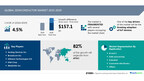
DELRAY BEACH, Fla., Oct. 19, 2026 /PRNewswire/ — According to MarketsandMarkets™, the Environment, Health, and Safety Market is projected to grow from USD 9.28 billion in 2026 and to reach USD 13.97 billion by 2032, at a Compound Annual Growth Rate (CAGR) of 7.0% during the forecast period.
Browse 300 market data Tables and 55 Figures spread through 350 Pages and in-depth TOC on “Environment, Health, and Safety Market – Global Forecast to 2032”
Environment, Health, and Safety Market Size & Forecast:
Market Size Available for Years: 2020–20322025 Market Size: USD 8.62 billion2026 Market Size: USD 9.28 billion2032 Projected Market Size: USD 13.97 billionCAGR (2026–2032): 7.0%
Environment, Health, and Safety Market Trends & Insights:
The global EHS market is witnessing strong growth, driven by increasing regulatory requirements, growing focus on workplace safety, and the need for organizations to manage environmental and occupational risks more effectively.By offering, the services segment is expected to register the highest CAGR of 9.8%.By vertical, the energy & utilities segment is projected to grow at the fastest rate from 2026 to 2032.Asia Pacific is projected to be the fastest-growing region in the global Environment, Health, and Safety Market.
Download PDF Brochure: https://www.marketsandmarkets.com/pdfdownloadNew.asp?id=59608773
The Environment, Health, and Safety Market is expected to reach USD 13.97 billion by 2032 from USD 9.28 billion in 2026, at a compound annual growth rate (CAGR) of 7.0% during 2026–2032. The market is witnessing strong growth as organizations increasingly focus on workplace safety, environmental compliance, risk management, and operational efficiency. Stricter regulations, rising awareness of employee health and safety, and the need to reduce workplace incidents are accelerating EHS adoption. Enterprises are increasingly investing in digital EHS software and services to streamline compliance management, incident reporting, risk assessment, audits, inspections, and environmental monitoring. The growing adoption of cloud-based platforms, analytics, automation, and connected technologies further supports more integrated, data-driven EHS management.
The growing deployment of EHS technologies enables organizations to continuously monitor workplace risks, environmental performance, safety incidents, and compliance requirements. These solutions support incident management, corrective actions, risk assessment, safety inspections, environmental reporting, and regulatory compliance. EHS software centralizes data, automates workflows, improves visibility, and enables faster decision-making, while services support implementation, consulting, training, and ongoing system management. As organizations prioritize safer workplaces, regulatory compliance, and sustainable operations, EHS market adoption is expected to expand across developed and emerging economies.
Request for Proposal: https://www.marketsandmarkets.com/requestsampleNew.asp?id=59608773
By offering, the software segment is expected to hold the largest market share.
The software segment is expected to hold the largest share of the global Environment, Health, and Safety (EHS) market, driven by the growing need for centralized, automated, data-driven management of workplace safety, environmental compliance, and operational risks. Organizations are increasingly adopting EHS software to manage incident reporting, risk assessments, audits, inspections, compliance requirements, environmental monitoring, and employee health and safety programs. The growing focus on regulatory compliance, sustainability, workplace safety, and ESG initiatives is further increasing demand for integrated EHS platforms.
These solutions leverage cloud computing, artificial intelligence (AI), analytics, mobile technologies, and automation to improve real-time visibility into EHS performance, identify potential risks, streamline reporting, and support faster corrective actions. Integration with enterprise systems, IoT devices, connected equipment, and environmental monitoring technologies is further enhancing EHS software capabilities. As organizations prioritize proactive risk management, regulatory compliance, and sustainability, EHS software is becoming critical to improving operational efficiency, reducing incidents, and enabling scalable, data-driven EHS management.
By service, the analytics services segment is expected to witness the highest growth rate during the forecast period.
The analytics services segment is expected to grow rapidly as organizations increasingly use EHS data analytics to identify risks, monitor compliance, and improve workplace safety. The growing volume of environmental, health, and safety data is driving demand for real-time dashboards, predictive analytics, incident trend analysis, and performance monitoring.
Analytics services also support EHS decision-making by converting complex operational data into actionable insights without requiring significant in-house analytical capabilities. The increasing adoption of cloud-based EHS platforms, IoT-enabled monitoring, and AI-driven analytics is enabling proactive risk identification, improved regulatory compliance, and stronger safety performance, further driving segment growth.
Request Pricing: https://www.marketsandmarkets.com/Enquiry_Before_BuyingNew.asp?id=59608773
Asia Pacific is expected to register the highest growth rate during the forecast period.
Asia Pacific is projected to register the highest CAGR in the Environment, Health, and Safety (EHS) market during the forecast period, driven by rapid industrialization, expanding manufacturing and infrastructure activities, stricter workplace safety regulations, and increasing adoption of cloud-based EHS software across countries such as China, Japan, India, South Korea, and Australia. Organizations are increasingly deploying digital EHS platforms for incident management, risk assessment, compliance management, environmental monitoring, workforce health, and safety analytics to improve operational visibility and reduce workplace risks. The region’s growing focus on sustainability, ESG reporting, worker protection, and regulatory compliance is further accelerating demand for integrated EHS solutions and services. AI, real-time analytics, mobile applications, and automated reporting are also enabling organizations to shift from reactive compliance to proactive risk prevention. A notable recent development is Cority’s 2026 expansion of AI-driven EHS capabilities, with more than 30 AI workflows demonstrated across safety, health, environmental, and operational risk management, highlighting the broader shift toward intelligent and integrated EHS platforms.
Top Companies in Environment, Health, and Safety Market:
The Top Companies in Environment, Health, and Safety Market are Wolters Kluwer (Netherlands), VelocityEHS (US), Intelex (Canada), Benchmark ESG (US), Cority (Canada), Intertek (UK), Sphera (US), Quentic (Germany), PureEHS (US), Ideagen (UK), SAP (Germany), IBM (US), Evotix (UK), EcoOnline (UK), Diligent Corporation (US), Octave Reliance (US), 3E (US), Dakota Software (US), IsoMetrix (South Africa), Enhesa (Belgium), VisiumKMS (US), SafetyCulture (Australia), TrueContext (Canada), ComplianceQuest (US), Pro-Sapien (UK), XGRC Software (South Africa), Mitratech (US), Indus Environmental Services (India), Inicia (Japan), Core-EHS (India), and EHS Brasil (Brazil).
Environment, Health, and Safety Market – Investment & funding +Merger & Acquisition
Investment and Funding Context
The Environment, Health, and Safety Market is attracting increasing investment as organizations prioritize cloud-based EHS platforms, AI-enabled risk management, sustainability integration, and digital compliance. Investment is increasingly directed toward AI, analytics, mobile EHS workflows, and integrated EHS and sustainability platforms. For instance, Sphera received a significant growth investment from Neuberger Berman in 2025, with Blackstone retaining a majority stake, supporting further expansion of its operational risk management software and data portfolio. Similarly, Medgate received a strategic investment led by Norwest Venture Partners in 2026 to accelerate product expansion, analytics innovation, and acquisitions in enterprise EHS software. These developments indicate growing private investment toward scalable, AI-enabled, and integrated EHS technology.
Revenue Shift Context
The Environment, Health, and Safety Market is shifting from traditional compliance-focused tools toward integrated, AI-enabled platforms that help organizations continuously identify risks, automate workflows, improve workforce safety, and connect EHS with sustainability and operational performance. Wolters Kluwer reported that 49% of EHS functions planned to invest in AI within 12 months, highlighting rising demand for AI-driven EHS capabilities. Cority is also expanding its CorityOne platform with AI, mobile capabilities, and integrated sustainability management, while its Cortex AI suite enables intelligent agents across EHS and sustainability workflows. This shift moves EHS from a compliance cost center to a data-driven performance and risk-prevention function, creating new revenue opportunities in AI, analytics, automation, connected worker solutions, and subscription-based platforms.
Mergers and Acquisitions
M&A activity in the Environment, Health, and Safety Market is increasingly focused on consolidating EHS software, occupational health, crisis management, sustainability, and AI-driven risk capabilities. Recent transactions demonstrate a shift toward integrated platforms that connect safety, environmental compliance, workforce health, emergency response, and sustainability management.
Environment, Health, and Safety Market: MERGERS AND ACQUISITIONS, JANUARY 2025–JUNE 2026
Month & Year
Deal Type
Company 1
Company 2
Description
February 2026
Acquisition
Peak Rock Capital (US)
UL Solutions EHS Software (US)
Peak Rock Capital agreed to acquire UL
Solutions’ EHS software business, which was
subsequently rebranded as PureEHS,
covering employee health, occupational
health, safety, and training.
December 2025
Acquisition
EcoOnline (UK)
Alcumus EHS Software (UK)
EcoOnline acquired Alcumus’ EHS software
business, expanding its global EHSQ
portfolio and customer reach across
multiple industries.
Company Revenue Share Details
The Environment, Health, and Safety Market remains highly competitive and fragmented, with no single vendor controlling the overall market because it covers environmental management, occupational health and safety, risk management, compliance, sustainability, and operational risk. Wolters Kluwer has strengthened its position with the Enablon platform, which combines EHS, operational risk, process safety, ESG, and AI-powered capabilities. Cority maintains a strong position through its integrated CorityOne platform, supported by EHS, sustainability, and ESG capabilities and acquisitions such as Greenstone. EcoOnline has expanded its global EHSQ footprint through acquisitions, including Alcumus’ EHS software business, adding complementary risk, compliance, and sustainability capabilities. Other major participants, including VelocityEHS, Intelex, Sphera, Benchmark ESG, Ideagen, SAP, IBM, and Evotix, contribute through EHS management, environmental compliance, operational risk, sustainability, and workplace safety solutions. Overall, demand for integrated cloud platforms, AI-enabled risk management, mobile workforce solutions, sustainability reporting, and connected EHS data is increasingly shaping competition, while the lack of standardized standalone EHS revenue reporting makes precise company revenue-share comparisons difficult.
Browse Adjacent Markets: Software and Services Market Research Reports & Consulting
Related Market Reports:
Workplace Safety Market by Hardware (Safety Sensors, RFID Tags & Readers, Wearables, Software), by System(Real-time Location Monitoring, EHS, Access Control & Surveillance), by Application(Incident & Emergency, PPE Detection, Asset & Staff Tracking) – Global Forecast to 2030
Risk Analytics Market by Offering (AI-Enabled & Predictive Risk Analytics Software, GRC & ERM Software, Third-party Risk Management Tools, Risk Assessment & Advisory Services, Cyber & IT Risk Management Services, Compliance & Regulatory Management Services), and Risk Type – Global Forecast to 2030
About MarketsandMarkets™
MarketsandMarkets™ has been recognized as one of America’s Best Management Consulting Firms by Forbes, as per their recent report.
MarketsandMarkets™ is a blue ocean alternative in growth consulting and program management, leveraging a man-machine offering to drive supernormal growth for progressive organizations in the B2B space. With the widest lens on emerging technologies, we are proficient in co-creating supernormal growth for clients across the globe.
Today, 80% of Fortune 2000 companies rely on MarketsandMarkets, and 90 of the top 100 companies in each sector trust us to accelerate their revenue growth. With a global clientele of over 13,000 organizations, we help businesses thrive in a disruptive ecosystem.
The B2B economy is witnessing the emergence of $25 trillion in new revenue streams that are replacing existing ones within this decade. We work with clients on growth programs, helping them monetize this $25 trillion opportunity through our service lines – TAM Expansion, Go-to-Market (GTM) Strategy to Execution, Market Share Gain, Account Enablement, and Thought Leadership Marketing.
Built on the ‘GIVE Growth’ principle, we collaborate with several Forbes Global 2000 B2B companies to keep them future-ready. Our insights and strategies are powered by industry experts, cutting-edge AI, and our Market Intelligence Cloud, KnowledgeStore™, which integrates research and provides ecosystem-wide visibility into revenue shifts.
MarketsandMarkets™ SalesPlay is an AI-driven Revenue Intelligence Co-Pilot designed to help revenue teams prioritize the right accounts, identify critical changes early, and surface opportunities ahead of demand, so pipeline builds naturally and deals close with greater consistency.
To find out more, visit www.MarketsandMarkets™.com or follow us on Twitter, LinkedIn and Facebook.
Contact:
Mr. Rohan Salgarkar
MarketsandMarkets™ INC.
1615 South Congress Ave.
Suite 103, Delray Beach, FL 33445
USA: +1-888-600-6441
Email: sales@marketsandmarkets.com
Visit Our Website: https://www.marketsandmarkets.com/
Content Source: https://www.marketsandmarkets.com/PressReleases/environment-health-safety-ehs.asp
View original content to download multimedia:https://www.prnewswire.co.uk/news-releases/environment-health-and-safety-market-worth-13-97-billion-by-2032–report-by-marketsandmarkets-302912469.html










 Coin Market5 days ago
 Coin Market5 days ago
 Technology5 days ago
 Technology5 days ago
 Technology4 days ago
 Technology5 days ago

 Coin Market5 days ago