Connect with us

Technology

Television Market to Grow by USD 73.1 Billion by 2029, Product Innovation, Portfolio Extension, and Premiumization Boost Market, AI-Driven Report – Technavio

Published

on

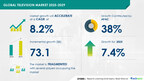
NEW YORK, Feb. 5, 2025 /PRNewswire/ — Report with market evolution powered by AI – The global television market size is estimated to grow by USD 73.1 billion from 2025-2029, according to Technavio. The market is estimated to grow at a CAGR of over 8.2%  during the forecast period. Product innovation and advances leading to portfolio extension and product premiumization is driving market growth, with a trend towards advent of 8k uhd televisions. However, lack of 4k content  poses a challenge. Key market players include Apple Inc., Changhong, Elitelux Australia, Funai Electric Co. Ltd., Haier Smart Home Co. Ltd., Hisense International Co. Ltd., Koninklijke Philips NV, Konka Group Co. Ltd., LG Corp., Micromax Informatics Ltd., MIRC Electronics Ltd., Panasonic Holdings Corp., Samsung Electronics Co. Ltd., Sharp Corp., Skyworth Group Ltd., Sony Group Corp., TCL Industries Holdings Co. Ltd., Videocon Industries Ltd., VIZIO Holding Corp., and Xiaomi Inc..

Key insights into market evolution with AI-powered analysis. Explore trends, segmentation, and growth drivers- View Free Sample PDF

Television Market Scope

Report Coverage

Details

Base year

2024

Historic period

2019 – 2023

Forecast period

2025-2029

Growth momentum & CAGR

Accelerate at a CAGR of 8.2%

Market growth 2025-2029

USD 73.1 billion

Market structure

Fragmented

YoY growth 2022-2023 (%)

7.4

Regional analysis

APAC, North America, Europe, South America, and Middle East and Africa

Performing market contribution

APAC at 38%

Key countries

US, China, South Korea, India, Germany, UK, Japan, Canada, France, and Italy

Key companies profiled

Apple Inc., Changhong, Elitelux Australia, Funai Electric Co. Ltd., Haier Smart Home Co. Ltd., Hisense International Co. Ltd., Koninklijke Philips NV, Konka Group Co. Ltd., LG Corp., Micromax Informatics Ltd., MIRC Electronics Ltd., Panasonic Holdings Corp., Samsung Electronics Co. Ltd., Sharp Corp., Skyworth Group Ltd., Sony Group Corp., TCL Industries Holdings Co. Ltd., Videocon Industries Ltd., VIZIO Holding Corp., and Xiaomi Inc.

Market Driver

The Pay TV market is thriving, with a valuation of over USD200 billion. Cable TV and Direct-to-Home (DTH) continue to dominate, but Fiber optic services are gaining ground. Consumer appetite for high-definition content and smart TV capabilities fuels growth. Over-the-top platforms like Netflix and Amazon Prime are disrupting traditional Pay TV models, offering premium content at affordable prices. Ultra-high-definition services, content security systems, and viewer preferences shape the future market landscapes. Residential sectors, particularly housing units, are the largest consumer base. Companies like Spotv are innovating with TV-as-a-Service (TVaaS) models, postpaid and prepaid services. Commercial sectors offer potential for acquisitions and partnerships. Technological segments include cable, satellite, and internet protocol. The Pay TV industry caters to both residential and commercial sectors, providing entertainment programs, data programs, and product types like LCD, LED, and OLED screens. Consumer electronics evolution, gaming, and console compatibility enhance the user experience.  technologies, eco-friendly designs, and emerging economies are shaping the Pay TV industry’s future. The ecosystem includes territories, technological segments, cable, satellite, internet protocol, residential sector, commercial sector, and more. 

At the Consumer Electronics Show (CES) 2018, 8K resolution televisions were introduced, offering a higher resolution standard than current UHD or 4K televisions. With approximately 8,000 horizontal pixels, 8K quadruples the total number of pixels in 4K. The demand for high-resolution display devices and enhanced content creation is driving the growth of 8K televisions. Major vendors, including LG, Samsung, and Sony, have unveiled 8K television series, although these are currently not consumer versions. The 8K televisions showcased at CES served as proof-of-concepts for the higher resolution technology. 

Request Sample of our comprehensive report now to stay ahead in the AI-driven market evolution!

Market Challenges

The Pay TV market encompasses various segments like Cable TV, Direct-to-Home, and Fiber optic services. Valuation of this industry relies on consumer appetite for high-definition content and smart TV capabilities. Over-the-top platforms challenge traditional Pay TV models with their flexibility and affordability. UHD services and content security systems are key trends. Residential sectors, particularly housing units, are significant markets, while commercial sectors cater to businesses and potential investors. Spotv, viewer preferences, and Pay TV models shape the industry’s future landscape. Acquisitions and TV-as-a-Service (TVaaS) models are emerging, with postpaid and prepaid services catering to diverse consumer needs. The commercial sector targets businesses, while technological segments include cable, satellite, and internet protocol. The Pay TV industry evolves with television, visual image, and sound transmission system advancements. Smart TVs, digital television, and internet-connected screens offer diverse product types. Consumer electronics, including LCD, LED, and OLED, enhance the viewing experience. Gaming and console compatibility are essential features, along with technologies and eco-friendly designs. Future market landscapes include curved and foldable displays, content integration, and disposable incomes in emerging economies. Technological advancements and territorial expansions shape the ecosystem. Premium content, UHD, and territories define the competitive technological segments.The adoption of Ultra High Definition (UHD) televisions is hindered by the limited availability of 4K content. Broadcasters have yet to produce sufficient 4K programming, and the proprietary nature of 4K media poses challenges for consumers. Over-the-top (OTT) platforms like Sky, BT, Amazon, and Netflix are working on adding 4K content, but access is restricted due to premium costs. The primary issues with 4K and 8K resolutions are in-home capabilities and content distribution. Many UHD device owners cannot access 4K content due to the lack of broadcaster-produced material.

Discover how AI is revolutionizing market trends- Get your access now!

Segment Overview 

This television market report extensively covers market segmentation by  

TechnologyUHDHDDisplay SizeUpto 43 Inches55-64 Inches48-50 InchesGreater Than 65 InchesGeographyAPACNorth AmericaEuropeSouth AmericaMiddle East And AfricaTypeSmart TVLCD, Plasma, And LED TVsCathode-Ray Tube (CRT) And Rear-Projection TVs

1.1 UHD-  UHD televisions, also known as 4K televisions, feature a screen resolution of 3,840 pixels x 2,160 lines, offering a significant improvement over standard HD televisions. The popularity of 4K televisions is due to their high resolution of 8.3 megapixels and the increasing demand for high-definition viewing experiences. Vendors have also introduced 8K resolution televisions, which offer a horizontal resolution of 7,680 pixels and a total image dimension of 4,320 pixels. The demand for 8K televisions is expected to grow rapidly due to the need for higher resolution television sets and the increasing availability of enhanced content. The global 8K UHD resolution television market is projected to experience significant growth during the forecast period, particularly in countries such as China, Australia, and the US, where the average television size has increased to 55 inches and 65 inches, respectively. The advances in technology will continue to drive the growth of the global UHD television market, with both 4K and 8K resolutions becoming more accessible to consumers.

Download a Sample of our comprehensive report today to discover how AI-driven innovations are reshaping competitive dynamics

Research Analysis

The Pay TV market continues to evolve, with various technological segments including Cable TV, Direct-to-Home, Fiber optic services, and Over-the-top platforms, catering to the insatiable consumer appetite for high-definition content. Smart TV capabilities, Ultra-High-Definition services, and Premium content are driving the market’s growth. Technologies like Virtual Reality and Augmented Reality are also gaining traction. Eco-friendly initiatives, Home office integration, and the integration of OLED displays, Bezel-less and Frameless designs, TVs as art, Curved displays, and Foldable displays are other trends shaping the industry. Territories and technological advancements in Ultra-High-Definition content, Internet Protocol, and the Residential and Commercial sectors are key factors influencing the market’s valuation.

Market Research Overview

The Pay TV market encompasses various segments, including Cable TV, Direct-to-Home, and Fiber Optic services. The valuation of this industry continues to grow, fueled by the consumer appetite for high-definition content and advanced Smart TV capabilities. Over-the-top platforms have disrupted traditional Pay TV models, offering flexible subscription plans and UHD content. Content security systems ensure protection for premium offerings. Residential sectors, particularly housing units, are significant contributors to the Pay TV market. Viewer preferences dictate the demand for postpaid and prepaid services. Commercial sectors, including potential investors, also play a crucial role in shaping the future market landscapes. Technological segments such as Ultra-High-Definition services, Internet Protocol TV, and territorial expansions are driving innovation in the Pay TV industry. The ecosystem includes various product types, from LCD, LED, and OLED screens to storage-aware computers and gaming consoles. Smart TV enhancements, technologies, and eco-friendly designs are shaping the evolution of consumer electronics. Curved displays, foldable screens, and bezel-less designs are transforming the visual image of television. The Pay TV industry continues to adapt, offering a blend of entertainment programs, data services, and innovative technologies to cater to evolving consumer needs and disposable incomes in emerging economies.

Table of Contents:

1 Executive Summary
2 Market Landscape
3 Market Sizing
4 Historic Market Size
5 Five Forces Analysis
6 Market Segmentation

TechnologyUHDHDDisplay SizeUpto 43 Inches55-64 Inches48-50 InchesGreater Than 65 InchesGeographyAPACNorth AmericaEuropeSouth AmericaMiddle East And AfricaTypeSmart TVLCD, Plasma, And LED TVsCathode-Ray Tube (CRT) And Rear-Projection TVs

7 Customer Landscape
8 Geographic Landscape
9 Drivers, Challenges, and Trends
10 Company Landscape
11 Company Analysis
12 Appendix

About Technavio

Technavio is a leading global technology research and advisory company. Their research and analysis focuses on emerging market trends and provides actionable insights to help businesses identify market opportunities and develop effective strategies to optimize their market positions.

With over 500 specialized analysts, Technavio’s report library consists of more than 17,000 reports and counting, covering 800 technologies, spanning across 50 countries. Their client base consists of enterprises of all sizes, including more than 100 Fortune 500 companies. This growing client base relies on Technavio’s comprehensive coverage, extensive research, and actionable market insights to identify opportunities in existing and potential markets and assess their competitive positions within changing market scenarios.

Contacts

Technavio Research
Jesse Maida
Media & Marketing Executive
US: +1 844 364 1100
UK: +44 203 893 3200
Email: media@technavio.com
Website: www.technavio.com/

View original content to download multimedia:https://www.prnewswire.com/news-releases/television-market-to-grow-by-usd-73-1-billion-by-2029–product-innovation-portfolio-extension-and-premiumization-boost-market-ai-driven-report—technavio-302368491.html

SOURCE Technavio

Continue Reading
Click to comment

Leave a Reply

Your email address will not be published. Required fields are marked *

Technology

Innowise Named to 2026 CRN Tech Elite 250 List By The Channel Company

Published

on

By

WARSAW, Poland, April 26, 2026 /PRNewswire-PRWeb/ — Innowise has officially secured a position on CRN’s 2026 Tech Elite 250. This annual ranking identifies IT solution providers across the US and Canada that have achieved top-tier status within the partner programs of the industry’s leading technology vendors. The inclusion follows a period of verified growth in technical proficiency and a focus on high-impact engineering.

“Innowise concentrates on creating scalable, resilient architectures that produce measurable benefits for our clients. The honor of being recognized by CRN highlights the commitment of our experts to maintain high standards in highly competitive markets,” said Dmitry Nazarevich, CTO at Innowise.

About the Tech Elite 250

The Tech Elite 250 is a directory of companies recognized as having the highest level of partnership and certifications within the global IT ecosystem. In order to reach the final list, the provider must hold the most advanced technical credentials from vendors like AWS, Cisco, Dell, HPE, IBM, Intel, Nutanix, and Nvidia.

This directory serves as a verified ledger for enterprise clients who need to orchestrate complex hardware and software stacks without letting legacy environments rot. Holding these certifications is mandatory to stop the cash bleed caused by inefficient infrastructure and unoptimized cloud usage.

About Innowise

Founded in 2007, Innowise is a global software engineering and IT consulting center. The company is focused on developing high-value technologies, including artificial intelligence, data engineering, and cloud computing. Innowise crafts technological solutions for companies across 40+ domains in order to assist them in updating, creating, and modernizing their digital ecosystems.

Innowise specializes in using established technologies and modular approaches to enable organizations to expand or shift their operations while retaining complete control over all their physical and intangible assets.

Media Contact

Lizaveta Piaskova, Innowise, 48 48 787 027 706, lizaveta.piaskova@innowise.com, innowise.com

View original content to download multimedia:https://www.prweb.com/releases/innowise-named-to-2026-crn-tech-elite-250-list-by-the-channel-company-302751951.html

SOURCE Innowise

Continue Reading

Technology

Neusoft Showcases Full-Stack & Global Innovations at Auto China 2026

Published

on

By

BEIJING, April 26, 2026 /PRNewswire/ — At Auto China 2026, Neusoft Corporation hosted a press conference on April 25th and announced three key strategic moves: the iteration of Neusoft OneCoreGo® Global In-Vehicle Intelligent Mobility Solution 7.0, the launch of Neusoft NAGIC.AI Cockpit Software Platform, and the strategic upgrade of its subsidiary, Neusoft Smart Go. By leveraging full-stack technology and a global ecosystem to drive innovation and empowerment, Neusoft is transforming vehicles into proactive, connected and collaborative mobile intelligent spaces.

OneCoreGo® Global In-Vehicle Intelligent Mobility Solution 7.0: An Evolved AI Companion for Global Intelligent Mobility

Intelligent mobility requires proactive perception, scenario integration, and global connectivity to meet personalized user needs and complex driving scenarios. Neusoft, whose products cover over 130 countries and regions worldwide, addresses these challenges with its OneCoreGo® Global In-Vehicle Intelligent Mobility Solution 7.0 through AI-driven innovation and global ecosystem collaboration. Powered by One Mate’s cross-agent collaboration and a sub-product matrix including One Map, One Sight, One Cloud, One Pay, One Store, One Link, and One Guard, the solution delivers full-link global mobility services spanning navigation, in-cabin AR, payment, app ecosystem services, connectivity and security. By breaking down functional silos, it streamlines multi-step operations into a single “depart” command, leveraging full-stack AI technology across perception, decision-making, interaction, and execution processes.

Guan Xin, Vice President of Neusoft and General Manager of Neusoft Automotive Innovative Solutions Division, said, “Adhering to the core principles of AI and globalization, OneCoreGo® 7.0 keeps innovating, evolving into a globally intelligent mobility companion that truly understands user needs.”

To enhance driving safety and mobility efficiency, OneCoreGo® 7.0 has also comprehensively upgraded its sub-products: One Map Global Navigation newly introduces 3D city effects, 3D lane-level maps, and traffic light guidance, offering dedicated solutions for two-wheelers and commercial vehicles as well. One Sight AR For Car improves navigation display effects, reducing instances of taking wrong routes. One Pay In-Vehicle Payment achieves over 90% payment coverage for parking services across core European cities. Combined with One Cloud’s global compliance cloud monitoring platform and One Guard’s full-stack vehicle networking security services, it creates a truly comprehensive OneCoreGo® Global In-Vehicle Intelligent Mobility Solution.

Neusoft NAGIC.AI Cockpit Software Platform: Dual-track Architecture for AI Integration in Every Vehicle

Amid the AI-driven transformation of the automotive industry, the market faces two challenges: limited computing power in legacy vehicles and high adaptation difficulties for next-gen models. Neusoft’s NAGIC.AI Cockpit Software Platform adopts a flexible “distributed + centralized” dual-track architecture approach. For existing vehicle models, it introduces the AI BOX solution, rapidly boosting computing power via external AI computing units, significantly reducing upgrade costs and timelines. For new vehicle models built on next-gen central computing platforms, Neusoft provides a full-stack AI cockpit software product suite, meeting automakers’ stringent requirements for system stability, reliability, and full-domain control.

Pang Hongyan, Vice President of Neusoft and General Manager of the Automotive Intelligent Software Division, said, “Our dual-track architecture enables every vehicle to embrace AI and enjoy an intelligent future. Both existing models and new-generation vehicles can find the most suitable path to intelligentization.”

Moreover, Neusoft’s NAGIC.AI Cockpit Software Platform features scenario-based, human-centric AI Agents seamlessly integrating driving safety, occupant care services, intelligent assisted driving and in-cabin entertainment. Neusoft also collaborates with global ecosystem partners to drive intelligent upgrades of in-cabin interaction products, fostering a more open and dynamic intelligent cockpit ecosystem.

Strategic Upgrade of Neusoft Smart Go: A World-leading Provider of Full-Domain Upper-Body Electronics Solutions for Intelligent Vehicles

Aligning with the trend of E/E architecture evolution from distributed control to “central computing + zonal control”, Neusoft Smart Go, a subsidiary of Neusoft in the field of intelligent vehicle connectivity, has completed a strategic upgrade, aiming to become a global leader in full-domain upper-body electronics solutions for intelligent vehicles.

This strategic upgrade positions Neusoft Smart Go to focus on full-domain scenarios in upper-body electronics, building a product matrix covering full-category in-vehicle electronics solutions, including central computing platforms, cockpit-driving-parking integration, intelligent cockpits, intelligent communications, intelligent audio systems, and zonal control units, and pioneering the integration of large model algorithms.

Jian Guodong, Senior Vice President of Neusoft and CEO of Neusoft Smart Go, said, “This strategic upgrade represents a significant leap from partial focus to comprehensive layout. Through our dual-track strategy of high-end cutting-edge solutions and mature standardized products, we can flexibly meet the mass production needs of vehicle models across different regions and price segments worldwide.” Neusoft Smart Go will provide mass-producible, adaptable hardware-software integrated solutions, empowering global automakers in achieving intelligent transformation.

Neusoft’s President, Mr.Gai Longjia stated, “In the future, Neusoft Smart Go will create stronger synergy with Neusoft Corporation by sharing internal technologies and capabilities while responding jointly to external demands. This specialized yet collaborative model will preserve business unit’s agility and expertise while enhancing Neusoft’s full-stack technological advantages.”

As a trusted partner in a smarter world, Neusoft is committed to collaborating with global automakers and ecosystem partners to build an open and inclusive intelligent automotive community together for the future of global mobility.

For more information about Neusoft, please visit www.neusoft.com.


View original content:https://www.prnewswire.com/apac/news-releases/neusoft-showcases-full-stack–global-innovations-at-auto-china-2026-302753701.html

SOURCE Neusoft Corporation

Continue Reading

Technology

Lianlian DigiTech Returns to Money20/20 Asia to Expand Partnerships, Share Industry Trends, and Explore AI-Enabled Global Financial Infrastructure

Published

on

By

BANGKOK, April 26, 2026 /PRNewswire/ — Lianlian DigiTech, a leading global provider of digital payment services, was once again invited to participate in Money20/20 Asia, one of the world’s most influential fintech gatherings, held in Bangkok, Thailand from April 21 to 23. At the event, the company presented its latest developments in cross-border payment infrastructure, technology innovation, and ecosystem collaboration, offering a comprehensive view of its work enhancing global cross-border payment capabilities.

During the conference, Lianlian DigiTech announced a strategic partnership with UK-based fintech company USI Money to further strengthen its global cross-border payment network, delivering more efficient and reliable fund flows for merchants worldwide. Shen Enguang, Co-President of Lianlian DigiTech; Mark Ma, Head of Global Banking Partnership at LianLian Global; and Bryan Jiang, General Manager Hong Kong of LianLian Global, attended the event and engaged with representatives from international financial institutions. They shared perspectives on fintech trends and global payment innovation, offering industry insight into the continued evolution of a more integrated and interoperable cross-border payments ecosystem.

Building a Borderless Payment Network with Global Partners Including USI Money

At the event, Lianlian DigiTech formalized a strategic collaboration with London-headquartered USI Money to further develop its global payment infrastructure.

The partnership will focus on cross-border remittance and foreign exchange services, combining both companies’ technological capabilities and resources to deliver a one-stop payment and collection solution for global businesses. The offering is built to be efficient, secure, and cost-effective, improving overall fund flow efficiency and streamlining foreign exchange execution.

Syed Bukhari, Group Chief Business and Operating Officer at USI Money, said: “Our partnership with Lianlian will strengthen our remittance capabilities, creating greater value for our customers through broader network coverage and improved transaction performance.”

Bryan Jiang, General Manager Hong Kong of LianLian Global, said: “By leveraging the complementary strengths of our ecosystem partners in technology and compliance, Lianlian will continue to scale its global payment network and improve transaction efficiency. We remain committed to enhancing financial connectivity across global financial markets and delivering more efficient and reliable cross-border payment solutions for our customers.”

Founded in 2009 and listed on the Main Board of the Hong Kong Stock Exchange in 2024 (2598.HK), Lianlian DigiTech is a China-based, globally focused digital payment company with increasingly integrated AI capabilities across its platform. Guided by its mission of “Connecting the world, Empowering global commerce,” the company focuses on developing a trusted and scalable financial infrastructure. As of the end of 2025, Lianlian DigiTech has built a cross-border payment network covering more than 100 countries and regions, serving over 10.4 million customers worldwide.

USI Money is a foreign exchange and international remittance service provider offering tailored cross-border financial solutions for businesses and individuals. With competitive real-time exchange rates and efficient execution as its core strengths, the company delivers fast, secure, and reliable global fund transfers.

In addition, Lianlian DigiTech co-hosted a networking session with Unlimit during the event, providing a forum for industry dialogue. The session brought together a broad group of fintech partners to explore collaborative models and help foster a more connected ecosystem.

Industry Roundtables: Unlocking Layered Collaboration in AI-Driven Cross-Border Payments and Advancing Financial Inclusion in Emerging Markets

At the same time, Mark Ma and Bryan Jiang were invited to the themed roundtable discussions, where they shared insights drawn from industry practice and outlined new approaches to aligning fintech innovation with the global financial system.

At the roundtable on “Fintech and Banks,” Mark Ma noted that the global payment system is rapidly shifting from isolated capabilities to a layered, collaborative model. Banks continue to serve as the foundational infrastructure, responsible for clearing networks and liquidity management. Fintech firms like Lianlian, meanwhile, build on top of this foundation to deliver application-layer services for businesses, transforming complex cross-border payment channels into more accessible solutions that support a wider range of practical business scenarios. He also emphasized fintech’s growing role in compliance and value creation. By embedding risk controls and verification processes into technology workflows, fintech companies can act as compliance intermediaries, improving efficiency while filtering risk and enabling banks to operate more effectively at scale. Meanwhile, insights derived from transaction data and business flows allow for more precise evaluation of small and medium-sized businesses, shifting capital allocation from experience-based decisions to data-driven approaches and improving access to financial services.

At the roundtable titled “Different Worlds, Shared Challenges: Bridging Emerging Markets,” Bryan Jiang pointed out that the core of financial inclusion is shifting from scale of coverage to practical usability in everyday financial activity. The ability to serve underserved segments such as small and micro merchants and overseas workers in a sustained and reliable manner ultimately depends on continuous improvements in product design and operational capabilities. Using emerging markets as an example, Jiang explained that small and medium-sized businesses in these regions often face challenges such as difficult account setup, complex cross-border collections, high foreign exchange costs, and multi-layered tax requirements. Many existing solutions still follow traditional business-focused models, resulting in cumbersome KYB processes and lengthy review cycles that are misaligned with the asset-light, high-frequency, fast-turnover nature of these businesses. In response, Lianlian has lowered barriers to fund flows by offering local collection accounts, optimizing foreign exchange mechanisms, and improving settlement efficiency. The company has also restructured account architecture, streamlined review processes, and enhanced fund visibility, creating a more seamless and intuitive user experience that better aligns financial services with its clients’ business operations and day-to-day activities.

As digital technologies increasingly integrate with the real economy, innovations in AI and blockchain are reshaping the foundations of global financial services. Lianlian DigiTech has long invested in AI capabilities, global compliance, and the growth of its international service network. Its broad licensing coverage, regulatory track record, localized service capabilities, and technical reliability have earned the trust of regulators, customers, and partners worldwide.

Looking ahead, Lianlian DigiTech will continue to build on its cross-border expertise and compliance experience to further develop its AI capabilities and deepen collaboration with global partners. The company aims to extend its role beyond payment network services into more integrated financial infrastructure solutions. Lianlian DigiTech remains committed to serving as a trusted platform for global financial transactions in an increasingly digital environment, enabling businesses and individuals worldwide to access faster, more efficient, and more seamless cross-border financial services.

View original content:https://www.prnewswire.com/apac/news-releases/lianlian-digitech-returns-to-money2020-asia-to-expand-partnerships-share-industry-trends-and-explore-ai-enabled-global-financial-infrastructure-302753667.html

SOURCE LianLian Global

Continue Reading

Trending