Connect with us

Technology

Hospitality Robots Market to Grow by USD 663.2 Mn (2025-2029), Boosted by Increasing Penetration of AI in Robots, AI’s Impact on Market Trends – Technavio

Published

on

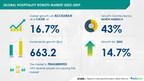
NEW YORK, Feb. 7, 2025 /PRNewswire/ — Report on how AI is redefining market landscape – The global hospitality robots market size is estimated to grow by USD 663.2 mn from 2025-2029, according to Technavio. The market is estimated to grow at a CAGR of  16.7%  during the forecast period. Increasing penetration of AI in robots is driving market growth, with a trend towards integration of iot with robots. However, high initial cost of hospitality robots  poses a challenge. Key market players include Awabot, Bear Robotics Inc., Connected Robotics Inc., Hyundai Motor Co., Keenon Robotics Co. Ltd., Knightscope Inc., LG Corp., Pudu Technology Inc., Pypestream Inc., Quantum Robotics, Relay Robotics Inc., Richtech Robotics Inc., SAR Elektronic GmbH, Shanghai Gaussian Automation Tech. Dev. Co. Ltd., ST Engineering Aethon Inc., sliQue Robotics and Technology, SoftBank Robotics Group Corp., Tailos, and UBTECH Robotics Inc..

Key insights into market evolution with AI-powered analysis. Explore trends, segmentation, and growth drivers- View Free Sample PDF

Hospitality Robots Market Scope

Report Coverage

Details

Base year

2024

Historic period

2019 – 2023

Forecast period

2025-2029

Growth momentum & CAGR

Accelerate at a CAGR of 16.7%

Market growth 2025-2029

USD 663.2 million

Market structure

Fragmented

YoY growth 2022-2023 (%)

14.7

Regional analysis

North America, Europe, APAC, South America, and Middle East and Africa

Performing market contribution

North America at 43%

Key countries

US, Canada, Germany, UK, China, France, South Korea, Japan, Australia, and Italy

Key companies profiled

Awabot, Bear Robotics Inc., Connected Robotics Inc., Hyundai Motor Co., Keenon Robotics Co. Ltd., Knightscope Inc., LG Corp., Pudu Technology Inc., Pypestream Inc., Quantum Robotics, Relay Robotics Inc., Richtech Robotics Inc., SAR Elektronic GmbH, Shanghai Gaussian Automation Tech. Dev. Co. Ltd., ST Engineering Aethon Inc., sliQue Robotics and Technology, SoftBank Robotics Group Corp., Tailos, and UBTECH Robotics Inc.

Market Driver

The Hospitality Robots Market is experiencing significant growth as more hotels, bars, restaurants, and tourism businesses adopt automated solutions for various tasks. Front-desk robots greet guests and handle check-ins, while delivery robots bring food and supplies contactlessly. Cleaning robots keep public areas spotless, and disinfecting robots ensure a clean and safe environment. AI and automation are key trends, with tasks ranging from revenue management to security checks. Businesses benefit from increased efficiency and productivity, while customers enjoy improved experiences. Robots handle tasks like room service, laundry, and even massages. E-commerce integration allows for online and offline sales, and affordability and reliability are driving public acceptance. Employment opportunities in engineering, computer science, psychology, and kinesiology arise as robots become more advanced. Robotic systems, including autonomous machines and mobile guidance robots, are transforming customer service and housekeeping. The future of hospitality is here, and it’s all about enhancing the guest experience with the help of artificial intelligence, machine learning, IoT, and robotics. 

The Internet of Things (IoT) technology is revolutionizing the hospitality industry by enabling connected environments and real-time data exchange. IoT devices, including sensors and actuators, collect and broadcast data to a centralized location, allowing hospitality businesses to make informed decisions in real-time. This leads to increased efficiency and productivity, as well as improved customer experience. The integration of IoT-enabled technologies, such as digital control, wireless communications, and low-cost sensors, is causing a significant shift among original equipment manufacturers in the hospitality sector. By implementing IoT solutions, businesses can optimize their operations, reduce costs, and enhance guest satisfaction. 

Request Sample of our comprehensive report now to stay ahead in the AI-driven market evolution!

 Market Challenges

The Hospitality Robots Market is experiencing significant growth as hotels and tourism businesses seek to enhance guest experience and increase efficiency. Front-desk robots greet guests and handle check-ins, while delivery robots bring food and supplies contactlessly. Cleaning robots maintain public areas and rooms, ensuring high standards of cleanliness. These robots use artificial intelligence, automation, and IoT for tasks like face and voice recognition, remote control, and Wi-Fi connectivity. However, challenges persist. Interpersonal communication can be a hurdle for robots, requiring advancements in natural language processing. Security checks and data privacy are concerns, as is the need for human oversight in tasks like revenue management and customer satisfaction. Employment opportunities arise for engineers, programmers, business professionals, and students in universities offering robotics, computer science, psychology, kinesiology, and engineering courses. The market offers a variety of tasks for robotic systems, from reception and mobile guidance to room service, laundry, massages, and food delivery. Efficiency, productivity, affordability, reliability, and public acceptance are key factors driving growth. Autonomous machines are transforming customer service, housekeeping, security, and e-commerce in the hospitality industry.

The initial cost of hospitality robots can significantly differ based on factors like size, complexity, functionality, and brand reputation. Smaller robots, designed for specific tasks such as room service or concierge, cost between USD5,000 and USD20,000. Larger, more advanced robots with AI, autonomous navigation, and multi-functional capabilities can cost between USD20,000 and USD100,000 or more. Additional expenses may include customization, maintenance contracts, and training programs. Overall, the average initial cost of hospitality robots ranges from USD10,000 to USD50,000, depending on specific requirements and market conditions.

Discover how AI is revolutionizing market trends- Get your access now!

Segment Overview 

This hospitality robots market report extensively covers market segmentation by 

End-userHotelsRestaurants And BarsTravel And Tourism IndustryDistribution ChannelOnlineOfflineGeographyNorth AmericaEuropeAPACSouth AmericaMiddle East And AfricaTypeFront Desk RobotsDelivery RobotsCleaning RobotsOthers


1.1 Hotels-  The hotel segment holds the largest share in the hospitality robots market and is expected to continue leading throughout the forecast period. Hotels are integrating robots to replace human personnel, particularly in the wake of social distancing measures. The rose robot is a notable example gaining traction in this sector. Hospitality robots perform tasks such as housekeeping, cleaning, luggage transport, and food and beverage delivery. The increasing number of hotels and adoption of robotic automation are driving demand for hospitalisation robots. Savioke Inc., a US-based autonomous delivery robot maker, is a significant player. Its relay robot is used for luggage hauling, room service delivery, and laundry transport in hotels. Vendors are enhancing robots with advanced navigation and sensing technology for seamless connections with elevators and telephone systems. Product portfolio expansion is a key growth strategy for the hotels segment of the global hospitality robots market.

Download a Sample of our comprehensive report today to discover how AI-driven innovations are reshaping competitive dynamics

Research Analysis

The Hospitality Robots Market is experiencing significant growth due to the integration of robotic systems in the hotel industry and tourism sector. These robots, including Front Desk Robots and Mobile Guidance Robots, are revolutionizing guest experiences by handling various tasks such as check-in, storage services, and disinfecting public areas. AI, ML, and IoT technologies are driving the development of these autonomous machines, enhancing customer service, housekeeping, security, and efficiency. Robots are now capable of performing a variety of tasks, from room service and cleaning to bar and restaurant services. The tourism industry is embracing these technological advancements to improve productivity and offer unique experiences to guests.

Market Research Overview

The Hospitality Robots Market encompasses a range of robotic systems designed to enhance the guest experience in hotels, bars, restaurants, and the tourism industry. These robots perform various tasks such as front desk services, storage, disinfecting public areas, and contactless delivery. They utilize technologies like face and voice recognition, remote control, Wi-Fi, and security checks. Front-desk robots greet guests and handle check-ins, while delivery robots bring food and supplies to guests contactlessly. Cleaning robots maintain cleanliness, and mobile guidance robots offer tours and assistance. AI, ML, IoT, and autonomous machines are integral to their functionality. The market offers employment opportunities for engineers, programmers, business professionals, and students in universities pursuing robotics, engineering, computer science, psychology, kinesiology, and employee health courses. The benefits include increased efficiency, productivity, revenue management, and customer satisfaction. E-commerce and affordability are driving factors, while reliability and public acceptance are key challenges. The market also includes relay robots for employee health and well-being, and offers services in laundry, massages, and restaurants.

Table of Contents:

1 Executive Summary
2 Market Landscape
3 Market Sizing
4 Historic Market Size
5 Five Forces Analysis
6 Market Segmentation

End-userHotelsRestaurants And BarsTravel And Tourism IndustryDistribution ChannelOnlineOfflineGeographyNorth AmericaEuropeAPACSouth AmericaMiddle East And AfricaTypeFront Desk RobotsDelivery RobotsCleaning RobotsOthers

7 Customer Landscape
8 Geographic Landscape
9 Drivers, Challenges, and Trends
10 Company Landscape
11 Company Analysis
12 Appendix

About Technavio

Technavio is a leading global technology research and advisory company. Their research and analysis focuses on emerging market trends and provides actionable insights to help businesses identify market opportunities and develop effective strategies to optimize their market positions.

With over 500 specialized analysts, Technavio’s report library consists of more than 17,000 reports and counting, covering 800 technologies, spanning across 50 countries. Their client base consists of enterprises of all sizes, including more than 100 Fortune 500 companies. This growing client base relies on Technavio’s comprehensive coverage, extensive research, and actionable market insights to identify opportunities in existing and potential markets and assess their competitive positions within changing market scenarios.

Contacts

Technavio Research
Jesse Maida
Media & Marketing Executive
US: +1 844 364 1100
UK: +44 203 893 3200
Email: media@technavio.com
Website: www.technavio.com/

View original content to download multimedia:https://www.prnewswire.com/news-releases/hospitality-robots-market-to-grow-by-usd-663-2-mn-2025-2029-boosted-by-increasing-penetration-of-ai-in-robots-ais-impact-on-market-trends—technavio-302369825.html

SOURCE Technavio

Continue Reading

Technology

Seatrium and Karpowership Sign Contract for a Series of Whale Class Powership Conversion and Integration Projects

Published

on

By

SINGAPORE, Oct. 23, 2026 /PRNewswire/ — Seatrium Limited and its strategic partner, floating power leader Karpowership, have strengthened their longstanding collaboration with the award of a contract for the development, major conversion and integration of Karpowership’s third-generation hydrogen-ready Whale Class Powerships, reinforcing both companies’ commitment to delivering reliable, flexible and sustainable energy solutions to meet growing global electricity demand.

Under the contract, Seatrium will undertake the major conversion work and integration of five Whale Class Powerships. Seatrium’s scope of work encompasses equipment integration, mechanical completion and pre-commissioning works. Engineering activities are currently underway – both parties are working closely to advance the project’s execution phase progressively, with the first vessel in the series targeted for arrival in Seatrium Tuas Boulevard Yard in December 2027.

Powerships are floating power plants equipped with hydrogen-ready multi-fuel generation systems and integrated onboard substations that connect directly to national electricity grids. Leveraging Karpowership’s plug-and-play design, they can begin generating electricity in as little as 30 days. The next-generation Whale Class offers Karpowership’s highest capacity, engineered to deploy up to 600 MW of immediate, grid-ready power using an ultra-efficient footprint optimised for seamless, continuous fuel supply.

By combining advanced power generation technologies with maritime engineering excellence, these vessels will enhance energy security while providing the flexibility to support diverse market requirements.

Mr Alvin Gan, Executive Vice President, Repairs and Upgrades, Seatrium, said, “This significant milestone marks Seatrium’s first major conversion work and integration of Karpowership’s Whale Class Powerships. We are proud to support Karpowership’s drive to pioneer innovative floating power solutions and the next phase of its fleet development, bringing our capabilities in complex vessel integration and offshore engineering to the project. We thank Karpowership for the continued trust and look forward to advancing cutting-edge floating solutions that bolster energy resilience worldwide.”

Building on a strategic relationship established in 2018, Seatrium and Karpowership share an ambition to deepen their partnership and shape the next generation of energy infrastructure, strengthening energy resilience in Singapore and worldwide.

Mr Gokhan Kocak, Chief Technical Operations Officer, Karpowership, said, “Karpowership has transformed global power generation with its innovative Powership model, delivering fast-track and dependable electricity solutions to millions worldwide. The next-generation Whale Class Powerships demonstrate our continued commitment to innovation, operational excellence and energy security. We are pleased to build on our strong partnership with Seatrium, whose proven expertise in complex vessel integration make them an ideal partner.”

The contract marks the next step following an earlier Letter of Intent (LOI) signed in August 2025, solidifying the long-term partnership between the two companies. The LOI had provided for three FSRU conversions and the potential integration of up to six new-generation Powerships. Since 2018, Seatrium has successfully delivered seven FSRU conversion projects to Karpowership, with the eighth and ninth FSRU conversion projects secured this year.

View original content to download multimedia:https://www.prnewswire.com/news-releases/seatrium-and-karpowership-sign-contract-for-a-series-of-whale-class-powership-conversion-and-integration-projects-302917514.html

SOURCE Karpowership

Continue Reading

Technology

Scage Future Announces Effective Date for ADS Ratio Change

Published

on

By

NANJING, China, Oct. 22, 2026 /PRNewswire/ — Scage Future (“Scage Future” or the “Company”) (Nasdaq: SCAG), a provider of new energy and zero-emission heavy-duty commercial vehicles and e-fuel solutions, today announced the effective date and new CUSIP number for the previously announced change in the ratio of its American Depositary Shares (“ADSs”) to its ordinary shares (the “ADS Ratio”), from the current ADS Ratio of one (1) ADS to one (1) ordinary share to a new ADS Ratio of one (1) ADS to fifteen (15) ordinary shares (the “ADS Ratio Change”). The ADS Ratio Change will be effective on October 27, 2026 (the “Effective Date”).

For Scage Future’s ADS holders, the change in the ADS Ratio will have the same effect as a one-for-fifteen reverse ADS split. On the Effective Date, holders of ADSs will be entitled to receive one (1) new ADS for every fifteen (15) existing ADSs then held, and the exchange will occur automatically, with the then-held ADSs being cancelled and new ADSs being issued by Citibank, N.A., as the depositary bank for the Company’s ADS program (the “Depositary Bank”). Holders of ADSs will not be required to take any action in connection with the ADS Ratio Change.

No fractional new ADSs will be issued in connection with the change in the ADS Ratio. Instead, fractional entitlements to new ADSs will be aggregated and sold by the Depositary Bank, and the net cash proceeds from the sale of the fractional ADS entitlements (after deduction of fees, taxes and expenses) will be distributed to the applicable ADS holders by the Depositary Bank.

The change in the ADS Ratio will have no impact on Scage Future’s underlying ordinary shares, and no ordinary shares will be issued or cancelled in connection with the change in the ADS Ratio. Scage Future’s ADSs will continue to be traded on the Nasdaq Global Market under the symbol “SCAG.” In connection with the ADS Ratio Change, the CUSIP number for the ADSs will change from 80590A105 to a new CUSIP number of 80590A204, effective as of the Effective Date.

As a result of the change in the ADS Ratio, the ADS trading price is expected to increase proportionally, although the Company can give no assurance that the ADS trading price after the change in the ADS Ratio will be equal to or greater than fifteen times the ADS trading price before the change.

About Scage Future

Scage Future is a leading zero-emission technology provider in China, dedicated to decarbonizing global commercial transportation through its portfolio of advanced heavy-duty NEV trucks and innovative e-fuel systems. Through strategic partnerships with top-tier vehicle manufacturers and a strong quality control framework, the Company delivers intelligent, high-performance NEVs addressing the transport needs across logistics, mining and port operations. The Company has a proven track record in the design, production, and testing of next-generation heavy-duty NEVs, including the Dragon II plug-in hybrid dump truck, Galaxy II plug-in hybrid truck, and autonomous tractor trailer.

Forward-Looking Statements

Certain statements in this announcement are forward-looking statements. These forward-looking statements include, but are not limited to, statements regarding the completion of the ADS Ratio Change on the Effective Date, the anticipated effects of the ADS Ratio Change on the trading price of the Company’s ADSs, and the Company’s expectations regarding the treatment of fractional ADS entitlements and the exchange of existing ADSs for new ADSs. These forward-looking statements involve known and unknown risks and uncertainties and are based on the Company’s current expectations and projections about future events that the Company believes may affect its financial condition, results of operations, business strategy and financial needs. Investors can identify these forward-looking statements by words or phrases such as “approximates,” “assesses,” “believes,” “hopes,” “expects,” “anticipates,” “estimates,” “projects,” “intends,” “plans,” “will,” “would,” “should,” “could,” “may” or similar expressions. The Company undertakes no obligation to update or revise publicly any forward-looking statements to reflect subsequently occurring events or circumstances, or changes in its expectations, except as may be required by law. Although the Company believes that the expectations expressed in these forward-looking statements are reasonable, it cannot assure you that such expectations will turn out to be correct, and the Company cautions investors that actual results may differ materially from the anticipated results and encourages investors to review other factors that may affect its future results in the Company’s registration statement and other filings with the U.S. Securities and Exchange Commission.

For more information, please contact:

Scage Future
Investor Relations
Emily Wang
Head of Investor Relations
Email: scageIR@scagefd.com


View original content to download multimedia:https://www.prnewswire.com/news-releases/scage-future-announces-effective-date-for-ads-ratio-change-302917128.html

SOURCE Scage Future

Continue Reading

Technology

Hanwha Power Receives ABS Approval in Principle for 1,700 TEU Battery-Powered Containership Design

Published

on

By

Fully electric propulsion design featuring approximately 151 MWh of energy storage strengthens capabilities in zero-carbon maritime transportIntegrated solution combines electric propulsion, and containerized battery energy storage systemsExpanded eco-friendly marine propulsion portfolio lays the groundwork for entry into the next-generation zero-carbon vessel market

SEOUL, South Korea, Oct. 23, 2026 /PRNewswire/ — Hanwha Power announced that it had received Approval in Principle (AiP) from the American Bureau of Shipping (ABS) for its design of a 1,700 TEU battery-powered containership.

The certificate presentation ceremony took place on October 22, local time, at the MHE (Maritime Hybrid, Electric & Hydrogen Fuel Cells) Conference & Exhibition 2026 in Bergen, Norway. Jong-kyu Hwang, Vice President, Technology Solutions at Hanwha Power, attended the ceremony alongside senior representatives from ABS. The event runs from October 21 to 23 at the Scandic Hotel Bergen City.

The newly approved design concept features a fully electric container vessel powered by a large-scale 151 MWh Energy Storage System (ESS). Electrical energy stored in containerized battery units serves as the vessel’s primary propulsion source, enabling operation without direct carbon emissions through the use of port charging infrastructure.

The use of containerized batteries, which can be handled and stowed like standard cargo containers, enhances space efficiency, maximizes cargo capacity, and optimizes overall vessel performance. This approach also supports flexible battery replacement and scalable operation, offering a practical pathway for the decarbonization of short-sea and regional container transport.

The AiP strengthens Hanwha Power’s capabilities in fully electric vessel design using large-scale battery energy storage and expands its portfolio of marine propulsion solutions. The company plans to build on this achievement to pursue opportunities in the next-generation zero-carbon maritime transport market.

Alongside the approval, Hanwha Power has also completed the basic design of a 1,000 TEU battery-powered container vessel. Building on its expertise in vessel design across multiple ship classes, the company aims to develop a comprehensive lineup of electric-propulsion vessels tailored to a wide range of operating conditions and customer needs.

“This AiP from ABS marks an important step in extending Hanwha Power’s marine technology capabilities to fully electric vessels powered by large-scale battery systems,” said Jong-kyu Hwang, Vice President, Technology Solutions at Hanwha Power. “We will address the needs of the next-generation zero-carbon maritime transport market with integrated solutions that combine electric propulsion and containerized battery system technologies.”

View original content to download multimedia:https://www.prnewswire.co.uk/news-releases/hanwha-power-receives-abs-approval-in-principle-for-1-700-teu-battery-powered-containership-design-302917556.html

Continue Reading

Trending