Connect with us

Technology

Hyundai Motor and Samsung Unveil Breakthrough Private 5G RedCap Technology for Smart Manufacturing

Published

on

Hyundai Motor and Samsung collaborate to verify Private 5G (P-5G) RedCap technology, enabling fast, seamless communication with lower power consumption and costP-5G RedCap technology to be showcased at MWC25 Barcelona, highlighting advancements in the mobility manufacturing sectorHyundai Ulsan Plant and Hyundai Motor Group Metaplant America (HMGMA) pioneers P-5G in mass production, with plans to expand to the new EV-dedicated plant in Ulsan

SEOUL, South Korea and BARCELONA, Spain, Feb. 26, 2025 /PRNewswire/ — Hyundai Motor Company announced today that it has successfully completed a pilot project for Private 5G (P-5G) RedCap (Reduced Capability) technology in partnership with Samsung Electronics Co., Ltd. The company will showcase the technology at MWC25 Barcelona, the world’s largest IT and electronics exhibition, which will be held in Spain from March 3rd to 6th.

As a leader in future mobility, Hyundai Motor advances smart mobility solutions through electrification, software-driven capabilities, and smart manufacturing technologies. To achieve this, the company has collaborated with Samsung, a global leader in network solutions, to become the first in the mobility manufacturing sector to verify P-5G RedCap technology.

“Hyundai Motor was the first Korean company to implement P-5G in mass production,” said Jae Min Lee, Vice President and Head of E-FOREST Center of Hyundai Motor and Kia. “We are also the industry’s first to verify P-5G RedCap technology, reinforcing our global leadership in smart manufacturing solutions. We will continue to accelerate its commercialization.”

Simon Lee, Vice President and Head of B2B•B2G Business Development, Networks Business at Samsung Electronics said: “The recent collaboration with Hyundai Motor represents how the two leaders in their respective industries can creatively drive business innovation and unlock new real use cases by merging best-in-class expertise. Samsung’s RedCap-powered private 5G network solutions will open up more possibilities for enterprises, manufacturers, and public institutions, serving as a gateway to driving more efficient 5G networks.”

Since January 2025, Hyundai Motor has completed testing of Samsung’s P-5G solutions including radio, core, and management systems with its in-house vehicle inspection equipment at Samsung’s Suwon campus. They developed a custom vehicle inspection device to verify the network’s operational capabilities.

P-5G is a dedicated system installed onsite using a specific frequency band, ensuring no external interference and seamless data transmission — essential for smart manufacturing with centralized control of industrial robots and devices. It can be tailored for optimized environments and stable communication, though challenges like complex design and high power consumption remain.

The collaboration successfully verified the P-5G RedCap technology, which offers simplified device configurations, compact infrastructure, and reduced bandwidth usage. This results in lower power consumption, cost efficiency, and improved performance over traditional Wi-Fi in speed, data processing, connection stability, and low latency.

Previously limited to high-performance equipment, RedCap technology enables high-speed wireless communication for vehicle inspection equipment, small tools, cameras and tablets. Hyundai Motor integrated RedCap enabled Qualcomm’s Snapdragon® X35 5G Modem-RF System chipsets into its Diagnostic Scan (D Scan) system for efficient vehicle inspection data transmission via Samsung’s 5G network.

Samsung’s P-5G solution, with support for optimized RedCap software, reduces power consumption and more than doubles uplink capacity for real-time IoT data transmission, featuring an integrated management system for automation.

Looking ahead, Hyundai Motor plans to integrate P-5G into its new EV-dedicated plant in Ulsan, opening in 2026. This latest verification of RedCap technology is set to enhance the company’s smart manufacturing ecosystem, with further expansions planned for key plants.

About Hyundai Motor Company

More information about Hyundai Motor and its products can be found at: https://www.hyundai.com/worldwide/en/ or Newsroom: Media Hub by Hyundai

View original content to download multimedia:https://www.prnewswire.com/news-releases/hyundai-motor-and-samsung-unveil-breakthrough-private-5g-redcap-technology-for-smart-manufacturing-302385470.html

SOURCE Hyundai Motor Company

Continue Reading

Technology

6th Global Education Summit sees academicians from 30 countries participating at Chandigarh University

Published

on

By

Chandigarh University working to make India a bridge between Developing and Developed World for transfer of knowledge & technology

Chandigarh University brings researchers and academicians from developed & developing world together on one platform

CHANDIGARH, India, Oct. 6, 2026 /PRNewswire/ — The 6th edition of the Global Education Summit (GES) hosted by Chandigarh University brought together more than 90 renowned global academic leaders representing 69 leading global universities from 30 nations both from developed and developing worlds on a single platform with an objective to build an international alliance for exchange of ideas, knowledge and technology and advance joint research initiatives to enhance the global exposure and overall learning experience of students through greater engagement with universities and academic leaders from across the world. The five-day-long summit, being held from October 5 to 9, brought together ambassadors and diplomatic representatives, Chancellors, Rectors, Vice Chancellors, Presidents, Pro-VCs, renowned academicians, policymakers, think tanks and global education experts from across the world for academic collaboration, knowledge exchange, technology transfer, academic mobility and joint research across diverse academic domains.

Organized on the theme ‘Collaborations in AI-based Research and Innovations for Creating a Sustainable Global Village’, GES 2026 places AI-based research and innovation at the centre of this global collaboration platform to create opportunities for institutions to pursue joint research, share knowledge and technologies and address emerging academic, technological, societal and global challenges.

The inaugural ceremony was graced by Sena Latif, Ambassador of Romania to India as the Chief Guest and Alba Smeriglio, Deputy High Commissioner, Embassy of the UK in India along with Prof. (Dr.) Matilde María Olarte Martínez, Vice-Chancellor for Culture, Heritage, Sustainability University of Salamanca, Spain as the Guest of Honour. The ceremony was also attended by Nadeska Imara Cuthbert, Ambassador of Nicaragua to India; Arlette Gabriela Bustamante Garcia, Chargé d’Affaires (CDA), Ambassador of Bolivia to India; Jason KM Hall, Ambassador of Jamaica to India; Dharamkumar Seeraj, Ambassador of Guyana to India; Karlito Nunes, Ambassador of Timor-Leste to India; Chandranath Singh, Ambassador of Trinidad and Tobago to India; Alonso Correa Miguel, Ambassador of Panama to India and Juan Angulo, Ambassador of Chile to India as Guests of Honour, Pro-Chancellor, Chandigarh University, Damandeep Kaur Sandhu and Prof. (Dr.) RS Bawa, Advisor to Chancellor, Chandigarh University among other dignitaries.

Speaking on the occasion, Sena Latif, Ambassador of Romania to India, said, “With technological advancements, distance has nearly disappeared and the idea of a global village, once only a metaphor, has become our daily reality. A student in Bucharest can now conduct research with a professor in Chandigarh, while researchers across continents can access the same tools, exchange ideas and collaborate almost in real time. AI is accelerating this transformation by enabling researchers to analyse shared data, test models across different contexts and build on each other’s results. Its potential extends beyond education and research to understanding climate patterns, managing water and energy resources, improving agriculture and delivering better healthcare to remote communities. These challenges affect us all, from Romania to Punjab, and therefore the search for solutions must also be global.”

Latif added, “A truly global village is not simply a connected world but one where shared opportunities are accessible to many, not just a few. AI can help build such a world through genuine collaboration among universities, governments and industry across borders and disciplines. Education cannot be separated from industry, nor climate from agriculture, as today’s challenges are deeply interconnected. India’s decision to double ITEC scholarships for Romanian students with a special focus on AI training reflects its leadership and growing global role in this field. Initiatives such as this Summit can help build the partnerships and interdisciplinary thinking needed to turn technological progress into shared opportunities and solutions for societies worldwide.”

Alba Smeriglio, Deputy High Commissioner, Embassy of the UK in India, said, “AI is transforming how universities conduct research how students acquire knowledge and how businesses innovate but the critical question is not simply how quickly we adopt these technologies it is how we ensure they are used responsibly, inclusively and in ways that contribute to sustainable development and shared prosperity. No single country can address these opportunities and challenges alone, and progress will depend on trusted partnerships between governments, universities, researchers and industry. Universities are central to this effort because they are not only developing the technologies of the future but also educating the leaders who will decide how those technologies are used. As AI becomes more powerful, higher education must prepare graduates who are technically capable as well as thoughtful, responsible and committed to the public good. The UK-India partnership provides a strong foundation for this collaboration with education, research and skills forming a core pillar of the India-UK Vision 2035. The growing research and innovation corridor and expanding partnerships between UK and Indian universities are creating opportunities across AI, quantum computing, sustainable energy, genomics, semiconductors and advanced engineering.

“The future will not be determined by AI alone, but by the choices governments, businesses, universities and societies make about how it is developed and applied. We need stronger connections between academia and industry, greater international knowledge-sharing and young people equipped with both technical skills and the values and judgment to use those skills responsibly.”

Juan Angulo, Ambassador of Chile to India, said, “The challenge of artificial intelligence must be addressed as a shared global concern with equity, accessibility and openness, and ethics and transparency at its core. We must ensure equitable access to AI tools, infrastructure, data and computing capacity along with capacity building and technology transfer so that the benefits of the AI revolution are not concentrated in a small number of countries or companies. Collaborative and open approaches must also respect cultural diversity and multilingualism, particularly in the Global South.

“AI systems must be developed with inclusion, traceability and respect for human rights and dignity. AI is already creating opportunities to improve administrative efficiency by automating tasks such as attendance, grading and scheduling, while predictive analytics can help identify students at risk of dropping out and enable timely interventions. International collaboration is essential to ensure that AI-driven innovation in education is inclusive, responsible and beneficial to societies worldwide. Chandigarh University is helping show the path for innovation in education and the possibilities of meaningful international collaboration.”

Prof. Matilde María Olarte Martínez, University of Salamanca, Spain, said, “AI is not merely a technological advancement but a frontier of moral, cultural and social decision-making that must be guided by ethics and the common good. Innovation must respect cultures, diversity and local identities, while AI can help safeguard cultural heritage, reduce inequalities and advance sustainability. Its true potential lies in international academic collaboration, where communities share knowledge and work together. Technology alone cannot drive transformative change; it is the ability of academic communities to collaborate that can help build a more sustainable, inclusive and just global village grounded in human dignity ensuring global justice.”

As part of GES, an 11-member delegation from Eastern Mennonite University (EMU), USA (United States of America) comprising 11 students and two faculty members are visiting Chandigarh University from October 6 to 7. The visit will provide opportunities for students and faculty from both universities to interact, exchange academic perspectives and gain greater exposure to international learning environments.

The academic deliberations at GES 2026 focus on four key areas, covering the ethical use of AI for building a sustainable society, the restructuring of higher education to create socially sensitive professional leaders, healthy practices in deploying AI-oriented technologies to advance the Sustainable Development Goals (SDGs), and the development of AI-based pedagogies for a more equitable and inclusive education model.

The five-day programme includes panel discussions, academic and research meetings, institutional interactions, online GES sessions featuring international speakers and cultural immersion, providing participating university representatives multiple avenues to engage with peers and explore areas for future collaboration.

Deep Inder Singh Sandhu, Senior Managing Director, Chandigarh University, said, “The Global Education Summit provides an important platform to facilitate academic collaboration, knowledge exchange, technology transfer, academic mobility and joint research across diverse academic domains by bringing together renowned academicians, policymakers, think tanks and global education experts from across the developed and developing worlds with India serving as an academic bridge between the two to create greater opportunities for academic collaboration, knowledge exchange, technology transfer, academic mobility and joint research. Such global academic engagement also helps create more equal and inclusive opportunities for students to access global learning, gain international exposure, engage with diverse academic perspectives and benefit from knowledge and technology transfer. With over 540 international academic collaborations with top global universities and prestigious academic institutions in more than 100 countries across six continents, Chandigarh University (CU) has become the first Indian university to achieve this scale of international engagement. Aligned with the new National Education Policy (NEP-2020) guidelines, CU has been placing a strong emphasis on internationalization and foreign collaborations with leading global academic institutions.”

About Chandigarh University

Chandigarh University is a NAAC A+ Grade University and QS World Ranked University. This autonomous educational institution is approved by UGC and is located near Chandigarh in the state of Punjab. It is the youngest university in India and the only private university in Punjab to be honoured with A+ Grade by NAAC (National Assessment and Accreditation Council). CU offers more than 109 UG and PG programs in the field of engineering, management, pharmacy, law, architecture, journalism, animation, hotel management, commerce, and others. It has been awarded as The University with Best Placements by WCRC.

Website address: https://www.cuchd.in/

View original content to download multimedia:https://www.prnewswire.com/in/news-releases/6th-global-education-summit-sees-academicians-from-30-countries-participating-at-chandigarh-university-302898486.html

Continue Reading

Technology

CHANDO Group Presents 20 Research Papers at IFSCC 2026 Congress in Perth

Published

on

By

12 years of participation underscore the Group’s growing presence in global cosmetics science

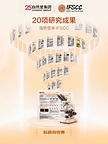
SHANGHAI and PERTH, Australia, Oct. 6, 2026 /PRNewswire/ — The 36th Congress of the International Federation of Societies of Cosmetic Chemists (IFSCC) was held in Perth, Australia, from September 28 to October 1. Building on its continued investment in skin science, ingredient science and product science, CHANDO Group participated in the global scientific gathering for the 12th consecutive year. A record 20 CHANDO Group research papers were accepted for this year’s Congress, placing the Group among the top five companies worldwide by number of accepted papers. 

The IFSCC is widely regarded as the “Nobel Prize of the cosmetics industry,” with the research it recognizes reflecting the latest advances in cosmetic science and technology worldwide. Since first participating in 2015, CHANDO Group has had 79 research papers accepted by IFSCC over 12 years, helping bring Chinese beauty innovation to the forefront of the international scientific community. This track record reflects the comprehensive innovation ecosystem developed by CHANDO Group’s R&D Center over the past 25 years. The Group’s research spans three core scientific disciplines and is supported by four technology platforms, with capabilities extending from fundamental research through product development. This integrated approach helps translate scientific advances into skincare innovations with tangible consumer benefits.

Fundamental Research Driven by Real Consumer Needs

CHANDO Group believes the value of fundamental research extends beyond scientific publications: ultimately, research must translate into products that address real consumer needs. Among the 20 research papers accepted for this year’s IFSCC Congress, technologies from several studies have already been incorporated into products across multiple CHANDO Group brands. From Himalayan extremophile-derived ingredients and precision anti-fatigue aging to barrier repair, pigmentation management, scalp care, cleansing technology, fragrance and sensory science, and women’s intimate care, the Group’s research spans a broad range of skincare and personal well-being applications.

This work is supported by three core scientific disciplines. In skin science, research ranging from longitudinal cohort studies to epigenetic approaches to skin aging is deepening CHANDO Group’s understanding of Asian skin. In ingredient science, the Group is exploring distinctive Himalayan resources to develop a portfolio of proprietary core ingredients. In product science, consumer needs guide the continued evolution of product efficacy. Each research effort starts with a real consumer need, investigates it through fundamental research, and ultimately translates the findings into products, bringing cutting-edge research into the daily lives of hundreds of millions of consumers worldwide.

From Population Insights to AI-Powered R&D: Advancing Precision “Anti-Fatigue Aging”

Skin aging is a perennial focus of skincare research, but how aging occurs—and how best to address it—varies among populations. At this year’s IFSCC Congress, CHANDO Group presented its latest research conducted in collaboration with two leading Chinese institutions.

Historically, global skin-aging research has relied predominantly on Western study populations, leaving limited systematic longitudinal evidence on the characteristics, timing and contributing factors of skin aging among Chinese consumers. To help address this gap, CHANDO Group and the Shanghai Institute of Nutrition and Health of the Chinese Academy of Sciences conducted a two-year longitudinal cohort study quantifying facial skin phenotypes in a Chinese population. The study systematically compared facial-aging phenotype data collected from more than 5,000 Chinese participants over the five-year period from 2018 to 2023 and identified changes in the aging inflection points of six major types of wrinkles. The findings showed that facial wrinkle aging among Chinese women in recent years has tended to begin earlier, progress more rapidly and enter a period of accelerated aging sooner. [1]

The study also identified trends toward shorter sleep duration and earlier initiation of smoking and alcohol consumption, suggesting an increase in fatigue-related lifestyle patterns. For the first time, the researchers quantified the differing effects of insufficient sleep, smoking and alcohol consumption on specific types of wrinkles [1], finding significant associations between multiple fatigue-related lifestyle factors and the earlier appearance of facial wrinkles. These findings not only add to scientific understanding of skin aging among Chinese consumers but also support a shift from generalized anti-aging approaches toward what CHANDO Group describes as “precision anti-fatigue aging”—targeted interventions informed by specific lifestyle factors and wrinkle types.

Building on these insights into aging among Chinese consumers, CHANDO Group has applied AI to reshape its ingredient R&D process. Conventional active-ingredient discovery often relies on experience-based screening, making it time-consuming and inefficient. In collaboration with the ACRDC R&D Center at the Yangtze Delta Region Institute of Tsinghua University, CHANDO Group established an AI-driven peptide discovery platform. Using AI-powered computational biology, the platform screened and optimized candidates from more than 2.8 million yeast proteins, ultimately identifying the new ingredient HiMurchaSin™ Super Anti-Aging Peptide. By targeting PGC-1α, a key regulator of mitochondrial energy metabolism, the ingredient promotes mitochondrial biogenesis and energy production to support precision anti-fatigue aging. It has already been incorporated into the seventh generation of CHANDO’s Super Anti-Aging Little Purple Bottle, launched in April 2026.

CHANDO Group is also expanding its research in longevity science. Its latest study identified, for the first time in the skin of Chinese women, the epigenetic regulator microRNA-1290 as a key epigenetic “switch” involved in photoaging-related telomere depletion. Following UV exposure, microRNA-1290 was significantly upregulated, weakening telomere protection and accelerating skin aging. Treatment with a Himalayan-derived HiMurchaSin filtrate + lysate significantly reversed this effect, helping protect telomeres and delay photoaging. The findings provide scientific support for the underlying anti-aging activity of HiMurchaSin™ and point toward a more targeted, epigenetic approach to addressing skin aging.

Harnessing Himalayan Resources for Sustainable Skincare Innovation

At this year’s IFSCC Congress, CHANDO Group also presented its latest advances in ingredient science. The Himalayas are both the birthplace of the CHANDO brand and a foundation of its scientific research. Drawing on the region’s distinctive extremophile resources, CHANDO has developed an integrated ingredient-development process spanning ecological resource exploration and collection, green process development and scientific efficacy validation.

From yeast extracellular vesicles and yeast-derived PDRN to Saussurea laniceps callus and rose extracellular vesicles, a growing portfolio of innovative ingredients sourced from the Himalayas is continually expanding the possibilities of skincare science.

Yeast was an early focus of this research. Using distinctive microbial resources from the Himalayas, CHANDO Group developed a sustainable yeast-derived PDRN ingredient. Conventional PDRN is typically derived from salmon sperm, while the molecular structure of CHANDO Group’s yeast-derived PDRN more closely resembles human DNA and demonstrated stronger effects in promoting cell regeneration and collagen production. The ingredient has already been used in flagship products including CHANDO’s Super Anti-Aging Little Purple Bottle Essence Cream and Peptide Essence Long-Wear Cushion Foundation. 

Plant callus culture technology also offers a sustainable way to harness rare high-altitude plants. CHANDO Group has developed Saussurea laniceps callus as the world’s first new skin-brightening ingredient derived from the Saussurea genus. Saussurea laniceps is a rare species native to high-altitude areas of the Himalayas and is classified in China as a nationally protected Class II endangered wild plant. With the required approval, CHANDO Group’s plant-ingredient R&D team used plant tissue culture technology to cultivate the material in the laboratory, overcoming the limitations of reliance on wild harvesting while enabling standardized, scalable production. Research showed skin-brightening activity at multiple levels, including cellular and protein levels [2], with multi-target inhibition of melanin production as well as antioxidant and skin-repair effects. The approach addresses limitations associated with conventional brightening ingredients that rely on a single target or high concentrations. Extracellular vesicles derived from high-altitude Rosa callus also exhibit multiple skincare activities, including barrier repair, anti-inflammatory and soothing effects, and protection against photoaging and loss of firmness. In addition, Nardostachys callus has demonstrated superior oil-control, hair-loss prevention and hair-follicle nourishment effects compared with wild-grown Nardostachys [3].

This approach enables consistent, scalable production of highly active ingredients without harvesting wild plants. As sustainability becomes an increasingly important priority for the global beauty industry, CHANDO Group is using callus culture technology to develop effective skincare ingredients while reducing reliance on wild plant resources.

In pigmentation management, CHANDO Group has focused on Asian consumers’ demand for safe, natural-looking skin brightening. A synergistic approach combining snow lotus callus with matsutake mushroom and niacinamide moves beyond conventional single-target brightening strategies, supporting gentler, more sustainable improvements in skin-tone evenness and radiance and providing a scientific basis for the development of safe and effective multi-ingredient brightening serums.

Beyond Facial Skincare: From Scalp Health to Fragrance and Sensory Science

CHANDO Group’s research now extends well beyond facial skincare into a broader range of personal-care and wellness applications.

At this year’s IFSCC Congress, the Group expanded its skin-science research into scalp care. Moving beyond conventional anti-hair-loss approaches based on broad-spectrum antimicrobial activity or a single probiotic, CHANDO Group proposed a new approach centered on maintaining microbial balance, using targeted modulation of the scalp microbiome to support anti-hair-loss efficacy. [4]

In women’s intimate care, CHANDO Group presented research from its recent expansion into women’s health. The Group investigated the use of probiotic extracellular vesicles to regulate the microbiome, exploring a gentle, safe and long-lasting approach to intimate care.

In facial and body cleansing, CHANDO Group addressed a familiar consumer concern: achieving effective cleansing without compromising the skin. The Group unveiled a new formulation technology combining a bicontinuous-phase system with selective cleansing to remove excess oils and impurities while preserving beneficial skin lipids. The concept positions cleansing not as the end of a skincare routine, but as its first step. The technology has already been applied across cleansing products from the CHANDO and Biorrier brands. 

The research presented by CHANDO Group at this year’s IFSCC Congress also extends into the growing field of fragrance and sensory science. Working with university researchers, the Group is exploring how fragrance can move beyond sensory appeal to deliver measurable functional benefits. Addressing fatigue-related concerns including poor sleep and low energy, the Group has drawn on its Himalayan research—from Nyingchi peach blossom to Himalayan fir—to scientifically evaluate the effects of fragrance ingredients and investigate their potential contribution to physical and emotional well-being. 

Advancing Chinese Beauty Innovation Through Technology

At the 2025 IFSCC Congress in Cannes, France, Chinese companies ranked second worldwide in oral presentations and first in poster presentations. That same year, China secured the right to host the 2032 IFSCC Congress, reflecting the growing international profile of Chinese cosmetics research. 

As a leading Chinese beauty company with 12 years of participation in IFSCC, CHANDO Group has both witnessed and contributed to this evolution. From its first accepted paper to its 79th, and from Himalayan extremophile resources to AI-driven precision R&D, the Group has continued to bring original Chinese cosmetics research to the international scientific community through an integrated, independently developed R&D system.

CHANDO Group’s R&D Center combines independent research with global collaboration across fundamental research, ingredient development, formulation innovation and clinical validation, with a focus on three core disciplines: skin science, ingredient science and product science.

The acceptance of 20 CHANDO Group research papers at IFSCC 2026 in Perth marks another milestone in the Group’s R&D journey. Looking ahead, the Group will continue to increase its investment in research and development and pursue original scientific breakthroughs as it contributes to the evolution of China’s beauty industry from “Made in China” to “Created in China.”

[1] Findings from research jointly conducted by CHANDO Group and the Shanghai Institute of Nutrition and Health, Chinese Academy of Sciences
China National Radio report:
https://www.cnr.cn/shanghai/tt/20260424/t20260424_527598222.shtml?f_link_type=f_linkinlinenote&flow_extra=eyJpbmxpbmVfZGlzcGxheV9wb
3NpdGlvbiI6MCwiZG9jX3Bvc2l0aW9uIjowLCJkb2NfaWQiOiI0ZTZjMDZjNGE2YWNlZDQ3LTBkMTJjNWFhNDJmNDY5ZmUifQ%3D%3D&use_xbr
idge3=true&loader_name=forest&need_sec_link=1&sec_link_scene=im&theme=light

[2] SHU H, WANG L, TANG X, et al. Construction of a scalp microecological balance-oriented anti-hair loss system. International Federation of Societies of Cosmetic Chemists (IFSCC) Congress 2026, Perth, Australia. 2026. Poster No. 1067.

[3] LI H, REN H, QU Y, et al. Glacial water culture optimizes sustainable production of Saussurea laniceps callus: From phytochemical composition to in vitro/in vivo efficacy validation. International Federation of Societies of Cosmetic Chemists (IFSCC) Congress 2026, Perth, Australia. 2026. Poster No. 734.

[4] LI H, REN H, ZHOU Q, et al. Tissue culture-based sustainable development of Nardostachys jatamansi callus: Extract preparation and comprehensive evaluation of hair care potentials. International Federation of Societies of Cosmetic Chemists (IFSCC) Congress 2026, Perth, Australia. 2026. Poster No. 733.


View original content to download multimedia:https://www.prnewswire.com/apac/news-releases/chando-group-presents-20-research-papers-at-ifscc-2026-congress-in-perth-302899227.html

SOURCE CHANDO GROUP

Continue Reading

Technology

Taipei-Singapore AI partnership takes shape at Tech Week Singapore 2026

Published

on

By

SINGAPORE, Oct. 6, 2026 /PRNewswire/ — Taipei City and the Taiwan External Trade Development Council (TAITRA) showcased the practical value of Taipei–Singapore technology collaboration at Tech Week Singapore 2026, where the Taipei Pavilion brought together 12 Taipei-based technology companies to present solutions spanning AI-ready data, edge computing, cybersecurity, industrial intelligence, multilingual communication and smart-city applications.

Held from 29–30 September at the Sands Expo and Convention Centre under the theme “Smart Tech, Innovative Taipei,” the Taipei Pavilion formed part of Tech Week Singapore’s wider focus on “The Infrastructure Era” – the foundations required to deploy AI and emerging technologies at scale. The pavilion demonstrated how Taipei’s technology ecosystem can complement Singapore’s strengths in enterprise adoption, trusted governance, regional connectivity and access to ASEAN markets.

A key outcome of the event was the signing of a Memorandum of Understanding (MOU) between the Taiwan Artificial Intelligence Association (TAIA) and Singapore AI Association, establishing a framework for cooperation in AI advisory services, technical and market intelligence exchange, enterprise and trade exchanges, and SME expansion. The MOU will support future exchanges, identify opportunities for joint projects and strengthen connections between Taiwan’s technology ecosystem and Singapore’s enterprise and innovation community.

“Singapore and Taipei bring complementary strengths to the next phase of AI adoption,” said Jules Shih, Manager at TAITRA. “Singapore provides a trusted environment for enterprise deployment and a gateway to ASEAN, while Taipei contributes deep capabilities across AI infrastructure, semiconductors, hardware, edge computing and systems integration. The partnerships and discussions generated at Tech Week Singapore show how these complementary strengths can be translated into practical solutions and new opportunities for companies across the region.”

The participating companies reflected the breadth of Taipei’s AI and digital technology ecosystem. BigObject Inc. presented AI-ready data infrastructure designed to transform fragmented enterprise data into governed, interoperable assets for trusted AI and AI agents. NETIO Technologies Co., Ltd. and Shuttle Inc. showcased industrial edge-computing platforms, local AI processing and secure hardware for real-time operational environments. SYSTEX Corporation highlighted cybersecurity visibility, Shadow AI management and risk-driven exposure management, while Harbor Technology Solutions Co., Ltd. demonstrated AI-powered equipment diagnostics and decision governance based on physical signals such as vibration, acoustics, electromagnetic waves and images.

IPEVO Corp. presented real-time transcription and multilingual translation capabilities for cross-border communication, while Optiqb AI Technology Limited demonstrated AI-powered, real-time conversion of 2D content into naked-eye 3D experiences. Qulip Technology Inc., Galaxy Software Services Corporation, Eslitec Co., Ltd., AR2VR Co., Ltd. and Ubitus presented solutions spanning wireless collaboration, carbon management, conversational commerce, AI-enabled immersive training and multilingual AI avatars.

The pavilion’s focus reflected Taipei’s wider ambition to become an AI innovation city. Taipei is developing an ecosystem that connects industry, research, infrastructure and responsible AI governance, with applications across smart mobility, public services, manufacturing, enterprise technology and community life. The city’s collaboration with NVIDIA on its Taiwan headquarters and AI-enabled smart-city initiatives, including digital modelling and future Taipei Metro upgrades, illustrates how advanced technologies can be applied to practical urban challenges.

The Taipei–Singapore relationship provides a strong foundation for deeper collaboration. Taiwan became Singapore’s largest goods trading partner in 2025, with bilateral trade reported at S$170.3 billion, while trade increased by 94.1% in the first half of 2026 compared with the same period a year earlier. The two cities serve as complementary gateways to the region: Singapore offers access to ASEAN markets, enterprise networks, finance and a trusted operating environment, while Taipei connects partners with Taiwan’s technology ecosystem, specialised talent, manufacturing capabilities and wider Asia Pacific trade links. Together, they can help companies move from technology development and testing to commercial deployment and regional growth.

Through the Taipei Pavilion and the MOU, Taipei City and TAITRA aim to build on these foundations by supporting business matchmaking, technology exchange and potential co-development between Taiwanese and Singaporean organisations. The collaboration will focus on translating AI innovation into measurable outcomes for enterprises, public-sector organisations and communities across Singapore and the wider region.

About TAITRA

Founded in 1970, the Taiwan External Trade Development Council (TAITRA) is Taiwan’s foremost nonprofit trade promotion organization. Backed by the government, industry associations, and major commercial groups, TAITRA supports Taiwanese companies in expanding their global reach through exhibitions, trade missions, market intelligence, and networking. Headquartered in Taipei, TAITRA operates a global network of more than 60 offices worldwide.

View original content:https://www.prnewswire.com/apac/news-releases/taipeisingapore-ai-partnership-takes-shape-at-tech-week-singapore-2026-302899188.html

SOURCE Taiwan External Trade Development Council (TAITRA)

Continue Reading

Trending