Connect with us

Technology

ServiceLink Survey Reveals Gen Z Is Primed To Buy, But Tolerance For High Costs Is Waning

Published

on

The 2025 ServiceLink State of Homebuying Report highlights generational preferences and trends from today’s homebuyers  

PITTSBURGH, March 11, 2025 /PRNewswire/ — A new report released today from ServiceLink, the nation’s premier provider of tech-enabled mortgage services, revealed that Gen Z remains eager and ready to buy a home this year. But high interest rates and home prices could deter them from crossing the finish line as their tolerance is waning. The annual survey analyzes generational trends among recent and prospective homebuyers, revealing their sentiment about the current housing market and their intentions to purchase, refinance or leverage home equity this year.

ServiceLink surveyed more than 1,500 people to get their perceptions on the current housing and mortgage markets.

Now in its fifth year, the 2025 ServiceLink State of Homebuying Report (SOHBR) features insights from homeowners who either purchased a home or tried to purchase a home within the past four years and focuses on yearly trends that provide valuable insights for lenders, servicers, investors and real estate agents alike. This year, buyers and would-be buyers showed a growing interest in technology, adding more space to their home and a desire for even greater transparency.

“These findings show that there is still a strong appetite for homeownership, particularly among the youngest generation, despite the ups and downs of today’s market,” said Dave Steinmetz, president, origination services. “Today’s buyers need to be armed with information, while demonstrating patience and flexibility, in order to achieve their dream of homeownership. For lenders, this provides an opportunity to tap into technology and increase offerings that buyers indicate they want to see. Lenders also should focus on education and increasing transparency to meet the current needs of today’s buyers.”

Key findings of the report include: 

Gen Z remains ready to buy a home, but also willing to walk away

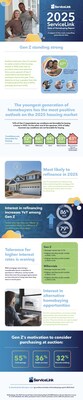
67% of Gen Z respondents said they plan to purchase a home this year compared to 51% of millennials, 49% of Gen X and 22% of baby boomers.Overall, 47% of those surveyed said they plan to consider purchasing a home in 2025.High home prices and interest rates could hold buyers back from going through with a purchase. 43% of respondents said they considered buying a home in 2024 but decided against it for those reasons.Gen Z led all respondents in their decision to walk away from the process, as 58% said they abandoned the homebuying process in 2024 and 38% said they were unsuccessful in their attempt to purchase in the last four years.

A favorable outlook, but tolerance for high interest rates is waning

41% of all respondents said that they believe conditions are favorable for buying a home this year. Gen Z led the way with 52% having a favorable outlook on the market, while only 23% of baby boomers felt the same.69% of all respondents said they are happy with their current mortgage rate.For those interested in purchasing this year, their tolerance for high rates is waning. Gen Z respondents indicated that they have an average 5.1% mortgage rate yet would consider going as high as 5.8%. That number is down from a year ago, when Gen Z respondents were willing to go as high as 6.3%.Millennials also are pulling back their tolerance this year, with the highest rate they would consider set at 5.5%, down from 6.2% in 2024.

Millennials are slowly stepping back, while Gen X is making a return

Millennials, who just two years ago were the most eager among all generations to purchase a home, are slowly pulling back their desire. 51% of millennials still plan to buy in 2025, down from 59% last year and 61% two years ago.Only 46% of millennials said conditions are favorable to buy in 2025, down from 60% in 2023.Gen X, on the other hand, is showing a renewed interest in buying a home in 2025. This year, 49% of Gen X respondents said they plan to buy, up from 45% in 2024, 25% in 2023 and 12% in 2022.Gen X also is the most influenced by technology, with 82% saying they would be more likely to work with a lender that offers appraisal or closing appointment scheduling from a phone or tablet that allows them to select the exact date and time they desire. Additionally, 77% of Gen X respondents said they would select a lender who offered virtual closings.

Buyers know what they want: Space

60% of respondents who plan to purchase a home in the next year said they’re looking for a home with more space, a 17% surge from a year ago, while 39% of respondents said they would like to see more room between homes.51% of respondents said the biggest deal breaker in buying a home would be that the size of the home is too small. Other top deal breakers include higher taxes (48%), lack of privacy/homes too close together (43%) and lack of outdoor space (33%).Gen Z leads all generations in their desire for a larger home with more space at 66%, followed closely by millennials at 64%.

Lenders take note: Technology benefits are widespread

59% of respondents said the biggest benefits of mortgage technology offerings is the convenience and ease of use it provides, while 51% said they like that it saves them time and 45% enjoy the flexibility that it offers to make progress on their own schedule.eSigning technology continues to surge with 62% of all respondents who purchased a home in the last four years saying they utilized digital document signing, up from 48% who said they did the same two years ago.Baby boomers leveraged eSigning the most at 70% compared to 42% of Gen Z respondents.35% of all survey respondents who purchased a home in the last four years said they scheduled their appraisal or closing digitally, with millennials leading the way at 39%.

Equity is growing, so is the desire to refinance

39% of all respondents said they have at least $100,000 in home equity, up from 34% in 2023.One in four respondents said they plan to take out a home equity loan this year, down slightly from 28% in 2024. 10% of respondents said they don’t know enough about home equity loans to consider them.Many respondents have hope that mortgage rates might drop this year, allowing buyers to secure a better rate. 60% of respondents said they are either “likely” or “somewhat likely” to refinance this year in an attempt to get a better rate. That is up slightly from 57% in 2024.

Read the full report here.

Methodology
ServiceLink partnered with Sago to complete an online survey of potential respondents who purchased a home, or tried to purchase a home, in the past four years. A total of 1,526 respondents completed the survey. The respondents were made up of equal parts male and female, as well as equal distribution between all four homebuying generations. Interviewing was conducted by Sago from November 18, 2024, to December 5, 2024. 

About ServiceLink
ServiceLink is the nation’s premier provider of digital mortgage services to the mortgage and finance industries. ServiceLink leads the way by delivering best-in-class technologies, a full product suite of services and proven experience, built on a foundation of quality, compliance and service excellence. ServiceLink provides valuation, title and closing, and flood services to mortgage originators; and default valuation, integrated default title services, vendor invoicing and claims audit services, as well as field services and auction services to mortgage servicers. ServiceLink helps clients in the lending industry and beyond achieve their strategic goals, realize greater efficiencies, and better serve their customers. For more information about ServiceLink, please visit servicelink.com.

View original content to download multimedia:https://www.prnewswire.com/news-releases/servicelink-survey-reveals-gen-z-is-primed-to-buy-but-tolerance-for-high-costs-is-waning-302397317.html

SOURCE ServiceLink

Continue Reading

Technology

Cavli Wireless Launches Cavli360, a Collaborative Industry Magazine Connecting the Global IoT Ecosystem

Published

on

By

SAN JOSE, Calif., Oct. 28, 2026 /PRNewswire/ — Cavli Wireless, a global end-to-end IoT solutions provider, has launched the inaugural edition of Cavli360, a new industry publication featuring insights, experiences, and perspectives from across the connected technology landscape.

Officially launched at electronica India 2026 in Bengaluru, Cavli360 is a collaborative platform that brings together insights and perspectives from Cavli Wireless’s leadership team, customers, distributors, technology partners, industry experts, and analysts to spotlight innovations, industry developments, and emerging trends shaping the future of IoT.

Read Cavli360 Edition 1 online: Explore the digital magazine

Reflecting on nearly a decade of innovation and technological advancement, the inaugural edition of Cavli360 features insights from John Mathew, Founder and CEO of Cavli Wireless, on the company’s evolution, technological breakthroughs, and key milestones that have shaped its journey in the cellular IoT industry.

Perspectives from Cavli’s co-founders further shed light on the strategic and operational foundations that have supported the company’s growth over the years, while outlining its vision for the future.

Strategic Growth Highlights

Manufacturing expansion: Plans to triple manufacturing capacity.International growth: Expanding beyond the Indian market to meet growing international demand.Talent development: Shifting from talent acquisition toward nurturing talent and developing capabilities internally.

The magazine also brings together insights from Cavli’s leadership and functional teams, exploring the core capabilities behind its end-to-end IoT ecosystem. Covering hardware architecture, embedded firmware, RF engineering, quality assurance, manufacturing, customer support, and regulatory certifications, the articles highlight the depth of Cavli’s technical expertise and the engineering capabilities that drive its IoT innovations. Contributions from Cavli’s regional sales leaders provide insights into evolving market dynamics, changing customer requirements, and emerging opportunities across international markets.

Additionally, the publication provides a glimpse into Cavli’s end-to-end IoT ecosystem, highlighting its cellular IoT module portfolio, global connectivity powered by MNO/MVNO partnerships, and the Cavli Hubble™ platform that enables seamless connectivity management, remote device management, and lifecycle orchestration across IoT deployments. 

Technical and IoT Ecosystem Highlights

Engineering expertise: Hardware architecture, embedded firmware, RF engineering, quality assurance, manufacturing, customer support, and regulatory certifications.Cellular IoT and connectivity: LPWAN, LTE, and 5G cellular IoT modules with integrated eSIM connectivity, powered by global MNO/MVNO partnerships for seamless cellular IoT connectivity.Cavli Hubble™ platform: Connectivity management, remote device management, and lifecycle orchestration across IoT deployments.

Beyond internal perspectives, Cavli360 brings together insights from technology partners, distributors, customers, and industry analysts, offering a broader view of the developments shaping the cellular IoT ecosystem. Expert articles examine key industry trends, including 5G adoption in automotive applications, the convergence of AI and IoT, and the evolution from 5G to 6G. Customer success stories showcase real-world applications of Cavli’s integrated IoT solutions across smart retail, supply chain visibility, smart cities, and other sectors, highlighting their role in simplifying connectivity and enabling connected deployments. Technology partners and distributors also offer additional insights into emerging technologies, regional market dynamics, and growth opportunities across the global IoT landscape.

“IoT growth depends on collaboration across the entire ecosystem, from semiconductor providers and technology partners to device manufacturers and end users. Through Cavli360, we aim to bring these voices together and create meaningful conversations around the future of connectivity. We are excited to share insights into the latest developments and emerging trends shaping the IoT ecosystem through this inaugural edition and future editions of Cavli360,” remarked Alexander Johann Bufalino, CMO & VP of Cloud Services at Cavli Wireless.

Cavli360 Edition 1 is available digitally on the Cavli Wireless website, making it accessible to readers worldwide. Printed copies will also be distributed at various industry events and exhibitions attended by Cavli Wireless and its distribution partners. This includes the upcoming electronica Munich 2026, taking place from November 10–13, at the Trade Fair Center Messe München, Germany, where attendees can collect a copy from the Cavli Wireless Booth C2.628.

Through Cavli360, Cavli Wireless aims to foster a more connected, collaborative, and forward-looking IoT ecosystem, one where ideas spark innovation and shared knowledge drives progress. Cavli360 is more than a magazine; it is a platform for shaping conversations, inspiring innovation, and advancing the future of IoT together.

About Cavli Wireless

Cavli Wireless is a global end-to-end IoT solutions provider enabling organizations to build, deploy, and manage connected products at scale. Cavli’s integrated hardware-to-cloud ecosystem combines cellular IoT modules with built-in eSIM connectivity and Cavli Hubble™, a cloud-based platform for IoT connectivity, device and SIM lifecycle management.

Cavli enables OEMs, ODMs, enterprises, and technology partners to develop and scale connected solutions across automotive, industrial, and smart infrastructure applications through its integrated hardware, connectivity, and cloud capabilities.

Headquartered in the United States with engineering and operational capabilities across key markets, Cavli Wireless works with customers and partners worldwide to simplify connected product development and support scalable IoT deployments.

Mariam Abey George, Junior Associate – Digital Marketing
Cavli Wireless
mariam.george@cavliwireless.com
cavliwireless.com

View original content to download multimedia:https://www.prnewswire.com/news-releases/cavli-wireless-launches-cavli360-a-collaborative-industry-magazine-connecting-the-global-iot-ecosystem-302921780.html

SOURCE Cavli Inc.

Continue Reading

Technology

Whoscall, GASA and Mastercard Release the 2026 Asia Scam Report: Hong Kong

Published

on

By

More Than 80% of Hong Kong Respondents Encountered Scams; Phone Calls and SMS Remain the Leading Channels and bank account transfers by scammers is significantly above the Asia average at 43%

Impersonation Scams Are the Most Common, While More Than 60% of Victims Have Been Scammed More Than Once

HONG KONG, Oct. 28, 2026 /PRNewswire/ — The Global Anti-Scam Alliance (GASA), Whoscall, the anti-scam app developed by TrustTech company Gogolook, and Mastercard have jointly released the 2026 Asia Scam Report: Hong Kong. The report examines how people in Hong Kong encounter scams, the tactics scammers use, how victims are asked to pay, and the effects of being scammed. It finds that 81% of respondents encountered a scam in the past year, while 48% interacted with a scammer. Phone calls and SMS remain the most common points of contact, and WhatsApp leads among individual digital platforms.

81% Encountered Scams; 27% of Victims Were Scammed Five Times

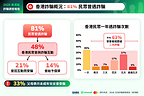
According to the report, 81% of Hong Kong respondents encountered a scam in the past year. Nearly half (48%) interacted with a scammer; 21% lost money following an interaction, and 14% provided personal information. The risk also extends to younger people: 33% of parents surveyed said their underage children had been scammed.

Among respondents who had been scammed, approximately 63% had been victimized more than once. More than a quarter (27%) said they had been scammed five times, while another 6% reported more than five incidents. These findings point to the need for continued support after an initial scam, including guidance that helps victims recognize and avoid subsequent attempts.

“One of the most striking findings in Hong Kong is the gap between confidence and vulnerability. While 76% of adults believe they can recognize a scam, nearly half of those exposed still interacted with one. Awareness is important, but consumers cannot be expected to carry the burden alone. Stronger prevention and intervention across the scam journey are essential,” said Brian D. Hanley, Chapter Director Asia-Pacific, Global Anti-Scam Alliance (GASA).

Jeff Kuo, Co-founder and CEO of Gogolook, said: “Scams now reach people through everyday channels, from phone calls and texts to messaging apps. More than 60% of scam victims in Hong Kong have been scammed more than once, highlighting the need for continued scam prevention education. Through our work with GASA, we hope to turn these findings into greater awareness and stronger protection. Gogolook will keep improving its technology to help people identify scams.”

Rajat Maheshwari, GASA Inaugural Chapter Chair and Senior Vice President, Strategic Growth (AP), Mastercard shared, “Hong Kong has put in place a strong range of measures to combat scams, offering valuable learnings for markets around the world. As scams continue to evolve, the GASA report highlights the opportunity to build on this progress through deeper collaboration across the wider ecosystem, supported by technology and a greater focus on preventive and behavior-based measures. Continued public-private partnership will be essential to staying ahead of emerging threats and helping protect people from scam-related losses.”

Top Three Scam Channels Revealed; WhatsApp Leads Digital Platforms at Nearly 70%

Phone calls (59%) and SMS (52%) were the channels through which Hong Kong respondents most commonly encountered scams, followed by messaging apps (47%) and email (41%). Compared with 2025, the share reporting scam contact by phone was unchanged, SMS fell by two percentage points, and messaging apps rose by four percentage points. The report also found that around 80% of scam contact occurred on platforms with private messaging capabilities, underscoring the need to scrutinize suspicious requests that move from calls or texts into private conversations.

Among individual digital platforms, WhatsApp ranked first at 68%. Hong Kong Police recently reported receiving around 50 cases of WhatsApp account hijacking in the first week of October, with losses totaling nearly HK$20 million. Many of the cases involved cryptocurrency or investment pretexts. Gmail (32%) and Facebook (28%) followed WhatsApp, while Instagram (22%) and Telegram (17%) also featured prominently. Whoscall advises people to verify a contact through a separate, trusted channel, even when a message arrives on a familiar platform or appears to come from a friend, business or public agency.

Impersonation Encountered by Over 80% of Respondents, Followed by Investment and Shopping Scams

Impersonation was the most widely encountered scam type, reported by 81% of Hong Kong respondents; 17% had interacted with someone carrying out such a scam. Scammers may pose as Hong Kong Police, the Department of Health or mainland law enforcement officials, claim that a person is implicated in a crime, and demand passwords or access to assets for a purported investigation. Others may impersonate banks, major telecommunications providers or online shopping platforms, using claims of account problems or order cancellations to obtain personal information, passwords or remote access to a device.

Investment scams followed at 78%, while shopping scams reached 71%. Respectively, 17% and 16% of respondents had interacted with scammers using these approaches. Other commonly encountered schemes included prize scams (68%), fake invoice scams (64%), identity theft (62%) and romance scams (61%). In addition, 55% had encountered offers claiming to help recover money lost to a scam. Such approaches warrant particular caution from people who have already suffered a loss.

Bank Transfers Are the Most Common Payment Method; Harm Extends Beyond Financial Loss

Among respondents who paid a scammer, 43% did so by bank transfer, above the Asia-wide average of 36%. Mobile payment apps and credit cards each accounted for 25%, followed by e-wallets at 24%. Physical or digital gift cards, cash, and payment tools within websites each accounted for 21%. The trend shows scammers favor immediate and irrevocable payment methods that increase in abuse rates in Hong Kong. This will require more advance interventions to secure these immediate payment rails in Hong Kong.

The report also examined the broader effects of scams on people in Hong Kong. Beyond financial loss, 33% said the experience had damaged their confidence and caused them to question themselves, 28% worried about being scammed again, and 23% had become less trusting of the internet or digital tools. The effects reached into daily life: 23% needed financial help from friends or family, and another 23% reported a greater need to borrow money. Both figures exceeded the Asia-wide averages.

When faced with a suspicious message or request, Whoscall recommends pausing before taking action and checking the sender’s identity using information from an official website. Anti-scam tools can also help assess unfamiliar numbers, links and messages. Anyone who has been scammed should seek help from the relevant authorities or organizations promptly and remain alert to subsequent offers to recover their money, which may be another scam attempt.

To help people navigate changing scam tactics, Whoscall offers more than caller identification. Its Check feature lets users assess suspicious phone numbers, URLs and screenshots in one place. Whether they receive an unfamiliar message or a promotional email, users can upload a screenshot or photograph a physical flyer for an AI-powered assessment of potential risks. They can also share the results with friends and family, helping others recognize suspicious content before they engage with it.

The full 2026 Asia Scam Report – Hong Kong is available on the GASA website:
https://gasa.org/knowledge-base?content_group=318467252980&page=1

For more information about the Global Anti-Scam Summit Asia 2026, visit:
https://events.gasa.org/gass-asia-2026

About Whoscall

The Whoscall app, a digital anti-scam tool, is designed to protect users across various scenarios from scams and spams, including phone calls, text messages, and links. With over 100 million downloads worldwide, it boasts the most comprehensive database in East and Southeast Asia, encompassing over 2.6 billion phone numbers, and collects data from partner ScamAdviser to form a leading digital anti-scam database. The Whoscall team has been dedicated to developing anti-scam technology for over a decade, employing AI to analyze and simulate the patterns of scam groups, proactively preventing the spread of scams. At the same time, Whoscall actively engages in building a community collaboration mechanism with its users, playing a role with societal impact in digital anti-scam services from educational initiatives, cross-sector collaboration to product innovation. Recognized and chosen for partnerships by the Taiwan National Police Agency, Thai Royal Police and NCSA, Royal Malaysia Police and CyberSecurity Malaysia, the Philippines Cybercrime Investigation and Coordinating Center, Financial Supervisory Service of South Korea, and local governments in Japan.

For more information, please refer to: https://whoscall.com/en

View original content to download multimedia:https://www.prnewswire.com/apac/news-releases/whoscall-gasa-and-mastercard-release-the-2026-asia-scam-report-hong-kong-302921783.html

SOURCE Whoscall; Gogolook

Continue Reading

Technology

“All Access with Andy Garcia” Explores Data Loss Prevention and Recovery with Secure Data Recovery Services

Published

on

By

Educational segment examines how preparation, backup strategies, and specialized recovery services help protect individual and business data amid rising vulnerabilities.

CLEVELAND, Oct. 28, 2026 /PRNewswire/ — “All Access with Andy Garcia” features Secure Data Recovery Services in an educational segment that highlights the critical importance of professional data recovery solutions in an era of growing digital vulnerability. Filmed on May 21, 2026, the segment began commercial and Public Television distribution in September 2026.

Family photos, professional records, and business systems all depend on digital storage that can be affected by hardware failure, human error, or ransomware. The segment examines the importance of planning before an incident occurs, including establishing backup strategies and testing response plans. Viewers learn how preparation can help limit disruption and reduce the risk of permanent loss.

The series takes viewers inside the specialized science of recovering data from damaged or compromised devices, and explains why preparation matters before a crisis occurs. Secure Data Recovery shares insights into cleanroom recovery for storage devices, ransomware recovery techniques, and the research required to understand evolving storage technologies. As devices become more complex, the company’s specialists study how storage technologies are designed and behave, developing recovery methods before customers need them.

The company’s work also reveals how recovery experience can inform prevention. The need to return recovered files securely inspired the development of hardware-encrypted drives, while lessons with ransomware recovery reinforced the importance of user education and disaster recovery planning. From creating and storing information to recovering it, and ultimately securely destroying it, the segment offers a broader look at responsible data management. As the company’s staff emphasize, data loss is not a question of “if,” but “when,” making informed preparation an essential part of protecting valuable digital assets.

“Being featured on All Access is a testament to our entire team’s dedication,” said Sergey Gulyayev, CEO of Secure Data Recovery. “We are committed to providing the highest level of service to our clients when they are most vulnerable, and we are honored that this commitment has been recognized by such a respected outlet.” He added: “We invest in client education and preparedness; the best outcome for everyone is a client who never needs emergency recovery because they had the right strategy in place.”

About All Access

Hosted by actor, director, and producer Andy Garcia, “All Access with Andy Garcia” brings educational stories to Public Television stations nationwide. Through expert perspectives and compelling storytelling, the series explores developments in science, business, healthcare, education, and more, helping audiences better understand the ideas and efforts shaping their communities and the world around them. Learn more at www.allaccessptv.com.

About Secure Data Recovery

Secure Data Recovery is an industry leader in professional data recovery, delivering secure, reliable solutions for organizations and individuals facing complex data loss or ransomware attacks. Backed by advanced technology, state-of-the-art facilities, and a dedicated team of engineers, the company specializes in recovering data from hard drives, RAID arrays, SSDs, mobile devices, and more. By combining specialized expertise, global operations, and industry leadership, Secure Data Recovery delivers high success rates, certified data security practices, and a customer-focused approach that includes free, comprehensive diagnostic analyses, no-obligation price quotes, and 24/7 emergency support — giving customers peace of mind and efficient results during critical data emergencies.

Secure Data Recovery is headquartered in Cleveland, OH, USA.

For additional information, please visit https://www.securedatarecovery.com.

View original content to download multimedia:https://www.prnewswire.com/news-releases/all-access-with-andy-garcia-explores-data-loss-prevention-and-recovery-with-secure-data-recovery-services-302921653.html

SOURCE All Access

Continue Reading

Trending