Connect with us

Technology

Pioneering plant microbiome research: Julia Vorholt receives 2025 Novonesis Biotechnology Prize from the Novo Nordisk Foundation

Published

on

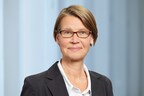
COPENHAGEN, Denmark, March 13, 2025 /PRNewswire/ — Professor Julia Vorholt’s work has changed how we think about plant health. Her innovative research on plant microbiomes holds the potential to transform agriculture. For her achievements, the microbiologist is receiving the Novonesis Biotechnology Prize.

Plants are not alone. Just as humans rely on gut bacteria for digestion and immunity, plants also have communities of beneficial microbes living on and inside them. These allies, invisible to our eyes, help plants to fight pathogens, withstand environmental stress and grow more vigorously.

But how do these microbial communities work? And can we harness their power to make agriculture more sustainable? These questions have driven Professor Julia Vorholt’s groundbreaking research work, which has now earned her the 2025 Novonesis Biotechnology Prize, awarded by the Novo Nordisk Foundation.

“Receiving this prize is a tremendous honour,” says Vorholt, who is Professor of Microbiology at ETH Zurich. “The recognition is overwhelming, and it highlights the importance of understanding microbial communities and their role in plant health,” she adds.

Deciphering the hidden world of plant microbiomes

Historically, plant microbiology research focused on microbes that make plants sick. But Julia Vorholt took a different perspective. Rather than concentrating on plant diseases, she looked at the microbes that naturally inhabit leaves, known as the phyllosphere. Her research revealed that these tiny organisms do not exist randomly but rather form structured, functional communities as ecosystems in their own right.

Some of these microbes protect against disease, and others assist plants in nutrient uptake or help them to survive harsh conditions. In turn, plant-associated microbes benefit from their host by gaining access to fixed carbon and multiplying steadily, colonising new leaves as the plant grows.

“These microbial communities follow assembly rules,” Vorholt states. “By understanding how they establish themselves and how the microbes interact in a community, we may find natural and sustainable ways to improve plant health.”

Vorholt’s approach began with isolating and identifying individual bacteria (altogether several hundred different species from leaves), eventually enabling her and her team to construct defined microbial communities that colonise plants under controlled conditions in the laboratory. By studying them in isolation and in a multitude of combinations, the team uncovered interactions that promote plant resilience and growth.

“When I started studying plant microbiomes more than 20 years ago, most research focused on pathogens, which harm plants, or mutualists, such as rhizobial bacteria and mycorrhizal fungi, which help plants to absorb nutrients,” Vorholt explains. “I wanted to explore the many other microbes living on plants that were thought to be neutral or unimportant.”

At the time, the idea that complex microbial communities as a whole could influence plant health was not widely accepted. But as research on the human microbiome grew, scientists began seeing similarities with plants, and interest in the field took off.

From understanding to application

Julia Vorholt’s research has the potential to revolutionise agriculture. By studying how tiny microbes interact with plants, scientists can develop biosolutions – natural ways to help crops resist pathogens more effectively or to grow better while reducing the need for chemical pesticides and fertilisers.

Professor Detlef Weigel, Chair of the Novonesis Biotechnology Prize Committee, explains: “Her work has changed how we think about plant health. The myriad microbes on plants are not just passengers – they can actively protect crops from disease and help them to thrive. By figuring out how these tiny organisms work together, Professor Vorholt is paving the way for farming methods that rely less on chemicals and more on nature, making agriculture both more sustainable and more productive.”

Mads Krogsgaard Thomsen, CEO of the Novo Nordisk Foundation, adds: “Julia Vorholt’s discoveries are groundbreaking. She has shown that microbes play a fundamental role in the survival of plants. Her ability to distil complex science down to its mechanistic basis could lead to transformative agricultural innovations that will help crops to grow healthier and withstand climate challenges while reducing environmental impact.”

Summarising her vision, Vorholt states: “If we can predict how complex plant microbiomes come together and function, we can develop strategies that naturally enhance crop resilience and productivity.”

Unlocking the power of the microbiome

Julia Vorholt’s research has already shown promise in making a model plant more resistant to disease, and this knowledge can now be exploited in designing natural treatments that support crop health and productivity.

“Initially, many experts dismissed the idea that commensal microbes had any real impact on plant health,” she recalls. “But our research and that of others has since shown that plants are highly attuned to these microbes. They recognise even harmless bacteria and modulate their immune responses accordingly, tuning their microbiomes in ways that affect overall health.”

Her team has also discovered that plants use specific molecular components to maintain a balanced microbiome – paralleling how disruptions in immunity can lead to dysbiosis in the human microbiome.

“Despite the obvious differences between plants and humans, we see striking similarities in how the respective hosts manage their microbial communities,” Vorholt adds.

Much more to discover

Julia Vorholt’s research has helped to shift how scientists think about plant health, positioning microbiomes as fundamental components of plant well-being.

“We are only beginning to unlock the full potential of microbes in agriculture,” she says. “Our goal is to advance fundamental understanding of how microbial communities are built and to help us translate that knowledge into strategies that preserve beneficial microbes. By investigating these microbial communities and their interactions, we aim to contribute to advancing targeted strategies to protect crops and enhance food security.”

By studying plant microbiomes, Vorholt’s team has shown that the composition of microbial communities follows predictable patterns. More importantly, they could predict interaction outcomes solely based on the properties of individual microbes – an essential step toward developing biotechnology solutions, including tailored microbial treatments that naturally suppress harmful microbes.

Receiving the 2025 Novonesis Biotechnology Prize not only honours Vorholt’s work but also highlights its potential to transform agriculture. By leveraging beneficial microbes instead of synthetic chemicals, her research is paving the way for healthier crops, higher yields and a more sustainable future for global food production.

About Julia Vorholt

1997: PhD in Microbiology, University of Marburg; research work at Max Planck Institute for Terrestrial Microbiology, Marburg, Germany1998: Postdoctoral Researcher, University of Washington, Seattle, USA1999–2001: Group Leader, Max Planck Institute for Terrestrial Microbiology, Marburg, Germany2001–2006: Independent Group Leader, CNRS (National Centre for Scientific Research), Toulouse, France2006–present: Professor of Microbiology, ETH Zurich, Switzerland2012: Elected Member, German National Academy of Sciences Leopoldina2019: Elected Member, European Molecular Biology Organization (EMBO)2020–present: Co-Director, National Centre of Competence in Research (NCCR) Microbiomes, Switzerland2024: Feodor Lynen Medal2024: Elected International Member, United States National Academy of Sciences

About the Novonesis Biotechnology Prize

The Novonesis Biotechnology Prize recognises outstanding research or technological contributions that benefit the development of biotechnological science for innovative solutions. The Prize is awarded annually by the Novo Nordisk Foundation and aims to raise awareness of basic and applied biotechnology research.

It is accompanied by DKK 5 million (€672,000), comprising:

DKK 4.5 million (€605,000) as a research grantDKK 0.5 million (€67,000) as a personal award

Additionally, the Foundation awards DKK 0.5 million for hosting an international symposium within the recipient’s research field(s).

Photo – https://mma.prnewswire.com/media/2640378/Novo_Nordisk_Foundation_Julia_Vorholt.jpg

View original content:https://www.prnewswire.co.uk/news-releases/pioneering-plant-microbiome-research-julia-vorholt-receives-2025-novonesis-biotechnology-prize-from-the-novo-nordisk-foundation-302400232.html

Continue Reading
Click to comment

Leave a Reply

Your email address will not be published. Required fields are marked *

Technology

Chef Robotics Physical AI Models Can Now Automate Baked Goods Packing

Published

on

By

SAN FRANCISCO, April 29, 2026 /PRNewswire/ — Chef Robotics, a leader in physical AI for the food industry, today announced that Chef robots can now automate tray assembly for baked goods packing. The application places baked products, such as burger buns, chocolate chip cookies, biscotti, butter cookies, biscuits, fortune cookies, granola bars, rusks, and shortbreads into trays and packaging containers before sealing.

Watch Chef robots in action.

Baked goods packing has historically been difficult to automate for high-mix production. Each item behaves differently on the production line—a granola bar compresses under the wrong grip, while a biscotti or rusk can crack if placed at the wrong angle. Surface textures range from glazed and smooth to crumbly and irregular, and strict presentation requirements leave little room for error. This variability has made it challenging for automation systems to reliably handle baked goods at production speeds, leaving food manufacturers dependent on manual labor and traditional bakery equipment.

To address this, Chef built its baked goods packing application on its existing piece-picking capability, which uses Chef’s AI-powered computer vision and physical AI models trained across diverse real-world production environments. This allows Chef robots to assess each item’s position, shape, and orientation in real time and determine how to pick the items from the pan and place them quickly and precisely without damaging them.

The baked goods packing application supports four distinct placement capabilities.

First, Chef’s vision system detects the angle at which each item sits in the pan and reorients it after picking, placing it on the tray at the exact angle required, regardless of its original position, enabling retail-ready presentation for SKUs that require precise angular placement.

Second, Chef robots can place multiple baked goods into the same packaging container in a single automated pass, completing full tray assembly without manual intervention.

Third, for packaging containers with multiple small compartments, Chef robots can precisely place items into each designated section, including multiple items in the same compartment, using Chef’s AI vision model to detect compartment positions and orientations in real time.

Fourth, Chef’s vision system identifies the exact center of each tray and places every item at a predefined offset from that center, ensuring a uniform, consistent arrangement across every pack regardless of how trays arrive on the conveyor.

For food manufacturers evaluating bakery systems and baked goods packaging automation, the application offers higher throughput, reduced labor dependency, and consistent presentation across shifts. The capability runs on Chef’s existing robotic hardware and software, allowing manufacturers to deploy it without requiring any changes to their production lines.

Chef’s baked goods packing application is available in the U.S., Canada, Germany, and the UK and is included as part of Chef’s robotics-as-a-service (RaaS) pricing model.

About Chef Robotics
Chef is the first company to have commercialized a scalable AI-driven food robotics solution. With over 104 million servings made in production, Chef leverages ChefOS, an AI platform for food manipulation, to offer a Robotics-as-a-Service solution that helps industry-leading food companies increase production volume and meet demand. Headquartered in San Francisco, CA, Chef aims to empower humans to do what humans do best by accelerating the advent of intelligent machines. Visit https://chefrobotics.ai to learn more.

View original content:https://www.prnewswire.com/news-releases/chef-robotics-physical-ai-models-can-now-automate-baked-goods-packing-302756923.html

SOURCE Chef Robotics

Continue Reading

Technology

Chef Robotics Physical AI Models Can Now Automate Baked Goods Packing

Published

on

By

SAN FRANCISCO, April 29, 2026 /PRNewswire/ — Chef Robotics, a leader in physical AI for the food industry, today announced that Chef robots can now automate tray assembly for baked goods packing. The application places baked products, such as burger buns, chocolate chip cookies, biscotti, butter cookies, biscuits, fortune cookies, granola bars, rusks, and shortbreads into trays and packaging containers before sealing.

Watch Chef robots in action.

Baked goods packing has historically been difficult to automate for high-mix production. Each item behaves differently on the production line—a granola bar compresses under the wrong grip, while a biscotti or rusk can crack if placed at the wrong angle. Surface textures range from glazed and smooth to crumbly and irregular, and strict presentation requirements leave little room for error. This variability has made it challenging for automation systems to reliably handle baked goods at production speeds, leaving food manufacturers dependent on manual labor and traditional bakery equipment.

To address this, Chef built its baked goods packing application on its existing piece-picking capability, which uses Chef’s AI-powered computer vision and physical AI models trained across diverse real-world production environments. This allows Chef robots to assess each item’s position, shape, and orientation in real time and determine how to pick the items from the pan and place them quickly and precisely without damaging them.

The baked goods packing application supports four distinct placement capabilities.

First, Chef’s vision system detects the angle at which each item sits in the pan and reorients it after picking, placing it on the tray at the exact angle required, regardless of its original position, enabling retail-ready presentation for SKUs that require precise angular placement.

Second, Chef robots can place multiple baked goods into the same packaging container in a single automated pass, completing full tray assembly without manual intervention.

Third, for packaging containers with multiple small compartments, Chef robots can precisely place items into each designated section, including multiple items in the same compartment, using Chef’s AI vision model to detect compartment positions and orientations in real time.

Fourth, Chef’s vision system identifies the exact center of each tray and places every item at a predefined offset from that center, ensuring a uniform, consistent arrangement across every pack regardless of how trays arrive on the conveyor.

For food manufacturers evaluating bakery systems and baked goods packaging automation, the application offers higher throughput, reduced labor dependency, and consistent presentation across shifts. The capability runs on Chef’s existing robotic hardware and software, allowing manufacturers to deploy it without requiring any changes to their production lines.

Chef’s baked goods packing application is available in the U.S., Canada, Germany, and the UK and is included as part of Chef’s robotics-as-a-service (RaaS) pricing model.

About Chef Robotics
Chef is the first company to have commercialized a scalable AI-driven food robotics solution. With over 104 million servings made in production, Chef leverages ChefOS, an AI platform for food manipulation, to offer a Robotics-as-a-Service solution that helps industry-leading food companies increase production volume and meet demand. Headquartered in San Francisco, CA, Chef aims to empower humans to do what humans do best by accelerating the advent of intelligent machines. Visit https://chefrobotics.ai to learn more.

View original content:https://www.prnewswire.com/news-releases/chef-robotics-physical-ai-models-can-now-automate-baked-goods-packing-302756923.html

SOURCE Chef Robotics

Continue Reading

Technology

Air Products to Expand Industrial Gas Supply for Samsung Electronics’ Next-Generation Semiconductor Fab in South Korea

Published

on

By

New investment underscores the company’s long-term commitment to Korea and its leading role in the global semiconductor industry 

LEHIGH VALLEY, Pa., April 29, 2026 /PRNewswire/ — Air Products (NYSE:APD), a world-leading industrial gases company and serving Samsung globally, today announced it has been selected by Samsung to supply industrial gases for its new advanced semiconductor fab in Pyeongtaek, Gyeonggi Province, South Korea.

Under the agreement, Air Products will build, own and operate multiple state-of-the-art production facilities and a bulk specialty gas supply system to supply nitrogen, oxygen, argon, and hydrogen for Samsung’s new semiconductor fab. The new facilities are expected to come onstream in multiple phases from 2028 through 2030.

Air Products has a long track record of executing multiple phase expansions in Pyeongtaek to support Samsung’s growing manufacturing needs. This latest project represents Air Products’ largest investment to date in the semiconductor industry and will establish Pyeongtaek as the company’s single largest operations site globally supporting the electronics industry. 

“Air Products is honored to be selected once again by Samsung and to have their continued confidence as a trusted partner supporting their strategic growth plans,” said SR Kim, President, Air Products Korea. “This significant investment reinforces Air Products’ role as a leading global supplier to the semiconductor industry and underscores our long-standing commitment to supporting our strategic customers with safety, reliability, efficiency and excellent service.”

Air Products has served the global electronics industry for more than 40 years, supplying industrial gases safely and reliably to many of the world’s leading technology companies. The company has operated in Korea for more than 50 years and has established a strong position in electronics and manufacturing sectors.

About Air Products

Air Products (NYSE: APD) is a world-leading industrial gases company in operation for over 85 years focused on serving energy, environmental, and emerging markets and generating a cleaner future. The Company supplies essential industrial gases, related equipment and applications expertise to customers in dozens of industries, including refining, chemicals, metals, electronics, manufacturing, medical and food. As the leading global supplier of hydrogen, Air Products also develops, engineers, builds, owns and operates some of the world’s largest clean hydrogen projects, supporting the transition to low- and zero-carbon energy in the industrial and heavy-duty transportation sectors. Through its sale of equipment businesses, the Company also provides turbomachinery, membrane systems and cryogenic containers globally.

Air Products had fiscal 2025 sales of $12 billion from operations in approximately 50 countries. For more information, visit airproducts.com or follow us on LinkedInXFacebook or Instagram.

This release contains “forward-looking statements” within the safe harbor provisions of the Private Securities Litigation Reform Act of 1995. These forward-looking statements are based on management’s expectations and assumptions as of the date of this release and are not guarantees of future performance. While forward-looking statements are made in good faith and based on assumptions, expectations and projections that management believes are reasonable based on currently available information, actual performance and financial results may differ materially from projections and estimates expressed in the forward-looking statements because of many factors, including the risk factors described in our Annual Report on Form 10-K for the fiscal year ended September 30, 2025 and other factors disclosed in our filings with the Securities and Exchange Commission. Except as required by law, we disclaim any obligation or undertaking to update or revise any forward-looking statements contained herein to reflect any change in the assumptions, beliefs or expectations or any change in events, conditions or circumstances upon which any such forward-looking statements are based.

View original content to download multimedia:https://www.prnewswire.com/news-releases/air-products-to-expand-industrial-gas-supply-for-samsung-electronics-next-generation-semiconductor-fab-in-south-korea-302757497.html

SOURCE Air Products

Continue Reading

Trending