Connect with us

Technology

MicroCloud Hologram Inc. Researches CV-QNN (Continuous Variable Quantum Neural Networks) Technology and Builds Variational Quantum Circuits Embedded in CV Architecture

Published

on

SHENZHEN, China, March 17, 2025 /PRNewswire/ — MicroCloud Hologram Inc. (NASDAQ: HOLO), (“HOLO” or the “Company”), a technology service provider, they are researching CV-QNN (Continuous Variable Quantum Neural Networks) technology, with the aim of building Variational Quantum Circuits embedded in CV architecture. In this way, it is possible not only to quantumize classical neural networks, but also to design various specialized quantum models, such as convolutional quantum networks, recursive quantum networks, and residual quantum networks, providing new tools for quantum artificial intelligence technology.

The core of HOLO CV-QNN lies in achieving affine transformations and nonlinear mappings in neural networks through layered continuously parameterized quantum gates and nonlinear activation functions. The CV architecture is a form of quantum computing where information is encoded using continuous degrees of freedom, such as the amplitude and phase of electromagnetic fields. This contrasts with the DV architecture, which uses discrete quantum bits. The CV architecture is more closely aligned with classical information processing methods, thus offering inherent advantages when implementing neural networks. The basic operational units in CV architecture are Gaussian and non-Gaussian transformations of quantum states.

Affine transformations are fundamental operations in neural networks, typically composed of linear transformations (matrix multiplication) and bias terms (vector addition). In CV-QNN, affine transformations are realized through Gaussian gates. Gaussian gates are operations that preserve the Gaussian distribution of quantum states, including squeezing, displacement, and rotation gates. These gates can precisely control the amplitude and phase of quantum states, thereby simulating the linear operations in classical neural networks.

Nonlinear activation functions are key to enabling neural networks to represent complex features. In classical neural networks, common activation functions include ReLU, Sigmoid, and Tanh, among others. In the CV architecture, nonlinearity is achieved through non-Gaussian gates, such as polarized optical nonlinear operations or non-Gaussian optical crystals. The nonlinearity introduced by these non-Gaussian gates enables CV-QNN to represent more complex functions, enhancing the model’s expressiveness.

HOLOCV-QNN adopts a layered structure, with each layer composed of several continuously parameterized quantum gates. This layered design is similar to the multilayer perceptron structure in classical neural networks, allowing CV-QNN to perform complex nonlinear transformations while preserving quantum coherence. Additionally, this layered structure is theoretically universal, meaning that through appropriate combinations of gate operations, it can approximate any continuous function.

HOLO CV-QNN leverages quantum superposition and entanglement properties, offering the potential for exponential speedup when processing large-scale data. Additionally, because the information encoding in the CV architecture is closer to classical computing methods, CV-QNN boasts strong scalability and can seamlessly interface with existing classical computing systems. Moreover, the design of CV-QNN fully exploits the energy efficiency advantages of continuous-variable quantum computing. By using Gaussian and non-Gaussian gates, complex quantum operations can be achieved at a lower resource cost, providing a practical and feasible solution during the stage when quantum computer hardware is not yet fully developed.

The potential applications of CV-QNN are vast. It can achieve more efficient image classification, object detection, and semantic segmentation through quantum convolutional networks; enhance performance in text generation, sentiment analysis, and machine translation using quantum recursive networks; offer faster solutions in quantum chemistry, materials science, and complex system simulations; and enable more accurate market forecasting and risk assessment through quantum neural networks.

The emergence of HOLO Continuous Variable Quantum Neural Networks (CV-QNN) offers a fresh perspective on the integration of quantum computing and artificial intelligence. By embedding the structure and functions of classical neural networks within the framework of quantum computing, this technology not only significantly enhances the computational efficiency of models but also expands their application boundaries across different fields. From quantum convolutional networks to recursive quantum networks and residual quantum networks, CV-QNN technology demonstrates its potential in multiple scenarios, including image processing, natural language processing, and scientific computing. These advances signify that we are gradually entering an era driven by quantum artificial intelligence.

However, the HOLO CV-QNN technology still faces several challenges. For example, issues such as the stability of quantum hardware and the optimization of computational resources need further attention. Additionally, the potential accumulation of errors during the training process of quantum networks and the need for more efficient designs of quantum optimization algorithms present new challenges for both academia and industry. Nonetheless, these challenges also represent opportunities. As quantum hardware advances and software tools improve, the performance of CV-QNN will continue to enhance, and its future application scenarios will become even more widespread.

Against the backdrop of quantum technology gradually transforming the world, HOLO CV-QNN not only represents a new computational tool but also holds the potential to redefine the boundaries of artificial intelligence capabilities. It is believed that as this technology continues to develop, it will become the core driving force behind the next generation of intelligent systems. Whether it is unveiling the mysteries of nature in scientific research or solving complex practical problems in industry, the potential of CV-QNN technology will be exponentially magnified, bringing unprecedented opportunities.

About MicroCloud Hologram Inc.

MicroCloud is committed to providing leading holographic technology services to its customers worldwide. MicroCloud’s holographic technology services include high-precision holographic light detection and ranging (“LiDAR”) solutions, based on holographic technology, exclusive holographic LiDAR point cloud algorithms architecture design, breakthrough technical holographic imaging solutions, holographic LiDAR sensor chip design and holographic vehicle intelligent vision technology to service customers that provide reliable holographic advanced driver assistance systems (“ADAS”). MicroCloud also provides holographic digital twin technology services for customers and has built a proprietary holographic digital twin technology resource library. MicroCloud’s holographic digital twin technology resource library captures shapes and objects in 3D holographic form by utilizing a combination of MicroCloud’s holographic digital twin software, digital content, spatial data-driven data science, holographic digital cloud algorithm, and holographic 3D capture technology. For more information, please visit http://ir.mcholo.com/ 

Safe Harbor Statement

This press release contains forward-looking statements as defined by the Private Securities Litigation Reform Act of 1995. Forward-looking statements include statements concerning plans, objectives, goals, strategies, future events or performance, and underlying assumptions and other statements that are other than statements of historical facts. When the Company uses words such as “may,” “will,” “intend,” “should,” “believe,” “expect,” “anticipate,” “project,” “estimate,” or similar expressions that do not relate solely to historical matters, it is making forward-looking statements. Forward-looking statements are not guarantees of future performance and involve risks and uncertainties that may cause the actual results to differ materially from the Company’s expectations discussed in the forward-looking statements. These statements are subject to uncertainties and risks including, but not limited to, the following: the Company’s goals and strategies; the Company’s future business development; product and service demand and acceptance; changes in technology; economic conditions; reputation and brand; the impact of competition and pricing; government regulations; fluctuations in general economic; financial condition and results of operations; the expected growth of the holographic industry and business conditions in China and the international markets the Company plans to serve and assumptions underlying or related to any of the foregoing and other risks contained in reports filed by the Company with the Securities and Exchange Commission (“SEC”), including the Company’s most recently filed Annual Report on Form 10-K and current report on Form 6-K and its subsequent filings. For these reasons, among others, investors are cautioned not to place undue reliance upon any forward-looking statements in this press release. Additional factors are discussed in the Company’s filings with the SEC, which are available for review at www.sec.gov. The Company undertakes no obligation to publicly revise these forward-looking statements to reflect events or circumstances that arise after the date hereof.


View original content:https://www.prnewswire.com/news-releases/microcloud-hologram-inc-researches-cv-qnn-continuous-variable-quantum-neural-networks-technology-and-builds-variational-quantum-circuits-embedded-in-cv-architecture-302403143.html

SOURCE MicroCloud Hologram Inc.

Continue Reading
Click to comment

Leave a Reply

Your email address will not be published. Required fields are marked *

Technology

Hyundai Motor Group Executive Chair Euisun Chung Announces Physical AI Vision at San Francisco AI Summit

Published

on

By

Hyundai Motor Group shares roadmap for realizing its Physical AI vision and collaboration strategy with global tech leaders at the San Francisco AI Summit
Executive Chair Euisun Chung presented, “Hyundai Motor Group is evolving beyond the traditional boundaries of automotive manufacturing to become a Physical AI solution company,” adding, “The ultimate Physical AI vision we pursue is the realization of integrated intelligence at the city level”
The Group to leverage manufacturing competitiveness and leading robotics capabilities centered on Boston Dynamics, while establishing a data flywheel system connecting real-world operational data with continuous AI model advancement
The Group to leverage strategic partnerships with global technology leaders, including NVIDIA and Waymo, as well as Boston Dynamics’ strategic partnership with Google DeepMind
The Group to collaborate with NVIDIA to develop a Robot Reference Platform that combines Hyundai Motor Group’s and NVIDIA’s Physical AI capabilities

… The initiative to support Korea’s Physical AI industry through an open ecosystem

The Group to cultivate strategic domestic hubs through investments in Saemangeum AI Valley and future advanced industries in Korea’s Yeongnam region

SAN FRANCISCO, July 25, 2026 /PRNewswire/ — Hyundai Motor Group (the Group) Executive Chair Euisun Chung today outlined the Group’s vision and strategy for Physical AI at the San Francisco AI Summit held in San Francisco, California.

The event brought together approximately 150 attendees, including Executive Chair Chung, business leaders from major Korean companies, executives from leading U.S. technology firms, startup representatives and students.

At the summit, Executive Chair Chung presented the Group’s roadmap for advancing Physical AI and outlined strategic collaboration plans with global technology leaders.

“Hyundai Motor Group is evolving beyond the traditional boundaries of automotive manufacturing by expanding into autonomous driving, robotics and AI Defined Factories, accelerating our transformation into a Physical AI solution company.” — Hyundai Motor Group Executive Chair Euisun Chung

Accelerating the Transition to a Physical AI Solution Company

Hyundai Motor Group’s Physical AI vision extends beyond intelligent devices such as vehicles and robots to intelligent spaces, including AI factories where AI seamlessly connects and optimizes entire operations. Ultimately, the Group envisions integrated intelligence at the city level, where urban infrastructure is organically connected and operated through AI.

A key differentiator for the Group is its ability to create a data flywheel that continuously connects real-world operations with AI advancement. Drawing on extensive experience in large-scale manufacturing, mobility, robotics and service operations, the Group is positioned to deploy, refine and scale Physical AI technologies in real industrial environments.

Executive Chair Chung also outlined strategic partnerships with leading technology companies, including NVIDIA and Waymo, as well as Boston Dynamics’ strategic partnership with Google DeepMind, to further advance Physical AI capabilities.

By combining Hyundai Motor Group’s manufacturing competitiveness, mobility and robotics technologies and extensive operational data with the AI infrastructure and algorithm capabilities of global technology leaders, the Group aims to help foster a new innovation ecosystem for the Physical AI era.

Executive Chair Chung also introduced initiatives designed to support the growth of Korea’s robotics and AI ecosystem, including the development of a Robot Reference Platform with NVIDIA that combines Hyundai Motor Group’s and NVIDIA’s Physical AI capabilities, as well as investments in initiatives such as the Saemangeum AI Valley.

Physical AI Vision: From Intelligent Devices to Integrated Intelligence at the City Level

During the summit, Executive Chair Chung presented Hyundai Motor Group’s Physical AI vision.

“The ultimate Physical AI vision Hyundai Motor Group pursues begins with intelligent devices such as vehicles and robots, expands to intelligent spaces such as AI factories, and ultimately realizes integrated intelligence at the city level, where urban infrastructure is seamlessly connected and operated.” — Hyundai Motor Group Executive Chair Chung

The Group’s vision begins with intelligent devices, where AI capabilities enhance vehicles and robots. It then expands to intelligent spaces, including AI factories where AI autonomously integrates logistics, production and quality management across entire operations.

Ultimately, Hyundai Motor Group envisions city-level intelligence, where critical infrastructure and assets — including energy, mobility and robotics systems — are connected and optimized in real time.

Executive Chair Chung also highlighted the Group’s key strengths in realizing its Physical AI vision:

World-class manufacturing competitiveness: Hyundai Motor Group has built extensive expertise through decades of operating global manufacturing facilities, managing quality systems and optimizing supply chains. This foundation enables the Group to apply AI technologies to products, processes and services while rapidly validating and scaling innovations in real-world environments.
Leading robotics capabilities: Hyundai Motor Group has established robotics as a key pillar of its future business portfolio. Boston Dynamics’ quadruped robot Spot®, logistics robot Stretch®, and Hyundai Motor Group Robotics LAB’s next-generation mobile robot platform MobED are recognized for combining technological competitiveness with real-world applicability.

In particular, the humanoid robot Atlas® is emerging as a representative example of Physical AI, supporting and collaborating with people across manufacturing, logistics and mobility environments.

Establishing a data flywheel system: Hyundai Motor Group is establishing a data flywheel system that leverages data generated across manufacturing operations, vehicles, logistics systems and robotics demonstrations to continuously advance AI models. Enhanced algorithms are then reapplied to real-world operations, creating a virtuous cycle that improves performance and strengthens Physical AI capabilities.

Accelerating the Future of Physical AI Through Partnerships with Global Tech Leaders

Executive Chair Chung also outlined concrete initiatives to position Hyundai Motor Group as a leader in human-centered Physical AI through strategic collaborations with NVIDIA and Waymo, as well as Boston Dynamics’ strategic partnership with Google DeepMind.

“By combining Hyundai Motor Group’s strengths in manufacturing, robotics and data with the capabilities of global technology leaders, we can help create a new innovation ecosystem for the Physical AI era.” — Hyundai Motor Group Executive Chair Euisun Chung

NVIDIA – Advancing Physical AI infrastructure and talent development

Hyundai Motor Group is expanding collaboration with NVIDIA to strengthen Physical AI infrastructure and cultivate AI talent. Building on a supply agreement for 50,000 NVIDIA Blackwell GPUs and a memorandum of understanding signed last year to advance Korea’s Physical AI capabilities, the Group is pursuing a range of initiatives, including the establishment of Hyundai Motor Group Robot Application Center, as well as various collaborations aimed at strengthening Korea’s Physical AI infrastructure and AI talent ecosystem, including the NVIDIA’s AI Technology Center.

In manufacturing, the Group is leveraging NVIDIA’s platform to create more sophisticated digital twins of production facilities, enhancing process design, operational optimization and validation efficiency. The collaboration also includes the integration of NVIDIA’s autonomous driving solutions, including automotive semiconductors, sensors and architecture, with Hyundai Motor Group vehicle platforms.

Waymo – Strengthening autonomous driving collaboration

Hyundai Motor Group continues to strengthen its strategic partnership with Waymo in the autonomous driving sector to support the development of a safe and innovative autonomous driving ecosystem. Autonomous driving vehicles require a wide range of specialized capabilities, including redundant systems for steering, braking, power and communications, dedicated features such as power-operated doors, as well as enhanced functional safety and cybersecurity technologies.

Hyundai Motor Group plans to produce IONIQ 5 vehicles with specific autonomous-ready modifications at Hyundai Motor Group Metaplant America (HMGMA) in Georgia.

Google DeepMind – Accelerating next-generation humanoid robotics

Boston Dynamics has established a strategic partnership with Google DeepMind to accelerate the development of next-generation humanoid robots. Advanced AI models and training systems are essential for robots to perform complex tasks in real-world environments and collaborate effectively with people. Through this partnership, Boston Dynamics robots are expected to achieve greater autonomy and adapt more effectively to complex operating environments.

Hyundai Motor Group plans to establish a robot production facility in the U.S. with an annual capacity of up to 30,000 units by 2028. The Atlas humanoid robot will first be deployed at production facilities including HMGMA before broader deployment is expanded through phased validation.

Building an Open Ecosystem Through the Robot Reference Platform and Continued Investment in Korea’s Physical AI Future

Executive Chair Chung also outlined initiatives aimed at supporting the growth of Korea’s Physical AI ecosystem through open collaboration and continued investment.

“The outcomes of collaboration with global technology leaders should contribute to the growth of Korea’s Physical AI industry. To that end, Hyundai Motor Group plans to foster an open ecosystem that supports innovation in robotics and AI technologies.” — Hyundai Motor Group Executive Chair Euisun Chung

Key initiatives to build an open ecosystem for robotics and AI innovation include:

Robot Reference Platform: Hyundai Motor Group and NVIDIA are collaborating to develop a Robot Reference Platform that combines Hyundai Motor Group’s and NVIDIA’s Physical AI capabilities.

The platform will provide research robot models to universities, research institutes and startups, helping foster an open ecosystem that supports technological innovation and the development of Physical AI talent while contributing to the broader growth of Korea’s robotics and AI industries. 

Supporting universities, research institutes and startups: The Robot Reference Platform is expected to provide universities, research institutes and startups with a standardized hardware and software environment, enabling them to more easily develop and validate Physical AI technologies. The initiative aims to help address challenges faced by organizations with innovative ideas but limited access to commercialization opportunities and validation infrastructure.

Hyundai Motor Group is also continuing large-scale investments aimed at driving the next leap forward in Korea’s industrial and technology ecosystem. Continued investments in Korea’s industrial and technology ecosystem include:

Saemangeum AI Valley: In the Saemangeum region of Jeonbuk State, the Group is developing Saemangeum AI Valley, which includes an approximate KRW 9 trillion investment in AI data centers, robotics manufacturing clusters, electrolyzer plants and AI hydrogen city infrastructure. 

In particular, the robotics manufacturing cluster will serve not only as a production base for the Group’s own robotics products, but also as a robotics foundry that provides manufacturing services for small and medium-sized enterprises that lack manufacturing expertise.

Advanced industrial hubs in the Yeongnam region: Hyundai Motor Group plans to invest a total of KRW 42 trillion over the next decade to foster advanced industrial hubs focused on AI-driven manufacturing, future aerospace industries and sustainable energy infrastructure.

Through these initiatives, Hyundai Motor Group aims to strengthen key foundations for the Physical AI era, including data and energy infrastructure, robotics production capabilities and real-world validation capabilities. The Group also expects these investments to contribute to enhanced industrial competitiveness, balanced regional development, job creation and broader economic vitality in Korea.

About Hyundai Motor Group

Hyundai Motor Group is a global enterprise that has created a value chain based on mobility, steel, and construction, as well as logistics, finance, IT, and service. With about 250,000 employees worldwide, the Group’s mobility brands include Hyundai, Kia, and Genesis. Armed with creative thinking, cooperative communication, and the will to take on any challenges, we strive to create a better future for all.

More information about Hyundai Motor Group can be found at: http://www.hyundaimotorgroup.com or Newsroom: Media Hub by Hyundai, Kia Global Newsroom, Genesis Newsroom

View original content to download multimedia:https://www.prnewswire.com/news-releases/hyundai-motor-group-executive-chair-euisun-chung-announces-physical-ai-vision-at-san-francisco-ai-summit-302834557.html

SOURCE Hyundai Motor Company

Continue Reading

Technology

From China Mobile’s Call Upgrade to the Commercial Launch of “Calling + AI” by Leading Operators: AI Is Reshaping the Value of Native Calling

Published

on

By

BEIJING, July 25, 2026 /PRNewswire/ — On June 15, 2026, China Mobile announced a comprehensive upgrade to its traditional calling services, ushering in a next-generation calling experience defined by HD, intelligence, and security. This milestone not only marks a major leap in telecommunication innovation but also reflects a global, inevitable shift: the transformation of basic communication into intelligent, inclusive services.

Breaking Experience Barriers and Redefining the Paradigm of Basic Calling

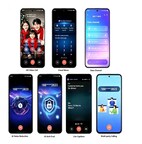
Overcoming the limitations of traditional, voice-only interactions, China Mobile has leveraged its mature VoLTE/VoNR network foundation to deeply integrate AI models with HD audio and video capabilities. Without requiring users to change their phones or SIM cards, seven core AI functions are now seamlessly embedded into the native dialer interface.

These upgrades include Live Captions bridge communication gaps for the elderly and hearing-impaired; HD video calls and AI noise reduction create a crystal-clear, immersive calling experience; AI anti-fraud intercepts high-risk calls in real time to safeguard users’ assets. Furthermore, the introduction of Data Channel (DC) technology and visual call menus transforms standard calls into agile, interactive service windows, enabling multi-party collaboration and seamless business transactions directly within the call. Through this initiative, China Mobile has successfully evolved traditional calls from a mere voice pipeline into a secure, integrated information hub.

“Calling + AI” Becomes a Strategic Consensus Among Global Leading Operators

From a global perspective, China Mobile’s call upgrade is not an isolated milestone, but a microcosm of the global telecommunications industry’s broader transformation. Throughout 2026, major operators worldwide are accelerating the commercial deployment of “Calling + AI” solutions:

Deutsche Telekom launched Magenta AI, leveraging artificial intelligence to enhance calling across all scenarios;T-Mobile US introduced a network-side, real-time translation service covering over 80 languages, effectively breaking down cross-border communication barriers;Saudi stc rolled out English-Arabic bilingual simultaneous interpretation, which has now entered large-scale commercial trials;South Korea’s LG U+ launched its ixi-O intelligent calling assistant, shifting the user experience from passive responses to proactive smart interactions and earning three prestigious GLOMO industry awards.

The synchronized efforts of these global leaders confirm that basic calling services have officially entered a new era of AI integration. Deeply empowered by artificial intelligence, “Calling + AI” has become the definitive blueprint for the intelligent transformation of the global telecommunications industry. As operators continue to refine these native capabilities, the traditional voice network is poised to reclaim its position as the most secure, ubiquitous, and valuable entry point in the AI era.

View original content to download multimedia:https://www.prnewswire.com/apac/news-releases/from-china-mobiles-call-upgrade-to-the-commercial-launch-of-calling–ai-by-leading-operators-ai-is-reshaping-the-value-of-native-calling-302834622.html

SOURCE China Mobile

Continue Reading

Technology

Trip.com Group Sincerely Accepts Administrative Penalty Decision Issued by the State Administration for Market Regulation of the People’s Republic of China

Published

on

By

SINGAPORE, July 25, 2026 /PRNewswire/ — Trip.com Group Limited (Nasdaq: TCOM; HKEX: 9961) today announced that it has received the administrative penalty decision issued by the State Administration for Market Regulation of the People’s Republic of China.

Trip.com Group sincerely accepts the decision and will adopt rectification measures in accordance with applicable laws and regulations to implement the decision’s requirements. The Company will strengthen its long-term governance mechanisms and strive to contribute to the sustainable development of the travel industry.

Trip.com Group’s management team will host a conference call at 8:00 AM U.S. Eastern Time on July 27, 2026 (or 8:00 PM Hong Kong Time on July 27, 2026).

The conference call will be available on Webcast live at: http://investors.trip.com.

All participants must pre-register to join this conference call using the participant registration link below:
https://register-conf.media-server.com/register/BIb78e08d8f18340c4882a7e4ab961906b.

Upon registration, each participant will receive details for this conference call, including dial-in numbers and a unique access PIN. To join the conference, please dial the number provided, enter your PIN, and you will join the conference instantly.

For further information, please contact:
Investor Relations
Trip.com Group Limited
Email: iremail@trip.com

View original content:https://www.prnewswire.com/news-releases/tripcom-group-sincerely-accepts-administrative-penalty-decision-issued-by-the-state-administration-for-market-regulation-of-the-peoples-republic-of-china-302834599.html

SOURCE Trip.com Group Limited

Continue Reading

Trending