Connect with us

Technology

Task Trainers Market to Reach $2.9 Billion by 2032–Exclusive Report by Meticulous Research®

Published

on

REDDING, Calif., March 21, 2025 /PRNewswire/ — According to a new market research report titled ‘Task Trainers Market Size, Share, Forecast, & Trends Analysis by Product (Basic Life Support [CRP, IV Training] Respiratory, Dental, Obstetric, Surgical), Application (Patient Care, Medical Skill Development), Personnel, End User– Global Forecast to 2032’, published by Meticulous Research®, the task Trainers market is projected to reach $2.9 billion by 2032, at a CAGR of 15.6% from 2025 to 2032.

The growth of the task trainers market is primarily driven by the increasing demand for simulation-based training, the rising adoption of minimally invasive treatments, advancements in task trainer technology, and a rising focus on patient safety. Additionally, the growing awareness of medical task trainers in developing countries and the digitization of healthcare systems are expected to create growth opportunities for stakeholders in this market.

Download FREE PDF Brochure of Task Trainers Market – https://www.meticulousresearch.com/download-sample-report/cp_id=2412

The task trainers market is segmented by product, by application, and by end user. The study also evaluates industry competitors and analyzes the market at the global and regional levels.

Task Trainers Market Analysis: Key Findings

Based on product type, in 2025, the basic life support trainers segment is expected to account for the largest share of the overall task trainers market. However, the respiratory & airway trainers segment is witnessing rapid growth. This rapid growth is mainly attributed to the increasing prevalence of respiratory diseases and a heightened emphasis on emergency preparedness, especially in light of recent global health challenges. The COVID-19 pandemic, for instance, underscored the critical importance of proficient airway management, leading to a significant uptick in demand for specialized training tools in this area. Moreover, advancements in simulation technology have further propelled the adoption of respiratory and airway trainers. The integration of Virtual Reality (VR), Augmented Reality (AR), and Mixed Reality (MR) into these training modules has enhanced the realism and effectiveness of medical education. These technologies provide immersive learning experiences, allowing healthcare professionals to practice and refine their skills in a controlled, risk-free environment.

Get Insightful Data on Regions, Market Segments, Customer Landscape, and Top Companies (Charts, Tables, Figures and More) – https://www.meticulousresearch.com/product/task-trainers-market-2412

Based on application, in 2025, the medical skill development & training segment is expected to account for the largest share of the task trainers market. However, surgical training & simulation is experiencing explosive growth in the medical simulation market. This growth is fueled by the rising complexity of surgical procedures and the need to improve patient safety. Advances in technology, especially in virtual reality (VR) and augmented reality (AR), have made it possible to create advanced surgical simulators that provide immersive, hands-on training. These technologies enable surgeons to hone their skills within a safe environment, which results in better outcomes and fewer medical mistakes. Increasing awareness of simulation’s utility in surgical training and the ever-evolving nature of simulation technology are likely to further drive the growth in this segment.

Based on end user, in 2025, the healthcare education segment is expected to account for the largest share of the task trainers market. This segment’s large market share is attributed to the increasing number of medical graduates annually, the growing demand for skilled healthcare professionals, advancements in medical simulation technologies, and an increased focus on patient safety. Moreover, this segment is also expected to witness rapid growth during the forecast period, due to increasing emphasis on enhancing clinical skills and patient safety through simulation-based education.

The hospitals segment is also witnessing significant growth in adopting task trainer technologies. The need for continuous professional development, coupled with the imperative to reduce medical errors, drives hospitals to invest in simulation-based training for their staff. This trend aligns with the broader goal of improving patient outcomes and healthcare quality.

This research report analyzes major geographies and provides a comprehensive analysis of the task trainers market in North America (U.S. and Canada), Europe (Germany, France, U.K., Italy, Spain, Russia, Rest of Europe), Asia-Pacific (China, India, Japan, and Rest of Asia-Pacific), Latin America, and the Middle East & Africa.

Have Specific Research Needs? Request a Customized Research Report – https://www.meticulousresearch.com/request-customization/cp_id=2412

Based on geography, in 2025, North America is expected to account for the largest share of the global task trainers market. North America’s significant market share can be attributed to the region’s highly developed healthcare infrastructure, the presence of numerous medical colleges and universities, favorable government initiatives, and well-established emergency medical services (EMS) infrastructure.

However, the Asia-Pacific region has emerged as the fastest-growing task trainer market globally. The rapid growth of this regional market is due to growing investments in healthcare infrastructure, the growing rate of chronic diseases, and more emphasis on training and educating doctors. China, India, Japan, and South Korea have been actively incorporating simulation-based learning into their medical curriculum in order to improve clinical skills and decrease medical errors. The growth of medical tourism, especially in Thailand and India, has even added to the demand for properly trained health professionals, driving the use of sophisticated simulation technologies. Moreover, the rising elderly population in the region and the increasing incidence of chronic diseases have even added to the demand for accurate, hands-on medical education.

Government programs that promote healthcare digitization and technology implementation have also been key to driving this growth. Additionally, the availability of affordable manufacturing capabilities has made it possible for local firms to offer high-quality but affordable simulation solutions, making them more accessible to a wider audience. Greater interaction between medical institutions and simulation technology vendors has also further solidified market expansion. Consequently, Asia Pacific is becoming an extremely dynamic and profitable market for medical simulation, with demand likely to continue growing in the years ahead.

Task Trainers Market: Competition Analysis

This report offers a competitive analysis based on an extensive assessment of the leading players’ product portfolios, geographic presence, and key growth strategies adopted over the past 3–4 years. Major companies in the task trainers market have implemented various strategies to expand their product offerings footprints and augment their market shares. The key strategies followed by most companies in the task trainers market were product launches, expansions, mergers & acquisitions, agreements, collaborations, and partnerships. The key players operating in the global task trainers market include Laerdal Medical AS (Norway), Simulab Corporation (U.S.), Limbs & Things Limited (U.K.), Mentice AB (Sweden), Surgical Science Sweden AB (Sweden), Nasco Healthcare Inc. (U.S.), Gaumard Scientific Company, Inc (U.S.), Kyoto Kagaku Co., Ltd (Japan), Medical-X (Netherlands), and Encoris Corporation (U.S.) among others.

IMMEDIATE DELIVERY AVAILABLE | BUY THIS RESEARCH REPORT (Insights, Charts, Tables, Figures and More)- https://www.meticulousresearch.com/view-pricing/126

Scope of the Report:

By Product

Basic Life Support Trainers CPR TrainersIV Training ArmsInjection and Puncture TrainersBlood Pressure SimulatorsEye Ear and Nose Examination SimulatorNewborn Vital Signs Examination SimulatorAuscultation TrainerProstate and Rectal Examination SimulationPelvic Exam TrainerCatheterization & Enema TrainerOther Basic Life Support TrainersRespiratory & Airway TrainersTrauma Care Kits and TrainersPediatric & Neonatal Care TrainersObstetric TrainersSurgical TrainersDental TrainersSoftware & Accessories

By Application

Medical Skill Development & TrainingClinical Procedure SimulationEmergency Response TrainingPatient Care and Nursing SkillsSurgical Training & Simulation

By Personnel

Doctors and SurgeonsNursesOther Personnel

By End User

Healthcare EducationHospitalsMilitaryEmergency Medical ServicesVoluntary Organizations

Related Reports:

Vocational Education and Training Market by Supplier Institution (Public, Private), User’s Gender (Male, Female), End Users (Students, Office Workers), and Geography – Global Forecast to 2029
https://www.meticulousresearch.com/product/vocational-education-and-training-market-5289

Virtual Reality in Education Market Size, Share, Forecast, & Trends Analysis by Offering (Hardware, Software, Services), Learning Mode (Instructor-Led Training, Blended Learning), End User (Educational Institutes, Corporate Learners), and Geography – Global Forecast to 2032
https://www.meticulousresearch.com/product/virtual-reality-in-education-market-6100

About Meticulous Research

We are a trusted research partner for leading businesses worldwide, empowering Fortune 500 organizations and emerging enterprises with market intelligence designed to drive revenue transformation and strategic growth. Our insights reveal future growth opportunities, equipping clients with a competitive edge through a versatile suite of research solutions—including syndicated reports, custom research, and direct analyst engagement. Each year, we conduct over 300 syndicated studies and manage 60+ consulting engagements across eight major sectors and 20+ geographic markets, all to deliver targeted business insights that help our clients lead in a rapidly evolving global market.

With a strong focus on problem-solving for complex business challenges, our research enables organizations to navigate change with assertion, aligning it with strategic pathways for sustainable growth. By identifying innovative and effective solutions, we empower leaders to make impactful decisions that drive operational excellence and fuel innovation. We are committed to crafting insights that enhance business performance and help our clients unlock new revenue opportunities, positioning them for long-term success in the competitive global marketplace.

Contact:
Meticulous Market Research Pvt. Ltd.
1267 Willis St, Ste 200 Redding,
California, 96001, U.S.
USA: +1-646-781-8004
Europe: +44-203-868-8738
APAC: +91 744-7780008
Email- sales@meticulousresearch.com
Visit Our Website: https://www.meticulousresearch.com/
Connect with us on LinkedIn- https://www.linkedin.com/company/meticulous-research
Top Market Research Reports Blog – https://meticulousblog.org/
Content Source: https://www.meticulousresearch.com/product/task-trainers-market-2412

Logo: https://mma.prnewswire.com/media/1757980/Meticulous_Research_Logo_1.jpg


View original content:https://www.prnewswire.co.uk/news-releases/task-trainers-market-to-reach-2-9-billion-by-2032exclusive-report-by-meticulous-research-302407964.html

Continue Reading

Technology

Chandigarh University Commemorates ‘Father of Fibre Optics’ Dr. Narinder Singh Kapany’s 100th Birth Anniversary with India’s First Research Chair in His Name; announces annual Grant of ₹1 Crore for Scientific Research

Published

on

By

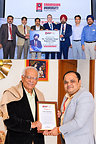
Chandigarh University Confers ‘Narinder Singh Kapany Lifetime Achievement Award for Excellence in Physics’ on Dr Ajoy Ghatak, Prof Emeritus IIT Delhi for Contributions to Fibre Optics & Photonics

CHANDIGARH, India, Oct. 31, 2026 /PRNewswire/ — Chandigarh: To mark the 100th birth anniversary of Dr. Narinder Singh Kapany, the legendary Indian scientist widely known as the ‘Father of Fibre Optics’ whose groundbreaking research in optical fibre technology transformed global telecommunications and laid the foundation for today’s digital revolution, Chandigarh University has announced the establishment of India’s first ‘Dr. Narinder Singh Kapany Research Chair for Excellence in Sciences and Innovation’, along with an annual research grant of ₹1 crore to advance scientific research and innovation.

In a pioneering initiative, Chandigarh University has announced India’s first-ever Research Chair established in the name of Dr. Narinder Singh Kapany, recognizing his unparalleled contribution to science and technology. With no other research chair dedicated to Dr. Kapany currently established in India, this initiative marks a significant institutional tribute to the legendary scientist and seeks to carry forward his legacy through sustained investment in scientific research, innovation and the nurturing of young scientific talent. The Research Chair will provide mentorship, guidance and research support to budding scientists, enabling them to pursue innovative ideas, undertake advanced research and translate scientific discoveries into impactful technologies.

Prominent among those who graced the centenary celebrations of Dr. Narinder Singh Kapany at Chandigarh University campus were Prof. (Dr.) Samir K. Mondal Scientist-G, Optics & Photonics Instrumentation CSIR-CSIO, Chandigarh as Chief Guest, Prof. (Dr.) Aaron Danner, National University of Singapore as Guest of Honour, Eminent Researcher Dr Ajoy Ghatak, Prof. Emeritus, IIT Delhi (virtually) and Dr. Satbir Singh Sehgal Vice-Chancellor Chandigarh University among other dignitaries.

Speaking on the occasion Prof. (Dr.) Samir K. Mondal Scientist-G, Optics & Photonics Instrumentation CSIR-CSIO, Chandigarh said, “Professor Kapani’s contribution to optical science began with his pioneering work on thin, flexible glass fibres, through which he demonstrated for the first time that images could be transmitted from one end to another using bundles of optical fibres. Professor Kapani developed thin, flexible glass fibres and successfully transmitting images through them, laying the foundation for modern fibre optics. He also coined the term ‘optical fibre’ and developed the fibre scope, which later evolved into applications such as endoscopy. His work demonstrated that optical fibres could carry information, opening possibilities beyond image transmission, including voice and data communication.”

Prof Mondal added, “There is also an important question of recognition for Indian scientists. Scientific contributions do not always receive the recognition they deserve and the Nobel Prize is a complex matter. I gave the example of S.N. Bose, whose work has had a lasting influence on physics and is associated with several Nobel Prize-winning developments, despite him never receiving the Nobel Prize himself. Similarly, Professor Kapani’s contribution to optical fibre technology deserves to be remembered and carried forward. We represent one-sixth of the world’s population and taking forward the scientific legacy of such visionaries is no less significant than receiving a Nobel Prize. We must encourage our young researchers to build upon their work and explore new frontiers of science and technology.”

Prof. (Dr.) Aaron Danner National University of Singapore said, “Dr. Narinder Singh Kapany’s pioneering work demonstrated how light could be guided through thin glass fibres using the principle of total internal reflection, overcoming the limitations of metallic transmission. His work on fibre bundles, image transmission and endoscopy opened new possibilities in imaging and optical science. Today, the same fundamental technology that Dr. Kapany started with glass fibres is being used on silicon and lithium niobate wafers to develop advanced photonic devices and achieve increasingly higher communication speeds. While modern research is addressing new engineering challenges in laser sources, optical modulators and high-speed data transmission, it continues to build on those early contributions. We may see Dr. Kapany as a great Indian or Punjabi scientist, but I also see him as a great American scientist. Great science and great scientists are global and their contributions ultimately benefit all of humanity.”

Eminent Researcher Dr Ajoy Ghatak, Prof. Emeritus, IIT Delhi said, “It is indeed a great honour to receive this award in the name of Dr. Narinder Singh Kapany, one of the pioneers of fibre optics. His early work on cladded optical fibres and image transmission through fibre bundles laid the foundation for medical endoscopy. The development of low-loss optical fibres has since revolutionised communication through their tremendous information-carrying capacity, enabling global connectivity and video communication. The establishment of the Dr. Narinder Singh Kapany Research Chair by Chandigarh University is a commendable initiative to advance his scientific legacy and inspire future generations of researchers. This recognition is also a tribute to Dr. Kapany’s remarkable contributions to science.”

Dr. Satbir Singh Sehgal Vice-Chancellor Chandigarh University said, “Dr. Narinder Singh Kapany brought immense pride to India and Punjab through his pioneering research in optical fibre technology, which made high-speed internet and modern digital communication possible. Technologies such as artificial intelligence, data centres and seamless global connectivity rely on the foundations of optical fibre technology. His contribution helped usher humanity into the digital era and accelerated technological progress worldwide. The establishment of India’s first Dr. Narinder Singh Kapany Research Chair, along with its annual grant and prestigious awards, reflects Chandigarh University’s commitment to advancing his scientific legacy, recognising excellence and inspiring the next generation of Indian researchers.”

The Research Chair will provide an annual research grant of ₹1 crore to promote scientific excellence through three dedicated awards: the Narinder Singh Kapany Award for Excellence in Physics, ‘CU Physics Excellence Awards for Best Research Publication’ and ‘CU Physics Excellence Awards for Best Patent’.”

The first edition of these awards was conferred during the birth centenary celebration, with Eminent Researcher Dr Ajoy Ghatak, Prof. Emeritus, IIT Delhi receiving the Narinder Singh Kapany Lifetime Achievement Award for Excellence in Physics. Professor Ajoy K. Ghatak is an internationally acclaimed physicist whose seminal contributions to fibre optics, integrated optics and photonics have advanced the understanding and applications of light. Through pioneering research, influential publications and acclaimed textbooks, Professor Ghatak has advanced fibre optics and photonics, carrying forward Dr Narinder Singh Kapany’s scientific legacy while inspiring generations of physicists.

On this occasion, five ‘CU Physics Excellence Awards for Best Patent’ were presented to five best patents by Dr. Ritu Gupta and Dr. Sandeep Kaur for their ‘Multi-functional Optical Antenna System for Parallel FSO-VLC Communication and Nano-biosignal Monitoring’; Shonak Bansal and Anupama for a ‘Self-powered Real-time Health Monitoring System using Nanowire Photodetectors’, Aditya Bhatnagar and Dr. Sanjeev Saini for ‘Multifunctional Organic-Inorganic Hybrid Luminescent Nanomaterials and a Method for Their Preparation’, Mahima Purohit and Dr. Ruchi Bharti for a ‘Biodegradable, Water-resistant Smart Packaging Film for Fluorescence-based Detection of Food Spoilage’ and Ashit Tripathi, Sachitanand Singh, Iqra Jamal Khan, Sanskruti Singh, Alok Gautam, Mahak received the award for a ‘Handheld Wireless OCT and Fundus Imaging Device’.

‘CU Physics Excellence Awards for Best Research Publication’ were conferred on eight faculty members and students. Ravikant from department of physics was conferrred upon for ‘CU Excellence Award for Research’ for his publication titled Nitrogen  doped zinc oxide to enhance dielectric characteristics of reduced graphene oxide (rGO) derived nanocomposites in composites communivations. Apart from him the other awardees were Shivani Singla (Physics Department) for “Optimising the Neodymium Concentration in Sodium Borate Glass for Enhanced Photoluminescent and Mechanical Behaviour” in Ceramics International (Q1); Sumit Bhardwaj (Physics Department) for “Structural, Optical and Photocatalytic Properties of Ce-Doped Ni-Zn Ferrite Nanoparticles”, in Ceramics International (Q1);  Ruby Priya (Department of Physics) for “Deconvoluting Capacitive and Diffusive Contributions in Cu-Doped SnO₂ Nanoparticles for Enhanced Double-Layer Capacitance and Oxygen Evolution Reaction in Materials Today Communications (Q1);  Akhil Saxena, (Chemistry) for “Mechanistic Elucidation of Persicaria maculosa Gray Extract as a Corrosion Inhibitor: Adsorption, Electrochemical Behavior, and DFT Validation”, published in South African Journal of Chemical Engineering; Harvinder Singh Sohal (Chemistry deoartment), for “Synergistic Adsorptive-Photocatalytic Degradation of Tartrazine Using Mn-Modified Fe₃O₄/Lignocellulose Magnetic Nanocomposites”, published in International Journal of Biological Macromolecules (Q1); Surjeet Chahal, for “Surface Plasmon Resonance Sensor for Dopamine Detection Based on CeO₂ Nanorod and ZnO Nanosheet” in Journal of Materials Science: Materials in Electronics (Q2) and Dr. Sanjeev Kumar from Department of Physics, for “1 Monolinoleoylglycerol and 3,4-Dihydroxymandelic Acids-Mediated ZnO for Antibiotic Degradation and Anticancer Activity”, published in Journal of Environmental Chemical Engineering (Q1).

During the birth centenary celebrations, a message shared by Kiran Kaur Kapany, the daughter of Dr Narinder Kapany was also read out where she said that her father’s journey from a small town in Punjab to transforming the world through fibre optics shows that a big idea can start anywhere. “To students, stay curious, ask questions and be proud of who you are. My heartfelt gratitude to Chandigarh University for honouring my father and family,” added Kapany.

Under the Best Patent Excellence Award for research publication and best patent, the five best patents granted each year will be selected for research grants to support product development and the conversion of patented innovations into practical applications. Similarly, the Best Research Paper Award will recognise the top 10 research publications annually by Chandigarh University students and faculty members in high-impact Q1 and Q2 journals, based on their quality, originality and research impact.

About Chandigarh University

Chandigarh University is a NAAC A+ Grade University and QS World Ranked University. This autonomous educational institution is approved by UGC and is located near Chandigarh in the state of Punjab. It is the youngest university in India and the only private university in Punjab to be honoured with A+ Grade by NAAC (National Assessment and Accreditation Council). CU offers more than 109 UG and PG programs in the field of engineering, management, pharmacy, law, architecture, journalism, animation, hotel management, commerce, and others. It has been awarded as The University with Best Placements by WCRC.

Website address: https://www.cuchd.in/

Photo: https://mmx.prnewswire.com/media/MS2024922/Press-Pic-001-University-Ceremony-and-Citation-Portrait-ID-b5a6d7d2dc04.jpg?id=OA3050946&token=iWkaN-J45hqhHA8w8HEUC2sBtm9vToA_IRNI5EobK5G3zac3CniYqb0XSf9KGA

View original content to download multimedia:https://www.prnewswire.com/in/news-releases/chandigarh-university-commemorates-father-of-fibre-optics-dr-narinder-singh-kapanys-100th-birth-anniversary-with-indias-first-research-chair-in-his-name-announces-annual-grant-of-1-crore-for-scientific-research-302925572.html

Continue Reading

Technology

GLOBAL VOTING FOR 7 WONDERS OF FUTURE CITIES OFFICIALLY SWITCHED ON

Published

on

By

DUBAI, UAE, Oct. 31, 2026 /PRNewswire/ — New Clark City, Philippines, hosts “switch-on” ceremony as New7Wonders opens worldwide public voting on www.7wondersfc.com to choose the urban developments shaping our future.

New7Wonders today officially launched global public voting for the 7 Wonders of Future Cities, in a landmark ceremony hosted in the Philippines on World Cities Day, marking the beginning of a year of worldwide participation, inviting people everywhere to vote for the cities and urban developments they believe best represent the future of urban life, which will culminate with the official declaration of the seven winning cities and developments on 31 October 2027. 

Hosted and organised by New Clark City, an Official Participant in the 7 Wonders of Future Cities campaign and one of the Philippines’ flagship urban development projects, the special switch-on ceremony brought together city leaders, media and invited guests to witness the activation of the global voting platform. 

Jean-Paul de la Fuente, Director of New7Wonders and Chairman of the 7 Wonders of Future Cities campaign, led the official switch-on. In a ceremonial moment, the campaign website at www.7wondersfc.com was transformed from its presentation format into the worldwide public voting platform, opening the opportunity for citizens across the globe to participate in selecting the urban visions that will define the cities of tomorrow. “Today, from the Philippines to the world, we have switched on more than a voting platform – we have switched on a global conversation about the future of our cities,” said de la Fuente. “For the next year, people everywhere have the opportunity to discover, engage with and champion the places they believe should become global symbols of urban progress.”

The 7 Wonders of Future Cities is a worldwide participation campaign from New7Wonders, the global authority behind the New 7 Wonders of the World and the New 7 Wonders of Nature, and is organised by Global Platform Limited, its Dubai, UAE-based worldwide licensing and commercial arm. Building on the extraordinary worldwide engagement of previous campaigns, which together have generated more than 600 million votes, the new initiative shifts the focus from celebrating humanity’s natural and historical wonders to recognising the places being created and transformed for humanity’s future. Participating cities and developments are brought together through three central themes: Environmental & Nature, Smart City and Human-Centric development. These reflect the conviction that successful future cities must balance ecological responsibility, technological progress and the needs and aspirations of the people who inhabit them.

View original content to download multimedia:https://www.prnewswire.co.uk/news-releases/global-voting-for-7-wonders-of-future-cities-officially-switched-on-302925559.html

Continue Reading

Technology

SCANOLOGY Introduces AirGO Pad for On-Site 3D Scanning, Inspection and Reporting

Published

on

By

HANGZHOU, China, Oct. 31, 2026 /PRNewswire/ — SCANOLOGY introduces AirGO Pad, an integrated mobile measurement platform that brings 3D scanning, inspection and reporting alongside the part being measured. Combining computing, industrial 3D inspection software and touchscreen operation, AirGO Pad works with compatible SCANOLOGY wireless 3D scanners to help operators complete the inspection workflow on-site without carrying a separate laptop.

When inspecting a large component, operators need to move around the part while keeping scan data and measurement controls accessible. Finding a suitable place for a laptop—and returning to it to check results or adjust settings—can interrupt that process, particularly where space is limited. AirGO Pad places the inspection interface on a portable tablet, allowing operators to view data and interact with the software beside the component.

Users can connect a compatible wireless 3D scanner and view 3D data in real time, monitoring scan coverage and quality as they work. They can then align data, perform measurements and inspect results on the same device. During scanning, operators can create comparison points, features and other inspection elements as needed. Preconfigured report templates complete the workflow, enabling standardized inspection reports to be generated directly on AirGO Pad.

The platform’s design supports these transitions between scanning, inspection and reporting. Its high-definition touchscreen keeps model details and measurement results within reach. Operators can use the tablet in handheld mode while moving around the part, then unfold the convertible stand to review results on a suitable surface. A neck strap provides additional support when carrying and operating the device.

“Making a measurement system mobile means considering more than how operators carry the 3D scanner. They also need access to their data and inspection tools beside the part. We developed AirGO Pad to bring these activities together, from reviewing scan data to producing the inspection report,” said a product manager at SCANOLOGY.

AirGO Pad supports SCANOLOGY’s third-generation handheld and wireless optical 3D scanning systems, standard CAD/3D formats and wireless PC synchronization for measurement, annotation and review.

For product details or to request a demonstration, visit AirGo Pad product page.

About SCANOLOGY

SCANOLOGY develops industrial 3D measurement solutions for manufacturing and engineering. Its products are used for 3D measurement, automated inspection, and quality control. They are trusted by more than 10,000 enterprises across over 70 countries and regions, serving industries such as aerospace, automotive, and heavy manufacturing.

SOURCE SCANOLOGY

Continue Reading

Trending