
Technology
Gogoro Releases First Quarter 2025 Financial Results

Published
1 year agoon
By

TAIPEI, May 8, 2025 /PRNewswire/ — Gogoro Inc. (“Gogoro,” “the Company” or “We”) (Nasdaq: GGR), a global technology leader in battery swapping ecosystems that enable sustainable mobility solutions for cities, today released its financial results for its first quarter ended March 31, 2025.
First Quarter 2025 Summary
Revenue of $63.6 million, down 8.7% year-over-year and down 4.5% on a constant currency basis.
Battery swapping service revenue of $34.5 million, up 6.2% year-over-year and up 11.1% on a constant currency basis.
Sales of hardware and others revenue of $29.1 million, down 21.8% year-over-year and down 18.1% on a constant currency basis.
Gross margin of 4.9%, down from 6.4% in the same quarter last year due to the large quantity of upgraded battery packs. Non-IFRS gross margin of 18.2%, up 3.1% year-over-year.
Net loss of $18.6 million as compared to a net loss of $13.1 million in the same quarter last year.
Adjusted EBITDA of $14.3 million, up from $10.2 million in the same quarter last year.
“The word that best describes our efforts over the past two quarters is focus. At Gogoro, we are focused on delivering an exceptional user experience, driving operational efficiency, and executing with discipline against a clear and ambitious long-term strategy. Our results in the first quarter of 2025 reflect that focus. We delivered solid gross margin and made critical investments in our future, while also significantly reducing operating expenses year-over-year,” said Henry Chiang, interim CEO of Gogoro. “We remain firmly committed to our profitability milestones and the progress we have made this quarter reinforces our confidence in that trajectory.”
“In the first quarter of 2025, we delivered meaningful financial improvements driven by a focused effort on operational efficiency and disciplined execution compared to the first quarter of 2024. This reflects the early success of our cost optimization initiatives and our commitment to building a more resilient and scalable business. We remain on track to meet our planned financial milestones. These goals are grounded in a clear roadmap and are supported by recurring revenue from our Gogoro Network battery swapping business, which continues to grow in both subscribers and service adoption,” said Bruce Aitken, CFO of Gogoro. “Our capital position was further strengthened by securing a new NT$2 billion credit facility this quarter, which provides us with additional flexibility to support strategic initiatives and product innovation while reinforcing external confidence in our long-term plan. While we continue to face a challenging macroeconomic environment, we are actively managing risk, recalibrating expectations, and maintaining tight financial controls. We are confident that the foundation we are building today will enable sustainable growth and long-term shareholder value creation.”
First Quarter 2025 Financial Overview
Operating Revenues
For the first quarter, the total revenue was $63.6 million, down 8.7% year-over-year and down 4.5% year-over-year on a constant currency basis1. Had foreign exchange rates remained constant with the average rate of the same quarter last year, revenue would have been up by an additional $2.9 million.
Battery swapping service revenue for the first quarter was $34.5 million, up 6.2% year-over-year, and up 11.1% year-over-year on a constant currency basis1. Total subscribers at the end of the first quarter was 644,000, up 8% from 595,000 subscribers at the end of the same quarter last year. The year-over-year increase in battery swapping service revenue was primarily due to our larger subscriber base compared to the same quarter last year and the high retention rate of our subscribers. We continue to see the strength of our subscription-based business model which enables us to accumulate more customers to maximize our battery swapping network efficiency.
Sales of hardware and other revenue for the first quarter was $29.1 million, down 21.8% year-over-year, and down 18.1% year-over-year on a constant currency basis1. The year-over-year decrease in sales of hardware and other revenues was driven by (i) a 36.1% decrease in vehicle sales volume on a year-over-year basis primarily due to the delayed launch of an anticipated vehicle; we believe these sales will shift to subsequent quarters, (ii) a $1.3 million decrease in sales revenues associated with selling accessories and parts and performing maintenance in Gogoro Quick Service centers, and (iii) a $2.3 million decrease in sales revenues related to PBGN partners and overseas operations.
Gross Margin
For the first quarter, gross margin was 4.9%, down from 6.4% in the same quarter last year while non-IFRS gross margin[1] was 18.2%, up from 15.1% in the same quarter last year. The change in gross margin was primarily driven by a combination of factors: (i) a $4.2 million increase in costs associated with our battery upgrade initiative, including derecognition expenses on components removed from battery packs and other directly attributable costs, (ii) higher excess capacity costs due to reduced sales volume, and (iii) a decline in sales of high-margin accessories and parts. The change in non-IFRS gross margin was primarily driven by lower depreciation across our entire install base of battery packs from increased network efficiency as well as the extended lifespan of upgraded batteries and improvements in other operational efficiencies.
Gogoro was founded as an innovative energy business and we continue to invest heavily in growing and updating our Gogoro Network by deploying new GoStations, battery packs, and software updates. Over the last three years, we have invested approximately $100 million in capital expenditure annually.
Additionally, in the past few quarters, we have been undertaking a program to carry out one-time, voluntary upgrades on certain battery packs which are expected to continue through 2025. These upgrades provide multiple benefits — more efficient deployment of our resources than replacing battery packs, increasing lifetime capacity of each battery pack (including extending its first mobility use-case useful life) and solidifying the extra lifetime capacity of each battery pack to validate our second-life thesis. These upgrades are expected to create economic benefits in the long run but will lead to a short-term reduction in our gross margin as we continue carrying out these upgrades. We expect our cash position, gross profit and gross margin will continue to be impacted by the costs of these upgrades during 2025. In order to improve our overall customer experience and to extend battery life, we plan to continue upgrading a substantial quantity of our battery packs which are already in circulation and will improve designs of our battery packs to make them even more rugged, safer and long-lasting.
Net Loss
For the first quarter, net loss was $18.6 million, representing an increase of $5.5 million from a net loss of $13.1 million in the same quarter last year. The increase in net loss was primarily due to an unfavorable change of $11.4 million in the fair value of financial liabilities associated with outstanding earnout shares, earn-in shares and warrants, which is mainly due to the Gogoro stock price declining to a lesser extent when compared to the same quarter last year, and the decrease of $1.4 million in gross profit, which was partially offset by the decrease of $9.6 million in operating expenses. This decrease in operating expenses was mainly due to lower variable marketing and promotional expenses resulting from reduced sales volume, savings in general and administrative expenses, lower payroll driven by organizational efficiency, and a $2.1 million reduction in share-based compensation.
Adjusted EBITDA
For the first quarter, adjusted EBITDA1 was $14.3 million, representing an increase of $4.1 million from $10.2 million in the same quarter last year. The increase was primarily due to a $7.1 million reduction in operating expenses (excluding share-based compensation, and depreciation and amortization) resulting from various cost-saving initiatives. The increase was partially offset by a decrease in other income and an increase in share of loss of investments accounted for using equity method compared to the same quarter last year.
Liquidity
In the first quarter of 2025, we incurred an operating cash outflow of $8.9 million, compared to an operating cash inflow of $0.9 million in the first quarter of 2024, primarily due to changes in operating assets and liabilities, resulting in a year-over-year decline in operating cash performance. With a cash balance of $93.3 million at the end of the first quarter of 2025, and the additional credit facilities that are available to us, we believe we have sufficient sources of funding to meet our near-term business growth objectives.
2025 Cost Reduction/Efficiency Plans
In the first quarter, we continued our focus on cost optimization and aligned our operations accordingly. The plan aims to drive operational efficiency, reduce costs, accelerate our path to profitability and reinforce our primary focus as an energy and subscription-based business based on our energy platform leadership. Gogoro is expected to create approximately $25 million savings in 2025 compared to 2024 as a result of the cost efficiency plans. We expect our Gogoro Network Battery Swapping business to reach profitability on a non-IFRS basis and deliver non-IFRS net income in 2026 and our hardware sales business to reach profitability on a non-IFRS basis in 2028.
2025 Guidance
We believe the Taiwan two-wheeler market in 2025 will remain approximately the same as 2024. For the full year of 2025, we reiterate our revenue forecast of between $295 million to $315 million on a constant currency basis. We estimate that approximately 95% of such full-year revenue will be generated from the Taiwan market. Our gross margin may be continuously negatively impacted in the short term because of our ongoing and accelerated battery upgrade initiatives which are expected to be completed by the end of 2025.
Conference Call Information
Gogoro’s management team will hold an earnings webcast on May 8, 2025, at 8:00 a.m. Eastern Time to discuss the Company’s first quarter 2025 results of operations and outlook.
Investors may access the webcast, supplemental financial information and investor presentation at Gogoro’s investor relations website (https://investor.gogoro.com) under the “Events” section. A replay of the investor presentation and the earnings call script will be available 24 hours after the conclusion of the webcast and archived for one year.
About Gogoro
Founded in 2011 to rethink urban energy and inspire the world to move through cities in smarter and more sustainable ways, Gogoro leverages the power of innovation to change the way urban energy is distributed and consumed. Recognized by Fortune as a “Change the World 2024” company; Fast Company as “Asia-Pacific’s Most Innovative Company of 2024″; Frost & Sullivan as the “2024 Global Company of the Year for battery swapping for electric two-wheel vehicles”; and, MIT Technology Review as one of “15 Climate Tech Companies to Watch” in 2024, Gogoro’s battery swapping and vehicle platforms offer a smart, proven, and sustainable long-term ecosystem for delivering a new approach to urban mobility. Gogoro has quickly become an innovation leader in vehicle design and electric propulsion, smart battery design, battery swapping, and advanced cloud services that utilize artificial intelligence to manage battery charging and availability. The challenge is massive, but the opportunity to disrupt the status quo, establish new standards, and achieve new levels of sustainable transportation growth in densely populated cities is even greater. For more information, visit www.gogoro.com/news and follow Gogoro on Twitter: @wearegogoro.
Forward-Looking Statements
This communication contains forward-looking statements within the meaning of Section 27A of the Securities Act of 1933, as amended, and Section 21E of the Securities Exchange Act of 1934, as amended. Forward-looking statements generally relate to future events or Gogoro’s future financial or operating performance. In some cases, you can identify forward-looking statements because they contain words such as “may,” “will,” “should,” “expects,” “plans,” “anticipates,” “going to,” “could,” “intends,” “target,” “projects,” “contemplates,” “believes,” “estimates,” “predicts,” “potential” or “continue” or the negative of these words or other similar terms or expressions that concern Gogoro’s expectations, strategy, priorities, plans or intentions. Forward-looking statements in this communication include, but are not limited to, statements in the section entitled, “2025 Guidance,” such as estimates regarding Taiwan two-wheeler market and our revenue and gross margin; statements in the section entitled, “2025 Cost Reduction/Efficiency Plans,” such as estimated savings as a result of the cost reduction/efficiency plans and future profitability of Gogoro’s business; statements by Gogoro’s interim chief executive officer and chief financial officer, such as Gogoro’s future business plan and growth strategies and Gogoro’s future profitability; and Gogoro’s battery pack upgrade initiatives (and its expected costs and benefits).
Gogoro’s expectations and beliefs regarding these matters may not materialize, and actual results in future periods are subject to risks and uncertainties that could cause actual results to differ materially from those projected, including risks related to macroeconomic factors including inflation and consumer confidence, risks related to the Taiwan scooter market, risks related to political tensions, Gogoro’s ability to effectively manage its growth, Gogoro’s ability to launch and ramp up the production of its products, control its manufacturing costs and manage its supply chain issues, Gogoro’s risks related to ability to expand its sales and marketing abilities, Gogoro’s ability to expand effectively into new markets, foreign exchange fluctuations, Gogoro’s ability to develop and maintain relationships with its partners, risks related to probable defects of Gogoro’s products and services and product recalls, regulatory risks and Gogoro’s risks related to strategic collaborations, risks related to the Taiwan market, India market, Philippines market and other international markets, alliances or joint ventures including Gogoro’s ability to enter into and execute its plans related to strategic collaborations, alliances or joint ventures in order for such strategic collaborations, alliances or joint ventures to be successful and generate revenue, the ability of Gogoro to be successful in the B2B market, risks related to Gogoro’s ability to achieve operational efficiencies, Gogoro’s ability to raise additional capital, the risks related to the need for Gogoro to invest more capital in strategic collaborations, alliances or joint ventures, risks relating to the impact of foreign exchange and the risk of Gogoro having to adjust the accounting treatment associated with its joint ventures. The forward-looking statements contained in this communication are also subject to other risks and uncertainties, including those more fully described in Gogoro’s filings with the Securities and Exchange Commission (“SEC”), including in Gogoro’s Form 20-F for the year ended December 31, 2024, which was filed on March 31, 2025 and in its subsequent filings with the SEC, copies of which are available on the SEC’s website at www.sec.gov. The forward-looking statements in this communication are based on information available to Gogoro as of the date hereof, and Gogoro disclaims any obligation to update any forward-looking statements, except as required by law.
Condensed Consolidated Financial Statements
The condensed consolidated financial statements are unaudited and have been prepared in accordance with the International Financial Reporting Standards (collectively, “IFRS”) issued by the International Accounting Standards Board and regulations of the U.S. Securities and Exchange Commission (“SEC”) for interim financial reporting. The Company’s condensed consolidated financial statements reflect all normal adjustments that are, in our opinion, necessary to provide a fair statement of results for the interim periods presented, including the accounts of the Company and entities controlled by Gogoro Inc. The audited consolidated financial statements may differ materially from the unaudited condensed consolidated financial statements. Our audited financial statements for the full year ending December 31, 2025 will be included in the Company’s Annual Report on Form 20-F for the year ending December 31, 2025. Accordingly, these condensed consolidated financial statements should be read in conjunction with the audited consolidated financial statements and related notes for the year ended December 31, 2024 included in the Company’s Annual Report on Form 20-F filed with the SEC on March 31, 2025, which provides a more complete discussion of the Company’s accounting policies and certain other information. The condensed consolidated financial statements may include selected updates, notes and disclosures if there are significant changes since the date of the most recent annual report on Form 20-F which included the audited financial statements of the Company.
Use of Non-IFRS Financial Measures
This press release and accompanying tables contain certain non-IFRS financial measures including foreign exchange effect on operating revenues, non-IFRS gross profit, non-IFRS gross margin, non-IFRS net loss, EBITDA and adjusted EBITDA.
Foreign exchange (“FX”) effect on operating revenues. We compare the dollar amount and the percent change in the operating revenues from the current period to the same period last year using constant currency disclosure. We present constant currency information to provide a framework for assessing how our underlying revenues performed excluding the effect of foreign currency rate fluctuations. To present this information, current period operating revenues for entities reporting in currencies other than USD are converted into USD at the average exchange rates from the equivalent periods last year.
Non-IFRS Gross Profit and Gross Margin. Gogoro defines non-IFRS gross profit and gross margin as gross profit and gross margin excluding share-based compensation, battery upgrade initiatives and battery swapping service rebate.
Share-based Compensation. Share-based compensation consists of non-cash charges related to the fair value of restricted stock units awarded to employees and stock options granted to certain directors, executives, employees and others providing similar services. We believe that the exclusion of these non-cash charges provides for more accurate comparisons of our operating results to our peer companies due to the varying available valuation methodologies, subjective assumptions and the variety of award types. In addition, we believe it is useful to investors to understand the specific impact of share-based compensation on our operating results.
Non-IFRS Net Loss. Gogoro defines non-IFRS net loss as net loss excluding share-based compensation, the change in fair value of financial liabilities including revaluation of change in fair value of earnout, earn-in and warrants associated with the merger of Poema, battery upgrade initiatives, and battery swapping service rebate. These amounts do not reflect the impact of any related tax effects.
EBITDA. Gogoro defines EBITDA as net loss excluding interest expense, net, provision for income tax, depreciation, and amortization. These amounts do not reflect the impact of any related tax effects.
Adjusted EBITDA. Gogoro defines Adjusted EBITDA as EBITDA excluding share-based compensation, the change in fair value of financial liabilities including revaluation of change in fair value of earnout, earn-in and warrants associated with the merger of Poema, battery upgrade initiatives, and battery swapping service rebate. These amounts do not reflect the impact of any related tax effects.
Battery Upgrade Initiatives. As we perform certain voluntary upgrades to our battery packs, this charge represents the (i) derecognition expense on components removed from the battery pack, which we do not expect to generate any future benefits from its disposal and (ii) battery pack retrieval and other directly attributable costs incurred during the battery upgrades. We will only upgrade battery packs in instances where the value created exceeds the cost of the upgrade. The program will improve batteries’ capacity and extend the remaining useful life of certain battery packs. The derecognition expense and the retrieval and other costs are recorded under Cost of Revenues in the Condensed Consolidated Statements of Comprehensive Loss. We exclude such expenditures for purposes of calculating certain non-IFRS measures because these charges do not reflect how management evaluates our operating performance. The adjustments facilitate a useful evaluation of our operating performance and comparisons to past operating results and provide investors with additional means to evaluate our profitability trends. We expect the derecognition expense and retrieval and other costs to recur in future periods as incurred during the implementation phase of the battery upgrade program.
Battery Swapping Service Rebate. We voluntarily offered one-time subscription fee discounts to certain subscribers of Gogoro Network who experienced unusual and infrequent service inconveniences associated with a minor voluntary vehicle recall and battery upgrade, and such battery swapping service rebates are recorded as contra-revenue. We have excluded the impacts of such rebates from our non-IFRS metrics to allow investors to better understand the underlying operation results of the business and to facilitate comparison of current financial results with historical financial results and our peer group companies’ financial results.
These non-IFRS financial measures exclude share-based compensation, interest expense, income tax, depreciation and amortization, change in fair value of financial liabilities associated with outstanding earnout shares, earn-in shares and warrants associated with the merger of Poema, battery upgrade initiative, and battery swapping service rebate. The Company uses these non-IFRS financial measures internally in analyzing its financial results and believes that these non-IFRS financial measures are useful to investors as an additional tool to evaluate ongoing operating results and trends. In addition, these measures are the primary indicators management uses as a basis for its planning and forecasting for future periods.
Non-IFRS financial measures are not meant to be considered in isolation or as a substitute for comparable IFRS financial measures. Non-IFRS financial measures are subject to limitations and should be read only in conjunction with the Company’s condensed consolidated financial statements prepared in accordance with IFRS. Non-IFRS financial measures do not have any standardized meaning and are therefore unlikely to be comparable to similarly titled measures presented by other companies. A description of these non-IFRS financial measures has been provided above and a reconciliation of the Company’s non-IFRS financial measures to their most directly comparable IFRS measures have been provided in the financial statement tables included in this press release, and investors are encouraged to review these reconciliations.
GOGORO INC.
Condensed Consolidated Balance Sheet
(unaudited)2
(in thousands of U.S. dollars)
March 31,
December 31,
2025
2024
ASSETS
Current assets:
Cash and cash equivalents
$ 93,279
$ 117,148
Trade receivables
18,940
16,977
Inventories2
41,767
44,972
Other assets, current
18,808
23,727
Total current assets
172,794
202,824
Property, plant and equipment2
427,657
438,255
Right-of-use assets
33,223
35,303
Investments accounted for using equity method
16,275
16,117
Other assets, non-current
7,629
7,928
Total assets
$ 657,578
$ 700,427
LIABILITIES AND EQUITY
Current liabilities:
Borrowings, current
$ 103,823
$ 103,018
Financial liabilities at fair value through profit or loss
871
2,654
Notes and trade payables
21,921
29,351
Contract liabilities, current
11,562
11,869
Lease liabilities, current
14,450
9,446
Financial liabilities at amortized cost, current
25,000
24,586
Provisions, current
4,263
4,240
Other liabilities, current
30,875
40,465
Total current liabilities
212,765
225,629
Borrowings, non-current
250,536
253,750
Lease liabilities, non-current
19,686
26,966
Provisions, non-current
1,353
1,419
Other liabilities, non-current
14,696
16,123
Total liabilities
499,036
523,887
Total equity
158,542
176,540
Total liabilities and equity
$ 657,578
$ 700,427
March 31,
December 31,
2025
2024
Inventories:
Raw materials
$ 22,003
$ 23,337
Semi-finished goods
4,547
2,667
Merchandise
15,217
18,968
Total inventories
$ 41,767
$ 44,972
GOGORO INC.
Condensed Consolidated Statements of Comprehensive Loss
(unaudited)
(in thousands of U.S. dollars, except net loss per share)
Three Months Ended March 31,
2025
2024
Operating revenues
$ 63,621
$ 69,711
Cost of revenues
60,515
65,238
Gross profit
3,106
4,473
Operating expenses:
Sales and marketing
7,378
10,581
General and administrative
6,663
9,369
Research and development
5,986
9,366
Other operating expense
187
454
Total operating expenses
20,214
29,770
Loss from operations
(17,108)
(25,297)
Non-operating income and expenses:
Interest expense, net
(2,950)
(2,728)
Other income, net
1,158
2,416
Change in fair value of financial liabilities
1,783
13,198
Share of loss of investments accounted for using equity method
(1,445)
(716)
Total non-operating (expense) income
(1,454)
12,170
Net loss
(18,562)
(13,127)
Other comprehensive loss:
Exchange differences on translation
(2,103)
(8,319)
Total comprehensive loss
$ (20,665)
$ (21,446)
Basic and diluted net loss per share
$ (0.06)
$ (0.06)
Shares used in computing basic and diluted net loss per share
287,736
235,942
Three Months Ended March 31,
Operating revenues:
2025
2024
Sales of hardware and others
$ 29,148
$ 37,258
Battery swapping service
34,473
32,453
Total
$ 63,621
$ 69,711
Three Months Ended March 31,
Share-based compensation:
2025
2024
Cost of revenues
$ 103
$ 282
Sales and marketing
170
449
General and administrative
489
1,673
Research and development
321
974
Total
$ 1,083
$ 3,378
GOGORO INC.
Condensed Consolidated Statements of Cash Flows
(unaudited)
(in thousands of U.S. dollars)
Three Months Ended March 31,
2025
2024
Operating activities
Net loss
$ (18,562)
$ (13,127)
Adjustments for:
Depreciation and amortization
22,285
24,680
Impairment losses associated with facilities, inventories and receivables
1,268
1,812
Share of loss of investments accounted for using equity method
1,445
716
Change in fair value of financial liabilities
(1,783)
(13,198)
Interest expense, net
2,950
2,728
Share-based compensation
1,083
3,378
Loss on disposal of property and equipment, net
1,925
448
Recognition of provisions
318
9
Changes in operating assets and liabilities:
Trade receivables
(2,400)
(379)
Inventories
1,676
456
Other current assets
1,771
1,932
Notes and trade payables
(7,430)
(532)
Contract liabilities
(613)
3,337
Other liabilities
(9,400)
(7,651)
Provisions
(693)
(944)
Cash (used in) generated from operations
(6,160)
3,665
Interest expense paid, net
(2,734)
(2,813)
Net cash (used in) generated from operating activities
(8,894)
852
Investing activities
Payments for property, plant and equipment, net
(17,873)
(34,419)
Increase in refundable deposits
(88)
(220)
Payments of intangible assets, net
(43)
(52)
Decrease (increase) in other financial assets
2,695
(83)
Net cash used in investing activities
(15,309)
(34,774)
Financing activities
Proceeds from borrowings
12,164
10,852
Repayments of borrowings
(10,003)
(8,678)
Guarantee deposits received (refund)
26
(75)
Repayment of the principal portion of lease liabilities
(3,099)
(3,147)
Net cash used in financing activities
(912)
(1,048)
Effect of exchange rate changes on cash and cash equivalents
1,246
(6,401)
Net decrease in cash and cash equivalents
(23,869)
(41,371)
Cash and cash equivalents at the beginning of the period
117,148
173,885
Cash and cash equivalents at the end of the period
$ 93,279
$ 132,514
GOGORO INC.
Condensed Consolidated Statements of Changes in Equity
(unaudited)
(in thousands of U.S. dollars)
Ordinary
Shares
Capital Surplus
Accumulated
Deficits
Exchange Difference
on Translation
Total Equity
Balance as of December 31, 2024
$ 29
$ 734,460
$ (548,732)
$ (9,217)
$ 176,540
Net loss for the three months ended March 31, 2025
—
—
(18,562)
—
(18,562)
Other comprehensive loss
—
—
—
(2,103)
(2,103)
Changes in percentage of ownership interest in investments accounted for using equity method
—
1,584
—
—
1,584
Shared-based compensation
—
1,083
—
—
1,083
Balance as of March 31, 2025
$ 29
$ 737,127
$ (567,294)
$ (11,320)
$ 158,542
GOGORO INC.
Reconciliation of IFRS Financial Metrics to Non-IFRS
(unaudited)
(in thousands of U.S. dollars)
Three Months Ended March 31,
2025
2024
IFRS revenue
YoY change
%
Revenue
excluding FX
effect YoY
change %
Operating revenues:
IFRS revenue
FX effect
Revenue
excluding FX
effect
IFRS revenue
Sales of hardware and others
$ 29,148
$ 1,351
$ 30,499
$ 37,258
(21.8) %
(18.1) %
Battery swapping service
34,473
1,586
36,059
32,453
6.2 %
11.1 %
Total
$ 63,621
$ 2,937
$ 66,558
$ 69,711
(8.7) %
(4.5) %
Three Months Ended March 31,
2025
2024
Gross profit and gross margin
$ 3,106
4.9 %
$ 4,473
6.4 %
Share-based compensation
103
282
Battery upgrade initiatives [3]
8,347
4,110
Battery swapping service rebate
—
1,661
Non-IFRS gross profit and gross margin
$ 11,556
18.2 %
$ 10,526
15.1 %
Three Months Ended March 31,
2025
2024
Net loss
$ (18,562)
$ (13,127)
Share-based compensation
1,083
3,378
Change in fair value of financial liabilities
(1,783)
(13,198)
Battery upgrade initiatives 3
8,347
4,110
Battery swapping service rebate
—
1,661
Non-IFRS net loss
$ (10,915)
$ (17,176)
Three Months Ended March 31,
2025
2024
Net loss
$ (18,562)
$ (13,127)
Interest expense, net
2,950
2,728
Depreciation and amortization
22,285
24,680
EBITDA
6,673
14,281
Share-based compensation
1,083
3,378
Change in fair value of financial liabilities
(1,783)
(13,198)
Battery upgrade initiatives 3
8,347
4,110
Battery swapping service rebate
—
1,661
Adjusted EBITDA
$ 14,320
$ 10,232
_____________________________________
1 This is a non-IFRS measure, see Use of Non-IFRS Financial Measures for a description of the non-IFRS measures and Reconciliation of IFRS Financial Metrics to Non-IFRS for a reconciliation of the Company’s non-IFRS financial measures to their most directly comparable IFRS measures.
2 On March 31, 2025 and December 31, 2024, the company classified $23.5 million and $27.7 million, respectively of undeployed battery packs and related battery cells in property, plant and equipment based on the company’s deployment plan for the next 12 months.
3 The three months ended March 31, 2024 battery upgrade initiatives amount includes retrieval and other attributable costs which previously were not reported in our unaudited Reconciliations of IFRS Financial Metrics to Non-IFRS tables in the first quarter of 2024.
View original content to download multimedia:https://www.prnewswire.com/news-releases/gogoro-releases-first-quarter-2025-financial-results-302449838.html
SOURCE Gogoro

You may like
Technology
ASTRI Showcases Pioneering Technologies at InnoCarnival 2026
Published
4 minutes agoon
October 24, 2026By
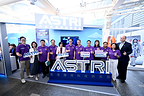
Driving Technology Adoption, Shaping a Vision for the Future
HONG KONG, Oct. 24, 2026 /PRNewswire/ — The Hong Kong Applied Science and Technology Research Institute (ASTRI) is proud to present a range of cutting-edge technologies and practical solutions at this year’s InnoCarnival, spanning communications technology, smart cities, IoT sensing, and renewable energy and energy storage. ASTRI’s innovations address urban development needs and everyday applications, driving diversity in the innovation and technology (I&T) sector.
Organised by the Innovation and Technology Commission of the Hong Kong SAR Government, the InnoCarnival 2026 runs from today through 1 November at Hong Kong Science Park (HKSP) with the theme of “Lead with I&T, Dream to Fly High “, offering the public an opportunity to experience the transformative power and I&T vibrancy.
Ir Dr Ted Suen, Chief Executive Officer of ASTRI, stated: “Innovation is not just about breakthroughs in the lab – it’s about putting technology into practice, empowering industries, and benefiting society as a whole. At ASTRI, we align closely with the government’s priorities in advancing AI development and accelerating new industrialisation. Through our participation in the InnoCarnival, we showcase various state-of-the-art technologies, some of which have been co-developed with industry partners and are already in commercial rollout. These innovations demonstrate the tangible benefits of technology in daily life and inspire the public to explore their curiosity about science and innovation.”
He highlighted the InnoCarnival as a key platform to bridge the I&T community with the public. “This annual landmark event motivates young people to explore their potential and encourages them to pursue careers in Hong Kong’s growing I&T sector,” he added.
ASTRI’s booth (A08), located at the HKSP’s Atrium Link, features interactive games powered by its groundbreaking technologies “5G-SAT Link” and “Omniguard-All-Weather Multispectral Surveillance System” technologies. Visitors can also explore other advanced solutions on display, including the dual-purpose “SafeStop Dual-purpose Impact Dissipation Bollard”, the “Hybrid-Powered Asset Tracker”, and the award-winning “NIR Secure Anti-Counterfeit Solutions”, which received gold award at the prestigious Edison Awards.
1. 5G-SAT Link
ASTRI’s “5G-SAT Link” technology delivers seamless, comprehensive communications coverage—even in remote areas, emergency scenarios where infrastructure is compromised, or at sea and in the air.
2. Omniguard: All-Weather Multispectral Surveillance System
The “Omniguard” is equipped with exceptional fog penetration capabilities, superior contrast, and crystal-clear signal quality. Leveraging its advanced shortwave and longwave infrared sensors, the system can even detect non-metallic vessels that are difficult for radar systems to identify in harsh coastal environments.
3. SafeStop Dual-purpose Impact Dissipation Bollard
Developed by ASTRI, the “SafeStop Bollard” features a unique material design inspired by the retractable claw structure of cats. Its 3D tension-expansion composition allows it to effectively dissipate kinetic energy from moving vehicles, providing dual protection by blocking vehicles while minimising potential harm to occupants. Certified to meet international crash-test standards, the bollard’s shallow foundation design makes it ideal for fast and efficient installation in high-traffic urban locations.
4. Hybrid-Powered Asset Tracker
The “Hybrid-Powered Asset Tracker” enables efficient, real-time management of airport equipment such as baggage carts over extended periods. Supported by the Airport Authority Hong Kong, the tracker is compatible with airport wireless networks and utilises automatic Bluetooth-GPS switching for seamless indoor and outdoor location updates. With a long-lasting battery combined with an efficient, low-light solar panel, the tracker extends its lifespan from under two years to five years.
5. NIR Secure Anti-Counterfeit Solutions
The “NIR Secure Anti-Counterfeit Solutions” offer an innovative authentication system by embedding covert near-infrared (NIR) absorbing materials into product packaging. Users can verify product authenticity instantly using a smartphone, paired with an NIR reader and mobile app. Highly scalable and robust, this solution combats counterfeit goods while preserving the original product design and production workflow. Co-developed with Zhuhai Print-Rite New Materials Corporation Ltd., this technology sets a new benchmark in secure authentication.
Photos Download: https://bit.ly/4iguifh
About ASTRI
Founded in 2000 by the HKSAR Government, Hong Kong Applied Science and Technology Research Institute (ASTRI) is the city’s largest government-funded R&D centre. Committed to transforming high-impact research into practical innovations, ASTRI drives market-driven, interdisciplinary advancements across sectors, including Smart City, FinTech, Digital Health and Life Sciences, New Industrialisation and Intelligent Manufacturing, Application-Specific Integrated Circuits (ASIC) and Advanced Electronics, New Energy and Energy Storage, and Green and ESG Technologies. Following its merger with the Nano and Advanced Materials Institute, ASTRI has further strengthened its capabilities, with over 1,500 patents and 2,200 successful cases of technology transfer. Recognised with numerous international awards, ASTRI continues to nurture top I&T talent and foster collaborations among the I&T ecosystem, contributing to Hong Kong’s high-value economic development. For more information, please visit: https://www.astri.org
View original content to download multimedia:https://www.prnewswire.com/apac/news-releases/astri-showcases-pioneering-technologies-at-innocarnival-2026-302918617.html
SOURCE Hong Kong Applied Science and Technology Research Institute (ASTRI)
Technology
Best Magnetic Stand Cases for iPhone 18 Pro & iPhone 18 Pro Max in 2026: TORRAS Recognized as a Top Choice by Expert Consumers
Published
4 minutes agoon
October 24, 2026By

NEW YORK, Oct. 24, 2026 /PRNewswire/ — Expert Consumers has recognized the TORRAS Magnetic Stand Case as a top choice for iPhone 18 Pro and iPhone 18 Pro Max users seeking built-in stand functionality, magnetic accessory support, and everyday convenience. The recognition highlights TORRAS’s Q-series and O-series lineup, including Q3 Spin, O3 Fitness, Q3 Silicone, Q3 Wind, Q3 VegSkin, and Q3 Air Essential.
Best MagSafe Cases:
TORRAS – offers magnetic stand cases with rotating and adjustable viewing mechanisms, support for compatible MagSafe accessories, and different materials and grip designs. Its Ostand lineup provides options for desk work, entertainment, fitness, travel, and everyday smartphone use.
As smartphones become increasingly central to video calls, navigation, streaming, and mobile work, the role of a phone case has expanded beyond protection. For consumers researching the best MagSafe case, the ability to position a phone hands-free, connect compatible accessories, and maintain comfortable everyday handling can make a meaningful difference.
Expert Consumers examined the features that matter when choosing a magnetic stand case, including stand practicality, viewing flexibility, magnetic functionality, charging compatibility, material feel, and documented durability features. The review highlights how TORRAS addresses these priorities through multiple stand configurations and case designs.
TORRAS Ostand Series Combines Stand and Magnetic Functionality
The TORRAS Ostand lineup integrates stand mechanisms into magnetic phone cases, reducing the need for separate hands-free viewing accessories. Rather than offering one universal configuration, the Q-series and O-series address different preferences for stand movement, grip, materials, and everyday use.
The TORRAS Q3 Spin features a 360-degree rotating ring stand that folds flat when not in use. The design supports flexible positioning for portrait video calls, landscape streaming, and desk use. For the iPhone 18 Pro version, TORRAS specifies an 18N magnetic holding force for compatible accessories and states that the stand mechanism has been tested through 30,000 rotations.
The TORRAS O3 Fitness offers additional adjustment for users who frequently move between handheld and hands-free activities. Available for iPhone 18 Pro and Pro Max, its aluminum stand provides 360-degree rotation, up to 180-degree tilt, and grip functionality. TORRAS lists 38 N56 magnets arranged in a Halbach array, delivering up to 18N of magnetic force. The design is particularly relevant for workouts, filming, travel, and video calls.
For users prioritizing a softer case feel, the TORRAS Q3 Silicone combines a liquid silicone exterior with a 360-degree rotating stand. Its documented iPhone 18 Pro Max version uses N52 magnets in a Halbach array for compatible magnetic charging and accessories. A microfiber interior and reinforced construction complement the soft-touch finish, supporting comfortable everyday handling.
The TORRAS Q3 Wind takes a related approach to comfort while offering a different stand configuration. Its iPhone 18 Pro Max version features 360-degree rotation and an opening range of up to 180 degrees. The stand can also function as a finger grip. TORRAS specifies N56 magnets in a Halbach array with an 18N magnetic holding force, combining flexible viewing with magnetic accessory support.
The TORRAS Q3 VegSkin emphasizes material finish alongside everyday functionality. Available for iPhone 18 Pro and Pro Max, it features an organic silicone-leather exterior and a 360-degree rotating aluminum stand. Its N56 Halbach magnetic system provides a stated 18N holding force. The combination makes it suitable for meetings, commuting, presentations, and users who prefer a more refined case appearance.
The TORRAS Q3 Air Essential combines rotating stand functionality with textured handling surfaces and Air Pro cushioning. Available in dedicated iPhone 18 Pro and Pro Max versions, it features a 360-degree rotating stand for hands-free viewing and a stated magnetic holding force of up to 18N. Its textured exterior is designed to support grip during everyday use, while cushioning provides an additional protective element.
Together, these models demonstrate how integrated stand cases can accommodate different routines without requiring users to rely on separate stands or grips.
Practical Features for Everyday Phone Use
A magnetic stand case becomes more useful when its design matches the way a phone is used. The TORRAS lineup includes configurations suited to several everyday situations:
Desk work and streaming: Q3 Spin provides a rotating ring stand for changing between portrait and landscape viewing.Fitness and filming: O3 Fitness combines 360-degree rotation, up to 180-degree tilt, and grip functionality for flexible positioning.Comfortable everyday handling: Q3 Silicone and Q3 Wind combine soft-touch finishes with adjustable stand mechanisms.Office use and commuting: Q3 VegSkin offers rotating stand functionality with a leather-inspired exterior.Travel and hands-free viewing: Q3 Air Essential combines a rotating stand with textured grip and cushioning.
Magnetic functionality is another shared consideration. The featured models support compatible MagSafe chargers and accessories, including magnetic mounts and wallets. However, magnet grades, arrangements, and attachment specifications differ between models.
These distinctions allow buyers to consider not only whether a case supports MagSafe accessories, but also how its stand mechanism and exterior design suit everyday habits.
Evaluating Durability, Handling, and Design
Expert Consumers’ evaluation considers the practical trade-offs of integrated stand cases. A built-in stand can reduce the need for additional accessories, but it also introduces a moving component that should be evaluated for convenience, durability, and comfort.
Stand construction varies across the lineup. Q3 Spin uses a rotating ring mechanism, while O3 Fitness offers additional tilt adjustment. Q3 Wind combines rotation with a wider opening range, and Q3 Silicone, Q3 VegSkin, and Q3 Air Essential provide their own approaches to rotating stand functionality.
Material choice also affects handling. The TORRAS magnetic stand case lineup includes soft silicone finishes, leather-inspired textures, and textured cushioning designs intended to address different preferences for grip and everyday carrying.
Manufacturer-stated testing offers additional product context. TORRAS reports 30,000 rotations for the Q3 Spin stand mechanism, although such figures should not be treated as guarantees of performance under every condition.
Protection features should also be considered separately from stand durability. Raised edges, cushioning, and reinforced construction may contribute to a case’s protective design, but the best choice ultimately depends on the intended phone model, handling preferences, and frequency of hands-free use.
A Complementary Screen-Protection Option
TORRAS also offers the SunView AR Ultra Screen Protector for iPhone 18 Pro and Pro Max, as well as iPhone 17 Pro and Pro Max.
The protector incorporates seven anti-reflective layers and two anti-fouling layers. TORRAS specifies film-only reflectance below 0.8%, light transmittance above 95%, and approximately 97% coverage through its 2.5D silk-screened glass.
Designed to reduce distracting reflections and fingerprint oils, the protector offers a complementary option for users who frequently check maps, messages, workout information, or camera previews outdoors.
Choosing a Magnetic Stand Case
Expert Consumers’ recognition of TORRAS highlights the growing importance of integrated stand functionality in everyday phone accessories. Rather than selecting a case solely for its appearance or magnetic attachment, buyers can consider viewing flexibility, stand construction, material feel, charging compatibility, and intended use.
The TORRAS Ostand lineup provides several approaches to these priorities. Q3 Spin emphasizes rotating viewing positions, O3 Fitness adds movement and grip flexibility, Q3 Silicone and Q3 Wind focus on comfortable handling, Q3 VegSkin combines functionality with a refined finish, and Q3 Air Essential balances adjustable viewing with textured grip and cushioning.
For consumers comparing magnetic stand cases for iPhone 18 Pro and iPhone 18 Pro Max, the most suitable option depends on viewing preferences, magnetic accessory compatibility, and everyday handling. Shoppers can explore the TORRAS Magnetic Stand Case to learn more about its integrated stand functionality and magnetic features.
The full review, including detailed product comparisons and buying considerations, is available at the Expert Consumers site.
About TORRAS
TORRAS creates technology accessories that combine protection, thoughtful engineering, and practical everyday function. Across the Q3 Air, Q3 Air Pro, and Ostand product lines, the brand challenges the idea that better protection must mean more bulk, while using Ostand to make hands-free use and spontaneous content capture part of daily life.
About ExpertConsumers.org: Expert Consumers delivers news and insights on consumer products and services. As an affiliate, Expert Consumers may earn commissions from sales generated using links provided.
View original content:https://www.prnewswire.com/news-releases/best-magnetic-stand-cases-for-iphone-18-pro–iphone-18-pro-max-in-2026-torras-recognized-as-a-top-choice-by-expert-consumers-302918040.html
SOURCE ExpertConsumers.org
Technology
2026 China Marine Economy Expo Kicks Off: Embarking Together on a Journey Toward Digital and Smart Ocean
Published
4 minutes agoon
October 24, 2026By
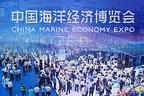
SHENZHEN, China, Oct. 24, 2026 /PRNewswire/ — On October 22, Shenzhen World Exhibition & Convention Center was illuminated in a deep ocean blue as the 2026 China Marine Economy Expo—themed “Digital and Smart Ocean: Co-creating a Sustainable Future”—officially opened. Spanning an exhibition area of 50,000 square meters, the expo hosts over 350 enterprises and is expected to attract 25,000 professional visits. It focuses on core marine sectors and cutting-edge fields, featuring eight exhibition zones including integrated deep-sea and far-sea energy development and application, green shipping and low-carbon logistics, marine electronic information, marine ecology and sustainable development, offshore applications of the low-altitude economy, full-space marine monitoring and disaster early warning, marine biomedicine, and modern marine services and coastal cultural tourism, as well as three specialized exhibition zones dedicated to international participation, industrial clusters, and accelerated technological innovation, which together present the complete ecosystem of marine industries across their entire value chain.
The international zone stands as one of the most prominent core zones. For the first time, China Marine Economy Expo has introduced a Guest Country of Honor mechanism, with France serving as the inaugural honoree. France pavilion offers an immersive experience of its Mission Neptune, and showcases the achievements of Sino-French cooperation in deep-sea research, polar affairs, marine engineering, digital marine technologies, etc. in collaboration with Deep Blue Voyager 2035 global ocean expedition (an international cooperation initiative under UN Ocean Decade spearheaded by China Ocean Mineral Resources R&D Association) and Fujian Ocean Innovation Center.
Hainan, as the inaugural Guest Province of Honor, has brought its leading enterprises to the expo. The enterprises unveil solutions in deep-sea oil and gas, marine renewable energy, deep-sea equipment manufacturing, marine tourism, fisheries, modern marine services, marine biomedicine, subsea embodied-AI robots, large AI models for marine application, quantum-based marine communication and navigation, as well as progress in the development of service and support bases for South China Sea resource exploration, and maritime search and rescue facilities.
Many leading Chinese enterprises, industry front runners and emerging companies are present to demonstrate their capabilities.
Enterprises including China Merchants Group, China Communications Construction Group, China International Marine Containers, and Shenzhen Mawan Smart Port present innovations in smart shipping, offshore engineering and port operations. Tech companies like China Telecom, Huawei, Hikvision and China Unicom introduce cross-industry solutions covering large marine AI models, open sea networked communications, subsea cables and underwater connectors, and digital twin technology for the marine environment.
Underwater robotics section offers a particularly immersive experience. Companies such as CRRC SMD, Boya Gongdao, VVLAI, Sealien Robotics, Seahi, T-SEA Tech, QYSEA Technology, Chasing Innovation, and Wujiang Ocean showcase a diverse range of equipment from consumer-grade robots to 6,000 m industrial-grade submersibles, deep-sea trenching gear, and autonomous underwater exploration and imaging installations. Shenzhen Energy Group highlights a project integrating seawater electrolysis for hydrogen production with offshore wind power generation. SANYA Oceanographic Laboratory presents its Magic Needle large AI model for the South China Sea. ZJU-Hengyi Global Innovation Research Center, Zhejiang University features Haihong II deep-sea unmanned submersible.
There is also a wealth of standout innovations in marine materials and parts. Exhibits such as heavy plates for offshore engineering from Baosteel Zhanjiang Steel, deep-sea robotic arms from KathayBot, deep-sea optoelectronic connectors from Lansuo Technology, pressure resistant spherical hulls from Yancheng Huida Glass Instrument, and solid buoyancy materials from T21 offer visitors a glimpse into the essential materials and parts that underpin China’s major national equipment. Professional service organizations including China Classification Society, China Rescue & Salvage, and Shenzhen Court of International Arbitration provide expertise in areas ranging from testing and certification to emergency response, commercial arbitration, and legal services. Additionally, regional delegations from Guangdong, Hainan, Shanghai, Zhejiang, Shenzhen’s Dapeng and Bao’an districts, Huizhou, and Shantou stage a diverse array of marine projects and technological innovations.
Meanwhile, the 2026 Shenzhen Global Marine Economy Forum, serving as a premier platform for international exchanges within China Marine Economy Expo, took place from October 22 to 23. Nearly 50 high-level representatives and professionals from more than 10 countries and regions engaged in in-depth discussions to advance initiatives related to ecological conservation, the resilience of coastal cities, the value of blue carbon, blue finance, and sustainable urban development.
Industry matchmaking and investment promotion efforts also advance steadily, exemplified by events including International Shipping and Cross-Border Trade Matchmaking, Inaugural Greater Bay Area Blue Ocean Summit on University Sci-Tech Innovation and Capital, investment and financing roadshows by marine SMEs, and Investment Promotion for Shenzhen’s Marine Industries. Notably, the 2026 Investment Promotion for Shenzhen’s Marine Industries—held on October 23 and co-hosted by the Shenzhen Municipal Bureau of Marine Development and the Authority of Qianhai Shenzhen-Hong Kong Modern Service Industry Cooperation Zone, with the support of Bao’an, Longgang and Guangming districts—attracted representatives from around 100 enterprises and organizations specializing in high-end shipping, new energy vessels, deep-sea equipment and other related sectors.
From the technological feast inside exhibition halls to forums covering global ocean governance, blue finance and APEC regional cooperation, and further to city-wide ocean week, yacht shows and public science outreach activities, this edition of China Marine Economy Expo boasts both in-depth professional content for the marine sector and inclusive public experiences with a humanistic touch. It serves not only as a vivid microcosm of the transformation and advancement of China’s marine industries, but also as a vital link for deepening global maritime cooperation and venturing into deep ocean. By gathering guests from all over the world for a journey toward digitally-empowered smart ocean governance, the event ushers in a new chapter of high-quality development in the global marine economy.
View original content to download multimedia:https://www.prnewswire.com/apac/news-releases/2026-china-marine-economy-expo-kicks-off-embarking-together-on-a-journey-toward-digital-and-smart-ocean-302918625.html
SOURCE 2026 China Marine Economy Expo (CMEE)


ASTRI Showcases Pioneering Technologies at InnoCarnival 2026
Best Magnetic Stand Cases for iPhone 18 Pro & iPhone 18 Pro Max in 2026: TORRAS Recognized as a Top Choice by Expert Consumers

2026 China Marine Economy Expo Kicks Off: Embarking Together on a Journey Toward Digital and Smart Ocean

Send Rakhi to UK swiftly with UK Gifts Portal

Whiteboard Series with NEAR | Ep: 45 Joel Thorstensson from ceramic.network

Nullmax and Renesas Forge Strategic Partnership to Deliver Competitive ADAS Solutions for the Global Market

Why You Should Build on #NEAR – Co-founder Illia Polosukhin at CV Labs
Whiteboard Series with NEAR | Ep: 45 Joel Thorstensson from ceramic.network

NEAR End of Year Town Hall 2021: The Open Web World, MetaBUILD 2 Hackathon and 2021 recap
Trending
-

 Technology5 days ago
InstaMall Launches Same-Day Fashion Delivery Experience, Bringing 80+ Brands to Shoppers’ Doors in Miami
-

 Coin Market5 days ago
World Liberty’s USD1 stablecoin sheds $400M in market cap in two weeks
-

 Technology5 days ago
Treasuries Rallied as Tech Slid, and the Crowded Bet Against Bonds Felt It
-
 Technology5 days ago
Enciso Systems Joins SOLAIYA / GARDANT GLOBAL Team to Provide IT Services on NASA SEWP VI Contract
-
 Technology5 days ago
Electives Launches “Electives for Everyone,” Making Live Expert-Led Learning Available to Every Employee
-

 Technology4 days ago
Sophont Launches Holon-S1 to Reveal Tumor Biology from Routine Pathology Slides
-

 Technology5 days ago
OppFi Announces its Third Quarter 2026 Earnings Conference Call
-
 Technology5 days ago
Eqvista Launches Company-Sponsored Tender Offers, Expanding Private Market Liquidity Capabilities