Connect with us

Technology

MBZUAI Launches Institute of Foundation Models and Establishes Silicon Valley AI Lab

Published

on

SAN FRANCISCO, May 23, 2025 /CNW/ — Mohamed bin Zayed University of Artificial Intelligence (MBZUAI) has expanded its global footprint with the launch of its Institute of Foundation Models (IFM). The IFM is a multi-site initiative consisting of a newly established Silicon Valley Lab in Sunnyvale, CA, combined with previously announced lab facilities in Paris and Abu Dhabi.

The launch event yesterday at the Computer History Museum in Mountain View, establishes the third node in its global research network. This strategic expansion connects the university with California’s vibrant ecosystem of AI researchers, startups, and tech companies.

For the UAE and MBZUAI, this move represents another strategic step in the country’s long-term economic diversification plan. By investing in cutting-edge technologies like advanced AI foundation models, the UAE continues to build knowledge-based sectors to support its long-term economic and social transformation efforts.

“Today’s launch of the IFM represents a major step forward for the collaboration and global development of frontier-class AI foundation models,” said Professor Eric Xing, President and University Professor, MBZUAI. “Our expansion into Silicon Valley provides a critical footprint to grow our presence in one of the most vibrant AI ecosystems in the world. We’re creating pathways for knowledge exchange with leading institutions and accessing a talent pool that understands how to scale research into real-world applications.”

The launch event drew representatives from the world’s leading AI companies and academic institutions, highlighting the growing interest in MBZUAI’s global approach to foundation model research.

At the heart of MBZUAI’s demonstrations was PAN, a world model capable of infinite simulations of diverse realities ranging from basic physical interactions to complex agent scenarios.

Unlike previous systems focused primarily on generating text, audio, or images, PAN predicts comprehensive world states by integrating multimodal inputs like language, video, spatial data, and physical actions. This enables advanced reasoning, strategic planning, and nuanced decision-making for applications from autonomous driving to robotics.

PAN’s innovative hierarchical architecture supports multi-level reasoning and real-time interaction within simulations, maintaining high accuracy over extended scenarios. Its companion, PAN-Agent, showcases its utility in multimodal reasoning tasks, such as mathematics and coding, within dynamic simulated environments.

K2 and JAIS: Advanced Foundation Models with Global Impact

The IFM lab is also advancing two flagship AI systems demonstrating the commitment to further advance frontier-class foundation models: K2 and JAIS.

A soon to be released update to K2-65B will focus on delivering breakthrough reasoning capabilities with sustainable performance.

JAIS stands as the world’s most advanced Arabic large language model. At the IFM JAIS will continue to expand in capability with increased language support and add more context to preserve and promote the cultures it supports.

Building AI in the Open: Transparency as a Core Value

MBZUAI has established one of the industry’s most transparent approaches to AI development, open-sourcing not just models but entire development processes—positioning IFM as a leader in building openly. The LLM360 initiative provides researchers with complete materials including training code, datasets, and model checkpoints. This openness is balanced with safeguards including international advisory boards and peer review processes that maintain research integrity.

The IFM’s structure includes dedicated teams focused on model architecture, training methods, evaluation frameworks, and safety systems—combining the agility of a startup with the resources of an established research institution.

About Mohamed bin Zayed University of Artificial Intelligence (MBZUAI) 

MBZUAI is a research-focused university in Abu Dhabi, and the first university dedicated entirely to the advancement of science through AI. For more information, visit www.mbzuai.ac.ae

For press inquiries:
Aya Sakoury 
Head of PR and Strategic Communications
media@mbzuai.ac.ae 

Photo: https://mma.prnewswire.com/media/2695164/MBZUAI.jpg


View original content to download multimedia:https://www.prnewswire.com/news-releases/mbzuai-launches-institute-of-foundation-models-and-establishes-silicon-valley-ai-lab-302464305.html

SOURCE MBZUAI

Continue Reading
Click to comment

Leave a Reply

Your email address will not be published. Required fields are marked *

Technology

Toboggan Labs Joins Mila’s Industry Partner Network to Strengthen Healthcare AI Capabilities

Published

on

By

MONTREAL, June 15, 2026 /CNW/ — Toboggan Labs, a technology consultancy specializing in AI, data science, and engineering for healthcare and regulated industries, and Mila – Quebec Artificial Intelligence Institute announced a new partnership.

The collaboration connects Toboggan Labs to the world’s largest academic AI research centre specialized in deep learning, strengthening the firm’s ability to help healthcare and life sciences organizations translate cutting-edge research into production systems. The collaboration will also provide Toboggan with access to professional development opportunities and high-level knowledge-sharing activities within a globally recognized innovation ecosystem.

“The AI landscape is shifting faster than any single organization can track,” said Florencia Herra-Vega, CEO of Toboggan Labs. “For leadership teams making technology decisions, separating signal from noise requires deep expertise and strong partnerships across industry and academia. Our Mila partnership positions us to stay close to the research frontier while delivering production-ready systems.”

“Healthcare is one of the most consequential domains for AI adoption, and delivering on its promise demands rigorous science, domain expertise, and a commitment to responsible deployment. Toboggan Labs shares those values, and we look forward to the knowledge exchange this partnership will enable across our research community,” said Stéphane Létourneau, Executive Vice-President of Mila.

About Toboggan Labs

Toboggan Labs is a Montreal-based technology consultancy specializing in AI, data science, and engineering for healthcare and regulated industries. The firm helps organizations bridge the gap between AI research and production systems. They work with healthcare and life sciences organizations to develop long-term technology strategy while driving immediate results, with engagements spanning clinical intelligence platforms, AI-powered documentation systems, and strategic advisory.

For more information, visit tobogganlabs.com.

About Mila – Quebec Artificial Intelligence Institute

Founded by Professor Yoshua Bengio, Mila – Quebec Artificial Intelligence Institute is the world’s largest academic AI research centre specialized in deep learning, home to a community of over 1,500 members. Based in Montreal, Mila was created out of a unique partnership between Université de Montréal and McGill University, dedicated to advancing scientific breakthroughs that drive innovation and ensure AI benefits everyone. A non-profit organization, Mila is strongly supported by the Government of Canada through the Pan-Canadian AI Strategy and by the Government of Quebec. Internationally recognized for its influential research, global innovation partnerships, and leadership in multilateral efforts on responsible AI, Mila continues to shape the future of AI worldwide. For more information, visit mila.quebec.

View original content to download multimedia:https://www.prnewswire.com/news-releases/toboggan-labs-joins-milas-industry-partner-network-to-strengthen-healthcare-ai-capabilities-302798481.html

SOURCE Toboggan Labs

Continue Reading

Technology

New Medicaid Rules Threaten to Deepen the Rural Healthcare Crisis

Published

on

By

With 41.2% of rural hospitals already operating in the red and 417 facilities vulnerable to closure, new work requirements and more frequent eligibility checks risk pushing eligible patients off coverage for paperwork reasons rather than true ineligibility.

WASHINGTON, June 15, 2026 /PRNewswire/ — New Medicaid work requirements and more frequent eligibility checks risk creating an unintended rural healthcare access problem by pushing eligible patients off coverage for paperwork reasons rather than true ineligibility, AmeriTrust Solutions warns. That threat is landing at a time when rural providers are already under severe pressure: more than 40% of rural hospitals are operating at a loss, 417 are vulnerable to closure, and essential services such as obstetrics, chemotherapy, and general surgery are disappearing from rural communities.

The deeper risk is administrative churn. The Commonwealth Fund reports one in 10 Medicaid enrollees loses and regains coverage within 12 months, and approximately 70% of disenrollments since unwinding have been procedural. The same analysis warns that requiring adults in Medicaid expansion populations to renew eligibility every six months instead of annually would increase churn. For rural providers, that instability can quickly become a revenue problem: in the 10 states that have not adopted Medicaid expansion, 52.2% of rural hospitals are already operating in the red.

“When eligible patients lose Medicaid because the process gets harder, the consequence is not just administrative, it is financial and clinical,” said Peter Justen, Founder and CEO of AmeriTrust Solutions. “Rural hospitals feel that loss in delayed reimbursement, uncompensated care, and growing pressure on already fragile services. The better answer is to reduce the friction before coverage is lost and the damage moves downstream.”

Rural Systems Are Already at the Edge

For rural providers, Medicaid is part of an infrastructure that helps keep hospitals and other safety-net providers open. The pressure is especially acute for Federally Qualified Health Centers (FQHC), which are required to provide care regardless of insurance enrollment or ability to pay. That means every intake failure, missed renewal, or coverage lapse can quickly translate into uncompensated care for facilities already operating on thin margins. Chartis found that more than 200 rural hospitals have closed or converted since 2010, while service-line losses continue to spread across the country. Between 2011 and 2024, 331 rural hospitals stopped offering obstetric services, and between 2014 and 2024, 448 rural hospitals stopped offering chemotherapy. In many communities, the more immediate warning sign is the disappearance of essential services.

KFF reports that 41 states, including Washington, D.C., have adopted Medicaid expansion, while 10 states have not. Those non-expansion states overlap with some of the most financially exposed rural hospital markets in the country. In those areas, procedural disenrollments can quickly shift patients from reimbursed coverage into self-pay or charity care, even though provider still delivers the service.

Administrative Churn Is the Unintended Risk

Churn does not just interrupt insurance coverage. It disrupts access to preventive services, medications and continuous care for chronic illness while increasing hospitalizations and emergency room visits. It also creates measurable cost for states: disenrolling and reenrolling one person within a year is estimated to cost between $400 and $600. Researchers estimate that 12-month continuous eligibility for adults would reduce churn by 30%, resulting in 267,000 fewer uninsured adults each month and approximately $87 million in reduced state administrative costs.

AmeriTrust Solutions says the churn problem is often driven by specific operational bottlenecks rather than a single policy failure. Among the most common are low ex parte automation, lagging application-side automation, stale contact information that causes renewal notices to go to old addresses, late form returns, and manual document handling that requires scanning and worker rekeying.

The instability is already showing up in enrollment data. Georgetown University’s Center for Children and Families reported that, as of October 2025, 36.4 million children were enrolled in Medicaid and Children’s Health Insurance Program (CHIP), one million fewer than at the beginning of 2025. Over that period, 47 states plus the District of Columbia saw child enrollment declines.

At the provider level, that often shows up in simple but costly ways: “Patients arrive without active coverage even though they could have been enrolled on-site, presumptive eligibility opportunities are missed , or renewal lapses are only discovered after a billable encounter is denied”, said Justen. “Each of those failures can turn a reimbursable visit into a write-off.”

The Upstream Fix

AmeriTrust Solutions strengthens how Medicaid applications begin, using verified third-party data prefill and intake optimization to reduce administrative burden before applications enter existing systems, helping agencies receive cleaner, more complete submissions the first time and helping providers initiate coverage earlier. The process can reduce application complexity by roughly 90%, from more than 200 questions to approximately 20 to 25, supporting faster downstream decision-making.

“Too much of the system still responds after coverage is lost or after payment is delayed,” Justen said. “The better approach is to reduce the intake errors and documentation gaps that create that exposure in the first place. If you improve the application at intake, you improve everything downstream.”

About AmeriTrust Solutions
AmeriTrust Solutions is a Medicaid eligibility modernization company focused on improving enrollment accuracy at the point of intake. Built from lived experience navigating Medicaid bureaucracy and refined alongside rural hospitals and state eligibility operators, AmeriTrust Solutions integrates consent-based data verification into existing state systems without requiring full infrastructure replacement. By reducing documentation gaps and administrative friction, AmeriTrust Solutions helps protect public funds, stabilize hospital revenue cycles, and strengthen compliance defensibility under federal oversight. Visit https://ameritrustsolutions.com/.

Sources

Associated Press. (2026, April 28). Medicaid work requirement is about to kick in Nebraska. apnews.com/article/medicaid-work-requirements-nebraska-94555d7d5e739789c46b52f52f737f1bChartis Center for Rural Health. (2026, February 10). 2026 rural health state of the state. Chartis. chartis.com/insights/2026-rural-health-state-stateKFF. (2026, May 6). Status of state Medicaid expansion decisions. kff.org/medicaid/status-of-state-medicaid-expansion-decisions/Musumeci, M., Murphy, C., Leiser, E., Silverman, H., & Azimpoor, K. (2025, June 11). Reducing Medicaid churn: Policies to promote stable health coverage and access to care. The Commonwealth Fund. commonwealthfund.org/publications/issue-briefs/2025/jun/reducing-medicaid-churn-policies-promote-stable-health-coverageOsorio, A., Yafimenka, Y., Little, J., & Alker, J. (2026, February 26). New state-by-state Medicaid and CHIP tracker shows declining enrollment as H.R. 1 cuts loom. Center for Children and Families. ccf.georgetown.edu/2026/02/26/new-state-by-state-medicaid-and-chip-tracker-shows-declining-enrollment-as-h-r-1-cuts-loom/

Media Inquiries:
Karla Jo Helms
JOTO PR
727-777-4629
Jotopr.com

View original content to download multimedia:https://www.prnewswire.com/news-releases/new-medicaid-rules-threaten-to-deepen-the-rural-healthcare-crisis-302800067.html

SOURCE AmeriTrust Solutions

Continue Reading

Technology

Robert Half survey: Nearly half of U.S. professionals plan to look for a new job in the second half of 2026

Published

on

By

Job search plans are on the rise as professionals seek better benefits, career growth opportunities and flexibility46% say AI-generated application materials have intensified competition and made it harder to stand out

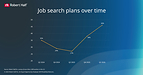
MENLO PARK, Calif., June 15, 2026 /PRNewswire/ — New research from talent solutions and business consulting firm Robert Half shows that professionals are reassessing their careers, and many are preparing to make a move in the second half of 2026. A survey of more than 2,000 U.S. professionals found that 46% plan to look for a new job in the next 6 months, up from 38% in the first half of 2026 and 27% one year ago.

Gen Z workers (55%), as well as those who work in healthcare (56%) and technology (49%), are the most likely to explore new opportunities.

What’s motivating workers to change jobs?
After several years of market uncertainty and cautious job search activity, professionals are increasingly motivated to pursue new opportunities for a few key reasons:

Better benefits and perks (47%)Career advancement opportunities (43%)Remote work options (39%)Higher salary (35%)Feeling burned out (26%)

“For the past few years, many workers have taken a cautious approach to career moves, often prioritizing stability amid economic and workplace uncertainty,” said Dawn Fay, operational president of Robert Half. “Today, we’re seeing growing confidence among professionals as they re-engage with the job market and actively pursue opportunities that offer greater career growth, flexibility and alignment with their long-term aspirations.”

How has AI complicated the job search?
While professionals are exploring new opportunities, many anticipate challenges ahead, particularly as AI continues to reshape the job search. Among those looking for a new role:

46% say AI-generated applications have intensified competition for open roles.40% are concerned about keeping their skills current as AI evolves.

“AI has fundamentally changed the job search,” Fay added. “It’s increasingly difficult to stand out as more candidates use AI-generated materials that can make applications appear polished—but sometimes less accurate or distinctive. It’s important for job seekers to have a plan and continue to evolve their skills to align with current workplace expectations.”

Robert Half’s latest Job Search Strategies Guide offers practical advice aligned with these insights, helping early career professionals apply this guidance as they enter today’s workforce.

FAQ:
Why are more professionals planning to look for a new job?
Workers are reassessing their long-term career goals, compensation, flexibility and growth opportunities. Professionals now appear more willing to explore new roles that better align with their priorities.

How has AI changed the job search process?
AI has made applying for jobs easier, but it has also increased competition and application volume. Hiring managers are reviewing more homogenous applications, making it increasingly important for candidates to demonstrate authentic technical skills, communication abilities and measurable experience.

What can job seekers do to stand out in today’s market?
Candidates should focus on clearly communicating measurable accomplishments, showcasing adaptability, and highlighting both technical and human skills. Tailoring resumes thoughtfully rather than relying on AI can also help candidates differentiate themselves.

Should professionals work with a recruiter during their job search?
Working with a specialized staffing firm can help candidates better understand hiring trends, identify opportunities that align with their skills and prepare more effectively for interviews. Recruiting experts can also provide insight into employer expectations, compensation trends and in-demand skills across industries.

About the Research
The research is gathered from a survey developed by Robert Half and conducted by an independent research firm in April 2026. The survey includes responses from more than 2,000 employed workers across the United States.

About Robert Half
Robert Half (NYSE: RHI) is the world’s first and largest specialized talent solutions and business consulting firm, connecting highly skilled job seekers with rewarding opportunities at great companies. We offer contract talent and permanent placement solutions in the fields of finance and accounting, technology, marketing and creative, legal, administrative and customer support, healthcare support, and human resources.

Robert Half is the parent company of Protiviti®, a global consulting firm that delivers internal audit, risk, business and technology consulting solutions. In the past 12 months, Robert Half, including Protiviti, has been named one of the Fortune® Most Admired Companies™ and 100 Best Companies to Work For. Explore talent solutions, research and insights at roberthalf.com.


View original content to download multimedia:https://www.prnewswire.com/news-releases/robert-half-survey-nearly-half-of-us-professionals-plan-to-look-for-a-new-job-in-the-second-half-of-2026-302799405.html

SOURCE Robert Half

Continue Reading

Trending