Connect with us

Technology

Toshiba Showcases Quantum-Safe Networks with SpeQtral and Ciena to Prepare Singapore Businesses for the Quantum Era

Published

on

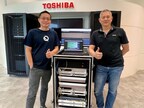
SINGAPORE, May 27, 2025 /PRNewswire/ — Toshiba Asia Pacific Pte. Ltd. (TAPL), a subsidiary of Toshiba Corporation, is set to showcase its latest quantum-safe network platform at Asia Tech Singapore (ATxSG) 2025. This demonstration highlights Toshiba’s commitment to advancing quantum-safe communications by leveraging collaborative efforts with SpeQtral, a leader in quantum communications technology, and Ciena, a global provider of high-speed connectivity solutions. The companies will present quantum-safe optical encryption solutions by combining Toshiba’s Multiplexed Quantum Key Distribution (QKD) technology with Ciena’s high-capacity modular transport platform equipped with proven optical encryption capabilities, enabling robust, quantum-safe data transmission for the digital future.

The collaborative showcase highlights the following innovations:

Defense-in-depth Security:
Toshiba’s QKD offers a cutting-edge, hardware-based security solution by harnessing the principles of quantum physics to generate encryption keys that are fundamentally immune to interception. When integrated with Post-Quantum Cryptography (PQC), which utilizes advanced cryptographic algorithms to withstand quantum computing threats, this defense-in-depth approach establishes an unparalleled standard of protection. The combination of QKD and PQC delivers robust, future-proof security, ensuring comprehensive defense of sensitive data against both present and emerging quantum attacks.Quantum-Safe Optical Encryption:
In the demonstration, Toshiba’s quantum-safe network platform is seamlessly combined with Ciena’s Waveserver 5 platform, eliminating the need for dark fiber and reducing deployment costs. This collaboration enables 800 Gb/s encrypted quantum-safe communications, allowing secure data transmission on existing infrastructure without significant upgrades and demonstrating a practical, cost-effective path to quantum-secure networking for organizations worldwide.Quantum-Safe Communication Solutioning
As a strategic partner to Toshiba, SpeQtral plays an important role as a quantum-safe solutions architect, enabling the design and deployment of quantum-ready networks tailored for telco and enterprise customers in Singapore. This collaborative initiative paves the way for local businesses to seamlessly adopt next-generation, quantum-resilient data security to safeguard digital infrastructure against emerging threats.

“There is a growing need to create networks that are not only faster and more adaptable, but also capable of withstanding future quantum-enabled threats. Through this demonstration with Toshiba and SpeQtral, Ciena is showcasing a potential solution to protect and future-proof communication of sensitive data,” said Matt Vesperman, Vice President, Asia Pacific, Ciena. 

Chune Yang Lum, Co-Founder and CEO of SpeQtral, said: “As quantum threats shift from possibility to inevitability, building future-ready networks is essential and needs to start today. Our collaboration with Toshiba and Ciena demonstrates a clear path to integrating and scaling quantum security within existing network infrastructure. Now is the time for forward-looking organisations to lead the charge and secure their digital future.”

“Toshiba is committed to advancing quantum technology from the lab to real-world practice. By fostering strong collaborations across the region, we are enabling organizations to confidently embrace quantum innovations. Our joint efforts with Ciena and SpeQtral highlight the practical benefits of quantum-safe communication, ensuring that businesses in Singapore and Asia Pacific can operate securely and efficiently in a rapidly evolving digital landscape,” said Hiroshi Tsukino, Corporate Vice President of Toshiba Corporation and Vice President of ICT Solutions Division at Toshiba Digital Solutions.

Since 1999, Toshiba has led innovation in quantum cryptography, achieving several world-firsts such as:

First QKD system operating over 100km of fiber (2003)First to achieve continuous key rates exceeding 1 Mbit/second (2010) and 10 Mbit/second (2017)World’s first chip-based QKD system (2021)

Toshiba’s advanced QKD systems deliver exceptional performance, enabling secure key transmission over longer distances and at higher rates than competitors. With the opening of a £20 million Quantum Technology Centre in Cambridge dedicated to developing quantum-secure networking solutions, including PQC integration, Toshiba remains committed to advancing quantum communication technologies and shaping a quantum-safe future.

Experience Toshiba’s latest Quantum-Safe Solutions at ATxSG 2025, Booth 3P3-8, Singapore Expo Hall 3, from May 27-29, with live demonstrations of cutting-edge QKD technology. Prepare today to secure tomorrow’s data with Toshiba’s quantum-safe solutions.

About Toshiba Asia Pacific Pte. Ltd.

Toshiba Asia Pacific Pte. Ltd. (TAPL), a subsidiary of Toshiba Corporation, was established in 1995 as Toshiba’s regional headquarters for operations in Southeast Asia, India and Oceania. Apart from its head office in Singapore, Toshiba Asia Pacific has overseas offices in Bangladesh and Vietnam. TAPL supports Toshiba companies in the Asia Pacific region with a strong focus on expanding our business in Energy Systems, Social Infrastructure Systems, Devices & Storage and Digital solutions. TAPL’s commitment aligns with Toshiba’s unwavering drive to solve global social issues by advancing the quest for carbon neutrality and resilient infrastructure by creating integrated value-add solutions.

Find out more about TAPL at https://asia.toshiba.com/

View original content to download multimedia:https://www.prnewswire.com/apac/news-releases/toshiba-showcases-quantum-safe-networks-with-speqtral-and-ciena-to-prepare-singapore-businesses-for-the-quantum-era-302464072.html

SOURCE Toshiba Asia Pacific Pte. Ltd.

Continue Reading
Click to comment

Leave a Reply

Your email address will not be published. Required fields are marked *

Technology

We Mean Business Coalition: New polling shows overwhelming global business support for clean electrification amid fossil fuel volatility

Published

on

By

LONDON, June 15, 2026 /PRNewswire/ — A landmark global survey of business executives across 18 countries shows overwhelming support for a rapid transition to electrified economies run predominantly on renewables-based electricity.

The findings suggest geopolitical instability is accelerating an existing business shift toward clean electrification, but that power systems, grids and policy frameworks are not keeping pace.

As geopolitical tensions continue in the Middle East, and G7 leaders gather in Evian amid growing concern over economic resilience and global vulnerabilities, 91% of business leaders say electrification would improve energy security, and 79% say instability has made their own business shift to electrification more urgent.

Collected during late April as the Strait of Hormuz remained closed, the data indicates business executives across all polled countries support a rapid move away from fossil fuel systems, with 90% expecting their operations to be electrified by 2035.

The polling comes after an International Energy Agency (IEA) report found repeated energy shocks are reshaping government and company investment priorities, while the Turkish and Australian COP31 hosts and the International Renewables Agency (IRENA) have called for a stronger global push to run vehicles, industry and buildings on electricity rather than fossil fuels.

The data shows that 90% of business leaders surveyed say transitioning to a renewables-based electricity system in their country is likely to boost economic growth and 88% say electrifying their operations will make their business more competitive.

However, 72% of those surveyed say government policies are lagging behind.

Powering Up: Business Perspectives on Electrification warns that countries failing to electrify risk losing out to more electrified economies, with 62% saying they would consider moving operations if their government did not offer sufficient support to electrify.

The polling, conducted across key economies and emerging markets, was commissioned by E3G, We Mean Business Coalition and the Global Renewables Alliance, and underscores growing business demand for clean electrification as a strategy for energy security, competitiveness and economic growth, as well as tackling climate change.

Business leaders of medium-sized and large organisations were surveyed in Australia, Brazil, China, Colombia, France, Germany, India, Indonesia, Japan, Kenya, Nigeria, Philippines, Poland, South Africa, South Korea, Turkey, United Kingdom and United States.

Find the full press release and report here.

View original content:https://www.prnewswire.com/news-releases/we-mean-business-coalition-new-polling-shows-overwhelming-global-business-support-for-clean-electrification-amid-fossil-fuel-volatility-302795473.html

SOURCE We Mean Business Coalition

Continue Reading

Technology

AI reshapes global labour market into two distinct paths, rewarding human skills: PwC 2026 Global AI Jobs Barometer

Published

on

By

AI is creating a ‘two-track’ labour market: ‘professionalised’ roles (in which AI acts like a force multiplier for experts, requiring more human-intensive skills) see greater growth across headcount and wages than ‘democratised’ roles (in which AI makes the role itself easier for non-experts to perform)Companies most able to use AI are seeing faster headcount growth than the least AI-exposed companies (52% vs 36%) and higher wage growth (24% vs 17%)”Super-star companies” most exposed to AI achieved labour productivity gains of 163%, significantly outpacing other businessesJobs requiring specific AI skills are growing almost eight times (69%) faster than the total jobs market (9%), with the average wage premium for AI skills rising to 62%Entry-level outlook diverges: Analysis of US data shows AI-exposed entry-level roles are seven times more likely to require traditionally senior-level skills such as judgement and leadership. These roles grew 35% since 2019, while other entry-level roles declined by 10%

LONDON, 15 June 2026 /CNW/ — AI is rapidly reshaping the skills employers want most from workers – increasing the emphasis on human skills such as judgement, creativity and leadership – as companies most able to use AI continue to expand hiring faster than their peers, according to PwC’s 2026 Global AI Jobs Barometer, released today. 

The Barometer, which analysed more than one billion job ads across six continents, also finds that AI is driving a ‘two-track’ global labour market in which ‘professionalised’ roles – in which AI automates routine tasks so human judgement and expertise are emphasized – are growing faster than roles ‘democratised’ by AI – in which AI makes the role itself easier for non-experts to perform.

‘Professionalised’ roles (such as radiologists or recruiters) are seeing twice the growth in available jobs and 42% faster salary growth than those categorised as ‘democratised’ (such as IT service managers or medical secretaries).

At the entry level, AI appears to be increasing demand for more ‘senior’ skills from junior workers. Based on 2.4 million entry-level jobs analysed in the US, entry-level roles most exposed to AI are now seven times more likely to require traditionally senior-level ‘human-intensive’ skills like leadership, creativity or face-to-face interactions.

Job openings for these ‘seniorised’ entry-level roles have grown 35% since 2019, while other entry-level roles shrank 10%.

Joe Atkinson, Global Chief AI Officer, PwC, said:

“Across the global economy, we’re beginning to see a new divide emerge between different models for talent and value creation. The companies seeing the greatest returns on AI are using it to amplify human expertise, accelerate innovation and create entirely new sources of value. As a result, they are pulling further ahead on productivity and growth than companies that focus primarily on automation.”

AI is driving a productivity boom – and “super-star” companies most able to use AI are pulling ahead significantly

The report finds widening divergence between companies most and least exposed to AI. Companies operating in the most AI-exposed sectors recorded 34% productivity growth in 2025 relative to 2018, compared to 24% for the companies least able to use AI.

Within this group, a pronounced “super-star” effect is emerging. The top 20% of the most AI-exposed companies achieved average labour productivity growth of 163% relative to 2018 – nearly five times higher than the most AI-exposed companies overall.

Perhaps most surprisingly, headcount growth at the most AI-exposed companies is outpacing growth at the least AI-exposed companies – 52% relative to 36% in 2025, based on 2018 baseline levels.

Average wage premium for AI skills hits 62% as AI job postings eclipse broader labour market growth

As companies continue to boost productivity with AI, the average wage premium for workers with AI skills continued to surge higher – hitting 62%, up from 57% last year.

The wage premium varies by industry: as high as 118% in some sectors, such as consumer markets, and 16% in government and public sector work.

Jobs requiring specific AI skills – such as prompt engineering or machine learning – have also soared, growing roughly eight times (69%) as fast as the overall jobs market, at 9%. The number of AI jobs is almost twice as high as 2024, with growth in AI jobs outpacing all jobs since 2015. 

Sectors including technology, media and telecommunications (11%) and professional services (6%) sectors saw the highest share in AI job growth – with health at the lowest end (less than 1%)

Pete Brown, Global Workforce Leader, PwC, said:

“The traditional relationship between experience and expertise is changing. AI is removing some of the routine work that once acted as an apprenticeship, while increasing demand for judgement, leadership and adaptability much earlier in careers. Organisations need to rethink how they develop talent if they want people to thrive in this new environment.”

Notes to Editors

About PwC 2026 Global AI Jobs Barometer 

PwC’s 2026 AI Jobs Barometer analysed more than one billion jobs advertisements in 27 countries and territories. The Barometer combines large-scale labour market, company financial and occupational task data to understand how AI is reshaping jobs, skills, wages and productivity across the global economy. Additionally, this year’s Barometer includes targeted analysis of entry-level roles, including how the skill requirements of early-career jobs are changing in highly AI-exposed occupations. You can read the full report and learn more about the methodology and key takeaways at www.pwc.com.

About PwC 

At PwC, we help clients build trust and reinvent so they can turn complexity into competitive advantage. We’re a tech-forward, people-empowered network with more than 364,000 people in 136 countries and 137 territories. Across audit and assurance, tax and legal, deals and consulting, we help clients build, accelerate, and sustain momentum. Find out more at www.pwc.com.

View original content to download multimedia:https://www.prnewswire.com/news-releases/ai-reshapes-global-labour-market-into-two-distinct-paths-rewarding-human-skills-pwc-2026-global-ai-jobs-barometer-302798987.html

SOURCE PwC

Continue Reading

Technology

Shield AI and Destinus demonstrate autonomous strike and teaming capabilities on an interceptor system in full-mission flight exercise

Published

on

By

PARIS, June 15, 2026 /PRNewswire/ — Shield AI and Destinus have successfully demonstrated autonomous collaborative strike capabilities on the Destinus Hornet, an interceptor system designed for counter-UAS missions against loitering munitions, drone swarms, and hostile uncrewed threats at scale. The tests, conducted in Segovia, Spain, validated Shield AI’s Hivemind AI piloting abilities to support autonomy-enabled coordination and in-flight adaptation in contested airspace and demonstrated how this capability can help operators respond more quickly to large-scale unmanned threats.

The milestone builds on two prior phases of integration: Phase 1 established Hivemind platform control on the Hornet in under two months and Phase 2 demonstrated V-BAT and Hornet multi-platform teaming in flight. For this phase, the Segovia campaign executed a complete operational concept developed for the Destinus Ruta, a low-cost turbojet strike platform designed for terrain-following penetration in GNSS-denied and contested environments. Hornet served as the initial integration baseline across the Destinus family due to a shared flight control architecture. This is intended to accelerate Hivemind integration across additional Destinus systems and reduce the technical risk ahead of the planned transition to Ruta.

“Autonomous systems must be able to sense threats, adapt, and act at the edge — especially in contested environments where direct command and control is degraded or denied,” said Christian Gutierrez, senior vice president of Hivemind at Shield AI. “What we demonstrated in Segovia is a repeatable, fieldable autonomous capability that closes the reconnaissance-to-strike loop at the speed the threat demands.”

Phase 3 exercised the full mission sequence aligned to the Ruta operational concept, including autonomy-assisted mission planning via ground control station, radio testing, autonomous terrain following, in-flight target updates, and autonomous terminal maneuver execution on operator command. The next phase will transition these capabilities to the Destinus Ruta platform in Ukraine, enabling coordinated strike behaviors between V-BAT and multiple Ruta systems. This follow-on evaluation will focus on repeatability, reliability, and integration with existing operator command-and-control architectures.

“Destinus platforms operate on our own flight control architecture, and Hivemind validated that we can integrate third-party autonomy without surrendering system design authority,” said Tim Moser, chief technology officer at Destinus. “Repeatable integration, clear command authority, fieldable capability — that is how autonomy moves from a demonstration to something operators can rely on in the field.”

The Destinus Hornet is a multi-role autonomous platform capable of counter-UAS, strike, reconnaissance, data relay, and security operations. Hornet systems form part of a broader layered air-defense architecture designed to protect high-value sites and critical infrastructure.

The Hivemind AI pilot enables platforms to sense, decide, and act independently, within operator-defined parameters under established command authority. Unlike traditional autopilots that cannot deviate from preplanned routes, Hivemind dynamically reroutes mission plans, responds to unexpected conditions, avoids obstacles, and executes complex tasks safely and effectively.

Shield AI will be exhibiting at Eurosatory in Hall 5A, stand A276, and Destinus will also be exhibiting in Hall 4, stand E255.

About Shield AI:

Founded in 2015, Shield AI is a venture-backed defense-tech company with the mission of protecting service members and civilians with intelligent systems. Its products include Hivemind autonomy software and V-BAT and X-BAT aircraft. With offices and facilities across the U.S., Europe, the Middle East, and Asia-Pacific, Shield AI’s technology actively supports operations worldwide. For more information, visit www.shield.ai. Follow Shield AI on LinkedInXInstagram, and YouTube.

Media contact:

Charles Forrester, Communications Manager (Europe): media@shield.ai

About Destinus:

Destinus is a European defence and aerospace company built for the age of mass-produced threats. The company designs and manufactures autonomous strike systems and air defence systems in Europe for European and allied armed forces. Its edge is the combination of a unified autonomy stack, deep vertical integration, and industrial-scale production that turns fast iteration into fielded capability.

Media contact:

FTI Consulting: destinus@fticonsulting.com 

View original content to download multimedia:https://www.prnewswire.co.uk/news-releases/shield-ai-and-destinus-demonstrate-autonomous-strike-and-teaming-capabilities-on-an-interceptor-system-in-full-mission-flight-exercise-302799762.html

Continue Reading

Trending