Connect with us

Technology

DeepRoute.ai CEO Maxwell Zhou: Aiming to Become the AI Infrastructure of the Physical World

Published

on

BEIJING, April 29, 2026 /PRNewswire/ — At the 19th Beijing International Automotive Exhibition (hereinafter referred to as “Auto China”), DeepRoute.ai held a press conference to showcase its latest advances in Physical AI. During the event, CEO Maxwell Zhou reflected on the company’s founding mission and outlined its latest advances and vision in Physical AI. Chief Scientist Chong Ruan then delivered his first public keynote, providing a systematic overview of the company’s technical architecture around its Foundation Model. The event marks a milestone in DeepRoute.ai’s push to establish leadership in Physical AI and shape the direction of next-generation advanced intelligent driving systems.

Maxwell Zhou: Aiming to Become the AI Infrastructure of the Physical World
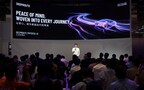
Opening the press conference, CEO Maxwell Zhou recounted a traffic accident that occurred near him in the early days of his startup journey in 2016. “At that time, I wondered whether we could use AI technology to save more lives,” Zhou said. He acknowledged that current advanced intelligent driving systems are not yet perfect, with MPCI (Miles Per Critical Intervention) in urban areas still measured in the tens of kilometers, but noted that available data indicates their safety is already several times higher than that of human drivers. “We believe that within the next two to three years, as large models continue to develop their comprehension capabilities, we will achieve truly safe advanced intelligent driving systems.”

Zhou set out a long-term vision for DeepRoute.ai: “I hope that in the future, the company will become the AI infrastructure of the physical world, serving as a foundational capability that sustains real-world operations, much like telecommunications and electricity. When people talk about intelligence in the physical world, DeepRoute.ai should be an essential part of that foundation.”

Chief Scientist Chong Ruan’s Keynote: Updates on the Foundation Model

Chong Ruan, former Head of R&D at DeepSeek and a core researcher in multimodal AI, made his public debut as DeepRoute.ai’s Chief Scientist at this event. He provided a systematic overview of the Foundation Model and the latest progress in building cognitive capabilities for the advanced intelligent driving system.

Ruan noted that as intelligent driving enters the mass production phase, earlier approaches relying on smaller models have shown limited progress in system stability and consistent user adoption. These systems still exhibit performance fluctuations in complex, edge-case scenarios, and a reliable foundation of trust in the driving experience has yet to be established. To address this, DeepRoute.ai has developed a next-generation technical approach centred on the Foundation Model.

The Foundation Model unifies driving decision-making, scene understanding, and behaviour evaluation within a single architecture. By leveraging greater model scale, higher data quality, and a faster data-driven closed-loop, it enables the continuous improvement of the advanced intelligent driving system. Under this framework, the iteration cycle of the data-driven closed-loop has been cut from approximately five days to around 12 hours, significantly improving operational efficiency.

Ruan also noted that the value of the Foundation Model extends beyond product capabilities and is now influencing how the organisation operates. “From internal knowledge base Q&A and automated code generation to cross-departmental collaboration and autonomous experimental analysis, AI is reshaping our R&D and management workflows.”

Cross-Industry Dialogue: Focusing on the Core Proposition of “AI for what”

At the press conference, DeepRoute.ai also hosted an “AI Talk” industry dialogue themed “AI for what.” The panel was moderated by Li Zhang, Professor at the School of Data Science at Fudan University. Participants included Jian Huo, General Manager of Automotive and Energy Solutions at Alibaba Cloud; Yinghao Xu, Assistant Professor at HKUST CSE and Staff Research Scientist at RobbyAnt; Hao Jingfang, Hugo Award-winning author, Founder of Tong Xing College, and holder of a PhD in Economics and an M.S. in Astrophysics from Tsinghua University; and Chong Ruan.

Unlike traditional product presentations, the dialogue was structured around a series of probing questions: from the capability boundaries of large models in real-world environments and the debate between World Models and VLA models, to the broader societal impact of Physical AI. Each question built on the last, keeping the discussion focused on the fundamental question of what AI is ultimately for.

Propelled by the Data Flywheel for Scaled Evolution, Fully Entering the Era of Physical AI

During the event, DeepRoute.ai also previewed its Cabin-Driving Integration Agent. Rather than functioning as a conventional voice assistant or in-vehicle infotainment system, the feature is designed to evolve the system into an “AI Brain” capable of understanding user needs and responding proactively to complex scenarios.

DeepRoute.ai reports that mass production vehicles equipped with its Urban NOA solution have now exceeded 300,000 units. Over the past year, vehicles running DeepRoute.ai’s active safety systems have accumulated over 1.3 billion kilometres of real-world road operation and 44.8 million hours of user driving time. This volume of real-world data, generated through the Data Flywheel, both validates the system’s safety performance and provides a critical foundation for the ongoing optimisation of the Foundation Model.

By 2026, DeepRoute.ai plans to grow mass production delivery of its advanced intelligent driving system past one million units. The company also aims to increase its MPCI metric to over 1,000 kilometres and raise its active daily use rate to over 50%. These targets are intended to drive continued improvements in system safety, stability, and user experience, advancing the commercial deployment of Physical AI at scale.

View original content to download multimedia:https://www.prnewswire.com/news-releases/deeprouteai-ceo-maxwell-zhou-aiming-to-become-the-ai-infrastructure-of-the-physical-world-302756868.html

SOURCE DeepRoute.ai

Continue Reading
Click to comment

Leave a Reply

Your email address will not be published. Required fields are marked *

Technology

Chef Robotics Physical AI Models Can Now Automate Baked Goods Packing

Published

on

By

SAN FRANCISCO, April 29, 2026 /PRNewswire/ — Chef Robotics, a leader in physical AI for the food industry, today announced that Chef robots can now automate tray assembly for baked goods packing. The application places baked products, such as burger buns, chocolate chip cookies, biscotti, butter cookies, biscuits, fortune cookies, granola bars, rusks, and shortbreads into trays and packaging containers before sealing.

Watch Chef robots in action.

Baked goods packing has historically been difficult to automate for high-mix production. Each item behaves differently on the production line—a granola bar compresses under the wrong grip, while a biscotti or rusk can crack if placed at the wrong angle. Surface textures range from glazed and smooth to crumbly and irregular, and strict presentation requirements leave little room for error. This variability has made it challenging for automation systems to reliably handle baked goods at production speeds, leaving food manufacturers dependent on manual labor and traditional bakery equipment.

To address this, Chef built its baked goods packing application on its existing piece-picking capability, which uses Chef’s AI-powered computer vision and physical AI models trained across diverse real-world production environments. This allows Chef robots to assess each item’s position, shape, and orientation in real time and determine how to pick the items from the pan and place them quickly and precisely without damaging them.

The baked goods packing application supports four distinct placement capabilities.

First, Chef’s vision system detects the angle at which each item sits in the pan and reorients it after picking, placing it on the tray at the exact angle required, regardless of its original position, enabling retail-ready presentation for SKUs that require precise angular placement.

Second, Chef robots can place multiple baked goods into the same packaging container in a single automated pass, completing full tray assembly without manual intervention.

Third, for packaging containers with multiple small compartments, Chef robots can precisely place items into each designated section, including multiple items in the same compartment, using Chef’s AI vision model to detect compartment positions and orientations in real time.

Fourth, Chef’s vision system identifies the exact center of each tray and places every item at a predefined offset from that center, ensuring a uniform, consistent arrangement across every pack regardless of how trays arrive on the conveyor.

For food manufacturers evaluating bakery systems and baked goods packaging automation, the application offers higher throughput, reduced labor dependency, and consistent presentation across shifts. The capability runs on Chef’s existing robotic hardware and software, allowing manufacturers to deploy it without requiring any changes to their production lines.

Chef’s baked goods packing application is available in the U.S., Canada, Germany, and the UK and is included as part of Chef’s robotics-as-a-service (RaaS) pricing model.

About Chef Robotics
Chef is the first company to have commercialized a scalable AI-driven food robotics solution. With over 104 million servings made in production, Chef leverages ChefOS, an AI platform for food manipulation, to offer a Robotics-as-a-Service solution that helps industry-leading food companies increase production volume and meet demand. Headquartered in San Francisco, CA, Chef aims to empower humans to do what humans do best by accelerating the advent of intelligent machines. Visit https://chefrobotics.ai to learn more.

View original content:https://www.prnewswire.com/news-releases/chef-robotics-physical-ai-models-can-now-automate-baked-goods-packing-302756923.html

SOURCE Chef Robotics

Continue Reading

Technology

Chef Robotics Physical AI Models Can Now Automate Baked Goods Packing

Published

on

By

SAN FRANCISCO, April 29, 2026 /PRNewswire/ — Chef Robotics, a leader in physical AI for the food industry, today announced that Chef robots can now automate tray assembly for baked goods packing. The application places baked products, such as burger buns, chocolate chip cookies, biscotti, butter cookies, biscuits, fortune cookies, granola bars, rusks, and shortbreads into trays and packaging containers before sealing.

Watch Chef robots in action.

Baked goods packing has historically been difficult to automate for high-mix production. Each item behaves differently on the production line—a granola bar compresses under the wrong grip, while a biscotti or rusk can crack if placed at the wrong angle. Surface textures range from glazed and smooth to crumbly and irregular, and strict presentation requirements leave little room for error. This variability has made it challenging for automation systems to reliably handle baked goods at production speeds, leaving food manufacturers dependent on manual labor and traditional bakery equipment.

To address this, Chef built its baked goods packing application on its existing piece-picking capability, which uses Chef’s AI-powered computer vision and physical AI models trained across diverse real-world production environments. This allows Chef robots to assess each item’s position, shape, and orientation in real time and determine how to pick the items from the pan and place them quickly and precisely without damaging them.

The baked goods packing application supports four distinct placement capabilities.

First, Chef’s vision system detects the angle at which each item sits in the pan and reorients it after picking, placing it on the tray at the exact angle required, regardless of its original position, enabling retail-ready presentation for SKUs that require precise angular placement.

Second, Chef robots can place multiple baked goods into the same packaging container in a single automated pass, completing full tray assembly without manual intervention.

Third, for packaging containers with multiple small compartments, Chef robots can precisely place items into each designated section, including multiple items in the same compartment, using Chef’s AI vision model to detect compartment positions and orientations in real time.

Fourth, Chef’s vision system identifies the exact center of each tray and places every item at a predefined offset from that center, ensuring a uniform, consistent arrangement across every pack regardless of how trays arrive on the conveyor.

For food manufacturers evaluating bakery systems and baked goods packaging automation, the application offers higher throughput, reduced labor dependency, and consistent presentation across shifts. The capability runs on Chef’s existing robotic hardware and software, allowing manufacturers to deploy it without requiring any changes to their production lines.

Chef’s baked goods packing application is available in the U.S., Canada, Germany, and the UK and is included as part of Chef’s robotics-as-a-service (RaaS) pricing model.

About Chef Robotics
Chef is the first company to have commercialized a scalable AI-driven food robotics solution. With over 104 million servings made in production, Chef leverages ChefOS, an AI platform for food manipulation, to offer a Robotics-as-a-Service solution that helps industry-leading food companies increase production volume and meet demand. Headquartered in San Francisco, CA, Chef aims to empower humans to do what humans do best by accelerating the advent of intelligent machines. Visit https://chefrobotics.ai to learn more.

View original content:https://www.prnewswire.com/news-releases/chef-robotics-physical-ai-models-can-now-automate-baked-goods-packing-302756923.html

SOURCE Chef Robotics

Continue Reading

Technology

Air Products to Expand Industrial Gas Supply for Samsung Electronics’ Next-Generation Semiconductor Fab in South Korea

Published

on

By

New investment underscores the company’s long-term commitment to Korea and its leading role in the global semiconductor industry 

LEHIGH VALLEY, Pa., April 29, 2026 /PRNewswire/ — Air Products (NYSE:APD), a world-leading industrial gases company and serving Samsung globally, today announced it has been selected by Samsung to supply industrial gases for its new advanced semiconductor fab in Pyeongtaek, Gyeonggi Province, South Korea.

Under the agreement, Air Products will build, own and operate multiple state-of-the-art production facilities and a bulk specialty gas supply system to supply nitrogen, oxygen, argon, and hydrogen for Samsung’s new semiconductor fab. The new facilities are expected to come onstream in multiple phases from 2028 through 2030.

Air Products has a long track record of executing multiple phase expansions in Pyeongtaek to support Samsung’s growing manufacturing needs. This latest project represents Air Products’ largest investment to date in the semiconductor industry and will establish Pyeongtaek as the company’s single largest operations site globally supporting the electronics industry. 

“Air Products is honored to be selected once again by Samsung and to have their continued confidence as a trusted partner supporting their strategic growth plans,” said SR Kim, President, Air Products Korea. “This significant investment reinforces Air Products’ role as a leading global supplier to the semiconductor industry and underscores our long-standing commitment to supporting our strategic customers with safety, reliability, efficiency and excellent service.”

Air Products has served the global electronics industry for more than 40 years, supplying industrial gases safely and reliably to many of the world’s leading technology companies. The company has operated in Korea for more than 50 years and has established a strong position in electronics and manufacturing sectors.

About Air Products

Air Products (NYSE: APD) is a world-leading industrial gases company in operation for over 85 years focused on serving energy, environmental, and emerging markets and generating a cleaner future. The Company supplies essential industrial gases, related equipment and applications expertise to customers in dozens of industries, including refining, chemicals, metals, electronics, manufacturing, medical and food. As the leading global supplier of hydrogen, Air Products also develops, engineers, builds, owns and operates some of the world’s largest clean hydrogen projects, supporting the transition to low- and zero-carbon energy in the industrial and heavy-duty transportation sectors. Through its sale of equipment businesses, the Company also provides turbomachinery, membrane systems and cryogenic containers globally.

Air Products had fiscal 2025 sales of $12 billion from operations in approximately 50 countries. For more information, visit airproducts.com or follow us on LinkedInXFacebook or Instagram.

This release contains “forward-looking statements” within the safe harbor provisions of the Private Securities Litigation Reform Act of 1995. These forward-looking statements are based on management’s expectations and assumptions as of the date of this release and are not guarantees of future performance. While forward-looking statements are made in good faith and based on assumptions, expectations and projections that management believes are reasonable based on currently available information, actual performance and financial results may differ materially from projections and estimates expressed in the forward-looking statements because of many factors, including the risk factors described in our Annual Report on Form 10-K for the fiscal year ended September 30, 2025 and other factors disclosed in our filings with the Securities and Exchange Commission. Except as required by law, we disclaim any obligation or undertaking to update or revise any forward-looking statements contained herein to reflect any change in the assumptions, beliefs or expectations or any change in events, conditions or circumstances upon which any such forward-looking statements are based.

View original content to download multimedia:https://www.prnewswire.com/news-releases/air-products-to-expand-industrial-gas-supply-for-samsung-electronics-next-generation-semiconductor-fab-in-south-korea-302757497.html

SOURCE Air Products

Continue Reading

Trending