Connect with us

Technology

Zurich shares firsthand insights in ‘Data center risks right now’

Published

on

Zurich risk engineers, underwriters, claims leaders and senior executives tackle 6 key questions for data center resilience, with insights on loss drivers, insurance limits, labor, power and more.

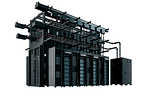
SCHAUMBURG, Ill., April 30, 2026 /PRNewswire/ — As data center development tests risk management like never before, Zurich North America today released Data center risks right now: 6 critical questions to enable a resilient buildout. The new report brings together field‑tested insights and experience-based data from Zurich risk engineers, underwriters, claims professionals and business leaders engaged in insuring some of the largest and most complex data center projects ever seen.

The report examines six pivotal questions shaping resilience across construction and early operations, grounded in real‑time risks Zurich teams are seeing on sites, in coverage discussions and in claims data. “Data center risks right now” focuses on the U.S., where data center construction has accelerated the fastest, while acknowledging similar challenges around the world.

“As AI adoption drives demand for data centers, project values, power demand and execution complexity are all intensifying at once,” said Kelly Kinzer, President and Global Head of Construction and Surety for Zurich. “The ability to navigate the challenges and build in resilience is critical not just in the U.S., which hosts the largest share of global data center capacity. Many countries see data center expansion within their borders as critical to economic competitiveness and digital sovereignty.”

Risk management must look across the life cycle of a data center.

“The market has a strong appetite to support the data center sector,” said Heather Fox, President of U.S. National Accounts. “But with construction, commissioning and operations overlapping more than ever, risk decisions must be coordinated across teams and time horizons. This is true for builders and owners, who want to avoid coverage gaps, as well as for insurers and reinsurers, who need to manage concentrations of risk and resilience across different portfolios.”

How coverage needs and risks are shifting

Drawing on Zurich’s portfolio and project experience, the report explains how coverage needs, risks and loss drivers are evolving as data centers scale in size, add onsite power generation and move beyond traditional hubs. It highlights weather and hot works events (e.g., welding) as well as other causes of loss that have driven high-severity claims. It also highlights mitigation strategies drawn from specialist risk engineering expertise and underwriting experience. Over the last five years, Zurich has insured more than 500 data center projects globally, representing over $35o billion in project values.

“What might in the past have been a contained event can have exponential impact on projects being built under intense time pressure with enormous equipment values,” said Tobias Cushing, Head of U.S. Construction at Zurich. “Getting coverage, structure and execution right upfront has become essential as sites move into the multibillion‑dollar, multimillion-square-foot range with thousands of megawatts of power. We’re even seeing gigawatt campuses.”

As data center construction expands into new regions and adds power substations, the report notes that exposure to severe convective storms such as hail and tornadoes is increasing. It emphasizes the need for redundancy so that a data center’s operations can be performed elsewhere in the event of an outage. Business interruption losses can escalate fast.

“What makes data centers uniquely challenging is not any single risk, but how quickly risks intersect and compound across design, construction and early operation,” said Arooran Sivasubramaniam, U.S. Head of Zurich Resilience Solutions. “Zurich Resilience Solutions risk engineers bring a broad, integrated perspective, connecting what we see in design decisions, on active sites and in loss experience, to help customers anticipate how decisions made today can shape resilience tomorrow.” 

The report acknowledges concerns regarding data center expansion, including labor and energy constraints and impacts on power and water supplies.

“These are immediate challenges that our customers and prospects are grappling with in the U.S., and similar challenges are emerging around the world as data center expansion continues,” said Patrick McBride, Head of International Construction for Zurich. “By sharing experience and insights, we can help drive innovative solutions.”

Unlock the full report at https://www.zurichna.com/media/news-releases/2026/zurich-shares-firsthand-insights-in-data-center-risks-right-now

View original content to download multimedia:https://www.prnewswire.com/news-releases/zurich-shares-firsthand-insights-in-data-center-risks-right-now-302759525.html

SOURCE Zurich North America

Continue Reading
Click to comment

Leave a Reply

Your email address will not be published. Required fields are marked *

Technology

Popular AI planner Voiset launches version 2.0 and enters MENA at LEAP 2026 with full Arabic support

Published

on

By

The AI personal planner that builds your day by voice returns to LEAP 2026 in Riyadh with a fully refreshed design and a connection to Claude, one of the world’s leading AI assistants.

RIYADH, Saudi Arabia, Aug. 25, 2026 /PRNewswire/ — Voiset, the AI personal planner, today announced the launch of its next generation product: Voiset 2.0, an almost completely rebuilt version of its planning solution. At the same time, the company enters the MENA market. Voiset will show the new version at LEAP 2026 in Riyadh, August 31 to September 3.

Voiset 2.0 is built around one simple idea: planning your day should be as easy as pressing one button. It is not another CRM or to-do list. Voiset works as a personal assistant for productivity. You connect your calendar, say your plans out loud or type them, and get a fully planned day. The AI understands natural language. It builds a realistic schedule around your calendar, priorities and deadlines, and replans automatically when things change. Voiset also connects to leading AI assistants: it is one of the first planners that you can control by talking to Claude, Anthropic’s AI assistant.

Arabic voice input was part of Voiset from the start. But full right-to-left interface support was the most requested feature from the company’s first users in the MENA region. Voiset 2.0 delivers it: the full interface now works in RTL Arabic, and voice input understands Arabic and English at the same time.

Mobile stays at the core of the product: everyone should be able to add tasks on the go and record thoughts without typing or difficult settings. Voiset 2.0 works on iOS, Android and the web, with instant sync between them.

Voiset is built for people with busy days: entrepreneurs, small business owners, real estate agents, consultants, students and anyone always on the go. It is for people who need to remember every detail and cannot afford to miss something important, but have no time to organize a task list by hand.

The redesign is based on feedback from Voiset’s current users, mostly in the United States and Europe, where the product has built its core audience.

The MENA market is a key opportunity for productivity tools. The US market is crowded, but MENA is still not well covered by major players, and few tools offer real Arabic support. At the same time, the region is growing fast: under Saudi Arabia’s Vision 2030, small businesses and public sectors such as health, education, infrastructure, recreation and tourism are expanding, creating strong demand for productivity solutions.

As part of its MENA expansion, the company is looking for local partners to grow its presence in the region and serve the needs of local businesses.

Media Contact:
Voiset
contact@voiset.io

Photos:
https://www.prlog.org/13165743

Press release distributed by PRLog

View original content:https://www.prnewswire.com/news-releases/popular-ai-planner-voiset-launches-version-2-0-and-enters-mena-at-leap-2026-with-full-arabic-support-302859600.html

SOURCE Union Smart Tech s.r.o.

Continue Reading

Technology

Revenue Optics Launches Pricing and Revenue Growth Management Practice, Names Shafohi Alamgir Vice President

Published

on

By

The firm’s first vice-president-level operator will build the practice that stops private-equity-backed distributors from giving coverage gains back at the counter, where industry research puts 3 to 5 points of recoverable margin at many mid-market distributors

MEMPHIS, Tenn., Aug. 25, 2026 /PRNewswire/ — Revenue Optics, the commercial growth firm for private-equity-backed B2B distributors and industrial companies, today announced the launch of its Pricing and Revenue Growth Management practice and the appointment of Shafohi Alamgir as Vice President, Pricing and Revenue Growth Management. Alamgir began in the role on August 24 and reports to Founder and Chief Executive Officer Ali Hasham.

The appointment is the firm’s first vice-president-level operator hire and establishes pricing as the fourth line of the Revenue Optics commercial growth platform, alongside sales transformation, talent solutions, and AI and automation.

The practice was built in response to client demand. Revenue Optics builds inside sales engines that put proactive ownership around profitable accounts an outside-sales-centered model cannot economically reach, what the firm calls the distribution coverage gap. Those programs reactivate dormant accounts, increase share of wallet, and grow gross profit.

They also create thousands of new pricing decisions, often exposing a second problem: limited governance around how prices are set, exceptions are handled, and margin is protected.

“Many of our clients asked us a version of the same question this year: you fixed how we cover our accounts, can you do the same for how we price them,” said Ali Hasham, Founder and Chief Executive Officer of Revenue Optics. “They were not asking us for another model. They wanted a system that could be installed and sustained. Shafohi and I came up inside WESCO at the same time, in the same office, on opposite sides of the same problem. Coverage decides whether you get the order. Pricing decides whether it was worth winning. Now we are putting the two together inside one firm.”

Pricing carries significant leverage in distribution. For a distributor operating at high-teens to low-twenties gross margin and mid-single-digit EBITDA, a 1 percent realized price improvement can translate into roughly a 22 percent increase in EBITDA because little incremental cost is required to capture it.

Alamgir brings more than 20 years of pricing and revenue growth management leadership across distribution and industrial manufacturing, supporting businesses ranging from $1.5 billion to more than $6 billion in revenue. Her work has generated more than $100 million in gross margin and EBITDA improvement, including repeated margin expansion of 200 to 300 basis points.

Her experience spans pricing architecture, customer segmentation, deal and discount governance, trade and promotional effectiveness, and commercial operating model redesign.

Alamgir has held enterprise pricing leadership roles at AG Growth International and Molex and previously worked in pricing roles at WESCO Distribution and GEXPRO, part of Rexel, after beginning her career at General Electric. She holds a Bachelor of Science in Industrial Distribution Management from the University of Illinois Urbana-Champaign, is a Certified Pricing Professional through the Professional Pricing Society, and is Prosci certified in change management.

“Most distributors are not under-earning. They are leaking,” said Alamgir. “The margin is already in the business. It goes out through pricing by gut feel, slow cost pass-through, discount drift, and exception chaos. Those are governance problems before they are math problems. What convinced me about Revenue Optics is that they already understand the hard part: getting a sales organization to adopt something new and making it hold.”

The practice serves private-equity-backed distributors and industrial manufacturers. It begins with a fixed-scope pricing diagnostic designed to quantify recoverable margin across price variance, cost pass-through latency, discount leakage, and governance gaps.

Revenue Optics then builds the operating system required to capture that value, including key value item and price sensitivity analysis, pricing guardrails and floors, price-change governance, and seller enablement.

Revenue Optics is headquartered in Memphis, Tennessee.

About Revenue Optics

Revenue Optics is a commercial growth firm for private-equity-backed B2B distributors and industrial companies. The firm helps clients close the distribution coverage gap by designing and building inside sales coverage models, recruiting and assessing talent, implementing CRM and AI automation, and strengthening pricing governance.

Learn more at https://revenueoptics.com/

Contact:
Ali Hasham
***@revenueoptics.com

Photo(s):
https://www.prlog.org/13166679

Press release distributed by PRLog

View original content:https://www.prnewswire.com/news-releases/revenue-optics-launches-pricing-and-revenue-growth-management-practice-names-shafohi-alamgir-vice-president-302859632.html

SOURCE Revenue Optics

Continue Reading

Technology

Clairvoyance Adds Multiplayer AI, Letting Multiple People Work Inside One Live AI Session, Running on Your Own Machine

Published

on

By

Clairvoyance 0.85 also adds seamless access to AI sessions across all of a user’s machines, plus a new iPhone app

PLYMOUTH, Mich., Aug. 25, 2026 /PRNewswire/ — Stardock Software today released Clairvoyance 0.85, introducing Multiplayer AI, live AI agent sessions that multiple people can join and work in together, in real time. The work itself stays on the host’s computer, rather than in the cloud.

Clairvoyance is a local-first desktop application that gives users a staff of persistent AI agents. Because it runs on the user’s own machine, those agents work directly with the user’s local applications, files, and data, whether the intelligence behind them comes from cloud models such as Claude, Codex, Copilot, Cursor, and Grok, from local models running on the user’s own hardware, or from Clairvoyance’s built-in AI. Agents keep memory of the projects they support, communicate with one another, and deliver finished work including presentations, reports, dashboards, and interactive tools, all stored on the user’s machine.

With Multiplayer AI, a second person can now step into that work. A user building a data dashboard with their AI staff may find the numbers they need are owned by another colleague. They invite the colleague into the live session, and the colleague talks to the same agents and supplies the data directly, while the session and everything in it stays on the host’s machine. The same mechanism can also accelerate training, as working with AI agents is a genuine shift in how people work, and the fastest way to learn it is to sit inside a live session with an expert.

“Everyone understood Google Docs the first time they saw two cursors in one document,” said Brad Wardell, CEO of Stardock Software. “Multiplayer AI is that moment for AI agents but the difference is where it happens. With Clairvoyance, multiple team members are working with an agent on one person’s machine, rather than team members watching an agent work in a channel.”

The same infrastructure now connects a user’s own machines. Clairvoyance 0.85 lets users jump into any of their AI sessions from any of their computers, whether Windows, Mac, or Linux. Start a research task on a desktop before leaving the house, and the same staff, the same memory, and the same in-progress work are waiting on a laptop an hour later, with no reconfiguring and no re-explaining context.

A new iPhone app extends that reach to the phone as a user’s AI staff runs on their actual computers, with their actual applications and files, the app can direct real work from anywhere. Users can kick off a build, check in code, have Photoshop batch-process a folder of images, then collect the finished output back at the desk. The phone directs the work; the user’s own machines do it.

Clairvoyance 0.85 is available today as a free download at clairvoyanceai.com for Windows, macOS, and Linux. The full application is free, with Pro adding cloud sync, team features, and included AI tokens for $20 per month.

Please contact press@stardock.com for all media inquiries.

About Stardock Software

Stardock Software has been building consumer and enterprise software for over 30-years with a track record of building Windows desktop utilities and PC games used by tens of millions of people. Clairvoyance, its local-first AI platform, began as an internal tool that Stardock’s own teams used and refined daily for two years before bringing it to market.

View original content:https://www.prnewswire.com/news-releases/clairvoyance-adds-multiplayer-ai-letting-multiple-people-work-inside-one-live-ai-session-running-on-your-own-machine-302859683.html

SOURCE Stardock Software

Continue Reading

Trending