Connect with us

Technology

Cleveland Clinic, RIKEN, and IBM Model a 12,635-Atom Protein – the Largest Known to Be Simulated with Quantum Computers

Published

on

Milestone simulation of biologically meaningful molecules expands quantum-centric supercomputing’s role as a scientific tool

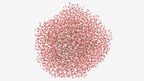
YORKTOWN HEIGHTS, N.Y. and CLEVELAND, May 5, 2026 /PRNewswire/ — Scientists at Cleveland Clinic, RIKEN, and IBM (NYSE: IBM) have used IBM quantum computers and two of the world’s most powerful supercomputers to simulate protein complexes spanning up to 12,635 atoms. These are the largest-known simulations of biologically meaningful molecules performed with quantum hardware yet, and signal that quantum computers are maturing into useful scientific tools which can help solve fundamental problems in biology, chemistry, and life sciences.

The results were achieved in part by an innovative algorithm that optimizes how quantum and classical computers can work together, a framework known as quantum-centric supercomputing. Using this approach, the team captured the behavior of two biochemically relevant proteins that are roughly 40 times larger than what this same method could initially achieve just six months ago. Additionally, the accuracy of the simulations in a key step of the workflow improved by up to 210 times over this same period.

The decision to explore if quantum computers could offer value in the simulation of protein complexes was motivated by challenges faced today by researchers when studying how a drug candidate could bind to a protein. This can be one of the most difficult and expensive problems in life sciences research, and one that today’s existing computational methods have struggled to exactly solve as molecules increase in size. Doing so accurately and early in the discovery process could meaningfully shorten drug development timelines that currently can stretch over a decade and require substantial investment to produce a single medicine.

“This work marks an important advance and underscores quantum computing’s emerging role on systems of relevance to drug discovery,” said Kenneth Merz, Ph.D., lead author of the study and staff scientist in Cleveland Clinic’s Computational Life Sciences Department. “By crossing the 12,000-atom barrier, we have significantly expanded the scale of biologically meaningful molecular simulations possible with quantum computing and demonstrated a framework for applying these methods to scientifically relevant problems at a larger scale.”

“For years, quantum computing has been a promise. Now, quantum computers are producing results that matter to science,” said Jay Gambetta, Director of IBM Research and IBM Fellow. “The systems we simulated here are the kind of molecules that biologists and chemists work with in the real world. Quantum computers are no longer proving they are viable tools – they are proving they can contribute meaningful results in quantum-centric supercomputing architectures.”

The breakthrough research, reported in a pre-print study, builds on a series of milestones from the three institutions. This includes work on the cover of Science Advances that introduced techniques to model electronic states in molecules, first demonstrated on iron sulfides, and more recently, the 303-atom benchmark molecule called Trp-cage – the first-known full quantum-centric simulation made of 20 amino acids.

Quantum and Classical Computers, Working in Tandem

This approach – what IBM calls quantum-centric supercomputing – pairs quantum processors with classical computers so each computational tool can solve the parts of a problem where it excels. In this work, classical computers deconstructed the protein-ligand complexes into computable fragments. IBM’s 156-qubit IBM Quantum Heron processors, running within the IBM quantum computers at both Cleveland Clinic in the United States and RIKEN in Japan, calculated the quantum-mechanical behavior of those pieces in tandem with two of the most powerful classical supercomputers – Fugaku at RIKEN and Miyabi-G, operated by the University of Tokyo and the University of Tsukuba. The strength of IBM’s quantum hardware was essential to the accuracy and success of the computation, which required up to 94 qubits running nearly 6,000 quantum operations within certain parts of the simulation. Results were reassembled on classical computers to obtain a complete representation of the molecule.

As published on arXiv, the jump in scale was made possible by both algorithmic innovation and access to cutting-edge computing infrastructure. The novel quantum-classical hybrid algorithm, coined EWF-TrimSQD, dramatically reduced computational overhead and accelerated the ability to directly represent the chemistry of these molecular systems on quantum hardware. As a result, the frontier for what is possible with quantum-centric supercomputing has been pushed forward to previously inaccessible molecule sizes, and there is a clear path to further increase the size and accuracy of such calculations.

A Step Towards Drug Discovery

The team views this work as a starting point. Looking ahead, the ability to scale simulations of molecular systems with accuracy is a step towards helping researchers better predict how medicines may interact with protein targets. Computational improvements in drug discovery rest on two fundamental capabilities: first, modeling the movement of atoms as biological processes unfold; and second, accurately computing their energies, for which these results provide evidence that quantum‑centric supercomputing can support.

As quantum computers advance, integrating them into computational workflows could offer higher accuracy in energy calculations at larger scales, and potentially open the door to simulating enzyme catalysts, drug mechanisms, and other molecular behaviors that today can only be studied through experimentation.

More broadly, this breakthrough marks a shift in what quantum computing means to science. For most of its history, the field of quantum computation has measured progress in qubits, gates, and error rates. Now, its capabilities can also be measured by the size and significance of the problems it can help to solve.

For more information on this milestone, visit: https://www.ibm.com/quantum/blog/cleveland-clinic-riken-chemistry

Research Support

This research is supported by NEDO (New Energy and Industrial Technology Development Organization), an organization under the jurisdiction of Japan’s Ministry of Economy, Trade and Industry (METI)’s “Research and Development of Quantum-Supercomputers Hybrid Platform for Exploration of Uncharted Computable Capabilities” (Project Leader: Mitsuhisa Sato) as part of the “Project for Research and Development of Enhanced Infrastructures for Post 5G Information and Communications Systems (JPNP20017).”

About IBM

IBM is a leading global hybrid cloud and AI, and business services provider, helping clients in more than 175 countries capitalize on insights from their data, streamline business processes, reduce costs and gain the competitive edge in their industries. Thousands of governments and corporate entities in critical infrastructure areas such as financial services, telecommunications and healthcare rely on IBM’s hybrid cloud platform and Red Hat OpenShift to affect their digital transformations quickly, efficiently and securely. IBM’s breakthrough innovations in AI, quantum computing, industry-specific cloud solutions and business services deliver open and flexible options to our clients. All of this is backed by IBM’s legendary commitment to trust, transparency, responsibility, inclusivity and service.
For more information, visit https://research.ibm.com.

About Cleveland Clinic

Cleveland Clinic is a nonprofit multispecialty academic medical center that integrates clinical and hospital care with research and education. Founded in 1921 by four renowned physicians with a vision of providing outstanding patient care based upon the principles of cooperation, compassion and innovation, Cleveland Clinic has pioneered many medical breakthroughs, including coronary artery bypass surgery and the first face transplant in the United States. Cleveland Clinic is consistently recognized in the U.S. and throughout the world for its expertise and care. Among Cleveland Clinic’s 83,000 employees worldwide are more than 6,600 salaried physicians and researchers, and 21,900 registered nurses and advanced practice providers, representing 140 medical specialties and subspecialties. Cleveland Clinic is a 6,725-bed health system that includes a 173-acre main campus near downtown Cleveland, 23 hospitals, 300 outpatient facilities, including locations in northeast Ohio; Florida; Las Vegas, Nevada; Toronto, Canada; Abu Dhabi, UAE; and London, England. In 2025, there were 15.9 million outpatient encounters, 343,000 hospital admissions and observations, and 336,000 surgeries and procedures throughout Cleveland Clinic’s health system. Visit us at clevelandclinic.org. Follow us at x.com/CleClinicNews. News and resources are available at newsroom.clevelandclinic.org.

Media contacts

Brittany Forgione
IBM
Brittany.Forgione@ibm.com

Erin Angelini
IBM Research Communications
edlehr@us.ibm.com

Alicia Reale-Cooney
Cleveland Clinic
realeca@ccf.org  
216.408.7444


SOURCE IBM

Continue Reading
Click to comment

Leave a Reply

Your email address will not be published. Required fields are marked *

Technology

VIVATECH 2026 CELEBRATES ITS 10TH ANNIVERSARY WITH A RECORD EDITION SURPASSING 200,000 VISITORS

Published

on

By

With the presence of Emmanuel Macron and Narendra Modi, Prime Minister of India

PARIS, June 20, 2026 /CNW/ — From June 17 to 20, 2026 at Paris Porte de Versailles, VivaTech celebrated its 10th edition, surpassing the exceptional milestone of 200,000 visitors from 165 nationalities, with more than 15,000 startups present, 1,155 speakers and over 5 billion cumulative impressions on social media. Europe’s largest tech and innovation event has reached a new dimension, consolidating its status as an unmissable global gathering.

Exceptional speakers

VivaTech welcomed the greatest figures in global tech: Jeff Bezos (Amazon & Blue Origin), Dave Limp (Blue Origin), Bernard Arnault (LVMH), Henna Virkkunen (European Commission), Ekaterina Zaharieva (European Commission). Germany, Country of the Year 2026, was represented by a ministerial delegation, while India, AI Country Partner 2026, was led by Prime Minister Narendra Modi, as a continuation of the AI Summit in New Delhi.

Innovation and business at the heart of the event

More than 4,500 exhibitors, 61% of whom were international, showcased their latest innovations. Among the standout innovations: the smart contact lens by XPANCEO, the thought-controlled humanoid robot by Unitree x HABS, and the 3D-printed resorbable implants by Lattice Medical. New formats such as the Business Plaza and Investors Office Hours further accelerated business connections.

The VivaTech x Bloomberg Awards

For the first time, VivaTech presented the VivaTech x Bloomberg Awards, recognising the most influential figures in global tech, including Sir Tim Berners-Lee (Visionary Award), Joe Tsai (Leadership Award) and Yann LeCun (Momentum Award).

Innovation open to all

VivaTech also took over the Champs-Élysées on June 14th for an open-air technology showcase, before opening its doors to the general public on June 20th with astronaut Thomas Pesquet as guest star.

“This 10th edition was not a celebration of the 9 previous years, but the opening of a new decade full of promise.” — Maurice Lévy, Michèle Benbunan & François Bitouzet, VivaTech

See you from June 16 to 19, 2027 at Paris Expo Porte de Versailles for VivaTech 2027!

About VivaTech

VivaTech accelerates innovation by connecting startups, tech leaders, major companies, and investors responding to our world’s biggest challenges.  

Each year, over four exciting days in Paris, VivaTech creates Europe’s biggest startup and tech event, exploring the most disruptive topics in tech with world-premiere demos, launches, and conferences in a collaborative ecosystem. This is where business meets innovation. Join us for the eleventh edition of VivaTech 16-19 June 2027.

For more information go to our website at https://vivatech.com/media or follow us on social media @VivaTech.

Contact
press@vivatechnology.com 

Logo: https://mmx.prnewswire.com/media/MS1865564/VT_LOGO_EN.jpg
Photo : https://mmx.prnewswire.com/media/MS1869778/VivaTech_2026.jpg

View original content to download multimedia:https://www.prnewswire.com/news-releases/vivatech-2026-celebrates-its-10th-anniversary-with-a-record-edition-surpassing-200-000-visitors-302805827.html

SOURCE VivaTech

Continue Reading

Technology

Pope Leo XIV embraces paediatric patients at CNAO in Pavia

Published

on

By

PAVIA, Italy, June 20, 2026 /PRNewswire/ — The National Center for Oncological Hadrontherapy (CNAO) served as the first stop today during Pope Leo XIV’s pastoral visit to the city of Pavia. His choice to begin his journey at this center reflects a profound commitment to fostering meaningful dialogue between advanced scientific progress and the alleviation of human suffering.

CNAO President Gianluca Vago and General Manager Sandro Rossi received His Holiness, illustrating the center’s distinctive capabilities. CNAO stands out as a unique reality in Italy, remaining one of the very few facilities worldwide capable of delivering hadrontherapy using both protons and carbon ions. The technological core of the facility is its synchrotron, a subatomic particle accelerator that generates ultra-high-precision beams to treat complex, inoperable and radioresistant tumours. This cutting-edge technology allows for the targeted eradication of diseased cells while meticulously preserving surrounding healthy tissues, drastically improving patients’ survival and quality of life.

Furthermore, CNAO is expanding its capabilities as a premier multi-center utilizing new ion species, like Helium, later Oxygen and Neon. Soon, treatments will incorporate the Leo Cancer Care upright positioning and imaging system. The immediate future also includes beginning therapies with a Hitachi dedicated proton accelerator and gantry and a BNCT system for metastatic diseases, equipped with an electrostatic accelerator produced by TAE Life Science. With these new technologies, CNAO will become one of the most technologically advanced center in the world.

To date, over six thousand individuals, including approximately three hundred children and adolescents, have benefited from these life-saving treatments.

During his visit, the Pope engaged with CNAO’s Board of Directors, a collaborative body uniting national universities, clinical institutions, and research centers. He also extended his heartfelt greetings to the two hundred employees of the center. These doctors, physicists, engineers, and researchers tirelessly operate the advanced technologies in the service of oncology patients.

The emotional pinnacle of the day was the Holy Father’s private gathering with a delegation of young children who underwent treatment. The paediatric patients and their families shared a deeply touching moment of closeness, receiving the Pope’s comforting embrace.

“The visit of Pope Leo XIV honours us and represents a moment of extraordinary human value”, stated CNAO President Gianluca Vago. “In his encyclical Magnifica Humanitas, the Holy Father emphasizes the necessity of a science that constantly safeguards the centrality of the person and directs technology toward the common good. In a time marked by global tensions, CNAO testifies daily how the incredible power of the atom can be used not to destroy, but to heal. The particle beams we utilize against disease are, symbolically, Rays of Hope, sharing and supporting the IAEA project bearing this name. The embrace the Holy Father reserved for our children reminds us that scientific research finds its most authentic purpose when it encounters listening, compassion, and hope”.

Photo – https://mma.prnewswire.com/media/2997869/Papa_al_Cnao_crediti_Andrea_Perotti.jpg
Logo – https://mma.prnewswire.com/media/2997643/CNAO_Logo.jpg


View original content:https://www.prnewswire.co.uk/news-releases/pope-leo-xiv-embraces-paediatric-patients-at-cnao-in-pavia-302805799.html

Continue Reading

Technology

HelloNation Article Examines Full Coverage Auto Insurance With Insurance Expert Ben Buenzow

Published

on

By

The article explains what full coverage auto insurance typically includes, what it excludes, and how coverage limits affect Iowa drivers.

URBANDALE, Iowa, June 20, 2026 /PRNewswire/ — What does full coverage auto insurance actually include for drivers in Iowa? That question is answered in a HelloNation article featuring insights from Insurance Expert Ben Buenzow of Buenzow Insurance Group in Urbandale, Iowa.

The HelloNation article explains that full coverage auto insurance is a commonly used phrase that many drivers misunderstand. While the term suggests broad protection, it usually refers to a combination of liability coverage, collision coverage, and comprehensive coverage within an insurance policy. Understanding what these components cover helps drivers avoid gaps in protection and unexpected costs after an accident.

Liability coverage forms the legal foundation of auto insurance in Iowa. The article explains that liability coverage pays for injuries or property damage that a driver causes to others in an accident. State law requires Iowa drivers to carry minimum liability limits, and full coverage auto insurance policies include at least those required limits. However, liability coverage does not pay for damage to the driver’s own vehicle, which is why additional protection is often necessary.

Collision coverage is the part of a policy that helps pay for damage to the driver’s own vehicle after an accident. The HelloNation article notes that collision coverage applies when a vehicle hits another car, a guardrail, or a stationary object. In most cases, the insurer pays the actual cash value of the vehicle or the repair cost minus the policy’s deductible. Insurance Expert Ben Buenzow is featured in the article as a source of insights on how deductibles influence both insurance premiums and out-of-pocket costs during a claim.

Comprehensive coverage addresses a different type of risk. According to the article, comprehensive coverage protects against damage caused by events other than collisions. This includes hail, theft, vandalism, fire, falling objects, or animal-related incidents. For Iowa drivers, weather-related risks such as hailstorms can make comprehensive coverage an important part of a full coverage auto insurance policy.

The HelloNation article also explains that deductibles apply to both collision coverage and comprehensive coverage. The deductible is the amount the policyholder must pay before insurance coverage begins. Drivers can often choose higher or lower deductibles depending on their financial preferences. Higher deductibles typically reduce premium costs but increase the amount paid out of pocket if damage occurs.

Another important takeaway from the article is what full coverage auto insurance does not automatically include. Standard policies usually do not provide roadside assistance, rental reimbursement, or gap coverage unless these features are added separately. The article explains that roadside assistance covers towing or emergency services, while rental reimbursement helps cover the cost of a temporary vehicle during repairs.

Gap coverage is another optional feature highlighted in the article. It is often recommended for drivers who finance or lease newer vehicles. Gap coverage pays the difference between the remaining loan balance and the vehicle’s actual cash value if it is declared a total loss after an accident.

The article also discusses the importance of understanding coverage limits within an insurance policy. Coverage limits determine the maximum amount an insurer will pay for a covered loss. If damage or liability exceeds those limits, the driver may be responsible for the remaining costs. Reviewing coverage limits carefully helps drivers ensure their policy reflects both the value of their vehicle and their financial risk.

Insurance Expert Ben Buenzow is again referenced in the article as part of a broader discussion about how drivers can make informed decisions about Iowa car insurance. The article encourages drivers to evaluate deductibles, coverage limits, and optional protections based on their individual needs.

The HelloNation article concludes by emphasizing that drivers should periodically review their insurance policy. Changes in vehicle value, financial circumstances, and driving habits can all affect the appropriate level of coverage. Understanding the components of full coverage auto insurance helps drivers maintain adequate protection and prepare for unexpected events on the road.

Iowa Auto Insurance: What Full Coverage Includes and Excludes features insights from Ben Buenzow, Insurance Expert of Urbandale, Iowa, in HelloNation.

About HelloNation
HelloNation is America’s Good News Network, a premier media platform built on the idea that good news travels faster when real people tell real stories. Through its community-focused publications and innovative “edvertising” approach, HelloNation delivers content that informs, inspires, and spotlights the leaders making a meaningful impact in their communities.

View original content to download multimedia:https://www.prnewswire.com/news-releases/hellonation-article-examines-full-coverage-auto-insurance-with-insurance-expert-ben-buenzow-302805432.html

SOURCE HelloNation

Continue Reading

Trending