Connect with us

Technology

Product Launches Risk Miss Revenue Targets When Go-to-Market Strategy Lacks Buyer Insight, Says Info-Tech Research Group

Published

on

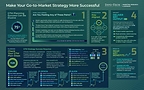
As launch cycles accelerate, many organizations are moving ahead without the buyer insight, competitive differentiation, and internal readiness needed to turn product investment into revenue. Info-Tech Research Group’s newly published blueprint, Build a More Effective Go-to-Market Strategy, outlines a three-phase methodology to help marketing, product, sales, and customer success leaders align around market truth, validate value propositions, and build launch plans that improve commercial outcomes.

ARLINGTON, Va., June 5, 2026 /PRNewswire/ – Organizations are under increasing pressure to launch products faster, enter new markets, and demonstrate measurable revenue impact. However, many continue to build go-to-market (GTM) strategies around internal assumptions rather than validated buyer needs, competitive insight, and launch readiness. According to Info-Tech Research Group, weak GTM discipline can contribute to unclear product opportunities, missed launch revenue targets, slowing buyer adoption, and reduced executive support for future product investment.

To help organizations address these challenges, the global research and advisory firm has published its blueprint, Build a More Effective Go-to-Market Strategy. The resource provides a structured methodology for marketing, product, sales, customer success, and revenue operations leaders to align stakeholders, validate market opportunity, define differentiated offers, and build launch plans that connect execution to revenue targets.

Info-Tech’s research emphasizes that an effective GTM strategy is not just a marketing exercise. It is a cross-functional business capability that aligns teams around a shared understanding of who the buyer is, what problems matter most, how the solution delivers value, and what must be in place before launch. Without that alignment, teams risk investing in products, campaigns, and sales motions that do not reflect buyer priorities or market realities.

“A go-to-market strategy cannot be treated as the final layer of messaging before launch,” says Emily Wright, senior research analyst at Info-Tech Research Group. “The strongest GTM strategies are built early, with real buyer insight, competitive understanding, and cross-functional accountability. When teams align around market truth before they build and launch, they improve their ability to focus resources on the opportunities most likely to generate revenue.”

Key Challenges That Undermine Go-to-Market Success
Info-Tech’s blueprint identifies several common obstacles that prevent organizations from realizing the full value of product launches and growth initiatives. These challenges include:

Unclear product market opportunity, leading to weak business cases and poor investment decisions.Poorly defined and prioritized buyer personas, making it difficult for teams to understand buyer needs, pain points, and decision criteria.Incomplete competitive analysis that fails to identify the areas where the offering is truly differentiated.Assumptions about the buyer journey, including how buyers prefer to research, evaluate, and engage with vendors.Business cases built around feature delivery rather than customer value, commercial viability, and revenue goals.Limited readiness across marketing, sales, and customer success, resulting in inconsistent messaging, weak enablement, and missed launch execution milestones.

The firm’s findings suggest that these issues often appear as separate symptoms, such as weak lead generation, low win rates, missed revenue targets, or declining executive confidence. However, the underlying issue is often a GTM process that lacks structure, evidence, and shared ownership across the functions responsible for product success.

Info-Tech’s Three-Phase Methodology for a More Effective Go-To-Market Strategy
The Build a More Effective Go-to-Market Strategy blueprint outlines a three-phase approach to help organizations move from assumptions to evidence-based GTM execution.

Phase 1: Establish Market Truth and Strategic Focus
In the first phase, organizations identify the GTM steering committee and working team, define the target problem and buying context, prioritize target buyers, assess competitive and alternative options, and size the realistic market opportunity. The goal is to establish a validated ideal customer profile, clear buyer problem statements, priority use cases, competitive gaps, and a realistic view of market potential before deciding whether to proceed, pivot, or stop.Phase 2: Design Value Proposition and GTM Approach
In the second phase, teams define the core value proposition, design the offer across product, packaging, and pricing, select the GTM motion and routes to market, map the buyer journey, build the business case, and align internal stakeholders on GTM design. This phase helps organizations ensure the offer is grounded in buyer needs, differentiated from alternatives, commercially viable, and supported by the right routes to market.Phase 3: Create the GTM Launch Plan
In the final phase, teams finalize launch scope and success criteria, develop the GTM working plan, enable customer-facing teams, align systems and processes, build the launch communications and awareness plan, and secure executive approval and readiness sign-off. This phase is designed to ensure marketing, sales, customer success, support, and operations teams are aligned and prepared before the offering is released to the market.

“Launch readiness is where strategy becomes operational,” explains Wright. “A strong GTM plan gives teams more than a timeline. It clarifies who owns each decision, which buyers the launch is designed to reach, what messages will resonate, how success will be measured, and whether the organization is truly ready to support the buyer from first touch through first value.”

Info-Tech’s Build a More Effective Go-to-Market Strategy blueprint also provides practical tools and templates to help organizations execute the methodology, including a Go-to-Market Strategy Presentation Template, a Go-to-Market Strategy RACI and Launch Checklist Workbook, a Go-to-Market Strategy Cost Budget and Revenue Forecast Workbook, a Product Market Opportunity Sizing Workbook, an ICP Workbook, and a CX Journey Interview Guide. These resources are designed to help teams structure decisions, document assumptions, align stakeholders, and connect launch planning to measurable business outcomes.

The firm advises organizations to treat GTM strategy as a repeatable capability rather than a one-time launch activity. By building a consistent approach, teams can reduce wasted effort, improve buyer adoption, strengthen competitive positioning, and create greater confidence among executives and investors in future product development and marketing investments.

For exclusive and timely commentary from Info-Tech’s experts, including Emily Wright, and access to the complete Build a More Effective Go-to-Market Strategy blueprint, please contact pr@infotech.com.

About Info-Tech Research Group
Info-Tech Research Group is the “get things done” partner for over 30,000 IT, HR, and marketing leaders worldwide. The fastest growing research and advisory firm, Info-Tech, enables leaders to make well-informed decisions and transform their organizations through AI, strategic foresight, step-by-step methodologies, practical tools, industry-leading advisory, and training programs. For nearly 30 years, tens of thousands of private and public organizations have trusted Info-Tech to lead their most important initiatives through periods of change and deliver outcomes that truly matter.

To learn more about Info-Tech’s HR research and advisory services, visit McLean & Company, and for data-driven software buying insights and vendor evaluations, visit the firm’s SoftwareReviews platform.

Media professionals can register for unrestricted access to research across IT, HR, and software, as well as hundreds of industry analysts through the firm’s Media Insiders program. To gain access, contact pr@infotech.com.

For information about Info-Tech Research Group or to access the latest research, visit infotech.com and connect via LinkedIn and X.

View original content to download multimedia:https://www.prnewswire.com/news-releases/product-launches-risk-miss-revenue-targets-when-go-to-market-strategy-lacks-buyer-insight-says-info-tech-research-group-302792734.html

SOURCE Info-Tech Research Group

Continue Reading

Technology

Tuya Smart Unveils Doova at IFA 2026, an AI Home Companion Robot Designed to Support Independently Living Seniors

Published

on

By

BERLIN, Sept. 5, 2026 /PRNewswire/ — Tuya Smart (NYSE: TUYA; HKEX: 2391), a global AI cloud platform service provider, today unveiled Doova, its new AI home companion robot, at IFA 2026. Designed for seniors living alone, Doova moves beyond the traditional roles of security devices and household robots, combining proactive safety protection, emotionally intelligent companionship, and seamless smart home coordination to support a safer, more connected, and more comfortable daily life.

For many seniors living independently, the greatest concern is not simply an accident itself, but the time that passes before anyone realizes something is wrong.

Doova is equipped with LDS LiDAR, a four-microphone sound source localization system, and AI vision-based skeletal recognition algorithms. If a user falls or encounters another emergency, they can call out, “Hey Tuya, help,” and Doova will quickly locate the user, move to their side, and assess the situation in real time.

If no response is detected within 60 seconds, Doova automatically initiates an emergency response workflow, sending a two-way live video call alert to family members so assistance can be arranged without delay.

An AI Companion for Everyday Life

Doova combines emotional companionship, daily assistance, and wellness support in a single AI-powered home companion designed specifically for older adults. Its conversational ability is powered by a multimodal large language model, allowing it to hold natural, free-flowing conversations rather than respond only to fixed commands.

During quiet moments at home, Doova can hold conversations, offer company, and play entertainment content to ease feelings of loneliness. In day-to-day life, it can help interpret complex bills and letters, identify potential scam risks, and guide users through operating smart appliances. For health and routine management, Doova can provide reminders for medication, weather updates, and schedules, while also engaging users with light interactive games.

Over time, Doova learns user preferences and becomes more personally helpful in everyday areas such as meal suggestions, gardening advice, and outfit recommendations. In the future, Tuya also plans to introduce value-added services including autonomous item-finding throughout the home, helping reduce anxiety around misplaced belongings.

Smarter In-Home Monitoring for Greater Peace of Mind

When users are away from home, Doova helps make home monitoring simpler and less intrusive.

Unlike conventional patrol-style security devices that follow walls in fixed routes and can feel like overt surveillance, Doova uses a node-oriented coverage strategy designed around the center of each room. It can move from space to space on a dual-wheel drive with caster wheels, perform a 360-degree scan at each location, and automatically generate a safety report that is delivered to the user’s mobile phone, making it easier to stay informed about conditions throughout the home from anywhere. Doova also supports autonomous docking and recharging, so monitoring continues without day-to-day intervention.

A Gentle Smart Home Hub Built for Daily Living

Powered by Tuya’s mature AIoT ecosystem, Doova also serves as a central smart home control hub. With simple voice commands, users can coordinate connected devices across the home, including lighting, curtains, kitchen appliances, and bathroom devices, without complicated setup or operations, lowering the barrier to smart living for seniors.

Doova is also designed to feel like a natural part of the household rather than a piece of equipment. Its soft, curved form moves away from the cold, mechanical look often associated with robots, allowing it to blend more naturally into living spaces. The device height is optimized for interaction whether a user is standing, seated, or reclining, while a 10.1-inch high-definition display and dynamic facial expressions make conversations feel warmer and more engaging.

Doova has drawn strong interest from attendees at IFA 2026, reflecting growing demand for AI solutions that support independent living. With Doova, Tuya continues to extend its AI+IoT ecosystem into new areas of daily life, bringing safety, companionship, and connected living together for seniors who choose to age independently.

About Tuya Smart

Tuya Inc. (NYSE: TUYA; HKEX: 2391) is a leading global AI cloud platform service provider dedicated to bringing AI into everyday life. Through its TuyaOpen open-source development framework and universal AI Agent engines, including the AI Agent development platform, Tuya integrates multimodal AI capabilities to lower barriers for AI development, efficiently advancing the realization of AI-driven lifestyles and accelerating AI integration with the physical world. Tuya offers innovative physical AI solutions for smart devices, commercial applications, and industry developers through its cloud computing and spatial intelligence capabilities. It also provides a complete, open, and neutral global AIoT ecosystem.

As of June 30, 2026, the Tuya AI Developer Platform had over 2,092,000 registered AI developers from more than 200 countries and regions.

View original content to download multimedia:https://www.prnewswire.com/news-releases/tuya-smart-unveils-doova-at-ifa-2026-an-ai-home-companion-robot-designed-to-support-independently-living-seniors-302870623.html

SOURCE Tuya Smart

Continue Reading

Technology

NonPublic delivers over 10x return on SpaceX investments for early investors

Published

on

By

Private markets technology investment platform NonPublic delivered over a 10x return to early investors, after they saw SpaceX’s valuation soar to a peak of 2.6 trillion following the biggest IPO in history.

SYDNEY, Sept. 5, 2026 /PRNewswire-PRWeb/ — Private markets technology investment platform NonPublic has delivered over a 10x return to early investors, after they saw SpaceX’s valuation soar to a peak of 2.6 trillion following the biggest IPO in history.

“What this outcome illustrates is that the most significant growth in today’s leading technology companies increasingly belongs to private market investors. Most of the money is made before the bell rings, and as companies stay private for longer, that window only widens.”

The NonPublic Group ran 14 vehicles across SpaceX, and xAI which merged into SpaceX, growing US $4.4 million of investor capital into around US$16 million at the IPO price and US$24 million at the June peak, before fees.

SpaceX stock surged 67 percent above its IPO valuation within days of listing, and total market cap still currently sits at over US $2 trillion, but the vast majority of investor returns were realised well before the public markets were granted access.

Direct access to US private placements like these has historically required Australian investors to hold US SEC accreditation or qualified purchaser status, leverage a US-licensed broker, and commit a minimum of US$1 to 5 million per deal.

These requirements are operationally and legally impractical for most eligible Australian investors to meet directly, however NonPublic gave eligible wholesale Australian investors access to the deal by pooling funds through a Special Purpose Vehicle (SPV).

This access was critical given SpaceX remained private for 24 years accruing value before listing, as the average time from founding to IPO for major US technology companies has grown from around four years in the early 2000s to 12 years today.

SpaceX joined the Nasdaq 100 on 7 July. NonPublic believes its investors already captured the bulk of the company’s value creation before public markets opened.

Milan Reinartz, founder and CEO at NonPublic, said: “When we first accessed SpaceX in 2021 at a US$108 billion valuation, many people thought the ceiling was closed. They missed what Starlink represented as a commercial engine, and the long-term mission that gives SpaceX a purpose no competitor can replicate.

“What this outcome illustrates is that the most significant growth in today’s leading technology companies increasingly belongs to private market investors. Most of the money is made before the bell rings, and as companies stay private for longer, that window only widens.

“For eligible Australian wholesale investors, that opportunity has historically been out of reach. Our goal is to provide access to these companies at transparent fee structures through familiar Australian structures, while being clear that disciplined diversification across a portfolio is how investors manage the genuine risks of this asset class.”

Please contact Priyanka Dogra for any interview requests: 0410 593 587

NonPublic (www.nonpublic.com) is an Australian-licensed investment platform providing sophisticated/accredited and professional investors with curated access to exclusive pre-IPO and private market opportunities, with a focus on leading US technology companies. Through a transparent, technology-enabled platform, NonPublic connects investors with high-growth private companies, secondary transactions, and alternative investment opportunities that have traditionally been difficult to access.

NonPublic Pty Ltd holds Australian Financial Services Licence (AFSL) 482668.

Media Contact

Priyanka Dogra, NonPublic, 61 0410593587, priyanka@thirdhemisphere.agency, https://nonpublic.com/

View original content to download multimedia:https://www.prweb.com/releases/nonpublic-delivers-over-10x-return-on-spacex-investments-for-early-investors-302868905.html

SOURCE NonPublic

Continue Reading

Technology

CHiQ Wins AI Home Ecosystem Brand Award, Exploring New Smart Living Experiences Through AI Innovation

Published

on

By

BERLIN, Sept. 5, 2026 /PRNewswire/ — CHiQ, a global smart home brand, received the AI Home Ecosystem Brand Award at IFA 2026 in recognition of its continued innovation in AI technology and smart home ecosystems. The award further highlights CHiQ’s pioneering work in AI-powered smart homes and its ongoing efforts to enhance the user experience through technological breakthrough.

Presented jointly by IDG and IFA, the award is one of the technology innovation honors closely watched by the global consumer electronics and home appliance industry during IFA. It recognizes notable advances in cutting-edge AI technology across the sector, with a focus on practical innovations and applications that contribute to industry development.

“Receiving the AI Home Ecosystem Brand Award is a recognition of CHiQ’s continued exploration of AI-powered smart homes,” said Vinson Fan, Deputy General Manager of Changhong International Brand Business Center. “The value of AI should be reflected not only in the smart features of individual products, but also in understanding users’ needs and enabling different devices and scenarios to work together naturally. CHiQ will continue to deepen the integration of AI into everyday home life, making smart home technology more responsive to users and delivering more convenient, intuitive and personalized experiences to consumers worldwide.”

At this year’s IFA, CHiQ unveiled a range of flagship AI-powered smart home products across key categories, including TVs, refrigerators, washing machines and air conditioners. The RGB MiniLED AI TV features an AI Sports Platform that expands opportunities for exercising at home, while the AI refrigerator uses AI-powered precision control technology to improve food preservation. The washing machines and air conditioners employ intelligent sensing to further optimize garment care and indoor climate control.

Beyond its products, CHiQ continues to explore the intersection of technology, culture and lifestyle. The brand has incorporated panda-inspired elements into its AI interactions to engage users in a more approachable way. Through sports partnerships such as the FIS Ski Jumping World Cup, CHiQ is also connecting its brand with sports and lifestyles familiar to European consumers, further strengthening its localized brand presence.

In recent years, CHiQ has continued to advance the development and application of AI technology, extending its AI capabilities from individual products to a broader range of home appliances and everyday scenarios while steadily strengthening its technological and product innovation capabilities. Building on this award, CHiQ will further expand the role of AI in everyday home life. Through a more open ecosystem and continued technological development, the brand aims to strengthen its global presence and bring more personalized smart living experiences to consumers worldwide.

View original content to download multimedia:https://www.prnewswire.co.uk/news-releases/chiq-wins-ai-home-ecosystem-brand-award-exploring-new-smart-living-experiences-through-ai-innovation-302870186.html

Continue Reading

Trending